

Your complete guide to Saskatchewan's 2025 fishing regulations. Understand limits, licenses, and key rules to avoid common fines and fish with confidence.
- Start with the current official rules for Saskatchewan Fishing Regulations; seasons, permits, and limits can change by province or management zone
- Check the date, location, species, and licence requirements before using any checklist or trip plan
- Use the guide to spot practical risks: closures, gear restrictions, local exceptions, and proof you may need in the field
Bottom line Saskatchewan Fishing Regulations is safest when you verify the current official rule first, then plan gear, timing, and travel around that rule
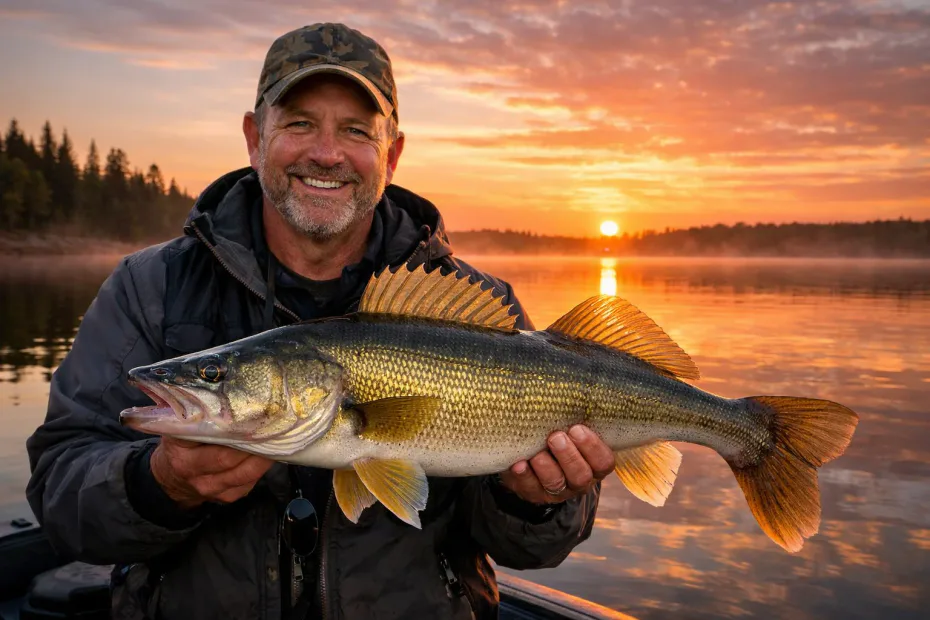
Saskatchewan fishing regulations for the 2026-27 season apply from April 1, 2026 to March 31, 2027. Before you fish the province’s prairie lakes, northern shield waters or border reservoirs, confirm the correct licence, Habitat Certificate, zone opener and waterbody-specific rule.
This guide focuses on the practical compliance pieces: who needs a Saskatchewan angling licence, what the 2026-27 fees are, when the Southern, Central and Northern zones open, where national park waters differ, and which official pages to check before a trip.
For the Canada-wide comparison before choosing a province, use our Fishing Regulations and Licences in Canada pillar, then come back here for Saskatchewan-specific licence, zone, and season details.
Last verified: June 4, 2026
Fees, season dates and licence rules below were checked against official Government of Saskatchewan and HAL-linked sources.
Key Takeaways: Saskatchewan Fishing Regulations 2026-27
- Licence year: Annual Saskatchewan angling licences expire March 31, 2027.
- Habitat Certificate: Anglers age 16 to 64 need the Fisheries Habitat Certificate unless an official exemption applies. It is $21 annually or $5.25 for short-term licences.
- Resident annual fee: Saskatchewan residents age 16 to 64 pay $42 for an annual angling licence.
- Canadian and international visitors: Canadian residents from outside Saskatchewan pay $86 annually; non-residents from outside Canada pay $115 annually.
- Youth and seniors: Youth under 16 do not need a licence. Saskatchewan residents age 65+ do not need a licence but must carry proof of age and Saskatchewan residency.
- Zone openers: Southern Zone opens May 5, 2026; Central Zone May 15, 2026; Northern Zone May 25, 2026.
CanadaFever Licence Check
We removed the old anecdotal field story from this guide and replaced it with a source-backed compliance check. The rule to remember is simple: keep your HAL licence details available, know your zone opener, and do not assume provincial Saskatchewan rules apply inside federal national park waters such as Prince Albert National Park.
What’s New? Key Regulation Changes for 2026-27
The Ministry of Environment doesn’t rewrite the book every year, but they do make critical adjustments based on fish population data. Ignorance of these updates is the fastest way to ruin a trip.

1. Zero Limit for Largemouth Bass
This is the big one for 2026. There is now a province-wide zero limit for Largemouth Bass. This means strictly catch-and-release only. If you hook one, it goes back in the water immediately—no photos on the carpet, no prolonged weigh-ins.
Immediate release ensures these populations can establish. This is a move to protect developing populations of this species in our waters.
2. Specific Waterbody Updates
Always check the “Special Regulations” section of the guide for the specific lake you are fishing. Notable changes this year include:
- Constance Lake: The stocked trout limit is set to three, and they have removed the upper size restriction.
- Nesland Lake: Completely closed to angling from April 1 to May 4 to protect spawning Northern Pike.
- Emerald Pond: Closed from April 1 to May 14 (Yellow Perch spawn protection) and has a reduced trout limit of two.
For a deeper dive into general licensing across the country, check out our comprehensive guide to Canadian fishing licenses.
Saskatchewan Fishing Licence Fees 2026-27
Saskatchewan sells angling licences through the HAL system, licence issuers, Ministry field offices, selected provincial park offices and by phone. Fees below are the official 2026-27 fee table amounts shown by Saskatchewan.
Who Needs a Saskatchewan Angling Licence?
- Saskatchewan residents age 16 to 64: licence required, plus the Fisheries Habitat Certificate unless exempt.
- Youth under 16: no angling licence required, but all limits and fishing rules still apply.
- Saskatchewan residents age 65+: no licence required when carrying proof of age and Saskatchewan residency.
- Canadian residents from outside Saskatchewan age 16+: licence required.
- Non-residents from outside Canada age 16+: licence required.
- Canadian Armed Forces veterans: eligible Saskatchewan or Canadian resident veterans can receive a free licence after official verification and are exempt from the Fisheries Habitat Certificate.
2026-27 Saskatchewan Angling Licence Fees
| Angler type | Annual | 3-day | 1-day |
|---|---|---|---|
| Saskatchewan resident age 16-64 | $42 | $21 | $15 |
| Canadian resident age 16+ | $86 | $46 | $23 |
| Non-resident age 16+ | $115 | $57 | $28 |
| Saskatchewan resident age 65+ | No licence required | No licence required | No licence required |
| Youth under 16 | No licence required | No licence required | No licence required |
Fisheries Habitat Certificate
For 2026-27, Saskatchewan lists the Fisheries Habitat Certificate at $21 for an annual licence or $5.25 for a short-term licence. If you buy both an annual angling licence and a hunting licence in the same year, Saskatchewan states that only one Habitat Certificate is required.
How to Buy Your Licence Through HAL
- Use your HAL account at the official Saskatchewan HAL portal, or buy through a licence issuer, Ministry field office, selected provincial park office or phone service.
- Choose the correct residency category before paying. Saskatchewan resident, Canadian resident and non-resident fees are different.
- Keep proof available as a printed copy, digital copy or through the official SK Hunt & Fish app where available.
- Check the waterbody rule in the 2026-27 Anglers Guide before you fish, especially if you are travelling between zones.
Saskatchewan’s Fishing Zones & Seasons Explained
Saskatchewan is massive. To manage it, the province is split into three main zones: Southern, Central, and Northern. The further north you go, the later the ice melts, and the later the season opens.
2026-27 Season Opening Dates
- Southern Zone: Opens May 5, 2026
- Central Zone: Opens May 15, 2026
- Northern Zone: Opens May 25, 2026
If you are planning a trip to one of the top fishing spots in Saskatchewan, double-check which zone it falls into. A lake might be open in the south while one 100km north is still closed for spawning.
🍁 The Local Secret
Watch the Border Waters. If you are fishing a lake that straddles the border (like Lake Athabasca or Cold Lake), the rules can get tricky. Usually, the regulations of the province where you are physically located on the water apply. However, some lakes have specific agreements. Always carry the guide for BOTH provinces if you plan on crossing that invisible line.
The Rules of the Catch: Limits & Species Regulations
This is where anglers get confused. There are two types of limits you need to know:
- Daily Limit: The maximum number of fish you can catch and keep in one calendar day (midnight to midnight).
- Possession Limit: The maximum number of fish you can have in your possession at any time—in your cooler, your RV fridge, or your freezer at home. In Saskatchewan, the possession limit is the same as the daily limit.
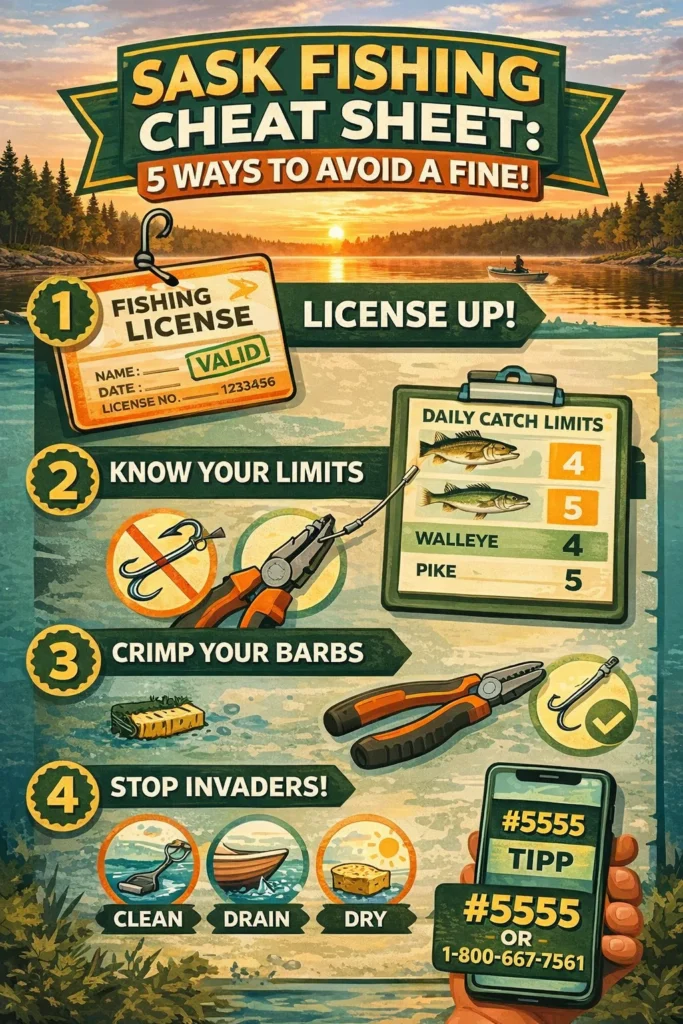
Provincial Limits at a Glance
Note: These are general limits. Specific lakes may have lower limits (CR1, CR2, etc.).
| Species | Southern/Central Limit | Northern Limit | Special Notes |
| Walleye/Sauger | 4 | 3 | Often has slot sizes (e.g., only one over 55cm). |
| Northern Pike | 5 | 5 | Only one may exceed 75cm. |
| Lake Trout | 3 | 3 | Only one may exceed 65cm. |
| Yellow Perch | 25 | 25 | No size limit usually. |
| Arctic Grayling | 2 | 2 | Catch-and-release only in many areas. |
| Stocked Trout | 5 | 5 | Combined limit for Brook, Brown, Rainbow, etc. |
For tips on limiting out on these species, check our dedicated guides on walleye fishing techniques and landing trophy northern pike.
The Practical Guide: How to Fish Legally & Avoid a Fine
Knowing the numbers is one thing; following the field protocols is another. Here are the three most common ways anglers accidentally break the law.
1. Barbless Hooks: The “CRIMP” Rule
Saskatchewan has many mandatory barbless waterbodies.
- The Rule: A hook from which all barbs have been removed or pinched flat against the shaft.
- The Fix: You don’t need to buy special hooks. Take a pair of needle-nose pliers and squeeze the barb down until it is completely smooth. Test it by passing it through a piece of fabric—if it snags coming out, it’s not legal.
2. Measuring Your Catch Correctly
With slot limits (e.g., “none between 45cm and 55cm”), guessing the length is a gamble.
- The Method: Lay the fish flat. Measure from the tip of the nose (mouth closed) to the tip of the tail with the lobes pinched together. Pinching the tail gives the maximum length, which is the standard officers use.
3. Transporting Your Catch
This is the “Guide’s Log” lesson. When transporting fish:
- They must be packaged individually.
- A patch of skin (at least 2.5cm / 1 inch) must be left on each fillet to identify the species.
- You must be able to count the number of fish readily.
- Never freeze them in a solid block of ice. If an officer cannot separate and count them without thawing the block, you will be fined.
For those of you fishing straight through the winter, these transport rules apply strictly to ice fishing regulations as well.
✅ The Pre-Trip Protocol
- Step 1: Buy your license online and screenshot it (or print it).
- Step 2: Download the 2026-27 Anglers Guide PDF to your phone so it works offline.
- Step 3: Check your pliers. Are they accessible for crimping barbs and unhooking fish quickly?
Protect Our Waters: Aquatic Invasive Species (AIS)
The threat of Zebra Mussels is real. The federal and provincial governments are not messing around with this. If you are hauling a boat, you are the first line of defense—and the biggest potential risk.
The Mandatory Protocol: Clean, Drain, Dry.
- Clean: Remove all visible plants, mud, and mussels from your boat, trailer, and gear.
- Drain: Pull the plug! Drain all on-board water (livewells, bilge, bait buckets) before leaving the boat launch. It is illegal to transport watercraft with the drain plug in place.
- Dry: Let your boat dry completely before launching in a new body of water.
Refer to Fisheries and Oceans Canada for more on federal AIS regulations.
Frequently Asked Questions About Saskatchewan Fishing Regulations
How much is a Saskatchewan fishing licence in 2026?
For the 2026-27 season, a Saskatchewan resident age 16 to 64 pays $42 annually. A Canadian resident from outside Saskatchewan pays $86 annually, and a non-resident from outside Canada pays $115 annually. Short-term 3-day and 1-day licences are also available.
What is the Saskatchewan Fisheries Habitat Certificate?
The Fisheries Habitat Certificate is a required add-on for many anglers age 16 to 64. Saskatchewan lists it at $21 for an annual licence or $5.25 for a short-term licence in 2026-27. Some official exemptions apply, including verified eligible Canadian Armed Forces veterans.
Do seniors need a fishing licence in Saskatchewan?
Saskatchewan residents age 65 and older do not need an angling licence, but they must carry proof of age and Saskatchewan residency. Out-of-province seniors need the correct licence for their residency category.
When does fishing season open in Saskatchewan in 2026?
The Southern Zone opens May 5, 2026, the Central Zone opens May 15, 2026, and the Northern Zone opens May 25, 2026. Some waters have special dates, so always check the official season page and Anglers Guide before fishing.
Are Saskatchewan free fishing weekends valid in national parks?
No. Saskatchewan’s free fishing weekends do not apply in national parks. They also do not allow someone to take fish out of Saskatchewan without buying the correct licence. For 2026, Saskatchewan lists free fishing dates as July 11-12, 2026 and February 12-14, 2027.
Conclusion: Fish Smart, Fish Safe
Saskatchewan offers some of the best freshwater fishing on the planet. The regulations aren’t there to spoil your fun; they ensure that your kids—and their kids—can experience the thrill of a 10lb Walleye hitting a jig.
Download the guide, buy your license, and respect the limits.
Official Sources:
- Government of Saskatchewan: Angling Licences
- 2026-27 Saskatchewan Anglers Guide PDF
- Saskatchewan Season Dates and Limits
- Saskatchewan Free Fishing Weekends and Anglers Extras
Keep your rod tip up, your license handy, and tight lines!
🎣 Premium Gear Suggestion
Garmin ECHOMAP Ultra 106sv Chartplotter/Fishfinder Combo
After ensuring you’re compliant with Saskatchewan’s fishing regulations, the single best investment you can make for a successful and safe trip on its vast and complex lakes is a premium sonar and navigation system. The Garmin ECHOMAP Ultra 106sv is an elite tool designed for serious anglers.
Its massive 10-inch, sunlight-readable touchscreen provides crystal-clear Ultra High-Definition scanning sonar, allowing you to see fish and structure with incredible detail.
More importantly for navigating unfamiliar waters, it comes preloaded with LakeVü g3 inland maps, ensuring you can precise locate productive spots, avoid hazards, and mark regulation-specific boundaries.
👉 Shop Garmin ECHOMAP Ultra 106sv on Amazon
Affiliate Disclaimer: We may earn a commission from purchases made through the links on this page without any addiitonal costs for you. Thank you for supporting our website ! Appreciated 👍