
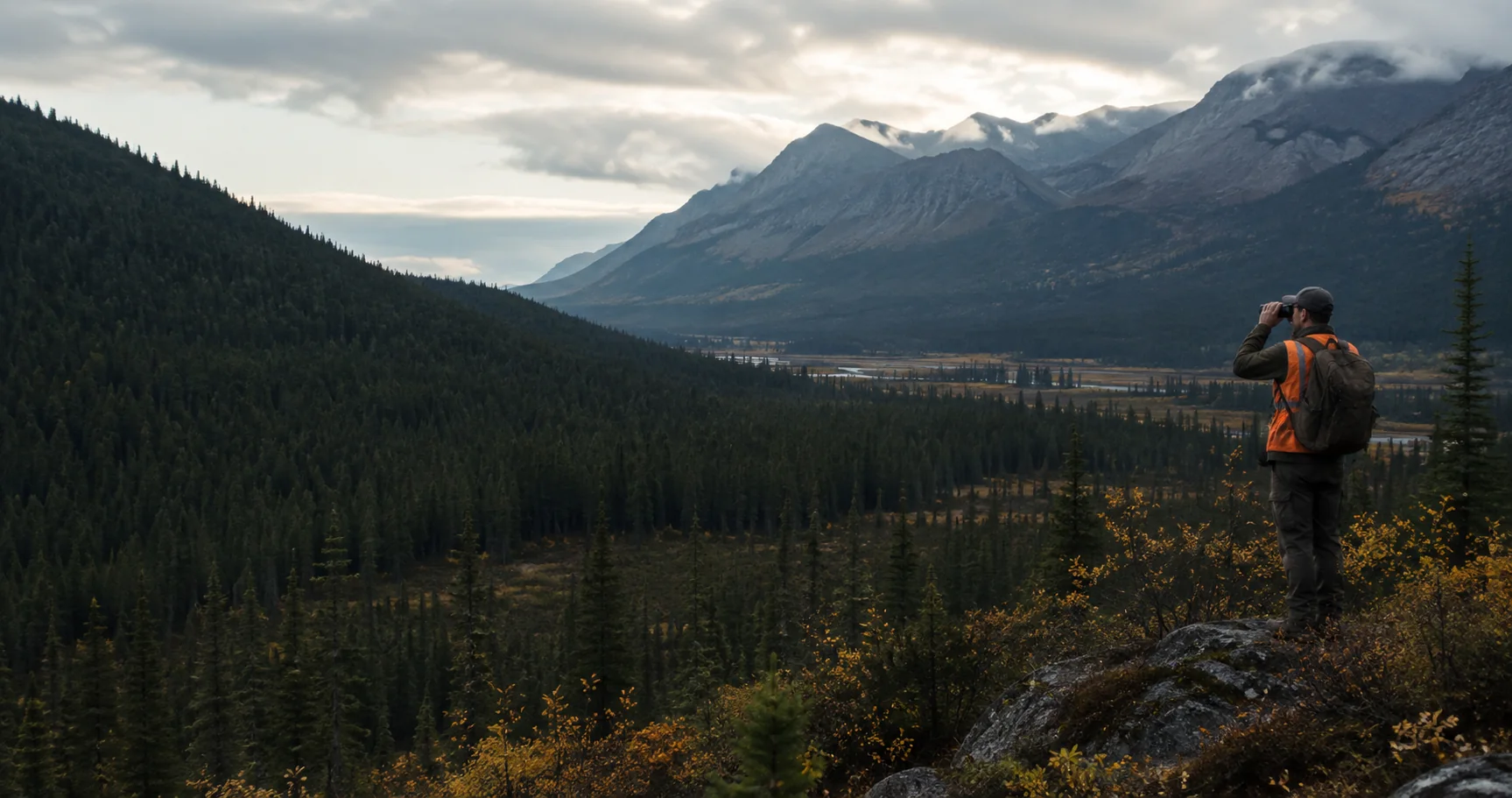
Hunting trip guide · 2026
Hunting in Canada
Plan the trip before you pack. Navigate licences, outfitters, access and safety with a clear starting point.
A better hunting trip
starts with a clear plan
Your province, residency, target species and access plan shape the rest of the trip. Start with those decisions, then work through licences, local requirements and operator arrangements.
This guide brings the planning steps together, with official sources, practical checks and deeper guides for the details.
Choose your starting point
Different trips. Different first checks.
Use your trip style to decide which part of the guide to read first.
| Your trip | Start with | Next step |
|---|---|---|
| First guided hunt | Operator role | Compare outfitter questions before a deposit. |
| Non-resident visit | Entry checks | Work through the visitor checklist for your itinerary. |
| Remote trip | Access plan | Review the trip planning risks before arranging travel. |
Start with rules, not gear
Canadian hunting is managed province by province and species by species. A good plan begins with the legal framework, then moves into safety, access, outfitter decisions, border paperwork, export checks, and equipment.
Licences and tags
Confirm hunter education, resident status, species tag, draws, non-resident rules, outfitter or Hunter Host requirements, and reporting before choosing dates.
Seasons and zones
Match the species, weapon/method season, wildlife management unit, legal shooting time, and local access rules.
Safety and ethics
Plan visibility, communication, weather, firearm handling, bear awareness, private land permission, and humane shot discipline.
Species and trip style
A whitetail hunt near farm country, a moose trip, a guided bear hunt, and an upland bird day need different planning systems.
Non-resident hunting is not a simple package purchase
Do not treat a lodge booking, gear list, or social-media hunt story as proof that your trip is legal. Non-residents may need a province-specific licence, species tag, draw authorization, legal outfitter or Hunter Host, firearm import documentation, export permits for some trophies, and carcass movement checks. Verify every step against official sources before paying deposits or crossing the border.
Verify hunting rules with official sources
Use this page as a planning hub, not as a substitute for provincial, territorial, federal, or outfitter-specific rules. Regulations can change by season, species, zone, and method.
Canadian Hunting Planning System
The visual map keeps the decision order simple. Build the hunt around legal permission, season timing, species rules, zones, safety, gear, access, and reporting.
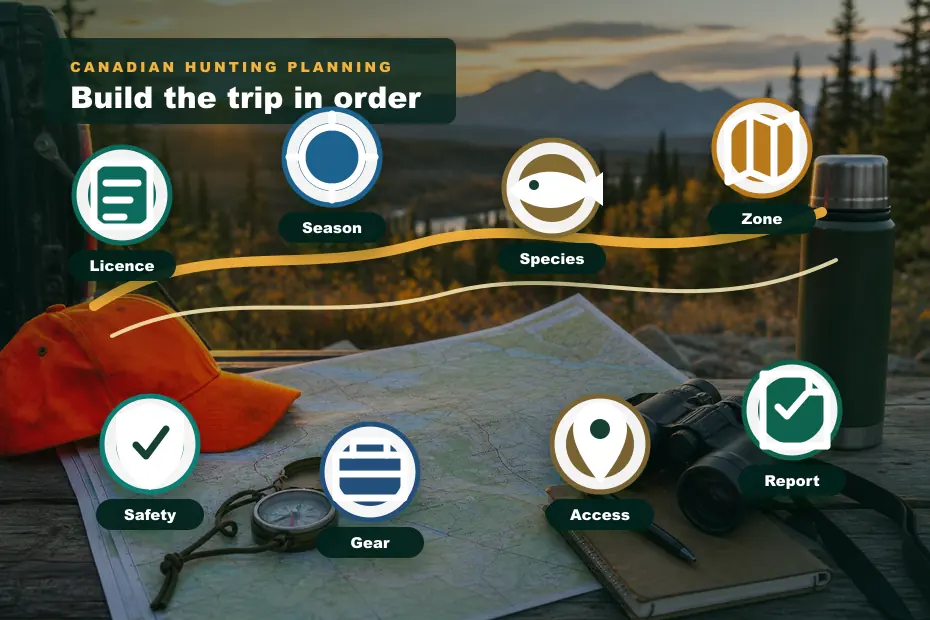
Confirm hunter education, resident status, tags, draws, permits, and non-resident/outfitter rules.
Check open dates, weapon/method seasons, legal shooting time, and special restrictions.
Know legal sex or age class, bag limits, possession limits, evidence rules, and reporting duties.
Match the hunt to the exact wildlife management unit, access rules, and private/Crown land details.
Plan visibility, communication, weather, navigation, first aid, bear awareness, and group accountability.
Pack only practical tools after the rules and trip style are clear. Avoid buying your way out of weak planning.
Confirm roads, gates, permission, extraction routes, parking, water crossings, and emergency exits.
Record tag use, harvest report deadlines, transport requirements, meat care, and post-trip lessons.
Non-resident Canada hunt check
Use this visual sequence before deposits, flights, firearm travel, taxidermy plans, or meat transport. The order matters: official rules first, outfitter confirmation second, shopping last.
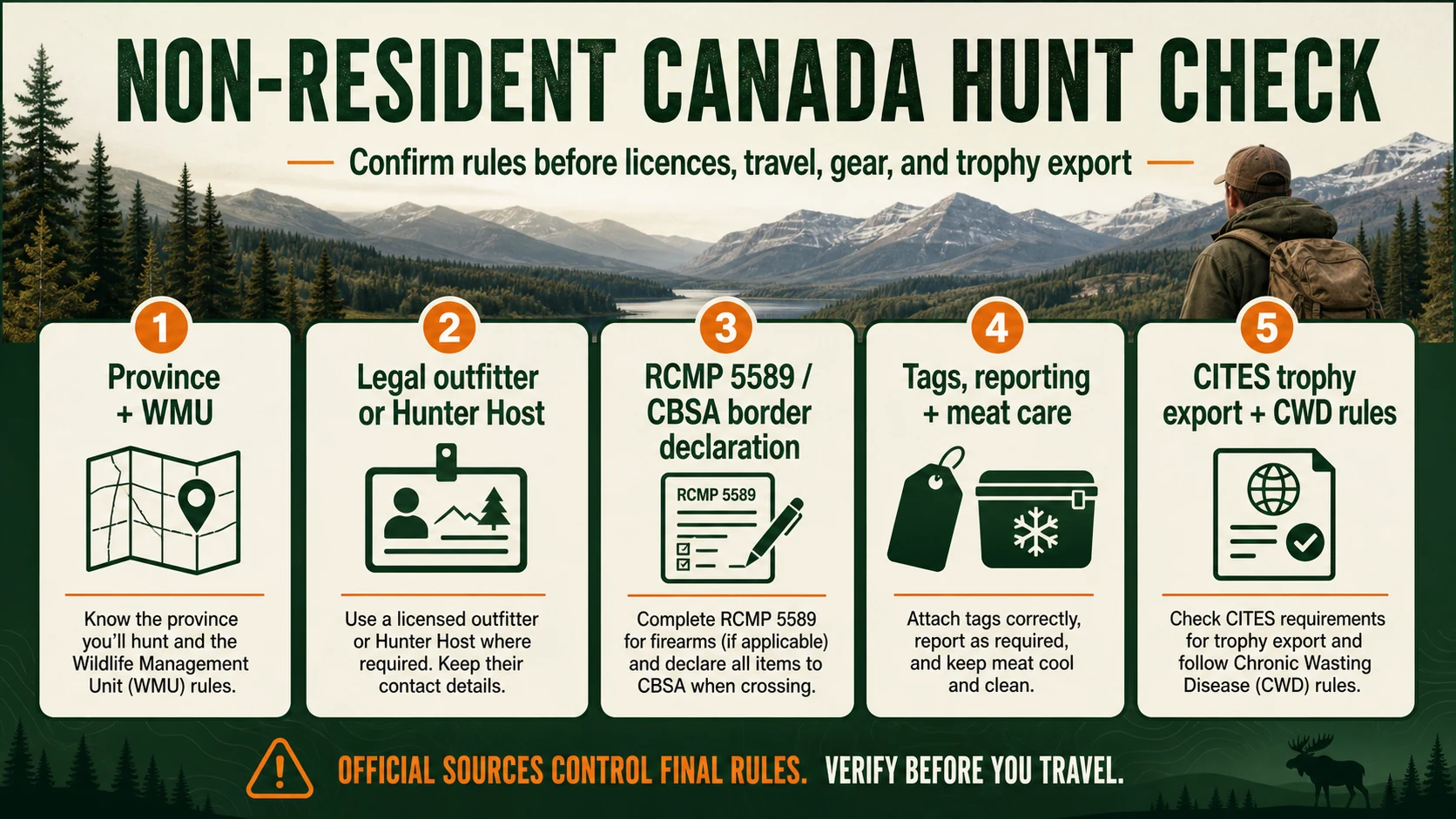
What non-resident hunters should verify before booking
Rules differ by province, territory, species, method, land access, and residency class. Treat this as a planning sequence, then confirm the final answer with the responsible official source or licensed operator.
| Decision | What to confirm | Why it matters |
|---|---|---|
| Province and WMU | Exact province or territory, Wildlife Management Unit, season dates, legal method, tag/draw status, reporting deadline. | A legal hunt in one zone can be closed, restricted, or draw-only in another. |
| Outfitter or Hunter Host | Whether a non-resident must use a licensed guide outfitter, licensed outfitter, or approved Hunter Host for the species and area. | Do not assume a general lodge, friend, or landowner can legally replace the required operator structure. |
| Firearm border paperwork | RCMP non-resident declaration process, CBSA declaration, allowed items, transport rules, and whether the firearm should be signed only when instructed by officials. | Border compliance is separate from the hunting licence. A valid tag does not automatically solve firearm import rules. |
| Meat, carcass and CWD | Province-specific rules for deboning, evidence of sex/species, carcass transport, freezer logistics, and chronic wasting disease restrictions for deer, elk, moose, or other cervids. | What you can transport after the hunt can be narrower than what you can harvest. |
| Trophy export | CITES or other export/import rules for species such as bear, wolf, certain birds, or taxidermy shipments, plus destination-country import rules. | A trophy can be legal to harvest but still require export paperwork before it leaves Canada. |
| Public and Crown land access | Road access, private permission, Indigenous lands, parks/protected areas, outfitter allocations, and local closures. | Public-land assumptions are a common source of failed plans for visitors. |
Match the hunt type to the real planning risk
The best Canadian hunt plan is built around the highest-risk constraint, not the most exciting species photo. Start with the constraint that can cancel the trip.
Whitetail, mule deer or elk
- Confirm WMU, draw/tag class, sex/age rules, and CWD transport limits.
- Plan evidence-of-sex/species and meat cooling before harvest.
- Use optics, navigation, and high-visibility layers before comfort gear.
Moose or remote big-game hunt
- Confirm outfitter allocation, aircraft/boat logistics, satellite communication, and extraction plan.
- Build a weather and cold-water safety plan before arrival.
- Ask how meat care, tag attachment, and reporting are handled.
Black bear, wolf or trophy-focused hunt
- Check CITES/export requirements and taxidermy shipping before booking.
- Confirm baiting, season, sex/age, reporting, and local operator rules.
- Do not rely on generic internet advice for legal method or export paperwork.
Waterfowl or migratory birds
- Check federal migratory game bird permits plus provincial access and firearm rules.
- Confirm possession limits, species identification, non-toxic shot, and transport details.
- Plan retrieval, cold-water safety, and weather exposure carefully.
Upland birds and small game
- Confirm licence class, open area, daily limits, firearm method, and blaze rules.
- Check dog, road, private-land, and park restrictions before walking in.
- Carry navigation, first aid, and a simple field notebook.
First guided Canada trip
- Prefer operators who explain licences, zones, tags, firearm travel, meat, export, and cancellation terms in writing.
- Ask for the exact legal role of the outfitter or Hunter Host.
- Be suspicious of vague packages that avoid official-rule details.
How to separate a serious outfitter from a risky cheap package
A strong outfitter does more than promise animals. They help you understand the legal structure, what is included, what you must do yourself, and where official rules control the plan.
High-risk bargain
Vague area, no written licence pathway, unclear guide status, no firearm-border guidance, no meat/export process, and pressure to pay before rule checks.
Professional operator
Names the province, WMU or area, required licences/tags, legal role, payment terms, cancellation terms, trophy/meat process, and safety plan.
Remote premium hunt
Adds aircraft or boat logistics, satellite communication, weather contingency, extraction planning, local allocation context, and clear post-harvest handling.
Good question to ask
“Which official pages should I read before I pay the deposit, and what legal steps remain my responsibility?”
Download the hunting trip planner
Printable 3-page PDF for licence checks, zone notes, safety planning, gear, reporting, and trip review.
Choose the right hunting guide
Use these CanadaFever guides to move from the big-picture pillar into a specific licence, species, safety, gear, or outfitter decision.
Licences and regulations
Start here when legality, tags, reporting, or province-specific details drive the trip.
Safety and wildlife awareness
Use these before remote trips, bear country, or any hunt that overlaps with public outdoor areas.
Gear planning
Build gear around weather, access, visibility, navigation, and the species instead of random upgrades.
Outfitters and lodges
Good for non-residents, remote access, species-specific hunts, and trips where local knowledge matters.
Species starting points
Species rules, timing, habitat, and legal details change the plan more than most beginners expect.
Trip planning bridge
Hunting, wildlife viewing, and scouting overlap in safety, ethics, access, and seasonal decision-making.
Direct Amazon product picks for safer trip planning
These are support tools for navigation, optics, visibility, and documentation. They are not weapon recommendations and they do not replace official hunting, firearm, border, or export rules.

Garmin inReach Mini 2 satellite communicator
A premium safety tool for remote hunts where cell coverage, weather, or extraction timing can change quickly.
- Two-way satellite messaging and SOS capability with an active subscription.
- Useful for outfitter pickup, weather delays, and emergency coordination.
- Small enough to keep on the hunter, not buried in a truck or duffel.

Vortex Diamondback HD binoculars
Reliable mid-premium optics for scouting, legal identification, and reducing unnecessary movement around wildlife.
- Good balance of field durability, optical clarity, warranty support, and price.
- Helpful for glassing cutlines, farm edges, alpine basins, and timber openings.
- Pair with local species rules before making any harvest decision.

Petzl ACTIK CORE rechargeable headlamp
A higher-quality headlamp for early starts, late exits, map checks, camp tasks, and emergency organization.
- Hands-free light is safer than carrying a flashlight while moving.
- Rechargeable setup works well when paired with backup power or spare batteries.
- Good for checking tags, gear, and route notes in low light.

SITKA Gear Mountain Optics Harness
A premium binocular harness for keeping optics protected, accessible, and stable during long glassing or stalking days.
- Protects binoculars from rain, brush, dust, and bouncing straps.
- Encourages frequent glassing instead of risky close approaches.
- Works best after you have confirmed the legal species, area, and season.
CanadaFever participates in the Amazon Associates Program. We may earn a small commission from qualifying purchases at no extra cost to you. Product images are loaded from Amazon media URLs; prices and availability can change.
Guided outdoor experiences around a Canada trip
Not every Canada outdoor trip is only about hunting. These sponsored experience links are for wildlife viewing, parks, nature tours, and family-friendly activities that can fit around a broader travel plan.
Add a guided wildlife-viewing day
Good for mixed outdoor trips where not everyone hunts, or when the safest way to observe animals is with a local guide and proper distance.
Plan park and wilderness experiences around the trip
Useful before or after hunting travel days, especially for families, non-hunting partners, and visitors who want scenery without adding legal complexity.
Compare low-pressure guided outdoor activities
Use this for hiking, scenic drives, paddling, nature walks, or day tours near the same region as your broader Canada outdoor itinerary.
Keep the wider travel group engaged
Helpful when a Canada trip includes kids, partners, or friends who want wildlife, scenery, and safe guided experiences rather than hunting-specific plans.
Affiliate disclosure: CanadaFever may earn a commission if you book through sponsored experience links, at no extra cost to you. Use these after checking licences, seasons, safety, and official rules.
Hunting in Canada FAQ
Tap a question for the short answer. Always verify final rules with the official source for your province, species, and season.
Do I need a hunting licence in Canada?
+
Yes. Hunting rules are set mainly by provinces and territories, and most hunts require a valid hunting licence plus species tags, permits, or draw authorization. Non-residents may face guide or outfitter requirements.
Are hunting seasons the same across Canada?
+
No. Seasons vary by province, wildlife management unit, species, age or sex class, and hunting method. A season that is open in one region may be closed in another.
Can non-residents hunt in Canada?
+
Often yes, but requirements vary. Non-residents may need special licences, tags, export paperwork, firearm documentation, and in some cases a licensed guide outfitter, approved Hunter Host, or province-specific operator structure.
Can a visitor bring a hunting firearm into Canada?
+
Possibly, but the hunting licence and the firearm border process are separate. Check the RCMP non-resident firearm declaration process and CBSA firearm import rules before travel, and follow officer instructions at the border.
Do hunting trophies need export paperwork?
+
Some species, parts, or destinations may require CITES or other export/import paperwork. Confirm this before the hunt if you plan to take home a bear, wolf, bird, taxidermy item, hide, skull, or other wildlife part.
Can non-residents hunt Crown land without a guide?
+
Do not assume that public or Crown land access means unguided non-resident hunting is legal. Province, species, residency class, outfitter allocations, Hunter Host rules, protected areas, and private access can all change the answer.
Why do CWD rules matter after the hunt?
+
Chronic wasting disease rules can affect how deer, elk, moose, or other cervid carcasses and parts move between areas or across borders. Check the province where the animal is harvested and your destination rules before transport.
What should a beginner check first?
+
Start with hunter education, province, species, season, zone, tag/draw requirements, legal shooting time, land access, and safety planning. Gear comes after those decisions.
Is blaze orange required in Canada?
+
It depends on the province, season, and hunt type. Many firearm seasons require high-visibility clothing, but exact colour and coverage rules differ. Check the official regulation summary before every trip.
Does CanadaFever replace official hunting regulations?
+
No. CanadaFever is a planning and research hub. Use it to understand the decision process, then verify dates, tags, zones, firearm rules, reporting, and species requirements with official sources.
How CanadaFever treats hunting content
Hunting content sits close to law, safety, conservation, and public trust. CanadaFever builds these guides around official sources, clear planning steps, ethical field behaviour, and practical trip decisions. Affiliate links may support the site, but they do not determine legal advice, source selection, or the order of planning priorities.
For broader site standards, read our Editorial Policy, How We Research, and Affiliate Disclosure.