

Compare four Alberta hunting operators, then confirm the actual camp, legal hunt, daily access and complete written quote before booking.
- Compare actual camps and operator offers
- Confirm Alberta licence and guide arrangements
- Get transfers and all extras in writing
Bottom line Choose the legal hunt and daily access before comparing lodge amenities.
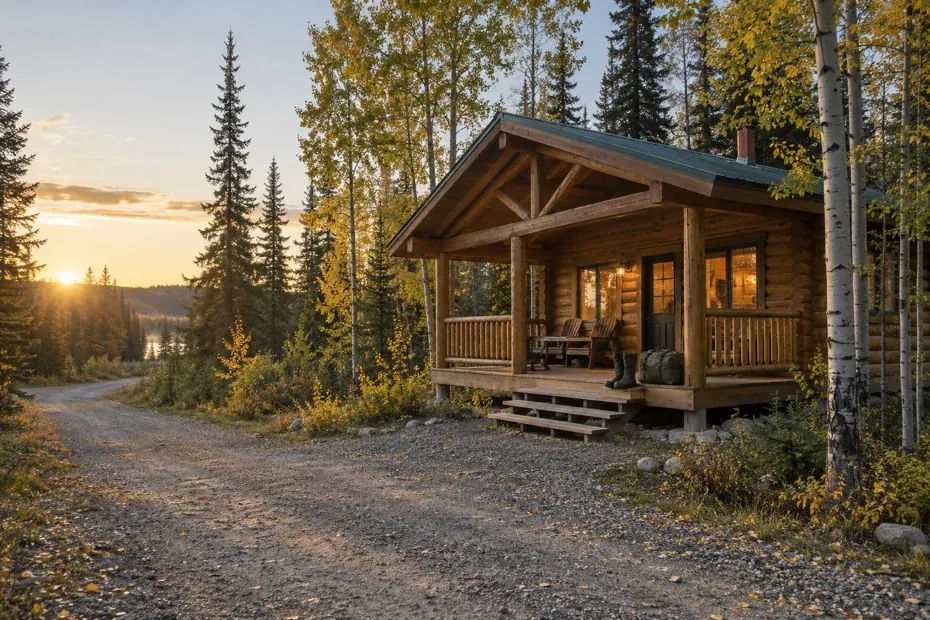
Alberta hunting lodges range from modern buildings near Slave Lake to small outfitter camps and hotel-based waterfowl trips in the Peace River region. Start with the species and legal hunting arrangement. Then compare your sleeping accommodation and the daily journey to the hunt.
A lodge photograph rarely tells you how the hunting day works. Your booking needs a named camp, confirmed hunting dates, a licence route for your residency category and a written account of transfers, meals and extra charges. A modern lodge can suit you well, but its location and daily schedule matter as much as its amenities.
Start with these booking checks
- Ask for the species, Wildlife Management Unit and licence arrangement before discussing the room.
- Confirm every overnight location and the daily vehicle, walking or stand access.
- Compare complete quotes in the same currency, including transfers and processing.
See the Alberta lodge booking process
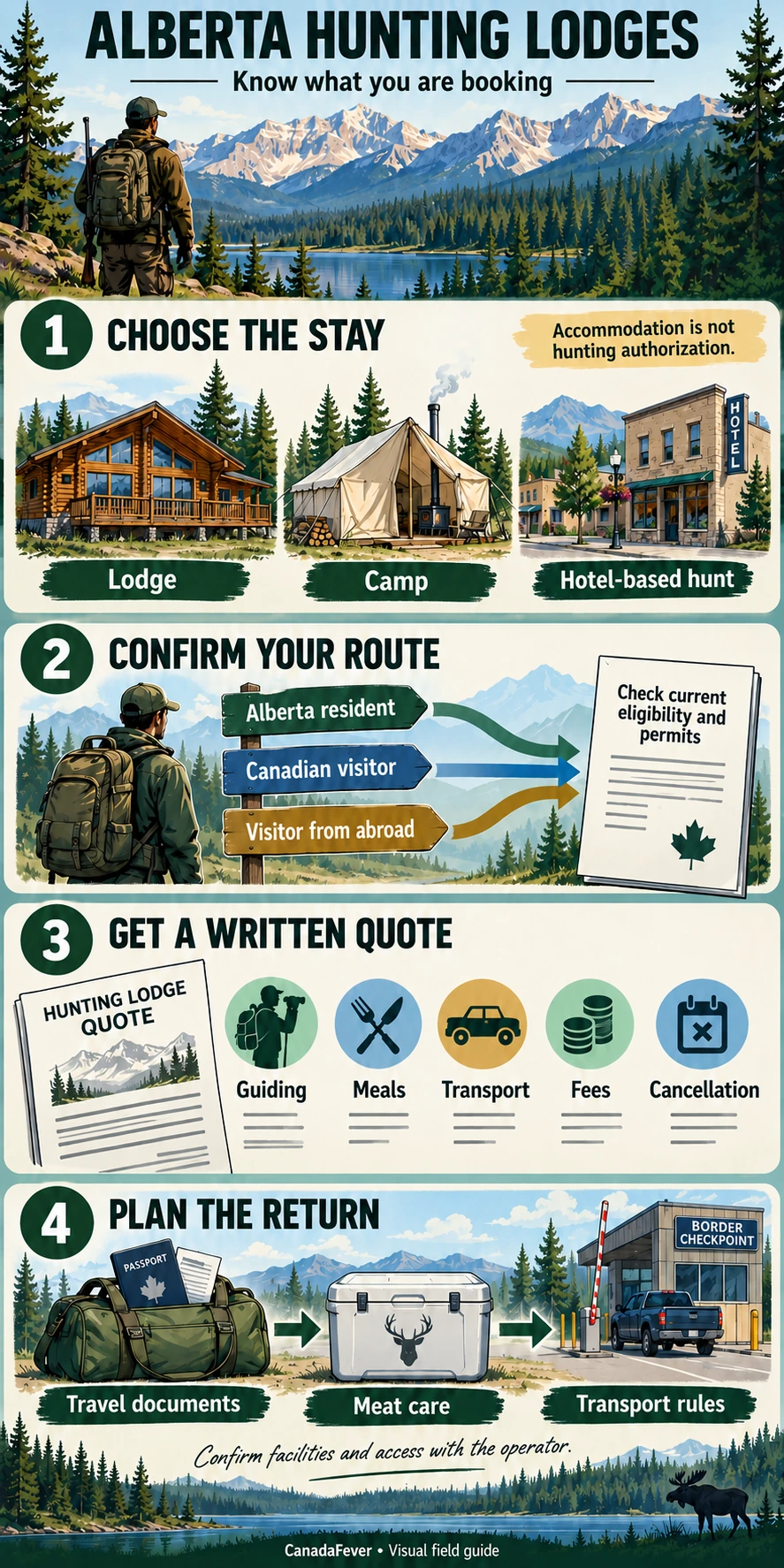
Alberta hunting lodges: four different booking options
These operators publish Alberta hunting programs and accommodation information. Contact them with a specific species and week in mind. We have not inspected these camps or evaluated the guiding in person. Availability, allocations and the conditions of your proposed package require direct confirmation.
| Operator and setting | Published offer | First question |
|---|---|---|
| Northern Wilderness Outfitters, Slave Lake | Modern lodge; deer, moose, elk and bear programs | Does this hunt return to the main lodge every night? |
| Alberta Hunting Adventures | Deer, bear and predator programs; tent or full-amenity lodging | Which camp serves my exact species and week? |
| Dallas Taylor Outfitting, Peace River Valley | Deer, elk, moose and bear; lodging and meals advertised | What does game handling cover, and what does the transfer cost? |
| Peace River Outfitters, Peace River | Guided waterfowl trips using hotel accommodation | Which hotel nights, meals and field transfers are included? |
Northern Wilderness Outfitters: a modern Slave Lake lodge
Northern Wilderness Outfitters describes a Slave Lake operation with semi-private rooms, communal spaces, fireplaces and satellite television. Its hunting list includes black bear, moose, white-tailed deer, mule deer, elk and wolves. The site advertises meals, guiding, lodging, trophy care and transportation, including Edmonton Airport transfers, in hunt prices.
Have the current quote confirm those inclusions for your chosen hunt. Confirm whether you share a room or bathroom, and whether you stay at the main lodge during the hunt. Its public calendar contains undated hunting descriptions; have the operator match your proposed week to the current official Wildlife Management Unit season before booking.
Alberta Hunting Adventures: pin down the camp before comparing comfort
Alberta Hunting Adventures advertises white-tailed deer, mule deer, black bear, wolf and coyote hunts. Accommodation can range from tent camps to lodging with full amenities. Its booking information identifies Edmonton International Airport, YEG, for guests arriving by air.
Ask for photographs and facilities at the camp assigned to your specific hunt. Packing for a heated tent will differ from packing for a room in a house. Put the transfers and actual hunting-day count in the contract. Use Alberta’s current licensing guidance for WiN requirements and fees; the operator’s booking page still carries older WiN information.
Dallas Taylor Outfitting: Peace River Valley with itemized extras
Dallas Taylor Outfitting identifies its operation with the Peace River Valley. Its site advertises mule deer, white-tailed deer, elk, moose and bear programs, and states that hunts include lodging, guiding, food and game handling. Grande Prairie Airport pickup and a non-hunter daily rate appear as additional costs.
Request a dated quote with the currency and those extras stated separately. Ask whether game handling means field care only or also cutting, freezing and delivery to a processor. Get the actual sleeping arrangements, daily access method and current licensed hunt details. Some dates on the page are undated or inconsistent; do not use that calendar to book flights.
Peace River Outfitters: a hotel base for a waterfowl trip
Peace River Outfitters describes accommodation at Chateau Nova Peace River, a hotel near Highway 2 with a restaurant and lounge. This is a useful alternative for a traveller seeking a hotel room while joining a guided waterfowl program.
Confirm the hotel’s availability for your proposed hunt, the room type, meal arrangements around early departures and the daily field transfer.
Find out whether a non-hunting companion can leave the hotel and make their own plans. Waterfowl licensing and federal migratory game bird requirements belong to a different planning route from big game; use our Canada waterfowl hunting guide when that is your intended trip.
For a trip centred on black bear, see our Alberta bear outfitters guide. If you are still choosing a province, our Canadian big-game lodge comparison covers a wider shortlist. Here, keep the enquiry centred on Alberta accommodation, local transfers and the hunt that the operator can actually offer you.
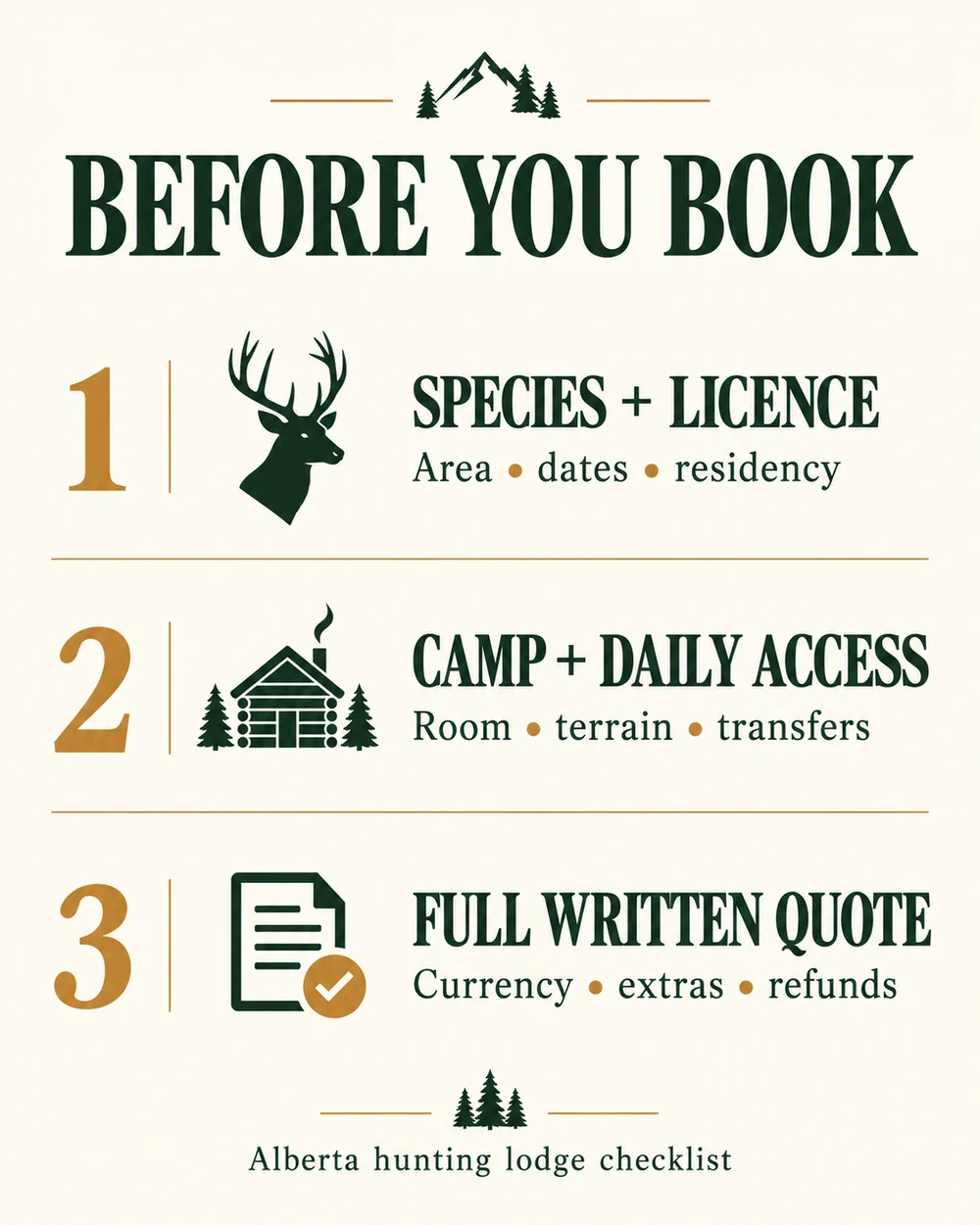
Confirm your Alberta hunting eligibility for 2026
Alberta’s 2026 licensing and guiding requirements distinguish residents, non-resident Canadians and non-resident aliens. Non-resident big-game, wolf and coyote hunters require a designated guide through an outfitter or an eligible Hunter Host arrangement. Hunter Hosts cannot accept direct or indirect payment for hosting. A paid lodge booking follows a different arrangement.
Hunters need a Wildlife Identification Number, commonly called a WiN, a wildlife certificate and the applicable licence and tags. Tell the outfitter where you live and which species you intend to hunt. Request the exact licence name and the Wildlife Management Unit, or WMU, associated with the proposed hunt.
Alberta’s allocation system provides hunting opportunities through professional outfitters. Have the operator confirm the allocation or other applicable authorization for your hunt. A licence opportunity says nothing about whether an animal will be encountered or harvested.
Read the licence description as carefully as the invoice. Ask what “tags included” covers: the fee, help with paperwork or the authorization for that species and area. Ask who obtains the licence, when it will be issued and what you must carry in the field.
Confirm each species before adding a second hunt to the booking. The second species needs its own legal dates, licence and hunting plan. Ask how the guide will divide the available days and whether the extra hunt changes the accommodation or transport. A week advertised for one animal may leave little time for another.
For a travelling group, check each person’s route individually. Different residency categories can change the answer even when everyone shares one room and one flight.
Send the operator a separate summary for every hunter. Resolve an unclear authorization before sending a deposit; an arrival-night discussion leaves little time to change the trip. For a trip crossing provincial or national borders, our Canada hunting regulations guide provides the broader sequence of licence and document checks. For a trip crossing provincial or national borders, our Canada hunting regulations guide provides the broader sequence of licence and document checks.
Match the species to the hunting day
The daily schedule can narrow your choice of accommodation. Have the outfitter walk you through a hunting day, from breakfast to the return journey. Include transport time, time outdoors, meal breaks and how you contact the guide if plans change.
A deer hunt may involve a long stationary session, while another package may involve frequent travel and walking. Get the physical demands of the proposed method explained. Someone comfortable with a steady walk can still find an all-day cold sit difficult; someone happy in a blind may dislike climbing into an elevated stand.
Describe your physical limits in useful terms
Describe your walking limit on uneven ground. Mention difficulty with steps while carrying a pack or with balance in low light. Explain any knee or hip limitation before asking about a ground blind or vehicle-assisted access. Avoid the vague question “Is this an easy hunt?”
If the route uses an ATV, boat or horse, discuss entering, leaving and riding it. Ask about the time spent travelling and whether the equipment suits your needs. Agree on changes to the itinerary before committing; a guide cannot promise an alternative route that the terrain or hunt area does not allow.
Ask about the proposed hunting method
- What transport gets us from camp to the hunting area, and how long does it take each way?
- What walking, climbing or sustained sitting is expected on an ordinary day?
- How are breaks, food and warm-up opportunities handled while we are away?
- How does the guide find and contact each hunter during a shared arrangement?
- What happens to the remaining schedule after a wounded animal needs tracking?
Confirm how many hunters share the guide and how that changes your day. For a shared service, request the plan for movements and contact. Get any dedicated-guide promise written into the quote and ask what happens if the assigned guide becomes unavailable.
Explain what you hope to learn. A first guided hunt may need more time for orientation than a return trip by a guest who already knows the camp. Agree on how instructions, species identification and decisions in the field will be handled. Those learning goals help the outfitter choose a suitable week. They do not promise a harvest.
Compare the actual room and camp facilities
Request photographs of your assigned room, bathroom and common area. A gallery may include several camps. Establish whether the accommodation is a lodge, cabin, wall tent or hotel. Ask where you sleep on the first night, hunting nights and final night.
A small cabin can work well when it has reliable heat, a sensible drying area and a workable washroom arrangement. A larger lodge can still be inconvenient if you share facilities with a full group leaving at the same time. Explain the facilities you need and confirm they are available during your week.
Room checks for Alberta hunting lodges
- Is the bedroom private, shared with my companion or assigned with another guest?
- Is the bathroom private or communal, and is hot water available around departure times?
- Where can wet boots and outer layers dry without using the sleeping room?
- Are bedding, towels, laundry access and charging outlets supplied?
- What dietary needs can the kitchen accommodate, and who needs advance notice?
Ask whether heat runs overnight and how a power interruption is handled. If you use a medical device, discuss its exact electricity needs and transport requirements before booking. Have the operator confirm those needs individually; “full amenities” leaves them unanswered. Contact your clinician about medical suitability when the trip requires it.
Meal schedules affect comfort during hunting days. Ask whether breakfast is served before departure, whether lunch is packed and whether dinner is available after a late return. A hotel restaurant may open after the hunting group has left. Confirm the early-meal arrangements with the operator.
For non-hunting companions, look beyond a daily accommodation rate. Ask whether they can leave camp independently, whether a vehicle is needed and whether any advertised activity operates during your stay. A lodge may be comfortable yet leave a companion with a very quiet week while hunters are away.
Agree on how the camp handles medication that requires special storage, food allergies and mobility access. Give the operator the details needed to plan that service. When a requirement cannot be met, choose different accommodation or a different trip; do not rely on improvising after a remote transfer.
Build a full trip budget from written quotes
Send the same species, approximate dates, group size and room requirements to two or three operators. Compare the number of hunting days separately from the number of nights. Arrival afternoon and departure morning can be counted in a package without giving you two full additional days in the field.
Write the currency beside each amount. An Alberta business may quote a package in US dollars while local extras are billed in Canadian dollars. Ask whether taxes are included and whether payment method, instalment dates or exchange conversion can change what you pay.
| Cost area | Have the quote state | Common uncertainty |
|---|---|---|
| Hunt and accommodation | Species, dates, hunting days, nights and guide arrangement | Arrival nights or dedicated guiding assumed |
| Licensing | Licence route, fees and who issues documents | “Tags included” left undefined |
| Transport | Airport, pickup time, camp transfer and delay charges | Transfer charged separately |
| Game care | Retrieval, field care, processing, freezing and freight | Handling mistaken for complete processing |
| Cancellation | Deposit terms, closure response, refunds or credits | Travel expenses outside the remedy |
Ask who supplies daily transport and whether fuel or an additional driver is charged. If you drive your own vehicle, establish where it will be parked and whether the last access road suits it. The cheapest airport transfer can be a poor fit if its pickup window requires another hotel night.
Have “game handling” defined in the quote. Separate retrieval and field care from cutting, freezing, taxidermy preparation and freight. Ask which tasks the outfitter performs and which go to another business. Processing may finish after you have flown home, requiring a separate collection or shipping arrangement.
Set aside room in the budget for the return journey. Ask the carrier about checked baggage and cooled meat, and the processor about package dimensions and collection times. Do this before deciding how much can travel with you. A prepaid hunt package does not settle the charges for extra luggage.
Compare cancellation clauses by cause. A cancellation you choose, a closure that prevents hunting and a weather delay that prevents access can trigger different terms. Ask whether the offered remedy is a refund, future credit or replacement dates, and whether your flights and hotel expenses remain outside it.
Check that your travel insurance covers the activity, route and location. Tell the insurer the trip involves hunting and any remote transfer, and ask about evacuation and disruption cover. Keep its answer with your contract. Confirm both the outfitter’s emergency plan and the insurer’s payment terms.
Verify payment instructions through the operator’s established contact details. If an email changes the account or business name, make a phone call before sending funds. Keep a copy of the dated quote, agreed amendments and payment receipts in a place you can access during the journey.
Plan Edmonton or Grande Prairie arrivals around the camp
Build your flight itinerary around the operator’s confirmed airport and pickup point. Edmonton International Airport and Grande Prairie appear in the example programs, but neither should be assumed for every Alberta lodge. Ask where the transfer begins, how long it takes and when you need to arrive.
Discuss a missed connection or delayed luggage before choosing your flight. Ask whether a late arrival moves your pickup, requires an overnight hotel or reduces hunting time. Establish who you call outside office hours. Keep a separate plan for essential medication and documents if checked bags do not arrive with you.
Get the baggage allowance for every leg if the trip adds a charter or smaller transfer vehicle. Weigh the fully packed equipment and clothing. Ask where oversized cases fit and whether extra freight needs advance booking. A shared road transfer can also run out of luggage space.
Confirm firearm classification, border requirements and every carrier’s transport policy before buying flights. Ask the outfitter about secure storage at the assigned camp. Have the relevant papers available at the border and retain copies separately. Check transport and possession requirements separately from a rental offer or hunting licence.
Ask how the camp communicates if mobile service is absent or unreliable. Establish the routine check-in procedure, the emergency contact and who makes an evacuation decision.
Give someone at home your dates and the operator’s contact details. Agree that an ordinary late return should be reported through that channel. Review our hunting safety planning guide when preparing your own contact and weather plan. Review our hunting safety planning guide when preparing your own contact and weather plan.
Pack for the hunting schedule and available drying space
Use the outfitter’s packing list for your species and week. A spring camp, an autumn walking hunt and a late-season stationary hunt need different clothing decisions. Ask what is supplied before buying a sleeping bag, camp bedding or specialist accessories that may duplicate lodge equipment.
Try your boots with the intended socks and check that your feet can move comfortably. Bring layers that can be changed during travel and outdoor sessions, and a plan for wet clothing at the end of the day. Ask whether the camp can dry several hunters’ gear overnight.
Keep the first packing pass practical
- Pack daily medication, travel documents and licence information where you can reach them during transfers.
- Choose clothing for the expected method, including long stationary periods if those are planned.
- Bring spare socks and a way to separate wet gear from clean clothing.
- Ask what charging, washing and drying facilities exist at the assigned camp.
- Weigh the final bag against the confirmed transfer allowance and leave space for the journey home.
For observation, comfortable binoculars can help you follow a guide’s explanation without taking turns with one pair. Test the view with your glasses and choose a harness or strap that works with your outer layers. Choose a magnification you can hold steadily.
A headlamp leaves your hands free when you sort gear before dawn or move around camp after dark. Test its controls wearing the gloves you plan to bring, and pack a separate backup light. Ask whether the camp has charging facilities before depending on a rechargeable model for every night.
Two optional field-kit additions
As an Amazon Associate, CanadaFever earns from qualifying purchases. Check the selected variant and delivery destination on Amazon; price and availability can change.

Vortex Crossfire HD 10×42 binoculars
Carry your own binoculars to follow the guide’s explanation across a field or clearing.
- This exact Amazon listing is the green 10×42 variant.
- Test eye comfort with glasses and your ability to hold 10x magnification steadily.
- Protect the lenses and check how the strap fits over your hunting layers.

Black Diamond Spot 400, Azul
Keep your hands free while sorting gear before dawn or returning to camp after dark.
- The listing selects the 400-lumen AAA-powered Azul model. Spot 400-R is a different version.
- It uses three AAA batteries; carry spares and practise the controls before departure.
- Try the headband over your hat, and carry a separate backup light for the trip.
Arrange meat and trophy travel before the hunt
Discuss the outcome you want to bring home, including meat, a hide or antlers, before choosing the package. Identify the processor and ask when work will be finished. Obtain separate contact details so you can arrange collection without relying on the guide to answer every shipping question.
Consult Alberta’s wildlife export guidance for the exact species and parts you will move. International travel can add CITES and destination-country requirements. Tell the processor where the shipment is going and confirm the documents with the relevant authorities before departure.
Check the cooling and storage plan at camp, the processor’s packaging and the time between pickup and arrival home. Ask who handles the meat when the hunter departs before processing is finished. Record the responsible businesses and the collection or freight arrangements.
If you will take no game home, discuss that choice with the operator before hunting. Ask what lawful arrangement is available for any harvested meat and how associated costs are handled. Do not leave an unresolved transport decision until a flight is due to depart.
Before the deposit: finish the enquiry in three steps
Give the operator enough detail to quote a specific package. Include your species, residency, preferred dates, number of hunters and companions, accommodation requirements and physical limits. Ask for alternatives if your dates or room needs cannot be met.
Confirm the hunt
Get the species, WMU, dates and licence route in writing. Ask how the proposed guide arrangement works and which camp serves that hunt. Resolve differences between the operator’s calendar and the current official regulations.
Confirm the camp and journey
Identify each overnight location, room sharing, bathroom facilities and daily access. Add the airport, pickup window, luggage allowance and response to a delayed arrival. Have any mobility or dietary arrangement recorded alongside these details.
Review the complete contract
Read the dated quote, currency, inclusions, extras and cancellation terms together. Confirm game care and the journey home, then verify payment details through an established channel. Keep the agreed version and receipts for the trip.
Ask for recent references from guests who used the same camp and hunted the same species. Include someone whose trip involved poor weather or no harvest. Ask how communication, meals and transfers worked when the hunt became difficult. An animal photograph leaves those questions unanswered.
When a success percentage is offered, ask which years and how many guests it covers. Establish whether it means sightings, shot opportunities or recovered animals. Experienced staff and a workable plan cannot guarantee a particular animal or a harvest.
If two quotes remain close, compare the ordinary hunting day and the response to a difficult one. Choose the package whose daily access and accommodation fit you. A clear transfer plan and written answers about the room make that decision easier. Use our hunting in Canada planning hub to review the wider travel and licensing sequence before finalizing the trip.
Alberta hunting lodge booking questions
Do Alberta hunting lodges include licences?
Some packages include fees or licence arrangements, while others charge separately. Ask for the exact species licence, residency category and authorization route in writing. Have the operator explain what “tags included” covers and how the licence will be issued.
Can a non-resident book accommodation and hunt alone?
For Alberta big game, wolf and coyote, non-residents need the designated-guide or eligible Hunter Host route described in the current regulations. Simply booking a lodge does not meet that requirement. Game bird planning follows different rules, so identify the intended species before arranging the trip.
Is a modern lodge always easier for someone with limited mobility?
Comfortable rooms do not establish easy field access. Ask about walking, climbing, vehicle entry, stand use and the time spent outdoors. Confirm the actual camp and any agreed adaptation in writing so the daily hunt matches your abilities.
Which airport should I use for an Alberta hunting trip?
Use the airport and pickup schedule confirmed by your outfitter. Edmonton and Grande Prairie appear in the example operations, but a different program may use another meeting point. Ask whether transfers, delays and arrival-night accommodation are included before buying flights.
How should I compare two lodge package prices?
Compare the same species, dates and group size, with all amounts expressed in the same currency. Compare hunting days, nights, guide arrangements, licence fees, transfers, game care and cancellation terms. Request a written answer for every missing cost item.
Sources and booking references
Official rules checked 3 October 2026. Operator information describes advertised services; verify the dated contract and proposed hunt directly.