
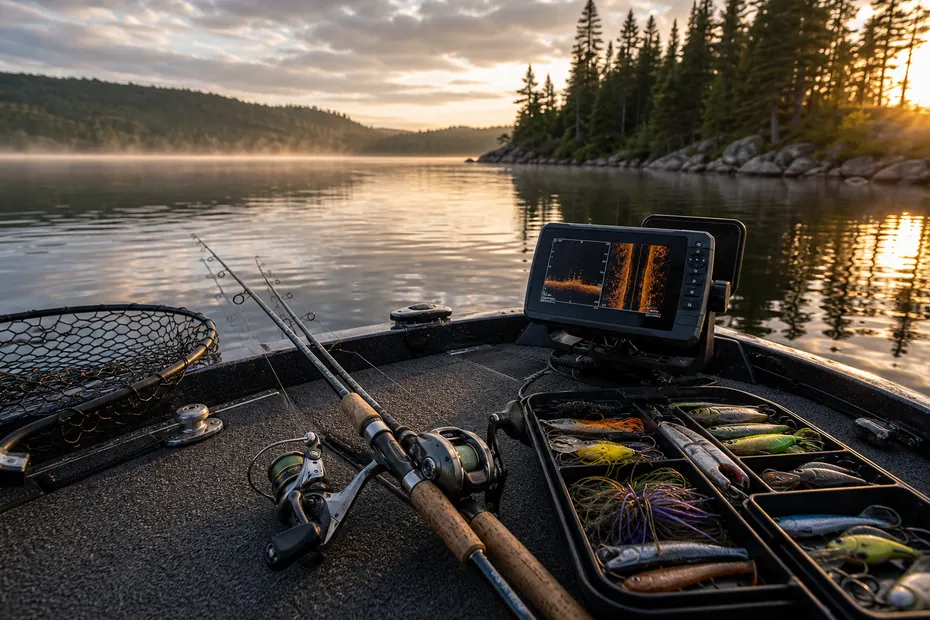
Canada outdoor field guide · Techniques
Read the water. Refine your technique.
Build repeatable fishing patterns through water reading, presentation control and thoughtful adjustments.
Watch the comparison →Build a pattern you can explain.
Move beyond random lure changes with a field system for reading water, controlling depth, adjusting presentation, using electronics and logging what works.
- 1
Read water, structure, season and fish position before changing lures.
- 2
Adjust one variable at a time: depth, speed, angle, profile or colour.
- 3
Use electronics and notes to confirm patterns, not replace judgement.
Bottom lineAdvanced fishing is deliberate pattern work, not making every cast complicated.
Tools for deliberate fishing
Support the technique. Simplify the kit.
Compare tools for structure, tackle control, line choice and keeping a useful trip record.
CanadaFever may earn a small commission from qualifying purchases at no extra cost to you. Amazon links use amazon.com with OneLink enabled for supported regions.

Garmin STRIKER Vivid 4cv Fishfinder
View on Amazon
KastKing HyperSeal Waterproof Tackle Box
View on Amazon
AURAME Fishing Pliers
View on AmazonBerkley Trilene Big Game Monofilament
View on AmazonRite in the Rain Waterproof Notebook
View on AmazonWatch · 12 seconds · No audio
One change. A clearer comparison.
Compare two retrieves with the same lure and depth. Watch the pause change, then observe and record what happens.
Illustrative testing method, not a catch prediction. Change one variable at a time; use full screen for a closer view.
Quick start
What advanced fishing really means
Advanced fishing techniques are not about making every cast complicated. They are about making every decision more deliberate. The best anglers do not change lures because they are bored. They change one variable because the water, fish, structure, or weather told them to.
- Read water and structure before opening the tackle box.
- Choose depth, speed, angle, and profile before colour.
- Use electronics to confirm a pattern, not replace judgement.
- Keep fish care, safety, and licence rules part of the system.
- Record what worked so the next trip starts smarter.
Field rule
Pattern first. Tackle second.
If a lure works but you cannot explain why, you caught a fish. If you can repeat the location, timing, depth, speed, and condition, you found a pattern. That is the difference between random success and advanced angling.
Sources and official links
Where to verify rules, species, and safety before using advanced techniques
Advanced tactics can affect where you fish, what you target, and which gear you use. CanadaFever helps with planning, but official sources control the final rules. Check the current source for your exact province, zone, waterbody, species, date, bait rule, hook rule, possession rule, and boating requirement.
DFO recreational fishing rules
Use Fisheries and Oceans Canada as the federal starting point for recreational fishing information and regional rule pathways.
Open DFO recreational fishing rulesDFO species profiles
Species biology helps explain why advanced presentations work differently for walleye, pike, salmon, trout, bass, and panfish.
Open DFO species profilesTransport Canada PFD guidance
Boat, canoe, kayak, and ice-edge fishing all become higher risk when anglers focus on technique and forget basic flotation planning.
Open Transport Canada PFD guidanceBC freshwater fishing licence information
BC is a useful example of why local waters, species, and licence details must be checked before applying any advanced tactic.
Open BC freshwater licence informationEditorial note: Use this page as a planning and technique framework, not as legal advice. Rules can change by date, waterbody, species, licence type, bait, hook, and conservation status.
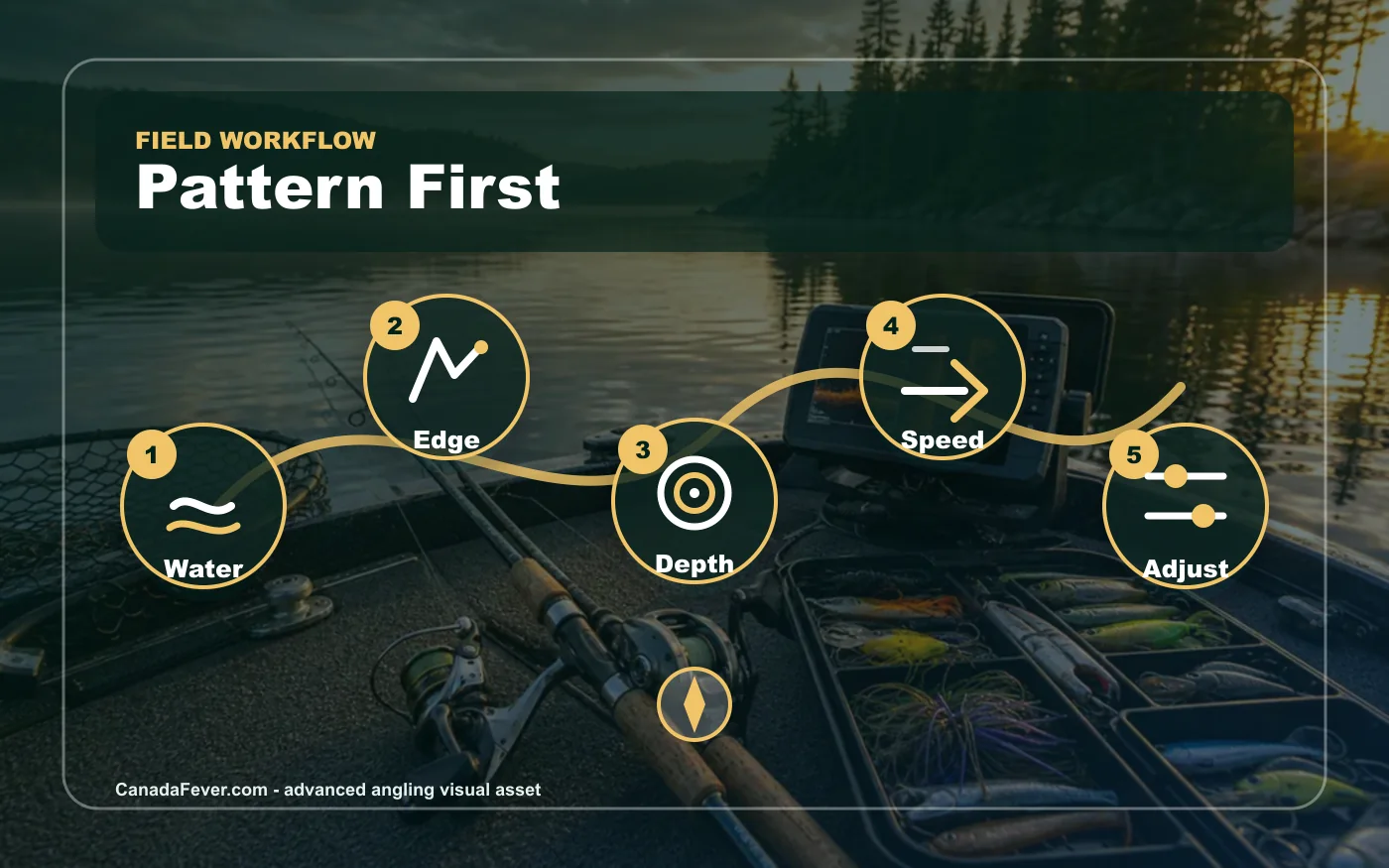
Digital field asset
Advanced fishing pattern workflow
The visual below is intentionally light on text: it shows the field rhythm, while the practical explanation sits in the cards underneath. Use it when you feel tempted to change lures too fast.
Download the field checklist PDF
This is a two-page printable checklist for pattern reading, presentation control, electronics, fish care, licence checks, and trip review. It is built as a real text PDF so it should display cleanly in normal PDF readers.
Connect the system to the water
Observe. Present. Adjust.
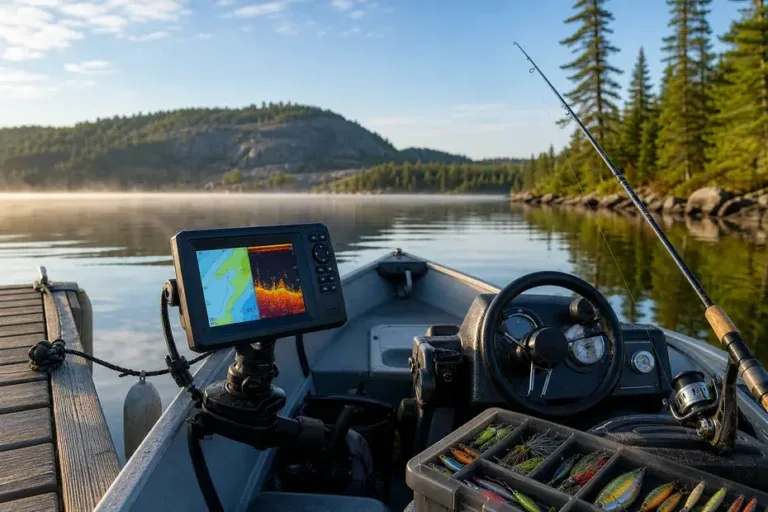
Confirm the structure
Use electronics to support what the water and your presentation are telling you.
Explore the guide →
Control the presentation
Match rod action and power to the lure and the way you work it.
Explore the guide →Decision system
The advanced fishing decision system
Most intermediate anglers already own enough gear to catch more fish. The missing piece is usually order. If you change five things at once, you never know what worked. The system below keeps every adjustment measurable.
| Decision | What to read | Best adjustment |
|---|---|---|
| Location | Wind, current, shade, bait, weeds, rock, depth breaks, inflows, temperature edges. | Move to the highest-percentage edge before changing lure style. |
| Depth | Where fish can feed without wasting energy or exposing themselves. | Change jig weight, line angle, float depth, trolling lead, or lure running depth. |
| Speed | Fish mood, water temperature, visibility, and chase distance. | Adjust cadence, pause length, fall rate, trolling speed, or retrieve angle. |
| Profile | Bait size, water clarity, cover density, and target species. | Change size and silhouette before changing colour repeatedly. |
| Proof | Repeat bites, follows, short strikes, marks, or missed opportunities. | Change one variable, then test long enough to learn something. |
Core techniques
Advanced techniques that matter most in Canada
Canada has big water, cold water, clear water, stained water, current, deep lakes, shallow shield lakes, tidal areas, and long winter seasons. The same lure can be brilliant in one setting and useless in another. The technique below the lure is what makes it travel.
Finesse fishing
Use lighter line, smaller profiles, slower movement, and precise depth control when clear water, pressure, cold fronts, or neutral fish make aggressive baits fail.
Best for clear or pressured waterPower fishing
Cover water with spinnerbaits, crankbaits, chatterbaits, jerkbaits, swimbaits, and topwater when wind, stain, warming trends, or active fish support a reaction bite.
Best for finding active fishVertical jigging
Control depth and contact under the boat, through ice, or on steep breaks. The lift, fall, pause, and line angle matter more than the brand name on the jig.
Best for structure and depthTrolling
Use speed, lead length, lure depth, turns, and contour lines to find lake trout, walleye, salmon, pike, and suspended fish across large water.
Best for big water coverageFly fishing
Read current seams, hatches, depth, drag, and presentation angle. Advanced fly fishing is often less about casting farther and more about making the drift believable.
Best for current and precisionIce fishing
Work mobility, safety, sonar, spoon cadence, deadstick timing, and hole rotation. On ice, location discipline often beats sitting longer in a bad spot.
Best for winter patterningTechnique notes
How to apply the system on the water
Start with water reading, not tackle shopping
Before you tie on a new lure, ask what the water is telling you. Wind can push bait against a shoreline. Current can position fish behind rocks or along seams. Cloud cover can extend a shallow bite. Bright sun can pin fish tighter to shade, weeds, depth, or overhead cover. Clear water can make fish follow without committing. Stained water can make vibration and contrast more important.
The mistake is treating every slow hour as a lure problem. Sometimes the lure is fine and the cast is wrong. Sometimes the cast is fine and the depth is wrong. Sometimes the depth is fine and the timing is wrong. Advanced fishing is the habit of isolating the weak link.
Control one variable at a time
If you change lure, colour, speed, depth, and location together, the fish cannot teach you much. Change one thing. If the water is cold, slow the pause before changing bait. If fish follow a jerkbait but will not eat, try longer pauses, smaller twitches, or a softer colour. If a jig gets touched but not pinned, adjust weight, hook size, trailer length, or line tension.
Use electronics as confirmation
A fish finder can show depth, bottom hardness, bait, suspended fish, and structure. It cannot decide whether the fish are catchable. The screen is useful when it confirms what your eyes and map already suggest. If you see bait on a windblown break and fish holding at the same depth, you have a plan. If you chase every mark without structure or timing, the screen becomes a distraction.
Build species-specific patterns
Walleye often reward depth control, bottom contact, and low-light timing. Bass can demand either finesse or aggressive reaction depending on cover, water clarity, and pressure. Pike often respond to visibility, speed, and leader planning. Trout and salmon make depth, temperature, oxygen, and current especially important. Panfish reward subtle presentation and small hooks, but they still teach structure and timing.
Canadian conditions
Season, water type, and platform change the technique
| Situation | What changes | Technique priority |
|---|---|---|
| Cold spring water | Fish may be shallow but not fast. Bites can be short. | Slow cadence, smaller profile, longer pause, careful temperature tracking. |
| Summer weeds | Cover, shade, oxygen, and bait stack together. | Edges, pockets, weed tops, frogs, jigs, spinnerbaits, and clean line management. |
| Deep clear lakes | Fish can suspend and follow without biting. | Depth control, natural colours, long casts, trolling passes, and electronics confirmation. |
| Stained shield lakes | Visibility drops and fish may rely more on vibration and silhouette. | Contrast, vibration, slower target zones, spinnerbaits, spoons, chatterbaits, and noisy topwater. |
| Ice season | Mobility, safety, light penetration, and oxygen become central. | Safe ice checks, hole rotation, sonar, spoon cadence, deadsticks, and shelter planning. |
| Canoe or kayak | Storage, stability, wind, and landing fish become harder. | Compact tackle, PFD, reachable tools, simple rod choices, and controlled drifts. |
Advanced gear support
Gear that supports better technique decisions
These picks support the work advanced anglers actually repeat: reading structure, controlling tackle, protecting fish, refining line systems, and recording the pattern. They are placed here after the technique system because buying gear should follow a real field decision.
Garmin STRIKER Vivid 4cv Fishfinder
Use it for depth, bottom changes, bait, and structure confirmation. The point is not to stare at a screen all day; the point is to prove or disprove the pattern faster.
View on AmazonKastKing HyperSeal Waterproof Tackle Box
A dry, organized box helps when you rotate jigs, jerkbaits, leaders, hooks, weights, and specialty presentations in rain, spray, and cold Canadian shoulder seasons.
View on AmazonAURAME Fishing Pliers
Fast hook removal matters more as technique gets sharper. Pliers help with treble hooks, split rings, leaders, pike teeth, and catch-and-release handling.
View on AmazonBerkley Trilene Big Game Monofilament
A dependable mono option for shock absorption, trolling, leaders, and forgiving setups. Advanced anglers choose line for the job, not just for breaking strength.
View on AmazonRite in the Rain Waterproof Notebook
A simple notebook is one of the highest-value upgrades. Record water, weather, lure, depth, speed, and what changed before the bite. Patterns become visible when you write them down.
View on AmazonCanadaFever may earn a small commission from qualifying purchases at no extra cost to you. Amazon links use amazon.com with OneLink enabled for supported regions.
Learning path
Build your advanced fishing learning path
Use these CanadaFever guides when the technique decision turns into a specific gear, species, or trip-planning decision.
Fishing gear and equipment for Canada
Build your kit around species, season, platform, and safety instead of buying random gear.
Read guideFish finders and electronics in Canada
Choose sonar support without letting the screen replace judgement.
Read guideAdvanced jerkbait techniques for walleye
Dial in cadence, pause length, depth, and seasonal windows.
Read guideClear-water smallmouth lure choices
Match finesse and natural presentation to pressured Ontario water.
Read guidePike lures for stained water
Use visibility, vibration, and leader planning for aggressive pike.
Read guideFishing regulations and licences in Canada
Verify the legal side before changing species, waterbody, season, or method.
Read guidePre-trip protocol
Before you fish advanced water
A sharp technique can still lead to a poor trip if the basic field protocol is weak. Before you leave, confirm the rule source, weather, safety gear, access point, fish care tools, and the first three spots you plan to test.
Legal check
Confirm licence, zone, species, date, possession limits, bait rules, hook rules, protected areas, and local waterbody exceptions.
Do this before packingSafety check
Check wind, storm risk, cold water exposure, PFD, ice condition, communication, lights, and the return route.
Do this before launchingFish-care check
Keep pliers, net, cutters, measuring tool, camera, and release plan ready before the first cast.
Do this before the biteAdvanced fishing FAQ
Common questions before applying advanced techniques
Tap a question for the short answer. These are practical technique, safety, and decision-making questions for Canadian water.
What advanced fishing technique should I learn first in Canada?
Start with pattern reading. Before you learn a new knot, lure, rod, or electronics setting, learn to explain where fish should be and why. Water clarity, wind, current, depth, structure, bait, pressure, and light give you the first move.
Do advanced fishing techniques require expensive electronics?
No. Electronics help on boats and ice, but advanced fishing is really disciplined decision-making. Shore anglers can still improve by tracking wind, light, depth access, lure speed, water temperature, and repeatable bite windows.
How do I choose between finesse and power presentations?
Use finesse when fish are pressured, water is clear, bites are short, or temperatures are cold. Use power when fish are active, water is stained, wind gives cover, or you need to cover water and contact aggressive fish.
Are advanced techniques legal everywhere in Canada?
No. Rules can change by province, zone, waterbody, species, date, bait, hook type, possession limit, and conservation closure. Check the official regulation source before applying any technique.
How should I handle fish when using advanced tactics?
Set up fish care before the bite. Keep pliers, net, cutters, measuring tool, and camera ready. Keep fish wet, support them horizontally, reduce air time, and stop targeting stressed fish during heat or low oxygen.
What is the best way to improve after each fishing trip?
Keep a short trip log. Record water condition, weather, structure, depth, lure, retrieve, line, time, and the exact adjustment that produced bites. Improvement accelerates when every trip leaves one clear lesson.
Before changing technique-specific gear, use the rod action and power guide to confirm whether the rod is helping the presentation or fighting it.
Technique deep dive: If your next upgrade is vertical control, cadence, or deep-water presentation, use the Advanced Jigging Techniques guide for Canadian walleye, lake trout, pike, bass, perch, and whitefish.