
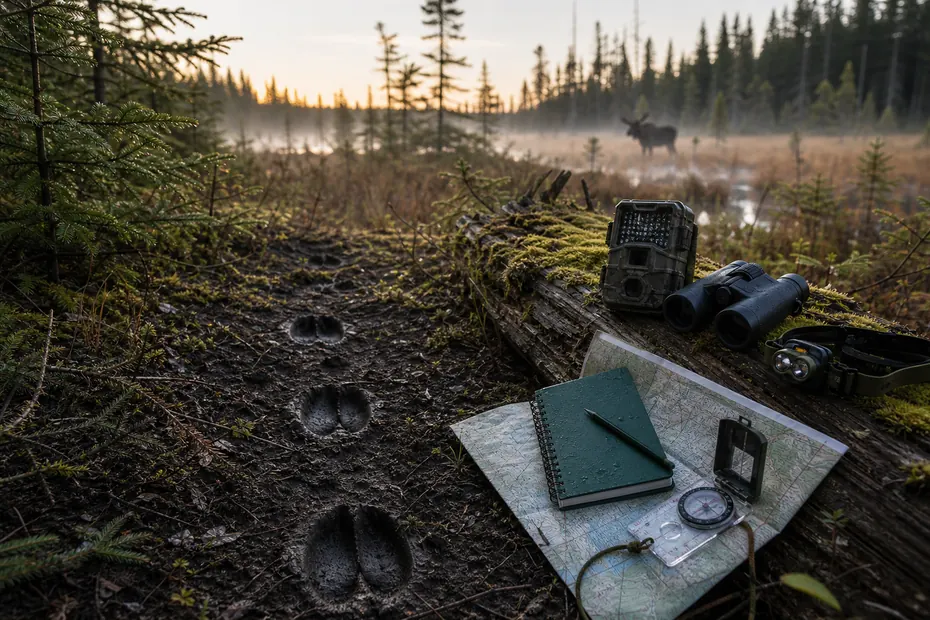
Canada wildlife skills guide
Tracking & Scouting in Canada
Learn to read tracks, sign, habitat, wind, maps, and camera data without crowding wildlife, sharing sensitive locations, or treating one clue like the whole story.
Quick start
Track slowly, verify carefully, leave quietly
Good tracking is not just naming an animal from a footprint. It is a disciplined way to observe, identify, interpret, map, and respect wildlife movement without adding pressure.
- Record the clue before stepping into it.
- Separate confirmed evidence from guesses.
- Use wind, habitat, water, cover, and season to interpret movement.
- Keep distance from wildlife, dens, young animals, and carcasses.
- Never share sensitive locations publicly.
Field rule
Respect beats access
If getting closer changes animal behavior, you are too close. A good scouting trip should leave the animal safer and the habitat quieter than you found it.
Sources and official links
Where to verify wildlife safety, species sensitivity, and hunting rules
Tracking and scouting can overlap with hunting, wildlife viewing, parks, private land, species at risk, camera use, and sensitive habitat. CanadaFever helps with field planning, but official sources control the rules.
Parks Canada wildlife safety tips
Use this before observing, photographing, or scouting wildlife near parks, trails, roads, camps, and popular corridors.
Open Parks Canada wildlife safety tipsCanada Species at Risk Public Registry
Use this source before sharing locations, approaching sensitive habitat, or interpreting sign from rare or protected species.
Open Species at Risk Public RegistryOntario Hunting Regulations Summary
Use this for hunting-season, licence, method, reporting, and species rules when scouting connects to a hunting plan.
Open Ontario hunting regulationsOntario hunting overview
Use this for basic Ontario hunting requirements and pathways before turning scouting notes into a field hunt.
Open Ontario hunting overviewEditorial note: Do not rely on old forum posts, social media, or second-hand reports for current rules. Check official sources for the exact place, species, season, land status, and activity.
Digital field asset
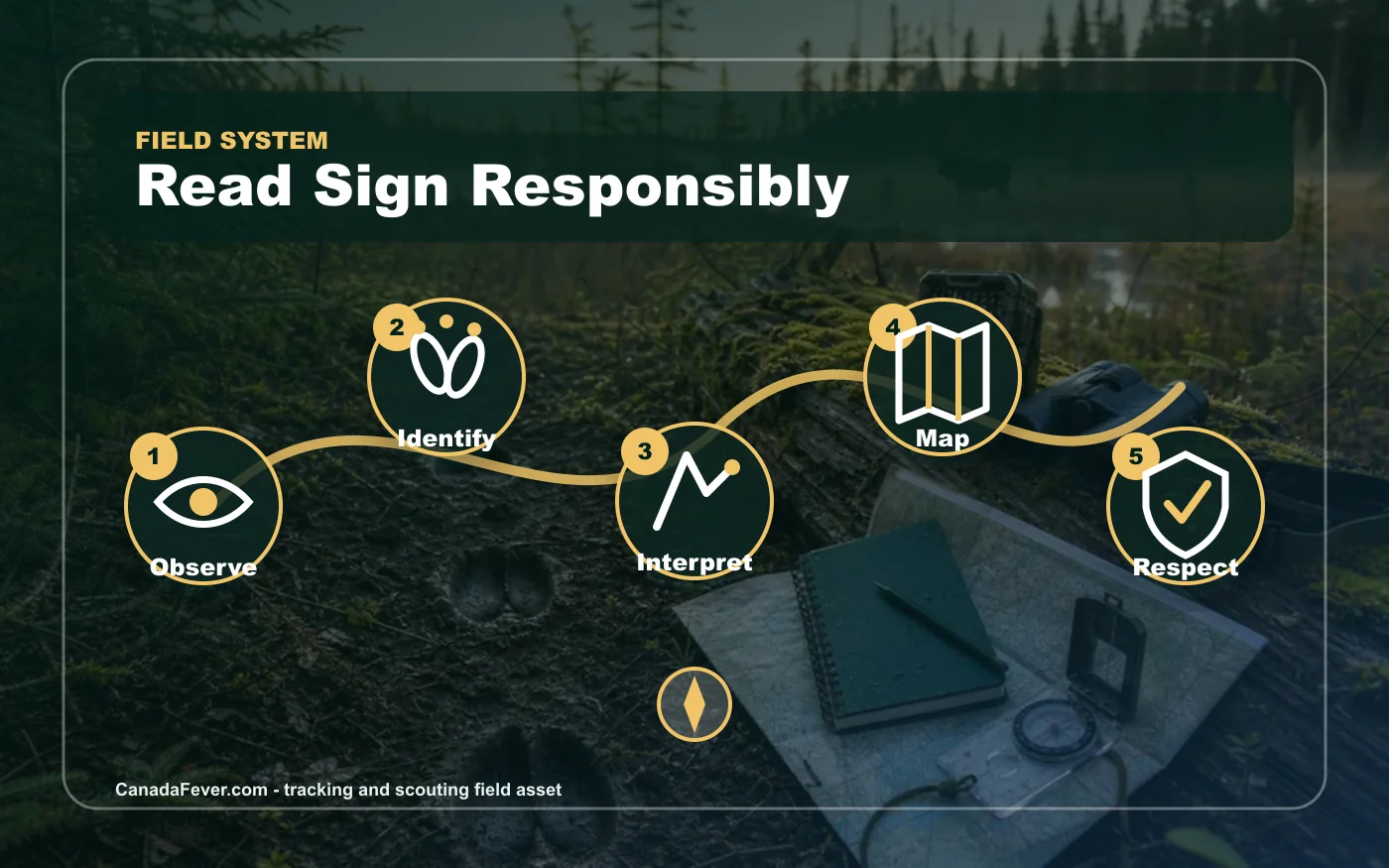
Tracking and scouting field system
The visual stays light on text. It shows the rhythm while the practical explanation sits in the cards underneath: observe, identify, interpret, map, and respect.
Download the field checklist PDF
This three-page printable checklist covers field observation, track and sign interpretation, mapping, safety, ethics, and trip review.
Core skills
Core tracking and scouting skills
The best trackers build confidence from multiple clues. One track can be useful, but repeated sign across habitat, weather, direction, and time is stronger.
Tracks and gait
Measure width, length, stride, straddle, depth, toe pattern, claw marks, and direction before naming the species.
Scat and feeding sign
Use scat, browse, rubs, feeding remains, feathers, hair, and dig marks as supporting evidence, not standalone proof.
Habitat reading
Connect sign to water, bedding cover, feeding areas, travel corridors, escape terrain, wind exposure, and edge habitat.
Behavior clues
Look for direction, urgency, grouping, bedding, rutting, feeding, avoidance, or repeated use across days and seasons.
Maps and GPS
Map the pattern privately, keep a backup route, and avoid publishing exact locations for sensitive wildlife.
Trail cameras
Use cameras legally and ethically to confirm timing, not to pressure animals or create a public hotspot.
Safety and ethics
Safety and ethical scouting in Canada
Tracking can put you near wildlife before you see it. The more skilled you become, the more responsibility you carry. Read the sign, then give the animal room.
| Situation | Main risk | Best move |
|---|---|---|
| Fresh predator sign | You may be close to a bear, cougar, wolf, carcass, den, or food source. | Slow down, make space, avoid carcasses and dense cover, and leave if the sign feels active. |
| Young animals or dens | Adults may be nearby and the young may be vulnerable to stress. | Back out quietly and do not photograph, handle, call, or share the location. |
| Trail camera placement | Legal, land access, privacy, baiting, and disturbance issues. | Check rules, avoid baiting where restricted, and place cameras to observe rather than pressure. |
| Hunting-season scouting | Licence, season, method, access, and species rules may apply. | Verify official hunting regulations before turning scouting notes into a hunt plan. |
| Rare or sensitive wildlife | Location sharing can increase disturbance or illegal pressure. | Keep exact locations private and use official reporting channels when appropriate. |
Field support gear
Gear that supports responsible scouting
These are support tools, not a replacement for ethics or official rules. Use them to observe from farther away, record better notes, navigate safely, and reduce disturbance.

8×42 waterproof binoculars
A practical first optics category for glassing edges, openings, crossings, birds, deer, moose, and distant movement without crowding wildlife.
View on Amazon
Trail camera for scouting corridors
Useful when used legally and ethically. Place cameras to learn travel timing without baiting, harassing, or exposing sensitive locations.
View on Amazon
Red and white headlamp
A red mode helps preserve night vision during early starts, late exits, and field-note checks while keeping both hands free.
View on Amazon
Waterproof field notebook
Record track size, direction, weather, wind, substrate, time, habitat, and uncertainty before memory turns a clue into a story.
View on Amazon
Baseplate compass and map support
A simple compass remains useful when batteries die, phones lose signal, or a scouting loop needs a clean return route.
View on AmazonCanadaFever may earn a small commission from qualifying purchases at no extra cost to you. Amazon links use amazon.com with OneLink enabled for supported regions.
Learning path
Build your tracking and scouting learning path
Use these CanadaFever guides when a field clue turns into a safety, gear, hunting, or wildlife-observation decision.
Hunting safety tips
Use this before scouting during active hunting seasons or moving through shared backcountry access.
Read guideOntario hunting licence 2026
Helpful when scouting connects to legal hunting plans, licence requirements, and season checks.
Read guideBest bear spray for fishing in Canada
Use this when your scouting route overlaps bear country, dense cover, remote water, or carcass risk.
Read guideFishing gear and equipment
Useful for shared field systems like waterproof notebooks, safety gear, optics, and trip organization.
Read guideAdvanced fishing techniques
Pattern thinking transfers well: observe, test, record, and avoid random conclusions.
Read guideResponsible wildlife viewing
Use this when the goal is observation, photography, conservation, or family-friendly wildlife travel.
Read guideTracking and scouting FAQ
Common questions before reading wildlife sign
Tap a question for the short answer. These answers focus on responsible tracking, scouting, and wildlife observation in Canada.
What is the first skill to learn in wildlife tracking?
Start with observation. Before naming a species, record substrate, track size, stride, direction, weather, freshness, and nearby habitat. A careful unknown is better than a confident guess.
How do I scout wildlife without disturbing animals?
Move slowly, keep distance, avoid dens and young animals, stay out of bedding areas, and do not block travel routes. Use binoculars and field notes before walking closer.
Are trail cameras legal everywhere in Canada?
No. Rules vary by province, park, landowner, hunting context, baiting rules, and local restrictions. Check official rules before placing a camera.
Should I share wildlife locations online?
Avoid sharing sensitive locations, especially for rare species, dens, nests, wintering areas, heavily pressured animals, or easy-access spots that could increase disturbance.
What gear matters most for scouting?
Binoculars, a notebook, navigation, light, weather-appropriate clothing, and safety gear matter more than gadgets. Add trail cameras and GPS tools only when they support an ethical plan.
How do I tell old tracks from fresh tracks?
Compare edge sharpness, moisture, collapse, debris, snow or mud condition, overlaying tracks, and recent weather. Freshness is a probability, not a guarantee.
Where this fits: Tracking skills are part of low-impact wildlife planning. The Wildlife Viewing in Canada pillar connects field sign with species, safety, parks, tours, and ethical viewing.