

Choose Canadian wildlife tours by animal, region, season and comfort: Churchill, coastal BC, the Rockies and whale cruises, with an honest trip planner.
- Choose one region around your main wildlife interest
- Match vehicle, boat or walking format to your group
- Confirm current access, local rules and weather terms
Bottom line The right outing is enjoyable even when its headline animal stays out of sight.
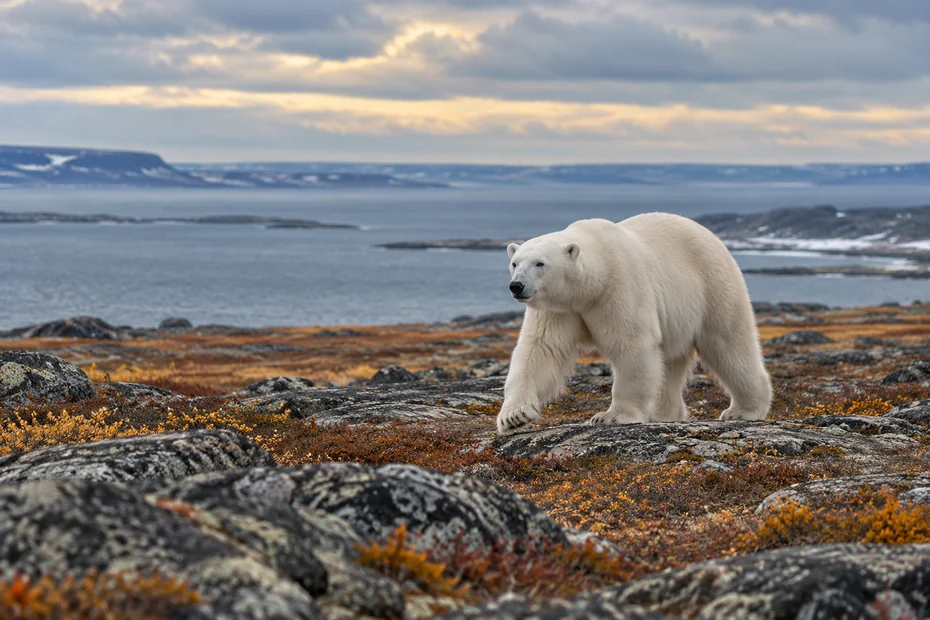
Canada wildlife · choose the trip, not the promise
Canada’s best wildlife-viewing tours start with a realistic match: the animal you care about, a region you can reach and a way of travelling your whole group can enjoy. A Churchill tundra day, a coastal bear lodge and a two-hour Banff bus tour solve very different holiday problems.
This guide compares those choices using current operator and public-authority information. It is an editorial shortlist, not a field-tested league table. We do not turn promotional sighting percentages into a forecast for your trip.
Choose a wildlife experience before choosing a tour company
Start with one main interest. Trying to combine polar bears, grizzlies, orcas and mountain wildlife in one short holiday can turn the trip into a series of airports. Our Canadian wildlife-viewing hub helps put the regions in context.
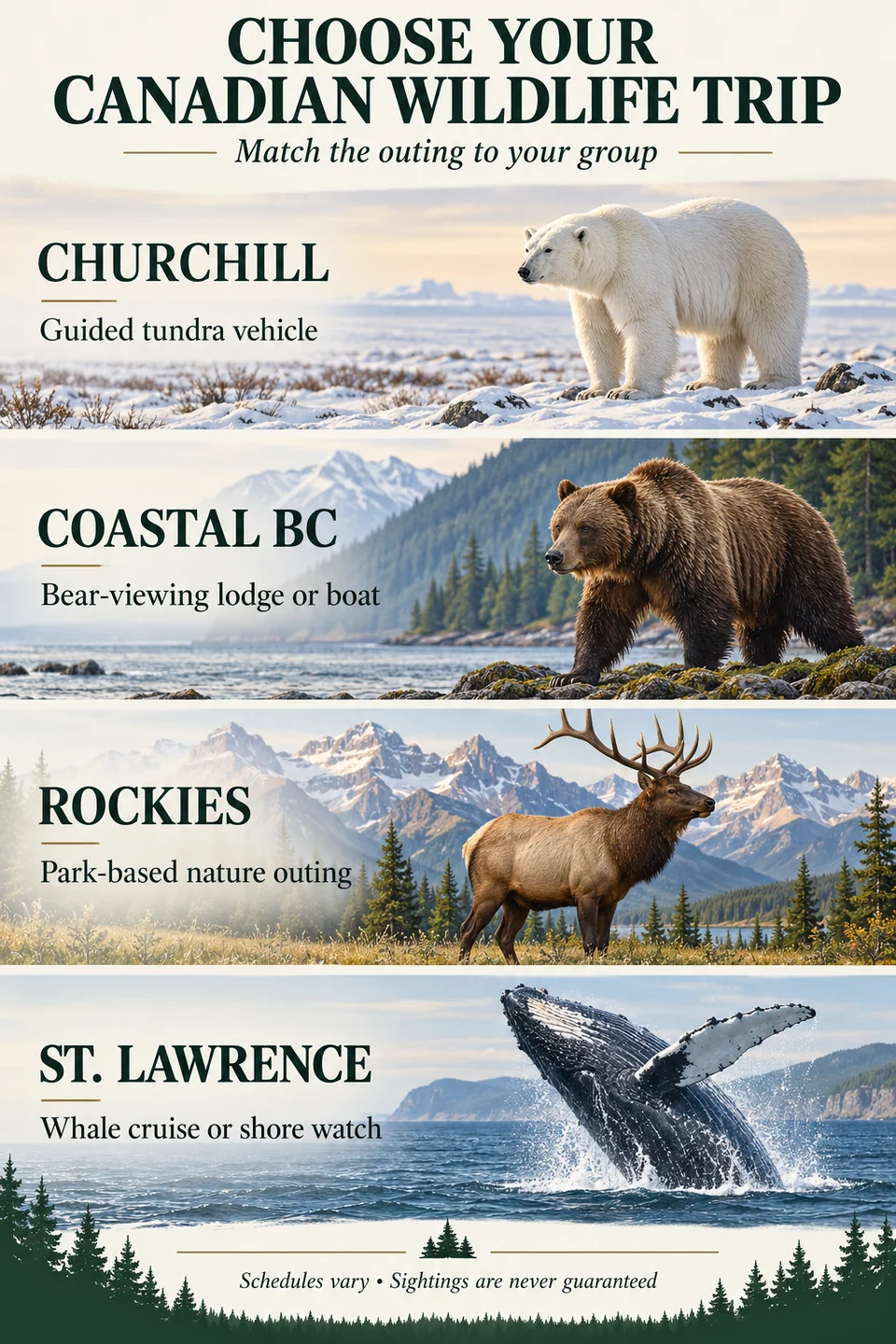
| Region / focus | Typical trip format | Most important booking check |
|---|---|---|
| Churchill · polar bears | Guided tundra vehicle or multi-day package | Exact season, travel connections and length of days |
| Coastal British Columbia · bears | Remote lodge with guided outings | Transfers, walking or boat access and weather contingency |
| Banff · mountain wildlife | Short guided vehicle outing | Pickup, departure time, child seating and mobility needs |
| St. Lawrence / Vancouver Island · whales | Boat excursion or shore interpretation | Shelter, boarding access, departure base and cancellation terms |
A practical shortlist of wildlife tours in Canada
Churchill: build the itinerary around the bear season
The Town of Churchill’s visitor guidance identifies guided tundra-vehicle operators and recommends knowledgeable guides or bear monitors. This is a destination where a wildlife plan and a safety plan belong together.
Frontiers North’s polar-bear adventures offer an autumn starting point for comparing dates and trip lengths. October and November are associated with bears waiting for sea ice; that is a planning window, not a guarantee that a particular departure delivers a particular encounter.
Ask whether the quotation starts in Winnipeg or Churchill, what flights and transfers it includes, and how much time is spent on the tundra. A long vehicle day may suit an enthusiastic photographer better than a child who needs frequent changes of activity. Confirm toilets, seating, meals and boarding arrangements with the specific itinerary.
Choose it when: polar bears justify the dedicated journey. Think twice when: you only have a spare afternoon elsewhere in Manitoba, or cannot accommodate delayed travel. Compare a day tour and a package as different products, rather than assuming the cheaper headline price buys the same experience.
Great Bear Lodge: ask about the daily viewing format
Great Bear Lodge / Great Bear Nature Tours presents a remote coastal bear-viewing experience reached from Port Hardy. Its seasonal offering spans spring through autumn; daily viewing conditions and the wider itinerary should be confirmed directly for your dates.
The attraction of a dedicated lodge is time allocated to wildlife, rather than a brief stop on a general sightseeing route. The trade-off is the transfer commitment. Ask how guests reach the lodge, what weather can change, what physical movement each outing involves and how much flexibility the guide retains.
Do not choose a remote bear itinerary by its most dramatic photograph. Ask what happens if a viewing location is unsuitable that day, and whether your group can comfortably manage the actual boat, path or platform access described in the current trip documents.
Spirit Bear Lodge: wildlife and an Indigenous-led place experience
Spirit Bear Lodge is owned and operated by the Kitasoo Xai’xais First Nation in Klemtu. Its wildlife trips take place in the Great Bear Rainforest. That ownership and location offer a reason to consider it beyond a single animal photograph.
Keep the name separate from an expectation of seeing a spirit bear. A wild Kermode bear cannot be scheduled, and an itinerary should remain worthwhile through its landscapes, interpretation and other wildlife. Ask the lodge which experiences are included for your season and how cultural activities are incorporated.
Compare the transfer plan, length of stay, physical requirements and daily guidance before deciding between coastal lodges. Our responsible wildlife-viewing guide explains why the guide may choose distance or change a viewing position, even when a guest wants a closer photograph.
Banff: a manageable addition to a Rockies holiday
Discover Banff Tours’ Evening Wildlife Safari currently lists a two-hour bus outing from April through October, with departure times changing seasonally. This is a useful format to compare when you already have accommodation in Banff.
A guided drive can add interpretation and avoid the temptation to improvise a roadside wildlife chase. It remains a search for wild animals. Ask where hotel pickup applies, whether your child needs a particular seat, how boarding works and what you can expect if no large mammals appear.
For a family or a mixed-interest group, a shorter outing can be a better match than a full wildlife expedition. Pair it with our Banff planning guide, then check Parks Canada’s current road, trail and wildlife bulletins rather than relying on an old trip report.
Whale watching: select the base first, then the boat
A whale excursion can fit a Vancouver Island or Québec itinerary without adding a remote lodge stay. Compare our specific whale-tour options and vessel trade-offs before choosing an open boat simply because its photographs look exciting.
For Québec, Tadoussac planning helps distinguish the departure town from the wider St. Lawrence journey. Parks Canada’s Pointe-Noire interpretation and observation centre also provides a shore-based alternative near the mouth of the Saguenay. Shore viewing can be a complete outing for someone who does not want a boat, rather than a consolation prize.
Build your shortlist
Seasonal trip planner
Choose a region and travel month for practical booking prompts. This tool does not predict sightings, openings or operating availability.
Broad planning guidance drawn from the sources in this guide. Always confirm the exact operator, dates and local restrictions.
Compare the whole booking, not just the ticket
Give each operator the same short description of your party: ages, mobility needs, wildlife interest, travel dates and how much time you can commit. That produces quotations you can compare. Avoid asking only “Which month is best?” without specifying the experience.
| Check | Ask for this answer | Why it matters |
|---|---|---|
| Transport | Exact start/end point, transfers and connection buffer | A tour price may exclude the difficult part of reaching it |
| Access | Boarding steps, walking surfaces, seating and toilet arrangements | Accessible means different things on different trips |
| Viewing | Target wildlife, route flexibility and distance policy | The guide must be able to respond to animals and conditions |
| Money | Currency, taxes, deposits and inclusions in writing | Headline prices rarely describe the entire journey |
| Disruption | Weather cancellation, rebooking and unused-service terms | A replacement date is useful only if you can take it |
Keep wildlife rules separate from promotional promises
Parks Canada’s photography guidance calls for 100 metres from bears, wolves, coyotes and cougars, and 30 metres from animals such as deer, elk and moose. Local bulletins, closures and species-specific directions still apply. A guided tour does not make crowding an animal acceptable.
For southern BC marine trips, the 2026 interim order requires 1,000 metres from Southern Resident killer whales in its defined southern BC area. Transport Canada’s current explanations distinguish that from the 200-metre Pacific killer-whale rule outside that situation. Do not expect a tour to pursue a Southern Resident encounter inside the protected distance.
Ask what a “sighting guarantee” actually provides. A return ticket, a conditional credit and a cash refund are different things. We do not assign a measured probability to the regions in this guide, and the planner does not infer one from the month.
What to bring without buying an expedition wardrobe
Begin with the operator’s current packing list. A remote autumn Churchill journey and an evening Banff vehicle outing need different clothing. Ask whether specialist outerwear is supplied or rented before buying something you will use once.
Bring binoculars if you have them, weather protection appropriate to the format, and a way to keep essential belongings secure. Prepare your optics before an encounter; the first decision remains where you can stand safely, not how to fill the frame.
Frequently asked questions
Which wildlife-viewing tour in Canada is best for a first trip?
Choose the format that fits your existing itinerary and group. A short guided Banff outing or a suitable whale cruise may be simpler than a remote lodge or Churchill package. None is automatically best for everyone.
When should I visit Churchill for polar bears?
Autumn polar-bear itineraries commonly focus on October and November. Check the named operator’s dates and exact programme. Summer beluga trips are a separate seasonal choice.
Does Spirit Bear Lodge guarantee a spirit bear?
Treat every wild-animal encounter as uncertain. Confirm the lodge’s current itinerary and policies directly; the destination and Indigenous-led experience should matter beyond a single species.
Are wildlife tours suitable for children or wheelchair users?
Some are, but the precise vehicle, boat, route and age rules determine suitability. Ask about your actual needs before payment. A general accessibility label cannot answer every boarding or seating question.
Does the planner show my chance of seeing wildlife?
No. It gives qualitative seasonal and booking prompts based on linked sources. It does not calculate probabilities, animal locations or live availability.
Research checked: 2 October 2026. Operator information is linked beside each profile; confirm current dates and terms before payment. Images are original illustrations and do not document a particular tour or sighting.