

Choose an orca tour on Vancouver Island by base, season, vessel, group needs, wildlife ethics and 2026 DFO distance rules.
- Base comes first: avoid crossing the island for a dawn departure if a suitable tour exists on your route.
- Wildlife is not guaranteed: compare the complete marine experience and operator policy.
- 2026 distances are specific: Southern Resident and other killer whales have different legal minimums.
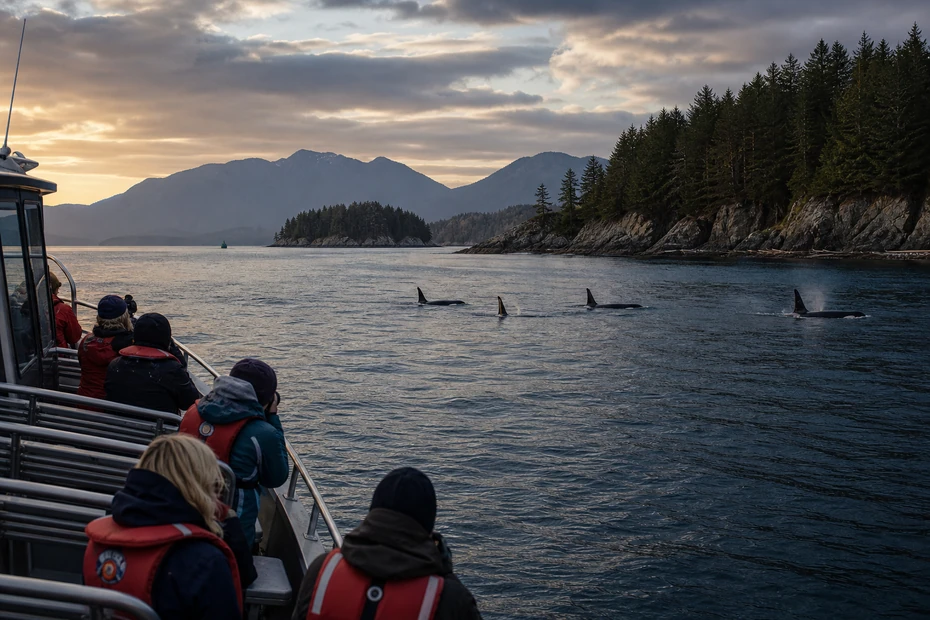
The best orca tours Vancouver Island visitors can choose start with the right departure base, responsible operator and vessel for the group. Victoria fits a city itinerary, Campbell River and Telegraph Cove suit a northern island route, and west-coast departures pair whale watching with Pacific scenery and weather.
No ethical operator can guarantee orcas. This guide focuses on route, platform, comfort, regulations and the wider wildlife experience.
Key Takeaways
- Base comes first: avoid crossing the island for a dawn departure if a suitable tour exists on your route.
- Open and enclosed boats are different products: choose from exposure, mobility and photography needs.
- Wildlife is not guaranteed: compare the complete marine experience and operator policy.
- 2026 distances are specific: Southern Resident and other killer whales have different legal minimums.
- Ethics are operational: speed, approach, time and response when animals appear matter more than slogans.
The “best” tour is the one your group can board comfortably from the right base, with an operator that follows current law even when a closer photograph would sell better.
🌲 The Guide’s Log
I choose a whale-watching base from the road trip, not the other way around. Vancouver Island is large, and a tour that looks close on a map can require a long mountain drive, ferry timing or an extra hotel. Once the base is fixed, vessel choice becomes the main filter. An open zodiac-style boat is fast and visceral but exposed to wind, spray and repetitive impact. A larger enclosed vessel can suit families, older travellers and photographers who need shelter, though boarding and viewing decks still differ. I ask about minimum age, pregnancy restrictions, mobility, washroom access and the operator’s bad-weather threshold. Then I listen for how the company explains whale rules. In 2026, Fisheries and Oceans Canada requires 1,000 metres from Southern Resident killer whales in specified southern B.C. waters and 200 metres from other killer whales in B.C.; other cetacean distances vary by resting or calf status. A responsible captain should explain what happens when identity is uncertain and how the vessel responds if whales surface close. Finally, I value the whole ecosystem. Humpbacks, grey whales, porpoises, sea lions, seabirds and coastal geology can make a superb day even without an orca. A guarantee culture encourages disappointment and pressure. A habitat-first tour creates a better trip and a healthier relationship with wildlife.
Best Orca Tours Vancouver Island: Choose the Base
Use our Vancouver Island travel guide, wildlife watching guide and best places in British Columbia to fit the departure into the wider itinerary.
| Base | Best itinerary fit | Common wider experience | Main planning issue |
|---|---|---|---|
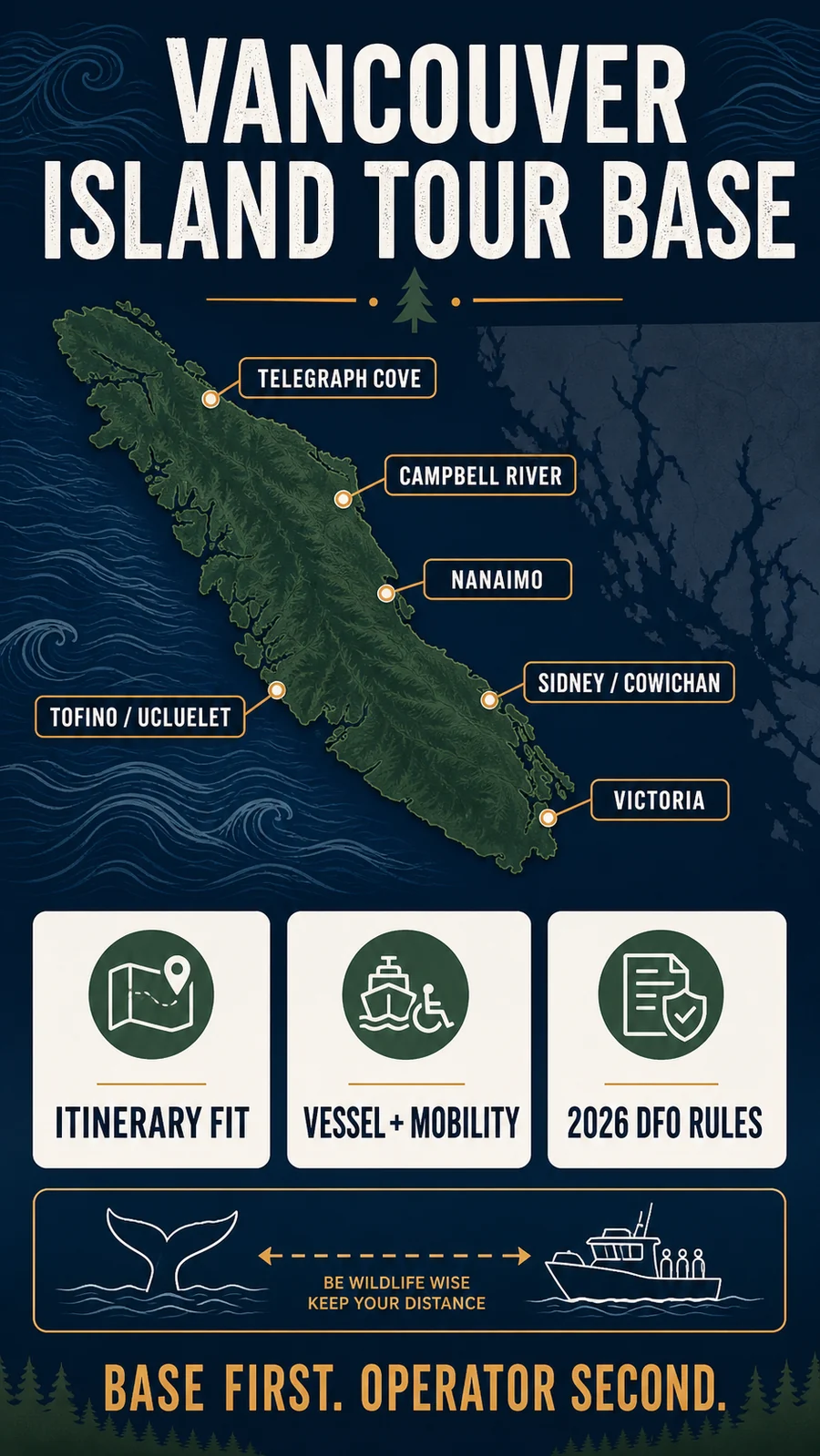
| Victoria | City stay and south-island trip | Salish Sea wildlife | Busy harbour and southern regulations |
| Cowichan Bay / Sidney area | South-island road trip | Gulf Islands and channels | Exact departure varies by operator |
| Nanaimo | Central-island access | Strait of Georgia | Ferry and parking timing |
| Campbell River | North-central route | Current-rich channels and marine life | Long drive from Victoria |
| Telegraph Cove / Port McNeill | Northern island wildlife trip | Johnstone Strait ecosystem | Seasonal services and remote logistics |
| Tofino / Ucluelet | Pacific coast itinerary | Grey whales, humpbacks and open coast | Ocean swell and weather |
Verified tour listings
Choose a whale-watching tour by departure base
These current Viator listings cover three useful Vancouver Island bases and distinct vessel experiences. Wildlife sightings are never guaranteed, so compare the operator details, mobility limits and weather policy before booking.

Victoria · Comfort-oriented cruise
Victoria Whale and Wildlife Cruise
A practical fit for Victoria itineraries and groups that prefer a larger purpose-built wildlife vessel.
- Departs from Fisherman’s Wharf in Victoria
- Naturalist-led cruise of approximately three and a half hours
- Semi-covered vessel option is listed for wheelchair access

Nanaimo · Small open boat
Whale Watching Nanaimo Open Boat Tour
A central-island option for travellers who want a smaller group and a more exposed open-boat ride.
- Four-hour route departing from Nanaimo
- Group size is capped at 12 travellers
- Anti-exposure suits and a naturalist guide are listed

Telegraph Cove · Zodiac adventure
Zodiac Whale Watching Adventure
A north-island choice for travellers building their itinerary around Telegraph Cove and Johnstone Strait.
- Three-hour small-group Zodiac tour
- Maximum group size of 12 travellers is listed
- Open Zodiac format may not suit neck or mobility concerns
Affiliate disclosure: CanadaFever may earn a commission if you book through a sponsored Viator link, at no extra cost to you. Images come from the corresponding Viator experience listings. Availability and operator details can change; verify the exact listing, date and cancellation terms before booking.
Choose Vessel and Trip Length
Open high-speed boats
Open boats provide speed and low sightlines but expose passengers to cold, spray and impact. Operators may impose age, height, pregnancy or health restrictions. Ask before booking.
Covered or enclosed vessels
Larger boats offer cabin shelter and often a washroom, making them easier for mixed groups. Confirm outdoor viewing space, window quality, passenger count and boarding stairs.
Three hours or longer
Trip duration affects search radius and exposure. A longer trip is not automatically better for a child or seasick traveller. Choose a schedule the group can enjoy even during transit.
Understand the 2026 Whale Rules
Killer-whale distances
DFO’s June 2026 poster requires 1,000 m from Southern Resident killer whales in southern B.C. coastal waters and 200 m from all other killer whales in B.C. waters. Read the official 2026 DFO measures.
Other cetaceans
The same poster states 200 m from whales, dolphins and porpoises that are resting or with a calf, and 100 m from other whales, dolphins and porpoises. Specific zones and measures also apply.
If animals approach
DFO advises placing the engine in neutral idle when too close and allowing animals to pass. A responsible operator manages speed and position instead of manoeuvring for a closer angle.
Evaluate the Operator
Ask how rules are applied
Request the operator’s approach policy, naturalist role and response when whale identity is uncertain. The strongest answer explains law, identification and animal behaviour clearly.
Read the sighting policy
Some companies offer a return trip if no whales are seen, but conditions, expiry and transferability vary. Treat it as a policy, not a guarantee that wildlife will appear.
Check passenger fit
Confirm clothing, flotation, footwear, boarding, washroom, mobility, child and medical restrictions. Pair marine layers with our cold-rain gear guide.
| Question | Strong answer | Concern |
|---|---|---|
| 2026 distance | Explains 1,000 m SRKW and 200 m other killer whales | Vague “we get close” language |
| Vessel | Exact boat, shelter, washroom, boarding | Generic fleet photo |
| Wildlife | Multiple species and habitat focus | Orca guarantee |
| Weather | Written captain decision and remedy | Undefined credit |
| Mobility | Specific steps, seating and restrictions | “Suitable for everyone” |
| Return policy | Clear conditions and expiry | Presented as guaranteed sighting |
Build It into the Island Itinerary
Avoid same-day ferry risk
Do not schedule a tight tour immediately after a ferry unless the operator explicitly accepts the risk. Arrive the night before for early departures or book a later slot with margin.
Plan for weather
Wind, fog and swell can change comfort or cancel a trip. Read who decides, when guests are contacted and whether the remedy is refund, credit or rebooking.
Photograph responsibly
Use a moderate telephoto, secure equipment and keep hands free while moving. Never pressure a captain to close distance. Our B.C. bear-watching guide applies the same wildlife-first booking principle on land.
🍁 The Local Secret
A north-island or west-coast departure should earn its place in the trip even without orcas. Pick a base whose scenery, other whales, seabirds and community you want to experience; that removes pressure from a single species sighting.
✅ The Pre-Trip Protocol
- Step 1: Reconfirm departure dock, parking, check-in, vessel and weather contact 48 hours before.
- Step 2: Pack the required layers and disclose child, mobility, pregnancy or medical constraints.
- Step 3: Listen to the briefing, stay seated when instructed and never request a closer wildlife approach.
Continue planning: Adding a mainland mountain day? Our Whistler tour comparison from Vancouver clarifies shuttle-style, Sea-to-Sky and private formats.
Best Orca Tours Vancouver Island: Frequently Asked Questions
Where is the best place for an orca tour on Vancouver Island?
Victoria suits south-island itineraries; Campbell River and Telegraph Cove fit northern routes; Tofino and Ucluelet suit west-coast trips. The best base is the one that fits the broader itinerary and desired wildlife mix.
When is the best time to see orcas?
Tours operate seasonally and sightings vary by population, prey and conditions. Ask operators for normal patterns on your dates, but reject guarantees.
How close can boats get to orcas in B.C. in 2026?
DFO requires 1,000 m from Southern Resident killer whales in specified southern B.C. waters and 200 m from other killer whales in B.C., with additional rules and zones.
Are zodiac whale tours suitable for children?
Restrictions vary by operator, vessel, age, height, health and weather. Open boats are colder and rougher, so confirm exact eligibility before booking.
What if no whales are seen?
Some operators offer a return trip under conditions; others do not. Read the written policy and value the full marine-wildlife experience rather than expecting a guarantee.
Bottom line: Choose the island base and vessel for the group, then favour an operator that explains and follows the exact 2026 DFO measures without promising wildlife.