

An honest breakdown of Vancouver Island salmon fishing charter prices. We expose the hidden costs, taxes, and fuel surcharges that aggregators won't tell you.
- Use Stop Overpaying to match destination, season, access, and budget to the kind of trip you actually want
- Check licences, local rules, travel logistics, weather, and booking windows before locking in dates
- Compare locations by practical fit: target species or activity, remoteness, services, safety, and backup options
Bottom line Stop Overpaying becomes easier when you choose the destination around timing, access, rules, and your real trip style
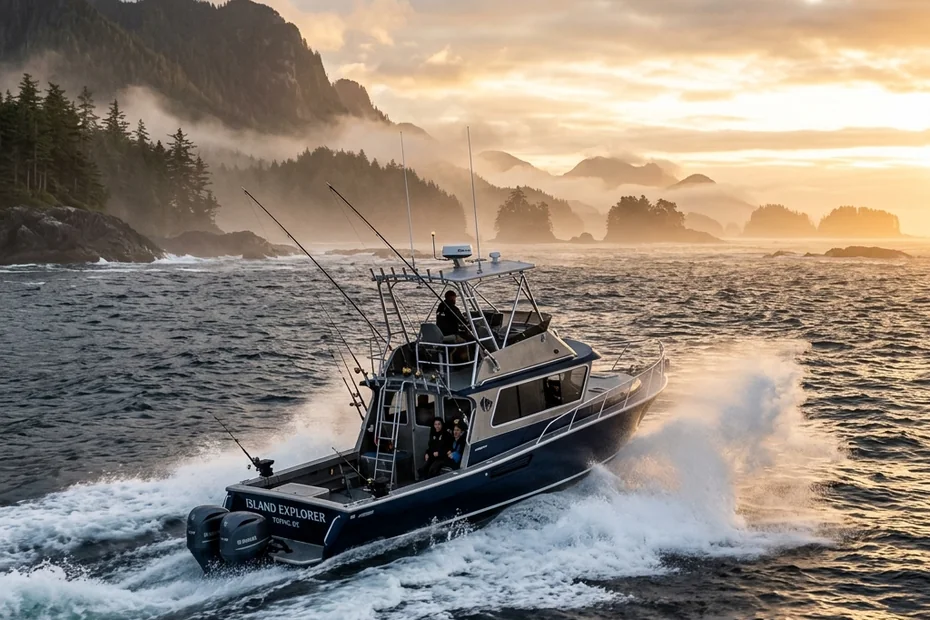
Booking a salmon charter along Vancouver Island rewards careful coast-side comparisons, because the true total spend depends far less on base hourly boat rates than on fuel range, dock gratuities, vacuum fish processing, and exact DFO tidal licensing.
Exposed West Coast hubs like Tofino, Ucluelet, and Port Renfrew place crews directly beside rich Pacific salmon highways and offshore halibut banks where bigger twins-outboard cruisers haul longer ocean runs. Sheltered East Coast passages around Campbell River, Victoria, and Port McNeill offer calmer runs within minutes of harbor ramps at friendlier family day rates.
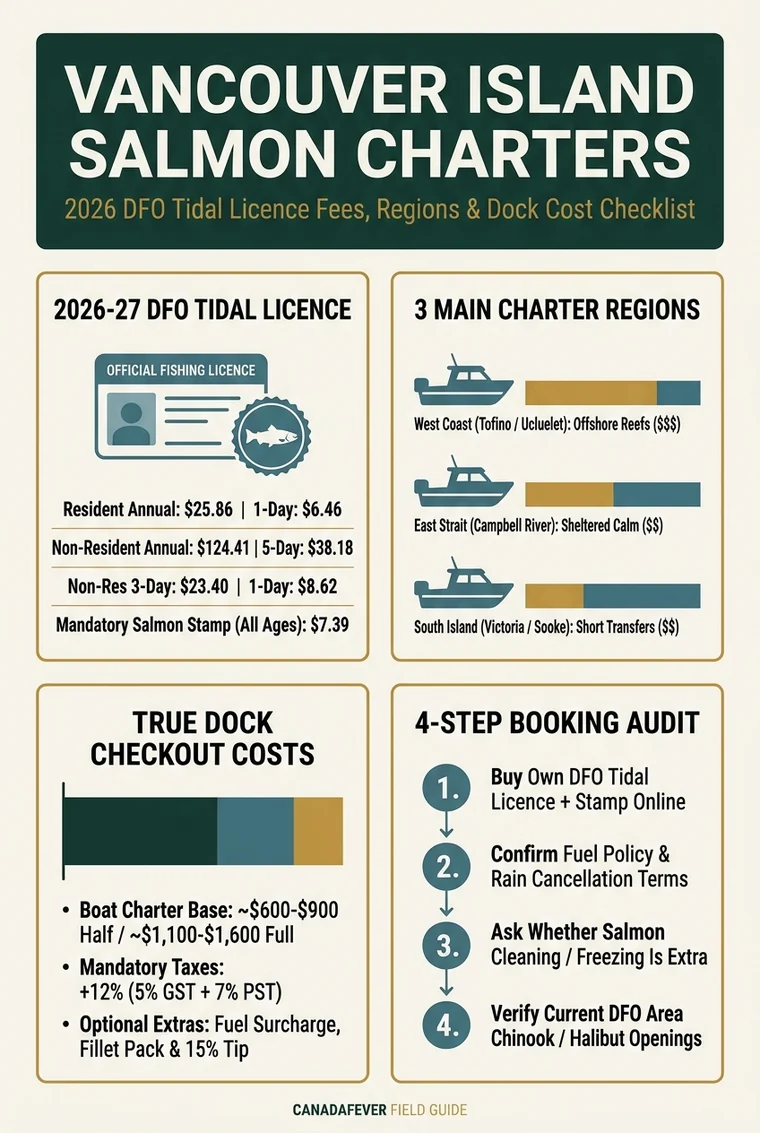
This verified 2026 charter guide separates real all-in dock invoices from confusing package teasers, pairs accurate DFO Pacific recreational rules with exact 2026/2027 BC Tidal Waters licence fees, and maps every Vancouver Island salmon coast honestly.
West Coast Offshore Versus East Coast Inside Passage Ports
Vancouver Island behaves like two distinct oceanic fisheries separated by steep coastal mountains. Choosing where to board your boat shapes hull size, sea-sickness exposure, catch diversity, and per-person charter cost more dramatically than any seasonal coupon code.
| Port / Coastal Corridor | Coast Side & Sea State | Run Time to Grounds | Typical Target Mix | Best Passenger Fit |
|---|---|---|---|---|
| Tofino & Ucluelet (Barkley Sound) | Open West Coast; moderate to big Pacific groundswell | 25 to 60 minutes offshore | Chinook, coho, Pacific halibut, lingcod | Seasoned anglers prioritizing multi-species heavy offshore combos |
| Port Renfrew & Bamfield | South-west outer entrance; heavy kelp ridges & offshore banks | 15 to 45 minutes to Swiftsure Bank / coastal shelves | Slab tyee Chinook, coho, crab traps, halibut | Dedicated sport crews focused on heavy August tyee weights |
| Campbell River & Quadra Narrows | Sheltered East Coast Inside Passage; calm tides | 5 to 15 minutes from Discovery Marina | Chinook, pink (odd years), sockeye openings, coho | First-time groups, kids, multi-generation families seeking calm decks |
| Victoria, Sooke & Sidney | Juan de Fuca Strait / Gulf Islands; quick protected hops | 10 to 25 minutes off waterfront harbors | Winter & summer springs, coho, spot prawn / crab drops | Half-day business or city travellers avoiding long highway drives |
| Port Hardy & Port McNeill | North Island edge; massive migrating feeder shoals | 15 to 35 minutes past protected islands | Dense mixed salmon runs, halibut, rockfish | Multi-day northern road trips chasing peak seasonal volume |
Browse live independent regional boat operator availability directly for sheltered Campbell River fishing charters on Viator or open ocean Tofino and Ucluelet salmon charters on Viator while cross-checking direct dock packages below.
Uncovering True Dock Charter Pricing Versus Sticker Teasers
Marketing banners quoting “starting at $299 per person” frequently assume four strangers splitting a short four-hour sheltered inside drift without fish cleaning, tax, fuel adjustments, or deckhand tips. Private four-angler cabin boats running full eight-hour to ten-hour West Coast offshore schedules carry starkly higher fuel burn and commercial insurance overhead.
- Confirm exactly what “dock-to-dock hours” mean: A six-hour charter running fifty minutes offshore leaves barely four hours of actual lines-in trolling time unless offshore bank runs carry extra eighth-hour upgrades.
- Ask whether custom vacuum-seal processing stays separate: On heavy Barkley Sound days yielding sixty to ninety pounds of salmon and halibut fillets, commercial plant blast-freezing adds $120 to $220 CAD onto boat invoices.
- Verify live fuel surcharge thresholds upfront: Marine wharf gas hovers noticeably higher in remote coastal villages like Bamfield or Port Hardy compared with mainland highway pumps; request exact dollar-per-gallon surcharge triggers before paying deposits.
- Insist on transparent bad-weather cancellation language: Reputable West Coast captains refund deposits cleanly or switch sheltered inlets if small-craft gale warnings cancel open-ocean departures rather than burning non-refundable guest cash.
Official 2026/2027 DFO BC Tidal Waters Licences & Salmon Stamp Rules
Charter guides supply rods, Scotty electric downriggers, herring bait, and survival gear, yet every passenger legally requires their own valid British Columbia Tidal Waters Sport Fishing Licence before touching a rod. Licences are never sold aboard boats once moving away from harbor docks; obtain digital credentials directly online through the DFO National Recreational Licensing System (NRLS) and verify sub-area daily limits via DFO Pacific licensing schedules.
| Licence Category (Apr 1, 2026 to Mar 31, 2027) | Canadian Resident (Excl. GST) | Non-Resident / International (Excl. GST) | Who Needs This Option |
|---|---|---|---|
| Annual Adult (Ages 16 to 64) | $25.86 CAD | $124.41 CAD | Multi-trip anglers sailing 6+ days across Vancouver Island |
| Annual Senior (Ages 65+) | $13.54 CAD | $124.41 CAD | Canadian seniors enjoy halved annual fee; valid credential still mandatory |
| Juvenile (Under Age 16) | Free ($0.00) | Free ($0.00) | Must carry zero-cost issued licence + Salmon Stamp if retaining salmon |
| 5-Day Short-Term Licence | $19.70 CAD | $38.18 CAD | Full week lodge stays across Tofino, Port Hardy, or Ucluelet |
| 3-Day Short-Term Licence | $13.54 CAD | $23.40 CAD | Weekend multi-day coastal trips |
| 1-Day Short-Term Licence | $6.46 CAD | $8.62 CAD | Single sheltered morning or afternoon charter sail |
| Salmon Conservation Stamp (Annual) | $7.39 CAD | $7.39 CAD | Mandatory for all ages (including youth) intending to keep any Pacific salmon |
Recording Catch Immediately on Your NRLS Paper or Phone Credential
Whenever retaining adult Chinook salmon or Pacific halibut aboard tidal boats, federal rules require immediately recording exact catch date, Pacific Fishery Management Area number, and species neatly inside your NRLS catch log table before resuming trolling or leaving boat premises. Review freshwater crossover boundaries cleanly inside our BC fishing regulations overview so dock transfers stay 100 percent compliant with fishery officer inspections.
When to Book Each Salmon Species Around Vancouver Island
Targeting specific runs saves thousands on multi-day stays by avoiding quiet transitional ocean weeks. Late spring produces crisp migratory feeder springs along outer reefs before massive summer Columbia River and Barkley Sound waves push inside calm inlets during July and August.
- Winter Springs (December through April): Sheltered Victoria, Sooke, and Sidney inside channels yield resilient twelve-to-eighteen-pound Chinook right alongside quiet off-season resort rates.
- Peak Chinook & Halibut Combo (June through August): Tofino, Ucluelet, Port Renfrew, and Port McNeill fire on all cylinders as ocean bait schools pack outer coastal shelves cleanly.
- Silver Coho & Tyee Trophy Runs (Mid-August through October): Heavy mature red-fleshed coho attack shallow bucktails and flashy anchovies along Campbell River and Barkley Sound mouths right prior to autumn spawning entries.
Why Barbless Single Hooks Apply Throughout BC Tidal Waters
British Columbia mandates strict single barbless hooks across every marine tidal salmon trolling setup, eliminating clumsy treble barbs that tear fragile shaker eyes before release. Checking clean pliers, bent-flat single Siwash hooks, and fast wet-hand net techniques before leaving dock ramps helps returning wild coho and undersized Chinook survive effortlessly.
5-Step Charter Verification Checklist Before Paying Your Deposit
Confirming clear operational credentials turns questionable social-media ads into reliable safe offshore memories.
- Verify Transport Canada Small Vessel Compliance (SVOP & MED): Confirm your captain carries active commercial passenger vessel certification, marine radio clearance, and proper coastal life raft or immersion readiness for open West Coast water.
- Confirm actual private vessel length and sheltered cabin heating: West Coast dawn mornings blow cold marine spray even in August; enclosed heated aluminum cabins between twenty-four and thirty feet deliver far smoother six-hour drifts for families.
- Obtain your 2026/2027 BC Tidal Licence + $7.39 Salmon Stamp online: Save offline PDF copies on two crew phones plus one crisp waterproof paper printout inside coat pockets before meeting dawn docks.
- Prepare motion sickness relief the evening before boarding: Taking gentle non-drowsy preventive medication ten hours prior to stepping onto rolling West Coast hulls beats trying pills once open ocean groundswell arrives.
- Pack insulated soft coolers and checked waxed box limits carefully: Coordinate cooler space in your vehicle trunk beforehand or confirm commercial vacuum-packing pickups if flying out of Comox, Victoria, or Vancouver.
Interactive Vancouver Island Charter & 2026 DFO Licence Estimator
Select your target coast side, party size, residency category, and charter length below to generate an honest all-in dock total including 2026/2027 NRLS licence fees, GST, customary 15% crew tip, and average fish-processing overhead.
Verified Vancouver Island Charter Deck Essentials
Practical waterproof bags, coastal sun glare optics, and high-visibility spoons verified for Pacific deck durability. Standard affiliate links open on Amazon.
CanadaFever participates in affiliate programs. We may earn a commission on qualifying purchases made through links on this page at no additional cost to you.
KastKing Skidaway Polarized Sport Sunglasses
- Cuts blinding Strait of Georgia and open Pacific surface glare cleanly while watching rod tips
- Snug wrap-around temples hold secure over breezy twenty-five-knot coastal run transits
- Smoke or amber lenses protect eyes across eight-hour bright summer afternoon salmon drifts
KastKing KarryAll Saltwater & Freshwater Tackle Bag
- Water-resistant tough woven chassis protects phones, spare layers, and printed DFO permits from cockpit spray
- Non-slip molded bottom grips wet aluminum gunwales cleanly during rolling West Coast swells
- Organized zippered pockets keep sunscreen, seasickness patches, and heavy shears separated
Blue Fox Pixiee 7/8-Ounce Nickel / Fluorescent Red Spoon
- Excellent compact shore-casting spoon for bonus pink and coho salmon off Campbell River beaches between charter days
- Bright fluorescent red egg-sac insert triggers aggressive coastal estuary follows fast
- Compact dense brass weight punches directly into afternoon Juan de Fuca Strait crosswinds
What to Pack Inside Personal Deck Daypacks for Open Pacific Waters
Leaving sunny Victoria café patios in light cotton hoodies often catches unprepared passengers off guard thirty minutes later when marine fog drops morning temperatures near nine degrees Celsius along Swiftsure Bank. Dressing sensibly in breathable fleece layers tucked under sealed storm shells keeps hands agile without shivering back into cabin corners before noon bites ignite.
Bring soft dark-soled deck shoes or waterproof deck boots giving steady wet traction across damp aluminum tread plate rather than slick white-marking running sneakers. Keep paper licence copies tucked securely inside sealable freezer sleeves, stow spare batteries cleanly away from salty rod holders, and verify seasonal multi-province gear overlaps smoothly inside our Canadian regulations reference and Canada outdoor planning tools.
- Avoid messy spray aerosol sunscreens onboard: Slick mist blowing across cockpit floors turns fiberglass and aluminum walking decks dangerously slippery; bring thick stick or rub-on zinc creams cleanly.
- Pack real salty ginger chews plus plenty of cold water: Dehydration accelerates coastal motion fatigue dramatically across bright reflective offshore runs.
- Verify cooler ice availability early at harbor ramps: Local marina ice freezers frequently clear out ahead of eight-o’clock weekend shifts; fill solid block ice at mainland town supermarkets beforehand.
Understanding Tidal Current Swings, Downrigger Depths & Charter Tactics
Vancouver Island’s coastal salmon follow narrow tidal current highways where deep cold upwelling nutrients concentrate herring, needlefish, and anchovy schools against rocky reefs. Strong flood and ebb rips through Discovery Passage outside Campbell River or off Race Rocks near Victoria surge beyond six knots at spring full moons, forcing skippers to run heavier fifteen-pound to eighteen-pound cannonballs to track close beside rocky ledges.
During brisk offshore Barkley Sound or Big Bank halibut drifts out from Ucluelet and Tofino, captains watch clean bottom contour drops between two hundred and three hundred feet on color sounders before dropping heavy barbless circle-hook spreader bars packed with fresh salmon bellies. Once tide turns past dead slack for thirty fast minutes, aggressive Chinook bites ignite along nearby shallow kelp points almost instantly.
Shipping Frozen Catch Home Cleanly From Island Ports
Landing limits of ocean Chinook, sockeye, and flaky white halibut adds practical airport transport math to every non-resident trip budget. Most major island harbors host certified cold-storage fish processors just blocks from fuel docks offering commercial boning, pin-bone trimming, clear heavy pouch vacuum sealing, and instant blast-freezing overnight.
| Return Travel Mode | Recommended Fish Packing Spec | Typical Processing Cost (CAD) | Key Airport & Highway Rule |
|---|---|---|---|
| Driving BC Ferries Home | Thick 48-qt roto-molded cooler packed tight with block ice | $1.50 to $2.00 per round pound custom filleted | Drain melted water cleanly prior to steep ferry loading ramps |
| Flying Out via YVR / YYJ / YQQ | Leak-proof waxed airline fish box with dry gel ice packs | $2.00 to $2.75 per round pound blast-frozen + box fee | Never pack loose wet wet-ice cubes; strict 50 lb checked weight cap applies |
| Self-Clean Dock Side Tables | Heavy freezer zip bags at rental cabins / condo freezers | $0 processing fees (vessel crew basic fillet tip appreciated) | Keep dorsal fin skin attached if provincial/DFO species ID proof is needed on transport |
Asking captains ahead about exact dock fillet cleaning policies prevents messy surprises at afternoon unloading slips. Always label every packed bag clearly with angler name, NRLS licence number, exact catch date, and Pacific Area tag whenever sharing highway cars home so fishery inspection stops remain straightforward and quick.
Shared Boat Seats Versus Full Private Boat Charters
Solo travellers or couples landing on Vancouver Island frequently compare per-seat “walk-on” bookings against chartering private boats outright. Shared boats reduce individual upfront boat rates down toward three hundred to four hundred dollars per angler, though passengers forfeit departure schedule flexibility, target species compromises, and cockpit rod rotation control.
Booking private four-passenger charters proves dramatically better value whenever three or four fishing partners travel together. Whole crews agree seamlessly ahead of boarding whether to spend extra morning hours chasing hard-fighting tyee springs close to steep shoreline Kelp reefs, running out toward deep halibut ridges under flat glassy mornings, or pausing inside calm sheltered coves to haul baited Dungeness crab and spot prawn traps.
Review broader seasonal Chinook migration corridors cleanly in our Canadian Chinook salmon guide and study deep-drop flatfish terminal tackle inside our Pacific halibut fishing guide weeks ahead of selecting your preferred island port harbor.
Double-check live tidal stream current charts, marine VHF emergency channel protocols, and regional conservation slot thresholds through our Canadian regulations reference and Canada outdoor planning tools prior to signing morning boat manifests. Smart coastal preparation lets guests step confidently onto chilly marine aluminum decks focused purely on singing drag reels rather than unexpected hidden harbor charges.
Frequently Asked Questions & Official Sources
How much does the BC Salmon Conservation Stamp actually cost in 2026?
Official 2026/2027 DFO Pacific rates set the annual Salmon Conservation Stamp at exactly $7.39 CAD (excluding GST) for both Canadian residents and international non-residents. Earlier third-party blogs repeating “$30+” figures are outdated or inaccurate.
Can I fish halibut and Chinook salmon on the exact same Vancouver Island trip?
Yes on exposed West Coast and North Island full-day combo runs (8 to 10 hours) out of Tofino, Ucluelet, Port Renfrew, Bamfield, and Port Hardy, provided DFO Pacific sub-area openings allow concurrent retention on your sailing date.
Is it customary to tip fishing charter guides and deckhands in BC?
Yes. Standard dock tipping across reputable Vancouver Island charters runs 15% to 20% of the pre-tax base boat rate when crew work diligently resetting downriggers, managing gear tangles, and bleeding catch neatly into slush coolers.
Which Vancouver Island port has the calmest water for beginners and families?
Campbell River, Quadra Island narrows, Sidney, and sheltered inside sections of Port McNeill deliver dramatically smoother tidal waters protected from deep North Pacific swell compared with open outer Barkley Sound runs.
Do kids under 16 need to buy a BC Tidal Waters Sport Fishing Licence?
Juveniles under 16 receive free ($0) BC Tidal licences online through NRLS, though they still must hold the issued credential and add a $7.39 CAD Salmon Conservation Stamp if keeping any caught Pacific salmon.