

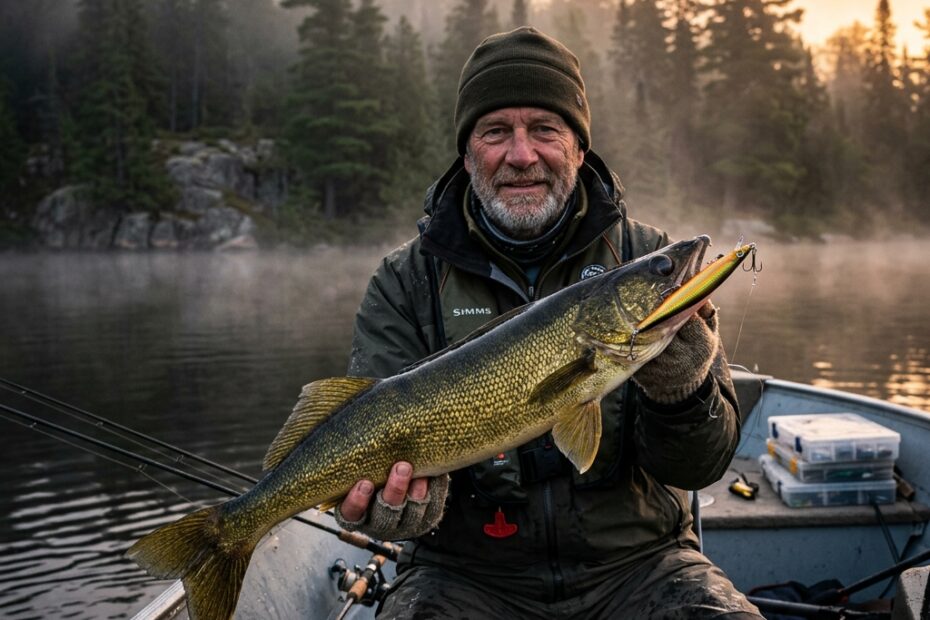
Discover why top Canadian guides are replacing live bait with suspending jerkbaits. Complete cadence guide by temperature and the top 5 walleye jerkbaits reviewed.
- Use Why Canadian Walleye Guides Are Secretly Throwing These 5 Jerkbaits to match species behaviour, habitat, season, and presentation to Canadian water conditions
- Check local regulations before fishing; limits, closures, bait rules, and licences can vary by province and waterbody
- Focus on practical setup: where to fish, what to cast or troll, how deep to work, and when to move
Bottom line Why Canadian Walleye Guides Are Secretly Throwing These 5 Jerkbaits gets simpler when you pair current rules with the right habitat, timing, and presentation
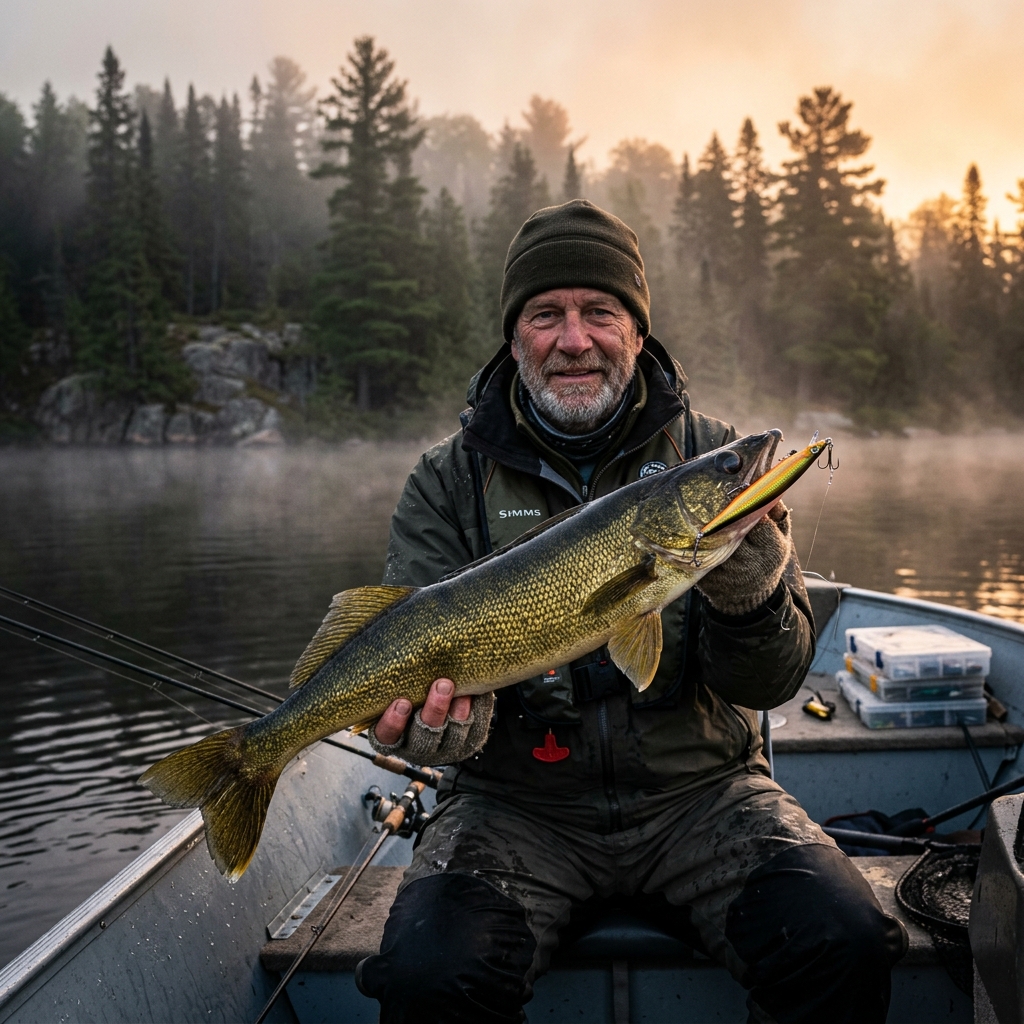
In mid-May, while most Ontario anglers are drifting live leeches at 0.5 mph on a bottom bouncer, a quiet segment of guides is doing something entirely different: aggressively snapping 4-inch hard plastics over 10-foot rock reefs. And they are catching larger walleye.
The suspending jerkbait is the most misunderstood and underutilized walleye tactic in Canada. American guides have used them on Lake Erie for decades, but the application on deep, cold, tannic Canadian Shield lakes requires a completely different approach to cadence and color selection.
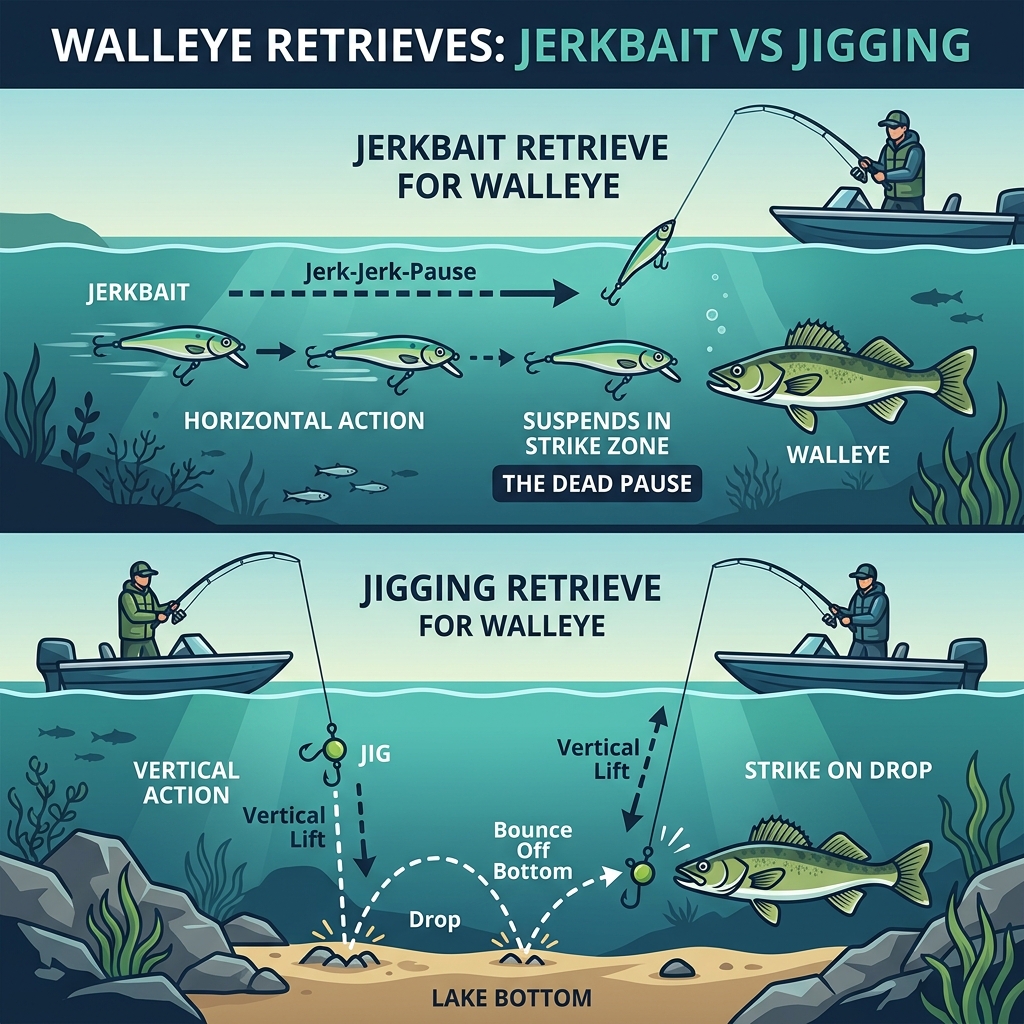
When the water is 45°F (7°C) right after ice-out, a walleye will rarely chase a fast-moving crankbait. But if you can rip a jerkbait down to their level and let it sit motionless in their face for five to ten seconds, the instinct to kill it overrides their lethargy. This “dead pause” is the secret to Canadian spring walleye.
⚡ Key Takeaways
- The Dead Pause: In water below 50°F (10°C), pause your jerkbait for 5 to 12 seconds between twitches. This is when 90% of strikes occur.
- Suspending vs. Floating: True suspending jerkbaits are mandatory. Floating models rise out of the strike zone too quickly on the pause.
- Water Clarity Matters: Use “Ghost” or natural forage patterns in clear oligotrophic lakes, and “Fire Tiger” or high-visibility UV colors in stained/tannic waters like Lac Seul.
- Line Choice: Avoid standard braid in freezing early-season temperatures. Use a high-quality fluorocarbon or monofilament to prevent ice buildup and provide slight shock absorption.
The Guide’s Log
It was the second week of June on a deep, clear shield lake two hours north of Kenora. The surface temperature had barely cracked 52°F. The boats around us were vertical jigging with minnows, pulling maybe one small “eater” walleye every hour.
I tied on a size 10 Rapala X-Rap in a Ghost pattern, fired it over a 12-foot rock spine, ripped it twice, and let it sit. I counted to eight. On “nine,” the line ticked sideways. It was a thick, pre-spawn 26-inch female that had completely ignored the live bait presentations all morning.
When you get the cadence right, a suspending jerkbait doesn’t just catch fish—it specifically targets the largest walleye in the school who are looking for a high-calorie meal that requires minimal chasing.
The 5 Best Jerkbaits for Canadian Walleye
Not all jerkbaits are created equal. For Canadian walleye, you need lures that cast well in the wind, run at the right depths (4–8 feet on a standard cast), and suspend perfectly without slowly floating to the surface.
1. Rapala X-Rap (Size 10)
The Rapala X-Rap is arguably the most versatile jerkbait ever made, and it holds a permanent spot in almost every Canadian guide’s tackle box. It features an aggressive “slashbait” action that darts erratically side-to-side when twitched.
For walleye, the Size 10 (4 inches, 7/16 oz) is the sweet spot. It mimics the profile of a juvenile perch or a large shiner perfectly. It suspends flawlessly and has internal long-casting mechanics, which is vital when you are trying to cover water on a massive lake like Nipissing or Lake of the Woods.
Best Canadian Application: Aggressive feeding windows in late June and September when walleye are willing to chase a more frantic presentation.
2. Salmo Rattlin’ Sting
Designed and tank-tested in Europe, the Salmo Rattlin’ Sting has quietly gained a cult following among elite walleye anglers in Ontario and Manitoba. It features an integrated long-cast weight transfer system and premium 3D eyes.
What separates the Sting is its ultra-precise suspension. In cold water, many “suspending” baits will slowly rise or sink depending on the water density. The Rattlin’ Sting holds its depth with incredible accuracy, making it lethal when walleyes demand a 10-second motionless pause.
3. Rapala Husky Jerk
The Husky Jerk is the original suspending minnow bait that started the modern walleye jerkbait craze. While the X-Rap is aggressive, the Husky Jerk offers a more subtle, rolling action that is often preferred when cold fronts shut the bite down.
Its internal rattle chamber is specifically tuned to emit a low-frequency sound that calls fish in stained or muddy water. If you are fishing the tannic, coffee-colored waters of Northwestern Ontario, a Fire Tiger or Gold Husky Jerk is mandatory.
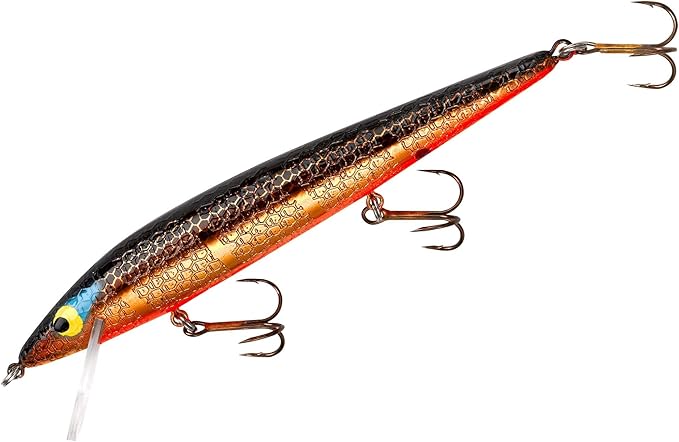
4. Smithwick Suspending Rattlin’ Rogue
The Smithwick Rogue is a legendary lure that many anglers associate with bass, but it is an absolute killer for cold-water walleye. It features a distinct “rogue roll” that flashes its sides even on a very slow, subtle twitch.
The suspending model hangs with a slight nose-down posture, mimicking a dying baitfish perfectly. It excels in shallow, clear-water scenarios where a stealthy approach is required. It’s an excellent choice for targeting shallow reef structures right after ice-out.
Top Finesse Pick: Smithwick Suspending Rattlin’ Rogue
Affiliate Disclaimer: As an Amazon Associate, CanadaFever earns from qualifying purchases. This helps support our Canadian outdoor research at no extra cost to you.
5. Northland Rumble Shiner
The Rumble Shiner brings something different to the table: balsa wood construction. Balsa provides a natural, buoyant action that plastic simply cannot replicate. While technically a slow-rising bait rather than a pure suspender, this characteristic is incredibly effective.
When paused, the Rumble Shiner slowly backs up and rises, imitating a baitfish fleeing towards the surface. This triggers instinctual upward strikes from trailing walleye. The custom Heat Compression Molding process ensures it casts better than traditional lightweight balsa baits.
The Science of the “Dead Pause” Cadence
The biggest mistake anglers make with jerkbaits is fishing them too fast. In Canadian waters, where spring temperatures are frigid, walleye metabolisms are slow. They will not expend energy to chase a fast-moving target.
| Water Temp (°F/°C) | Retrieve Cadence | Pause Duration | Strike Indication |
|---|---|---|---|
| 38-45°F (3-7°C) | Subtle pulls, no aggressive snaps | 8 to 15 seconds | Line feels heavy on next pull |
| 45-55°F (7-13°C) | Sharp twitch-twitch | 4 to 8 seconds | Visible “tick” in the line |
| 55-65°F (13-18°C) | Aggressive rip-rip-rip | 2 to 4 seconds | Aggressive rod-bending hit |
| 65°F+ (18°C+) | Constant erratic twitching | 1 second or less | Violent reaction strike |
Always watch your line during the pause. The strike is rarely a hard hit in cold water; it often looks like a subtle twitch or simply feels like extra weight when you start your next pull. Before you strike, ensure you know how to safely unhook a walleye equipped with three sets of treble hooks.
🍁 The Local Secret
If your suspending jerkbait is slowly sinking or floating, you need to adjust it based on water temperature. Cold water is denser than warm water, meaning a bait that suspends perfectly in July will slowly rise in May.
To counteract this, Canadian tournament anglers use “SuspenDots” (small adhesive lead weights) or upsize the front treble hook by one size to add just enough weight to achieve perfectly neutral buoyancy in frigid water.
Safety and Hook Regulations in Canada
Before throwing a lure with three sets of treble hooks, you must be aware of local regulations. Many premier walleye lodges and specific Fisheries Management Zones (FMZ) in Ontario and Manitoba have strict barbless hook requirements to protect their fisheries.
Take a pair of pliers and crush the barbs flat on all your jerkbaits before hitting the water. Not only is it the law in many areas, but it also makes dispatching a keeper or releasing a trophy significantly faster and safer for both you and the fish.
The Pre-Trip Protocol
The Sink Test: Before your first cast on a Canadian lake, drop your jerkbait next to the boat and watch it. If it floats to the surface or sinks quickly, swap it out or adjust the weight. Do not waste a 10-second pause on a bait that isn’t sitting motionless in the strike zone.
Frequently Asked Questions
Do jerkbaits work for walleye in the summer?
Yes, but you must fish them faster and more aggressively. In warmer water, walleye will chase baits. Switch to a “rip-rip-pause” retrieve with very short pauses (1-2 seconds) to trigger reaction strikes.
What color jerkbait is best for walleye?
In clear water, natural patterns like silver, ghost, and perch are best. In dark, tannic, or stained water (common in Northern Canada), high-visibility colors like Fire Tiger, Chartreuse, and Clown are far more effective.
Do I need fluorocarbon line for jerkbaits?
Fluorocarbon is highly recommended. It sinks (unlike monofilament or braid), which helps the jerkbait achieve its maximum running depth, and its low visibility is crucial during the long pauses when a walleye has time to inspect the bait.
Can I troll a jerkbait for walleye?
Yes. Baits like the Rapala Husky Jerk are excellent trolling lures, especially at slow speeds (1.0 – 1.5 mph) in the spring. However, they lack the erratic darting action of casting and ripping them.
How deep do suspending jerkbaits run?
Standard jerkbaits run between 3 to 8 feet deep on a standard cast. For deeper fish, look for “Deep Diver” models that feature a longer lip, allowing them to reach 10 to 15 feet.