
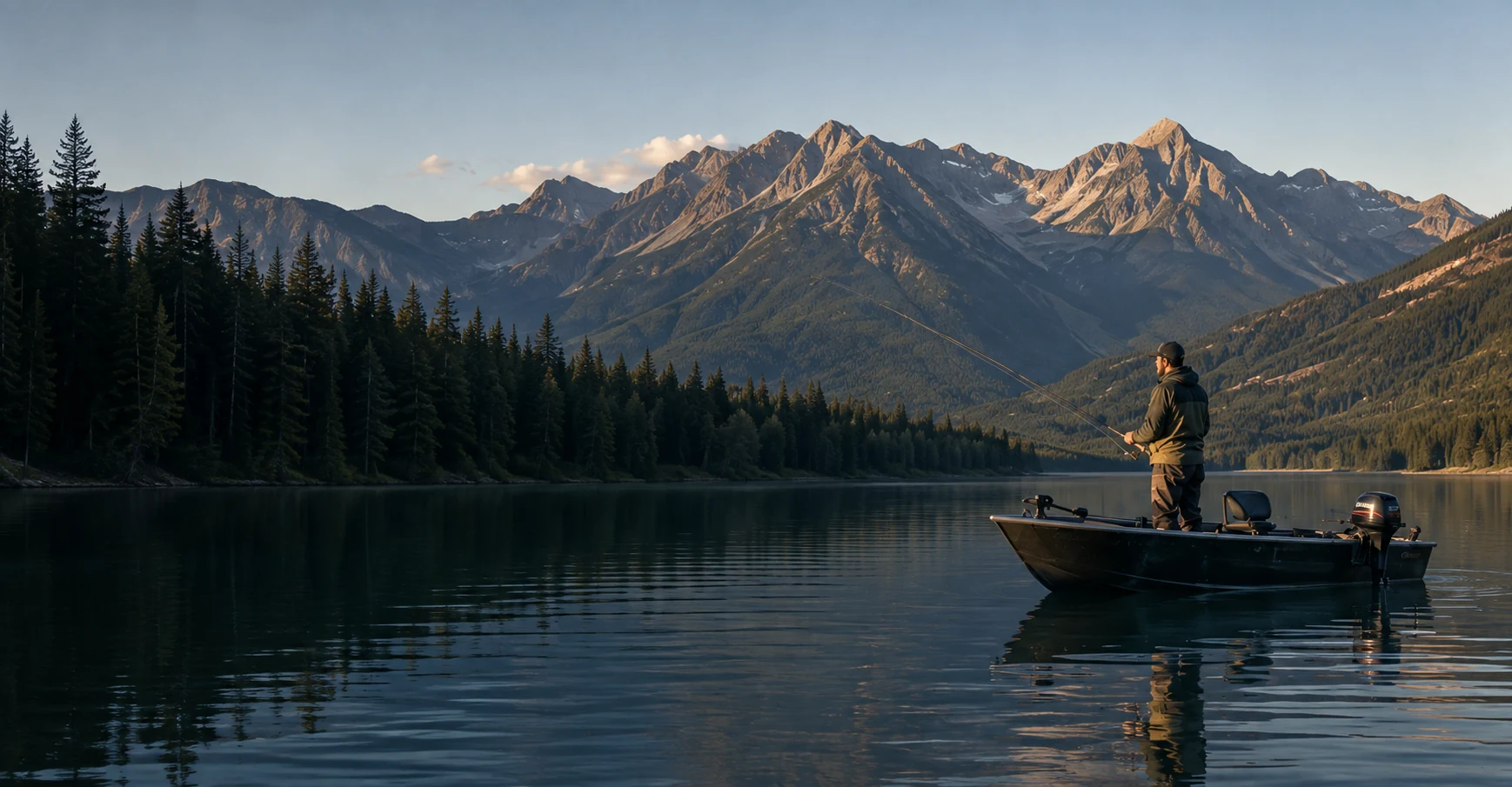
Destination guide · 2026
Best Fishing Spots
in Canada
Find your kind of water. Choose by province, species, season and the way you like to fish.
Great fishing starts with
the right destination
Canada offers lake country, mountain rivers and wild coastal waters. The right trip starts with the species you want to target, the season and how you plan to reach the water.
Use this guide to compare regions, choose a trip style and check the details before booking a lodge or packing your gear.
Compare your options
From lake country to coastal waters
Start with a region, then narrow your shortlist by access and trip style.
| Region | Fishing focus | Plan your access |
|---|---|---|
| Ontario | Lake country | Compare shore access, boat launches and guided options. |
| British Columbia | Salmon waters | Separate freshwater and tidal plans before checking local rules. |
| Alberta | Trout rivers | Check river access, conditions and seasonal restrictions. |
Quick start
Pick the kind of fishing trip before the exact lake
The best fishing spot in Canada changes by angler. A new family, a fly angler, a trophy hunter, an ice-fishing group, and a non-resident lodge guest need different water, rules, access, and gear.
Beginner spots
Look for easy access, simple rules, stocked water, shore options, rentals, and predictable species.
Trophy water
Prioritize timing, guide knowledge, remote access, proper gear, conservation rules, and realistic budget.
Fly fishing
Match water clarity, access, hatch timing, casting room, wading safety, and species expectations.
Family and urban access
Choose bathrooms, parking, shorter walks, safe shorelines, nearby food, and forgiving water.
Destination selector
The Canadian fishing spot selector matrix
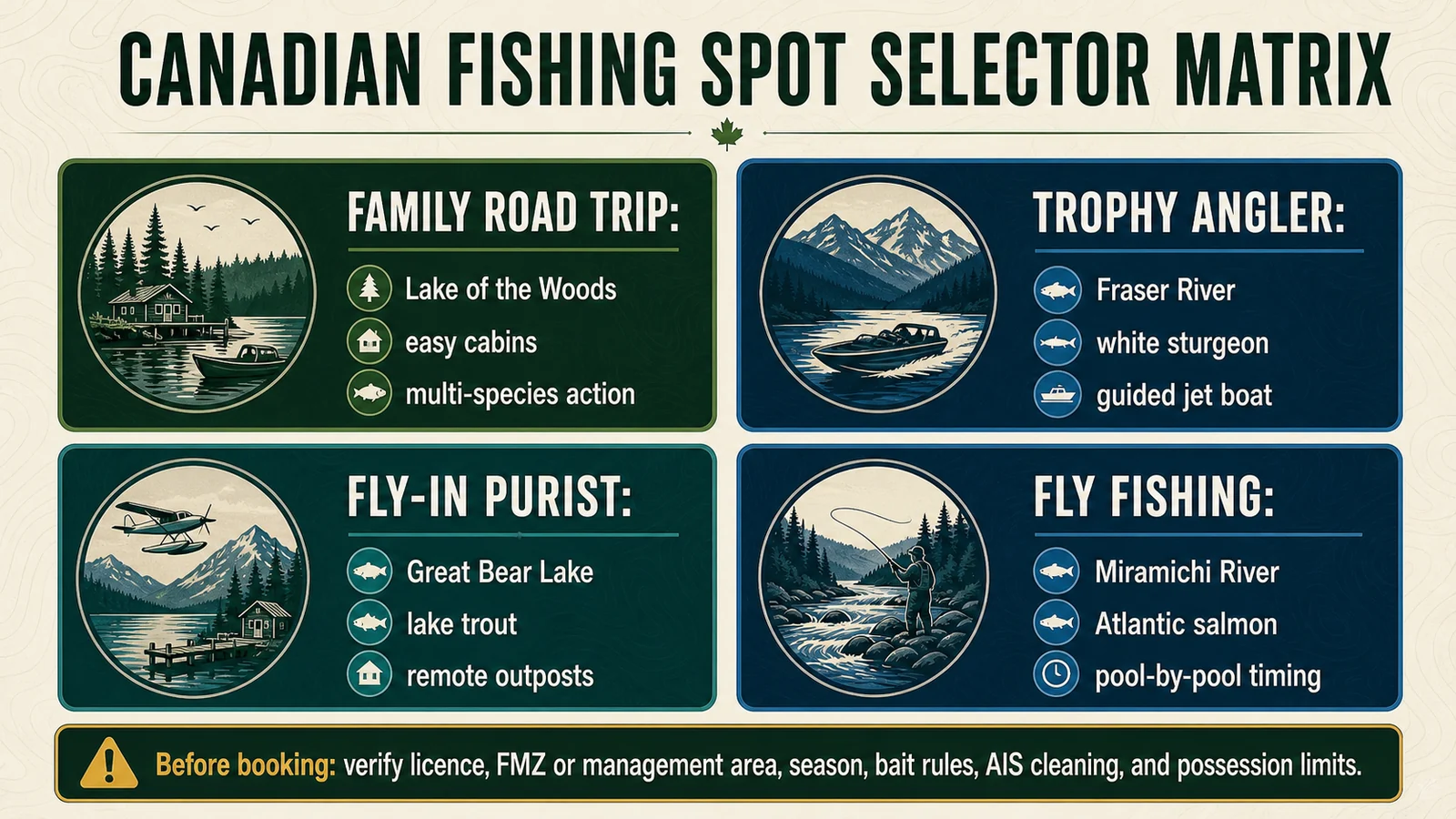
Famous water is not always the right water. Use this matrix to match the destination to the angler, transport, rules, species, and budget before comparing lodges or gear.
| Trip profile | Best core water | Mandatory checks | Best value |
|---|---|---|---|
| Family road trip | Lake of the Woods, Ontario | Ontario FMZ, cabin access, boat rental rules, child-friendly docks, weather exits. | Multi-species action with enough services to keep first-time anglers engaged. |
| Trophy extreme angler | Fraser River, British Columbia | DFO notices, guided jet boat safety, white sturgeon handling, barbless hook rules. | Prehistoric white sturgeon potential without pretending it is a casual DIY shore trip. |
| Fly-in purist | Great Bear Lake and northern outposts | Floatplane payload, cold-water safety, conservation limits, satellite communication, lodge evacuation plan. | True remote lake trout and grayling water with low pressure and high planning demands. |
| Fly-fishing salmon trip | Miramichi River, New Brunswick | Atlantic salmon rules, river conditions, local pool access, wading safety, live release expectations. | Classic Atlantic salmon water where timing and conservation discipline matter more than hype. |
Sources and official links
Check rules before booking the trip
Destination advice is only useful when licences, seasons, species rules, parks permits, and local restrictions line up with your actual travel dates.
DFO Recreational Fishing
Parks Canada Fishing Regulations
Ontario Fishing Regulations
BC Freshwater Fishing
DFO Pacific Recreational Fishing
Pacific Salmon Commission
GoFishBC Stocking Database
Keep Fish Wet
Regulatory safety
Check your licence, water and season
The best Canadian fishing spot can become the wrong choice if your licence, zone, season, bait, gear, slot-size, possession, or fish-transport rules do not match the exact water you plan to fish.
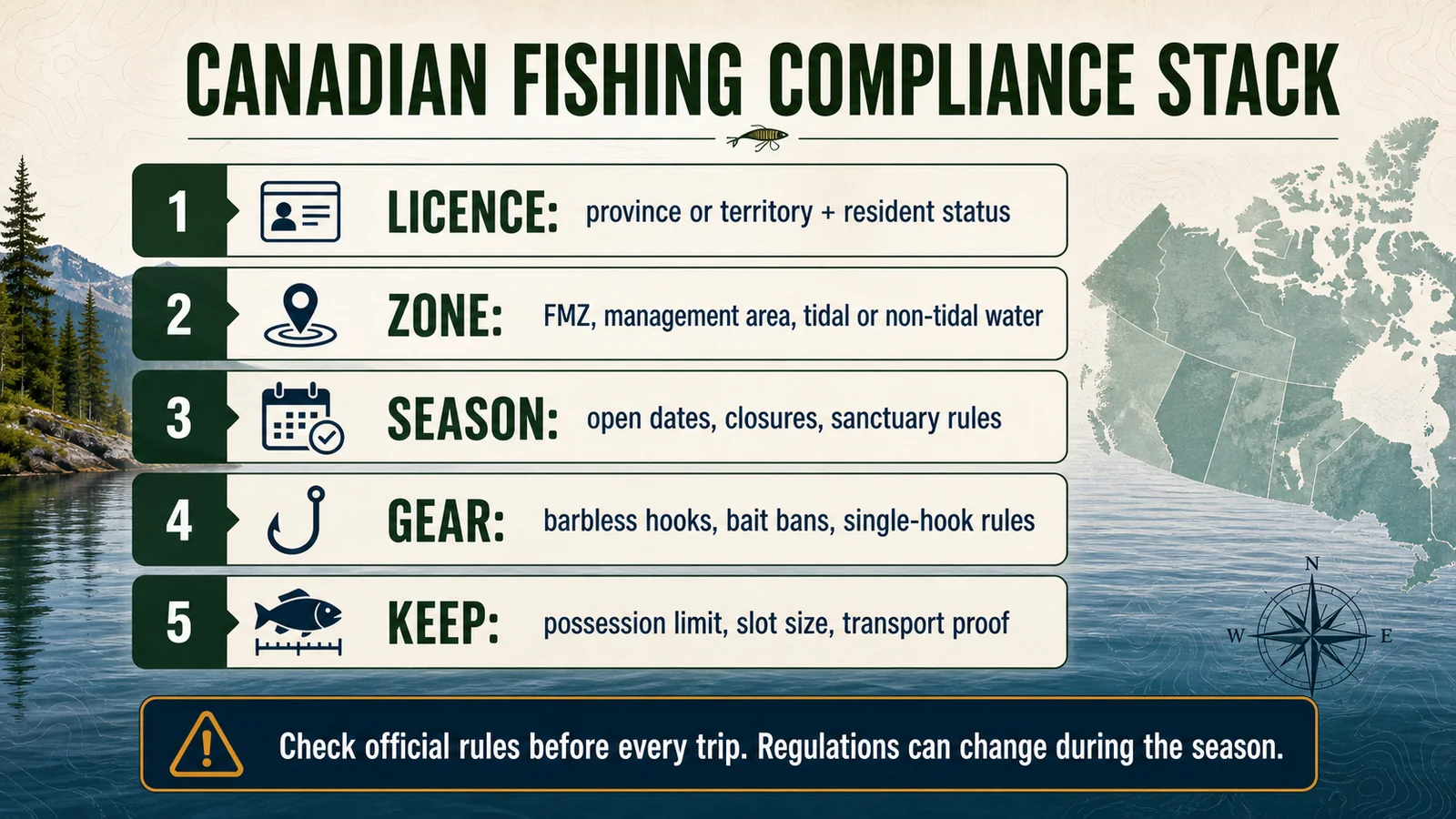
Critical regulatory notice: FMZ, bait, hook and transport rules
Canadian fishing rules can change by province, Fisheries Management Zone, tidal area, national park, species, season, and in-season conservation closure. Do not rely on a travel article or lodge brochure as your final rule source.
- Check the exact waterbody, not only the nearest town or province.
- Confirm whether the water is tidal, non-tidal, park-managed, stocked, catch-and-release, or under special exceptions.
- Review bait movement, invasive species cleaning, barbless hook, single-hook, slot-size, possession and transport-proof rules before travel.
Printable trip planner
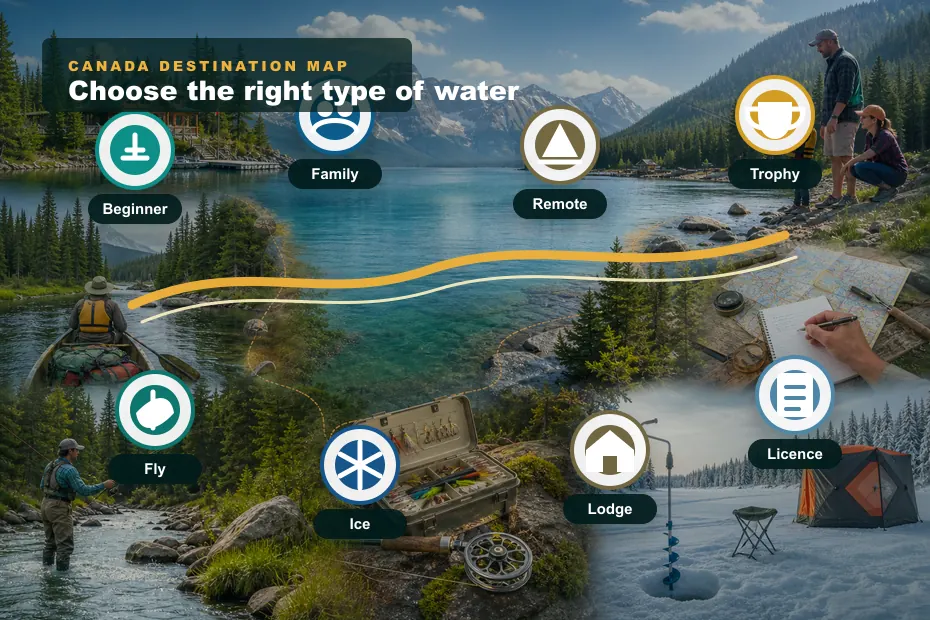
Canada Fishing Spot Decision Map
Use the visual map as a first filter, then read the cards below for the actual planning logic. A good fishing spot is not only about fish size. It has to fit access, group, season, safety, and licence rules.
Choose simple access, forgiving species, short travel, and clear local rules before chasing famous water.
Prioritize safe shorelines, parking, bathrooms, easy exits, and short sessions over remote scenery.
Plan access, weather windows, communications, wildlife awareness, and backup routes before the destination name.
Match timing, regulations, conservation expectations, and guide knowledge before booking a trophy-focused trip.
Look for casting room, current, clarity, hatches, access points, and seasonal water conditions.
Verify ice safety, hut rules, winter roads, local reports, and emergency planning before choosing a lake.
Compare boats, meals, guide support, remote access, non-resident logistics, and what is included.
Check province rules, park permits, seasons, slots, bait restrictions, and possession limits before travel.
Download the fishing spot planner
Printable 3-page PDF for destination shortlist, access, rules, species, lodging, budget, and trip notes.
Budget reality check
Fishing spot budget tiers: what the money really buys
Canadian fishing cost is mostly access, not scenery. A public lake, road-in lodge, and fly-in outpost can all be excellent, but they solve different problems.
DIY / public access
Lower cash cost, but you supply the research, licence checks, launch plan, weather decisions, safety gear, and backup water.
Road-in lodge or day guide
Better local knowledge and boat access without the full cost of fly-in logistics. Still verify rule zones and what is included.
Elite fly-in wilderness
Premium price buys isolation, aircraft, guide systems, private water access, and logistics. It also demands weight, weather, and safety discipline.
Explore by trip style
Choose the next destination guide by trip style
Explore destination types, province guides, lodge planning, ice fishing, or small-craft access.
Beginner and family spots
Start with easier access, shore options, bathrooms, rentals, simple rules, and water that does not punish new anglers.
Urban and quick-access fishing
Use city and near-city waters when time, transport, and simple day trips matter more than remote scenery.
Remote, trophy, and fly fishing
Plan these trips around access, season, guide needs, gear limits, and realistic skill level.
Province and licence planning
A spot is only useful when the licence, season, park rule, and species rule fit the trip.
Seasonal and small-craft trips
Ice, kayak, canoe, and backcountry trips need a different safety and access filter than ordinary shore fishing. If you are choosing a powered platform, compare the best fishing boats for Canadian conditions before matching the boat to a destination.
Lodges and guided trips
Use lodges when access, boats, meals, remote water, local knowledge, or non-resident logistics matter.
Guided experiences
Guided Canada fishing and outdoor experiences
Some destinations are easier to enjoy with a guide, boat tour, park experience, or family-friendly outdoor activity. Use this section after you have narrowed down the province, season, licence rules, and trip style above.
Compare guided fishing trips near your destination
Useful when you want local boat access, seasonal pattern knowledge, or a simpler first trip on unfamiliar Canadian water.
Add a boat or wildlife tour to the itinerary
Good for mixed groups where not everyone wants a full fishing day, but the trip still needs water, scenery, and wildlife value.
Plan park-based outdoor experiences around fishing days
Helpful when your fishing spot sits near a national park, mountain town, coastal route, or family travel base.
Keep non-anglers engaged on a Canada fishing trip
Use this when the destination choice has to work for kids, partners, or friends who want more than time beside a rod.
Affiliate disclosure: CanadaFever may earn a commission if you book through sponsored experience links, at no extra cost to you. We keep these links below the planning framework so the destination choice still comes first.
Fishing spots FAQ
Common questions before choosing a Canadian fishing destination
Tap a question for the short answer. Always verify current licences and local rules before travelling.
What is the best fishing spot in Canada?
There is no single best spot for every angler. Ontario lake country, British Columbia salmon water, Alberta trout rivers, Saskatchewan and Manitoba trophy lakes, Atlantic coastal water, and northern fly-in destinations all win for different trips. Match the spot to species, access, season, licence rules, budget, and skill level.
Where should beginners fish in Canada?
Beginners should start with stocked lakes, family-friendly shorelines, urban ponds, easy boat launches, and waters with simple access and clear rules. A famous remote lake is often a poor first choice if it requires complex travel, boat handling, or expensive gear.
Do I need a fishing licence for every spot in Canada?
Usually yes, but rules vary by province, age, residency, species, waterbody, and national-park status. National parks often require park-specific permits. Always check the current provincial or park rules before fishing.
What province has the best fishing in Canada?
Ontario and British Columbia are the most obvious all-round answers because they offer huge variety, but Saskatchewan, Manitoba, Alberta, Quebec, and the Atlantic provinces can be better for specific species or trip styles.
Are remote fishing spots better than urban spots?
Remote spots can offer bigger scenery, less pressure, and trophy potential, but they cost more and require better safety planning. Urban spots can be better for learning, family outings, quick sessions, and repeat practice.
How should I choose between a lodge, day trip, kayak trip, and ice fishing trip?
Choose by season, access, group comfort, safety, budget, and how much local knowledge you need. Lodges simplify logistics. Kayaks and canoes increase mobility. Ice fishing can be excellent in winter but adds serious safety and condition checks.
Do non-residents need a fishing licence in Canada?
Yes, non-residents normally need a valid licence for the province or territory they fish, and the rules may differ for tidal water, national parks, conservation licences, salmon stamps, and youth or senior categories. Buy the licence for the exact jurisdiction and water type before fishing.
What does FMZ mean when choosing a fishing spot?
FMZ means Fisheries Management Zone, a regulatory unit used in Ontario to set seasons, limits, exceptions, and species rules. Other provinces use different management areas, but the planning logic is the same: find the exact zone before trusting a general destination recommendation.
Can I bring fish home after a Canada fishing trip?
Often yes, but only within the possession limit and transport rules for that water and species. Many jurisdictions require fish to remain identifiable, such as leaving skin on fillets or packaging fish so officers can count and identify them.
Editorial note
CanadaFever treats fishing destinations as planning decisions, not just pretty place names. Rules, licences, park permits, seasons, access, safety, weather, and conservation can change the best choice for your trip. Use the linked destination, lodge, gear and licence guides to plan the details of your trip.
Choosing a river spot? Pair this destination guide with the River Fishing in Canada guide so you can read current, compare bank access, match likely species, and verify local rules before you go.
Choosing when to go? Use Seasonal Fishing in Canada to compare beginner-friendly spring, summer, fall, and winter timing before choosing a lake, river, lodge, or ice-fishing destination.
Protect the places you fish: Before choosing a destination only by scenery or catch reports, read Fishing Conservation Organizations in Canada for habitat, watershed, salmon, trout and invasive-species action paths.
Coastal destination planning: Before choosing a BC salmon, halibut, shellfish or Atlantic coastal spot, use Ocean Fishing Licence in Canada to separate tidal, freshwater, stamp and species-specific rule checks.