

Discover expert techniques and premier fishing spots tailored for your target species in Canada with our comprehensive "Fishing for Specific Species" guide.
- Pick a target that fits your access
- Match habitat, method and equipment
- Check exact waterbody rules before casting
Bottom line Choose one legal water, one target and one presentation you can control.
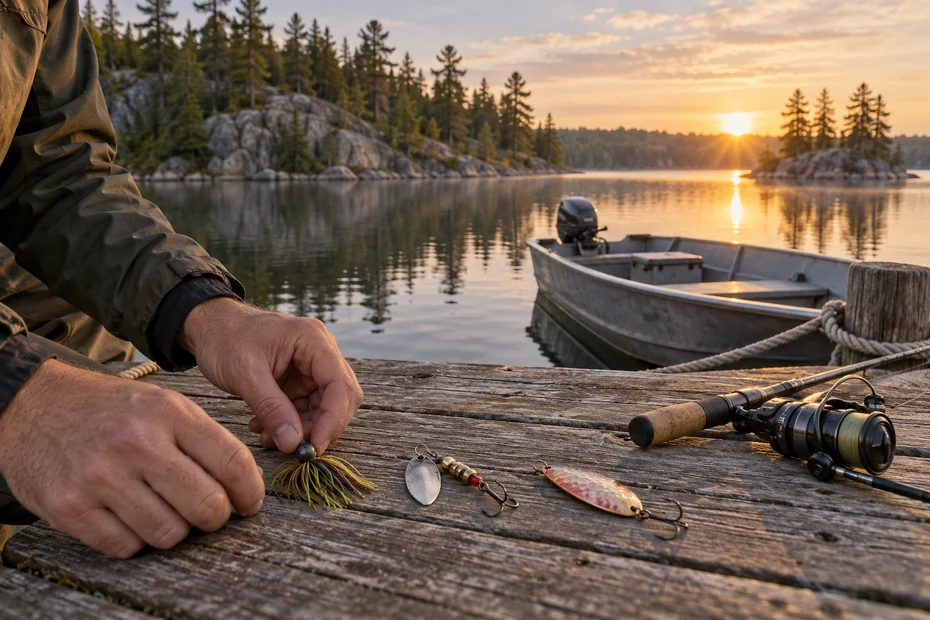
Canadian fishing / species-first trip planning
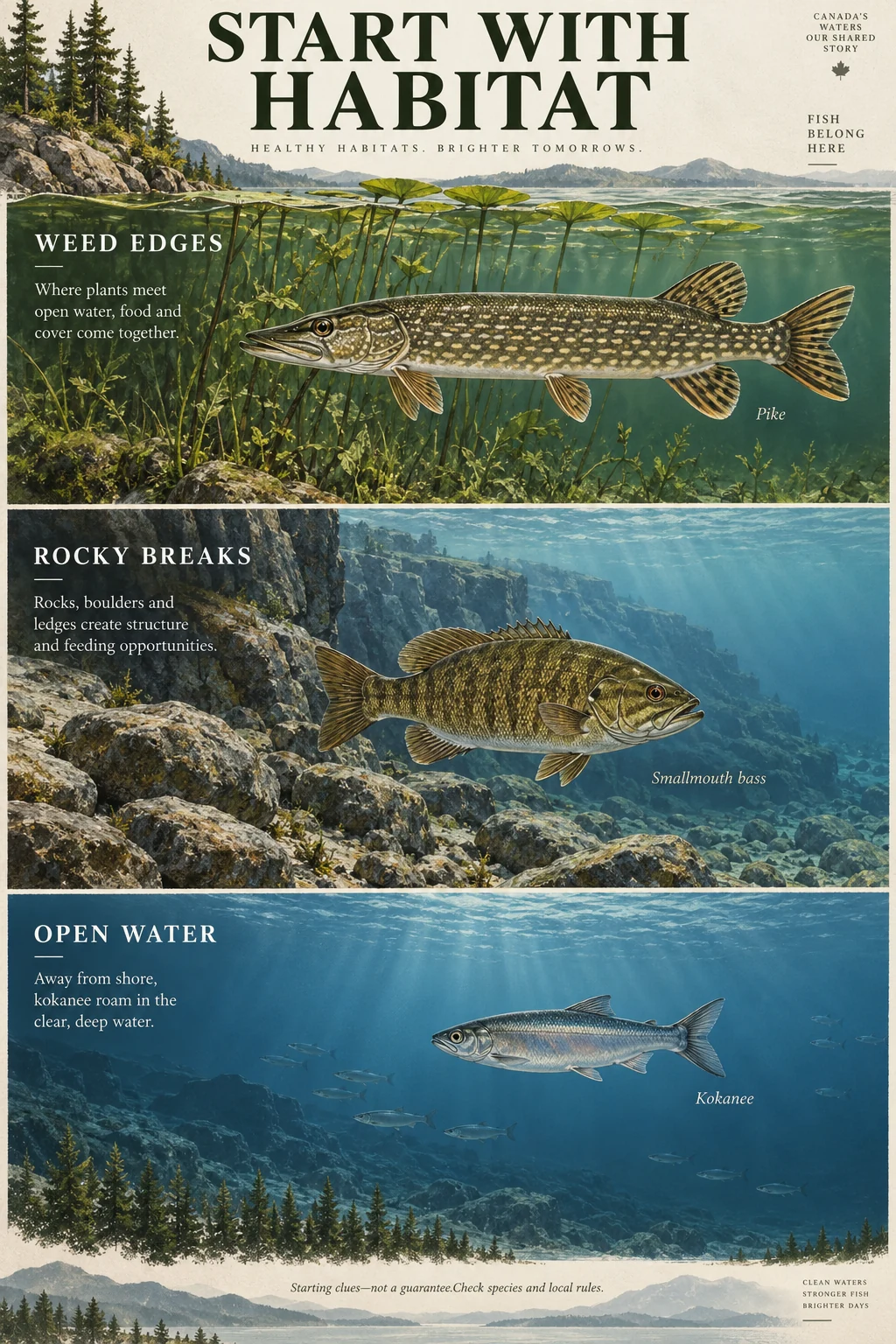
Fishing for specific species works best when you choose the fish first, then match its habitat to water you can actually reach. A weed-edge pike trip, a rocky smallmouth outing and an open-water kokanee day require different presentations, access and equipment—even when all three start at a Canadian lake.
The useful question is not which Canadian fish is “best.” It is which fish offers a realistic outing for your available time, access and experience. Start with a modest plan that you can explain before the first cast.
Fishing for specific species: choose a realistic target
Begin with access. If you have a couple of hours, a public fishing dock or stocked urban lake may be more useful than a remote trophy destination. If your target usually requires covering open water, the transport and boat plan become part of the fishing method. A famous location cannot compensate for the wrong access.
Next, choose the kind of observation you can make. From shore, you can read weed margins, current seams, shade and visible rock. From a boat, you can investigate offshore structure and depth changes. Electronics help describe the water column, but a mark on a screen still needs interpretation; it is not a confirmed species identification.
For identification and distribution, use our Canadian fish species guide. This article instead connects an identified target to a workable outing. Once a basic presentation is producing useful information, the advanced fishing techniques guide can help you refine it.
| Target | First habitat clue | Starting presentation | Access question |
|---|---|---|---|
| Walleye | A bottom transition, rocky edge or cover near a depth change | A jig worked close to bottom; a controlled drift when conditions permit | Can you reach the edge while maintaining bottom awareness? |
| Northern pike | Vegetation with adjoining open water | A spoon, spinner or suitable soft bait worked along the outside edge | Can you retrieve without dragging through an entire weed mat? |
| Smallmouth bass | Rock, shoals, points and broken bottom | A modest jig or soft bait; a moving lure to explore more water | Is there enough casting room and a safe route around the bank? |
| Stocked rainbow trout | An accessible lake with a current stocking record | A small spinner, spoon or permitted float presentation | Is the lake shore-only, and can you reach water beyond shallow weeds? |
| Kokanee | Open lake water and a changing feeding depth | A small lure behind a dodger, trolled with depth control | Do you have a suitable boat and a repeatable way to control depth? |
These are starting hypotheses, not fixed depths or universal seasons. Fish move, water clarity changes and a legal method on one lake may be prohibited on the next. The named techniques below are options to evaluate after checking the local rules.
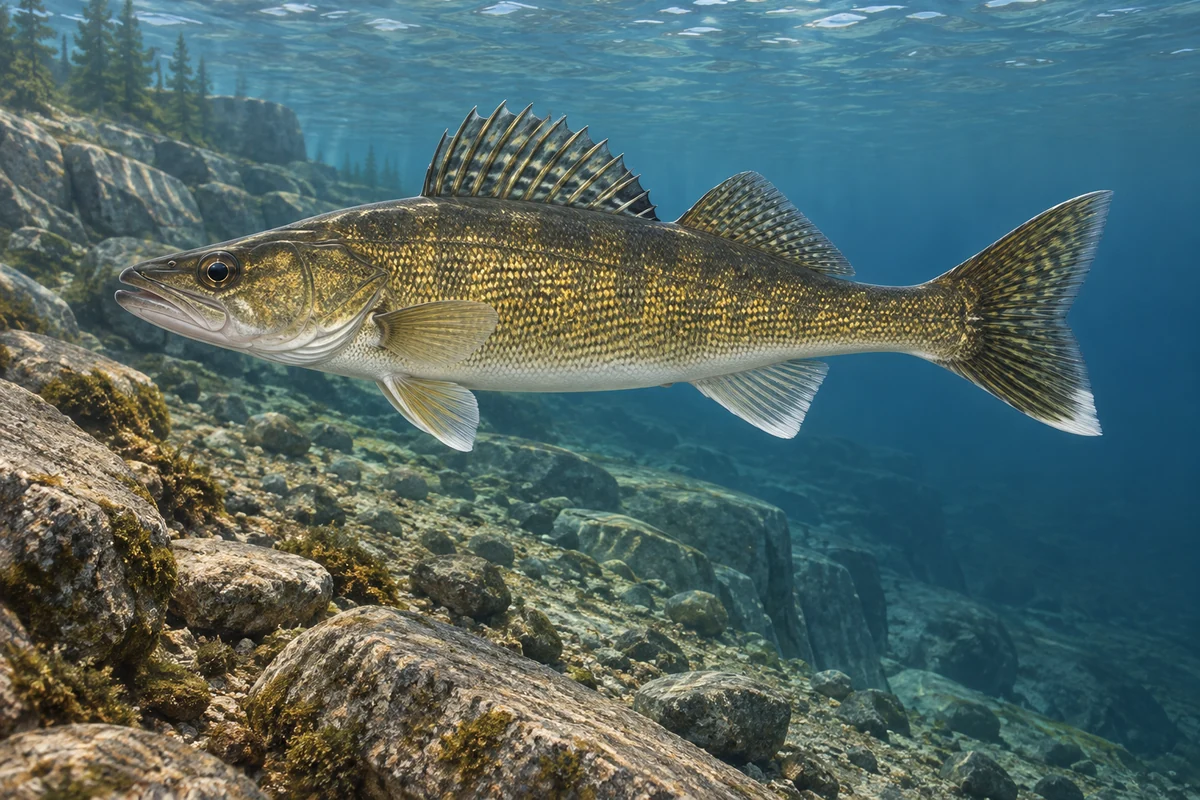
Walleye: make bottom contact informative
Ontario’s walleye profile describes a fish that uses both clear and stained waters and a range of cover. Lower-light periods can be useful starting opportunities. The practical implication is to plan a presentation around a specific edge or change in bottom rather than assume the entire lake will fish equally.
Start with a jig that you can track through the retrieve. It should be heavy enough for useful control in the present wind and depth, without simply bulldozing the bottom. Cast beyond the transition, allow it to settle and work back deliberately. If you cannot tell whether it is sinking, touching bottom or snagged, simplify before changing colours.
From a boat, compare a controlled pass along a contour with repeated casts from a stable position. Note the direction and approximate depth of any response. If every cast snags, move the presentation above the obstacle or change its angle. Repeatedly sacrificing tackle does not prove that fish are holding there.
A worm harness or minnow-style lure can offer a moving alternative where the bait and gear are permitted. Keep the location and depth plan consistent enough to learn from the change. Before a spring outing, read our walleye spawning and seasonal-rule guide; an attractive spawning location is not an invitation to target a closed fishery.
Northern pike: work the edge and plan the release
Ontario’s Learn to Fish guide identifies shallow, weedy water as a useful pike habitat clue. Look for the boundary between vegetation and open water, an opening in cover, or a change in the shoreline. An edge gives you a more specific casting target than an undifferentiated bay.
Use a presentation you can retrieve along that boundary. A spoon offers a simple moving profile; a spinner or suitable soft bait gives a different movement and route through cover. Cast from several angles before deciding an edge is unproductive. If weeds collect on every retrieve, change the angle or presentation rather than assume pike are absent.
Treat bite protection as a separate decision from main-line strength. Choose an appropriate pike leader and inspect it, the connection and the hooks for damage. A reel that holds strong line does not prevent a tooth-related cut-off. Bring suitable hook-removal tools and a landing plan that keeps hands away from the mouth.
This target can make a rewarding Canadian lake outing, but it demands more release preparation than small stocked trout. Keep a hooked fish in the water as much as practical, avoid prolonged photographs and stop when conditions make a careful release unlikely. Our northern pike fishing guide develops the species-specific setup further.
Smallmouth bass: distinguish searching from working a spot
The provincial smallmouth bass profile is a useful starting source for habitat and angling information. Rock, points and changes in bottom provide a practical search framework. A shoreline with visible boulders can offer readable structure; a steep bank without safe casting space may be a poor choice despite good-looking water.
Use a moving lure when the first task is to explore a stretch. Keep casts systematic so you cover different angles instead of repeatedly throwing to the easiest open space. Once you find a useful feature or receive a response, a jig or soft bait lets you investigate it more slowly.
Match the hook and weight to the presentation and cover. A heavier sinker may improve control but can also wedge into broken rock. A lighter approach may drift away from the feature in wind or current. The useful compromise is the lightest arrangement that you can still present deliberately in the conditions you face.
Do not treat visible nests or a familiar warm afternoon as proof of an open season. Bass regulations can vary by management zone and waterbody. Set your trip date using the applicable official rules, then make decisions about location and presentation inside that legal window.
Rainbow trout and kokanee: two different lake plans
A stocked rainbow trout lake is often a practical introduction because you can check a stocking record and look for established public access. The Freshwater Fisheries Society of BC’s beginner techniques guide explains float, bottom and trolling approaches. Choose between them according to the reachable water, bottom conditions and local restrictions.
A small spinner or spoon is useful when you have enough casting space and want to explore. A permitted float presentation lets you hold an offering at a chosen depth. A bottom presentation is less useful where weeds or debris repeatedly bury the bait. Stocking confirms that fish were released; it does not guarantee they will feed beside the nearest parking space.
Kokanee are a separate planning problem. They feed in open water, and their usable depth changes with lake conditions and season. The society’s kokanee trolling guide explains depth control and small-lure presentations. A dodger and lure should work as a coordinated arrangement, rather than a collection of extra hardware.
For a first kokanee outing, choose a method that allows you to repeat a depth and adjust it intentionally. Record the setting and boat movement associated with a response. A boat is not automatically suitable just because it floats: weather, freeboard, required safety equipment and the group’s handling skills belong in the decision. If those conditions are uncertain, choose shore trout or hire an appropriate guide.
Build the setup around the job
Rod length, action, lure range, line and leader need to work together. The lure-weight range printed on the rod is a useful first check; do not load a light trout outfit with a much heavier pike presentation merely to gain casting distance. Likewise, a heavy predator outfit can make tiny trout lures awkward to present.
A medium spinning setup is a flexible starting point for many bass and walleye presentations, but it is not a universal Canadian fishing kit. Small trout lures favour a lighter matched outfit. Larger pike lures and specialized trolling arrangements can justify a separate setup. Buy for the method you have actually selected, not every species you might encounter.
| Fishing job | What to prioritize | What to avoid |
|---|---|---|
| Small-lure shore trout | A rod rated for the lure, manageable line and room for a clear cast | Heavy hardware that overwhelms a small presentation |
| Bass or walleye casting | Repeatable casting, contact with the presentation and a workable drag setting | Choosing a reel solely by maximum drag or bearing count |
| Pike in vegetation | Appropriate lure range, bite protection and release tools | Assuming thicker main line replaces a suitable leader |
| Kokanee trolling | Consistent depth, compatible lure/dodger action and safe boat control | Buying trolling accessories before resolving boat access |
| Guided coastal salmon | A clear booking scope, licence plan and weather clothing | Buying a complete offshore outfit before checking supplied gear |
Two practical additions for a planned freshwater trip
As an Amazon Associate, CanadaFever earns from qualifying purchases. The links below are affiliate links; prices, availability and delivery vary.
Use these as options after matching your rod, target and access. They are listing-based selections, not claims of personal product testing. A tackle box solves organization; it does not turn an unsuitable outfit into a specialist setup.

Pflueger President spinning reel: size 30
A specific size 30 reel option for a matched freshwater spinning outfit. Check the selected size and your rod balance before ordering.
- Graphite body and rotor on the verified size 30 listing.
- Aluminium spool and a handle configurable for right- or left-handed use.
- Listed monofilament capacity includes 130 yards of 8 lb line; line choice still depends on your method.

Plano 23700-02 adjustable tackle box
A transparent 3700-series organizer for separating the few presentations you intend to use. Check its footprint against your bag.
- Adjustable dividers create 4–24 compartments.
- ProLatch closures on the verified listing.
- Transparent construction helps identify contents without opening every compartment.
Canadian places that fit different fishing decisions
A useful destination recommendation tells you why it fits a trip. Choose a region where your intended species is documented, then resolve the exact waterbody and public access. A provincial park name often covers many lakes with different roads, launches and rules. Reserve time for those details before committing to accommodation.
These examples are planning anchors, not a ranked list of guaranteed catches. They help you decide whether to investigate a stocked shore lake, a Shield-water outing or an open-water specialist trip. For a wider travel comparison, see our Canadian fishing destinations guide.
| Planning anchor | Why it fits | Next decision |
|---|---|---|
| Green Timbers Lake, Surrey, BC | A stocked urban lake with official shore-fishing access | Read the City of Surrey restrictions; no boats or wading |
| Sheridan Lake, Cariboo, BC | Documented rainbow trout stocking and a north-shore fishing dock | Confirm dock access and regional lake-specific rules |
| Lac La Ronge Provincial Park, Saskatchewan | A large park with documented walleye and northern pike opportunities | Pick a specific lake and a realistic boat or shore access route |
| Whiteshell Provincial Park, Manitoba | A Shield-water region with several fishing targets | Match the named lake to the intended species, road and launch |
| Lake Nipissing, Ontario | Documented walleye and northern pike opportunities near North Bay | Check Lake Nipissing-specific rules and the precise public access or launch |
Destination Ontario’s Lake Nipissing guide documents that lake’s fishing targets. Surrey’s Green Timbers park page establishes its shore-only restrictions. The Sheridan stocking record and fisheries society dock report help verify that separate option. Saskatchewan Parks and the official Whiteshell map are starting sources for those larger regions.
When nothing happens, change one thing
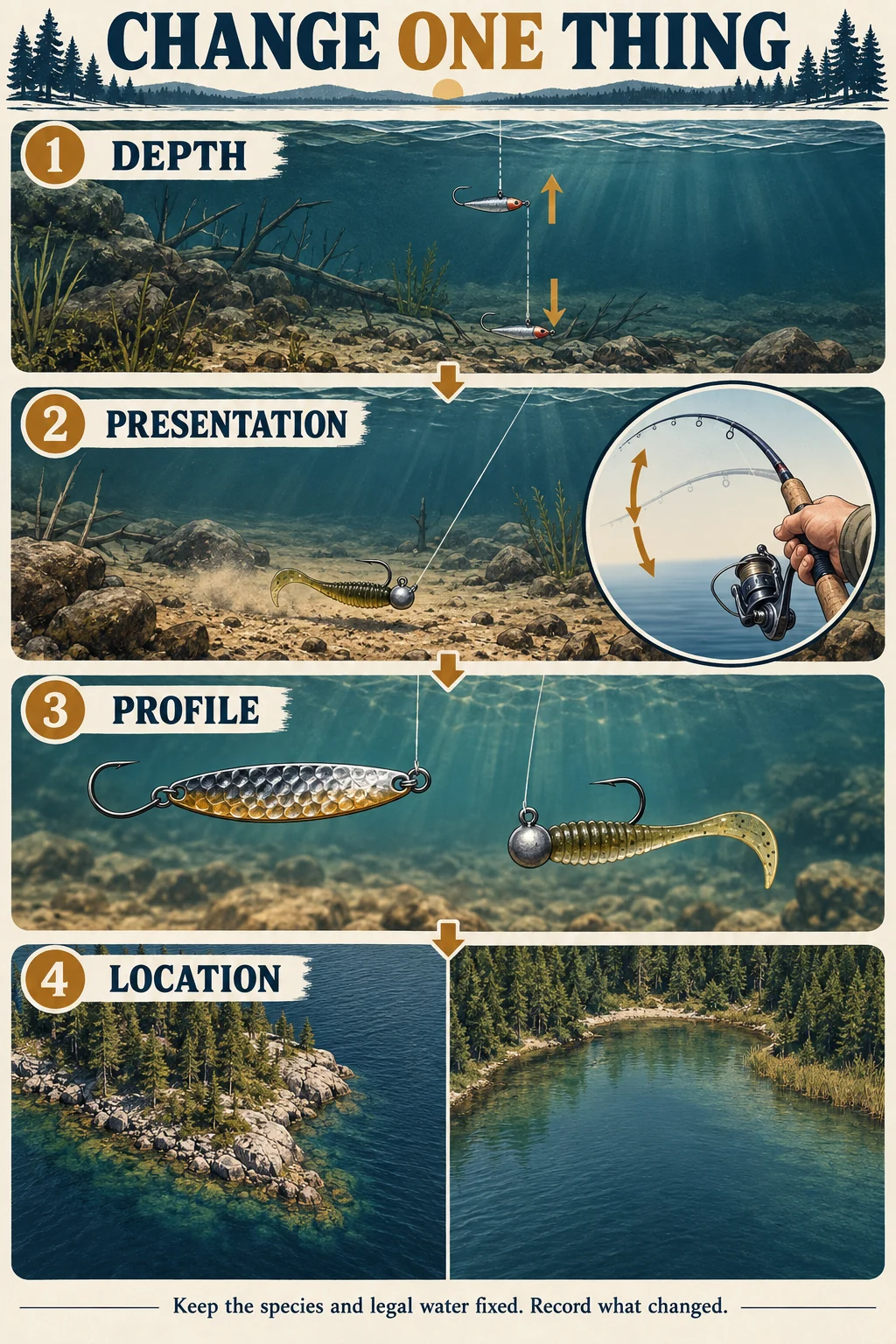
First establish whether the method is working mechanically. Check that the lure is clean, the hook point is sound, the line is not wrapped around a guide and the presentation reaches the intended water. A weed-covered lure or an uncontrolled drift creates poor evidence about fish behaviour.
Then make a specific change. Move the presentation through a different part of the water column while keeping its movement familiar. Alternatively, retain depth and change the pause or retrieve. If you alter depth, lure, speed and bank position together, a later bite gives little indication of which decision mattered.
After a reasonable, deliberate attempt, move to a different feature that still suits the target. Compare an outside weed edge with a nearby opening, or one rocky point with another. Keep a short note of conditions and responses. It can be as simple as “clean bottom contact, no response; slower retrieve next.”
Decide your stopping point in advance. Rising wind, an uncomfortable boat ride, unsafe footing or difficulty releasing fish are good reasons to finish or change the outing. A complete day includes returning safely and leaving the access point clear; it does not require forcing a catch into the final hour.
Check the licence and rules for this exact trip
Canada does not have one recreational freshwater licence or a single national set of fishing zones. Provincial and territorial rules apply, with additional federal requirements in some fisheries. Check the named water, species, date, bait and gear restrictions before using any method in this guide.
For Ontario, select the correct residency category and duration, and distinguish a Sport fishing licence from a Conservation fishing licence. They can carry different catch and possession limits. The official Ontario licence service publishes current fees and Outdoors Card requirements. Avoid deciding from an old price table: the lowest fee is not necessarily the product that matches your trip.
Ontario’s 20 Fisheries Management Zones are Ontario zones, not 20 zones covering Canada. Read the relevant zone and waterbody exceptions in the Ontario fishing regulations summary. A permit does not remove a closed season, sanctuary or bait restriction.
In BC, distinguish the provincial freshwater system from the federal tidal system and the DFO rules for non-tidal salmon. Our BC fishing regulations guide explains those checks. For a broader itinerary, use our Canadian licence planning guide and confirm each jurisdiction separately.
Frequently asked questions
What is the easiest species to plan a first Canadian fishing trip around?
An accessible stocked trout lake is often a practical first option because you can verify stocking and public access. It is not a guarantee of a catch. Choose a legal method, manageable casting space and a short session; an easy outing is more valuable than an ambitious target that your group cannot reach.
Can one spinning outfit cover trout, bass, walleye and pike?
It can cover some overlapping lure ranges, but one outfit rarely handles every presentation well. Match the rod rating, reel and line to the job. Small trout lures, large pike lures and depth-controlled trolling can require different arrangements. Pike also require appropriate bite protection and release preparation.
Should I change bait or move when I am not getting bites?
Check the presentation first: clean lure, sound hook, controlled depth and a retrieve that reaches the intended feature. Then change one variable. If the method is functioning but a deliberate search finds no response, try a different suitable feature rather than continually changing tackle at the same uninformative spot.
Does catch-and-release fishing avoid season or licence requirements?
No. Releasing fish does not create permission to target a closed species or fish in a sanctuary. Licence, season, gear, bait and waterbody rules still apply. Read the current official requirements for the exact location before planning either a harvest trip or a release-only outing.
When does a fishing guide make more sense than buying specialist gear?
Consider a guide when access, boat handling or specialist depth control is the main obstacle. A first coastal salmon or large-lake trip can involve more than choosing a rod. Confirm the target, supplied equipment, licence responsibilities, group capacity, weather arrangements and cancellation terms before booking.
Your final species-to-trip check
Write down one main plan and a usable backup. If an essential decision is unresolved, finish it before adding another lure to the bag.
This checklist works without JavaScript. A checked box records your preparation; it does not establish that fishing is permitted.
Research checked 2 October 2026. Official rules and in-season notices remain authoritative. Generated illustrations depict general fishing concepts, not documented field visits, catches or the named locations.