

Plan an Ontario night fishing outing around exact water restrictions, access hours, daylight scouting, task lights and a manageable return.
- Use The guide to Fishing at Night in Ontario to match destination, season, access, and budget to the kind of trip you actually want
- Check licences, local rules, travel logistics, weather, and booking windows before locking in dates
- Compare locations by practical fit: target species or activity, remoteness, services, safety, and backup options
Bottom line The guide to Fishing at Night in Ontario becomes easier when you choose the destination around timing, access, rules, and your real trip style
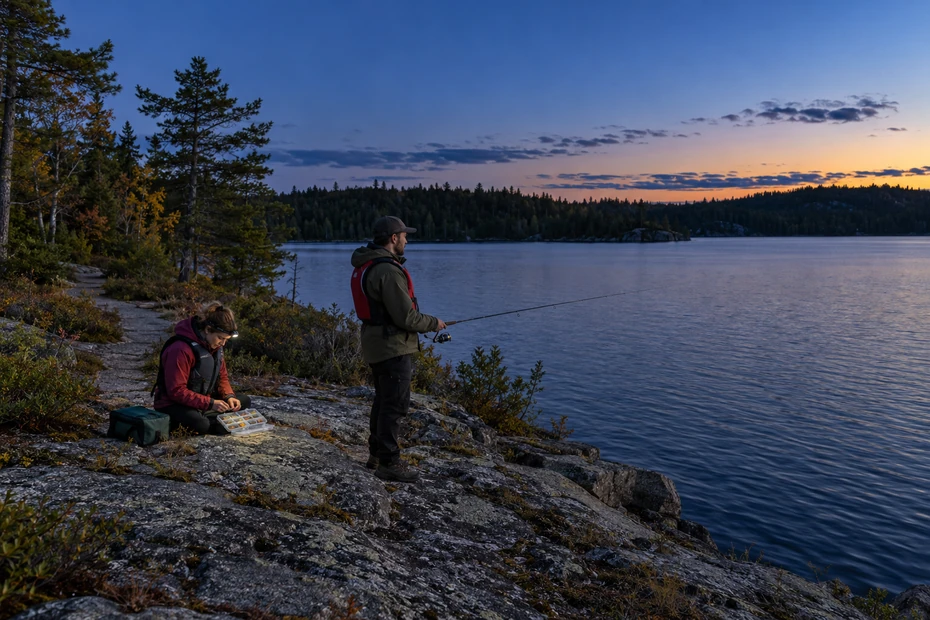
Fishing at night in Ontario starts with the exact water, an open species season and permission to use the access after dark. Ordinary rod-and-line angling is generally allowed at night, but province-wide rules have exceptions and some river reaches have seasonal night closures.
For a first outing, choose a familiar shore with firm footing and a short, known return route. Arrive while you can still inspect the bank. Keep the first session short enough to practise finding tackle and using both lights before the walk out.
Is fishing at night legal in Ontario?
For ordinary angling, generally yes. Section 34 of the Ontario Fishery Regulations, 2007 exempts angling from the general sunset-to-sunrise sport-fishing prohibition, except in Eagle Lake at 49°42′N, 93°13′W. That exemption does not cancel other closures or authorize every fishing method.
Read the current Ontario Fishing Regulations Summary in layers: general rules, the relevant zone, then the exact waterbody and species exceptions. A lake name alone can be ambiguous. Match the location and the described boundaries before treating an exception as applicable.
| Water or reach | Restriction to check | Why the detail matters |
|---|---|---|
| Eagle Lake, 49°42′N, 93°13′W | Angling is excluded from section 34’s night exemption | The sunset-to-sunrise prohibition applies; do not transfer another lake’s permission here |
| Maitland River, Colborne and Goderich Townships: 550 m downstream from Falls Reserve Waterfall to the first natural waterfall | Night-fishing sanctuary closure, September 15 to October 31 | The listed night period is half an hour after sunset to half an hour before sunrise |
| Saugeen River, Amabel and Saugeen Townships: Denny’s Dam to the concrete abutments downstream | Night-fishing sanctuary closure, October 1 to October 31 | This named reach has its own closure; the river name does not describe the full boundary |
The river examples come from the current FMZ 16 waterbody exceptions, checked on October 17, 2026. Read the complete entry for your date, including any additional daytime, species or year-round restrictions.
Keep the season and licence valid through the outing
A closed season also prohibits deliberately targeting that species for release. Ontario’s seasons and sanctuary guidance explains that distinction. Changing the intended destination of the fish does not open a closed fishery.
An Ontario one-day sport fishing licence covers one calendar day starting at midnight, rather than 24 hours after purchase. If fishing will continue past midnight, arrange valid coverage for both dates. Carry the licence documents or applicable identification required for your circumstances; check the current licence rules before departure.
Headlamps, glow tackle and lights that attract fish
The general fishing regulations prohibit artificial light used to attract fish, subject to specific exceptions. For angling, the exception concerns a light forming part of a lure attached to the line. Do not assume that covers a separate illuminated float, a floating lamp or an underwater attractor.
Direct a work light towards the knot, tackle or walking surface you need to see. A red setting does not create a legal exception. If a proposed lighting arrangement depends on interpreting the lure exception, confirm the exact setup with Ontario’s Ministry of Natural Resources before using it.
Choose a place you can fish and leave comfortably
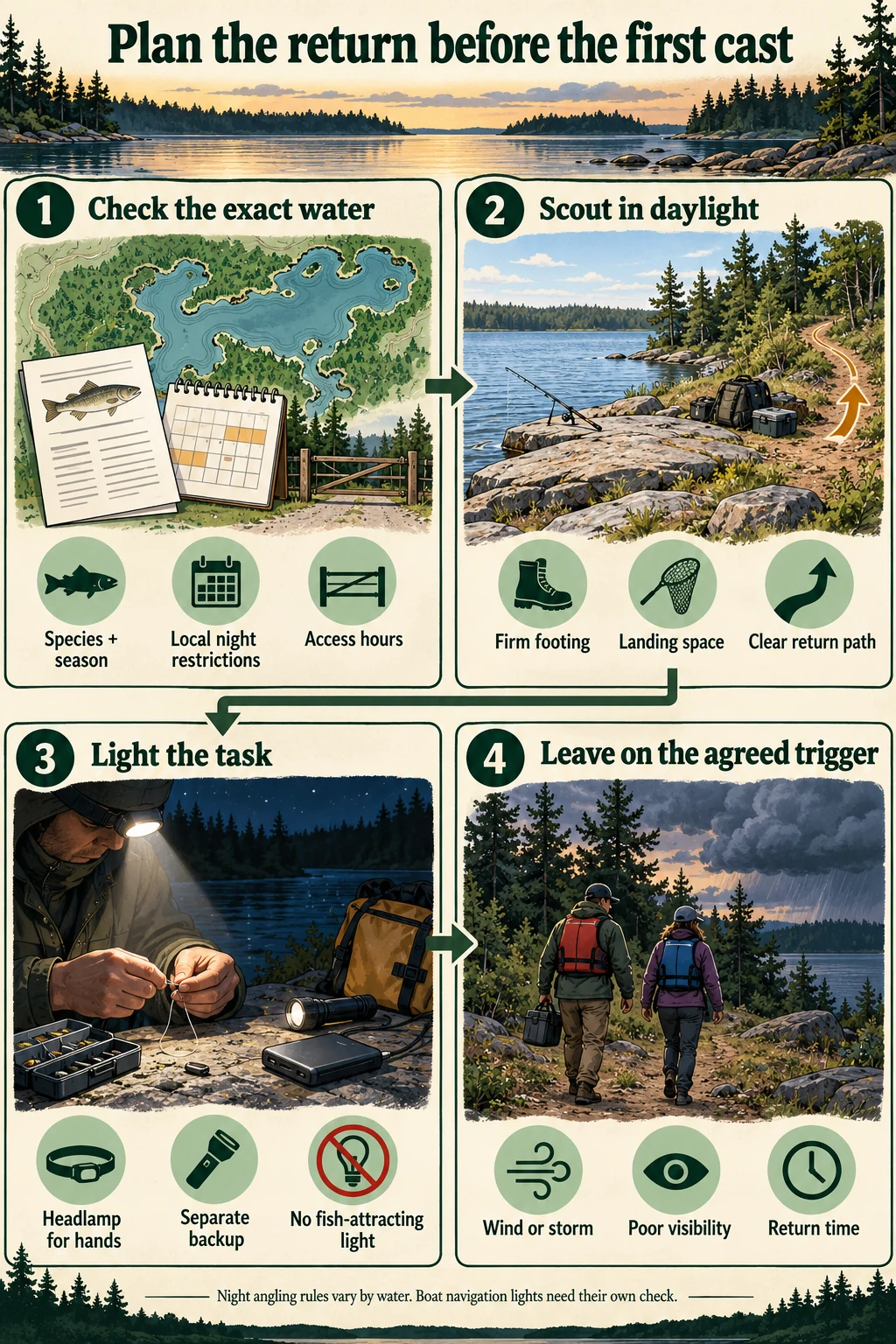
A useful night spot has more than a promising fish report. You need a place to stand, room to cast without hooking someone, somewhere to land a fish and a route back that remains manageable as visibility changes. Check those details at the actual bank you intend to use.
Inspect the shore before sunset
- Footing: look for slick algae, loose rock, eroded edges, steep banks and changes in water level. Choose a broad dry position with room to step back.
- Landing space: decide where the net and tools will be used without climbing down an unfamiliar ledge or entering current.
- Casting room: check branches, other anglers, paths and the space behind your rod. Agree who is casting before either person starts.
- Return: walk the route to the vehicle, identify junctions and confirm the departure gate. Save an offline map where useful, but check the actual path.
Keep this first session on land. Wading adds depth, current and submerged footing decisions that become harder to judge in darkness. Familiar daylight fishing access does not establish that a crossing or exposed bank remains suitable after rain.
Choose a target and a small area
Pick an open-season species and a method you already control. If you are learning low-light walleye fishing, work through the species-specific night walleye techniques guide after settling the Ontario access and regulations. Its fishing suggestions cannot establish permission for a particular water.
Use daylight to identify a repeatable casting lane and retrieve path. For example, a short cast along a known clean edge can be easier to repeat than a long cast towards unseen cover. A snag that is merely annoying at noon can invite a poor footing decision in the dark. Break off or change the presentation rather than pursuing tackle into unsafe water.
Ask a local tackle shop or qualified guide about present conditions and practical access. Be specific about the date, reach, target species and whether you will be on shore. A general recommendation to fish a large lake at night leaves most of those decisions unresolved.
Make a separate decision for a boat
Use the current Transport Canada Safe Boating Guide to check the vessel’s required equipment and lights. Requirements depend on the craft and its operation; do not apply a single lamp arrangement to every motorboat, canoe and kayak. A personal headlamp is not a substitute for compliant navigation lighting.
Before committing to a night return, establish that the operator can navigate the route and handle the launch, hazards and expected traffic. Test the installed lights, check power for the whole trip and use the appropriate current nautical charts. A saved launch waypoint shows a destination; it does not establish a clear route around shoals or other boats.
File a trip plan with a trusted person, including the route, people aboard and overdue procedure. Wear a properly fitted Canadian-approved lifejacket or PFD and prepare for a person entering the water. If the night route or equipment remains uncertain, finish the boat outing in daylight. The fishing electronics guide separates portable phone power from boat electrical systems.
Prepare lights and tackle you can use by touch
Use your normal suitable rod, reel and line before buying a dedicated night outfit. Check the complete rig’s weight against the rod rating and practise its knot and retrieve while you can see. The matched beginner gear guide helps with that basic compatibility.
Carry fewer lure changes than on a roaming daylight trip. Put each item in a repeatable place, protect exposed hooks and keep the landing net ready. A bag full of loose options makes it harder to find the tool needed while controlling a fish.
- On your person: a charged headlamp, separate backup light, required licence documents and accessible communication equipment protected from water.
- At the landing position: a suitable net, pliers, hook-removal tools and any measuring equipment needed for the fishery.
- In dry storage: an appropriate spare layer, drinking water, first-aid supplies and the cables needed for your actual devices.
- For the weather: suitable footwear, insulating layers and rain protection that allow you to cast and use the PFD without restricting movement.
Choose fishing layers for the temperature and exposure while standing still, as well as the walk in. Keep essential contents dry independently of the outer pack; the bags and backpacks guide explains the difference between rain resistance and sealed storage.
Three optional light and power purchases
These accessories cover different jobs: hands-free work, an independently charged light and reserve USB power. They do not form a complete boating or emergency kit. Keep useful equipment you already own if it serves those jobs.
As an Amazon Associate, CanadaFever earns from qualifying purchases. Links below lead to Amazon.com. Confirm the selected model, seller, delivered cost and shipping to your Canadian address before ordering.

Nitecore NU20 Classic: light for hands and tackle
Wear it while tying knots or finding tackle. Try the controls before leaving home.
- USB-C charging and white, high-CRI white and red light options.
- Maximum output is 360 lumens; 97-hour runtime applies only to the 1-lumen setting.
- IP66 rain resistance is not an immersion rating; carry a separate backup.

Streamlight MicroStream USB 66604: separate backup
The selected black boxed model is a pocket light you can keep apart from the headlamp.
- 250-lumen high and 50-lumen low settings, with a pocket clip.
- IPX4 splash resistance; protect it from immersion.
- The manufacturer’s 66604 sheet specifies a micro-USB cord. Check the supplied connector and charge before departure.

Nitecore NB10000 Gen4: phone power reserve
A portable USB reserve suits a phone or compatible small device. It does not restore mobile coverage.
- 39 Wh nominal energy and two USB-C outputs.
- Maximum 22.5 W from one output; 15 W combined when both are used.
- Despite IPX7, its manual excludes underwater use and requires thorough drying after accidental immersion.
Specifications and package details: NU20 Classic manufacturer page, MicroStream USB manufacturer page, Streamlight item-number sheet and NB10000 Gen4 manual.
Test the entire charging connection at home. A cable that fits a flashlight may have a USB-A plug at the power-source end and cannot connect directly to a USB-C-only bank. Start with both lights charged; do not make the backup depend on charging the failed primary light at the bank.
Set up an evening session you can control
Check and rehearse before leaving
Confirm the water, species, dates and access hours. Check the forecast, charge the devices and operate their controls. Tell your contact where you are going and when to act if you are overdue.
Arrange the position in daylight
Walk the return route, choose the casting lane and place the net and tools within easy reach. Practise a few controlled casts. Set the finish time early enough to pack and leave within access hours.
Fish within the plan and reassess
Keep the line attended and the space behind the rod clear. Pause if you cannot see what a task requires. Leave when weather, footing, visibility or fatigue makes the outing harder to manage.
Keep fishing decisions simple
Begin with a presentation you can place accurately in the known lane. Adjust one variable at a time, such as retrieve pace or the depth of the same rig. Keep track of where it contacts bottom and whether it returns cleanly. A modest change you understand is more useful than repeatedly changing unfamiliar lures in poor light.
Do not add chumming, extra lines or unattended baited rods because darkness makes them convenient. Check the exact bait, line and method rules for the water. The Ontario tackle guidance is a starting point; the zone and waterbody exceptions still matter. Choose lawful tackle for the target and conditions using the bait and lure guide.
Moonrise and sunset can help describe your session, but a moon-phase chart cannot establish that fish will feed at a promised hour. Record actual light, weather, presentation and observations. A quiet outing may justify changing the next plan; it does not justify extending tonight’s access or weather limits.
Prepare for landing before the bite
Agree who holds the rod and who uses the net. Keep hook-removal tools accessible and turn on enough task light to see hooks and hands. Avoid swinging a suspended lure towards your companion. The fishing tools guide distinguishes hook-removal tools from cutters with limited capacity.
Know the target’s legal size and retention rules before fishing. If identification or a required measurement is uncertain, do not guess in order to keep the fish. Follow the applicable immediate-release requirements for incidental out-of-season or otherwise prohibited catches.
| Change | Practical response | What to avoid |
|---|---|---|
| Wind rises or waves reach the stance | Stop and move inland; reassess the outing | Following the waterline onto a narrower ledge |
| Fog or darkness hides the return route | Stop fishing and use the prepared return plan; seek help if you cannot return safely | Wandering along an unfamiliar shoreline |
| Primary light fails | Use the separate backup to pack and return | Using the remaining light as a reason to extend the session |
| A storm approaches or thunder is heard | Leave exposed water and seek appropriate substantial shelter | Continuing under a tree, fishing shelter or open boat canopy |
| Access closing time approaches | Pack with enough time to leave | Treating a legal fishing season as permission to stay |
Use Environment and Climate Change Canada’s lightning safety guidance to plan suitable shelter. Build travel time into the decision; a vehicle well inland cannot shelter you while you remain on the water.
Pack for the walk out
- Secure hooks and close tackle boxes before lifting the bag.
- Account for net, tools, line offcuts and waste while the work light is available.
- Keep the return light accessible rather than packing it first.
- Tell your contact when everyone is out; record any route or gear problem for the next outing.
Night fishing in Ontario: common questions
Can I fish all night in Ontario?
Ordinary angling is generally permitted at night, subject to the exact water’s restrictions, open seasons and access rules. Eagle Lake at the coordinates specified in section 34 is an exception. Check any seasonal night sanctuary closure and licence validity across midnight.
Can I use a lighted bobber or an underwater fishing light?
Do not assume either is allowed. The angling exception concerns light forming part of a lure attached to the line. It does not expressly authorize every illuminated float or separate attractor. Confirm the particular setup before using it to attract fish.
Where is the best place for a first night session?
Choose familiar permitted access with a broad firm stance, a clear casting lane, manageable landing space and a short known return path. Inspect it in daylight and confirm departure hours. A named lake recommendation cannot establish that a particular bank meets those needs.
Does a one-day licence cover an overnight session?
It covers one calendar date starting at midnight. Fishing on the next date requires valid coverage for that date as well. Check your exact licence or applicable exemption before planning to continue past midnight.
Is a headlamp enough for night fishing from a boat?
A headlamp helps with close work. It does not replace the navigation lights, other equipment or operating competence required for the particular vessel and conditions. Use the current Transport Canada guide and finish in daylight if the night return remains uncertain.