

Choose freshwater bait and lures by depth, cover, tackle and local rules. Compare three exact examples and build a small box for the trip you plan.
- Match Fishing Bait and Lures for Canada in to your water, season, boat size, and actual skill level instead of buying by specs alone
- Prioritize readable controls, durable construction, and Canada-relevant use cases before chasing premium features
- Use the guide to compare what matters in the field: setup time, reliability, safety, storage, and upgrade path
Bottom line The right Fishing Bait and Lures for Canada in choice solves your real Canadian trip conditions without adding gear you will not use
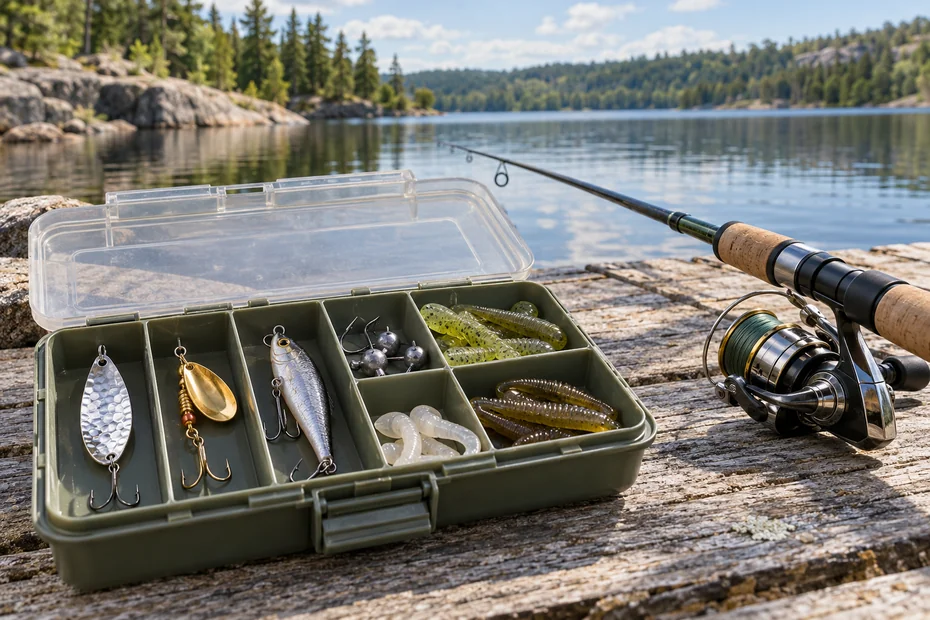
The best fishing bait and lures for Canada are those you can use legally, cast with your outfit and present where the target fish are feeding. Start with the waterbody, species, depth and cover. Then choose a small selection that gives you different ways to fish.
A shallow floating minnow, a sinking spoon and a jig solve different problems. Buying ten colours of the same lure will not help much if every one runs above the fish or gathers weeds on each cast. This guide focuses on freshwater selection; coastal salmon, heavy trolling and specialist ice presentations need their own tackle choices.
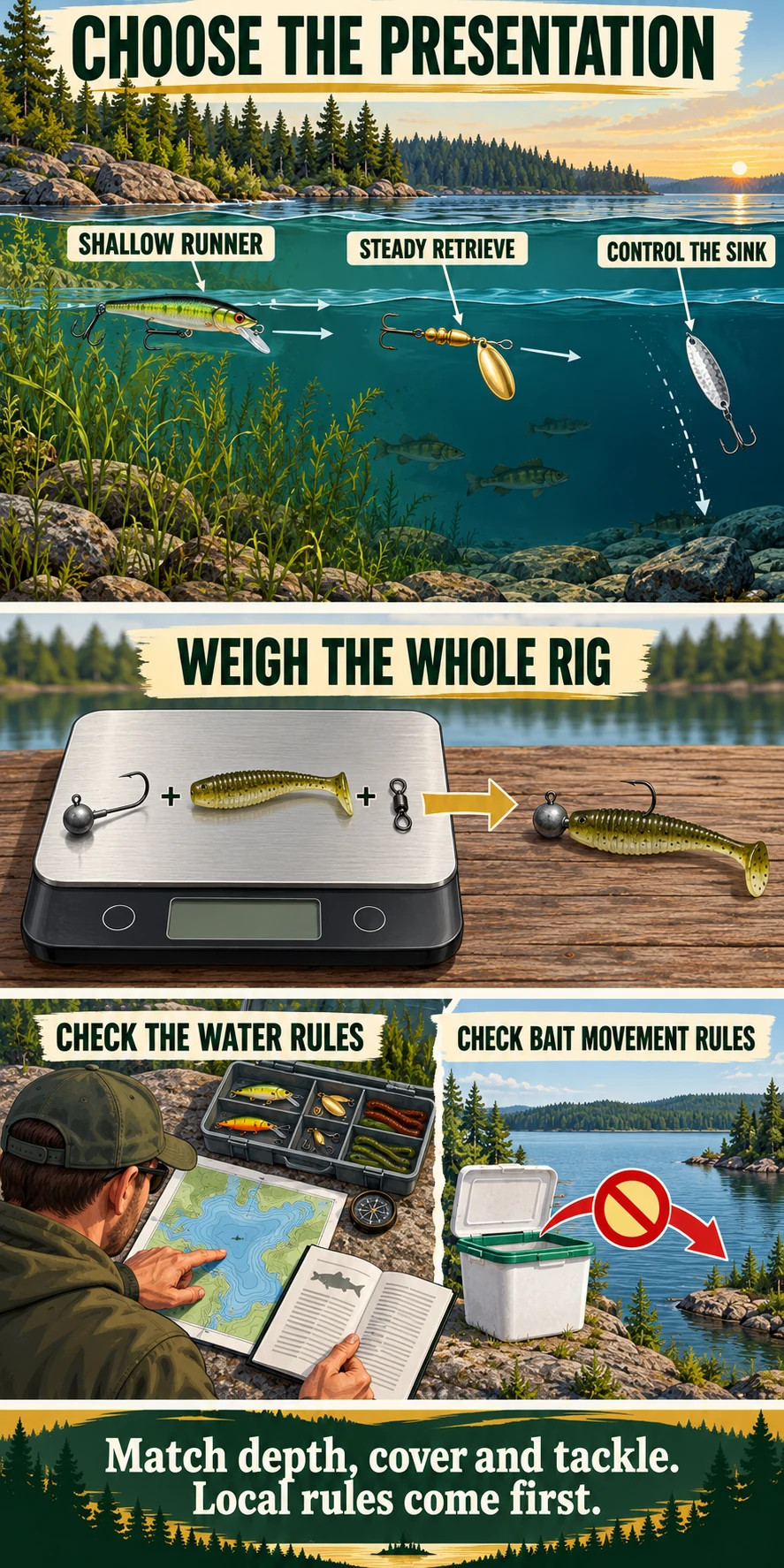
Match the presentation before the colour
Identify the species you intend to target and the water you can safely reach. From shore, that may be a clear lane beside weeds, a rocky point or a permitted dock. From a boat, it may be a particular break or suspended depth. Select a lure that can reach that area without constantly fouling.
| Fishing problem | Presentation to compare | Important limit |
|---|---|---|
| Cover open shallows with repeated casts | Inline spinner or shallow minnow plug | Exposed hooks collect weeds and snag wood |
| Work a chosen depth on the retrieve | Sinking spoon or jig-and-plastic | Depth changes with weight, current and retrieve speed |
| Keep a small bait near a specific level | Legal natural bait or an artificial below a suitable float | Float setting, weight and bait rules still matter |
| Fish thick vegetation | A suitable guarded or weedless presentation | These three treble-hook examples are a poor starting point |
| Fish deep or troll specialised tackle | Purpose-fit jig, diving plug or trolling system | A shallow plug’s own diving range does not solve deep-water access |
For walleye, a jig lets you adjust head weight and dressing independently. For trout in a stocked lake, small casting spoons and spinners provide different sink and retrieve options. For bass, cover may determine the hook arrangement before anything else. Pike require deliberate leader, handling and tackle choices; do not treat an incidental pike capture as proof that a light trout setup is suitable for targeting them.
Use the narrower guides for stocked-lake trout spoons, pike lures in stained water, walleye jerkbaits and bass topwater lures when you know that is the trip you are planning.
Weigh what actually leaves the rod tip
A jig-head label describes the head, not every component attached to it. Add the soft plastic, hook hardware and any other cast weight when checking the rod’s lure range. A float rig includes its float and sinkers. A large plastic can add substantial mass even when the head looks light.
- Read the lure rating printed on your actual rod.
- Weigh the assembled presentation when its total is uncertain.
- Check that line, leader, knot and terminal hardware suit the intended fish and cover.
- Make a short, controlled test retrieve in clear water to check that the lure runs properly.
Our fishing rod guide separates rod power from lure weight, and the line comparison explains different mainline and leader roles. A lure’s small size does not make every rod able to cast it comfortably.
The guide’s log: choosing for one accessible lake
This is a hypothetical planning example, not a report of our own trip or a product test.
If I were packing for a permitted shore session at an Ontario lake, I would first confirm the open species, access and bait rules. I would ask about the bank I could reach rather than buy tackle for the deepest part of the lake.
With an open casting lane, I would take a small spinner, a shallow floating minnow and a sinking presentation suited to my rod. I would leave treble-hook lures in the box where dense vegetation made them impractical, and consider an appropriate alternative before casting into it.
I would begin with a retrieve I could repeat. If the lure returned covered in weed, I would change the path or depth. If it barely reached the likely feeding area, I would reconsider weight and presentation rather than immediately select another colour.
I would keep a short note of the lure, approximate countdown, retrieve and what I actually observed. A follow or missed strike would be useful information; several empty casts would not establish that a colour never works. Before moving to another lake, I would check the rules again and make a separate decision about any natural bait. I would keep only items that earned their place in that small box.
Three exact lure examples with different jobs
These are specification-based choices for light freshwater presentations, rather than a tested national ranking. They do not cover heavy pike or muskie fishing, thick weeds or every Canadian hook restriction. All three pictured versions have exposed treble hooks.
As an Amazon Associate, CanadaFever earns from qualifying purchases. Links open Amazon.com. Confirm the exact variant, pack count, seller, Canadian delivery, currency and total shipping/import cost before ordering.

Steady open-water retrieve
Mepps Aglia #2 plain treble B2 G/RW
A small inline spinner for a repeatable retrieve through an open casting lane. The selected gold blade has a red-and-white design; this is the plain treble version, without a dressed tail.
- Manufacturer size #2 is approximately 1/6 oz.
- The linked model is B2 G/RW, gold/red-white, with an exposed treble hook.
- Keep it out of thick vegetation; it is not a weedless or heavy-pike presentation.
Check the selected pack count before paying; marketplace count fields conflict. Confirm blade movement on a short retrieve rather than assuming an extremely slow retrieve keeps it spinning.
Check this exact lure on Amazon
Shallow floating presentation
Rapala Original Floating F09SH
The Shiner F09 is a balsa minnow plug that floats at rest. Rapala lists the F09 body at 3½ in and 3/16 oz, with a nominal 3-5 ft running range.
- The selected model is F09SH in Shiner, not another size or silver pattern.
- The manufacturer specifies two No. 8 hooks for the F09.
- Its shallow running range does not make it a deep-diving crankbait.
Treat the published depth as a guide rather than a guarantee. Line, speed and rigging affect the result. Marketplace weight fields conflict with the model table; use the manufacturer’s 3/16 oz specification.
Check this exact lure on Amazon
Controlled sinking presentation
Acme Kastmaster SW10/CH
This compact casting spoon gives you a sinking alternative to the floating minnow. The selected SW10/CH is Chrome, 1/4 oz; Acme describes a machined body with a split ring and treble hook.
- Choose the selected Chrome 1/4 oz model, rather than relying on the generic marketplace title.
- Change countdown and retrieve to explore a different path through open water.
- It has an exposed hook and can snag when allowed to settle into rocks or wood.
The listing’s general title refers to a different colour and weight. Confirm SW10/CH and the selected options. This small spoon is not a substitute for a complete deep-water trolling system.
Check this exact lure on AmazonManufacturer references: Mepps 2026 Aglia specifications, Rapala Original Floating specifications and Acme Kastmaster construction and sizes. Choose by the exact model and selected options, especially when a marketplace’s generic title conflicts with them.
Jigs, soft plastics and natural bait
A jig-and-plastic is useful when you want to change weight without changing the entire lure family. Match hook size to the plastic’s profile, rig it straight and leave the hook able to work as intended. A crooked body can spin or track poorly.
Choose enough weight to control the presentation for the depth, wind and current. More weight may improve contact but can also make a bait fall faster or wedge into rocky gaps. There is no single jig-head weight that suits every Canadian river and lake.
A float can hold a small presentation above a snaggy bottom. Set its depth for the water in front of you, balance it with the appropriate weight and keep enough line control to recognise movement. Do not copy a fixed leader length or sinker weight from a different fishery.
Natural bait is a local decision
Minnows, leeches and worms can be used in several freshwater presentations where permitted. They do not always outperform artificials. Buying bait at a shop also does not establish permission to use or transport it to your next destination.
Buy only what the planned session needs. Ask a licensed local seller about legal species, origin, storage and disposal, then confirm the official requirements yourself. Keep bait containers secure and separate from ordinary tackle. A dead or frozen baitfish can still fall under movement and import rules.
For the handling and presentation basics, see fishing with live bait and beginner fishing techniques. Use those alongside the current official rules for your destination.
Check water rules, bait movement and border requirements
Before packing natural bait or modifying a lure, check the province or territory, the individual waterbody, target species and current notices. National parks and other specially managed waters may have separate requirements. A lure recommendation cannot establish permission to fish a closed season or use a particular hook.
- Check permitted bait and the applicable definition of an artificial lure or fly.
- Check hook points, barbs and any limits on the number or arrangement of hooks.
- Check bait possession, harvest, movement and disposal separately from fishing permission.
- Read current waterbody exceptions and in-season changes before departure.
Ontario’s bait-management rules restrict movement of baitfish and leeches between Bait Management Zones, with limited exceptions. Anglers fishing outside their home zone must follow the local purchase or preserved-bait provisions and applicable receipt requirements. These are Ontario rules, not a Canada-wide system.
In Ontario, refrigeration or freezing alone does not meet the stated definition of preserved bait. The province also prohibits depositing bait and its holding materials into or within 30 metres of water. Read the official page for the precise scope and exceptions rather than treating a frozen container as unrestricted travel bait.
For B.C. freshwater trips, use the provincial synopsis and current changes, including the relevant regional and waterbody entries. These can impose different bait and hook conditions. Do not assume crushing a treble hook’s barbs makes it comply with a requirement for single-point hooks.
The Canada Border Services Agency’s bait guidance says to declare bait and check federal plus provincial or territorial requirements before travel. Permits and documentation can depend on the species, product and origin. Consult the linked CFIA import system; a retailer’s shipping option or an old lodge packing list is not border clearance.
Change one useful variable at a time
Watch the lure on its return. Does the spinner blade turn? Is a plug tracking to one side? Are hooks buried in a plastic or carrying grass? Correct a mechanical problem before deciding the fish dislike the lure.
For a sinking presentation, a repeatable countdown helps you compare retrieves. It does not turn seconds into an exact depth: line, wind, current and lure shape alter the path. Start where you can avoid snagging, then adjust deliberately as you learn the water.
| What happens | Check first | Next adjustment |
|---|---|---|
| Weed on nearly every cast | Path, running depth and exposed hooks | Use an open lane or an appropriate guarded presentation |
| Lure runs above the intended area | Buoyancy, sink time, current and retrieve | Change presentation or weight within the outfit’s range |
| Spinner stops working on slow retrieves | Blade movement and tangled hardware | Clear fouling and find a steady speed that keeps it working |
| Plug tracks sideways | Damage, weeds and attachment arrangement | Inspect and follow manufacturer tuning instructions |
| No response despite a clean retrieve | Fish location, depth, access and time spent there | Change a useful variable or move rather than promise a colour fix |
Water clarity and forage can help you choose an initial profile and contrast, but colour is an experiment. Avoid a rigid sunny-equals-one-colour rule. Keep the retrieve and depth similar while comparing two finishes, and record what happened without turning a brief result into a universal claim.
Seasons affect access, fish location and legal opportunities. They do not supply a national spring/summer/fall lure calendar. Check the open season first, then adjust to the water you encounter; never interpret spawning activity as permission to target protected fish.
The pre-trip protocol: build a small useful box
Define one trip
Choose the legal target, access and likely depth. Check the current rules and decide whether natural bait is practical before shopping.
Choose complementary presentations
Take a few lures that offer different depth or cover options, all within your outfit’s working range. Include spares of an important item rather than many near-identical colours.
Prepare handling and storage
Inspect hooks, knots and connectors. Keep hook-removal tools accessible, separate sharp lures and leave room for wet tackle to dry after the session.
Keep the box ready for another trip
- Separate wet lures from dry spares until cleaned and dried.
- Keep incompatible soft-plastic materials in their own labelled packaging, following the maker’s storage advice.
- Replace damaged hooks and split rings with suitable sizes; changes can alter a lure’s balance.
- Pack out discarded line, broken plastics and packaging.
Our fishing knives and tools guide covers separate cutting and hook-handling jobs. Choose a tackle bag around the boxes you actually carry. For a first outing, pair the tackle plan with a suitable beginner fishing location, checking its current access and regulations.
Bait and lure questions
What is the best all-round fishing lure for Canada?
There is no national winner. Start with the legal target, depth and cover. A small selection of complementary presentations is more useful than a large set that all runs at the same depth.
Is live bait always better than artificial lures?
No universal comparison supports that claim here. Natural bait can suit particular methods where legal; artificials offer different handling, storage and presentation options. Choose for the actual fishery and its rules.
Can I take frozen minnows between lakes?
Do not assume freezing removes bait restrictions. Check the movement rules for the route and destination, plus import requirements if crossing a border. Bait law can apply to dead fish as well as live ones.
Can I use these factory treble hooks everywhere?
No. Waterbody, species and jurisdiction rules may restrict points, barbs and hook arrangements. Check before use. A crushed barb does not change a treble into a single-point hook.
Does a 1/4 oz jig head make a 1/4 oz cast?
Only if that is the total weight of the complete presentation. Plastics, sinkers, floats and other attached components add weight. Check the assembled rig against the rod’s range.