

Choose a Canadian freshwater rod by lure weight, reel type and transport. Compare three exact buying options and find specialist guides for other methods.
- Match Fishing Rods for Canada to your water, season, boat size, and actual skill level instead of buying by specs alone
- Prioritize readable controls, durable construction, and Canada-relevant use cases before chasing premium features
- Use the guide to compare what matters in the field: setup time, reliability, safety, storage, and upgrade path
Bottom line The right Fishing Rods for Canada choice solves your real Canadian trip conditions without adding gear you will not use
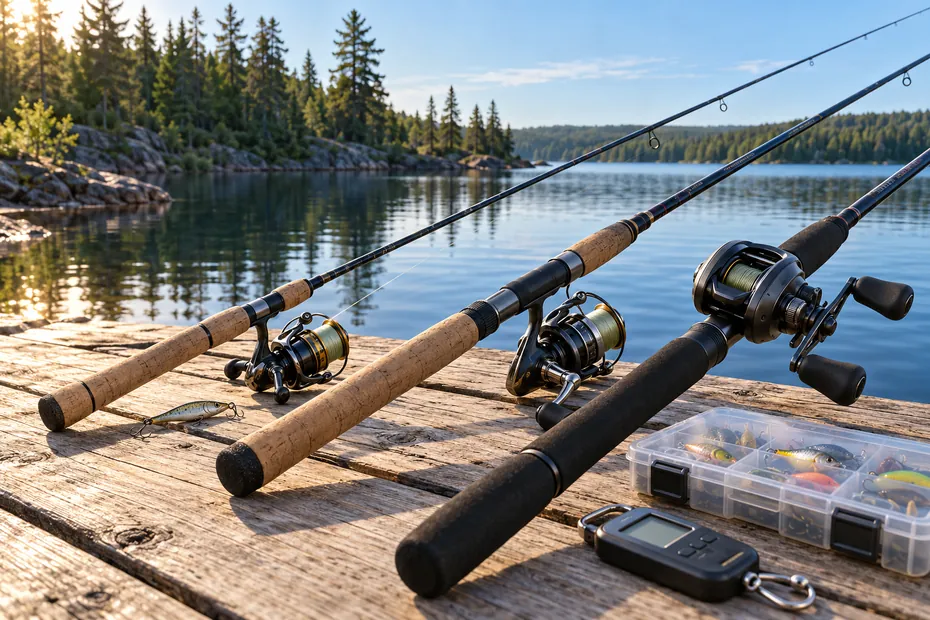
The best fishing rods for Canada match the complete lure or rig you cast, the reel you use and the space available at your fishing spot. A medium spinning outfit can cover a useful range of freshwater trips, but it cannot replace an ultralight, a heavy muskie rod or a specialist salmon setup.
Start with one realistic outing. A small jig beside a cottage dock, a weighted bass rig and a large predator lure put different demands on a rod, even if the same lake holds all three fish. Use those demands to narrow the models you compare.
Choose the best fishing rods for the method you will use
A species name is only part of the decision. Trout can be caught with tiny spinners, larger spoons, flies and deep-water trolling tackle. A rod selected for one method may be poorly suited to another. The same applies to bass and pike.
Note the casting weight, water and reel type. Then check cover, current and your landing plan. Do not choose a stronger power label solely because a large fish might be present.
| Your main job | What to check first | Where to compare |
|---|---|---|
| Ordinary freshwater shore casting | Complete rig weight, spinning-reel fit and casting space | Three examples in this guide |
| Tiny trout or panfish lures | Low-end lure rating, fine-line use and transport | Ultralight spinning rods |
| Large muskie casting lures | Actual lure mass, grip length and casting versus trolling design | Muskie rods by load and method |
| Small car, walking or airline travel | Longest packed section and protective case | Travel and telescopic rods |
| A child learning reel control | Reach, grip, reel operation and manageable length | Fishing rods for kids |
| Salmon or steelhead float, drift or trolling methods | Local presentation, line control, current and method-specific rating | Choose within that fishery; a generic species label is insufficient |
| Fishing through an ice hole | Short-rod handling, presentation and shelter clearance | Ice-fishing setup guide |
For fly fishing, the line carries the casting weight and the matching process changes. Our fly-fishing equipment guide explains matched outfits. Salmon, steelhead, trolling and ice fishing also need a method-specific choice; do not stretch this freshwater casting comparison into a recommendation for every Canadian fishery.
Three freshwater options with different buying roles
These selections compare manufacturer specifications and exact listing identities. CanadaFever has not field-tested these rods, measured their sensitivity or ranked their durability. The two Daiwas are rod-only choices; the GX2 includes a reel, so compare the cost of the complete outfit you need.
As an Amazon Associate, CanadaFever earns from qualifying purchases. Links lead to Amazon.com. Check the selected model, Canadian delivery, currency, seller, shipping and any import charges before paying.

When you need rod and reel
Ugly Stik GX2 USGXSP662M/35CBO
The selected new-model GX2 pairs a 6-foot-6, two-piece medium rod with a size35 spinning reel. Its 1/8–5/8oz lure range makes it a candidate for modest freshwater presentations that fit that total weight.
- Includes the spinning reel, unlike the two rod-only choices here.
- Manufacturer line rating is 6–15lb; choose suitable line and terminal tackle separately.
- Confirm the full USGXSP662M/35CBO model, because older GX2 generations and other sizes differ.
Skip this configuration for micro-lures below its range or heavy predator baits above it. A combo saves a pairing decision but does not include every item needed for fishing.
Check the medium GX2 combo on Amazon
When you already own a spinning reel
Daiwa AIRD-X AIRX662MFS
This 6-foot-6, two-piece medium spinning rod has a fast action and a published 1/4–3/4oz lure range. Compare it when your usual lures fit that range and you want to keep a compatible reel.
- Rod only; budget for a spinning reel if you do not already have one.
- Manufacturer line rating is 6–15lb, with a two-piece format for car transport.
- The 1/4oz lower casting rating is higher than the selected GX2’s 1/8oz floor.
It is not an ultralight alternative. Include the jighead when weighing a soft-plastic presentation.
Check the AIRX662MFS on Amazon
For a baitcasting setup
Daiwa AIRD-X AIRX702MHFB
The 7-foot, two-piece AIRX702MHFB is a medium-heavy, fast-action casting rod. Its 1/4–1oz lure range provides a different casting role from the two medium spinning examples.
- Use a suitable baitcasting reel; this is a trigger-grip casting rod.
- Manufacturer line rating is 10–20lb; two sections are confirmed in Daiwa’s specification table.
- Compare it for bass presentations within its range, with room to use the longer rod.
Skip it for tiny lures, a spinning reel or large muskie baits that exceed its rating. Medium-heavy does not mean it covers every heavy-lure fishery.
Check the AIRX702MHFB on AmazonSee Ugly Stik’s exact GX2 model table and Daiwa’s AIRD-X specifications for the published ranges. Keep the intended method in mind when selecting line and lures.
The guide’s log: choosing for a cottage shore
This is a hypothetical planning example, not a product test or a report of a trip we made.
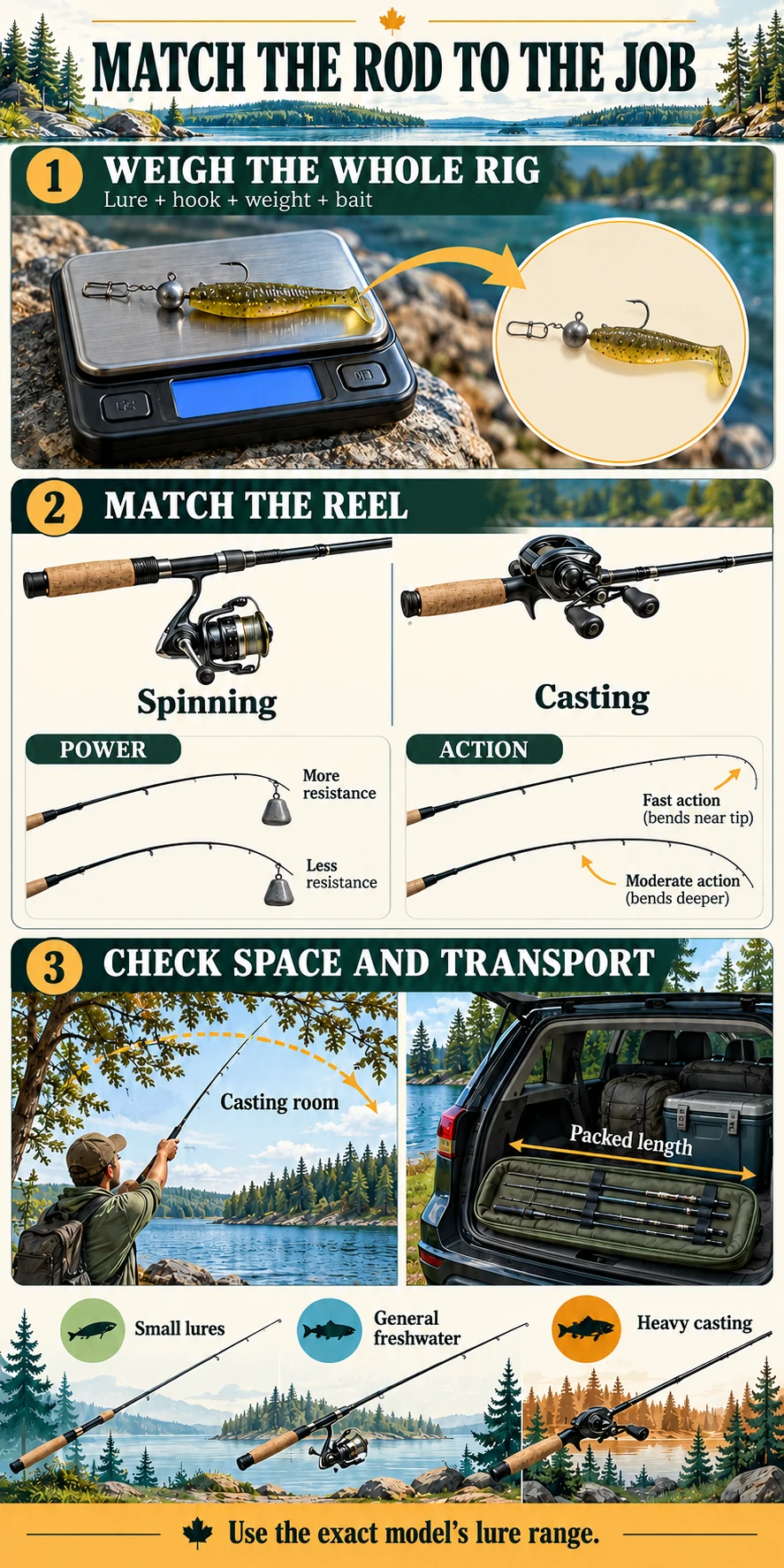
If I were buying one outfit for an accessible Canadian cottage shore, I would put the day’s tackle on the table first. I would choose a few presentations I expected to use and weigh the complete castable rig, including its hook, sinker or jighead and bait.
I would then check the bank. An open dock gives a different casting space from a narrow gap under trees. I would also check how the rod fits in the car with everyone’s bags. A rod that must lie unprotected through the passenger space would send me back to the transport options.
If I already owned a comfortable spinning reel, I would compare rod-only models within the right casting range. If I needed both parts, I would include the price of the reel when comparing a combo. I would not buy a second reel simply because the package looked complete.
Before the first cast, I would check the guides and connections, secure the hook during the walk and make a landing plan. I would keep the remaining budget for suitable line and the actual trip supplies. A recommendation would have to fit that outing before a brand name persuaded me.
Read power, action and lure range separately
How to read the best fishing rods’ model labels
Power describes how much load is needed to flex the rod. Action describes where the rod bends under load. Fast action and heavy power are separate characteristics; one does not imply the other.
Manufacturers use different designs and conventions. Two rods carrying a medium label need not share the same casting range. The two medium examples here already demonstrate that difference: the selected GX2 is rated 1/8–5/8oz, while the AIRX662MFS is rated 1/4–3/4oz.
Use the exact model’s lure range as the casting check. Weigh the combined load that leaves the rod tip, including a jighead, hook, soft bait, sinker, float or other attached parts as applicable. A jighead’s printed weight does not describe the whole finished presentation.
The line rating is another selection guide, not the weight of fish you can lift with the rod. Strong braid can have a different diameter from mono of similar breaking strength. Match the line, knots, drag and fishing conditions rather than treating a breaking-strength number as a safe lifting capacity.
Our fishing-line comparison explains mono, braid and fluorocarbon roles. The fishing rod guide covers construction and the wider rod-selection vocabulary if you need more detail.
- Find the model code on the blank and compare it with the order.
- Read lure range and line range as separate specifications.
- Check whether the listed action belongs to that exact length and power.
- Confirm whether the package contains a rod, a rod-and-reel combo or accessories.
Match the reel and the way you cast
A spinning reel hangs beneath the rod, and the guide layout is designed around line coming off its spool. A conventional baitcasting reel sits above a casting rod, commonly paired with a trigger grip. Choose matching rod and reel types before comparing retrieve ratios or drag claims.
A medium-heavy casting rod is not automatically an upgrade from a medium spinning rod. It serves a different load and reel arrangement. If you are learning from a spinning setup, choose a casting outfit because your planned presentations and learning goals justify it.
Try the assembled rod and reel in hand where possible. Grip shape, reel-seat position and total balance affect how comfortable the outfit feels during repeated casting. Those details cannot be established by a brand name or the blank material alone.
The fishing-reel guide helps narrow reel choices. If buying a complete starter system, our matched beginner-kit guide puts the rod alongside line and terminal tackle.
Choose length and sections for the real trip
A longer rod may help manage line or reach, but it needs room during the cast and while carrying it. Check overhead branches, a crowded dock and boat seating. A short rod can be easier to manage in confined space without being the right tool for every open-water presentation.
- Two-piece rods are useful for ordinary car transport.
- Multi-piece travel rods can fit a shorter case.
- Telescopic designs shorten by nesting sections.
Compare the longest packed section or retracted length with your actual storage space.
Do not assume a two-piece rod has a packed length exactly half its assembled length. Overlapping joints, section proportions and handles affect it. Ask for the actual measurement if an airline bag, small boot or canoe compartment makes centimetres important.
Use a rod case suited to car, air or ice travel, and keep hooks covered. At home, choose a rack with suitable clearance and support. Neither a case nor a rack makes it safe to force a bent tip into a space it does not fit.
The pre-trip protocol: inspect the outfit in three steps
Verify the model and complete load
Match the delivered code, length, reel type and section count to your order. Check the finished rig against the rod’s printed lure range.
Assemble and inspect
Seat joints according to the manufacturer’s instructions, align guides and secure the reel. Check for visible damage or rough guide surfaces. Stop using damaged components rather than hoping the line will pass safely over them.
Plan casting, landing and transport
Check the casting lane, nearby people and a suitable landing method. Carry the rod with hooks secured. Recheck the outfit after knocks, snags or a loose joint.
Bring clothing for the exposure at your chosen water. Our fishing clothing guide covers layers, sun and rain; the gear hub helps keep the complete kit practical.
Avoid damage and spend on a useful change
A graphite, glass or composite blank can still be damaged by a car door, a fall or a sharply bent tip. Handle the rod with care, protect it during transport and use landing equipment appropriate to the fish. Do not lift a fish or free a stuck lure by sharply loading the tip.
For routine care, follow the rod and reel makers’ instructions. Wipe off dirt and moisture, inspect guides and let the outfit dry before enclosing it for storage. Do not spray lubricant over the blank, cork and guides as a general maintenance routine.
| Problem | Check first | Useful next move |
|---|---|---|
| Small lure is hard to cast | Complete rig weight versus lure range; line condition | Use a matched lighter outfit if the presentation is below the range |
| Finished rig exceeds the upper rating | All attached weights and bait | Reduce the load or choose an appropriately rated rod |
| Rod is awkward in the car | Actual packed length and protected storage space | Compare travel formats before another full-length purchase |
| Outfit feels tiring | Reel balance, grip, technique and actual time casting | Try the complete outfit before buying a premium blank |
- Upgrade when you can name the presentation or handling problem the new rod will solve.
- Compare the complete cost, including reel, line, case and any extra shipping.
- Check warranty terms for the exact model, region and seller; a brand-wide promise may not apply.
- Keep a sound existing outfit when it already does the job.
Fishing rod questions
What is a useful first rod for Canadian freshwater fishing?
A medium spinning outfit can cover modest freshwater presentations when its exact lure range fits your complete rig. Check the casting space, transport and reel before choosing. Tiny lures, large predator baits and specialist fisheries need different comparisons.
Is medium-heavy the same as fast action?
No. Medium-heavy describes power; fast describes where the rod bends. Read both specifications and the exact lure range. The same power label can cover different ranges across models.
Does a rod’s line rating tell me how heavy a fish I can lift?
No. It helps select line for the outfit. Fish size, drag, knots, cover and handling still matter. Use appropriate landing equipment instead of lifting a fish with the rod tip.
Does the selected GX2 include a reel?
Yes. USGXSP662M/35CBO is the 6-foot-6 medium combo with a size35 spinning reel. The AIRX662MFS and AIRX702MHFB selections here are rods only. Line and other fishing supplies need to be checked separately.
Can one rod cover trout, bass, muskie and travel?
Some presentations overlap, but tiny trout lures and large muskie baits can require very different casting ranges. Travel also adds a packed-length limit. Begin with the method you use most and choose a specialist outfit when a clear need falls outside it.