
Canada fishing skills guide
DIY Fishing Projects in Canada
Build smarter tackle storage, safer lure projects, cleaner repair kits, and more useful trip systems without turning your garage into a risky science experiment.
Quick start
Start with safe, useful DIY projects
DIY fishing projects should make your fishing simpler, safer, and more personal. The best first projects are not the flashiest builds. They are the ones that reduce mess, prevent lost gear, protect fish, and help you learn faster.
- Choose beginner-safe projects before using heat, fumes, molds, or permanent boat mods.
- Use lead-free or lower-risk materials when practical.
- Test every build before trusting it on a serious trip.
- Keep hooks, blades, adhesives, and drilling away from rushed work.
- Log what worked so the next version improves.
Field rule
Useful beats clever
If a DIY project adds clutter, sharp edges, fumes, instability, or rule confusion, it is not an upgrade yet. Simplify it before it reaches Canadian water.
Sources and official links
Where to verify rules, safety, and materials before DIY fishing projects
CanadaFever can help you plan a safer build, but official sources control fishing rules and boating requirements. DIY projects can affect bait, hooks, tackle materials, boat stability, storage, and fish handling, so verify the final rule for your exact waterbody and trip.
DFO recreational fishing rules
Use Fisheries and Oceans Canada as the starting point for licence and regulation pathways across Canada.
Open DFO recreational fishing rulesTransport Canada PFD guidance
Any kayak, canoe, boat, or dock project should still leave flotation, emergency gear, and movement clear.
Open Transport Canada PFD guidanceMoving toward lead-free fishing tackle
Use this Canada.ca source when choosing safer weights, jigs, sinkers, and homemade tackle materials.
Open lead-free tackle guidanceLead sinkers and jigs summary
Use this background source before making weighted lures, sinkers, jigs, or molds for fishing projects.
Open lead sinkers and jigs summaryEditorial note: DIY advice is not legal or safety advice. Check current rules for your province, zone, waterbody, species, bait, hook type, possession limit, and boating setup.
Digital field asset
DIY fishing project decision map
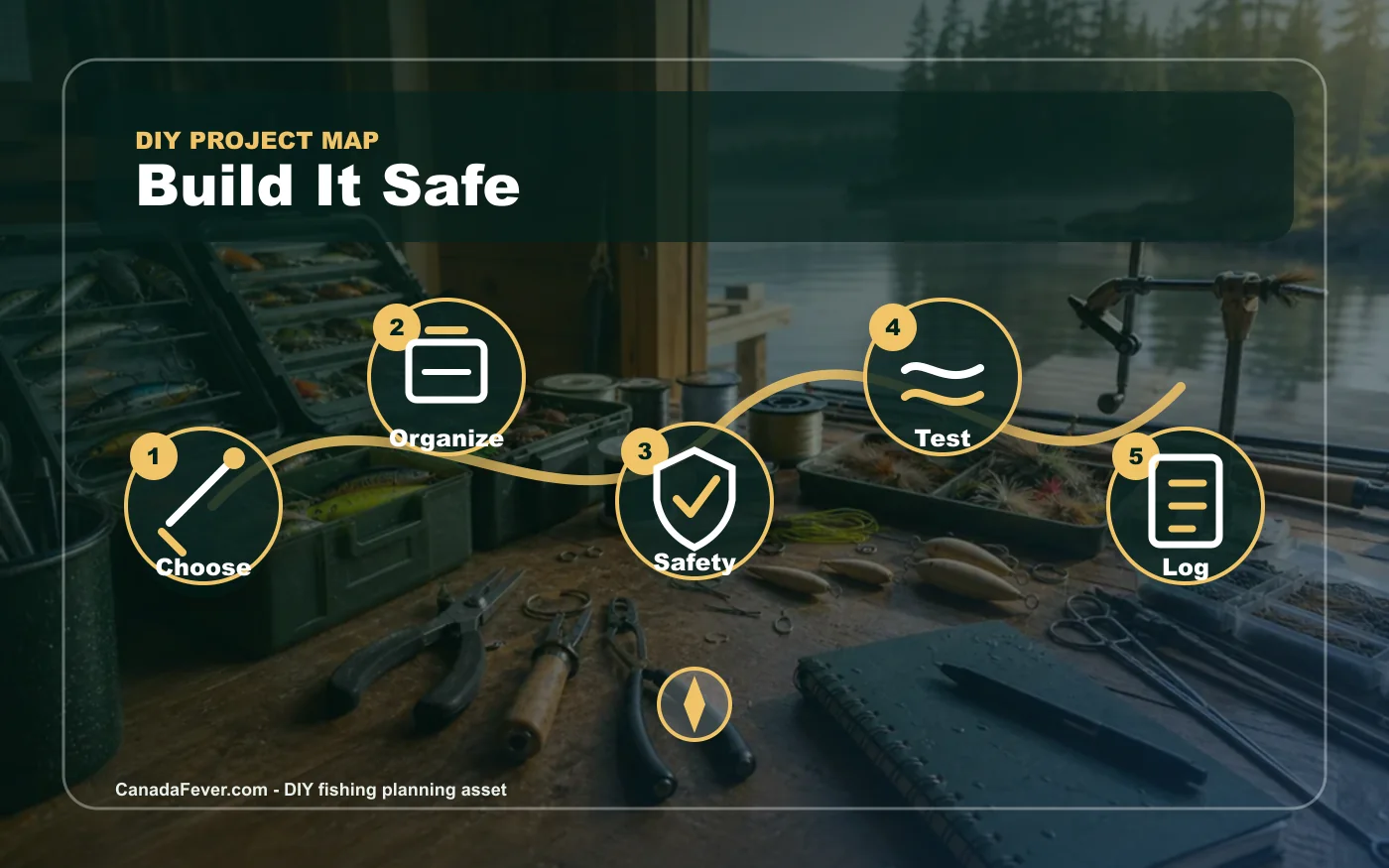
The visual below stays light on text. It shows the build rhythm while the practical details sit in the cards underneath: choose a project, organize materials, check safety, test it, and log the result.
Download the project planner PDF
This three-page printable checklist covers project choice, materials, safety, testing, kayak and boat mods, and the field log you need before trusting DIY gear on a real trip.
Project tracks
Pick the right DIY fishing project track
Not every project needs a vise, mold, drill, or resin kit. Start with the track that matches your skill, workspace, and trip problem.
Tackle storage systems
Build waterproof boxes, terminal tackle trays, labels, lure wraps, leader sleeves, hook files, and grab-and-go kits for specific species.
Lure tuning and simple builds
Replace hooks, tune crankbaits, add skirts, organize soft plastics, build spinnerbait boxes, or paint practice blanks before using heat or molds.
Rod and reel care
Clean cork, inspect guides, replace tip-tops, organize line spools, build a repair pouch, and make a pre-trip rod inspection checklist.
Kayak and boat organization
Use removable crates, dry boxes, track mounts, straps, and tool stations before drilling into a hull or creating snag hazards.
Fly tying and small patterns
Start with durable, simple patterns and a small material list. Test sink rate, hook gap, durability, and whether fish actually eat it.
Field repair kits
Build a compact kit with pliers, line, split rings, snaps, hook file, tape, zip ties, spare trebles, leaders, and waterproof notes.
Safety system
Safety and compliance notes for DIY fishing gear
The risky part of DIY is not creativity. It is rushing materials, tools, and modifications into real conditions without testing. A homemade lure, boat crate, rod repair, or storage system should reduce friction, not create new risk.
| DIY area | Main risk | Safer move |
|---|---|---|
| Weighted lures and sinkers | Lead exposure, wildlife risk, fumes, spills, and unsafe heating. | Use lead-free alternatives where practical and avoid melting metal without proper training and ventilation. |
| Hooks and split rings | Punctures, flying parts, damaged eyes, and bad fish handling. | Wear eye protection, use proper pliers, cover hooks, and test hardware before fishing. |
| Adhesives, paint, resin | Fumes, skin contact, poor curing, water contamination, and brittle repairs. | Ventilate, follow product labels, cure fully, and keep projects away from food and living areas. |
| Kayak or boat mods | Hull damage, blocked drainage, snag points, poor balance, and reduced access to safety gear. | Dry-fit first, use removable mounts where possible, and keep PFD, paddle, light, whistle, and phone reachable. |
| Storage builds | Overpacking, rust, loose hooks, and heavy boxes that do not match the trip. | Build species-specific kits and leave space for wet gear, leaders, and the lures that actually worked. |
DIY support gear
Gear that supports cleaner fishing projects
These are supporting tools and materials, not a shortcut around planning. Buy only what solves the project you are actually building.

AURAME Fishing Pliers
Useful for split rings, hook swaps, leader trimming, lure tuning, and fast field repairs when a project needs adjustment on the water.
View on Amazon
Berkley Trilene Big Game Monofilament
A practical line option for leaders, repair kits, backing, practice knots, homemade rigs, and general-purpose project testing.
View on Amazon
Fly tying starter materials and tools
A better entry point than buying random materials. Start with a small kit, tie a few durable patterns, and test them before expanding.
View on Amazon
Rite in the Rain Waterproof Notebook
Use a waterproof project log for lure recipes, rod repairs, kayak layouts, field failures, and the small changes that actually improved the build.
View on AmazonCanadaFever may earn a small commission from qualifying purchases at no extra cost to you. Amazon links use amazon.com with OneLink enabled for supported regions.
Learning path
Build your DIY fishing learning path
Use these guides when your project turns into a gear, technique, safety, or trip-planning decision.
Fishing gear and equipment for Canada
Use this hub to decide which gear is worth buying and which DIY upgrades actually solve field problems.
Read guideFishing for beginners in Canada
A practical baseline for rods, tackle, safety, and simple systems before building custom gear.
Read guideAdvanced fishing techniques
Use pattern thinking to test whether your DIY lure, storage, or repair system made fishing better.
Read guideFishing rod guide
Helpful before rod care, guide inspection, tip-top replacement, and line-management projects.
Read guideFish finders and electronics in Canada
Useful before mounting, organizing, or protecting electronics in kayaks, canoes, and small boats.
Read guideFishing regulations and licences in Canada
Check rules before building rigs, weighted tackle, bait systems, or species-specific setups.
Read guideDIY fishing FAQ
Common questions before starting DIY fishing projects
Tap a question for the short answer. These answers focus on practical, safe, Canada-first DIY decisions.
What DIY fishing projects are best for beginners?
Start with low-risk projects: tackle labels, waterproof storage, knot practice cards, rod cleaning, hook organization, simple leader kits, and a trip log. Avoid heat, fumes, drilling, lead, and permanent boat modifications until you have a clear safety plan.
Can I make my own fishing lures in Canada?
Yes, but keep the first builds simple. Start with lure tuning, hook replacement, skirts, soft-plastic storage, or fly tying before moving into molds, pouring, paints, resins, and weighted heads. Always check local rules and consider lead-free materials.
Is lead tackle a problem for DIY fishing projects?
Lead can be harmful to wildlife, and Canada encourages anglers to move toward lead-free tackle. For DIY projects, consider tin, steel, tungsten, brass, glass, bismuth, or non-weighted designs where practical.
Should I drill into a kayak or boat for DIY fishing mods?
Only after dry-fitting the layout and understanding hull structure, drainage, balance, and snag hazards. Many upgrades can be done with crates, track mounts, straps, or removable systems before permanent drilling.
What tools do I need for DIY fishing gear?
Most anglers can start with pliers, split-ring pliers, side cutters, scissors, hook files, a small screwdriver set, measuring tape, labels, storage boxes, and eye protection. Add specialty tools only when a specific project requires them.
How do I know if a DIY project is safe enough to fish?
Test it before the trip. Pull-test knots, shake-test boxes, float-test lures, inspect sharp edges, check fumes or residue, and make sure it does not create rule confusion, fish-care problems, or boat instability.