
Canada outdoor field guide · Fish biology
Fish facts. A world beneath the surface.
Explore how Canadian sportfish sense, feed, move and survive.
See the lateral line in action →Understand the fish. Read its world.
Use fish biology to understand feeding windows, depth, light, temperature, oxygen, handling stress and why Canadian sportfish move the way they do.
- 1
Temperature, oxygen and light shape where fish hold and feed.
- 2
Forage, cover and current often predict location better than luck.
- 3
Good handling protects fish when depth, heat or cold add stress.
Bottom lineUnderstand the fish first and your tackle choices become simpler.
Your field-learning kit
Identify. Observe. Record.
Useful references and tools for turning fish biology into observations on the water.
As an Amazon Associate, CanadaFever may earn from qualifying purchases. These direct product links use Amazon images and are chosen for field-learning value, not for live price claims.

Peterson Field Guide to Freshwater Fishes
View on Amazon
Garmin Striker 4 with Portable Kit
View on Amazon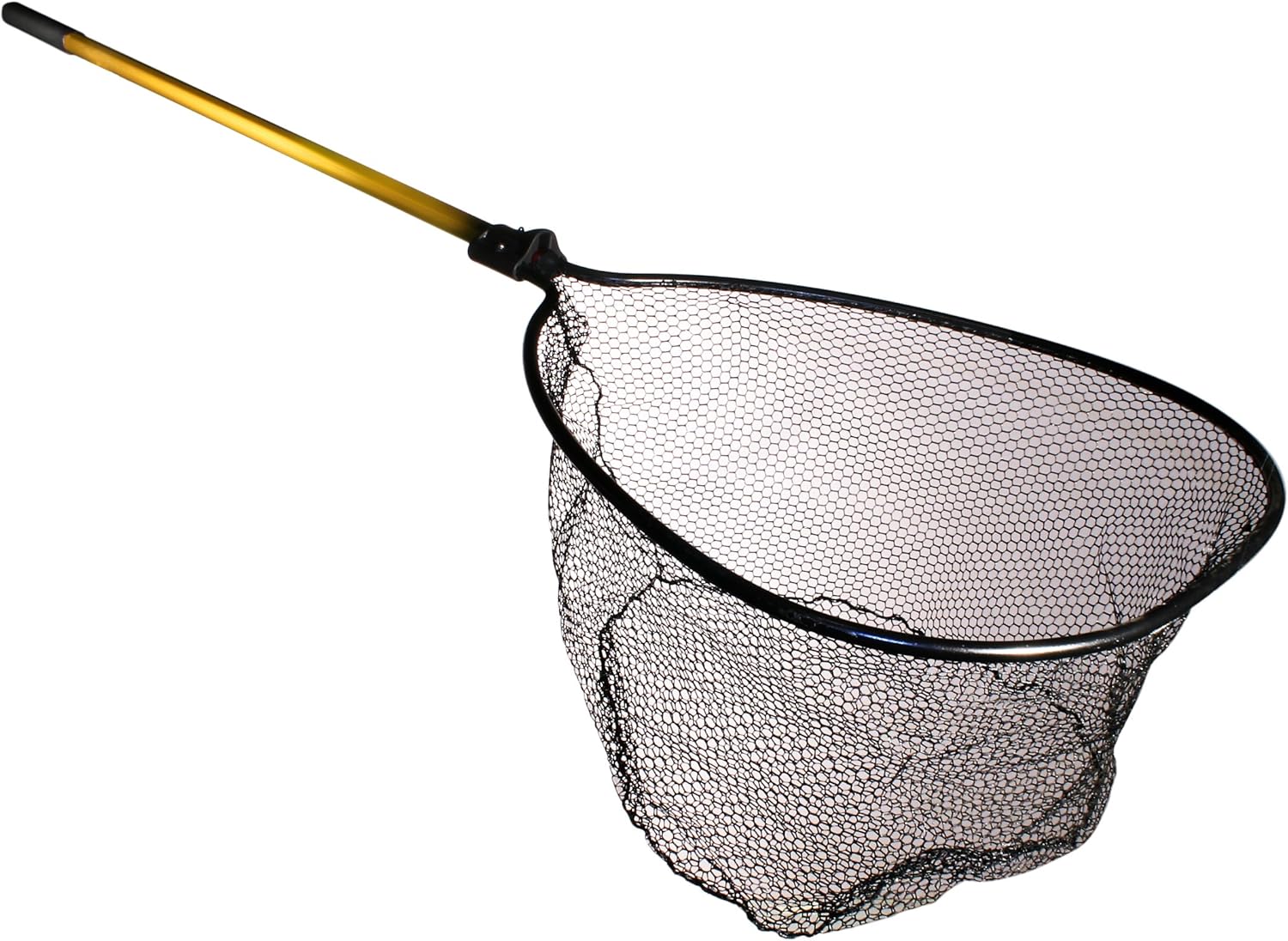
Frabill landing net
View on Amazon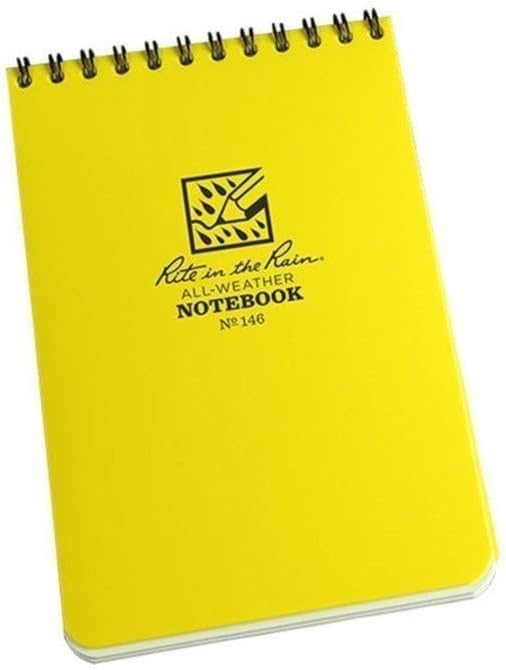
Rite in the Rain field notebook
View on AmazonWatch · 12 seconds · No audio
How a fish feels water movement.
Follow water movement from a small prey fish to the lateral line: a sensory system that helps fish detect movement around them.
Schematic illustration, not to scale or a species identification guide. Open full screen for a closer view.
The five fish facts that matter most on Canadian water
Most simple fish fact pages stop at colour, size and average weight. Those details help with identification, but they do not explain behaviour. The better question is: what does the fish sense, what does the water column allow, and how much stress can the fish survive?
Light changes feeding windows
Walleye have a reflective eye layer called the tapetum lucidum, which helps explain dawn, dusk and stained-water feeding.
Vibration can beat vision
Northern pike and muskie use lateral-line sensors to detect pressure waves from prey, blades and swimbaits.
Temperature controls location
Cold-water species such as lake trout track oxygen-rich layers below the thermocline when summer surface water warms.
Sportfish selector matrix
Use this as a practical translation layer between fish biology and field decisions. Always confirm current local rules before fishing because seasons, limits, sanctuary areas and licence requirements vary by province, waterbody and year.
On smaller screens, swipe the comparison sideways to see every column.
| Target pattern | Species examples | Biology signal | Field move |
|---|---|---|---|
| Low-light structure fishing | Walleye, sauger, yellow perch | Reflective eye layer and strong scotopic vision support feeding in dim or turbid water. | Fish rock edges, weed breaks and current seams early, late or under cloud cover. Use sensitive jigging gear and avoid unnecessary deep-release risk. |
| Heavy-cover ambush casting | Northern pike, muskie | Lateral-line neuromasts detect pressure waves before the fish gets a clear visual target. | Use strong line, leaders and lures that move water. Land fish quickly in warm water to reduce fight stress. |
| Cold-water depth tracking | Lake trout, brook trout, arctic char | Thermocline position, dissolved oxygen and preferred temperature narrow the strike zone. | Use electronics or depth charts to find cold oxygenated water. Stop catch-and-release when deep fish show barotrauma risk. |
| Warm-water shoreline feeding | Smallmouth bass, largemouth bass, crappie | Metabolism rises with temperature until heat and low oxygen create stress. | Fish shade, current, cover and transition edges. Handle fish fast during heat waves. |
Release warning: depth changes can injure fish
Deep-water species with a closed, physoclistous swim bladder cannot vent gas quickly during rapid ascent. When a fish comes up from depth, the gas expands and can cause barotrauma. If you plan to release fish, avoid targeting deep fish when survival is unlikely, keep fight time short, keep fish wet, and use a descending device where appropriate and legal.
How fish sense the water
Fish live in a pressure, oxygen and light environment. Anglers who understand that environment make better choices than anglers who only memorize species descriptions.
Vision and light
Many fish see contrast, shadow and movement better than fine detail. Walleye are famous for low-light hunting because their eyes reflect available light back through the retina.
- Use subtler profiles in clear, bright water.
- Use vibration, flash or scent when water is stained.
- Expect low-light feeders to slide shallower at dawn and dusk.
Lateral line and pressure
The lateral line is a row of sensory organs that helps fish feel water displacement. This is why lure vibration can matter even when visibility is poor.
- Bladed lures and swimbaits call predators through cover.
- Subtle jig hops can work when fish are cold or pressured.
- Boat noise, stomping and repeated casts can push fish off shallow spots.
Oxygen and temperature
Dissolved oxygen and temperature decide how much energy a fish can spend. Cold-water trout and char need cooler, oxygen-rich water; warm-water species tolerate different zones but still suffer in heat and low oxygen.
- Follow moving water, springs, shaded banks and deep basins in summer.
- Fish slower during cold fronts and late winter oxygen dips.
- Release fish faster when water is warm.
Swim bladder and depth
A swim bladder helps many fish control buoyancy. The same organ can become a survival problem when pressure changes quickly during deep-water angling.
- Plan harvest before fishing deep basins.
- Watch for bulging eyes, bloating or inability to swim down.
- Use descending tools instead of puncturing fish unless trained and legally allowed.
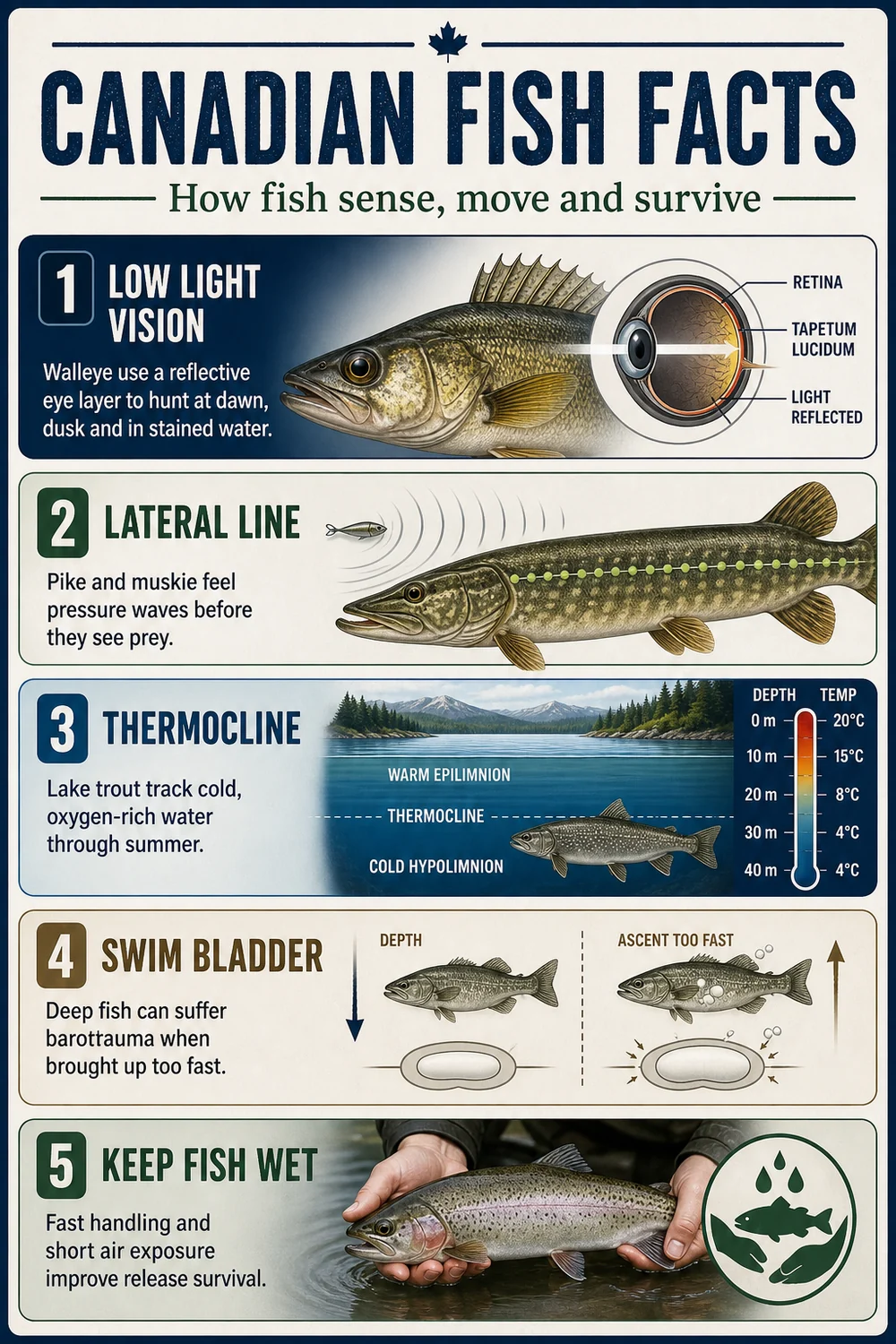
Select the infographic to view it at full size.
Canadian sportfish facts by species
These quick profiles connect common Canadian species to the body systems and habitat cues that drive real fishing decisions. For deeper tactics, use the related CanadaFever species guides linked throughout this page.
Low-light hunter
Walleye
Sander vitreus
Walleye are built for low light. Their reflective eye layer helps them feed in stained water, cloudy weather and twilight. In many Canadian lakes, the best structure is close to current, rock, weeds or basin edges.
Next: read the broader Canadian fish species guide.
Ambush predator
Northern pike
Esox lucius
Pike are ambush predators with strong lateral-line awareness. They often hold near weeds, logs, shallow bays and bait corridors where one short burst can close the distance.
Next: compare tactics in smallmouth bass fishing and predator-water structure.
Cold-water salmonid
Lake trout
Salvelinus namaycush
Lake trout are cold-water salmonids. In summer, they often relate to the thermocline or deeper oxygenated water. Deep catch-and-release should be treated carefully because pressure change can be severe.
Next: match cold-water timing with the seasonal fishing guide.
Cool-water specialist
Brook trout
Salvelinus fontinalis
Brook trout depend on cool, clean, oxygen-rich water. Heat, low dissolved oxygen and long handling times can be hard on released fish.
Next: see beginner-friendly context in Fishing for Beginners in Canada.
Rock and current
Smallmouth bass
Micropterus dolomieu
Smallmouth use rock, current, shade and baitfish movement. Their location can shift quickly with temperature, water clarity and wind.
Next: use the full smallmouth bass fishing guide.
Schooling forage fish
Yellow perch
Perca flavescens
Yellow perch often travel in schools and respond strongly to basin edges, vegetation and small prey movements. They are also a key forage species for larger predators.
Next: learn tactics in the yellow perch fishing guide.
Simple fish facts, explained properly
Do fish breathe air?
Most fish breathe by passing water over gills, where oxygen moves into the blood. Some species can gulp air or survive low oxygen better than others, but typical sportfish still need dissolved oxygen in the water.
Do fish sleep?
Fish do rest, but not like mammals. Many reduce activity, hold position and become less responsive while still watching for danger and maintaining balance.
Can fish hear?
Fish detect vibration and sound through inner-ear structures and the lateral line. This is why repeated boat noise, heavy footfalls in a canoe and loud shallow-water movement can matter.
Do fish feel stress?
Yes. Long fights, warm water, air exposure, dry hands and rough surfaces can reduce survival after release. Wet hands, rubber nets and short photo windows are simple improvements.
Field tools for learning fish behaviour
As an Amazon Associate, CanadaFever may earn from qualifying purchases. These direct product links use Amazon images and are chosen for field-learning value, not for live price claims.
Peterson Field Guide to Freshwater Fishes
A serious identification reference for readers who want more than casual species names and colour descriptions.
- Strong fit for learning body shape, families and range context.
- Useful beside CanadaFever species guides and local regulations.
- Best for anglers who want a durable reference, not a quick novelty book.
Garmin Striker 4 with Portable Kit
A compact fish finder helps readers connect fish facts to water depth, structure and suspended marks.
- Useful for learning depth changes, basins and contour edges.
- Portable format fits small boats, kayaks and ice setups.
- Pairs well with the fishing electronics guide.
Frabill landing net
A proper net helps shorten the end of the fight and keeps fish controlled during unhooking.
- Better than dragging fish onto dry rock, gravel or boat carpet.
- Supports faster handling for catch-and-release situations.
- Choose size and mesh style for the species you actually target.
Rite in the Rain field notebook
A simple waterproof notebook is a useful field tool for logging depth, weather, water clarity, temperature, lure response and release notes.
- Best for building your own lake pattern history.
- Works when phone notes are awkward in rain or spray.
- Pairs well with maps, sonar notes and regulation reminders.
Use facts with current rules and conservation in mind
Fish biology can help you decide where to cast, but it does not replace regulations. Before fishing, check the current province, territory, waterbody, species, season, possession limit, slot size and bait rules. If you are unsure, treat the official source as the deciding source.
Fish facts FAQ
How do fish breathe underwater?
Fish move water across gills. Oxygen dissolved in the water passes into the blood, while carbon dioxide moves out. Low oxygen, warm water and pollution can make this process harder.
Why do walleye bite better at dawn and dusk?
Walleye are adapted for low light. Their eye structure helps them use dim light efficiently, so they often gain an advantage over prey at dawn, dusk, in stained water or under cloud cover.
What is the lateral line on a fish?
The lateral line is a sensory system that detects water movement and pressure waves. It helps fish avoid danger, school, track prey and respond to vibrating lures.
Why is deep catch-and-release risky?
Rapid ascent can expand gas in the swim bladder and cause barotrauma. The deeper the fish comes from, the more careful anglers need to be about harvest decisions, fight time and release method.
Do fish facts replace fishing regulations?
No. Biology helps explain behaviour, but regulations decide what you may legally catch, keep, release or target. Always check the current official rules for the exact waterbody and species.