
Fishing lodge guide · 2026
Fishing Lodges in Canada
Find the right base for your fishing trip. Compare access, lodge styles, regions and the details behind the package.
The right lodge starts
with the right trip
Compare Canadian fishing lodges by region, target species, access style, package structure, rules, costs and whether the trip should be guided or self-guided.
Choose the lodge after the trip style is clear
A lodge should solve a trip problem. It should not create a bigger one with the wrong access, season, fishery, or package structure.
- Choose target species before comparing cabins, menus, or scenery.
- Decide whether the trip is drive-in, fly-in, boat-access, guided, self-guided, all-inclusive, or outpost-style.
- Check licences, non-resident rules, park permits, bait rules, slot limits, and possession rules before dates are locked.
- Ask what is included: boats, fuel, guide time, meals, shore lunch, fish cleaning, freezing, airport transfers, tackle, and satellite communication.
- Budget beyond the package price: flights, tips, taxes, licences, fish transport, gear, insurance, weather buffers, and hotel nights around travel days.
Six decisions before booking a fishing lodge in Canada
Use these cards before sending a deposit. They stop the most expensive lodge mistakes early.
Drive-in, fly-in, outpost or all-inclusive
Drive-in lodges are easier for families and flexible travel. Fly-in lodges usually trade convenience for remoteness, better solitude, and stricter weight and weather planning.
Province and waterbody first
Ontario, Manitoba, Saskatchewan, Quebec, British Columbia, Alberta, and northern territories offer different access, species, seasons, and travel complexity.
Let the fish shape the trip
Walleye, pike, lake trout, brook trout, salmon, smallmouth, musky, and ice-fishing species point to different tackle, boats, timing, guides, and expectations.
Package price is not total cost
The real cost includes travel, extra hotel nights, licence fees, tips, taxes, gear, baggage, insurance, floatplane delays, and optional guided days.
Timing beats brochure claims
Prime walleye, pike, lake trout, salmon, brook trout, and ice-fishing windows differ. Ask what is realistic for your dates, not only what the lake can produce.
Every access type has tradeoffs
Road access is simpler. Floatplanes need weather buffers. Boat shuttles need timing. Remote outposts need more self-reliance and clearer emergency expectations.
Use official rules before lodge marketing
Lodges can help explain the local fishery, but the official rules decide licences, seasons, permits, bait rules, possession limits, boating expectations, and special waters.
DFO Recreational Fishing Rules
Federal recreational fishing rules and conservation context for planning lodge-based trips in Canada.
Open official sourceParks Canada Fishing Rules Example
National-park fishing permit and rule example for trips that touch federally protected park waters.
Open official sourceTransport Canada Boating Safety
Federal boating-safety entry point for guided boats, small craft, and lodge day trips on Canadian water.
Open official sourceTransport Canada PFD Guidance
Official guidance for choosing lifejackets and personal flotation devices for boating and fly-in lodge trips.
Open official sourceBC Freshwater Fishing Licence
Province-level example of licensing, freshwater rules, and trip planning details for western lodge travel.
Open official sourceCanada Fishing Lodge Decision Map
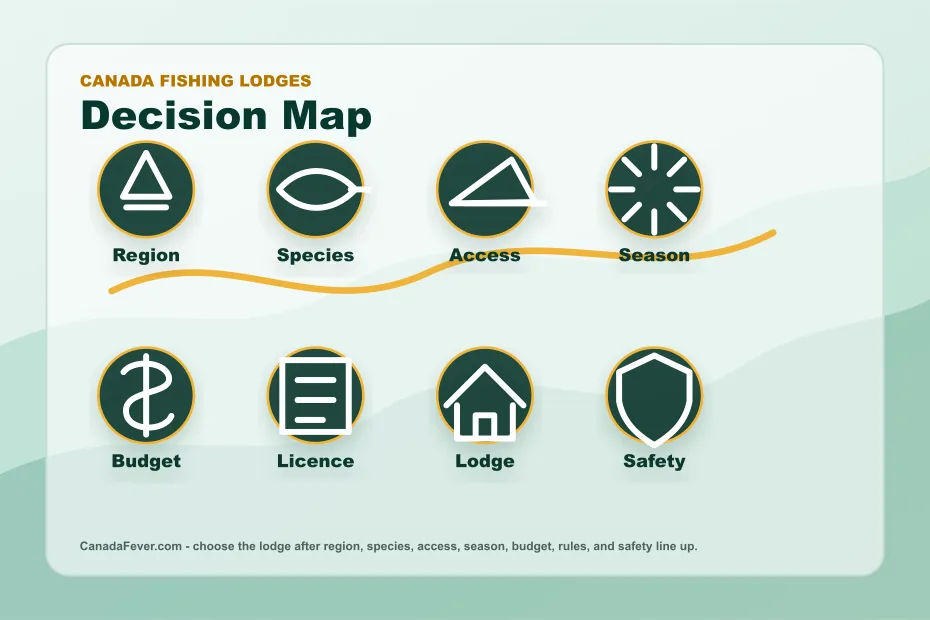
The visual map keeps the choice simple. The full planning work happens below: region, species, access, season, budget, licence, lodge fit, and safety.
Download the Canada fishing lodge trip planner
Printable 3-page PDF for lodge shortlist, region, species, access, licence checks, safety, budget, booking questions, and trip review.
The lodge mistake that costs the most
The most expensive mistake is not choosing a lodge that is too rustic or too fancy. It is booking a lodge before the fishing goal is clear.
A beautiful dock, a cedar cabin, and a wall of trophy photos can make almost any lodge look right. But a lodge that is perfect for early-summer walleye may be a poor choice for a family that needs easy road access. A fly-in outpost that is ideal for two experienced anglers may be too much work for a mixed group. A luxury salmon lodge may be a poor fit if the dates miss the run, the non-anglers are bored, or the real cost is twice the advertised rate.
The better approach is to build the trip from the fish outward. Start with the species, then the province, then the season, then the access style, then the level of service. Only after those decisions line up should you compare lodge photos, meal plans, cabins, guide ratios, or boat packages.
For CanadaFever, the lodge is part of a larger trip system. It touches licences, fish handling, boating safety, weather, remote travel, conservation rules, family expectations, and budget. That is why this page acts as the main lodge pillar instead of a simple list of properties. Use it to choose the right kind of trip, then move into the specific lodge and destination guides linked below.
Drive-in, fly-in, all-inclusive, outpost and resort lodges
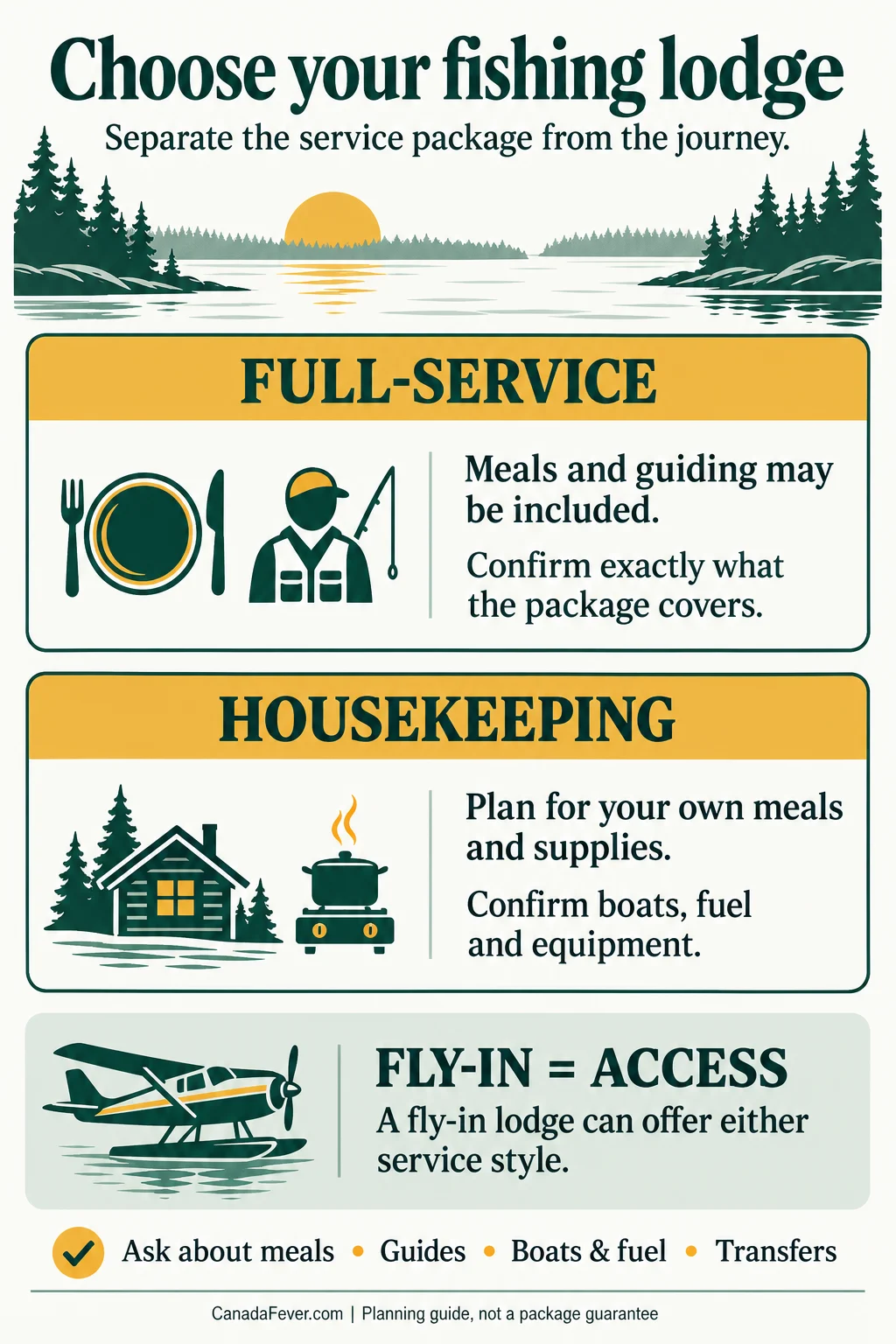
The word lodge covers very different trips in Canada. Match the lodge type to the people on the trip before comparing price.
Drive-in fishing lodges
Drive-in fishing lodges are the easiest starting point for many anglers. You can bring more gear, adjust travel timing, stop for supplies, and leave with fewer weather complications. They are often better for families, first-time lodge guests, budget-conscious trips, and anglers who want comfort without the risk of a floatplane delay.
The tradeoff is pressure. Road-access water can see more boats, more weekend traffic, and more variable fishing. That does not make it bad. It means the lodge choice should focus on lake size, boat quality, guide availability, nearby backup lakes, fish cleaning, storage, family amenities, and how well the staff handles beginner or intermediate anglers.
Fly-in fishing lodges and outposts
Fly-in lodges can deliver the classic Canadian dream: remote water, floatplane access, fewer boats, and a stronger feeling of wilderness. They can also be less forgiving. Weather delays happen. Weight limits matter. Medical access can be slower. A remote outpost may require anglers to cook, clean, run boats, manage fuel, and solve small problems without resort-style service.
Ask detailed questions before booking: floatplane weight limits, baggage rules, satellite communication, emergency procedures, boat size, fuel policy, guide availability, water levels, portage expectations, and what happens if weather delays arrival or departure. If this is your first remote trip, compare it against the fly-in fishing and hunting lodges guide and the rustic and backcountry lodges planning guide before choosing an outpost.
All-inclusive fishing lodges
All-inclusive lodges reduce friction. Meals, boats, guide time, lodging, transfers, shore lunch, fish processing, and local logistics may be bundled into one package. This can be excellent for travellers who value certainty, mixed-skill groups, corporate trips, visiting anglers, and families that do not want to handle every detail. If the same lodge trip also includes hunting, compare the legal and package questions in our fishing and hunting packages with lodging planner.
The key is reading what all-inclusive actually includes. Some packages include guide time every day. Some include only boats. Some include meals but not alcohol, flights, gratuities, tackle, licences, fish transport, or hotel nights before travel. The all-inclusive fishing lodges guide is the next step when you want package-style comparisons.
Resort-style fishing lodges
Resort-style lodges are often best for mixed groups. They may offer cabins, dining, beaches, hiking, wildlife viewing, paddling, kids’ activities, or nearby towns. The fishing may be very good, but the lodge is not built only around hardcore anglers.
These trips are easier to sell to partners, grandparents, kids, or friends who do not want to fish every day. They can also be a better fit for first Canada fishing vacations because the trip still works if weather slows the bite. Use the lodges and resorts in Canada guide when comfort and non-fishing value are central.
Best Canadian lodge regions by trip goal
Do not ask which province is best. Ask which province fits your species, access, budget, and season.
Ontario: walleye, smallmouth, pike, musky and family lodge access
Ontario is one of the easiest provinces for many lodge trips because it has a deep mix of drive-in lodges, fly-in outposts, all-inclusive packages, family cabins, and species options. Walleye is the anchor for many trips, but smallmouth, pike, lake trout, musky, and brook trout can shape the plan depending on region.
Ontario is also a place where price ranges vary widely. A simple housekeeping cabin, a guided American-plan lodge, and a remote fly-in outpost can all be called fishing lodges but have very different costs. Use the Ontario fishing lodge prices guide when budget is the central question, and the Ontario walleye lodges guide when species is the priority.
Manitoba: trophy pike, walleye and remote northern water
Manitoba becomes compelling when anglers want a stronger wilderness feel, trophy pike potential, remote lakes, and northern lodge experiences. It is not always the easiest trip, but it can be one of the most memorable when the group is ready for remote water and less urban comfort.
Pike trips need different planning than casual cottage fishing. Leaders, pliers, release tools, big-fish handling, boat control, and weather all matter. Compare Manitoba options through the best northern pike lodges in Manitoba and best pike lodges Manitoba support guides.
Saskatchewan: lake trout, pike and cold-water lodge planning
Saskatchewan can reward anglers looking for lake trout, pike, and big northern water. Many trips require more serious travel planning than a quick drive-in weekend. Cold water, wind, large lakes, guide knowledge, boat quality, and weather windows matter.
Lake trout lodge trips are especially season-sensitive because depth, temperature, and location change fast. If that is the target, use the Saskatchewan lake trout lodges guide after you understand the broader lodge decision system here.
British Columbia: salmon, halibut, steelhead, trout and coastal travel
BC lodge trips can mean coastal salmon and halibut, interior trout, remote river systems, island travel, or boat-based saltwater packages. The planning burden can be higher because tides, marine weather, species timing, travel logistics, and charter or lodge structure all matter.
For salmon-led trips, start with the best salmon lodges in BC guide. Make sure expectations are season-specific. A lodge can sit in a legendary region and still be wrong for your target species if the timing is off.
Quebec: brook trout, remote water and language/logistics planning
Quebec lodge trips can be excellent for brook trout, remote wilderness, and distinctive regional experiences. The planning should include access, season timing, language comfort, outfitter structure, road conditions, and whether the trip is better as a guided experience or a self-directed stay.
If brook trout are the reason for the trip, move from this pillar to the Quebec brook trout lodges guide. It is easier to compare lodges once the species, season, and access expectations are clear.
| Trip goal | Good starting point | Planning risk |
|---|---|---|
| First lodge trip with family | Drive-in or resort-style lodge with flexible activities. | Choosing a remote outpost that non-anglers will not enjoy. |
| Trophy pike | Manitoba or northern fly-in/remote-water lodge guides. | Underplanning leaders, release tools, boat control, and weather. |
| Ontario walleye | Walleye-focused lodge or all-inclusive package. | Booking dates without checking bite window, slot rules, and package details. |
| BC salmon | Coastal lodge or guided package matched to run timing. | Ignoring tides, marine weather, travel buffers, and species timing. |
| Remote solitude | Fly-in lodge or outpost with clear emergency and weather policy. | Forgetting weight limits, self-reliance, and floatplane delay buffers. |
What Canadian fishing lodges really cost
The package price is only one line in the budget. The real cost depends on how much work the lodge handles for you.
Housekeeping cabins and basic drive-in lodges
A basic lodge or housekeeping cabin may look inexpensive because it includes lodging but not much else. You may bring food, cook, run your own boat, pay separately for fuel, rent gear, buy licences, and handle fish cleaning or storage. This works well for experienced anglers who know the water or want budget control.
The risk is hidden friction. If you need to rent boats, buy fuel, find bait where legal, learn the lake, handle meals, and solve weather problems yourself, the cheaper package may not feel cheaper by the end of the week.
American-plan and all-inclusive packages
American-plan or all-inclusive packages usually cost more because they reduce logistics. Meals, lodging, boats, guide time, fish cleaning, shore lunch, and local transport may be included. These packages can be a better value for travellers who are flying, bringing family, hosting a group, or fishing unfamiliar water.
Ask exactly what guide time means. Is it one guide per boat, a shared guide across multiple boats, or only orientation? Are boats private or shared? Is fuel included? Are transfers from the airport included? What happens if wind makes the main lake unsafe?
Fly-in and remote outpost pricing
Fly-in pricing often includes the floatplane leg, but every operator structures packages differently. Weight limits, extra flights, weather delays, satellite communication, fuel, boats, motors, propane, food, and emergency procedures should be clear before the deposit.
Remote outposts may feel like a bargain compared with full-service lodges, but they shift work to the group. That can be a feature for experienced anglers and a problem for beginners. Do not book a remote outpost unless the group is honest about skill, comfort, medical needs, weather tolerance, and self-reliance.
Budget questions to ask every lodge
- What is included in the package price?
- What is usually paid separately?
- Are taxes, gratuities, licence fees, and transfers included?
- Are boats, motors, fuel, batteries, electronics, bait, and guide time included?
- What is the cancellation, refund, weather-delay, and deposit policy?
- What extra hotel nights or travel buffers do guests usually need?
- What fish processing, freezing, packaging, or transport support is available?
The Local Secret
The best lodge value is rarely the cheapest package. It is the trip where the lodge’s access, boats, staff, timing, and fishery remove enough uncertainty that your group actually fishes well.
Licence, conservation and safety checks for lodge trips
Do not outsource every rule check to the lodge. Good operators help, but the angler is still responsible for fishing legally and safely.
Licences and non-resident planning
Each province and territory can handle resident, Canadian resident, and non-resident licences differently. Trip length, conservation licences, species tags, park permits, tidal-water differences, and special waters can change what you need. Visitors should use the Canada fishing licence for non-residents guide before assuming one licence covers the whole trip.
Lodge staff can often point guests toward the right purchase portal, but official sources are the final answer. Check dates, waterbody, species, harvest rules, bait restrictions, live-bait rules, slot limits, barbless rules, lead restrictions where relevant, and possession or transport rules.
Boat safety and PFD expectations
Many lodge trips revolve around boats. That makes PFD fit, weather calls, cold-water risk, navigation, fuel planning, and guide judgement central to the trip. A boat that is comfortable on a calm morning can feel very different in wind, rain, current, or cold water.
Ask what safety gear is on the boats, who makes weather calls, whether guests can run boats alone, how lake maps or GPS are handled, what communication exists on the water, and what guests should do if fog, wind, lightning, or motor trouble appears.
Fish handling and conservation
Many lodge fisheries depend on repeat guests and healthy fish populations. Good lodges usually care about slot limits, selective harvest, careful release, barbless hooks where required, quick photos, livewell use, and keeping only what will be eaten legally and responsibly.
If trophy fish are part of the trip, ask how the lodge handles measurement, photos, revival, and release. If shore lunch is part of the package, ask how it fits local limits and conservation expectations.
Questions to ask before sending a lodge deposit
A lodge conversation should sound specific. If every answer is vague, the trip risk is still too high.
Ask what the lodge is best at
Every strong lodge has a lane. Some are best for walleye numbers. Some are built around trophy pike. Some shine for family trips, shore lunch, comfortable cabins, fly-in solitude, guided salmon, lake trout structure fishing, or mixed-species action. Ask the lodge what they are best at and what they are not built for.
A good answer will usually include season, water type, guide style, realistic fish size, guest skill level, weather, and the kind of group that enjoys the lodge most. A weak answer will sound like everything is perfect for everyone at all times. That is rarely true in Canadian fishing.
Ask what happens on a hard week
Most lodge marketing shows the best days. Your booking conversation should cover the hard days: high wind, cold front, wildfire smoke, low water, late ice-out, early turnover, delayed floatplanes, boat issues, and guests who need a slower pace. The question is not whether problems can happen. They can. The question is how the lodge handles them.
Ask whether there are protected bays, river options, backup lakes, shore fishing, guide adjustments, rain plans, non-fishing activities, or flexible meal timing. A lodge that has a thoughtful bad-weather plan will usually run a better trip than a lodge that only talks about trophy photos.
Ask about boats, guides and daily rhythm
Boat quality changes a lodge trip fast. Ask about boat size, motors, electronics, seating, fuel, anchors, safety gear, spare equipment, lake maps, landing nets, and whether guests run boats alone. If guides are included, ask whether the guide stays with one boat, rotates between boats, or only provides morning orientation.
Daily rhythm also matters. What time do boats leave? Are lunches packed, served on shore, or eaten back at the lodge? Can guests fish evenings? Are there quiet hours? How are fish cleaned, packaged, or stored? How much flexibility exists if the group wants a shorter day?
Ask about deposits and cancellation terms
A lodge deposit should not be an afterthought. Ask when the balance is due, what happens if travel is delayed, what weather cancellations mean, whether trip insurance is recommended, whether deposits are transferable, and how the lodge handles medical or family emergencies.
This is especially important for fly-in trips because weather can affect both arrival and departure. A group may need extra hotel nights, adjusted flights, food buffers, or flexibility after the planned end date. The cheapest package can become expensive if the travel policy is unclear.
| Question | Why it matters | Strong answer sounds like |
|---|---|---|
| What are guests realistically catching during my dates? | Season timing shapes expectations more than lodge photos. | Specific species, depths, patterns, average results, and honest limits. |
| What is included in the package? | Price comparisons are useless unless inclusions match. | Clear list of meals, guide time, boats, fuel, transfers, fish handling, taxes, and extras. |
| What happens in bad weather? | Wind, cold fronts, smoke, and delays are normal outdoor risks. | Backup water, schedule flexibility, safe boat policies, and travel buffer advice. |
| What skill level is expected? | Remote water and self-guided boats may not fit beginners. | Honest description of casting, boat operation, fish handling, and self-reliance needed. |
| How do you handle conservation? | Healthy fisheries protect the trip and the lodge’s future. | Clear release practices, harvest rules, slot limits, shore-lunch policy, and fish-care expectations. |
What to pack for a Canadian fishing lodge trip
Packing depends on lodge style, but the best lists start with weather, safety, documents, and fish handling before extra tackle.
Documents and rule proof
Bring licence confirmation, government ID, travel documents, lodge confirmation, emergency contacts, insurance details, and any required park or special-water permit information. Save digital copies, but do not rely only on one phone. Remote trips can expose dead batteries, weak signal, wet bags, or forgotten chargers.
For non-residents, also confirm whether the lodge recommends printing licence details, carrying passport information, checking customs rules for gear or fish transport, and planning around provincial definitions of residency. The rule details should be checked before travel day, not at the dock.
Clothing and weather gear
Canadian lodge weather can swing hard. A June trip can bring bugs, heat, cold rain, and chilly boat rides in the same week. A September trip can feel perfect at noon and cold at sunrise. Pack layers that work while sitting still in a boat, not only while walking around camp.
Rain gear is one of the most important lodge items. A wet angler fishes worse, quits earlier, and makes poor decisions. Waterproof footwear, warm socks, sun protection, sunglasses, gloves, a brimmed hat, bug protection, and a dry bag can matter more than another lure box.
Tackle and rod planning
Ask the lodge what tackle they actually recommend for your dates. Do not bring a full garage if floatplane weight is limited or boat storage is tight. For walleye, pike, trout, salmon, or lake trout, the useful rod, line, lure, leader, and net expectations can be very different.
Bring backups for the small items that stop a day: leader material, line, swivels, snaps, jig heads, pliers, hook files, sunscreen, sunglasses retainers, and any medicine or comfort item you cannot easily replace. Remote lodges may not have a tackle shop a short drive away.
Health, communication and comfort
Pack personal medication, basic first-aid items, motion-sickness support if needed, bug-bite treatment, sunburn care, and comfort items for long boat days. Ask whether the lodge has satellite communication, Wi-Fi, cell service, emergency evacuation procedures, and refrigeration for medicine if relevant.
Comfort is not weakness. A comfortable angler fishes longer and pays attention better. Warm hands, dry feet, a good rain shell, polarized sunglasses, snacks, and hydration can produce better decisions than the newest lure pattern.
Warning signs when comparing fishing lodges
Some lodge risks show up before booking if you know what to look for.
Only trophy photos, no practical details
Trophy photos are useful, but they are not a trip plan. A lodge that cannot explain timing, access, package details, realistic catch expectations, weather plans, guide ratios, boat quality, licence support, and fish-care expectations is asking you to book on emotion alone.
Photos should support the decision, not replace it. Look for practical information about lake size, species mix, boats, travel day, meals, daily schedule, safety, family fit, conservation, and what guests should bring.
Unclear inclusions and surprise extras
If the package language is vague, ask for a written breakdown. Meals, guide time, boats, motors, fuel, airport transfers, floatplane legs, taxes, gratuities, fish processing, tackle, bait where legal, and licence help should be clearly separated. Two lodges can advertise similar weekly rates while offering very different value.
Surprise extras are not always dishonest. Sometimes guests simply assume too much. A clear lodge will help prevent that by explaining what is included and what is not.
No clear safety or weather policy
A lodge that treats safety questions as annoying is not a strong choice. Guests should be able to ask about PFDs, boat rules, weather calls, remote communication, emergency plans, guide decisions, cold water, fuel, and what happens if a group does not feel comfortable on the water.
Safety does not kill a good fishing trip. It protects it. The strongest lodges usually have practical safety routines because they have seen how fast weather and water can change.
Poor fit for the actual group
A lodge can be excellent and still wrong for your group. Hardcore anglers may be frustrated by a resort where fishing is secondary. Families may struggle at a remote outpost with few comforts. Beginners may need guides and easy water. Experienced anglers may want self-guided freedom.
The final test is simple: can every person on the trip enjoy the lodge if the fishing is only average? If the answer is no, the trip may depend too heavily on perfect conditions.
How different anglers should use this lodge hub
Use these profiles to narrow the next guide without getting lost in every possible Canadian lodge option.
The first-time visiting angler
Start with a drive-in or all-inclusive lodge in a province with straightforward travel and strong support. Prioritize guide help, boat quality, licence guidance, meal structure, and clear expectations. Avoid the most remote option until you understand Canadian lodge logistics.
Next steps: read the regulations hub, compare non-resident licence details, review all-inclusive lodge options, and ask lodges what first-time guests usually misunderstand.
The family fishing vacation
Choose a lodge where the trip works even when not everyone fishes all day. Look for safe docks, swimming or paddling where appropriate, wildlife viewing, short boat runs, comfortable cabins, flexible meals, and beginner-friendly staff. Fish quality matters, but group happiness matters more.
Next steps: compare resort-style lodges, family-friendly destinations, guided add-ons, and nearby outdoor experiences for non-anglers.
The trophy-focused group
Choose species first and comfort second. Ask about realistic trophy windows, guide experience, water access, release practices, boat setup, leader and tackle recommendations, and how the lodge adjusts during weather changes. Trophy trips are probability plays, not guarantees.
Next steps: move into species-led lodge guides for Manitoba pike, Ontario walleye, Saskatchewan lake trout, Quebec brook trout, or BC salmon.
The remote wilderness group
Remote groups should be honest about self-reliance. Fly-in lodges and outposts can be unforgettable, but they require better planning around food, weather, communication, health, boat operation, fuel, maps, and emergency expectations. The more remote the trip, the more each guest’s judgement matters.
Next steps: compare fly-in lodge guidance, ask about floatplane and weather policies, and decide whether full service or an outpost is the better fit.
Match the lodge to the people on the trip
The right lodge for two hardcore anglers may be wrong for a family, a corporate group, a first-time visitor, or a mixed outdoors vacation.
Family and mixed-skill groups
Family lodge trips need more than fish. They need safe docks, comfortable cabins, predictable meals, backup activities, shorter boat days, patient guides, good swimming or paddling where appropriate, and enough flexibility that a slow bite does not ruin the week.
Ask whether the lodge regularly hosts families. Ask about kids’ lifejackets, easy fishing spots, dock fishing, family boats, beach areas, trails, wildlife viewing, rainy-day plans, and how they handle brand-new anglers.
Hardcore anglers and species-focused trips
Experienced anglers should ask sharper questions. What is the realistic catch rate for the target species during your dates? How much water can you access? How many boats fish the same areas? Are guides species specialists or general lodge staff? What tackle should you bring? What is the plan when weather blocks the main pattern?
A species-focused trip is about probabilities. Trophy fish are never guaranteed, but the lodge should be able to explain the season, patterns, water types, and guest expectations honestly.
Luxury and comfort-led trips
Luxury fishing lodges can be excellent when comfort, food, guiding, and scenery matter as much as fish. They are also easy to overbuy. A high-end lodge is not automatically the best fishing choice if the species, dates, or water do not fit the goal.
Luxury makes the most sense when the group values service, lodging, meals, travel simplicity, non-fishing activities, or a special occasion. If fishing performance is the only goal, compare guide quality, boats, water access, timing, and fishery history before judging by amenities.
Ice fishing lodge trips
Ice fishing changes the lodge decision. Shelter warmth, transport, electronics, ice conditions, guide judgement, safety gear, and short winter daylight become major factors. A summer lodge with good cabins is not automatically a strong winter operation.
If hard-water fishing is the goal, use the Ice Fishing in Canada hub alongside this lodge pillar. Winter trips need a separate safety and gear mindset.
Choose the next guide by trip type
This page is the top-level lodge decision hub. Use the support guides when you already know the trip style, species, province, or budget question.
All-Inclusive Lodges
Compare lodge trips where meals, boats, guide time, and accommodations are bundled into one easier planning package.
Open guideFly-In Lodges
Use this when the trip depends on floatplane access, remote water, weight limits, and weather buffers.
Open guideLodges and Resorts
Support guide for resort-style stays, multi-activity lodging, and more comfortable fishing bases.
Open guideOntario Lodge Prices
Cost guide for Ontario lodge tiers, packages, extras, and realistic budget planning.
Open guideOntario Walleye Lodges
Species-led planning for anglers who want walleye water, boats, guide help, and Ontario access.
Open guideManitoba Northern Pike Lodges
Trophy pike planning for Manitoba trips where remote lakes, heavy tackle, and boat access matter.
Open guideManitoba Pike Lodges
A second Manitoba pike support guide for comparing remote and species-focused lodge options.
Open guideBC Salmon Lodges
Coastal and salmon-led lodge planning for anglers comparing timing, species, saltwater access, and travel complexity.
Open guideSaskatchewan Lake Trout Lodges
Use this when deep, cold, lake-trout-focused water shapes the lodge choice.
Open guideQuebec Brook Trout Lodges
Brook trout lodge planning for anglers comparing access, season, region, and remote-water expectations.
Open guideBest Fishing Spots
Destination hub for choosing province, water type, family access, trophy trips, lodges, and seasons.
Open guideNon-Resident Licence Guide
Important for visitors comparing provincial licence categories, fees, and trip-length rules.
Open guideFishing Regulations Hub
Start here before booking around seasons, limits, bait rules, conservation rules, or provincial differences.
Open guideIce Fishing Hub
Use this for lodge trips built around hard-water seasons, shelters, electronics, and winter safety.
Open guideKayak and Canoe Fishing
Useful when a lodge trip includes small-craft access, remote bays, or paddle-based fishing days.
Open guideGuided Canada fishing and outdoor experiences
Use this section only after you have narrowed down the region, season, licence rules, and lodge style. It can help add a guided day, boat tour, park experience, or family outdoor activity around a broader lodge trip.
Compare guided fishing days near your lodge region
Useful when you add a guided day before or after a lodge stay, or when a mixed group wants one lower-friction fishing experience.
Browse guided fishing tripsAdd a boat or wildlife day for non-anglers
Good for partners, families, or friends who want scenery, wildlife, and water time without a full fishing schedule.
Find boat and wildlife toursPlan park and wilderness experiences around lodge travel
Helpful when your route passes near national parks, mountain towns, coastal gateways, or family-friendly outdoor bases.
Explore park experiencesKeep the full group engaged between fishing days
Use this when the lodge trip must work for kids, partners, or non-anglers who still want Canada outdoor value.
Compare family outdoor toursAffiliate disclosure: CanadaFever may earn a commission if you book through sponsored experience links, at no extra cost to you. We keep these links below the planning framework so the lodge decision still comes first.
For a more focused lodge shortlist, compare Manitoba pike lodges by access, guiding and package inclusions, or compare British Columbia salmon lodges by transfer route and fishing format. Both guides explain which questions to resolve in a written quote before paying a deposit.
Fishing lodges in Canada FAQ
Tap a question for the short answer.
What is the best type of fishing lodge for a first Canada trip?
+
Most first-time groups should start with a drive-in or all-inclusive lodge rather than a remote outpost. It reduces travel risk, meal planning, boat logistics, and weather pressure while still giving access to good fishing.
Are fly-in fishing lodges worth it?
+
Fly-in lodges can be worth it when the group values remote water, fewer boats, wilderness, and stronger solitude. They are not ideal for every first trip because weather delays, weight limits, and self-reliance matter more.
What should I ask before booking a Canadian fishing lodge?
+
Ask what is included, what costs extra, what fish are realistic for your dates, whether guides and boats are included, what licence rules apply, what happens during bad weather, and what communication or emergency plan exists.
Do Canadian fishing lodges include fishing licences?
+
Usually no. Some lodges help guests understand where to buy licences, but anglers should verify official provincial or park rules themselves before fishing, keeping fish, using bait, or travelling across regions.
Is an all-inclusive lodge better than a cheaper cabin?
+
It depends on the group. All-inclusive packages cost more but can save planning time and reduce uncertainty. A cheaper cabin can be better for experienced anglers who want control and can handle boats, meals, fuel, and local lake knowledge.
Which province is best for a fishing lodge trip?
+
There is no single best province. Ontario is strong for variety and access, Manitoba for pike and remote water, Saskatchewan for lake trout and northern trips, BC for salmon and coastal travel, and Quebec for brook trout and distinctive regional trips.
How CanadaFever covers fishing lodges
CanadaFever treats lodge planning as a travel, safety, regulation, and destination decision, not only a booking decision. We separate official source links from sponsored experience links and keep affiliate monetization below reader-value sections.
For our methodology, see Editorial Policy, How We Research, and Affiliate Disclosure.
If your shortlist shifts from drive-in lodges to floatplane-only outposts, compare the safety, payload and licence questions in our fly-in fishing and hunting lodges in Canada guide before sending a deposit.