

Compare three exact fishing-line spools by material, diameter and length, then match the line, leader and reel to your Canadian fishing plans.
- Use Fishing Lines for Canada to match species behaviour, habitat, season, and presentation to Canadian water conditions
- Check local regulations before fishing; limits, closures, bait rules, and licences can vary by province and waterbody
- Focus on practical setup: where to fish, what to cast or troll, how deep to work, and when to move
Bottom line Fishing Lines for Canada gets simpler when you pair current rules with the right habitat, timing, and presentation
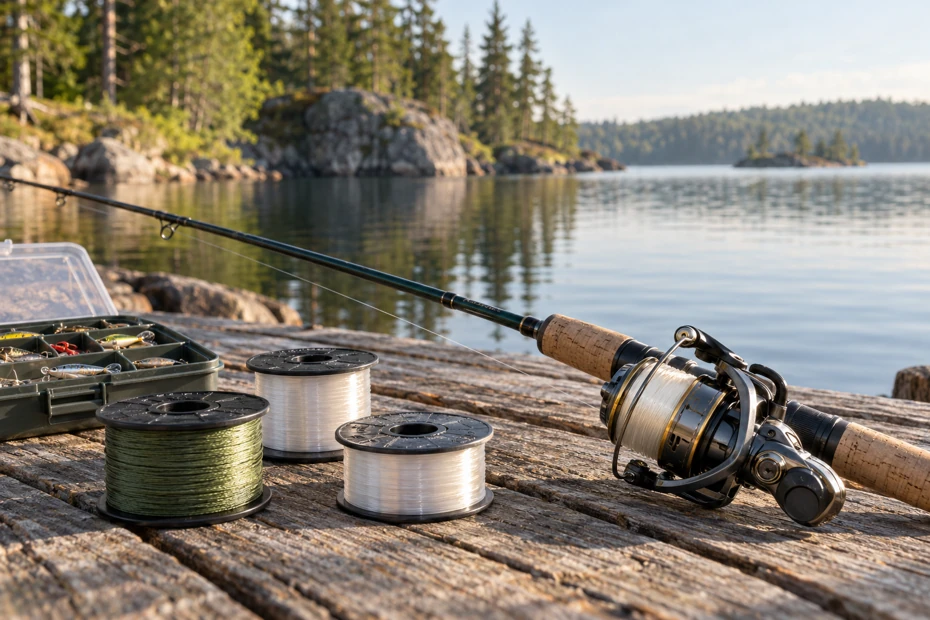
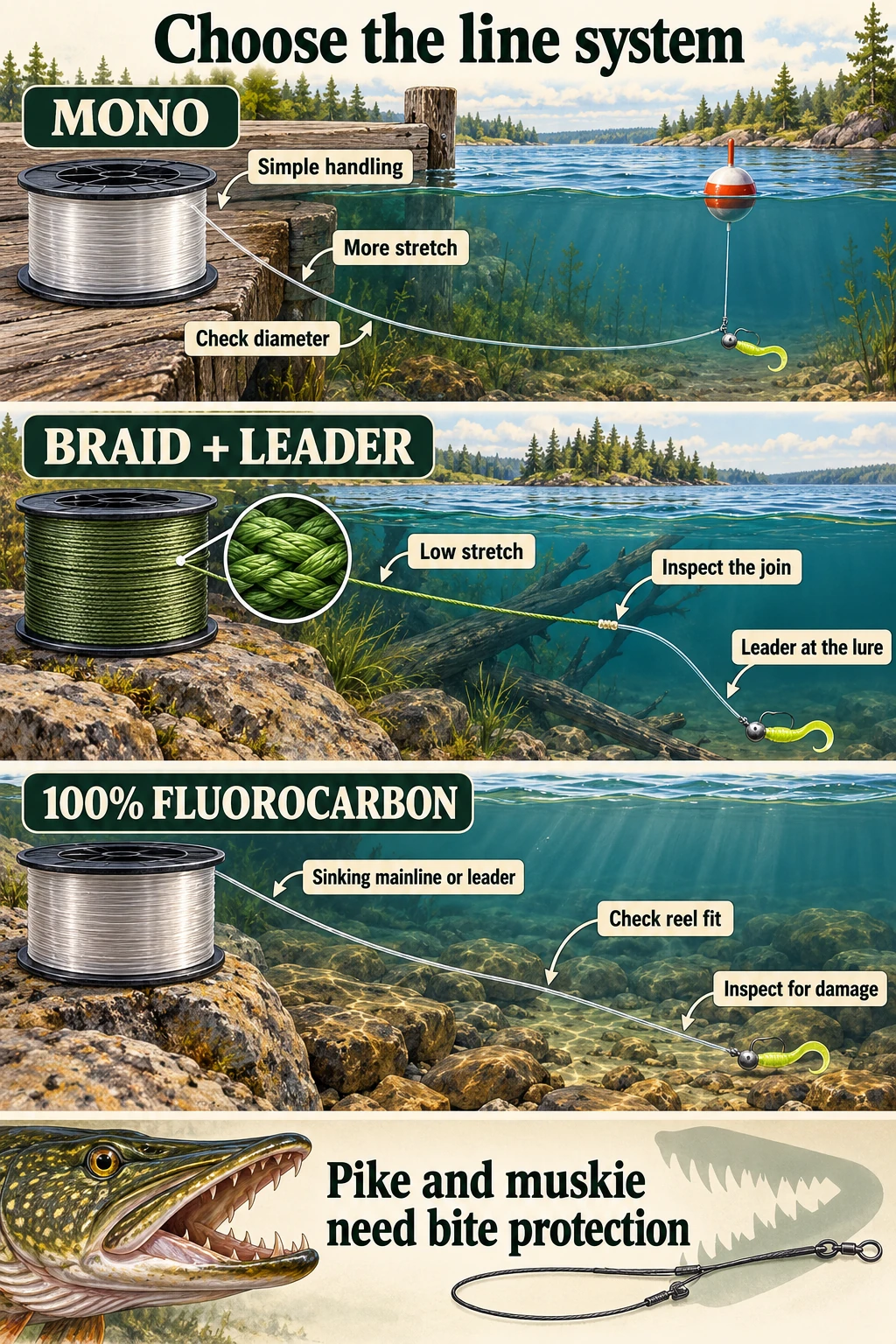
The best fishing lines for Canada depend on the rig you cast, the reel you fill and what the line will touch. Nylon monofilament suits a straightforward shore outfit; braid helps with direct contact; fluorocarbon can work as a sinking mainline or a separate leader.
A float beside a cottage dock needs a different line setup from a deep jig. Clear water, sharp rock, weeds and freezing air add further decisions. Buying the strongest spool in the shop can leave you with poor casting, an overloaded outfit or a leader that offers no suitable protection against teeth.
As an Amazon Associate, CanadaFever earns from qualifying purchases. Product links lead to Amazon.com. Confirm the selected size, Canadian delivery, currency, shipping and any import charges before ordering.
Compare the best fishing lines for Canada by their actual labels
These are three different materials and sizes, selected for distinct jobs. CanadaFever has compared manufacturer specifications and listing identities. We have not measured their breaking strength, abrasion resistance or casting distance, and we have not conducted a hands-on comparison.
| Exact spool | Published size | Reason to compare it |
|---|---|---|
| Berkley Trilene XL XLFS8-15; clear nylon mono | 8 lb; 330 yd / 301 m 0.010 in / 0.25 mm | A simple freshwater mainline when easy handling matters more than maximum contact feel. |
| Sufix 832 Advanced Superline 660-020G; Low-Vis Green braid | 20 lb; 150 yd 0.009 in; about 0.23 mm Eight fibres | A low-stretch mainline, with leader material chosen for the actual presentation. |
| Seaguar Red Label 12RM200; clear 100% fluorocarbon | 12 lb; 200 yd 0.012 in / 0.310 mm | A sinking mainline designed for baitcasting reels, or line to evaluate for suitable lighter leader jobs. |
The inch and metric figures are published label values, with the Sufix metric figure rounded from 0.009 inch. They are not our measurements. Do not compare these spools as if 8, 12 and 20 pounds describe the same fishing job.
For a complete first outfit, work through choosing fishing gear for beginners. Match the line to a suitable rod and reel before buying accessories.
Three line options with different limits
Trilene XL: nylon mono for a straightforward outfit
Berkley’s XLFS8-15 is clear, 8-pound nylon monofilament on a 330-yard spool. The published diameter is 0.25 mm. Berkley positions XL around manageable casting and resistance to twists and kinks; that makes it a reasonable starting comparison for an ordinary spinning outfit.
Use it when you want one continuous mainline for a float, small lure or other rig that fits the outfit. It avoids an extra leader connection when the presentation does not need one. Nylon’s stretch can provide some cushioning, though the drag and rod still control the load.
Check for sharp contact surfaces and consider how the diameter affects light tackle. Do not interpret 8 pounds as permission to drag fish through any cover. For tiny trout lures on a light reel, 0.25 mm may be more line than the presentation needs; our ultralight rod guide explains why the entire outfit needs matching.
XL, XT and Big Game are separate lines. A diameter or handling claim from one does not automatically apply to another. Check the full XL model and strength when moving between the retailer’s colour and spool-size options.
Compare mono, braid and fluorocarbon
Affiliate links: We may earn a commission from qualifying purchases, at no extra cost to you. We have not field-tested these items. Check the selected model, current price and delivery options on Amazon.
For a compatible line setup
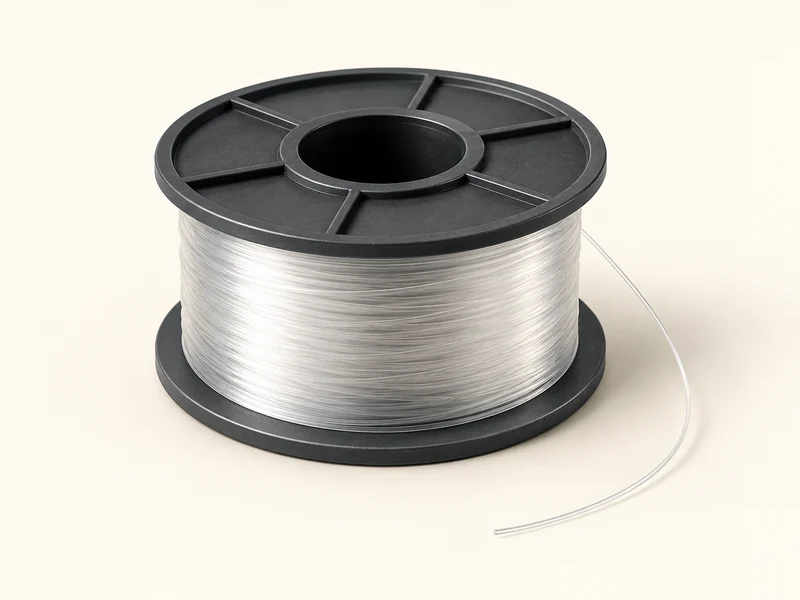
Berkley Trilene XL Monofilament
- Clear 8 lb monofilament in a 330-yard spool.
- Diameter 0.010 inch / 0.25 mm for checking reel capacity.
- Match line strength to the fish, cover and tackle when replacing worn line.
This size is an option for a compatible light freshwater outfit. A lighter size may suit small lures; check the rod, reel and target fish together.
Check this line spool on Amazon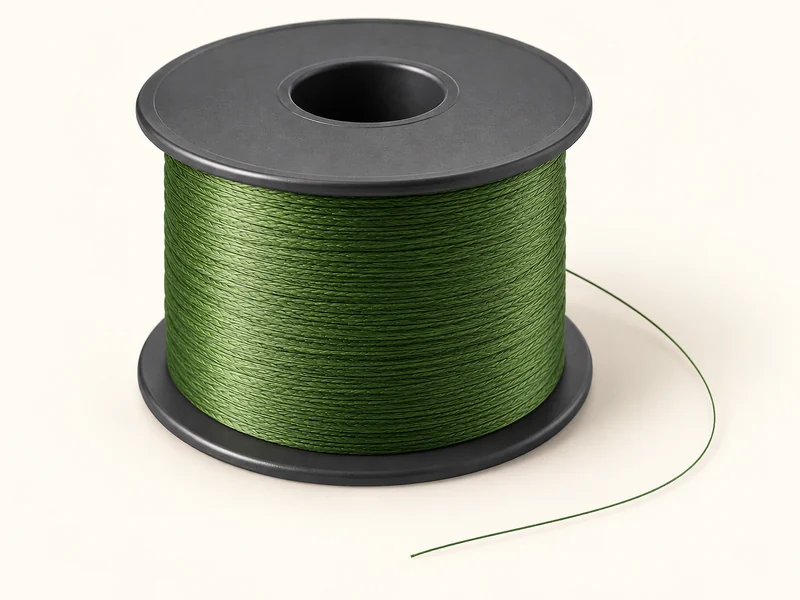
For a braid-based setup
Sufix 832 Advanced Superline Braid
- Selected variant: 20 lb, 150 yards, Low Vis Green.
- Eight-fibre braided construction for a braid-based setup.
- Compare line diameter with reel capacity and choose a leader for the actual rig.
Published nominal diameter is 0.009 inch (about 0.23 mm). Choose a suitable leader and connections; braid is not tooth protection. This is open-water 832, not 832 Ice Braid.
Check this braid on AmazonFor a compatible line setup
Seaguar Red Label Fluorocarbon, 12RM200
- Clear line listed as 100% fluorocarbon.
- The selected 12RM200 variant is 12 lb in a 200-yard spool.
- Compare diameter with reel capacity and choose strength for the actual rig.
Published diameter is 0.012 inch / 0.310 mm. This size is designed as baitcasting mainline and is not tooth protection.
Check this line spool on AmazonSufix 832: a braided mainline with a separate leader decision
The 660-020G is the 20-pound, 150-yard Low-Vis Green version of 832 Advanced Superline. Rapala’s specification chart gives 0.009 inch, about 0.23 mm. Its eight-fibre construction combines seven HMPE fibres with one GORE Performance Fiber.
Consider this size for an outfit that benefits from braid’s low stretch and direct contact. A leader can put a different material next to the lure, while the braid remains on the reel. You still need to choose the leader’s strength, diameter and length around the method and contact surfaces.
Twenty-pound braid can fit into a relatively small space, but that does not make a light rod a 20-pound lifting tool. Adjust the drag for the whole outfit. Braid also needs a secure connection to the spool and suitable knots; a loosely filled reel can create problems before the lure reaches the water.
This 150-yard spool may leave too little working line for a large-capacity reel, long trolling runs or repeated cutbacks. Check capacity first. Choose a different strength or longer spool if needed; the exact option linked here is not the whole 832 range.
Seaguar Red Label: 100% fluorocarbon mainline
The 12RM200 is clear, 12-pound Red Label on a 200-yard spool, with a published 0.310 mm diameter. Seaguar identifies it as 100% fluorocarbon mainline designed for baitcasting reels. It is not nylon carrying a fluorocarbon coating.
Compare it when a sinking mainline fits your subsurface presentation and the reel accommodates the diameter comfortably. On a small spinning spool, consider whether a suitably sized leader would solve the actual problem without filling the whole reel with this particular line.
Mainline and dedicated leader products are not automatically interchangeable formulations. Seaguar explains that its line and leader ranges use different resins and designs. Red Label can be evaluated for suitable leader tasks, but do not buy it expecting the construction of Blue Label or another dedicated leader.
Fluorocarbon remains visible under some conditions and it stretches under load. It also needs inspection after contact. Twelve-pound Red Label is not a pike or muskie bite leader, regardless of broad marketplace wording about toothy fish.
Choose the line system for the method
A species name alone does not settle line choice. A walleye caught on a shallow running lure and one targeted with a deeper jig involve different line lengths, contact and load. Start with the presentation, then account for the fish and cover.
| Fishing task | Useful starting comparison | Check before committing |
|---|---|---|
| Dock or shore float fishing | Suitable nylon mono for straightforward rigging. | Diameter, float loading, hook size and the reel’s capacity. |
| Small trout or panfish lures | Light mono, or fine braid with a suitable leader. | The full lure weight, line diameter and the rod’s lower casting range. |
| Subsurface bass or walleye lures | Braid plus a leader, or an appropriate fluorocarbon mainline. | Contact with rock, leader joins, lure action and drag. |
| Pike or muskie | A purpose-matched mainline plus a suitable bite leader. | Teeth, lure mass, connections and fish-handling equipment. |
| Coastal trolling or bottom fishing | A dedicated rig chosen for the technique and reel. | Working line length, depth, terminal tackle and local method requirements. |
These are starting comparisons, not fixed pound-test prescriptions. For walleye, decide whether you will cast, drift, jig or troll before choosing the line. On trout tackle, extra diameter can change how a small presentation behaves even when the reel can hold plenty of it.
For the narrower choice of light braid on a walleye jigging outfit, use our walleye jigging braid guide. The 20-pound spool here illustrates a broader mainline option; it does not replace that lighter-size comparison.
Topwater lures deserve a separate check. A sinking fluorocarbon section can affect how a light surface lure sits. Nylon mono may suit that presentation better; test the complete rig beside the bank before making long casts.
- For open water, prioritise casting, line control and enough reserve to fight and land fish.
- For rock or hard structure, plan for frequent checks and reties at the contact end.
- For heavy cover or large lures, match the entire outfit to the load; a stronger spool cannot correct an unsuitable rod.
Use our muskie rod comparison when large casting loads are the actual task. For the broader choice of powers and methods, start with the fishing rod buying guide.
See why strength and diameter are different labels
The 20-pound Sufix example is nominally thinner than the 8-pound nylon example. Those are different constructions and manufacturer labels, not results from a shared breaking-strength test. A strength number alone cannot tell you how a spool will fill.
Check the full product name and size when comparing labels. These examples do not establish that every braid is thinner than every mono, or that two brands with similar nominal diameters pack identically. Use your reel’s instructions and actual line lay to assess the fill.
Read diameter and capacity before pound test
Pound test is a strength label. Diameter affects how much line fits on the reel and how the line works with the presentation. A braid’s quoted mono-equivalent rating is a size comparison, not permission to substitute strengths throughout the outfit.
For example, the shortlisted 20-pound Sufix is published at about 0.23 mm, while 8-pound XL is published at 0.25 mm. Do not expect those two lines to fill every reel equally. Braid packs differently under tension, and nominal size labels do not describe every product sold as 8-pound mono.
Read the reel manufacturer’s capacity for the relevant material and diameter. Allow enough usable line for the cast or deployment, a fish’s run and future cutbacks. A 150-yard purchase is not automatically a complete fill for every reel marked 2500 or 3000.
- Record the rod’s line and lure ratings, then the reel’s actual capacity information.
- Check the chosen spool’s material, strength, diameter, colour and total length together.
- If using backing, keep enough working line above it that the backing join stays clear of normal casting and fishing.
Follow the reel’s instructions for attaching braid to the arbor. Some reels have a suitable gripping surface; others call for backing or another specified attachment. Do not assume a tightly pulled knot makes slippery braid grip a bare spool.
When filling the reel, use the line and reel manufacturers’ guidance for orientation, tension and fill level. Stop if loose loops build up. On a spinning reel, closing the bail by hand and checking the first wrap can help you spot slack before winding it beneath tighter line.
Separate leader choice from mainline choice
A leader changes the section nearest the lure. Choose it for the job at that end of the rig: lure presentation, contact with hard surfaces or protection against teeth. A length of clear 12-pound fluorocarbon addresses very different loads from a purpose-made predator leader.
Keep a leader join outside the guides if that arrangement fits your casting and landing needs. If it must pass through the guides, check its size and smoothness against the actual rod. A bulky connection can catch; an inadequately tied slim connection can fail.
Use a knot appropriate to the two materials and their diameters. Follow the manufacturer’s demonstrated instructions, seat it carefully and pull-test the connection before fishing. Seaguar’s knot instructions provide material-specific examples. Practise with your actual line at home rather than learning the join while balancing tackle on a shoreline.
Do not confuse a cut end pulled through a knot with a freshly broken strand. After a failure, inspect the remaining end, nearby line and hardware before replacing only the lure. Repeated failures need a cause checked, including damaged guides, poor knots or an unsuitable rig.
Freezing air and coastal trips need another check
Cold water and freezing air are different problems. Water on line and guides can freeze above the surface. A braid that handles comfortably inside a warm shelter may behave differently on an exposed ice hole; an open-water spool is not automatically an ice-specific product.
Rapala sells 832 Ice Braid separately from the open-water 832 linked here. Berkley also sells ice-specific mono and fluorocarbon formulations. Compare the actual winter product and intended handling conditions rather than transferring a cold-weather claim across an entire brand.
Carry a suitable alternative when line icing interrupts control, and stop to clear affected guides safely. Do not force a hard cast through a blocked guide. Line selection does not establish safe ice conditions; use our ice-fishing planning guide for the separate access and safety decisions.
For coastal fishing, select the rig around the method and the fish before choosing spool length. Deep deployments or trolling can need substantially more working line than a shore cast. Rinse tackle according to its maker’s instructions after saltwater use, and inspect the line and terminal connections.
Local rules can affect hooks, bait and methods, regardless of which mainline you buy. Check the exact water and date through our Canadian fishing regulations and licences guide. No line colour or strength makes an otherwise restricted rig legal.
Check the working length before buying a spool
Enter the line length you plan to put on the reel, the farthest cast or deployment, your chosen reserve for a fish’s run and future cutbacks. The planner adds your allowances; it cannot decide what reserve is suitable for a species or method, and it does not calculate reel capacity.
For reference, 150 yards equals 137.16 metres, 200 yards equals 182.88 metres and 330 yards equals 301.752 metres. Manufacturer metre labels may round those conversions. A plan with 80 metres of deployment, 50 metres of reserve and 10 metres for cutbacks needs 140 metres; a complete 150-yard spool falls 2.84 metres short. These are example inputs, not recommended fishing allowances.
Enter only usable working line. Backing beneath a joining knot, damaged sections and the line left on a supply spool are different quantities. If the total looks insufficient, revisit the method, spool length and reel capacity together; filling beyond the reel maker’s guidance is not the solution.
The Pre-Trip Protocol: prepare and inspect the whole system
Confirm the label and fill the reel
Match the exact material and size to your outfit. Follow the reel’s filling instructions, keep the line controlled and check for loose coils before attaching terminal tackle.
Check every connection
Inspect the arbor attachment, any backing join, leader join and terminal knot. Pull-test safely with the hook secured and clear of hands; never wrap braid around your fingers.
Make a short test before fishing
Cast or lower the complete rig in a safe area. Check the drag, line lay, leader passage and lure behaviour. Correct loops or a catching join before casting farther.
During the session, check the working end after a snag, hard contact or fish. Run a damp section carefully between your fingers for mono or fluorocarbon; inspect braid for frayed fibres and damaged connections. Cut back beyond damage and retie.
- Carry suitable cutters, enough leader material and a small closed container for waste line.
- Replace damaged or unreliable line; a fixed calendar interval cannot describe every storage and fishing history.
- Store spare spools clean and protected from heat, sunlight and crushing. Follow any product-specific storage advice.
Keep cut line out of the water and shoreline vegetation. Take it home in the closed container and use an appropriate local collection or disposal route. A short leader offcut can still entangle wildlife.
For the rest of the outfit, the fishing gear and equipment hub covers rods, reels, tackle storage and other practical choices.
Fishing line questions
What is the best fishing line for a beginner in Canada?
A suitable nylon monofilament is a useful first comparison for a simple freshwater spinning outfit. Match the strength and diameter to the rod, reel, lure and cover. The 8-pound XL here is one documented size, not a prescription for every beginner.
Is 20-pound braid the same size as 20-pound mono?
No. Compare the published diameters of the exact products. The shortlisted 20-pound Sufix 832 is 0.009 inch, about 0.23 mm. A mono-equivalent number concerns size; it does not change the braid’s strength label or the rod’s load limits.
Can I use fluorocarbon as my mainline?
Yes, if it is designed for that role and suits the reel. Seaguar positions Red Label as baitcasting mainline. Check its diameter and handling on your outfit; a dedicated leader product is not automatically a suitable whole-spool replacement.
Does fluorocarbon disappear underwater?
No. Even Seaguar’s technical FAQ says it is not completely invisible. Diameter, light, surroundings and presentation still matter. Do not choose excessive diameter on the assumption that fish cannot see the line.
Do I need different line for ice fishing?
Evaluate the conditions separately. An exposed rig can carry water into freezing air, while a sheltered outfit faces different handling demands. Compare ice-specific products where needed; the open-water Sufix 832 linked here is not the separate 832 Ice Braid.
Specifications and technical sources
Model specifications: Berkley Trilene XL, Berkley’s XLFS8-15 specification row, Rapala Sufix 832 and Seaguar Red Label.
Material distinctions: Seaguar’s line and leader FAQ. Canadian beginner context: the Freshwater Fisheries Society of BC’s Learn to Fish guide. Product selection is based on specifications, not comparative field testing.