

Compare Okuma Celilo, Shimano Sensilite and Daiwa Presso ultralight rods by lure weight, transport and fit for Canadian trout and panfish trips.
- Compare the Celilo CE-S-662ULb for a two-piece, 6-foot-6 outfit with a published 1/32 to 3/8-ounce lure range.
- Compare the Sensilite SENS66ULA if you can transport a full 6-foot-6 rod and your complete rigs fit its 1/32 to 3/16-ounce range.
- Compare the Presso PSO604ULFS-TR when four-piece transport matters. It is 6 feet assembled and rated for 1/32 to 1/4 ounce.
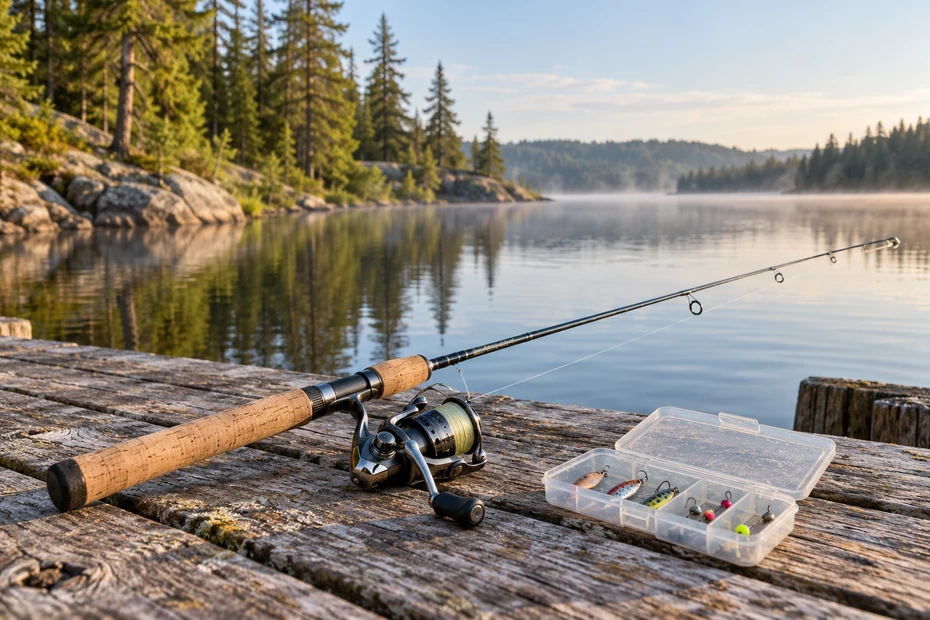
An ultralight spinning rod suits small trout and panfish presentations when its lure rating matches the complete rig you cast. For a Canadian creek, cottage lake or stocked pond, start with that weight, then check casting room and how the rod will travel.
The three rods here solve different transport problems: a two-piece Okuma Celilo, a one-piece Shimano Sensilite and a four-piece Daiwa Presso. All carry an ultralight power label. Their upper lure limits, actions and packed shapes differ enough to change which one belongs in your car or pack.
As an Amazon Associate, CanadaFever earns from qualifying purchases. Product links lead to Amazon.com. Check the selected model, delivery to your Canadian address, currency, shipping and any import charges before paying.
Choose an ultralight spinning rod by load and transport
CanadaFever’s selection compares published manufacturer specifications and exact model identities. We have not conducted a hands-on test of these rods, measured their casting distances or compared their sensitivity. The recommendations below explain where each documented design fits and where another outfit makes more sense.
| Exact rod | Manufacturer ratings | Choose it when |
|---|---|---|
| Okuma Celilo CE-S-662ULb 6 ft 6 in; two pieces | UL; M taper 2 to 6 lb line 1/32 to 3/8 oz lures | You want a two-piece rod and the wider published upper lure allowance fits your rigs. |
| Shimano Sensilite SENS66ULA 6 ft 6 in; one piece | Ultra Light; Fast 2 to 6 lb monofilament 1/32 to 3/16 oz lures | You have protected space for the full length and use lighter complete presentations. |
| Daiwa Presso PSO604ULFS-TR 6 ft; four pieces | UL; Fast 1 to 6 lb line 1/32 to 1/4 oz lures | Breaking the rod into more sections solves a real carrying problem. |
The published ranges do not identify a measured casting sweet spot. A shared 1/32-ounce lower limit does not prove these rods cast that weight equally well. Line diameter, lure shape, wind and casting technique still affect the result.
For a wider choice of powers and fishing methods, use our fishing rod buying guide. Use this shortlist for small-lure spinning; choose a different outfit for heavier freshwater methods.
Three rods for different carrying needs
Okuma Celilo: a two-piece ultralight spinning rod
The CE-S-662ULb is the 6-foot-6, two-piece ultralight model. Okuma lists an M taper, a 2 to 6-pound line range and a 1/32 to 3/8-ounce lure range. Keep the final letter and full model code when shopping: the Celilo family includes other lengths, powers and fishing applications.
This is the first option to compare if a one-piece rod will not travel safely in your vehicle, but you have no reason to break it into four sections. Check the longest separated section against your storage space. A rod that fits diagonally between loose luggage still needs protection from a closing hatch or shifting cooler.
The 3/8-ounce upper rating is higher than the other two shortlisted models. Compare it if your small-lure rigs exceed the upper limits of the other two rods. The specification gives no measured optimum casting weight or comparative control in dense weeds.
Use Okuma’s model specifications if a retailer calls this a one-piece rod or lists its action as simply “Ultra Light.” Power and action are different specifications, and the matching manufacturer’s model is two pieces with an M taper.

Okuma Celilo CE-S-662ULb
- 6-foot-6 UL rod that separates into two pieces.
- Manufacturer lure rating: 1/32 to 3/8 ounce; line: 2 to 6 pounds.
- Choose the exact CE-S-662ULb; this is a rod, not a rod-and-reel combo.
Shimano Sensilite: for protected one-piece transport
Shimano’s SENS66ULA is also 6 feet 6 inches, but it stays in one piece. Its Fast action, 2 to 6-pound monofilament rating and 1/32 to 3/16-ounce lure rating distinguish this exact version from other Sensilite lengths and powers.
Consider it if you can move the assembled rod from storage to vehicle to water without forcing the tip around doors or bags. There is no ferrule to assemble, although the full rod remains exposed during transport. That trade-off can decide the purchase before handle materials or branding enter the discussion.
Its 3/16-ounce upper lure limit deserves a close look if your box includes 1/4-ounce spoons. Those already exceed the range before adding anything else. Even a 3/16-ounce jig head can exceed the limit once you fit a plastic body.
Fast action describes where a rod bends under load. It does not establish casting distance or how readily you will detect a bite. Keep the lure range and one-piece transport requirement in view when comparing this model.

Shimano Sensilite SENS66ULA
- 6-foot-6, one-piece UL spinning rod with Fast action.
- Manufacturer lure range: 1/32 to 3/16 ounce.
- Needs full-length transport space; reel and line are separate purchases.
Daiwa Presso: four pieces for a smaller carrying space
The PSO604ULFS-TR is the 6-foot, four-piece Presso pack rod. Daiwa specifies UL power, Fast action, 1 to 6-pound line and 1/32 to 1/4-ounce lures. Other Presso rods have different section counts, so a family photograph or shared review total cannot identify this version.
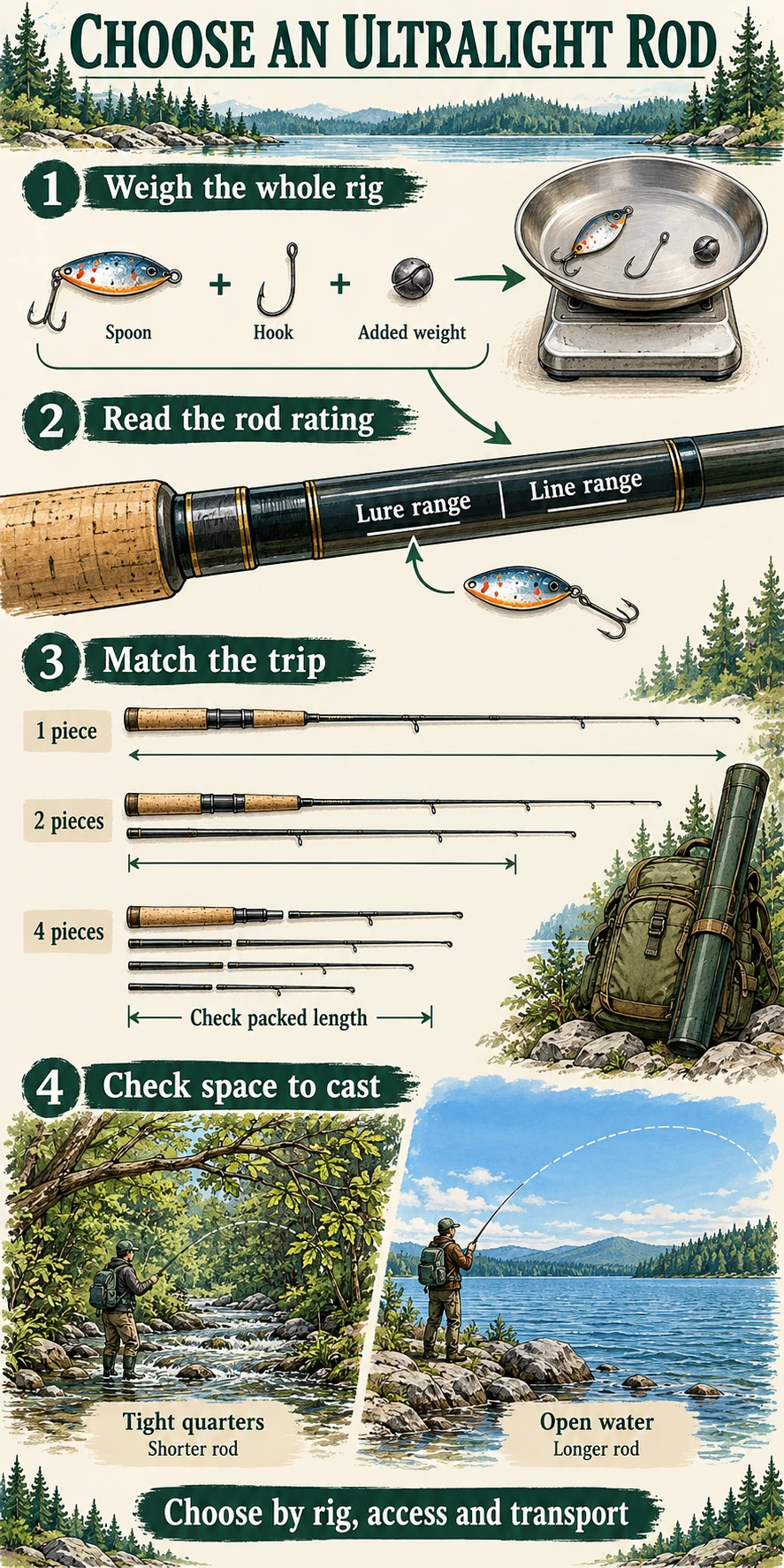
Choose it when shorter separated sections make the journey easier, such as carrying the outfit to a walk-in lake. Check the actual packed dimensions with the seller and protect every section. An Amazon dimension of 24 inches is not the assembled rod length.
Four pieces mean three ferrules to seat and inspect. Align all guides before fishing and check for movement during use. Keep grit out of the joints and follow the manufacturer’s assembly instructions; do not force a joint completely closed just because a gap looks untidy.
The assembled rod is six inches shorter than the two 6-foot-6 choices. That may help in a particular opening along a creek, but it cannot guarantee a clear cast under branches. For travel rods covering larger lures or other methods, compare our separate travel fishing rod guide.

Daiwa Presso PSO604ULFS-TR
- 6-foot UL spinning pack rod with four sections.
- Manufacturer lure range: 1/32 to 1/4 ounce; line: 1 to 6 pounds.
- Confirm the packed dimensions and the PSO604ULFS-TR variant.
Weigh the whole rig before choosing UL or light
A jig head’s stamped weight leaves out the plastic body. A float rig includes the float, hook, bait and any shot or sinker. Weigh everything the rod will cast together on a suitable small scale, then compare that result with the exact model’s lure range.
In grams, 1/32 ounce is about 0.9 gram, 1/8 ounce about 3.5 grams, 3/16 ounce about 5.3 grams, 1/4 ounce about 7.1 grams and 3/8 ounce about 10.6 grams. These are rounded conversions, not extra ratings supplied by the manufacturers.
Suppose a complete rig weighs 6 grams. It exceeds the Sensilite’s approximately 5.3-gram maximum. It sits within the published ranges of the Celilo and Presso, although that alone does not tell you how comfortably either will cast it.
Light and ultralight labels vary between rod families. Compare the actual lure range, line guidance and action of the models you are considering. Our rod power and action guide explains those terms before you move to a different power.
- Include the soft bait when weighing a jig presentation.
- Include extra sinkers, floats and bait on a casting rig.
- Keep a margin from the upper rating if your rig changes during the day.
- Choose another rod for routine loads outside the printed range.
For lure choices, our stocked-lake trout spoon guide is a separate starting point. Check the weight of the particular spoon you buy; names and colours do not establish compatibility.
Match length to the bank and the landing plan
Walk through the casting movement before judging reach. A bank with branches overhead, brush behind and a steep drop in front may leave no safe place for a normal cast. A six-inch reduction in rod length cannot fix a location that has no clear path for the lure.
On an open shore, extra length can help you manage line around nearby plants. Choose a position where you can bring a fish to a suitable landing net without lifting it by the rod. Plan that last part before casting, especially when fishing alone or standing above the water.
| Situation | What to check | Reason to change the outfit or spot |
|---|---|---|
| Small creek opening | Clear lure path, rod clearance and a reachable landing area | Branches or footing prevent controlled casting and landing |
| Open stocked-lake bank | Complete spoon or float-rig weight; wind and access to water | The required casting load exceeds the rod’s range |
| Panfish near sparse cover | Room to guide the fish toward a net | Dense weeds or timber demand force beyond the outfit’s useful control |
| Strong river current or larger trout methods | Required weights, line and fish control | Steelhead rigs, heavy current or lake-trout trolling call for a different setup |
A small lure can still hook a larger fish. Keep a working drag and a landing plan in case that happens. Avoid deliberately choosing an underpowered outfit where controlling the fish requires pulling it through heavy cover.
Match the reel, line and drag to the rod
Reel size numbers are not consistent across brands. Compare actual weight, line capacity, spool design and how the assembled outfit feels in your hand. A reel that holds suitable line can still make a short UL rod unpleasant to hold if the combination is poorly balanced.
The manufacturer line ratings guide line selection; they do not specify the maximum fish weight. They also do not mean that every line marked 4 pounds has the same diameter or breaking strength. Use the reel’s instructions, the rod’s guidance and the line manufacturer’s specifications together.
Monofilament can keep a first setup simple. Braid adds decisions about diameter, leader connections and knots. A thin braid’s label is not permission to tighten the drag until the rod takes all the load. If you need a reel comparison, our trout spinning reel guide covers that separate purchase.
- Keep line within the reel’s recommended capacity and avoid overfilling the spool.
- Check every guide for damage before threading the rod.
- Use a sound knot and test it with hooks secured away from hands and faces.
- Set the drag to release line under controlled load; adjust it for the weakest part of the setup.
Close the bail by hand and remove loose slack before retrieving. If coils appear, stop and inspect the line rather than winding the tangle deeper into the spool. Practise connections before travelling using our hook-tying guide.
Set up before fishing in three steps
Check the route and assemble the outfit
Confirm how the rod will travel, then seat the reel and assemble any sections according to the instructions. Align the guides, inspect the tip and thread every guide. Choose a stable fishing position with clear casting space and appropriate safety equipment.
Fit one legal rig within the rating
Weigh the finished presentation, check the knot and test the drag safely. Start with a controlled cast in a clear area. If the rig feels difficult to cast, check line, tangles and total weight before using more force.
Check the outfit during the session
Inspect multi-piece joints for loosening and line near the lure for damage. Recheck the complete load after adding weight or changing the rig. Stop fishing if a guide, ferrule or tip is damaged; extra pressure can make a small fault worse.
Trout and panfish opportunities differ across Canada, and the tackle permitted on one lake may be restricted on another. Check the current authority for the actual waterbody, including bait, hook, licence and season requirements, through our Canadian fishing rules and licence guide. No nationwide tackle rule is implied by these product recommendations.
If you are assembling your first complete outfit, the beginner fishing gear guide helps you budget for the reel, line, landing equipment and tackle as well as the rod.
Ultralight spinning rod FAQ
Is an ultralight rod suitable for every trout trip?
No. Small spinning presentations can suit UL tackle, but trout fishing also includes heavy-current rigs, steelhead methods and lake-trout trolling. Choose by complete casting load, required fish control and the method you plan to use.
Should I choose a 6-foot or 6-foot-6 rod?
Check the space at your fishing spot and the carrying format first. The Presso here is 6 feet and four pieces; the Celilo and Sensilite are 6 feet 6 inches with different section counts. Neither length guarantees longer casts or clearance under branches.
Can I cast a 1/4-ounce lure on these rods?
A complete 1/4-ounce presentation is within the listed Celilo and Presso ranges. It exceeds the Sensilite SENS66ULA’s 3/16-ounce maximum. Include the weight of any body, float or other added tackle when checking the total.
Does a four-piece rod perform worse than a one-piece rod?
Section count alone cannot establish that. The Presso trades additional joints for shorter separated sections, while the Sensilite needs full-length transport space. We have no comparative casting, sensitivity or durability measurements for these three models.
Do these rods include a reel and line?
The selected listings are rods, not rod-and-reel combos. Budget separately for a compatible reel, line and tackle. Confirm the exact seller’s contents, delivery terms and selected model before placing an order.
Manufacturer specifications
Model codes and ratings follow the manufacturer’s exact model entries. Retailer fields can describe a different version or contain errors; verify the code printed on the rod when it arrives.