

Choose equipment around one freshwater shore trip, with compatible rod, reel, line and a simple legal presentation.
- Choose the water and target first.
- Match the outfit, line and casting weight.
- Practise knots and pack landing tools.
Bottom line Buy one coherent kit for the fishing you can actually do, then upgrade the component that limits that method.
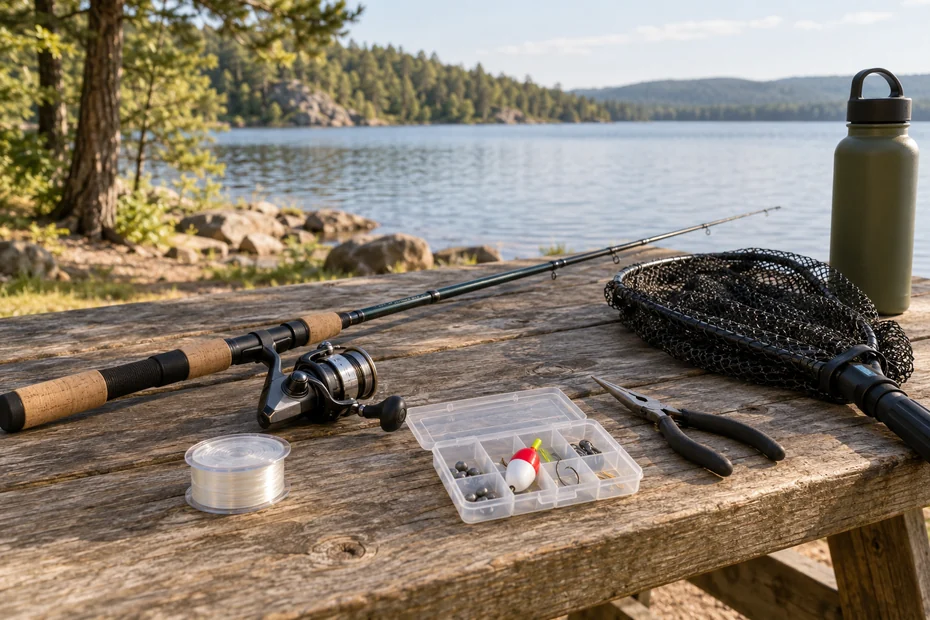
Choosing fishing gear for beginners starts with the water you can actually visit, the fish you intend to target and the method you want to learn. For a first Canadian freshwater shore trip, a matched spinning outfit, suitable monofilament and a small selection of single-hook rigs can cover a useful lesson.
Buy equipment for one plan before expanding into other fisheries. A stocked trout pond, a weedy bass lake and a rocky riverbank ask different things of the tackle. Check that the pieces in a mixed kit fit the same fishing method.
Build a kit that works together
- Choose a legal, accessible fishing spot and one target species.
- Match rod power, reel capacity, line and lure weight.
- Practise a knot, set the drag and pack landing tools before the trip.
The equipment suggestions below are editorial starting points for ordinary freshwater shore fishing. They are not a claim of a recent field test, a guaranteed catch or a single outfit for all Canadian species. If your first trip is guided, ask what equipment you can borrow before buying.
Choose your first fishing situation
Pick a place you can reach safely and revisit. A stable public bank with room behind you makes casting practice easier than a narrow trail above fast water. Confirm legal access, parking and any site restrictions before building a shopping list.
Ask a local tackle shop which legal species a beginner can target there during your intended visit. State that you will fish from shore. Advice for a boat over deep water can lead you to equipment that does not suit the bank.
For smaller panfish or stocked trout with modest lures, a light or medium-light spinning outfit is one option. For mixed bass and walleye fishing with heavier presentations, a medium outfit can be a more practical starting point. Those labels vary between manufacturers.
If you intend to target northern pike, discuss bite-resistant leader material and suitable landing tools. Pike teeth change the connection you need. Adding a thicker general monofilament main line does not establish that the terminal leader resists teeth.
For salmon, sturgeon, heavy current or large saltwater fish, ask for a separate equipment plan. Do not buy a moderate freshwater starter combo expecting it to cover those jobs. Technique, fish size, current and lure weight all affect the choice.
Our fishing for beginners in Canada guide covers the first outing itself. Use it to narrow the trip, then choose gear around the method you will practise there.
| First situation | Starting direction | Ask locally |
|---|---|---|
| Small panfish or stocked trout | Light or medium-light spinning tackle and modest lures. | Target species, lure weight and permitted bait. |
| Mixed bass and walleye from shore | Example: 6 ft 6 in medium GX2, size 35 reel and 10 lb mono in modest cover. | Check actual rod ratings, line capacity and total casting weight. |
| Northern pike | An appropriate outfit with bite-resistant terminal connection. | Leader material and landing tools before targeting pike. |
| Heavy current or large specialist fish | A separate tackle and access plan. | Method-specific instruction before buying a general combo. |
Read the rod’s ratings before the colour
A spinning rod carries its reel underneath the handle, and the larger guide near the reel helps line leave the spool. A casting rod is designed for a different reel arrangement. Choose the matching system rather than buying two components because their colours look similar.
Rod length affects reach, transport and casting space. A roughly six- to seven-foot spinning rod is an editorial starting range for many adult shore beginners, but a shorter rod can suit confined banks or a smaller angler. Try holding the outfit before deciding.
Power describes the load range the rod is designed to handle. Light, medium-light and medium are relative manufacturer categories. Action describes where the rod bends under load. A fast-action rod and a medium-power rod can describe the same rod using different properties.
Read the rod ratings
- Find the printed line range and lure-weight range on the blank or manufacturer specification.
- Compare them with the line and total rig you plan to use.
- A lure’s weight includes the attached jig, sinker or other load you must cast.
The line rating is not a promise about the largest fish you can catch. Drag, knots, obstacles and how you fight the fish affect the load on the system. It also does not mean you should suspend a fish of that weight from the rod tip.
A two-piece rod can be easier to transport. Seat the joint according to the maker’s instructions, keep the sections aligned and inspect the connection during use. Avoid forcing dirty joints together or letting a loose upper section move while casting.
Inspect the guides for damage and make sure the reel seat tightens securely. A rough guide can damage line, while a slipping reel makes casting awkward. On used equipment, a short inspection can save replacing components that still work.
Choosing fishing gear for beginners who need a smaller outfit
Consider hand size, balance and the casting space. A child does not need the same rod length as an adult simply because both are targeting perch. Have them hold the outfit, turn the handle and practise the bail movement before you pay.
A spincast reel with a push button can suit some learners, although it is a different system from the spinning gear discussed here. Borrow one to compare if coordination is the main obstacle. The easiest system is the one the learner can operate calmly with supervision.
Match reel capacity and controls
Reel size numbers vary between brands. A size 2500 from one maker and a size 30 from another can occupy a similar general role without having identical capacity or weight. Read the actual line-capacity figures for the model you are considering.
A matched rod-and-reel combo reduces one purchase decision, but you still need to inspect the selected variant. Online listings can group youth, ultralight, medium and medium-heavy outfits under a shared title. Confirm length, power, reel size and piece count before ordering.
Check whether the handle can move to your preferred side. Spinning reels often offer that option, but confirm the instructions for the specific reel. Hold the rod with the hand that feels comfortable and use the other hand to turn the handle.
The bail is the wire arm you open before casting and close afterwards. Practise holding the line with your finger, opening the bail and releasing the line under control. Close the bail by hand, then check that the line has settled on the roller.
The drag allows the spool to release line when the load rises. Set it with the hook controlled safely and a firm pull on the line. Ask an instructor to demonstrate a useful setting for your exact line and rig instead of tightening it completely.
On a spinning reel, gear ratio describes rotor rotations per handle turn. Line recovered per turn also depends on spool dimensions and how full the spool is. For a first outfit, manageable controls and a suitable fit deserve more attention than a headline speed number.
Compare how the reel controls work; bearing count alone tells you little about its quality. Try the handle, bail and drag, and check whether the shop can help with spooling or service. A usable local support arrangement can matter when you need an explanation before your second trip.
Choose line that fits the whole system
Nylon monofilament is a practical starting material for many ordinary freshwater spinning lessons. You can tie the lure directly in suitable applications, and its stretch gives a different feel from braid. Pick the strength for the target, cover and rod range.
For the medium shore outfit described here, eight- or ten-pound mono is an editorial starting choice in modest cover. It is not suitable for every fishery. Small trout presentations may need lighter tackle, while heavy weeds and larger targets can require a different outfit altogether.
Line diameter matters when comparing capacity figures. Two lines marked with the same breaking strength can have different diameters. Use the reel maker’s capacity information as a reference and avoid assuming that every ten-pound line fills the spool identically.
Have the shop spool your reel if you are unsure. At home, follow the reel and line instructions, keep controlled tension and stop before overfilling. Loose coils spilling off the edge can turn a first casting lesson into a long untangling session.
Braid can suit particular jobs, but a beginner also needs to learn its knots, handling and any required leader. Fluorocarbon has its own handling characteristics. Neither material solves a mismatch between a heavy lure and a light rod.
Inspect the line near the hook after snags, abrasion or fish contact. Cut away damaged material and retie. Our hook-knot guide explains Palomar, Improved Clinch and Uni choices, with limits for different line materials.
Store spare line away from heat and direct sunlight, and keep clipped pieces in a small waste container. Discarded loops can harm wildlife. Replace line according to its condition and the manufacturer’s advice, rather than assuming a spool remains sound because it has hardly been used.
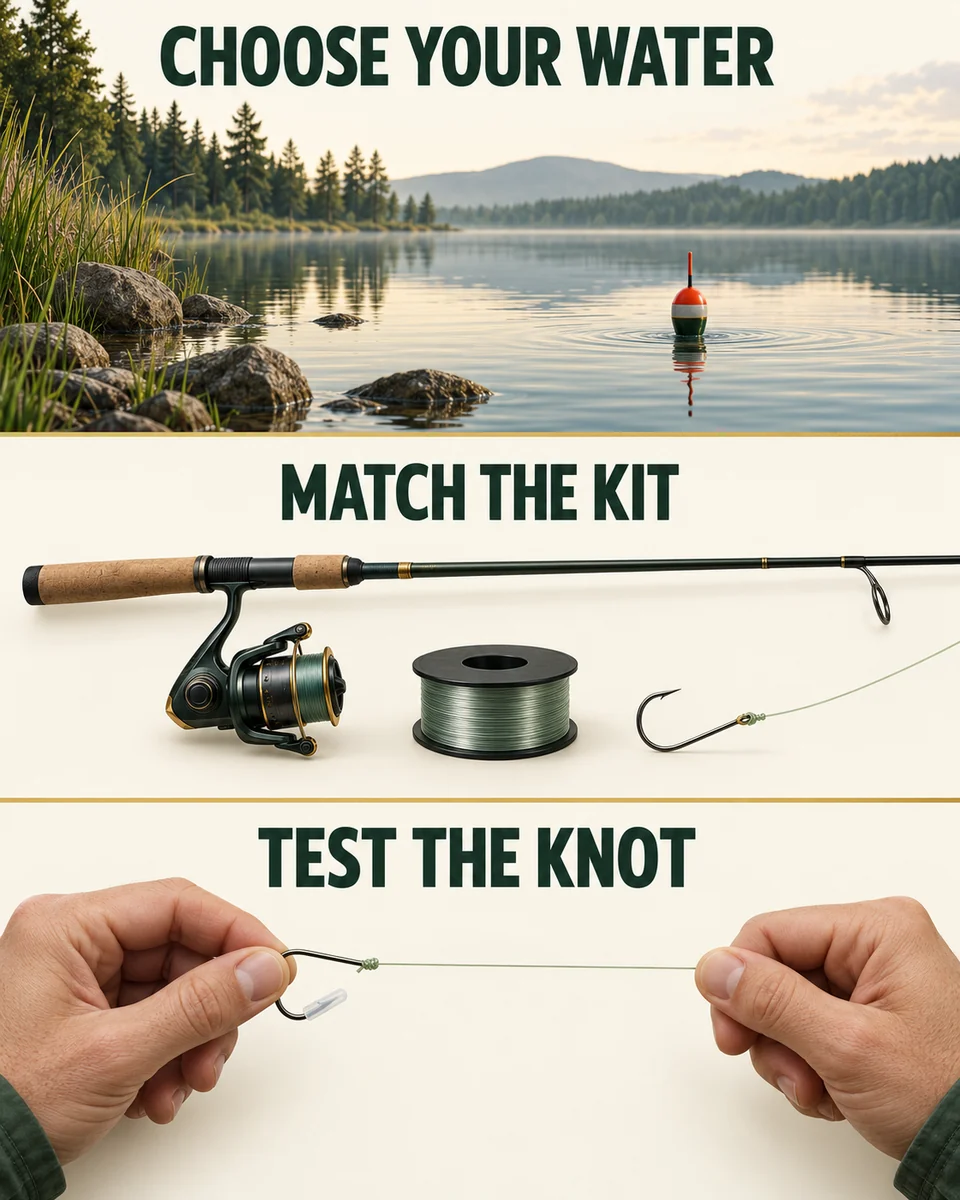
Build one simple rig before adding lures
Where bait is permitted, a modest float rig can make the first lesson easier to observe. Use a float that matches the weight needed to cast and present the bait, a suitable single hook and only enough permitted weight to balance the presentation.
Choose a hook for the bait and fish mouth. Hook-number systems are easy to misread: ordinary numbered sizes and the slash-zero series run differently. Compare the actual hook and ask the shop for a suitable starting size for the local target.
Place permitted weights according to the rig you are learning. Avoid squeezing a sharp weight onto line carelessly, because damaged line can fail at that spot. Check that the float moves or fixes in the intended way before putting bait on the hook.
A jig with a small soft plastic is another manageable starting presentation. Match the jig weight to the rod rating, depth and conditions. Begin with one size and shape that the shop recommends for that water, then practise making it behave consistently.
An inline spinner can give immediate feedback through steady resistance when its blade turns. Choose a weight the rod can cast, check the hook rules and practise a controlled retrieve. Some waters require single or barbless hooks, so packaging alone does not establish permission to use it.
Keep a few spare hooks and one or two duplicate lures. You will lose tackle to snags while learning. Duplicates of a useful presentation help you continue practising; a tray of unrelated giant lures can leave you without a suitable replacement.
Leave complex bass rigs for a later lesson unless your instructor chooses one for the site. Our Carolina-rig hook and weight guide explains how those components work together when that bottom presentation fits the target.
Keep soft plastics in storage compatible with the manufacturer’s instructions. Some materials can react when mixed in a tackle tray. Do not heat unknown lure scraps to create replacements; the soft-plastic customisation guide separates simple trimming and rigging from material-dependent processes.
| Item | Its job | Buying check |
|---|---|---|
| Float, single hooks and permitted weights | Observe a simple bait presentation. | Match float size, hook size and water-specific rules. |
| One or two suitable jigs | Learn depth and controlled lift-and-drop movement. | Total weight must fit the rod rating. |
| A modest spinner | Learn a steady retrieve in suitable water. | Check hook restrictions before casting. |
| Spare hooks and duplicate working lures | Continue the same lesson after a snag. | Avoid unrelated sizes that do not fit your outfit. |
| Pliers, cutter and net | Manage the landing and tackle changes. | Tools and reach must fit the expected fish and bank. |
A coherent medium-outfit shopping example
For a planned mixed freshwater shore lesson in modest cover, start with the selected six-foot-six medium GX2 spinning combo and size 35 reel, then ten-pound monofilament. Check the actual rod’s printed ratings before choosing the casting load. The selected older combo and the current GX2 revision have separate model specifications.
Build the first presentation
- For a bait-permitted perch lesson, ask the shop to match a small float, a size 6 single hook and permitted non-lead weights to the bait and depth.
- Those are editorial starting choices, not water-specific rules or a guarantee that every float rig needs that hook size.
- Take a few spare hooks of the same working size.
- For a separate jigging lesson, consider a one-eighth-ounce jig only if it falls within the rod’s lure rating and suits the conditions.
- Adjust the weight with local advice when depth, wind or current changes the job.
Ask the shop to assemble the first float rig and show how to change its depth. Practise with that rig before switching to the jig. A lighter trout or panfish outfit can cast very small presentations more comfortably than this medium example.
Add suitable pliers, a line cutter, a landing net that reaches the bank and a measuring board when the rules require measurement. Keep the list tied to the named fishing spot. Ontario’s Learn to Fish guide explains the basic tackle systems and first setup, while our fishing equipment guide covers the wider choices when you need another method.
Pack the tools for the fish you might land
A landing net should fit the expected fish and the bank. A short handle can work beside a low shoreline, while a high platform may need another arrangement. Avoid fishing a spot where you cannot safely reach the water or land the target fish.
Choose a net mesh suited to fish handling and the hooks you use. Ask the shop to show how your hook can catch in the mesh. Keep the net within reach before casting, rather than carrying it folded behind your chair.
Tools to keep within reach
- Needle-nose pliers or a suitable hook-removal tool help you control a hook near a fish’s mouth.
- Match the tool to the fish size.
- Pike and other toothed fish need a handling plan and appropriate tools before you deliberately target them.
- Pack a line cutter and a small container for clipped line.
- Keep the cutter secure and accessible, with blades stowed safely.
- Ordinary suitable scissors can work; buy a specialised tethered tool only if it solves a practical problem for you.
Bring a measuring device when size restrictions apply, and learn which fish must be released immediately. Wet your hands and minimise handling time. Decide before the trip whether you are equipped and trained to keep a legal fish for food.
Our responsible fish-harvest guide explains the preparation behind that decision. Learn the dispatch method separately and prepare suitable cold storage before keeping a fish.
A small tackle box, water, sun protection and suitable footwear complete the shore kit. If the bank is slippery or the water is fast, reconsider the location. Choose another practice spot if you cannot manage the access safely.
Check licence and tackle rules before spending
Canadian rules vary by province, territory, water and species. Use the current official licence service for your residency and age category. Our fishing regulations and licences guide helps you find the applicable authority.
Check the season, possession and size rules for your intended target. A fish may be present in the water while its season is closed. Do not use general species availability or a shop’s product label as proof that you may target or retain it.
Ask the tackle shop to put together a legal rig for the named water, then verify it against the official rules yourself. Keep the receipt and model details, but remember that selling tackle does not guarantee it is lawful in every nearby lake.
Do not build the budget around an old licence price copied from a blog. Fees and categories can change, and non-resident arrangements may differ. Obtain the current cost from the official service and leave room for access or parking charges.
If you plan to use a boat later, keep that purchase separate from the shore outfit. Flotation equipment, boating rules and the landing arrangement need their own planning. A shore-fishing equipment list does not cover a boating trip.
A matched outfit and a compatible line option
As an Amazon Associate, CanadaFever earns from qualifying purchases. Links use Amazon.com; country routing and local availability may vary.
The older GX2 variant below is a medium spinning outfit for the ordinary freshwater shore uses discussed here. The line option fits the proposed ten-pound starting choice, but its 110-yard spool may need suitable backing or a longer spool to fill your reel. Compare capacity before ordering. These are equipment options, not a hands-on product ranking.

Ugly Stik GX2, 6 ft 6 in, medium, two-piece
- Selected older model USSP662M35CB: medium rod and size 35 reel.
- Two-piece 6 ft 6 in rod for easier transport; inspect the actual rod ratings.
- Ordinary freshwater starting option, not a specialised pike, salmon or sea outfit.

Berkley Trilene XL, 10 lb, 110 yd
- Selected fluorescent clear/blue nylon mono, 10 lb (4.5 kg).
- 110 yd (100 m) spool: check reel capacity and any backing requirement.
- A modest-cover starter-line option; choose differently for another target or method.
Inspect the purchase and practise at home
Inspect the outfit
Before keeping an online order, compare the actual rod marking with the selected listing. Assemble the pieces, seat the reel and check the guides. A family listing can ship a different variant if the selection changed while you were comparing options.
Try the controls
Turn the handle and work the bail without line under tension. Read the instructions for moving the handle or adjusting the drag. Keep the packaging until you are satisfied that the outfit is complete and suits the intended job.
Practise the knot
Practise the chosen knot with the hook secured safely. Follow the line maker’s instructions, seat the knot gradually and inspect the wraps. Pull-test it with controlled tension away from your face; do not wrap line around bare fingers to force a strength test.
Use a hook-free practice weight for casting where there is enough open space and no people or overhead wires. Keep its weight within the rod rating. Learn the line-holding finger movement and bail sequence before adding an exposed hook.
Once on the bank, start with short controlled casts. Check behind you, manage loose line and retrieve slowly enough to feel the lure. Increasing distance can wait until you can place the rig without crossing another angler’s line.
If line loops off the spool, stop before winding the tangle tight. Inspect the fill level and loose coils, then ask for help if the cause is unclear. Resolve the line-management problem before changing lures.
Upgrade the part that is holding you back
After several outings, write down the actual difficulty. A rod that struggles to cast your usual lure calls for a different discussion from a reel that feels heavy or a net that cannot reach the bank. Match the next purchase to that problem.
Ask whether a change of lure weight, line condition or rig would help before replacing the outfit. A smaller float or freshly spooled line can make the outfit easier to use. If the intended method exceeds its ratings, consider another rod.
Keep gear for the jobs it still does well. A modest freshwater spinning outfit can remain useful even after you buy specialised tackle. Label spare spools and tackle boxes so you do not mix a heavy-rig setup into the light fishing kit.
Ice fishing introduces different rod lengths and a separate winter-access plan. If that is your next interest, borrow equipment during a guided beginner ice-fishing lesson. Buying a short rod first leaves the more important access, clothing and instruction decisions unresolved.
For a future location, compare practical access and the fishery before expanding the kit. Our Canadian fishing lakes guide helps with that choice. Start with the water you can revisit, and keep a working rig ready for the next trip.
Frequently asked questions
What should I buy first as a beginner angler?
Choose a legal fishing spot and one target, then a matched outfit and line for the intended method. Add a small working rig, landing tools and suitable clothing. Borrow bulky or specialist equipment until you know that you need it.
Does the rod line rating tell me the largest fish it can catch?
It describes the intended line range, not a guaranteed fish size. Knots, drag, current and obstacles change the load. Keep line and casting weight within the manufacturer’s guidance and avoid lifting a fish by the rod tip.
Is ten-pound monofilament suitable for every beginner?
It is an editorial starting choice for the medium freshwater outfit and modest cover discussed here. Smaller trout presentations, heavy cover, pike and specialist fisheries can need a different combination. Check the target and rod range first.
Do I need braid, fluorocarbon and a leader straight away?
Buy the material your first method needs. Mono can simplify ordinary freshwater spinning lessons; braid and fluorocarbon introduce different handling and knot choices. Toothed fish require an appropriate terminal connection regardless of the main-line choice.
Can I trust a large all-in-one fishing kit?
Check whether the actual rod, reel, line and lures fit together and suit the named water. Piece count alone does not establish a working outfit. A small coherent kit with known ratings can be easier to learn and replace.
Sources and equipment notes
Manufacturer and official rule sources checked on 3 October 2026. Rod and line ranges above are editorial starting points for stated freshwater uses. Product families contain different variants; confirm the selected model before buying.