

A Canada-first beginner fishing gear guide for 2026, with starter kit checklist, safety gear, rods, tackle, tools, PDF download, official links, and balanced Amazon.com product categories.
- Use Essential Fishing Gear for Beginners in Canada to match species behaviour, habitat, season, and presentation to Canadian water conditions
- Check local regulations before fishing; limits, closures, bait rules, and licences can vary by province and waterbody
- Focus on practical setup: where to fish, what to cast or troll, how deep to work, and when to move
Bottom line Essential Fishing Gear for Beginners in Canada gets simpler when you pair current rules with the right habitat, timing, and presentation
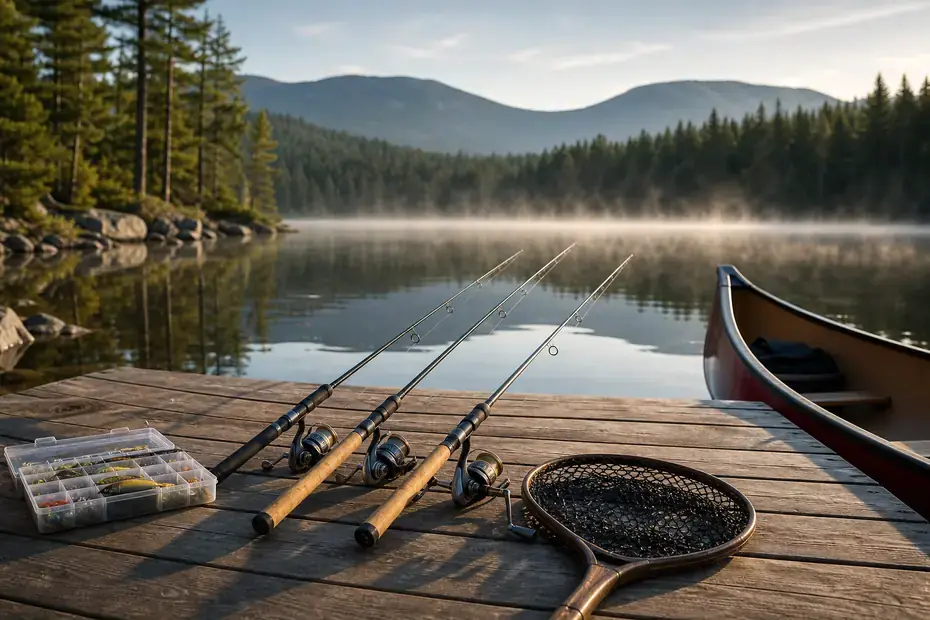
Beginner fishing gear in one small kit
You do not need a garage full of tackle to start fishing in Canada. You need a dependable core kit, current rules, and a plan for the water you will actually fish. A simple perch setup is one of the easiest ways to test that kit, so use the perch fishing in Canada guide when you want a species-specific starter path.
- Start with a medium-light or medium spinning rod and reel combo, not a specialty rod.
- Use fresh line, a few hooks, a few weights, floats, swivels, pliers, and a compact waterproof tackle box.
- Plan safety before lures: PFDs, weather, cold water, footing, sun, bugs, and fish handling matter.
- Check your licence, local rules, bait restrictions, seasons, and limits before the first cast.
- Upgrade by species after you know whether you are mainly chasing trout, panfish, bass, walleye, pike, salmon, or ice-fishing species.
Check safety and rules before buying more tackle
Gear advice is only useful if the trip is legal and safe. Use these official sources for PFDs, boating safety, federal fishing context, and a province-level regulations example.
Transport Canada PFD Guidance
How to choose lifejackets and personal flotation devices for Canadian boating and small-watercraft trips.
Transport Canada Boating Safety
Federal boating-safety entry point for paddlers, boaters, and anglers using small craft in Canada.
DFO Recreational Fishing Rules
Federal recreational fishing rules and conservation context for Canadian anglers.
Ontario Fishing Regulations Summary
A useful province-level example for checking seasons, zones, catch limits, bait rules, and local regulations.
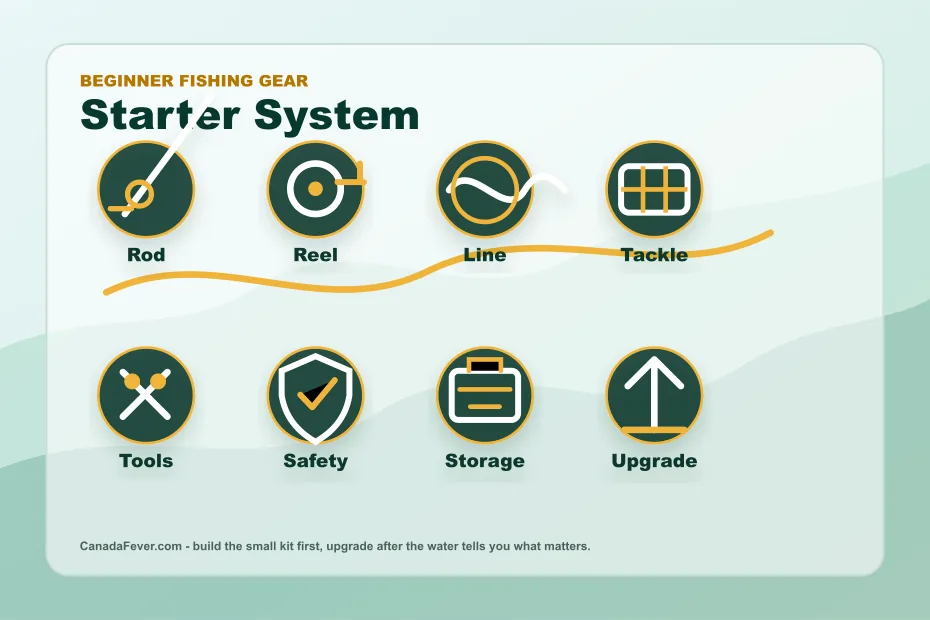
Beginner Fishing Gear Starter System
The visual map keeps the kit simple. The detailed decisions live in the guide below, where you can match rod, reel, line, tackle, tools, safety, storage, and upgrades to the trip.
Download the beginner fishing gear checklist
Printable 3-page PDF for starter tackle, species notes, water type, buying priorities, safety, and trip notes.
The mistake most beginners make with fishing gear
The first mistake is not buying the wrong lure. It is buying too many small things before you know the water.
A beginner can walk into a tackle aisle and leave with enough colours, crankbaits, floats, scented plastics, leaders, and jig heads to fill a backpack. Then the first trip is spent sorting through gear instead of learning how current, wind, depth, cover, and fish behaviour work.
A better first kit feels almost boring. One spinning combo. Fresh line. A handful of hooks and weights. A few lures that cover shallow, mid-depth, and slow presentations. Pliers. A small box. A legal plan. Safety gear if you are near cold water or in a small craft.
That kind of kit teaches you faster because every choice has a job. If you catch panfish under a dock, you learn hook size and float depth. If bass follow but do not strike, you learn speed and profile. If pike bite off your lure, you learn leader planning. The kit grows from the trip, not from guesswork.
Use this post as the support guide for the broader Fishing for Beginners in Canada hub. If you already know the beginner basics and want a deeper gear system, move next to the Fishing Gear and Equipment pillar.
What should be in a beginner fishing kit?
Build the kit around control, safety, and repeatability. Fancy tackle comes later.
Medium spinning combo
A 6-7 ft medium-light or medium spinning combo is the most forgiving first setup for docks, shorelines, small boats, bass, panfish, trout, and mixed Canadian lake trips.
Fresh mono or braid plus leader
Old line causes break-offs. Start simple with 6-10 lb monofilament or braid with a leader, then adjust by species, clarity, rocks, weeds, and teeth.
Hooks, weights, floats and swivels
Carry a small selection rather than every size. Hooks, split shot, sinkers, floats, swivels, and snaps cover bait rigs and many beginner presentations.
A few proven search baits
Small spoons, inline spinners, jigs, soft plastics, and one or two shallow crankbaits give you moving and slow options without overloading the box.
Pliers, cutters and fish handling
Pliers, line cutters, a small towel, a measuring tool, and a simple net make hook removal and release faster and cleaner.
PFD, weather and cold water plan
A PFD matters for canoes, kayaks, boats, and family trips. Add sun protection, layers, water, bug protection, and a way to call for help.
How to choose essential fishing gear for beginners
Use the fish, water, and platform before you choose the product.
Rod and reel: choose easy casting first
A spinning combo is the best first rod for most new anglers because it casts light lures more easily than a baitcaster and handles common beginner mistakes better. For most Canadian lake and shore fishing, a 6-7 ft medium-light or medium spinning rod is the practical starting point.
For a child, check grip and reel controls before choosing an adult outfit. Our kids’ fishing combo comparison separates short push-button outfits from a youth spinning setup.
Do not start with a heavy musky rod, a tiny ultralight rod, or an expensive bass casting setup unless your first trips clearly demand it. A versatile combo gives you more learning range before the next purchase.
Line: fresh line beats expensive tackle
Fresh line does more for beginners than another tray of lures. Monofilament is forgiving, inexpensive, and simple. Braid casts well and feels bites clearly, but it usually needs a leader and better knot habits.
For a first kit, 6-10 lb line covers many panfish, trout, bass, and light walleye situations. Pike, salmon, heavy weeds, current, or rocky water may require stronger line or a leader.
Tackle: buy a small working spread
A beginner tackle box should cover a few jobs: suspend bait under a float, fish near bottom, cast a moving lure, jig slowly, and handle basic leader or swivel needs. That does not require a giant bag.
- Hooks in a few practical sizes for bait or simple rigs.
- Weights or sinkers where legal and appropriate.
- Floats for panfish, trout, and visible bite detection.
- Swivels or snaps for line twist and quick lure changes.
- Jigs, soft plastics, spoons, and spinners for active searching.
Tools: protect fish and fingers
Pliers are one of the best beginner buys because they make hook removal faster and safer. This matters around small hooks, trebles, pike, barbs where legal, and fish you plan to release.
A line cutter, small towel, measuring tool, and net are simple upgrades that make the day smoother. If you plan to keep fish, also check local cleaning, transport, possession, and packaging rules in the current regulations.
Safety gear: the quiet part of a good kit
Fishing safety is not only a boat issue. Cold water, slippery banks, sudden wind, remote shorelines, hooks, sun, bugs, and kids near docks all shape the kit.
If you fish from a canoe, kayak, or small boat, start with a properly fitted PFD and read the relevant Transport Canada guidance above. If you are planning a licence or rules-dependent trip, use the Canada fishing regulations and licences hub before buying gear around bait, harvest, or seasonal assumptions.
| Beginner situation | Best first move | Mistake to avoid |
|---|---|---|
| Dock or family panfish | Small hooks, floats, light line, pliers, and a compact box. | Buying oversized lures that small fish cannot take. |
| Shoreline bass | Medium spinning combo, soft plastics, spinnerbait or spoon, and stronger hooks. | Carrying too many colours instead of learning cover and retrieve speed. |
| Canoe or kayak fishing | PFD, dry storage, short tackle list, pliers, and a landing plan. | Overpacking loose tackle that shifts, rusts, or tangles. |
| Pike water | Add leader planning, longer pliers, stronger line, and tooth-safe release habits. | Using thin leader material and losing lures to bite-offs. |
| Cold spring or fall water | Wear layers, plan PFD use, watch wind, and keep trips shorter. | Treating cold water like a warm summer shoreline. |
The Pre-Trip Protocol
Before you leave, answer four questions: what licence or rule applies, what fish are realistic, what water are you actually fishing, and what safety issue could end the trip early? If the kit does not answer those questions, simplify it.
When should beginners upgrade their fishing gear?
Upgrade after the fish and water create a clear problem. Do not upgrade only because a product looks interesting.
Go lighter only when needed
Small hooks, light line, floats, tiny jigs, and small spoons matter more than heavy rods. An ultralight setup can be useful after your all-round combo is covered.
Add presentation range
Soft plastics, spinnerbaits, shallow crankbaits, and weedless options help once you understand cover, retrieve speed, and water temperature.
Think depth and low light
Jigs, live-bait rules, bottom contact, low-light timing, and line sensitivity matter. Check province rules before building a bait-based kit.
Plan teeth and release tools
Use leader planning, stronger line, longer pliers, and a net or handling plan before fishing pike-heavy water.
Do not force beginner gear
Bigger fish, current, long casts, and regional rules often need stronger setups and better local information.
Use winter-specific equipment
Open-water rods are awkward on ice. Use the <a href="/ice-fishing/">Ice Fishing in Canada</a> hub before buying winter gear.
Five beginner gear categories worth comparing
Use these after the checklist makes sense. The goal is not to buy everything at once; it is to compare the categories that solve real beginner problems.

Beginner spinning rod and reel combo
Best comparison category for new anglers who want one forgiving setup for docks, shorelines, stocked trout, bass, panfish, and casual lake trips.
- Easier to cast than most baitcasting setups.
- Covers the widest range of beginner Canadian fishing situations.
- Works with common hooks, floats, small spoons, spinners, and soft plastics.
- Good first choice before buying species-specific rods.
- Helps keep the starter kit simple and affordable.

Waterproof tackle box or organizer
A compact waterproof box keeps hooks, swivels, jigs, leaders, and soft plastics separated when rain, boat spray, wet docks, or canoe landings get messy.
- Protects terminal tackle from rust and loose-water damage.
- Keeps small hooks and weights away from fingers and bags.
- Makes it easier to pack one small box instead of too much gear.
- Works for shore, canoe, kayak, dock, and cabin trips.
- Reduces time wasted searching for basic tackle.

Fishing pliers or multi-tool
Pliers are not optional once hooks, split rings, pike teeth, trebles, and catch-and-release handling enter the picture.
- Helps remove hooks faster and with less fish handling.
- Useful for crimping, split rings, line cutting, and leaders.
- Keeps fingers farther from hooks and toothy fish.
- Small enough to clip to a vest, bag, or tackle tray.
- One of the highest-value beginner safety upgrades.

Beginner fishing line and leader material
Line choice affects casting, bite detection, knot strength, and fish survival. Most beginners do well with simple mono or braid plus leader before chasing specialty setups.
- Fresh line prevents many beginner break-offs.
- Leader material helps around rocks, weeds, teeth, and clear water.
- Simple 6-10 lb starting points cover many casual trips.
- Teaches knot practice before gear gets expensive.
- Easy upgrade when changing species or water clarity.

Fishing-friendly PFD or life vest
A comfortable PFD matters for beginners fishing from canoes, kayaks, small boats, docks with children, cold water, or remote shorelines.
- Safety gear should be planned before tackle upgrades.
- Comfortable designs are more likely to be worn all day.
- Useful for boats, canoes, kayaks, and family trips.
- Pairs with Transport Canada small-craft safety guidance.
- A better beginner buy than another lure box full of duplicates.
CanadaFever participates in the Amazon Associates Program. We may earn a small commission from qualifying purchases at no extra cost to you. Product links use Amazon.com with OneLink enabled where available; product links do not replace official fishing, boating, or safety rules.
Where this beginner gear guide fits
This post supports the broader CanadaFever fishing cluster. Use these next steps when you want the full beginner path, deeper gear planning, rod selection, rules, or species-specific choices.
Fishing for Beginners in Canada
Start here for licences, first-trip planning, beginner methods, safety, and the complete learning path.
Fishing Gear and Equipment
Use the full gear pillar when you are ready to compare rods, reels, electronics, tackle storage, ice gear, and safety gear.
Fishing Rod Finder
Choose rod power, length, action, and setup based on species, platform, water type, and season.
Fishing Regulations and Licences
Check licences, seasons, provincial rules, non-resident differences, bait rules, and official links before the first trip.
Fishing for Specific Species
Move from generic starter gear into species-specific thinking for trout, bass, walleye, pike, salmon, and panfish.
Best Fishing Spots in Canada
When the kit is ready, choose beginner-friendly, family, urban, remote, fly, ice, lodge, and trophy fishing destinations.
Essential fishing gear for beginners FAQ
Tap a question for the short answer.
What is the most important fishing gear for a beginner?
+
A simple spinning rod and reel combo, fresh line, hooks, weights, floats, a few proven lures, pliers, a compact tackle box, and the right safety gear. A licence and rules check should come before the first cast.
Should beginners buy a rod and reel combo or separate pieces?
+
Most beginners should start with a spinning combo because it is simpler and usually better value. Separate rod and reel purchases make more sense once you know your target species and preferred water.
How much tackle does a beginner really need?
+
Less than most people buy. A small box with hooks, weights, floats, swivels, a few jigs, soft plastics, spoons, and spinners is enough for many first Canadian lake, dock, and shore trips.
Is a PFD part of beginner fishing gear?
+
Yes when fishing from a canoe, kayak, boat, or risky shoreline. A comfortable PFD is more important than extra lures when the trip involves small craft, cold water, kids, or remote access.
What should beginners avoid buying first?
+
Avoid huge tackle bags, specialty rods, too many lure colours, cheap dull hooks, and gear that does not match your local fish or rules. Buy a small working kit first, then upgrade from real trip problems.
How CanadaFever keeps beginner gear advice useful
CanadaFever builds beginner gear recommendations around practical Canadian fishing decisions: legal access, water safety, species, season, platform, and budget. Official source links are separated from affiliate links, and affiliate commissions do not determine the checklist or learning path.
For our broader methodology, see Editorial Policy, How We Research, and Affiliate Disclosure.