

Compare muskie rods by lure weight, casting or trolling method, grip and transport length. Exact Okuma and Shimano models, with Canadian buying checks.
- Okuma EVX-C-761H-Tb: compare this 7-foot-6 casting rod when its 1 to 8 oz rating covers your tackle and a shorter rod suits your working…
- Okuma EVX-C-931XH-Tb: compare this 9-foot-3 casting rod for heavier presentations, subject to its 4 to 16 oz rating and a practical reach check.
- Shimano SJCMTR80HTC: the 8-foot trolling option here, with a Moderate action and a 1 to 8 oz lure rating. Keep it separate from Sojourn…
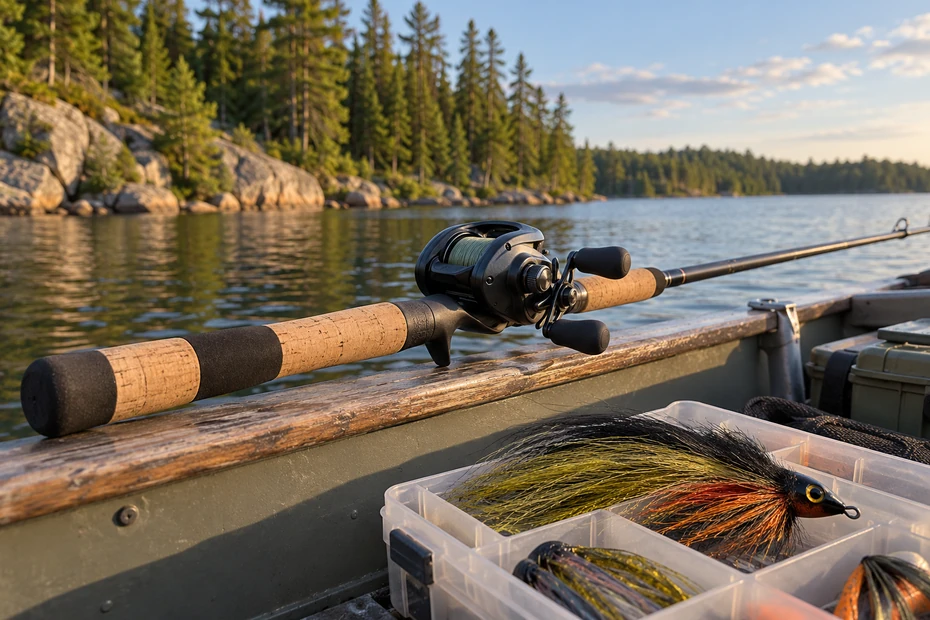
The best musky rods for a Canadian fishing trip fit the lures you will actually cast or troll, the reel you own and the space around your boat. Weigh the complete lure, then check retrieve comfort and the space around your casting position.
A heavy-power label does not tell you the lure range or intended method. Two rods can share a lure rating while serving different methods. This shortlist compares a shorter Okuma casting model, a longer model for heavier lures and a Shimano trolling rod, with the model numbers kept separate throughout.
Musky rods compared: two casting choices and one trolling option
The shortlist uses manufacturer specifications and practical fit criteria. CanadaFever has not tested the rods side by side, measured casting distance or scored fatigue. The two casting options belong to the same Okuma series. Other brands and models may suit your tackle; this shortlist covers three specific jobs.
As an Amazon Associate, CanadaFever earns from qualifying purchases. Product links lead to Amazon.com. Check the selected model, delivery to your Canadian address, currency and any import charges before paying. Offers and delivery options can vary.
| Exact model and method | Manufacturer specifications | Fit question |
|---|---|---|
| Okuma EVX-C-761H-Tb Casting | 7 ft 6 in; H; MF taper 1 to 8 oz; 30 to 65 lb line 1-Tele | Can you work the lure comfortably with this reach and grip? |
| Okuma EVX-C-931XH-Tb Casting | 9 ft 3 in; XH; MF/F taper 4 to 16 oz; 65 to 100 lb line 1-Tele | Do your heavier lures justify the longer rod, and does it fit the boat? |
| Shimano SJCMTR80HTC Trolling | 8 ft; H lineup; Moderate action 1 to 8 oz; telescopic No line range given in current chart | Does the outfit fit the holder, trolling presentation and boat layout? |
Specifications: Okuma EVx B-Series and Shimano Sojourn Muskie. Okuma’s current 931XH field reads “4~16” without a unit; the matching row in its official 2018 specification sheet confirms ounces. MF and MF/F retain Okuma’s published notation. Confirm the markings on the supplied rod before use.
Musky rods for a shorter casting setup: Okuma EVX-C-761H-Tb
The 7-foot-6 EVX is the shorter casting candidate here. Consider it when your usual complete lures fall within the manufacturer’s rating and you prefer less rod extending beyond your hands. Try its working length if your retrieve uses downward rod movements or your casting space is limited.
From your normal stance, check whether the tip reaches the water comfortably and clears the gunwale during a boatside turn. Boat height and the angler’s reach matter; a length that suits one person in a low boat may feel awkward from a higher deck.
The two Okuma models overlap in lure range, but their length and power differ. A 5 oz lure fits both published windows, but the long XH rod adds length and a different power/taper combination. Buy for the lures used through most of the session, after checking the heaviest one too.

Okuma EVX-C-761H-Tb: shorter casting candidate
- 7 ft 6 in length for anglers comparing a shorter working reach.
- Published 1 to 8 oz lure range; check the complete presentation.
- Retracting design still needs an exact transport-length check.
Check model EVX-C-761H-Tb. The listing is for a rod; a reel and terminal tackle require separate selection.
Check the 7-foot-6 EVX on AmazonOkuma EVX-C-931XH-Tb for heavier casting presentations
The 9-foot-3 931XH needs more working space and carries a higher lure rating. Put it on the shortlist when a substantial part of the tackle box calls for a 4 to 16 oz casting rod and you have room to use it. For a tackle box of mostly lighter lures, its 4 oz lower rating is a reason to compare another model.
Before ordering, copy the assembled length onto a tape measure and compare it with the actual boat. Include the overhead cast path, your partner’s position and the space needed to bring the tip around the bow or stern. A long blank does not create safe working room where none exists.
Okuma lists a longer rear grip on this model than on the 761H. Try the complete outfit with the reel attached when possible. Check the hand position needed to cast with two hands, then bring the rod into the retrieve position. An uncomfortable handle can make the extra reach difficult to use.

Okuma EVX-C-931XH-Tb: longer heavy-lure candidate
- 9 ft 3 in length requires a casting and boatside clearance check.
- Published 4 to 16 oz window suits a heavier lure selection.
- XH power and MF/F taper; verify the exact 931XH model.
Do not substitute an 8-foot-6 model, a full-grip FG variant or a different power because the series name matches.
Check the 9-foot-3 EVX on AmazonShimano SJCMTR80HTC: a separate trolling choice
Check the “TR” in the model number before buying. Shimano identifies the SJCMTR80HTC as an 8-foot telescopic trolling model with a Moderate action. Other Sojourn rods on the same product page are casting models with different ratings. Confirm the selected model number even when the listing title says “Sojourn Muskie”.
Compare this rod for a trolling outfit that will work from a suitable holder. Check that the butt seats properly, the reel clears the holder and the rod can be removed without striking a rail or canopy. Match the whole installation to the rod, reel and anticipated load.
The lure rating is not a specification for the total resistance of every trolling arrangement. Diving baits, added equipment and boat speed affect the load. Ask the rod and tackle manufacturers whether the intended setup suits the rod.

Shimano SJCMTR80HTC: trolling option
- 8 ft telescopic trolling model, separate from Sojourn casting rods.
- Moderate action and a published 1 to 8 oz lure rating.
- Check holder fit and request line guidance for the exact model.
The current manufacturer chart gives no numeric line range for this model. Ask Shimano for the appropriate line guidance.
Check the Sojourn trolling rod on AmazonFor mounting choices, our boat rod-holder guide explains the differences between holder and mounting systems. A rod purchase alone does not establish that an existing mount is suitable for trolling.
Match the casting load and the resistance on the retrieve
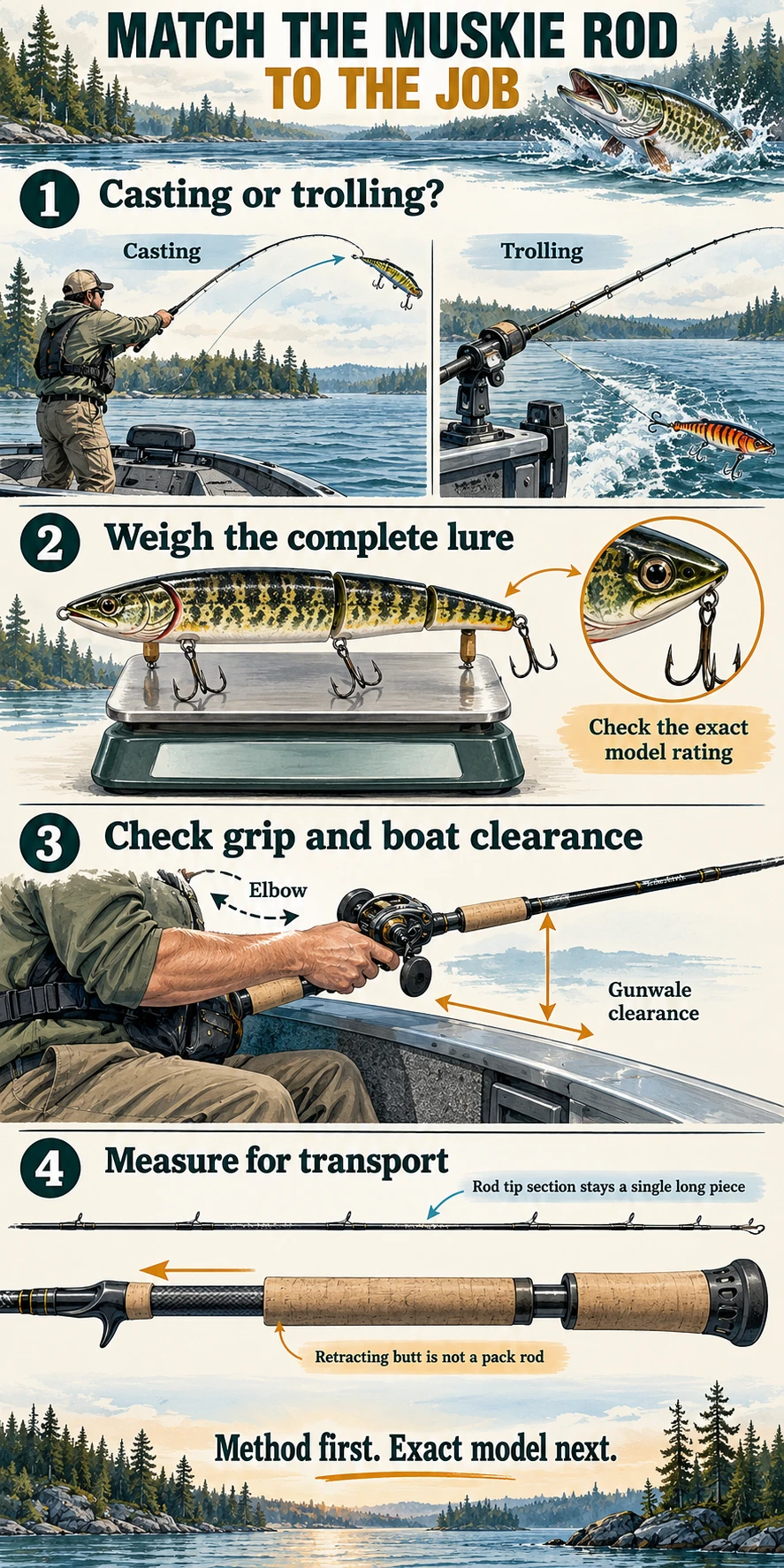
Weigh the presentation as you will fish it, including any hook changes or added weight. A familiar lure name can cover several sizes, and a soft body without its harness does not represent the complete casting load. Record ounces or grams consistently; one ounce is about 28.35 grams.
Use a small scale rather than estimating by lure length. For example, a complete 3 oz presentation falls below the 931XH’s published 4 oz lower rating, although it sits inside the 761H’s stated window. That is a useful reason to compare another model, even if both rods carry the muskie label.
The Anglers Resource interview with St. Croix rod developer Gavin Falk discusses muskie rods by presentation, including bucktails and jerkbaits. Use that technique context when describing your fishing to a tackle shop. The interview does not test the models in this shortlist.
- Record the lightest and heaviest complete lures you expect to use.
- Identify the presentation used most often, including how hard it pulls.
- Check the actual model’s lower and upper ratings before choosing its power.
- If a favourite lure repeatedly sits at the upper limit, ask the manufacturer about a more suitable model for that workload.
Power describes resistance to bending; action or taper describes the bending pattern. Neither label has a universal lure range across brands. The fishing-rod selection guide covers those terms in more detail if you are moving from lighter freshwater tackle.
| Your main job | Check first | A reason to change the plan |
|---|---|---|
| Casting smaller muskie presentations | Complete lure load and comfortable working length | The chosen XH model’s lower rating exceeds your usual lures |
| Casting large rubber or other heavy lures | Exact upper rating, grip leverage and reel suitability | The regular presentation sits at or beyond the rod’s ceiling |
| Retrieving high-resistance blades | Rod-and-reel comfort at your usual retrieve speed | Weight fits but the outfit is difficult to retrieve comfortably |
| Trolling | Purpose, holder fit and the complete trolling arrangement | A casting model or ounce figure is the only basis for the match |
The Guide’s Log: choosing for one planned day
An editorial planning example, not a field-test report.
If I were choosing a first dedicated outfit for a Canadian cottage trip, I would put the lures on the kitchen table before opening a rod listing. I would weigh each complete presentation and set aside anything I had no realistic plan to fish. That would leave a smaller, more useful range than the whole tackle catalogue.
I would then make the choice against the boat I expected to use. From a seated position, could I move a long butt past my jacket? Standing on the casting deck, could I lower the tip beside the boat without leaning out? Those questions would decide whether a longer rod offered reach I could use.
With mostly moderate-sized casting lures, I would start by comparing the shorter EVX against its printed range. A box built around heavier rubber would send me back to the longer XH option. If the day were primarily trolling, I would work through the holder and reel fit of the Sojourn trolling model separately.
Before buying, I would measure the available transport space and ask for the rod’s actual retracted length. I would also check the seller’s selected model and delivery terms. If the numbers did not fit, I would choose another model or borrow an outfit. I would want the outfit to fit the car and the fishing I had planned.
Check handle clearance, boatside reach and transport length
Check the distance behind the reel seat as well as total rod length. The butt needs to pass your body during the movements you use. Manufacturer handle measurements give you a starting point:
- Okuma lists a 14-inch rear grip on the 761H.
- Okuma lists a 16-inch rear grip on the 931XH.
- Shimano lists a 13-inch grip on the trolling model. Grip definitions can vary, so confirm the actual hand positions before comparing dimensions across brands.
If you can handle the outfit in a shop, mount the intended reel. Try the stance and clothing you will use, without hooks attached. A dry fit can reveal a handle catching your jacket or a reel that feels awkward to palm. You still need to account for the lure’s resistance in water.
A longer rod can give more reach for boatside lure movements, but check where its tip travels and where everyone else stands. For a new muskie angler, our muskie-fishing guide provides the broader planning context. Practise the movement with suitable instruction before putting a hooked lure beside another angler.
Measure the route into a rod locker as well as its interior. A rod may fit along the locker once inside but fail to pass through the opening. For car transport, include any protective tube or case in your measurement and secure the tackle away from doors and loose luggage.
If compact transport is the priority, compare the construction options in our travel fishing-rod guide. Many travel outfits serve lighter fishing; check their ratings independently before treating them as muskie substitutes. A rod case also needs to fit the actual packaged length and reel arrangement.
Choose the reel, line and landing equipment with the rod
None of these links supplies a complete matched outfit. Select a reel for the presentation, line capacity and retrieve workload, then check its fit on the rod. Before reusing a bass baitcaster, check whether it suits the heavier lures and repeated retrieve load.
The two Okuma models have different published line windows, shown in the comparison above. Use the rod and reel guidance together, including line diameter and capacity. Do not turn a line rating into a fixed drag setting or assume a stronger braid makes an unsuitable rod suitable.
Our Canadian fishing-line guide explains the material choices. For muskie tackle, plan a suitable bite-resistant leader and terminal connections as part of the outfit, with guidance from a tackle specialist for the lures and method. Inspect them before fishing and after damage.
- Check reel fit, retrieve side and the manufacturer’s capacity for your chosen line.
- Keep suitable pliers and hook cutters accessible, with a landing net appropriate to the intended fish.
- Arrange tools and the landing area before casting so hooked tackle stays away from loose equipment and other people.
For a Canadian trip, identify the waterbody and current jurisdictional rules before choosing a date or method. In Ontario, use the official Fishing Regulations Summary and the applicable zone and waterbody entries. A rod sold for muskie does not establish an open season, permission to use a bait or a legal trolling setup elsewhere.
The Pre-Trip Protocol: three checks before buying
Write down the method and complete lure range
Choose casting or trolling first. Weigh the assembled presentations and note the one you will use most often. Compare those facts with the exact model’s specifications. Keep the manufacturer’s model number in the shopping note.
Measure the outfit against your working space
Check assembled reach, grip clearance and the actual retracted transport length. For trolling, include the holder and mount. Ask the seller to confirm a missing measurement before ordering a long rod.
Confirm the selected listing and the delivered cost
Check model, length, power and whether the item is rod-only. Read Canadian delivery, return and damage-reporting terms. Include currency conversion, shipping and any import charges. If an offer is unavailable for your address, compare a local dealer using the same model number.
When the rod arrives, compare the blank markings with the order before discarding packaging. Check the guides, reel seat and telescopic section according to the manufacturer’s instructions. Report shipping damage before fishing, and keep the packaging until you have completed the inspection.
Muskie rod questions
What length muskie rod should a beginner buy?
Choose a length you can cast, retrieve and move beside the boat without awkward reaching. The 7-foot-6 and 9-foot-3 casting candidates here serve different fit and lure-load needs. Test grip clearance with the intended reel and measure transport space before choosing the longer rod.
Is a heavy rod enough for every muskie lure?
No. Read the exact model’s lure rating and weigh the complete presentation. Power labels vary across manufacturers. A lure that fits the casting range can also create substantial resistance during the retrieve, so include the reel and technique in the choice.
Can one rod cover casting and trolling?
Some manufacturers offer rods for more than one method, but check the exact model’s intended use. The Shimano SJCMTR80HTC in this guide is the trolling variant. Its Moderate action and model number distinguish it from Sojourn casting models sold under the same series name.
Do telescopic muskie rods fit airline cabin baggage?
A telescopic label does not establish that. Obtain the exact protected transport length and check it against the carrier’s current baggage rules, including any connection. These listings do not provide a verified cabin-baggage fit. Long rods may need different transport arrangements.
Are musky rods and muskie rods different?
Musky and muskie are spellings used for muskellunge. The spelling on a listing does not describe a different power or fishing method. Compare the model number, manufacturer rating and intended use, especially when a series includes both casting and trolling rods.