

Build a compatible freshwater fly outfit: compare three exact kits, match rod and line weight, understand leader and tippet, and pack for Canadian access.
- Match Premium Fly Fishing Gear and Equipment to your water, season, boat size, and actual skill level instead of buying by specs alone
- Prioritize readable controls, durable construction, and Canada-relevant use cases before chasing premium features
- Use the guide to compare what matters in the field: setup time, reliability, safety, storage, and upgrade path
Bottom line The right Premium Fly Fishing Gear and Equipment choice solves your real Canadian trip conditions without adding gear you will not use
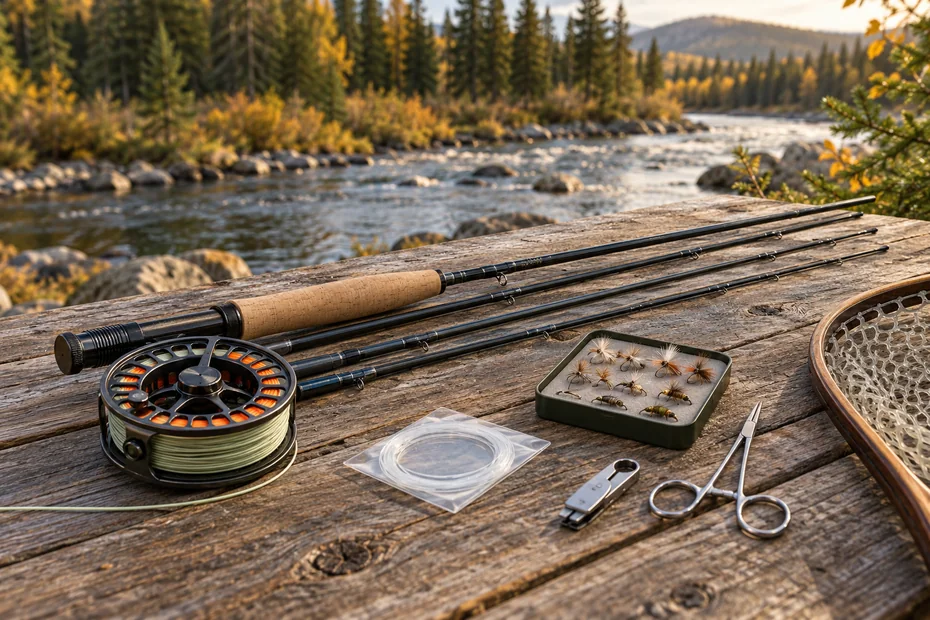
Fly fishing gear and equipment work best when you buy a matched outfit for the flies and water you will actually fish. For a first Canadian freshwater trout trip, that often means a 9-foot 5-weight rod, a compatible reel and floating line, a tapered leader, and a small selection of suitable flies.
Choose a different setup when the trip calls for salmon or pike tackle, heavy streamers or a specialist lake presentation. Decide what you need to cast before comparing brands. A beautifully made rod with the wrong line or an oversized fly can still make learning frustrating.
How the pieces connect
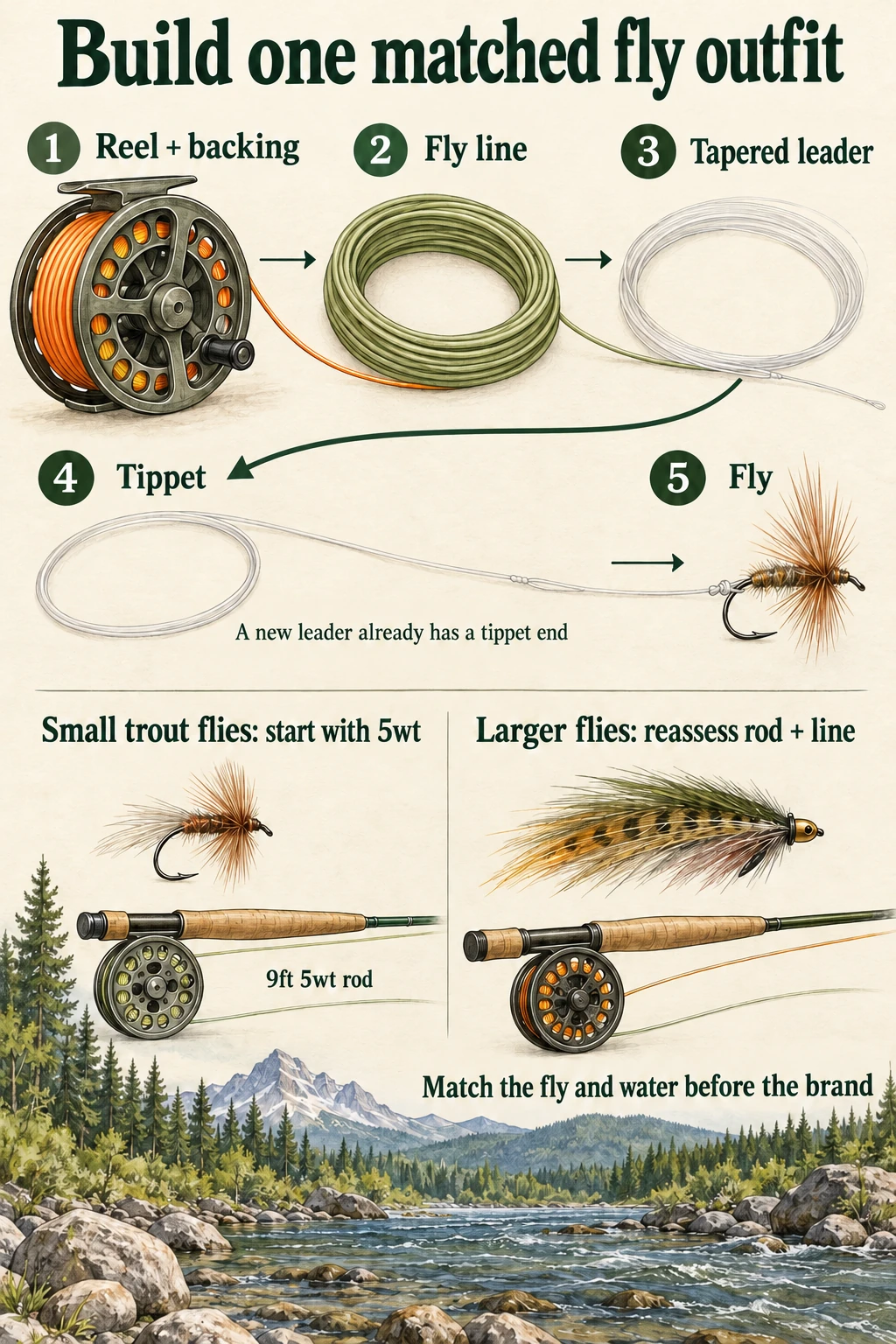
The rod casts the weight of the fly line. The leader transfers that movement to the fly, and the reel stores the line and provides controlled resistance when needed. Check that those parts work together before adding accessories.
Choose fly fishing gear and equipment for one job
Write down your first realistic outing: a modest trout stream with room to cast, a sheltered pond, or an exposed lake shore. A narrow casting lane limits the space behind you; exposed water adds wind to the decision. Include the fly you expect to use, because a bushy, air-resistant pattern and a tiny dry fly can demand different casting outfits even when both target trout.
A 5-weight floating-line outfit is a sensible place to begin for dry flies, modest nymph presentations and small streamers. In tight cover, rod length and casting space can matter more than extra reach. For repeated casting of larger or heavily weighted flies, reassess the rod and line together rather than forcing the light outfit to do everything.
| Your first fishing situation | Useful starting direction | Check before buying |
|---|---|---|
| Trout stream; small dries and modest nymphs | Matched 5-weight outfit with a floating line | Room for the rod and a safe casting lane |
| Pond or lake edge; small flies near the surface | Floating-line trout outfit can work | Wind exposure and whether the fish are within practical reach |
| Frequent larger streamers or bulkier rigs | Consider a heavier outfit and appropriate taper | Total fly weight, air resistance and intended presentation |
| Salmon, steelhead, pike or deep-water specialities | Choose a fishery-specific setup | Local advice, suitable tackle strength and current water rules |
Read the fly fishing gear and equipment labels
A 5-weight rod is designed around a class of fly line. The number does not mean the rod weighs five ounces or can catch only five-pound fish. Compare that rating with the line label and the rod maker’s guidance. Start with the intended match before experimenting with different line weights.
Rod action describes how the blank flexes; it is a separate choice. A fast-action label does not prove that a rod is easier for a novice, and a higher price does not diagnose a casting problem. If possible, try a short supervised cast with the actual line before buying an expensive upgrade.
The Guide’s Log: planning a first trout outing
This is a hypothetical editorial planning example, not a field test or a report of a trip we made.
If I were putting together a first outfit for an accessible Canadian trout stream, I would begin with a place where I could fish from the bank. I would choose a short session with a clear casting lane and ask a local shop for a few flies appropriate to that water. That would give me a practical reason to buy a particular rod and line.
I would keep the initial outfit simple: one matched floating-line kit, a spare tapered leader, a little matching tippet, nippers and forceps. I would also carry suitable landing equipment, eye protection and the ordinary clothing and safety supplies the outing requires. I would leave extra fly boxes and a second rod at home.
Before leaving, I would unpack the reel and identify the backing, fly line and leader. I would check the retrieve direction and practise the connections without a hooked fly. A kit arriving pre-spooled would save some work, but I would still inspect it.
My first purchase after that outing would depend on the actual problem. A clipped leader needs replacement material. A crowded bank may call for a different approach. Neither observation, by itself, would convince me that I needed a premium reel.
Three matched outfits to compare
These are specification-based options for different starting needs. We have not cast or field-tested these packages. Check the exact size, included components and seller before ordering; similarly named versions can contain different line weights.
As an Amazon Associate, CanadaFever earns from qualifying purchases. These links open Amazon.com. Canadian delivery, import charges, currency and seller terms depend on the offer and your address.

A defined 5-weight trout outfit
Redington Original Freshwater Kit 590-4
The 9-foot, four-piece 5-weight Original is the clearest match here for an angler building around small trout flies. Its Crosswater reel, backing, RIO floating line, leader and case cover the main outfit. Add the flies, replacement material and tools that suit your water.
Choose the Freshwater 590-4, not the similarly named All Water 890-4. Check for WF5F on the included line. The manufacturer identifies that 5-weight line in the Freshwater kit’s component section, although another feature list on the same page contains 8-weight text.
- Choose it for a straightforward, dedicated 5-weight starting point.
- Allow for flies, tippet, nippers and landing equipment beyond the outfit.
- Skip this size for a trip built around heavy predator flies or specialist salmon tackle.

A kit that also includes flies
Wild Water Standard 9-foot 5/6-weight kit
This four-piece package includes a preloaded die-cast reel, WF5-F floating line, backing, a 9-foot 5X leader, a case and a fly box with nine flies. The broader 5/6-weight rod label does not mean two different fly lines are included; the listed line is a 5-weight floater.
The included flies give you something to inspect and organize, but they cannot cover every Canadian hatch or presentation. Check whether their sizes fit the leader and your intended water before treating the box as a finished selection.
- Choose it when you want the core outfit and a small fly selection in one package.
- Inspect the preloaded connections and add suitable spare leader and tippet material.
- Skip it if your plan requires a sinking-line system or large, heavy flies.

A separate 6-weight option
Orvis Encounter 9-foot 6-weight outfit
The linked 3ASJ53 outfit is a 9-foot, four-piece 6-weight, supplied with an Encounter reel, floating line, backing and leader. Compare it when your trout plan calls for a heavier outfit. It is a different line class from the dedicated 5-weight Redington, so choose it for that need rather than the brand name alone.
Do not read a family-level Encounter description as confirmation that you are ordering the 5-weight. The exact linked variant is 6-weight. It also leaves flies, spare material and streamside tools to choose separately.
- Choose it when a 6-weight suits the flies and conditions you intend to fish.
- Confirm the 3ASJ53 size and matching line on the seller’s package details.
- Skip it if your priority is a lighter small-fly outfit or a specialist big-fish setup.
For package specifications, see Redington’s Original Freshwater details, Wild Water’s Standard kit contents and the Orvis Encounter 9-foot 6-weight outfit. A rod-only listing from any of these brands is a separate purchase.
Understand the line, leader and tippet
Reading the line label
In WF5F, WF means weight-forward, 5 is the line class and the final F means floating. That makes the label useful when checking a 5-weight kit. A reel marked 4/5/6 is a capacity range; it does not make every line in that range the correct match for every rod.
Backing fills space beneath the fly line and provides reserve length. Follow the reel maker’s capacity guidance instead of buying an arbitrary amount because a general checklist recommends it. Overfilling can make the line rub against the frame. If assembling components separately, a shop can help spool the reel to the appropriate level.
A floating line is convenient for learning line pickup, surface presentations and many modest subsurface rigs. It does not solve deep-lake presentations automatically. If your fishing depends on a particular depth, understand the required line system before buying the outfit. Our fishing-line guide separates conventional main lines from specialist fly-line needs.
Choose the thin end to suit the fly
A tapered leader gradually reduces diameter from the thick butt to a fine terminal section. That fine section is already the leader’s tippet when new. Separate tippet material lets you rebuild the end as fly changes shorten it; you do not need to add another length automatically before the first cast.
Match the material diameter to the fly and fishing conditions. A very fine end can struggle to turn over a bulky fly, while an unnecessarily stiff end can spoil a small fly’s movement. X-size and breaking strength are not interchangeable labels across every material and brand. Read the actual spool rather than treating 5X as five-pound test.
Orvis explains how tippet size relates to fly size. Use that relationship as a starting check, then adjust for abrasion, cover and the fishery rather than choosing the finest material available.
Assemble and inspect the outfit in three steps
Check the rod, reel and line labels
Confirm the ordered model, rod length and line class before discarding packaging. Assemble the rod according to its instructions, align the guides and secure the reel. Check the retrieve direction and the maker’s instructions for changing it.
Trace every connection
Follow backing to fly line, fly line to leader, then leader to its terminal end. Check existing knots and loops even on a pre-spooled outfit. Use a suitable connection for the supplied line; a loop-to-loop method needs sound loops on both components. Gently test each connection before fishing.
Practise without a hooked fly
Use a safe open area and a hookless practice target. Learn to pick up and lay down a manageable length of line before attempting distance. At the water, check the casting lane and other people before adding the fly. Stop and fix tangles rather than forcing line through the guides.
The beginner fly-fishing guide covers the learning sequence and first-trip practice. This equipment guide helps you decide what belongs in that outfit.
Carry what you need to fish and handle a catch
Start with tools you can reach without setting the rod on the ground. Keep the layout simple enough that a fly change does not become a search through five pockets. A small, comfortable pack can be more useful than a vest covered in unused attachments.
- Carry a small fly box, suitable spare leader and tippet, nippers and forceps.
- Choose landing equipment appropriate to the fish and access, and know how you will reach it.
- Keep eye protection, weather layers, drinking water and essential personal supplies accessible.
- Put clipped line and damaged flies into a closed waste container.
For carrying choices, compare fishing backpacks, sling packs and bags. Check that the strap arrangement leaves room to cast and does not interfere with a properly fitted PFD when one is needed. A pack advertised as water-resistant still needs suitable protection for a phone or dry clothing.
Buy wading equipment only when the access requires it
You can learn and fish from an accessible bank. Waders do not make unfamiliar current safe or create permission to enter closed water. If you do need them, choose the wader and footwear combination for the setting, fit them with the intended layers and seek appropriate instruction for the conditions.
Our wading-boots guide covers footwear choices. Check the specific water’s requirements before buying soles: Banff prohibits felt-soled wading boots, and Jasper has water-activity zones that affect where waders and wading boots may be used. Those park rules are not a nationwide footwear rule.
Spend on the problem you actually have
Compare the cost of a fishable system, not just the advertised rod. A cheaper rod-only purchase can leave you buying a reel, backing, line, leader and case separately. A more complete kit can still need appropriate flies and tools. Check the delivered total, returns and replacement support for your Canadian address before deciding.
| What happens | Useful next check | Purchase to avoid by habit |
|---|---|---|
| Leader becomes short after fly changes | Rebuild its end with suitable tippet or replace the leader | A new fly line |
| Large flies are difficult to turn over | Check leader, line taper, fly size and casting instruction together | A premium reel as the assumed fix |
| Line tangles or rubs the frame | Inspect winding, spool fill and the actual line condition | Another rod before checking the reel |
| Bank vegetation blocks the cast | Change position or learn an appropriate cast | More accessories that do not change access |
Keep the rod in its case in transport and inspect it after knocks. Dry wet gear before long storage, follow the reel and line makers’ care instructions, and carry consumables you can replace locally. For a broader starting kit beyond fly tackle, use the essential beginner fishing gear checklist and the fishing gear and equipment hub.
Fly fishing gear and equipment questions
Do I need expensive fly fishing gear to start?
No. A compatible outfit, suitable flies and a way to handle fish matter more than premium branding. Include line, backing, leader, replacement material and basic tools in the total. Casting instruction may resolve a problem that a more expensive rod will not.
Is a 9-foot 5-weight suitable everywhere in Canada?
No. It is a useful starting point for ordinary freshwater trout fishing with modest flies. Heavy streamers, predator flies, salmon fisheries, deep presentations and very confined streams can call for different tackle or approaches.
Does a new tapered leader need extra tippet immediately?
Usually the new leader already has a fine tippet end. Add suitable material when you need to restore length or change the terminal diameter. Inspect that end after snags and fly changes.
Does a fly rod combo include flies and waders?
Check the exact contents. The Wild Water Standard package here includes nine flies; the Redington and Orvis core outfits leave flies to select separately. None of these packages includes wading equipment.
Should I buy the linked Orvis Encounter as a 5-weight?
The linked B09SBVQSTX variant is the 9-foot 6-weight 3ASJ53 outfit. If you need a 5-weight, choose an explicitly identified 5-weight package and recheck its contents. Do not rely on a generic family title.