

Compare three exact tackle packs by tray size, carrying load and water protection, with practical advice for Canadian shore, boat and stream trips.
- Use Fishing Backpacks and Bags to match species behaviour, habitat, season, and presentation to Canadian water conditions
- Check local regulations before fishing; limits, closures, bait rules, and licences can vary by province and waterbody
- Focus on practical setup: where to fish, what to cast or troll, how deep to work, and when to move
Bottom line Fishing Backpacks and Bags gets simpler when you pair current rules with the right habitat, timing, and presentation
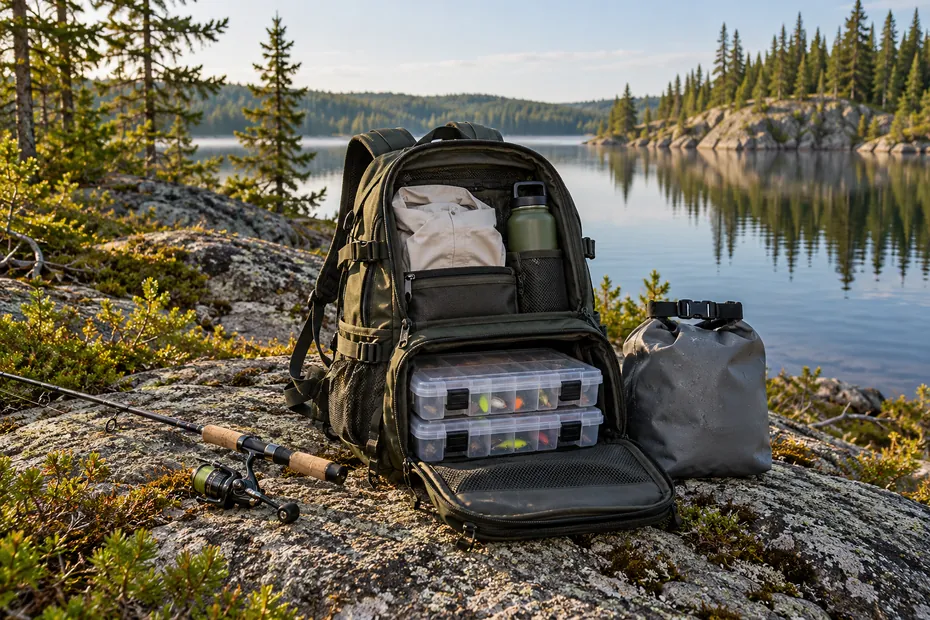
The best fishing backpacks and bags fit the tackle you actually use, leave room for a warm layer and keep the right things dry. For a Canadian shore trip, boat day or walk to a trout stream, check how the loaded bag will carry and where you will put it down.
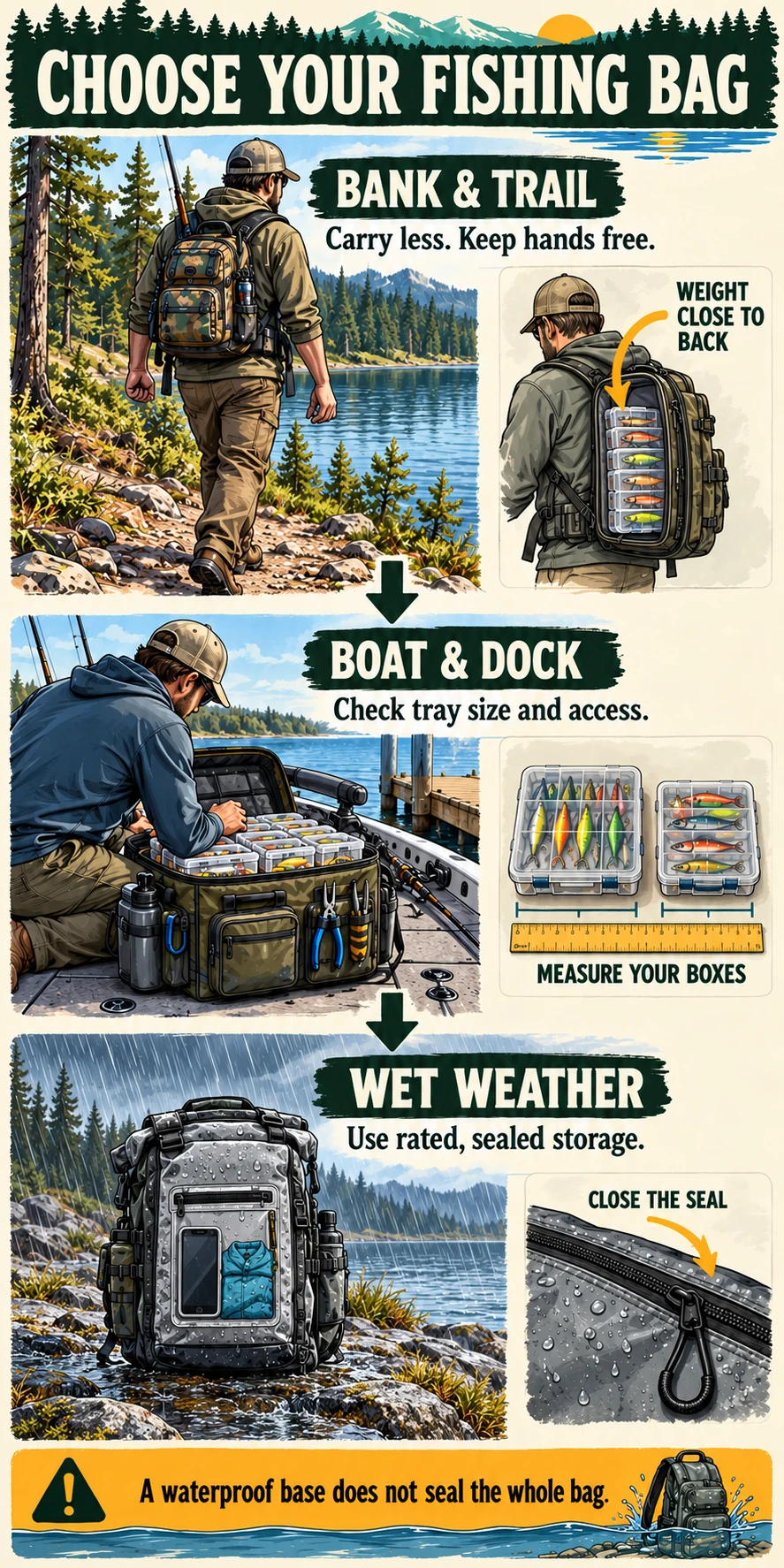
A small sling can be enough for an evening at the pond. A two-strap backpack makes more sense when you also carry water, lunch and rainwear. Neither becomes submersible because its fabric sheds a shower or its base is waterproof.
As an Amazon Associate, CanadaFever earns from qualifying purchases. Product links lead to Amazon.com. Check the selected size, seller, delivery to your Canadian address, currency, shipping and any import charges before paying.
Best fishing backpacks and bags for three carrying jobs
These are specification-based selections, not results of a CanadaFever field test. We checked the exact Amazon variants against manufacturer descriptions. We have not measured comfort, rain resistance or long-term zipper wear; those depend on the load, fit and conditions.
| Exact option | Useful fit | Main limit |
|---|---|---|
| KastKing BlowBak standard, khaki camo | Up to two 3600-size trays; short, selective trips | One shoulder carries the load; trays are not included in this selection |
| KastKing KarryAll 40L, black | Four included 3600-size boxes plus an adjustable upper compartment | Easy to overpack; water-resistant rather than submersible |
| Plano Atlas PLABE900 | Three included 3750 StowAway boxes; structured dock or boat storage | Waterproof base does not make the complete pack waterproof |

For a small tackle load: BlowBak standard
Choose the standard khaki-camo sling when two 3600-size trays cover the plan. Its single strap lets you bring the bag around for access, although a loaded sling can pull unevenly when walking.
- Standard main compartment accommodates up to two 3600-size trays; this listing selection is the bag.
- Side storage provides a place for a rod and drink; secure the rod for the actual route.
- Water-repellent construction offers weather resistance, without an immersion rating.
Skip it when you need several heavy trays, bulky cold-weather layers or two-shoulder load distribution. The larger BlowBak is a different variant.
Check the standard BlowBak on Amazon
For a fuller shore kit: KarryAll 40L
The black 40L KarryAll gives you a defined tackle section and a foldable divider for adjusting the main space. It suits a day kit that needs more organisation than a small sling.
- Four 3600-size tackle boxes are included in the selected 40L configuration.
- The padded partition separates lower tackle storage from the upper load when set up.
- Oxford 600D outer fabric, 210D lining and a water-resistant coating do not establish submersibility.
Leave unused trays at home. A roomy bag full of weights and spare lures may become a poor walking pack even though everything fits. The 26L version is a separate size.
Check the KarryAll 40L on Amazon
For structured tackle storage: Plano Atlas
The Atlas PLABE900 combines moulded EVA panels with a waterproof HDPE base. That construction suits a pack you set beside you for frequent tackle changes.
- Includes three 3750 StowAway utility boxes in the selected PLABE900 pack.
- Padded shoulder straps and a sternum strap provide a backpack carrying option.
- A magnetic Dropzone and tool storage offer temporary access; secure sharp items before moving.
The phone pocket is described as water-resistant. Protect electronics separately, and choose another design if a compact, compressible trail pack is the priority.
Check the Plano Atlas on AmazonHow to size the best fishing backpacks and bags for your kit
Start with one method for the day. If your beginner fishing kit uses a small selection of hooks, floats and lures, you do not need four trays simply because the bag includes them. Use the spare space for clothing and food, or choose the smaller bag.
For a boat, a broad, low tackle bag can be easier to reach than a tall backpack. Check the space beneath a seat and the width of the opening before buying. A backpack is worth choosing when the walk and carrying job justify its harness.
The guide’s log: a shore-trip packing example
This is a hypothetical planning example, not a record of a product test. If I were packing for a half-day on an accessible Ontario lake shore, I would choose one spinning outfit and a small range of presentations before choosing the bag.
I would put hooks, floats and weights in one compact box, then give a second box to a few spoons, spinners or other lures suited to the plan. A spare leader spool, pliers and a small rubbish pouch would stay close to the opening. That leaves the main space for a drink, food and weather layers.
For a short walk from the parking area, I would compare the standard sling with that actual load. If the outing involved a longer approach or more clothing, I would move the same kit into a two-strap backpack rather than adding tackle to fill the extra room.
Before leaving, I would check the local fishing rules and access, pack dry essentials separately and try the bag while wearing the day’s clothing. On the return, I would keep wet tools out of the dry compartment. The useful result is a kit I can carry and open easily, with room for the jacket that comes off after the morning warms.
Water-resistant, waterproof base and submersible mean different things
A coating can slow water passing through fabric while seams, ordinary zippers and open pockets still admit it. A moulded base may protect the underside when you set the bag on wet ground. It does not seal the lid, shoulder-strap attachments or side pockets.
A rain cover helps shield a pack from falling rain, but leaves openings around the harness and may collect water underneath. Do not treat it as a dry bag. If a phone, licence or spare insulating layer needs to remain dry, give it its own suitable sealed protection.
| Claim | What to check | Practical response |
|---|---|---|
| Water-resistant fabric | Coating, seams, zippers and care instructions | Expect limited weather protection; protect essentials inside |
| Waterproof bottom | Whether the claim covers only the base | Keep the opening and upper pockets away from water |
| Roll-top dry storage | Required closure method and stated rating | Follow the exact roll/clip instructions; do not assume every roll-top is submersible |
| Explicit immersion rating | Depth, time, closure and maintenance conditions | Use only within the stated limits, with the seal fully closed |
A sealed pack is not personal flotation equipment and does not make a river crossing safe. For paddle trips, wear suitable approved flotation and check Transport Canada’s guidance on lifejackets and PFDs. Check that any bag or harness can be worn or stowed without interfering with your chosen safety equipment.
On a rainy British Columbia bank or a windy cottage dock, keep the things you need during a shower accessible without opening the main dry compartment. A small external pouch for a frequently used lure can reduce repeated exposure of spare clothing and electronics.
Fit your tackle boxes before choosing litres
Capacity in litres does not tell you whether a rigid tray can pass through the opening or lie flat in its compartment. A tall, narrow pack may hold clothing well while wasting space around a wide tackle box. Box depth, projecting latches and rounded corners also change the fit.
The 3600 and 3700 names describe useful size families, not a promise that every brand, deep version or waterproof model fits every pocket. The Atlas includes 3750 boxes; that does not mean every oversized box marketed near the 3700 family will slide into the same space.
- Measure the outside length, width and depth of your closed boxes, including latches.
- Check both the compartment dimensions and the zippered opening; a wide interior behind a small opening is still awkward.
- Leave room to grip and remove one tray without unloading the rest.
- Account for leader spools, bait packets and tool handles that sit outside the tray footprint.
For ultralight trout and panfish fishing, a shallow selection of small lures can keep the carrying system modest. Large muskie baits, by contrast, may require deeper or longer storage. Measure those specific lures rather than filling a small tray until hooks foul the lid.
Check the load with water and clothing included
Compare the packed bag you will carry, not just its empty weight. One litre of water adds about one kilogram before the bottle. Add several trays of sinkers, a lunch and a rain shell, and the harness becomes more important than the pocket count.
Keep compact heavy items close to your back and avoid filling the outermost pocket with all your weights. Balance side pockets. A sternum strap can steady shoulder straps, but a narrow webbing waist strap should not be mistaken for a load-bearing hiking hip belt.
During a home fit check, walk, bend and reach as you would on shore. The pack should not bounce into your head or prevent you from looking up. If the shoulder straps dig in, first remove tackle you do not need; more padding cannot always rescue an excessive load.
Before ordering for delivery to Canada, check the selected listing:
- Confirm the size and colour in the basket; a shared product title can cover several capacities.
- Check whether the offer includes trays or only the bag, and include any extra boxes in your cost comparison.
- Review the total delivered cost and return terms for your address, especially when importing from a US seller.
Choose access for the way you fish
Shore walking and short sessions
A sling brings a small working kit in front of you without completely taking it off. That is useful when there is no clean place to set a bag down. One strap supports most of the weight, so keep the load small.
A two-strap pack is a better starting point when you are carrying clothing and supplies for several hours. Keep one small working box accessible and leave the less-used tackle in the main compartment. You should not need to spill a full kit onto a narrow bank to change one lure.
Boats, docks and kayaks
A flat-bottomed bag or structured pack helps organise equipment at a fixed spot, but still needs a suitable place to sit. Keep walkways, controls and emergency equipment clear. Loose straps and exposed treble hooks can catch on other gear.
For a kayak, check the loaded bag against the actual storage well or hatch, including the opening and lid clearance. Do not buy by advertised litres alone. Our kayak and canoe fishing guide covers the wider trip setup; arrange tackle so you can reach it without twisting awkwardly or compromising balance.
Wading and fly fishing
A backpack often works best as transport for spare clothes and lunch while a small chest or waist pack carries the working flies and tools. Try the combination with your fishing waders and safety equipment, checking that it does not block a wading belt, flotation device or arm movement.
Keep forceps and other fish-unhooking tools reachable before you hook a fish. Store the tools where you can reach them without unpacking your clothing. Build the working kit around the method in our fly-fishing gear guide, then decide what must stay dry on your back.
Rod holders and exposed equipment
A side rod pocket does not protect the tip from branches. Secure each section, cover hooks and check the rod’s height above your head. For a long walk through brush, a protected broken-down rod can be easier to manage than an assembled outfit sticking above the pack.
A bag’s rod pocket also does not replace a proper travel case. Compare the packed lengths in our travel fishing rod guide, especially if several people and their gear share a small car.
The pre-trip protocol: three checks before leaving
Load the exact boxes and essentials
Pack your normal water, food and weather layer with the tackle. Close every zipper without forcing it, then remove and replace each working box. Leave out spare presentations that do not serve this trip.
Walk with the complete kit
Adjust both shoulder straps where present, steady the load and check access to tools. Test the fit with your jacket and safety equipment. Remove or secure dangling straps, loose hooks and unsupported rod sections.
Check dry storage and the return plan
Inspect and close the dry pouch or rated pack according to its instructions. Give wet tackle a separate place for the journey home, and leave space for clothing. Confirm access, weather and the rules for your destination.
The fishing gear and equipment hub helps decide what belongs in the kit. Use the Canadian fishing regulations and licences guide to find the relevant authority; a well-packed bag does not settle local rules.
Dry and clean the kit after fishing
Waterproof storage can trap moisture that was already inside. Put a wet lure into a closed tray and you have enclosed the water with the hooks. Dry the used items before returning them to long-term storage, and inspect them for corrosion.
- After the trip, remove boxes, food and damp clothing rather than leaving the pack closed in the car.
- Open affected trays and dry tools and tackle in a suitable ventilated place before repacking.
- Brush grit from zippers and follow the bag maker’s cleaning and lubrication instructions.
- Inspect stressed seams, buckles and rod attachments before the next outing.
For aquatic invasive species, follow Fisheries and Oceans Canada’s clean, drain, dry and decontaminate guidance and local requirements before moving wet equipment between waters. Check pockets and seams for plant material and mud. Do not substitute a quick wipe for a required local decontamination process.
Keep fish, bait and leaking food containers away from your clothing and tackle. An insulated pocket is not evidence that a pack can safely chill a retained catch for the whole day. If keeping fish is part of the trip, plan an appropriate separate cooling system and follow the applicable rules.
Fishing backpack questions
Is a fishing backpack better than a tackle bag?
A backpack is useful when you need both hands free and must walk with the load. A broad tackle bag can provide easier access beside a boat seat or dock. Choose by the carrying distance, storage space and the trays you need to remove.
Will 3700 tackle boxes fit a 3600 backpack?
Do not assume they will. Check the exact compartment and opening dimensions against the outside measurements of your closed tray. The standard BlowBak and selected KarryAll here are described around 3600-size trays; the Atlas includes larger 3750 StowAway boxes.
Does a waterproof base keep the entire backpack dry?
No. The base claim covers the underside. Water may still enter through ordinary zippers, seams or open pockets. Use suitable sealed storage for dry essentials, and an explicitly rated bag if immersion protection is necessary.
How large should my fishing backpack be?
Load the tackle, water, food and clothing for one realistic outing, then choose a bag that holds them without forcing the opening. Leave room for a layer you may remove. A smaller kit can be easier to carry than a large bag packed with backup tackle.
Can I use an ordinary hiking daypack?
Yes, if your closed trays fit, the load carries well and sharp equipment is secured. Use separate protection for dry essentials. A fishing-specific pack earns its space when its tray access and tool storage solve a problem your existing daypack leaves unresolved.
Product specifications and Canadian guidance
- KastKing BlowBak standard and large configurations
- KastKing KarryAll 40L manufacturer specifications
- Plano Atlas PLABE900 construction and included boxes
- YETI Panga 28L closure, weight and immersion conditions
- Transport Canada: choosing lifejackets and PFDs
- Fisheries and Oceans Canada: clean, drain, dry and decontaminate