

Compare stockingfoot and bootfoot fishing waders, check fit with your layers, and plan for Canadian sole rules, cleaning and drying.
- Use Waders for Fishing in Canadian Waters to match species behaviour, habitat, season, and presentation to Canadian water conditions
- Check local regulations before fishing; limits, closures, bait rules, and licences can vary by province and waterbody
- Focus on practical setup: where to fish, what to cast or troll, how deep to work, and when to move
Bottom line Waders for Fishing in Canadian Waters gets simpler when you pair current rules with the right habitat, timing, and presentation
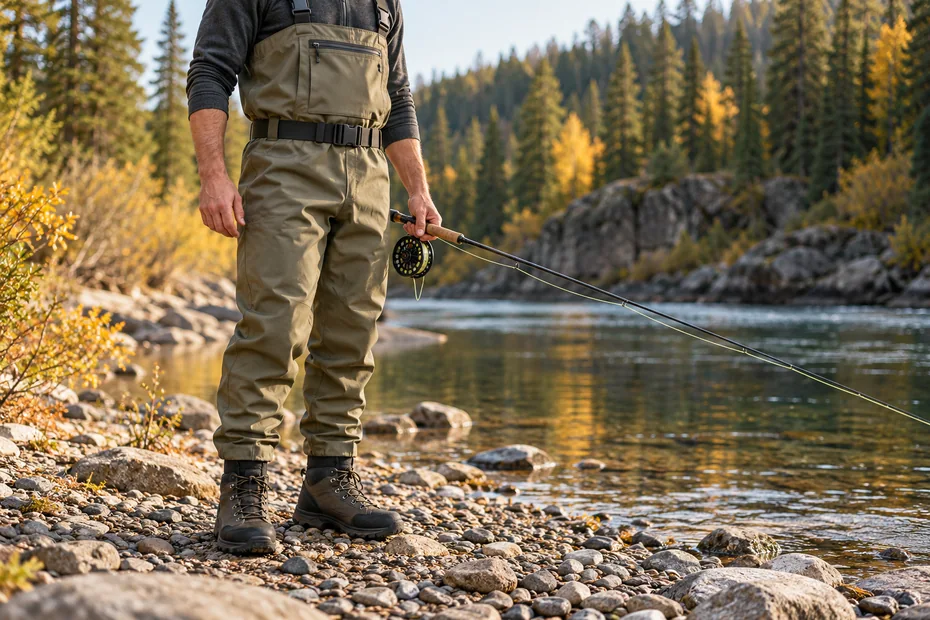
The best waders for fishing fit your body, footwear and planned layers, and are permitted on the water you want to fish. For an angler who walks between Canadian trout runs, breathable stockingfoot waders with separate boots are a useful starting comparison. Shorter, colder sessions may favour a properly fitted bootfoot outfit.
Include the footwear in your comparison. Stockingfoot waders need separate boots; integrated boots must fit your feet and the wader body at the same time. Neither a higher chest nor a waterproof label makes deeper or faster water safe.
Choosing the best waders for fishing in Canada
Start with how you will reach the fishing spot and how much you will move. An hour of walking followed by occasional shallow wading creates a different clothing problem from standing still for a short cold-water session. Consider the walk back as well as the time spent fishing.
- For many walking anglers, a breathable shell allows flexible layering.
- Neoprene adds insulation but can be an uncomfortable choice for a warm approach.
- A coated nylon/PVC outfit can keep the purchase simple, though the coating does not offer the same moisture-management approach as a breathable laminate.
Check footwear style and upper material separately. Bootfoot does not automatically mean neoprene or insulated. Stockingfoot describes the attached socks, not the entire wader fabric. Read both parts of the specification before comparing products.
| System | Reason to compare it | Cost or limitation to check |
|---|---|---|
| Breathable stockingfoot | Separate footwear choice and flexible layering for active sessions | Boots cost extra and must fit over the actual booties |
| Coated nylon/PVC bootfoot | Integrated footwear and a straightforward short-session outfit | Boot/body fit must work together; do not assume insulation or breathability |
| Neoprene bootfoot | Insulating upper for a suitably planned cooler session | Added bulk and heat during a long approach; check the boot separately |
| Waist or hip waders | Less upper-body coverage when the access plan allows it | Lower opening; this is not permission to approach its maximum height |
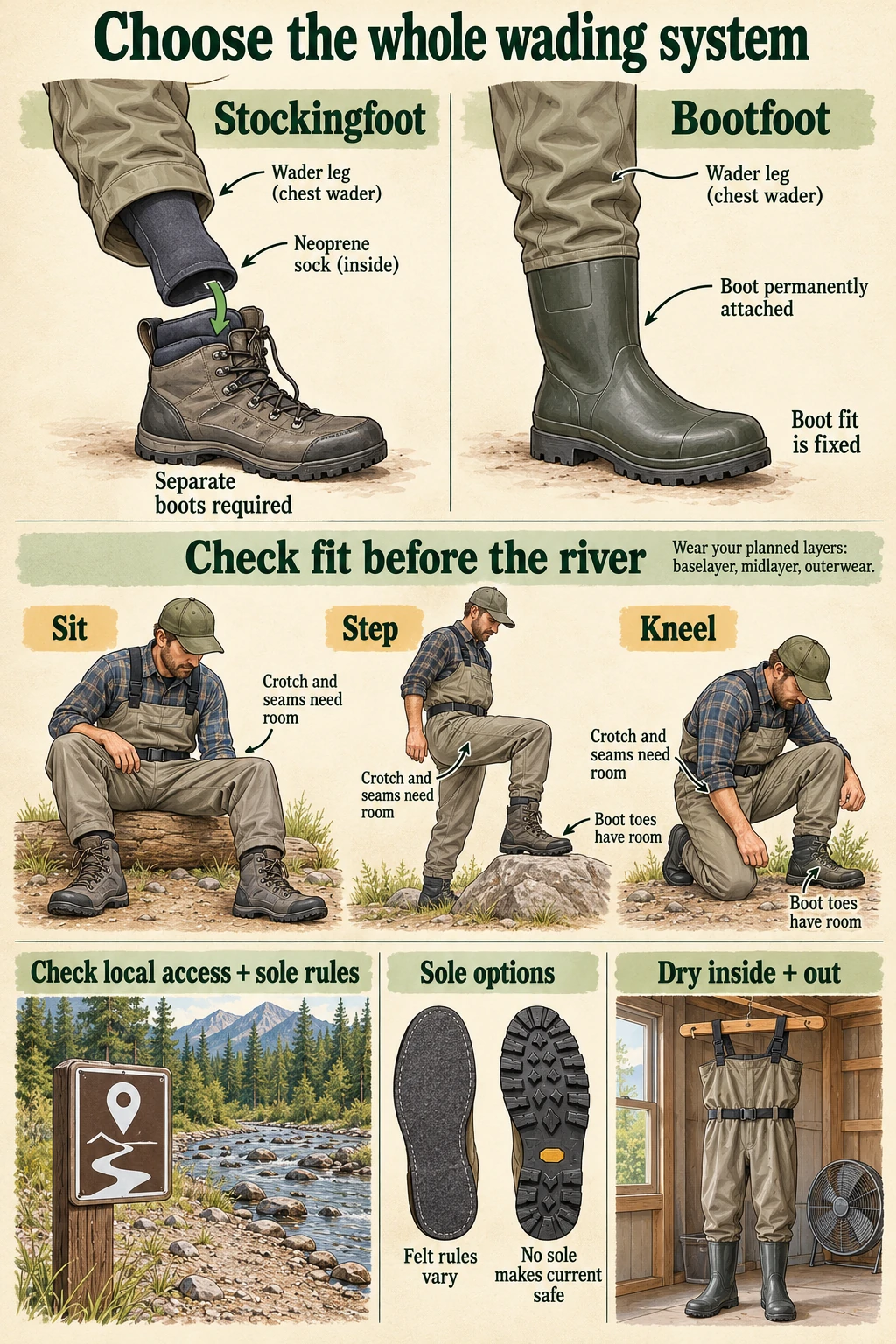
Stockingfoot means separate boots
The waterproof neoprene stocking foot belongs inside a suitable boot. It is not a walking sole. Put the waders on over a protective mat and fit the boots before stepping onto gravel; small stones can damage a bootie and remain trapped inside the boot.
Choose boots around fit, drainage, terrain and permitted soles. Try them over the actual booties and socks, rather than applying an automatic one-size-up rule across brands. Our wading-boot comparison covers that separate purchase.
Bootfoot means one combined fit
Attached boots simplify changing at the car, but their dimensions cannot be adjusted as freely as a separate laced boot. A comfortable chest with a loose heel is still a poor fit. Check your step, toe space and heel movement with the socks you intend to wear.
If your body and feet need different sizes, try another model or cut. Do not solve a tight boot by buying such a large wader body that the legs bunch around your knees. Compare the actual size chart and return terms before ordering.
Three waders to compare by construction
These are specification-based options, not winners from a CanadaFever field test. We have not measured their leakage, warmth or lifespan. The linked sizes identify the reviewed listings; choose your own size from a current chart and recheck the selected option.
As an Amazon Associate, CanadaFever earns from qualifying purchases. Links open Amazon.com. Check Canadian delivery, currency, import charges, seller and return terms for the offer you select.
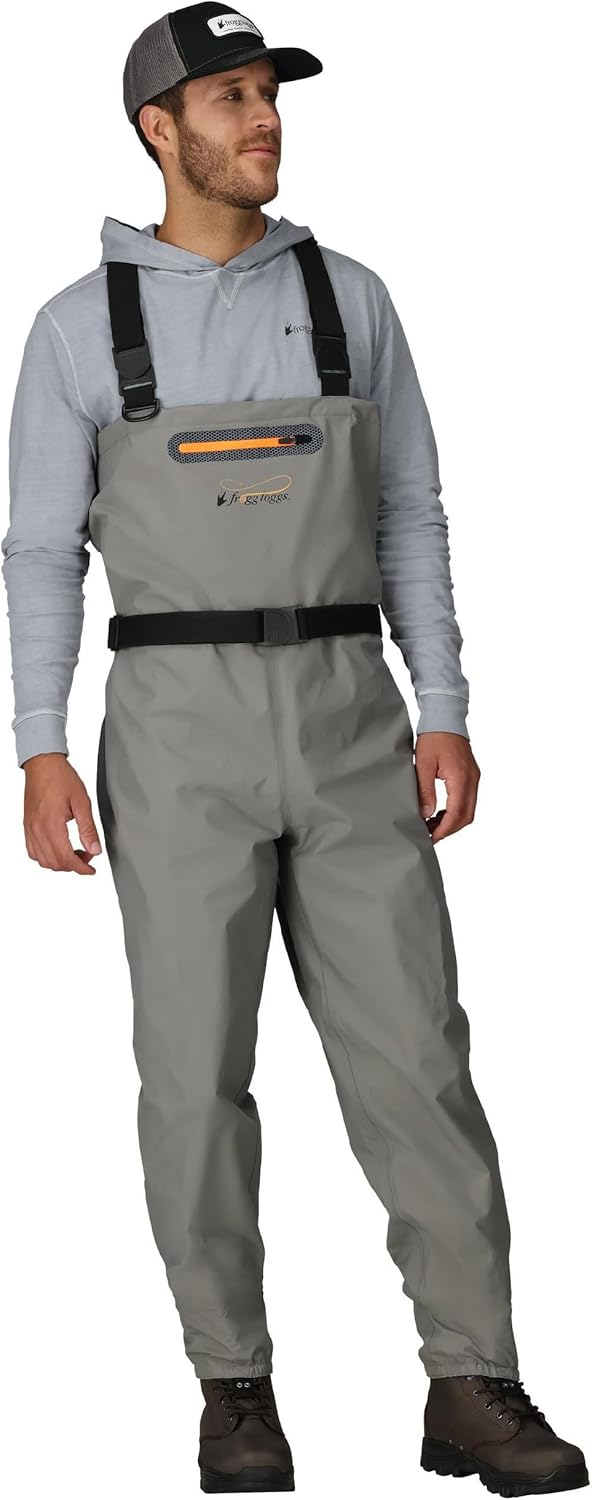
Frogg Toggs Canyon II stockingfoot
The Canyon II has a four-ply nylon upper, 4 mm neoprene booties, gravel guards and an adjustable wading belt. The linked gray Medium is the 2711136-MD option. Compare it for a breathable shell with separately chosen boots, particularly when you want to adjust the footwear fit independently.
The chest pocket is described as splash-proof. Put a phone or other water-sensitive item in suitable separate protection. The booties also leave you buying boots; the package is not a complete footwear system.
- Choose it for a breathable stockingfoot system with separate boot choice.
- Check chest, inseam and foot fit with your planned layers.
- Allow for boots and avoid treating the splash-proof pocket as dry storage.

TIDEWE nylon/PVC bootfoot
The linked brown US 11 listing identifies model WD001-BN-11 with a two-ply nylon/PVC construction and attached boots. Compare this simpler coated outfit for an occasional, short-access session where the complete fit works for you.
The construction details above come from the linked listing. Specifications from TIDEWE’s newer hunting ranges may differ, so check the care instructions and seller’s terms for WD001-BN-11. This coated outfit is not presented as an insulated or breathable system.
- Choose it when an integrated boot and straightforward coated upper fit the outing.
- Confirm the boot size and body dimensions together; US 11 is only the reviewed variant.
- Skip it when you need a documented breathable or insulated system.

Frogg Toggs Amphib cleated bootfoot
This Amphib version pairs a 3.5 mm neoprene upper with attached boots containing 200 grams of Thinsulate insulation. The reviewed variant is cleated US 10 in the 2713243 family. It is a cooler-session comparison, with the fit and boot construction considered together.
Amphib also appears in felt-soled and different camouflage versions. Check the exact outsole and insulation instead of borrowing specifications from another Amphib. The cleated sole does not certify grip on every riverbed, and extra chest height does not establish a safe wading depth.
- Choose it when an insulating neoprene bootfoot outfit suits the planned session.
- Check that the actual variant is cleated, with the boot and body fit you need.
- Skip it for a warm, demanding approach or when the fit limits ordinary movement.
Primary specifications for the two Frogg Toggs models are on the Canyon II page and cleated Amphib page. Compare included components and local replacement support alongside the delivered cost.
Check movement with the layers you will wear
Use the maker’s chest, waist or hip, inseam and foot measurements. A familiar clothing letter is only a starting point. Different cuts can help an angler whose torso, legs and feet do not fit one standard size; a poorly fitting shortlist is a reason to shop elsewhere.
Keep your tags and packaging while you check the fit on a clean floor. Wear the intended base layer and socks. Make ordinary fishing movements, including sitting and bending a knee, while noticing tension at seams and excess material that folds against itself.
Simms’ fit guide explains measurement and layering checks. Its chart applies to its own products; use the selected wader maker’s chart for an actual order. A size name from one company is not a reliable conversion to another.
- The crotch should allow an ordinary step without pulling hard on the seams.
- The boot or bootie should leave comfortable toe room with the intended socks.
- Suspenders should hold the wader body without forcing all the movement through the shoulders.
- Check the belt, jacket and any pack straps together before deciding the outfit fits.
Warmth comes from the full clothing system
Separate the air temperature, water temperature and your activity level. A long approach may leave you warm before you reach cold water. A breathable shell allows changes underneath, but it does not prevent perspiration or guarantee a dry-feeling interior.
Choose suitable moisture-managing base layers and leave enough room for the required insulation. Thick socks squeezed into a tight boot are a poor solution. For the rest of the outfit, use our fishing clothing and layering guide and Canadian fishing rain-gear guide.
| What you notice indoors | What to check | What not to assume |
|---|---|---|
| Pulling when stepping or kneeling | Inseam, rise, cut and suspender adjustment | That fishing will stretch a restrictive fit into comfort |
| Tight toes with intended socks | Bootie volume and the complete boot fit | That thicker socks will solve a cold-foot problem |
| Excess material bunching at knees | Shorter or different body cut | That a larger size is always better for layering |
| A pocket seems weather-resistant | Its specific water-protection claim | That the contents can be submerged safely |
Check Canadian water rules before choosing soles
Sole rules and access conditions vary by destination. Banff National Park prohibits felt-soled wading boots. Jasper has a separate 2026 park-wide felt-sole prohibition, as well as water-activity zones that restrict waders and wading boots.
Under Jasper’s July 31 to December 31, 2026 order, fishing with waders and wading boots is prohibited in the Special Tactics and Water Preservation zones. Choosing a non-felt sole does not override those restrictions. Check the current order and your exact water before travel.
Cleaning requirements are a separate check. Jasper’s cited order specifies cleaning and draining equipment, plus minimum drying periods of 48 hours after use within Alberta, British Columbia or the Canadian territories, and 30 days after use elsewhere. Check for additional inspection or permit requirements at each destination. These are park-specific measures, not a national drying rule.
Clean and dry the exact materials you own
Read the care label before washing, applying heat or using repair chemicals. Different laminates and neoprene constructions can have different instructions. A method permitted for one brand’s breathable shell should not become a rule for every wader.
- Remove mud and debris, then dry the interior and exterior before long storage.
- Give attached boots and stocking feet enough time and airflow.
- Keep wet gear separate from clean clothing during transport, then unpack it promptly so air can reach the damp surfaces.
Use the maker’s approved leak-check and repair procedure. Do not automatically fill an unsupported wader with water or apply a solvent because another brand’s video demonstrates it. A failing boot attachment or extensive seam problem may need a repair service rather than a field patch.
The Frogg Toggs care guidance starts with the model’s own instructions. For carrying and separating wet gear, compare fishing bags and backpacks, keeping sensitive items protected from leaks and damp fabric.
The Pre-Trip Protocol
Check access and the full outfit
Confirm the current water rules, local conditions and route. Inspect the waders, belt, boot soles and laces; leave damaged equipment out of the plan until properly repaired.
Practise the fit on dry ground
Wear your intended layers and footwear. Check movement and pack straps, and keep the changing area free of grit that can damage stocking feet.
Plan the change and return
Carry dry clothing and suitable personal supplies. Know where you can leave the water, and allow for the cleaning, draining and drying steps required before another destination.
For tackle, compare rods by casting method and load, or use the fly-fishing equipment guide to build a matched first fly outfit. The fishing gear hub puts waders alongside rods, reels and carrying equipment.
Wader questions
Do stockingfoot waders include boots?
They normally end in waterproof neoprene stocking feet and need separate suitable boots. Check the package because some sellers bundle both. Try the boots over the actual booties and socks before ordering a second size.
Which are the best waders for fishing in cold water?
Compare the whole fit and insulation system against the activity and conditions. Neoprene or an appropriately layered breathable outfit may suit different sessions. No fabric thickness or boot-insulation number alone establishes a safe temperature or session length.
Should I order waders one size larger?
Use the selected maker’s measurements and fit guidance. Allow for the actual layers without creating excessive folds or loose boots. A blanket size-up rule can leave a poor body or foot fit.
Can I use felt soles everywhere in Canada?
No. Banff and Jasper are examples with felt restrictions, and Jasper also restricts waders and wading boots by water-activity zone. Check your exact destination’s current rules; a permitted sole does not automatically permit wading.
Does dampness inside prove that my waders leak?
Perspiration and condensation can also leave the interior damp. Inspect the location and follow the maker’s leak-check instructions before choosing a repair. Stop using an unreliable outfit until the problem is resolved.