

Compare the best fishing boats for Canadian lakes, rivers and coasts by hull, size, towing needs, safety, budget and real-world use.
- Match the hull and size to the largest water you fish regularly
- A 17- to 18-foot aluminum deep-V is the practical all-round starting point for many Canadian anglers
- Verify towing weight, ownership documents, current Transport Canada rules and required safety equipment before buying
Bottom line Choose the complete boat system for your real water, crew, tow vehicle and storage—not the most impressive showroom model
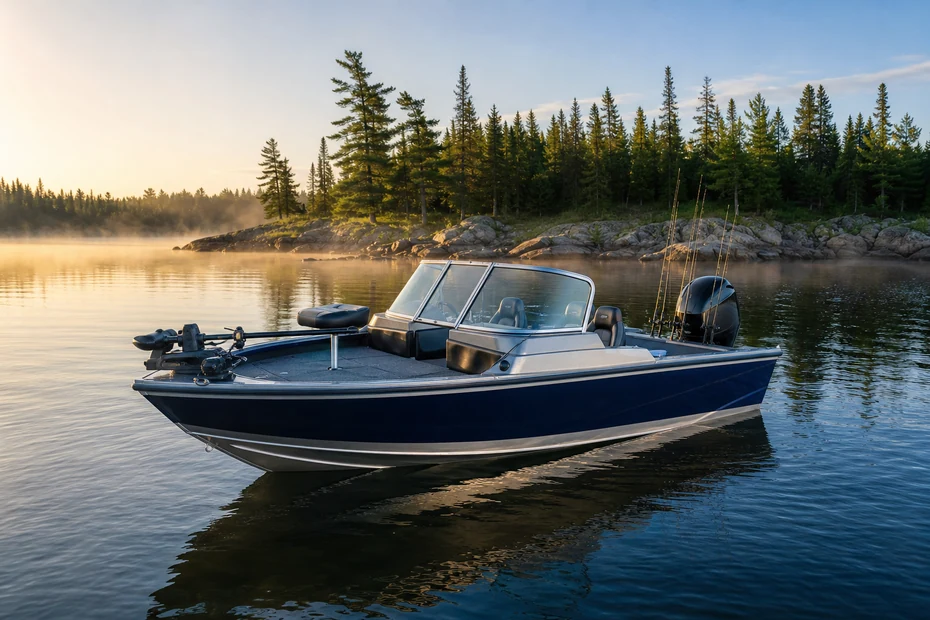
The best fishing boats for Canada are not one model or one brand—they are the boats that match your water, weather, crew, tow vehicle, and fishing style. A rig that feels perfect on a sheltered cottage lake can become the wrong tool on Lake Erie, a windy prairie reservoir, a shallow northern river, or the Pacific coast.
Travellers who prefer a captain and equipped boat can use the Lake Ontario fishing charter booking guide.
This guide gives you a practical Canada-first way to choose. It starts with the boat type, hull and size that fit your real trips, then moves into towing, storage, safety, used-boat checks and 2026 Canadian requirements.
Key Takeaways
- Best all-round choice: A 16- to 19-foot aluminum multi-species deep-V suits many Canadian lake anglers.
- Big-water priority: Hull shape, freeboard, bilge capacity, weather protection and conservative loading matter more than extra gadgets.
- Small-water priority: A lighter 12- to 16-foot boat is easier to tow, launch, beach and store.
- Buy the full system: Boat, motor, trailer, batteries, electronics, safety equipment, insurance and winter storage must work together.
- Before paying: Verify the Hull Serial Number, Canadian Compliance Notice, ownership documents and current Transport Canada requirements.
The most expensive boat in the showroom can still be a poor choice. Start with the hardest conditions you expect to face, then choose the smallest boat that can handle those conditions with a sensible safety margin.
Boat layout is only half of cold-rain comfort. Compare jacket, bib and layering choices in the Canada fishing rain-gear guide before planning exposed-water trips.
If electric boat control is part of the plan, use the Canada trolling-motor buyer guide to match thrust, shaft length, mounting position and voltage to the loaded hull.
🌲 The Guide’s Log
When I evaluate a fishing boat for Canadian water, I picture the trip after the easy morning has ended. The lake is no longer flat. A west wind has stacked a short chop across the run back to the ramp, the temperature has dropped, and two people have moved aft to sort wet gear. That mental picture exposes weak choices quickly. A wide casting deck means little if the boat is overloaded, bow-heavy on the trailer, awkward at the launch, or too low-sided for the water it will regularly face. I also picture the boring parts of ownership: backing into a narrow driveway, charging batteries after work, draining livewells before a cold night, and finding a winter storage space before the first hard freeze. Those moments decide whether a boat gets used or becomes an expensive object under a tarp. My default advice is simple: buy for the roughest normal day, not the wildest fantasy trip. Leave room in the budget for a reliable motor, properly matched trailer, working bilge pump, quality lifejackets and weather protection. A modest boat that launches easily and comes home safely will give you more fishing days than a bigger rig that is difficult to tow, store or trust.
The Best Fishing Boats for Canada: Quick Picks by Water
Use this table as a starting point, not a substitute for a sea trial. If you are still deciding where you want to fish, compare the regional conditions in our guide to the best fishing spots in Canada before choosing a hull.
| Your normal water | Best starting type | Useful size range | Main trade-off |
|---|---|---|---|
| Small sheltered lakes and ponds | Utility aluminum, small V-hull, canoe or fishing kayak | 12–16 ft | Easy access and low cost, but limited rough-water margin |
| Canadian Shield lakes and prairie reservoirs | Aluminum multi-species deep-V | 16–19 ft | Versatile and towable, but wind protection varies by layout |
| Great Lakes and other exposed inland water | Heavier deep-V aluminum or fibreglass multi-species boat | 18–22+ ft | Better ride and weather protection, but higher towing and ownership cost |
| Shallow rivers and rocky launches | Light aluminum modified-V, tiller or suitable jet setup | 14–18 ft | Shallow access improves, but open-water comfort may decrease |
| Family fishing on protected water | Fish-and-ski, dual-console or fishing pontoon | 17–22 ft | More seating and comfort, less pure fishing space |
| Inshore or coastal saltwater | Saltwater-rated centre-console, walkaround or pilothouse | 20 ft and up | More range and protection, with much higher cost and maintenance |
Our default recommendation for many Canadian anglers: Start your search with a 17- to 18-foot aluminum multi-species deep-V, a full windshield, enough rated capacity for your normal crew, and an outboard that sits comfortably within the hull’s permitted range. It is not perfect everywhere, but it covers walleye, pike, trout and bass trips on a wide range of inland waters without automatically requiring a heavy-duty tow vehicle.

Top accessory starting point
The batteries and onboard charger also need to be designed as one system; our marine batteries and chargers guide walks through bank roles, chemistry, charging profiles and cold storage.
NOCO GEN5X2 two-bank onboard marine charger
A practical default for electrically equipped boats with two compatible 12-volt battery banks. It provides 10 amps total, split across two banks, and supports common lead-acid and lithium charging modes.
- Best for: a starting battery plus a trolling or accessory bank
- Check the correct charging mode for each battery chemistry
- Confirm ventilation, cable routing and installation clearance first
Check the current listing, compatibility and included components before ordering.
Affiliate disclosure: As an Amazon Associate, CanadaFever earns from qualifying purchases at no extra cost to you.
Four Questions That Choose the Boat Before the Brand
1. What is the largest water you will fish regularly?
Do not buy for the smallest bay you visit twice a year. Base the hull, freeboard and weather protection on the largest exposed water that will be part of your normal season.
For sheltered lakes, light weight and easy launching often win. On larger lakes, a deeper V and higher sides can improve the ride and keep more spray outside the boat. No hull makes bad weather safe, so your operating judgment still matters.
2. How many people and how much gear are normally aboard?
Capacity plates are limits, not comfort targets. Four adults, a cooler, tackle boxes, batteries, a full livewell and fuel can make a boat feel much smaller than the brochure suggests.
Walk through the cockpit with the real crew in mind. Can someone net a fish without stepping over a battery box? Can children sit away from hooks and moving gear? Can every lifejacket and safety item remain accessible?
3. Can your vehicle, ramp and driveway handle the complete package?
Boat length alone does not tell you tow weight. Add the motor, trailer, fuel, batteries, spare tire and gear, then compare the loaded package with the vehicle’s ratings and hitch setup.
A smaller boat that you can launch confidently at local ramps will usually see more water. For remote, paddle-access fishing, our canoe fishing guide explains a different, lighter style of trip planning.
4. Are you buying a fishing platform or a family boat that can fish?
Wide casting decks, rod lockers and livewells serve dedicated anglers. Deeper seating, a walk-through windshield, swim ladder and flexible rear seats serve mixed family use.
Be honest about the split. A pure bass boat can frustrate a family in cold wind. A large pontoon can be comfortable but awkward on small ramps or rough open water.
For long days scanning glare and shallow structure, the polarized fishing sunglasses guide matches lens colour and frame coverage to Canadian conditions.
🍁 The Local Secret
The real limiting factor is often not the fish or the hull—it is the launch, tow and storage system. Measure your garage opening, storage length with the trailer tongue, local ramp depth, driveway slope and tow rating before falling in love with a boat. Those five numbers eliminate expensive mismatches faster than a showroom feature list.
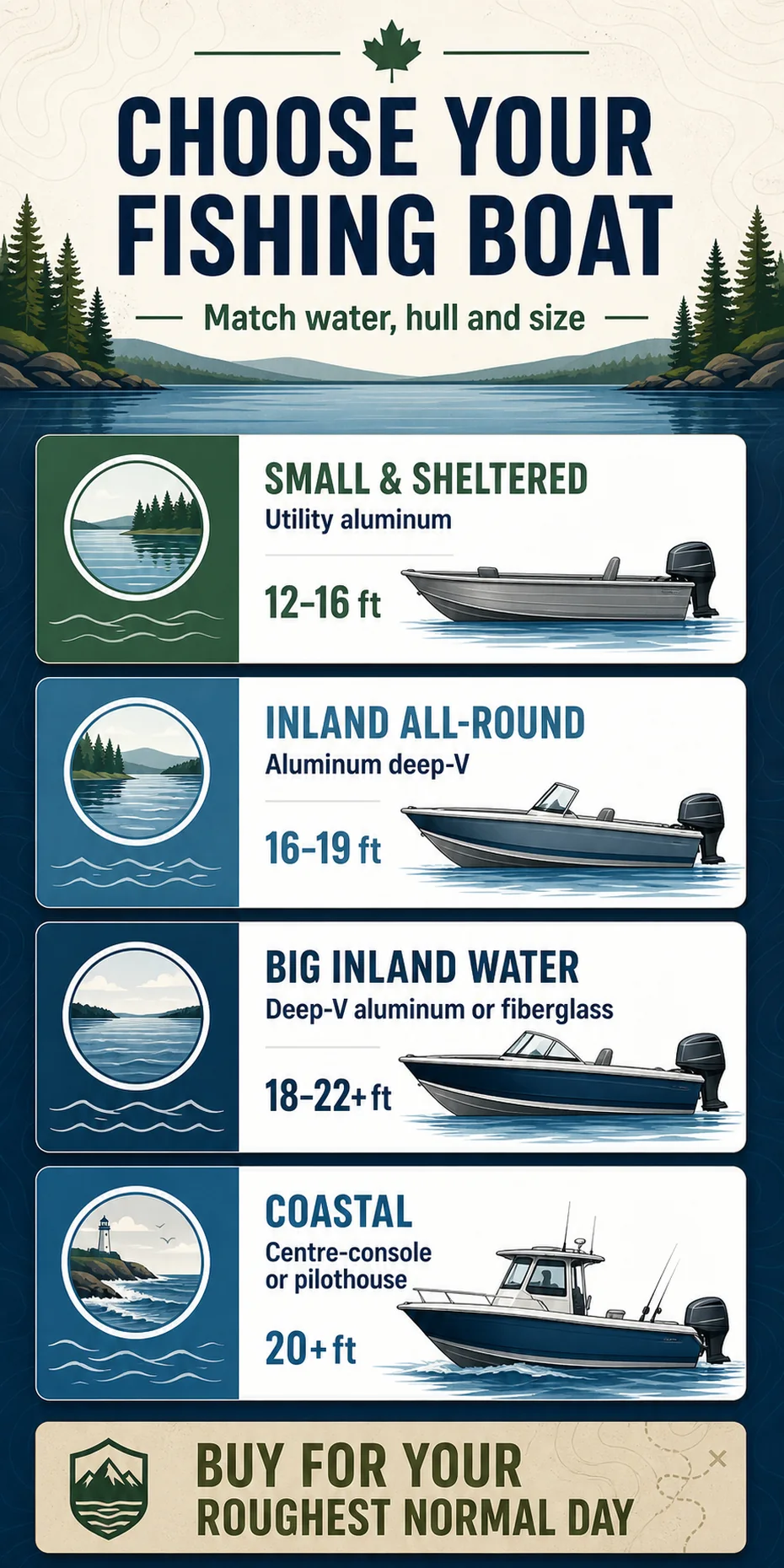
Best Fishing Boat Types for Canadian Conditions
Best fishing boats for Great Lakes and big inland water
Start with an 18-foot or larger deep-V multi-species boat, higher freeboard, a strong bilge system and meaningful wind protection. A full windshield or enclosed helm can extend comfort when cold spray and fast temperature drops are normal.
Fibreglass adds weight and can deliver a more planted ride. Heavier aluminum deep-V boats offer a strong combination of toughness and trailering flexibility. Neither material replaces conservative weather decisions.
Best all-round boat for inland multi-species fishing
A 16- to 19-foot aluminum deep-V is the practical centre of the Canadian market. It can troll for walleye and lake trout, cast for pike and bass, and carry enough gear for day trips without becoming a major towing project.
Look for a layout with an uncluttered bow deck, secure rod storage, movable seating, a properly sized livewell and room to mount modern electronics. Our guide to fish finders and fishing electronics in Canada can help you plan the helm before drilling holes.
Best budget and small-lake fishing boat
A 12- to 16-foot aluminum utility boat or modest V-hull keeps the package light and mechanically simple. It works well on protected lakes, small rivers and camps where easy transport matters more than speed.
The compromise is weather margin. Do not treat a small open boat as a cheap substitute for a big-water rig.
Best boat for bass and shallow casting
A bass boat or low-profile modified-V provides broad casting decks, shallow draft and excellent tackle organization. It is strong for sheltered water and technique-focused fishing.
Low sides and open layouts offer less protection in cold chop. If your season includes exposed walleye water or family cruising, a multi-species deep-V may be the better compromise.
Best family fishing platform
A dual-console, fish-and-ski or fishing pontoon can provide flexible seating, a swim ladder and space for food, children and non-anglers. On protected water, a fishing pontoon is stable and comfortable at rest.
Check how the layout changes when every seat is occupied. Some family features consume the casting and storage space that serious anglers expect.
Best fishing boat for Canadian coastal water
Coastal fishing demands a purpose-built saltwater platform, corrosion-resistant systems and enough hull for the intended range. Centre-consoles maximize working deck space, while walkarounds and pilothouses add protection.
Saltwater ownership also increases cleaning and maintenance demands. Read our overview of saltwater fishing in Canada before deciding whether an occasional coastal trip justifies a dedicated boat.
Aluminum vs. Fibreglass Fishing Boats
| Decision factor | Aluminum | Fibreglass |
|---|---|---|
| Towing and launching | Usually lighter and easier to manage | Usually heavier; vehicle and ramp demands increase |
| Rocky shorelines | Tolerates normal bumps and beaching well, but dents and welds still require inspection | Gelcoat and laminate damage need careful assessment |
| Ride in chop | Depends heavily on hull shape and weight | Extra mass can feel more planted |
| Noise at rest | Can transmit more hull noise | Often feels quieter and more solid |
| Maintenance | Simple finish; inspect rivets, welds, corrosion and transom | Inspect gelcoat, laminate, stringers and transom |
| Best fit | Trailered inland use, rocky access and versatile day trips | Big water, heavier layouts and buyers prioritizing ride and finish |
Do not reduce the choice to “aluminum is tough” and “fibreglass rides better.” A well-designed heavy aluminum deep-V may outperform a poor fibreglass hull for your needs. Compare the complete package and take a real on-water test in conditions that resemble your normal fishing.
Choosing the Right Fishing Boat Size
- 12–14 ft: Best for one or two anglers on small protected lakes. Keep loads light and routes conservative because freeboard, payload and weather margin are limited.
- 15–16 ft: A practical first-boat range for local lakes and easy towing. Test the layout with your real crew because storage and floor space disappear quickly.
- 17–19 ft: The versatile range for multi-species fishing, moderate big-water use and family day trips. Verify loaded tow weight and storage length before buying.
- 20 ft and up: Suits exposed big water, larger crews and coastal platforms when the trip profile genuinely justifies the higher fuel, storage, insurance and maintenance costs.
Length is only one measure. Beam, hull depth, deadrise, freeboard, loaded displacement and layout all affect how large a boat feels and how it behaves.
Features Worth Paying For
- Reliable bilge system: Easy access, working automatic function and enough capacity for the boat.
- Weather protection: Windshield, top or enclosure appropriate for cold Canadian conditions.
- Battery access: Serviceable placement with proper ventilation, secure mounting and clean wiring.
- Rod and tackle storage: Gear should be secured without blocking walkways.
- Trolling-motor readiness: Adequate bow space, battery capacity and wiring path.
- Electronics mounting room: A clear helm and transducer plan before installation.
- Non-slip surfaces and handholds: Especially important with children, cold water and wet decks.
- Trailer fit: Correct support, brakes where required, usable tie-downs and a serviceable spare.
Electronics and rod holders are easy to add. Hull shape, cockpit depth, trailer geometry and poor service access are much harder to fix. Spend money on the structure and systems first, then build out the fishing gear and equipment around the boat.
Build the complete boat system
Three practical upgrades for electronics, drainage and dry storage
Choose accessories only after checking available space, voltage, wiring, hose sizes and the water you normally fish. Each image and button below opens the exact Amazon.com product page.

Garmin STRIKER Vivid 7sv fishfinder
A strong fit for anglers who want a seven-inch display, high-sensitivity GPS and compatible CHIRP, ClearVü and SideVü sonar in one unit.
- Best for: locating structure, saving waypoints and repeating routes
- Built-in Quickdraw Contours can help map familiar water
- Confirm the exact transducer bundle and charting needs on the listing
Direct product link · ASIN B08LF1F981
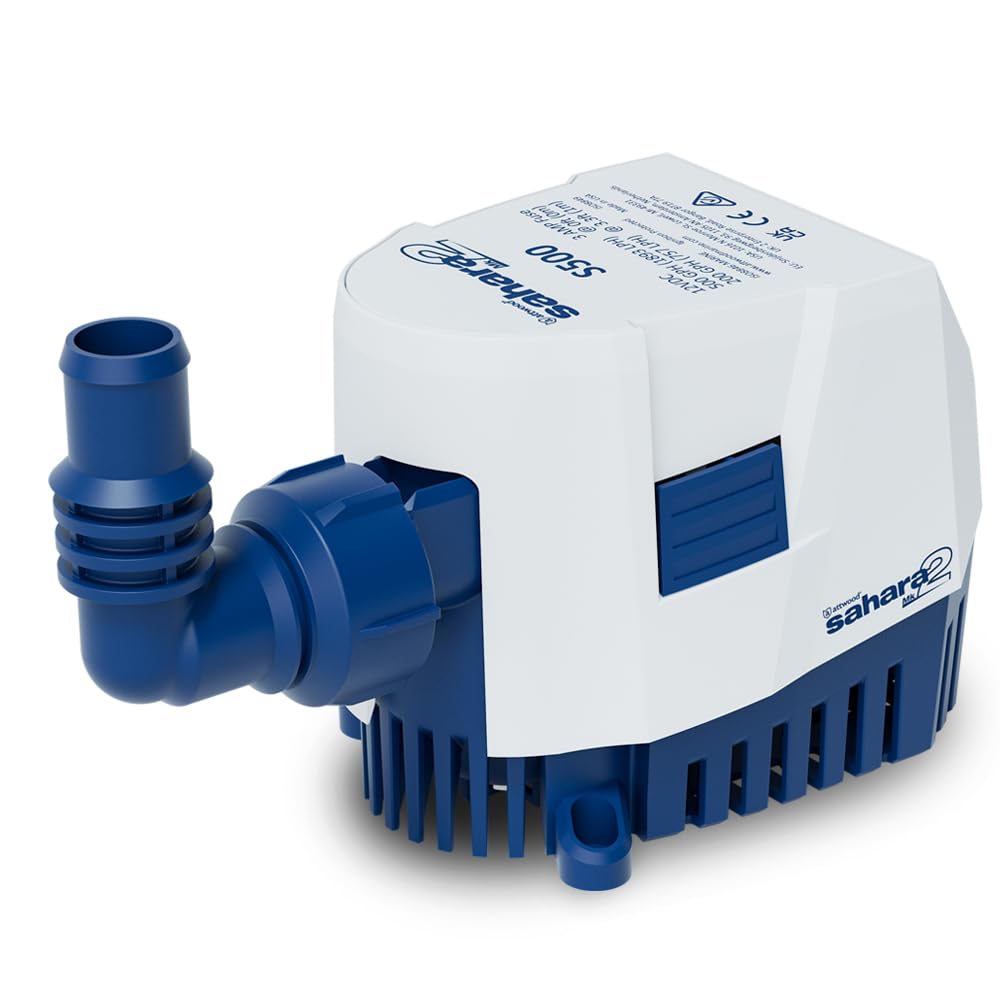
Attwood Sahara MK2 S500 automatic bilge pump
A compact 12-volt, 500-GPH automatic pump for compatible small-boat bilge systems, with supplied straight and elbow fittings.
- Best for: a compatible automatic drainage upgrade or replacement
- Match voltage, flow rating, hose size, fuse and mounting position
- Keep the pump accessible for testing, inspection and cleaning
Direct product link · ASIN B09B3LT7S5

YETI Panga 75 waterproof duffel
A large 75-litre waterproof gear bag for spare clothing and multi-day boat gear. It is a duffel, not a cooler.
- Best for: family loads, wet-weather clothing and multi-day trips
- Removable straps and internal mesh pockets help organize bulky gear
- Check dimensions, packed weight and zipper care before choosing this size
Direct product link · ASIN B074QSQ7NM
Affiliate disclosure: As an Amazon Associate, CanadaFever earns from qualifying purchases at no extra cost to you.
Safety note: Accessories do not replace required Canadian safety equipment. Performance can vary with condition, installation, storage and operating conditions. Follow manufacturer instructions and current official guidance.
2026 Fishing Boats and Series Worth Comparing
The list below is a test-drive shortlist, not a claim that we personally tested or ranked every model. Availability, packages and specifications can change by dealer and province.
- Alumacraft Competitor 175X Sport: A current mid-size multi-species deep-V to compare for inland versatility.
- Lund Impact XS: A useful comparison point for anglers balancing fishing features with family use.
- Lund Fury 1600: A compact option to compare when towing ease and first-boat simplicity matter.
- Lund SSV series: A straightforward utility family for camps, small lakes and remote access.
- Ranger 620FS: A premium big-water benchmark for serious multi-species anglers.
- Princecraft fishing series: Worth including when comparing Canadian dealer support, aluminum layouts and local availability.
Do not choose from a list alone. Sit in the helm, remove a battery cover, open every storage compartment, walk from stern to bow, and ask to see the rig on a trailer. If possible, test it with the engine and load you expect to use.
New vs. Used: Where the Better Value May Be
A used boat can free budget for a better hull and motor, but condition matters more than age. A neglected five-year-old package can cost more than a carefully maintained older rig.
Ask for cold-start video or a true cold start, service records, winterization history and proof of ownership. Water-test the boat. If the seller refuses a reasonable inspection or cannot explain the ownership paperwork, walk away.
| Check | Good sign | Reason to pause or walk away |
|---|---|---|
| Hull and transom | Dry, firm and free of suspicious repairs | Softness, flex, cracks, leaking rivets or unexplained welds |
| Motor | Clean cold start, stable idle and documented service | Warm engine before arrival, alarms, poor cooling flow or missing records |
| Electrical system | Fused, labelled wiring and secure batteries | Household connectors, corrosion, tangled wiring or dead accessories |
| Trailer | Correct fit, working lights, sound tires and serviced bearings | Cracked tires, rusted structure, loose bearings or poor hull support |
| Documents | Matching HIN, bill of sale and clear ownership trail | Numbers do not match, documents are missing or seller identity is unclear |
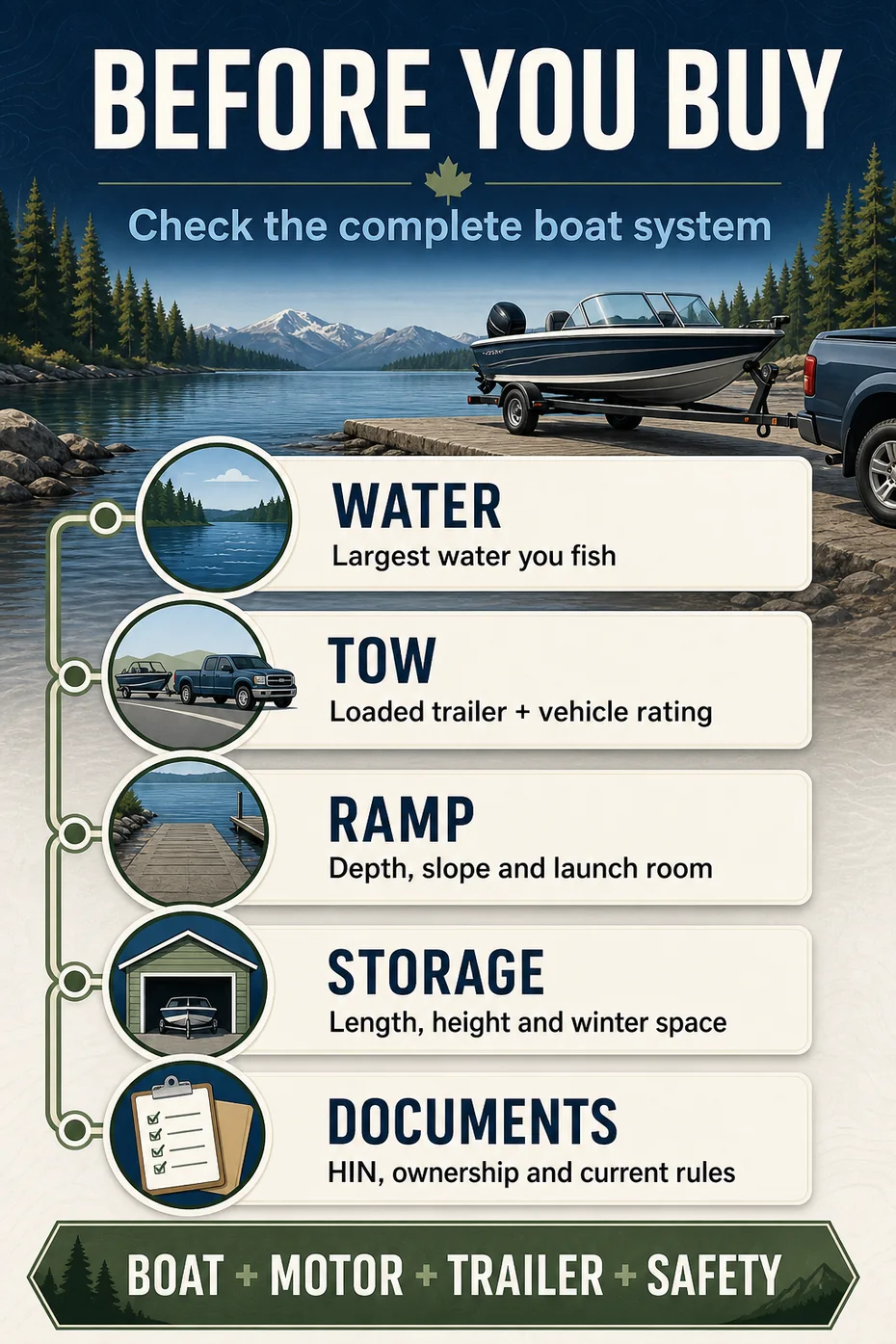
The Real Budget: Boat, Motor, Trailer and Ownership
Do not spend the entire budget on the hull. Set aside money for the motor and trailer inspection, batteries, charger, safety equipment, insurance, registration or licensing requirements, winterization, storage, fuel and repairs.
A lower-priced package with a questionable motor is rarely a bargain. A dependable outboard and properly fitted trailer often matter more than cosmetic upgrades.
Before adding expensive accessories, cover the essentials. Beginners can use our Fishing for Beginners in Canada guide to build a sensible first-trip system instead of filling every compartment immediately.
Canadian Boat Buying, Licensing and Safety Checks for 2026
Rules can change, and this section is general information rather than legal or professional advice. Confirm the current requirements for your boat, operator, province and waterway before operating.
Transport Canada says a pleasure craft principally operated and maintained in Canadian waters generally needs a Pleasure Craft Licence when it has one or more engines totalling at least 10 horsepower (7.5 kW), unless the craft is registered. A Pleasure Craft Licence is different from proof of operator competency.
Transport Canada also states that new, transferred and renewed Pleasure Craft Licences are valid for five years, and ownership or licence information may need to be updated within stated deadlines. Read the current official guidance before buying or transferring a boat:
The safety equipment required on board depends on the type and length of the craft. Every operator of a power-driven pleasure craft also needs accepted proof of competency. Check the official guide rather than copying a generic equipment list from a sales page.
Fishing rules are separate from boating rules. Licences, seasons, limits, bait restrictions and closures vary by jurisdiction and waterbody, so confirm them through the appropriate authority and our Canada fishing regulations and licences guide.
When moving between lakes, clean, drain and dry the boat, trailer, livewell and gear as required by local invasive-species rules. Never move water, bait or aquatic material where prohibited.
✅ The Pre-Trip Protocol
- Step 1: Inspect the hull, fuel, electrical, steering, cooling and bilge systems before launch.
- Step 2: Check the forecast, local hazards, load, required safety equipment and current fishing rules.
- Step 3: File a trip plan, brief the crew and know how you will turn back before conditions exceed the boat or operator.
Boat handling matters as much as boat selection. Review how to pass another fishing boat safely, and consider a guided trip before taking a new platform onto unfamiliar water. Our fishing charters and guides overview can help you learn a region without rushing into ownership.
Final Verdict
For many Canadian anglers, the best place to start is a 17- to 18-foot aluminum multi-species deep-V with a reliable outboard, full windshield and properly matched trailer. It offers a strong balance of towability, durability, weather protection and fishing space.
Go smaller when protected water, simple launching and low ownership cost dominate. Go larger or heavier when exposed big water, coastal conditions or a larger crew genuinely require it.
The right boat should make ordinary fishing days easier—not just look impressive at the dealer. Match it to your normal water, test the complete package, protect room in the budget for safety and maintenance, and leave the dock when conditions are within both the boat’s and operator’s limits.
FAQ About the Best Fishing Boats for Canada
What is the best fishing boat for most Canadian lakes?
A 16- to 19-foot aluminum multi-species deep-V is a strong starting point for many Canadian lakes. It balances rough-water ability, towing weight, durability and room for two to four anglers. The final choice still depends on the largest water you fish regularly.
Is aluminum or fibreglass better for fishing in Canada?
Aluminum is often lighter and practical around rocky launches, while fibreglass can offer more weight, finish and a planted ride. Hull design and total package quality matter more than material alone.
What size fishing boat is suitable for the Great Lakes?
Many anglers begin their Great Lakes search at 18 feet or more with a deep-V hull, higher freeboard and suitable weather protection. Conditions vary greatly, and boat length never guarantees safety. Match the boat, crew and route to the forecast and your experience.
Should a first-time buyer choose a new or used fishing boat?
A well-maintained used package can offer better value, but it should receive a proper hull, motor, electrical and trailer inspection. New boats provide warranty support and clearer history but still require a careful dealer setup and water test.
Do fishing boats need a licence in Canada?
A pleasure craft principally operated and maintained in Canadian waters generally needs a Pleasure Craft Licence when its engine or engines total at least 10 horsepower, unless it is registered. Operators of power-driven pleasure craft also need accepted proof of competency. Verify the current Transport Canada rules for your situation.