

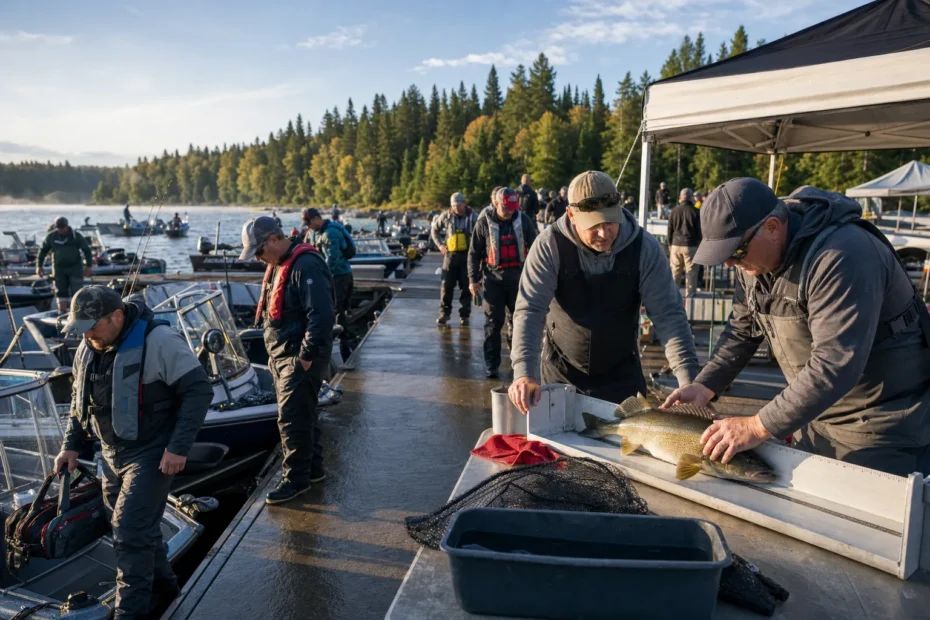
Discover the best fishing competitions and events across Canada. From bass to walleye tournaments, find top-notch angling events for all skill levels.
- Use Fishing Competitions and Events in Canada to match species behaviour, habitat, season, and presentation to Canadian water conditions
- Check local regulations before fishing; limits, closures, bait rules, and licences can vary by province and waterbody
- Focus on practical setup: where to fish, what to cast or troll, how deep to work, and when to move
Bottom line Fishing Competitions and Events in Canada gets simpler when you pair current rules with the right habitat, timing, and presentation
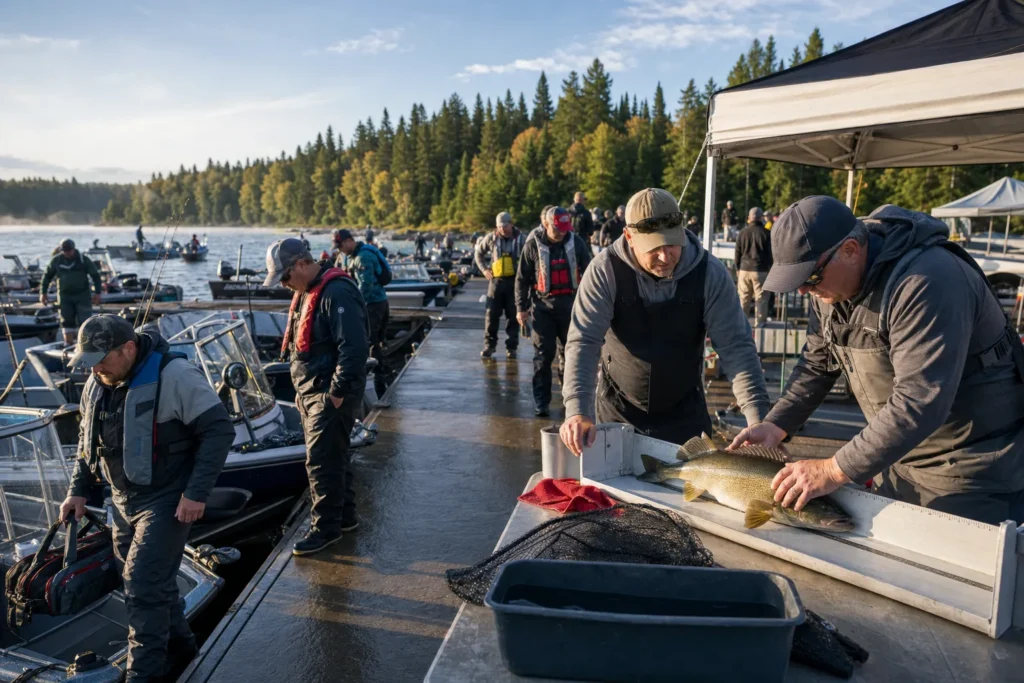
Quick answer: how to use this 2026 Canada fishing events guide
Fishing competitions and events in Canada are best planned by event type, province, eligible species, licence requirements, scoring format, travel cost and fish-care rules. Use this guide to shortlist the right kind of event, then confirm the official rules with the organizer and the provincial, territorial, federal or park source before entering.
Start with beginner fishing competitions, club events, derbies or catch-photo-release formats.
Compare species, region, entry fee, boat needs, scoring and travel logistics before committing.
Check event rules, then verify the official fishing regulations for the exact waterbody.
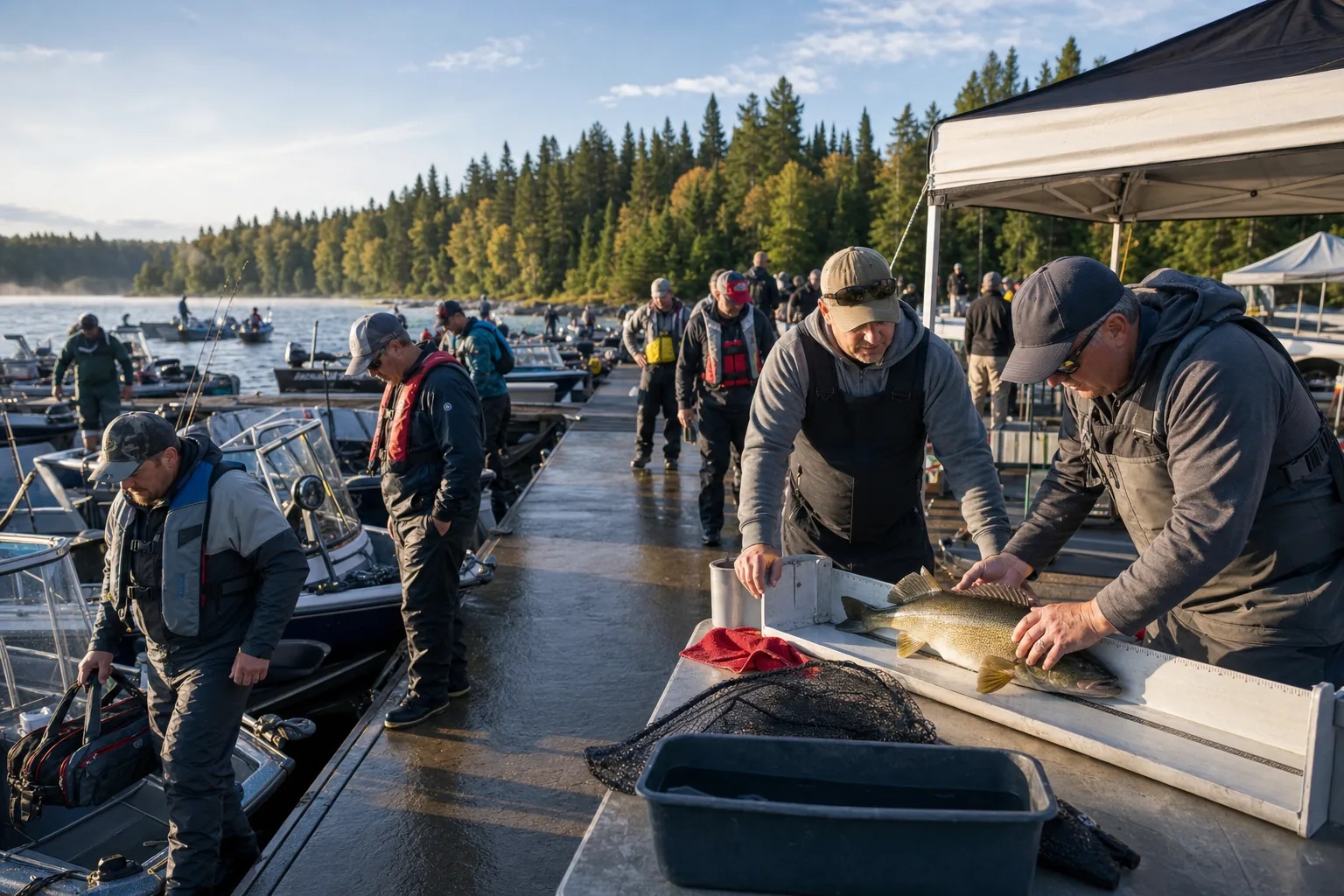
Canada has no single fishing tournament scene. Ontario bass events, prairie walleye tournaments, ice derbies, local family derbies, fly fishing gatherings, conservation fundraisers and coastal-adjacent festivals all work differently.
That is why this page does not pretend to be a live event database. Event dates, sponsors, entry fees and registration windows change. The useful evergreen job is to help readers choose the right event type, understand the rule checks, budget realistically and avoid entering a format that does not fit their skill or equipment.
Canada fishing tournament planner
Use this sequence before paying an entry fee or booking travel.
Derby, club event, CPR, live weigh-in, ice derby or travel tournament.
Licence, species, season, zone, waterbody, event format and fish care.
Entry fee, travel, lodging, fuel, boat, bait, meals, gear and backup plans.
Required board, PFD, net, tackle, phone, charger and weather layers.
Launch, check-in, boundaries, start time, submission deadline and release rules.
Best fishing competition types in Canada
The event type matters more than the prize. A relaxed family derby and a serious live weigh-in tournament are both fishing events, but they ask for different gear, skill, preparation and fish-care discipline.
Event type selector
Choose the format that matches your skill, gear and travel budget.
Best for kids, casual anglers, local water and learning basic event flow.
Best when quick release, measuring boards and app submissions are part of the format.
Best for experienced boat anglers who understand fish care, livewells and timing.
Best only where ice safety, access and line rules are clear and conservative.
Fishing event format infographic
A quick visual comparison of the most common competition formats.
| Event type | Best fit | Risk to check |
|---|---|---|
| Family derby | New anglers, youth groups, local communities and low-pressure learning. | Licence requirements, eligible species, age classes and event boundaries. |
| Catch-photo-release | Anglers who want measurable scoring without live weigh-in stress. | Photo rules, approved board, app deadline and release requirements. |
| Live weigh-in | Experienced competitors with boats, livewell knowledge and fish-care discipline. | Possession, transport, livewell, mortality penalties and release rules. |
| Ice fishing derby | Winter anglers where conditions, access and emergency planning are strong. | Ice safety, shelter rules, bait rules, number of lines and weather shutdowns. |
| Travel tournament | Serious anglers combining competition with a fishing trip or lodge stay. | Registration timing, lodging, fuel, weather, cancellation and local water rules. |
2026 planning calendar for fishing events
Use the calendar below as a planning rhythm, not a guarantee that a specific event is active. Always confirm dates, registration and rules directly with the event organizer.
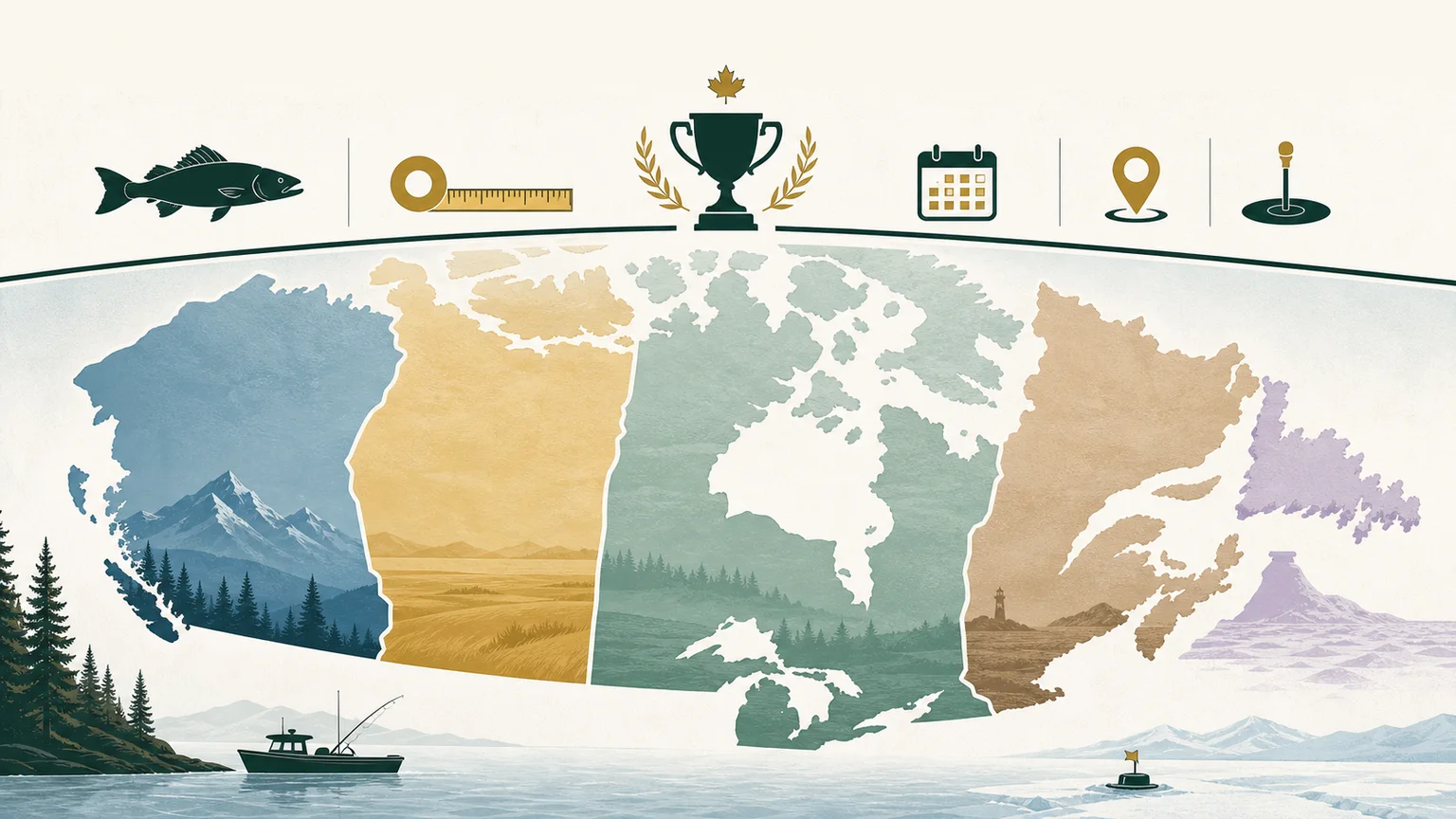
Canada tournament region map
Broad event-planning regions, not a live calendar or legal fishing map.
2026 event planning calendar
Common event windows by season across Canadian freshwater contexts.
Rules and licences for fishing competitions
Event rules never replace official fishing rules. A tournament may tell you how to score fish, but the province, territory, federal government, park authority and exact waterbody determine whether you can fish, keep, transport or release a fish in a certain way.
| Check | Why it matters | Where to verify |
|---|---|---|
| Licence and residency | Entry does not automatically include a fishing licence. | Official province or territory licensing portal. |
| Species and open season | Eligible tournament species may still have local closures or special rules. | Regulation summary, zone map and waterbody exception list. |
| Scoring and submission | Photo, length, weight and live weigh-in formats require different proof. | Organizer rules and day-of briefing. |
| Fish care | Handling, livewell, release and mortality rules affect both ethics and scoring. | Event rules plus official possession and transport rules. |
| Boundaries and access | Crossing an event boundary can disqualify a catch or create legal issues. | Organizer map, official waterbody map and local access rules. |
Rule-safe planning: this guide does not list final open seasons, limits, entry fees or live tournament schedules. Those details change and must be confirmed with current official and organizer sources.
Costs to plan before entering
The entry fee is only one part of the budget. A nearby family derby might be cheap. A serious travel tournament can involve fuel, lodging, meals, launch fees, boat maintenance, replacement tackle and weather delays.
Tournament cost stack
Estimate the full trip, not just the entry fee.
Check refund rules, late fees, team fees and membership requirements.
Remote events can cost more in travel than in entry fees.
Boards, PFDs, livewell tools, rain gear and phone power can matter.
Build in time and budget for wind, storms, cold fronts or event changes.
Gear for fishing competitions and events
Competition gear should solve problems: clear measurement, safe fish handling, weather exposure, organization and rule compliance. Do not buy tournament gear before reading the event format.
Tournament and event gear worth considering
These are category-level links, not product guarantees. Match gear to the event rules and fish-care expectations.
Measuring board
Many length-based or CPR events require clean measurement photos.
Browse on AmazonTackle storage
Organized tackle reduces wasted time during short event windows.
Browse on AmazonLanding net
A rubberized net helps with safer landing and faster release.
Browse on AmazonRain gear
Events often continue through uncomfortable weather unless safety rules stop them.
Browse on AmazonGuided practice trips
A guided day can help travelling anglers learn local water before an event.
Browse optionsCanadaFever may earn from qualifying purchases. Official-source sections never contain affiliate links.
How to choose the right 2026 event
Use a filter before you fall in love with an event name. Ask whether the species, season, distance, rule complexity, event pressure and required equipment fit your actual situation.
Tournament day workflow
A visual day-of checklist for reducing stress and disqualification risk.
- Choose a species you can identify and handle confidently.
- Choose a format you understand before paying the entry fee.
- Check whether the event is beginner-friendly, team-based, boat-only, shore-friendly or travel-heavy.
- Read cancellation, refund, weather and safety rules.
- Verify official fishing regulations for the exact waterbody.
- Plan arrival, launch, parking, lodging and backup food before event morning.
If this is your first event, use the beginner fishing competitions guide before comparing bigger tournaments. If you need the broad trip context first, start with freshwater fishing in Canada and the Canada Outdoor Planning Tools.
Common tournament planning mistakes
- Choosing an event because of prize money before checking skill fit.
- Assuming old event pages still show current dates or entry fees.
- Ignoring waterbody-specific rules because the event flyer looks simple.
- Waiting until event morning to learn scoring or photo rules.
- Underestimating travel, fuel, lodging and weather backup costs.
- Forgetting that fish care is both an ethical issue and often a scoring issue.
Official fishing competition and event sources
CanadaFever helps with planning. Official province, territory, federal, park, organizer and waterbody sources control final rules.
DFO recreational fishing
Federal starting point for recreational fishing context and regional rule paths.
Open official sourceOntario fishing regulations summary
Official Ontario seasons, zones, limits, exceptions and sportfishing regulation context.
Open official sourceDestination Ontario tournaments
Tourism-facing Ontario fishing tournament examples and regional event context.
Open official sourceSaskatchewan competitive fishing events
Official Saskatchewan requirements and permitting context for competitive fishing events.
Open official sourceB.C. fishing regulations
Official British Columbia freshwater fishing regulations and regional rule checks.
Open official sourceAlberta fishing regulations
Official Alberta sportfishing regulation resources and rule checks.
Open official sourceFAQ about fishing competitions and events in Canada
Where can I find fishing competitions in Canada?
Start with local clubs, provincial tourism pages, tackle shops, conservation groups, lodge calendars and organizer websites. Always confirm the current event page before travelling.
Do tournament entries include a fishing licence?
Usually no. Most anglers still need the correct licence, residency class and any required permit or tag. Confirm through the official provincial, territorial, federal or park source.
What is the easiest tournament format for beginners?
A local family derby, club fun event, shore event or catch-photo-release format is usually easier than a live weigh-in boat tournament.
Are fishing tournaments catch and release?
Some are, but not all. Formats vary by organizer, province, species and waterbody. Read the rules for scoring, release, livewell use, mortality penalties and possession.
Should I travel for a fishing tournament?
Only if the species, rules, travel cost, lodging, weather backup and skill level make sense. For most readers, a local event is a better first step.