

Discover the 3 best topwater lures for Canadian bass fishing. Expert tactical buyer guide on when to use poppers, walkers, and ploppers based on water chop.
- Match The 3 Best Topwater Lures for Canadian Bass Lakes to your water, season, boat size, and actual skill level instead of buying by specs alone
- Prioritize readable controls, durable construction, and Canada-relevant use cases before chasing premium features
- Use the guide to compare what matters in the field: setup time, reliability, safety, storage, and upgrade path
Bottom line The right The 3 Best Topwater Lures for Canadian Bass Lakes choice solves your real Canadian trip conditions without adding gear you will not use
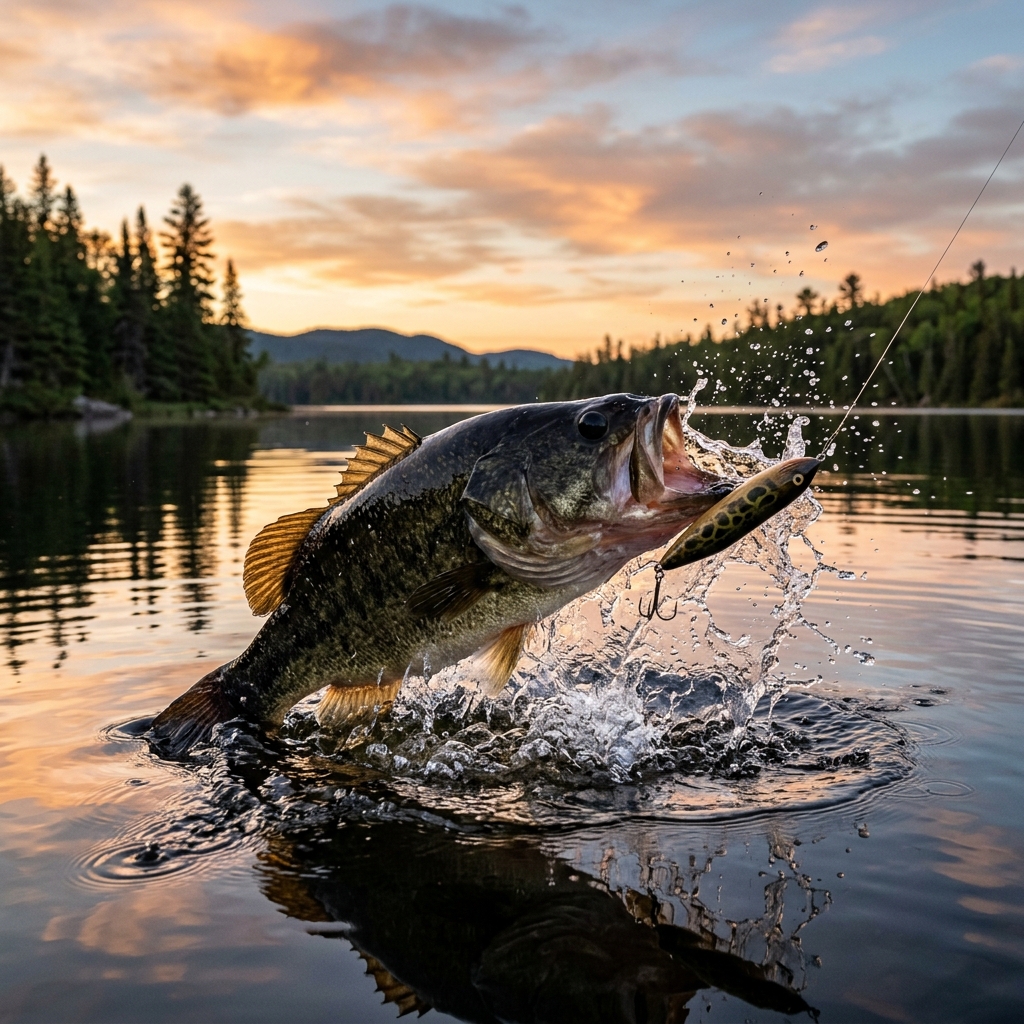
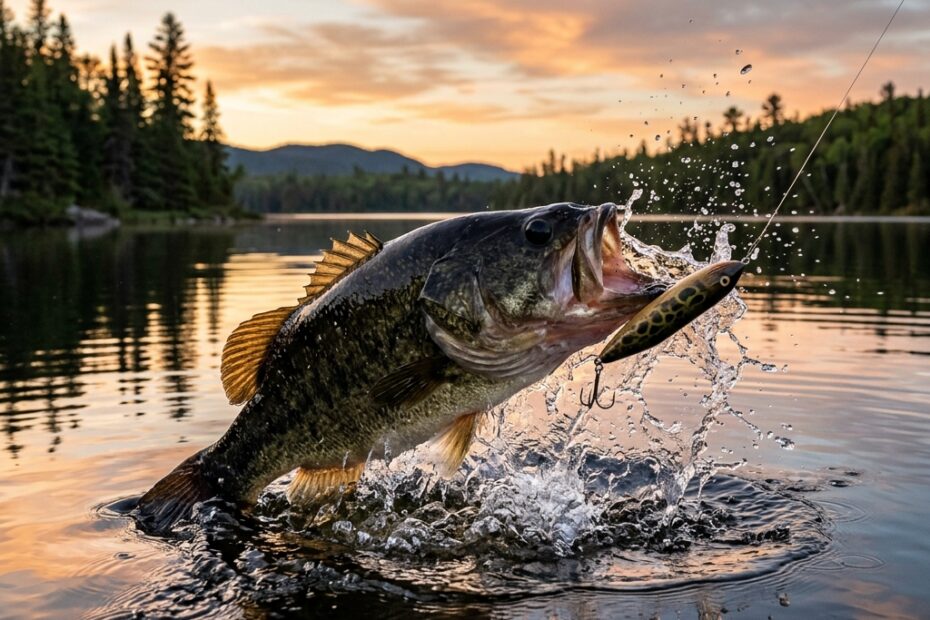
There is nothing in freshwater fishing that compares to the sheer adrenaline of a topwater strike. Watching a 5-pound largemouth bass absolutely detonate on a surface lure as the sun rises over a misty Canadian shield lake is the pinnacle of the sport. It’s visual, it’s violent, and when done correctly, it’s one of the most effective ways to target the largest bass in any given system.
However, throwing topwater lures is not a one-size-fits-all game. The biggest mistake novice anglers make is tying on a single topwater bait and throwing it regardless of the environmental conditions. To be consistently successful, you must understand the “Topwater Strike Zone” and how surface chop dictates the specific type of lure you should be throwing.
In this guide, we break down the three absolute best topwater lures for Canadian bass lakes, precisely categorized by the surface conditions they were engineered to dominate: The Chopper, The Walker, and The Popper.
⚡ Key Takeaways
- Chop dictates the bait: Glass calm water requires a subtle popper. A light ripple is perfect for a walking bait. Heavy chop requires the loud, aggressive thrashing of a plopper-style lure.
- Cadence is everything: Topwater fishing is about rhythm. If you lose your rhythm or cadence, the bass will often turn away from the bait.
- Delay the hookset: Never set the hook when you see the splash. Wait until you physically feel the weight of the fish on your rod. Setting on the splash usually results in pulling the bait away from the fish.
- Target the shade: In the heat of summer, bass will hold in shade pockets created by docks, overhanging trees, and lily pads. These are prime topwater targets even at mid-day.
- Use monofilament line: Fluorocarbon line sinks and will pull your topwater lure underwater, ruining its action. Always use buoyant monofilament or braided line for topwater fishing.
The Topwater Conditions Chart
Before we dive into the specific lures, you must understand the relationship between wave action and acoustic presence. A lure that works perfectly on glass-calm water will be completely invisible (acoustically) in heavy wind. Conversely, a loud, thrashing lure that excels in the wind will often terrify bass on a calm morning.
Review the infographic below to understand which category of topwater lure you should tie on based on the current surface conditions of your lake.
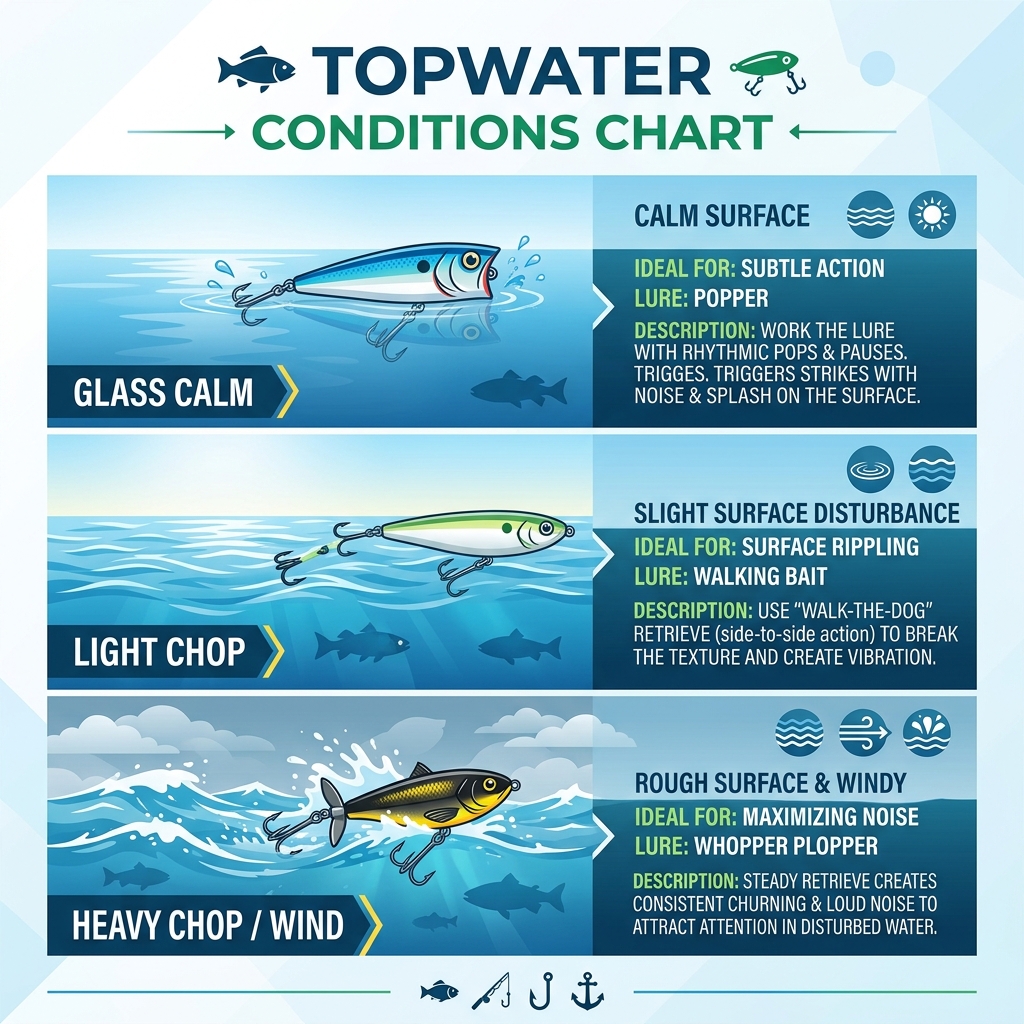
Match your lure to the surface conditions. The rougher the water, the louder the bait needs to be.
1. The Heavy Chop Specialist: River2Sea Whopper Plopper
Ten years ago, the Whopper Plopper revolutionized topwater fishing. Before its invention, fishing topwater in heavy wind or whitecap conditions was nearly impossible; standard lures simply couldn’t make enough noise to be heard over the crashing waves.
The Whopper Plopper solves this problem with its unique, rotating plastic tail. As you retrieve the bait on a steady, straight wind, the tail spins violently, creating a loud, low-frequency “plopping” sound and churning a massive wake of bubbles. This aggressive acoustic signature cuts through the ambient noise of a windy day, drawing bass from incredible distances.
In Canadian waters, the Size 90 is arguably the most versatile, appealing to both largemouth and large smallmouth bass. The “Bone” (solid white) color is legendary. It provides a stark silhouette against a dark, overcast sky (which often accompanies the windy conditions where this bait excels).
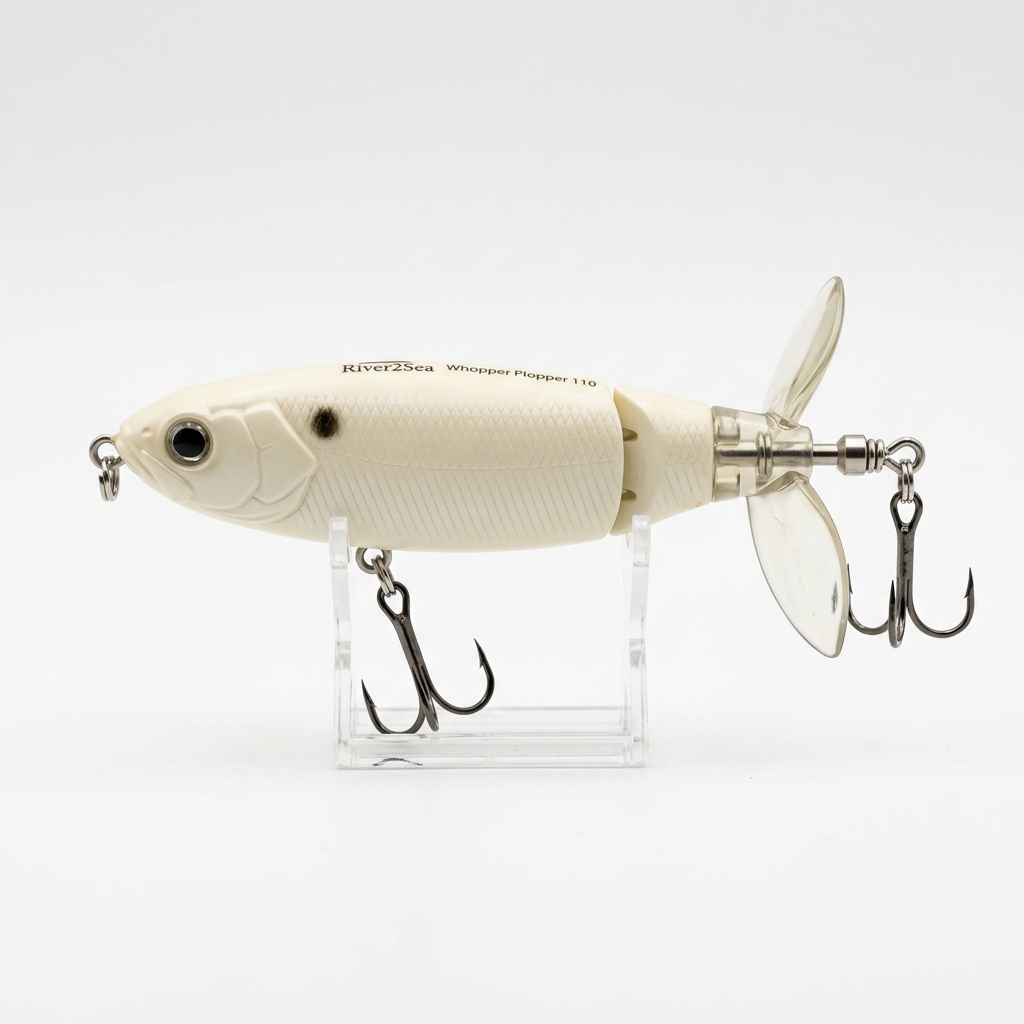
River2Sea Whopper Plopper (Size 90)
The ultimate search bait for covering water quickly, especially in windy or choppy conditions. The spinning tail creates a loud, low-frequency plop that bass cannot ignore. Easy to use: just cast and reel.
2. The Light Ripple Specialist: Heddon Super Spook Jr.
When there is a light ripple on the water—a “walleye chop”—the Whopper Plopper is often too loud, and a popper is too subtle. This is the exact scenario where a “Walk-the-Dog” style cigar bait reigns supreme.
The Heddon Super Spook Jr. is the gold standard for walking baits. By rhythmically twitching your rod tip downward while simultaneously reeling in slack, the bait glides from side to side in a mesmerizing zig-zag pattern. This motion perfectly mimics a wounded or dying baitfish struggling on the surface.
Mastering the “Walk-The-Dog” Action
The key to the Spook Jr. is establishing a rhythmic cadence. Watch the animation below to understand how the lure should glide left and right across the surface.
The “Jr.” size is heavily favored in Canada because it perfectly matches the profile of juvenile perch, shad, and shiners that northern bass feed on. It casts like a bullet, allowing you to cover vast flats of submerged milfoil or coontail weedbeds. When a bass strikes a Spook, it is rarely a subtle slurp; it is usually a violent, aggressive attack aimed at killing the struggling prey.
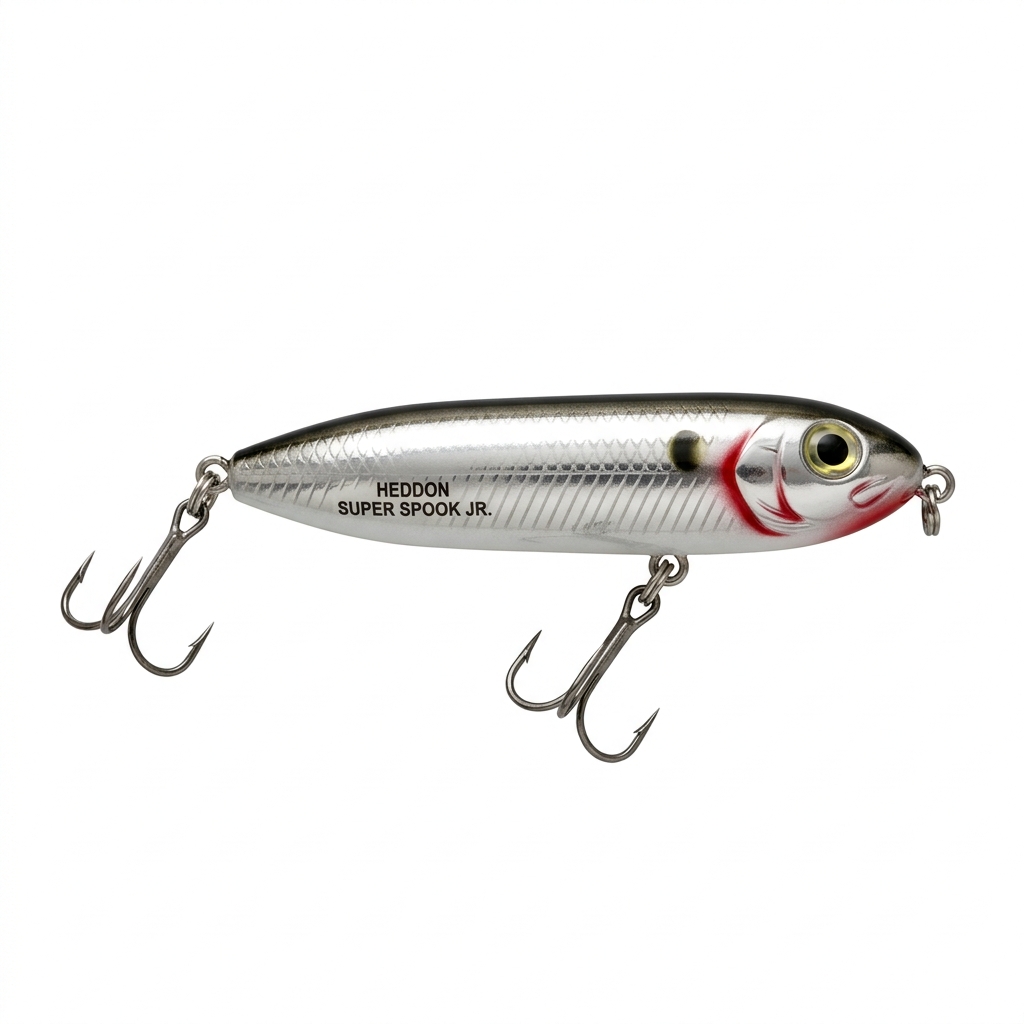
Heddon Super Spook Jr.
The quintessential walking bait. Requires a rhythmic rod twitch to achieve the side-to-side glide that drives bass crazy. Perfect for fishing over submerged weedbeds during a light surface chop.
📋 The Guide’s Log
I was guiding on the Rideau Canal system early last August. We had a slight breeze, perfect for a Spook. My client was working the bait beautifully over a 4-foot cabbage bed when a massive largemouth swiped at it and completely missed.
Instinctively, the client stopped his retrieve, letting the bait sit dead still. The bass never came back. I explained the golden rule of walking baits: If a fish misses the lure, do not stop the cadence! A wounded baitfish doesn’t freeze when it’s attacked; it panics and tries harder to escape. Keep walking the bait at the exact same rhythm, and 90% of the time, that bass will wheel around and annihilate it on the second pass.

3. The Glass Calm Specialist: Rebel Pop-R
When the sun is just beginning to crack the horizon and the lake is as flat as a mirror, aggressive lures will often spook fish rather than attract them. This is the domain of the classic popper.
The Rebel Pop-R features a deeply cupped, concave mouth. When you give the rod a sharp twitch, the cup catches the water, spitting it forward while producing a distinct “bloop” sound. This sound mimics a bluegill feeding on the surface or a dying baitfish gasping for air. Because the popper lacks continuous forward momentum, it is an exceptionally target-oriented bait.
You cast a Pop-R to a specific piece of cover—a dock piling, a lily pad point, or a submerged laydown log. You let it sit until the ripples disappear, give it two quick “bloops,” and then let it sit motionless again. The majority of strikes occur while the bait is sitting perfectly still. The feather-dressed rear treble hook breathes in the water during the pause, providing an irresistible lifelike trigger to cautious bass.
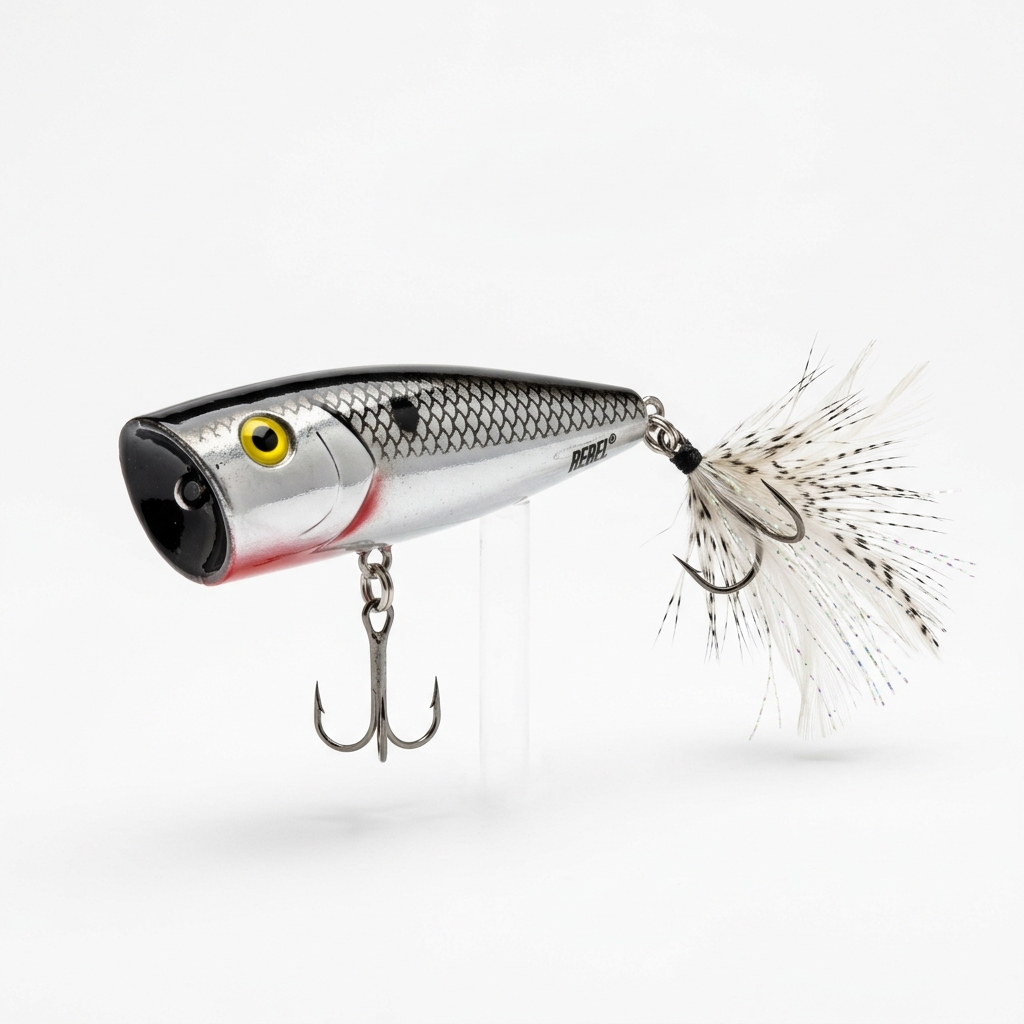
Rebel Pop-R
The original and still the best. The cupped mouth creates a subtle, spitting bloop that excels in dead calm water. The feather-dressed rear hook breathes during pauses, triggering strikes from wary bass holding tight to cover.
🍁 The Local Secret: Delaying the Hookset
The number one reason anglers lose fish on topwater is “setting on the splash.” When a massive bass erupts on your lure, human instinct screams at you to immediately yank the rod back. If you do this, you will rip the lure out of the water before the bass has actually closed its mouth around the hooks.
To fix this, implement the “Two-Second Rule.” When the explosion happens, keep reeling your slack and physically say the words “One… Two…” in your head. Do not sweep the rod until you feel the heavy weight of the fish pulling back against your line. By forcing this delay, your hookup ratio will skyrocket.
Topwater Gear: Rods and Line Setup
Fishing topwater lures effectively requires a specific rod and line setup. Because you are constantly manipulating the lure with your rod tip, heavy, cumbersome gear will lead to rapid fatigue.
The Rod: You need a rod with a fast or extra-fast tip to impart the sharp, crisp twitches required for walking baits and poppers, but it needs enough parabolic bend in the middle section to keep the fish pinned on the treble hooks. A 6’10” to 7’0″ Medium-Heavy casting rod is the sweet spot for Canadian bass.
The Line (CRITICAL): The most important factor in topwater fishing is your line choice. You absolutely cannot use 100% fluorocarbon line for topwater fishing. Fluorocarbon is dense and sinks. When the line sinks, it pulls the nose of your topwater lure underwater, ruining the action of Spooks and Pop-Rs. You must use either Monofilament (which floats) or Braided line. A standard professional setup involves 30lb braided main line tied to a 2-foot monofilament leader. The braid provides zero-stretch for solid hooksets at long distances, while the mono leader floats and prevents the limp braid from tangling in the front treble hook during a cast.
Disclaimer: Always consult official provincial regulations for specific waterbodies before fishing. This article contains affiliate links; as an Amazon Associate, CanadaFever earns from qualifying purchases. This content is for informational purposes and should not be considered professional outdoor survival advice.