

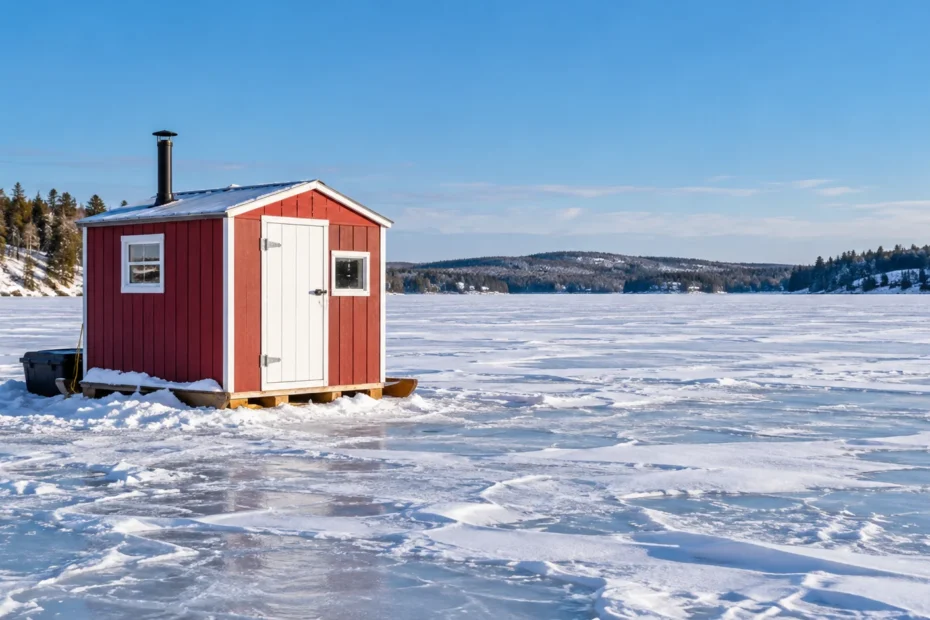
Published Lake Simcoe day-hut examples show CAD 75–80 per adult on ordinary weekdays and CAD 100 on weekends. Overnight stays, group minimums and included services change the bill; compare the party total for the same dates and hours.
These are online prices checked on 30 October 2026, not a province-wide average or a guarantee for your dates. The rate pages do not clearly label a future season. Confirm the applicable season, taxes, minimums, transport, bait and equipment charges before paying.
What published rates actually include
The following snapshots are prices shown on operator pages checked 30 October 2026. They may change, and neither page establishes availability for every future season. All figures are Canadian dollars. Check taxes, minimums and dates directly with the operator.
| Operator and trip | Listed rate | Included or conditions shown |
|---|---|---|
| Happy Go Fishing, Lake Simcoe or Couchiching day hut | $75 adult weekday; $100 adult weekend/holiday; $40 child under 13 | Hut, shuttle, heat and bait. A large weekend hut has a three-adult minimum or equivalent value. |
| Lucky’s Sons, Lake Simcoe day hut | $80 adult weekday excluding Family Day; $100 adult Saturday/Sunday; $40 child age 12 and under | Full day 8 a.m.–4 p.m., hut, transport and one bucket of minnows per hut. |
| Lucky’s Sons, luxury bungalow day hut | $800 flat per day | Listed for six to eight adults, with equipment rental and bait. Confirm any extra charges and deposit. |
Sources: Happy Go Fishing ice fishing and Lucky’s Sons rates. Their offers are different products, so a lower headline rate is not necessarily the cheaper trip. These are illustrative providers, not endorsements or an exhaustive list.
Overnight prices need a different comparison
A bungalow’s daytime occupancy is not its sleeping capacity. Lucky’s Sons lists its luxury day bungalow for six to eight adults at $800, but its overnight price section says a maximum of four sleepers. Dividing the overnight fee by eight would produce a misleading figure. Ask which people are actually allowed to stay overnight before comparing the cost with a hotel or a daytime hut.
The same rate page shows a $1,200 Friday–Sunday flat-rate line and $100 per adult or child for a one-night Sunday–Thursday stay. At four people, the first figure divides to $300 each for the stated booking; the weekday one-night figures produce $400 for the group before any additional charges. These are different durations and products. Confirm exactly which nights, taxes and inclusions the operator attaches to the quotation rather than interpreting a weekend line as a nightly rate.
Published overnight check-in begins at noon on a first-come basis, with checkout by 10 a.m. The page says staff are on the ice during the day and available by phone for emergencies at night. Ask when the shuttle runs, what happens after a delayed arrival and how the group contacts help. A quoted overnight stay does not necessarily give two full fishing days.
Children and minimum charges change the group total
Use the provider’s age rule for the date of the trip. Happy Go Fishing’s day-hut page says children under 13 pay $40; Lucky’s Sons says children 12 and under pay $40. Those descriptions cover the same ages in this example, but do not assume every operator uses that boundary. A child who turns 13 before departure may change the quote.
For two adults and two eligible children on an ordinary weekday, the published day rates give $230 at Happy Go Fishing and $240 at Lucky’s Sons before taxes or extras. Lucky’s Sons lists $100 for a child on its weekday overnight line, so carrying the $40 day-hut child rate into an overnight budget would understate the cost.
Minimum booking value is a separate check. Happy Go Fishing states a three-adult minimum or equivalent value for large weekend huts. Two adults at $100 plus one eligible child at $40 add to $240; a $300 minimum, where that specific large-hut condition applies, would increase the base charge. Ask whether a smaller hut or another permitted arrangement is available. Do not apply that minimum to an ordinary weekday or a different operator without confirmation.
What a guided price buys instead of a fixed hut
Compare a mobile guide’s price with the services your group needs. Happy Go Fishing lists guided outings at $550 solo, $650 for two people and $750 for three. Those divide to $550, $325 and $250 per person respectively; they are not the fixed day-hut prices. The advertised guided window is 7 a.m.–3 p.m., while its day-hut window is 8 a.m.–4 p.m.
Its description includes travel by snowmobile and fishing from a heated portable hut. Ask about the supplied equipment, the time spent transferring, the target species and what happens if the route or conditions change. A three-person guided quote may include help that an independent group does not need. For someone without suitable tackle or local experience, those services can be the reason to choose it. Compare the itinerary and support before using cost per person to rank the options.
Day hut, sleeper or guided outing?
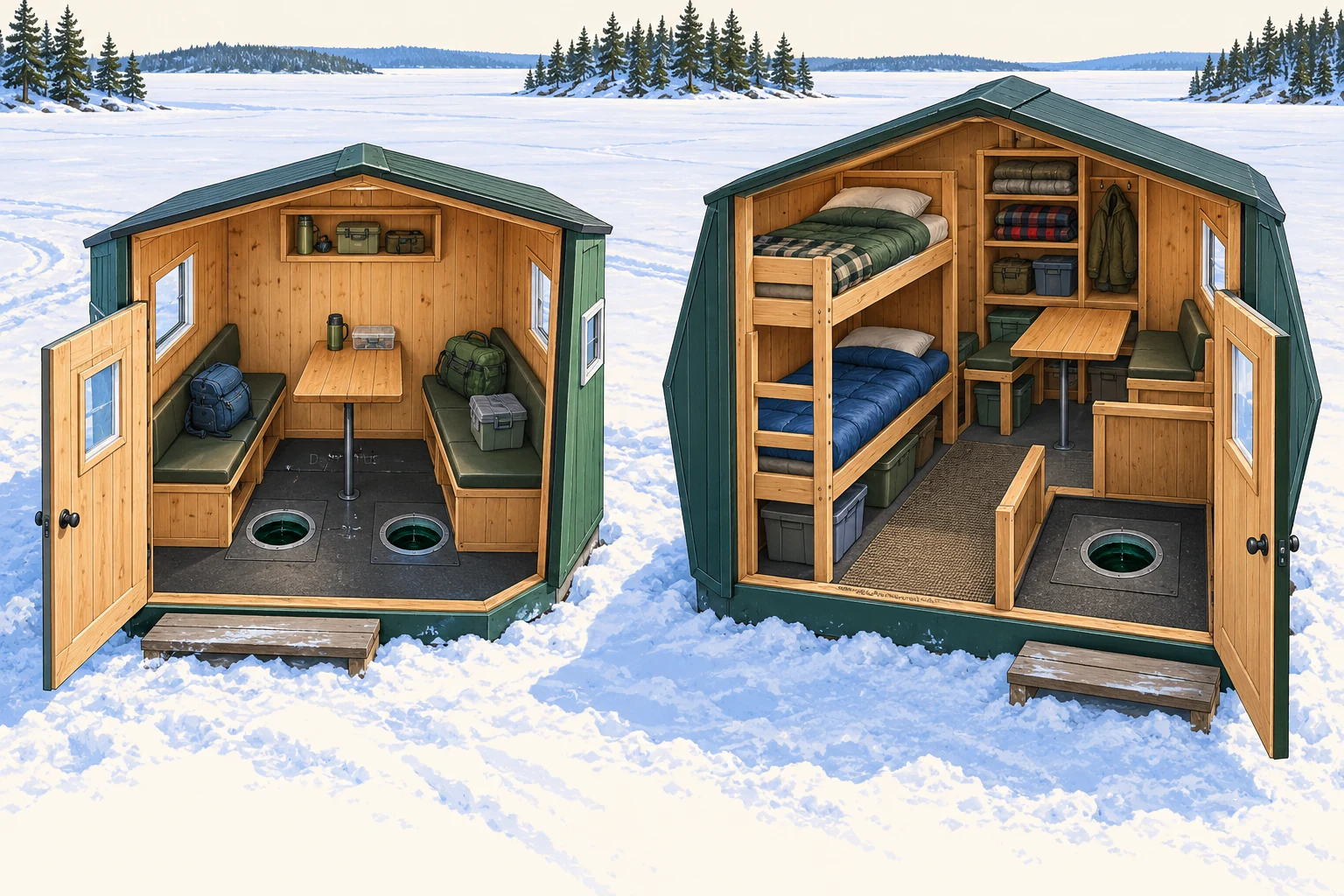
A heated day hut suits a group that wants shelter and a fixed fishing base. Ask for the actual hours, number of holes, seating, toilet access and whether someone checks in on guests. A day hut can be a simpler choice for a first trip, but the experience still depends on conditions and the operator.
A sleeper or bungalow adds accommodation on the ice. Its rate may cover a hut, night, group or weekend, and sleeping capacity is not always the same as daytime capacity. Ask about bedding, cooking, drinking water, toilets, heating, the overnight contact and the route back to shore. Clarify check-in and checkout times before comparing it with a full-day rental.
A guided mobile trip is a different service. You may pay for an individual guide, travel between spots, electronics and coaching rather than exclusive use of a fixed hut. Check party size, mobility requirements, equipment and how much of the outing is spent travelling. A guide cannot guarantee fish or predictable weather.
How to compare the full cost
- Write down the group and dates. Count adults and children under the operator’s own age rules. Check if a weekend, holiday or minimum group rate applies.
- Confirm what the base price buys. Ask if it is per person, hut, night or group, and whether the quoted hours include travel to the hut. Get taxes and mandatory fees in writing.
- Add what your group needs. Consider tackle rental, extra bait, food, parking, accommodation before the trip and transport to the meeting point. Do not add rental gear you already have without asking if your own is suitable.
- Ask about payment and changes. Is the deposit refundable if ice or weather prevents travel? Can dates be moved, and is the choice made by the operator? What happens if one member of the group cancels?
A quote with fewer inclusions can be a good fit if you already own the equipment. A higher price can be worthwhile if transport and gear are included. Compare the services you actually need, not just the advertised starting price.
Choosing a location and operator
Lake Simcoe and Lake Couchiching have operators offering fixed day huts and guided trips. They can be practical starting points when you want an established operator with published terms. Bay of Quinte and Lake Nipissing offer other trip choices, including guided and overnight formats, but facilities, open seasons and access vary between providers and areas. Ask the operator where the hut is placed, the meeting point and what happens if ice conditions prevent that route. A lake name alone does not tell you how long the transfer takes.
If a particular fish is the reason for the trip, check the current season, size and possession rules for the exact water and date. An operator’s advertising is not a fishing licence or a guarantee that retention is allowed. Before paying, ask whether the operator can accommodate your group’s mobility needs and whether children have properly fitted cold-weather and flotation equipment when the operator requires it.
Questions to send before booking:
- What is the total for our party, including tax, minimums and any mandatory transport?
- Which services and equipment are included, and what are the added charges?
- How will we travel to the hut? Is an alternative offered if conditions change?
- What are the deposit, cancellation, rescheduling and refund terms?
- For an overnight stay, how do we contact someone after hours, and what heating and carbon monoxide precautions are in place?
Guide’s Log: compare the usable day as well as the bill
For a hypothetical four-adult weekday booking, I would ask what the advertised eight-hour day actually covers. Lucky’s Sons publishes an 8 a.m.–4 p.m. window. That is a service window to clarify, rather than a promise that every minute is spent fishing. Meeting, loading and the shuttle all need to fit somewhere in the itinerary.
I would also compare the journey with the group’s realistic departure time. At an $80 adult base rate, eight scheduled hours divide to $10 per person per hour. If our available visit were only six hours, the same $80 would divide to about $13.33 per available hour. That calculation does not mean an operator accepts a late arrival, offers a shorter booking or refunds missed time.
Before paying, I would ask for the meeting time, departure procedure and expected return to shore. I would keep the address separate from the hut’s location and leave time for clothing, licence checks and the operator’s briefing. For an overnight booking, I would write the checkout time beside the return journey instead of assuming we could fish until late afternoon.
This is a planning example, not a trip report or a service I have tested. A timetable, quote and reservation cannot establish that an ice route is usable; changed conditions can still change the day.
Check the total for your party
Enter Canadian-dollar amounts from one written quotation. Start with the base amount for the whole party, whether you calculated it from adult and child rates or received a flat price. Enter any stated minimum booking value separately. Tax and extras are amounts from the quotation, not percentages calculated here.
The calculation uses the greater of your base amount and stated minimum, then adds extras and tax. Equal shares are rounded to cents for planning; the operator may still charge adults and children differently. Confirm party eligibility, dates, cancellation terms and actual tax with the operator. This tool does not make a reservation or determine the applicable tax.
Ice and hut safety
Ice strength is not uniform across a lake. Current, inlets, springs, cracks, snow cover and thawing weather can all make local conditions different from those nearby. No single measurement establishes that a whole route is safe. Check the Ontario ice-fishing page, the Canadian Red Cross ice-safety guidance and the operator’s current instructions before you leave. Conditions can change after arrival; follow closures and do not assume that a road or marked route is open.
Ask what emergency equipment and communications are provided, how to reach the operator, and what the plan is if the weather deteriorates. Let someone on shore know the itinerary and expected return. Wear clothing appropriate for prolonged exposure and ask the operator what safety equipment is required. A hut’s presence does not prove that an approach route is safe.
Health Canada says never to operate outdoor equipment that burns fuel, charcoal or wood inside a home, vehicle, camper or tent. Kerosene, propane or oil space heaters and lamps must not be used in enclosed areas unless specifically designed for indoor use. Ask the operator about the installed equipment, ventilation, maintenance and a carbon monoxide alarm certified for Canadian use. Ventilation or an alarm does not make an outdoor-only appliance suitable indoors. Do not bring an extra heater or cookstove. Read Health Canada’s carbon monoxide guidance.
Licences, registration and removal
Ontario does not set one ice-fishing season: species seasons and local rules apply regardless of whether you fish from ice, boat or shore. Most anglers need an appropriate Ontario fishing licence, with exceptions depending on eligibility. Check the current Ontario rules, including licence requirements, open seasons, line rules and local restrictions. The Ontario fishing licence guide can help you prepare, but the provincial rules control.
Hut registration and removal requirements depend on the Fisheries Management Zone and hut type. If you rent, ask who handles the operator’s registration and removal obligations; do not infer a universal deadline from the lake name. Ontario publishes zone-specific dates and requirements on its ice-fishing page. An operator may remove huts earlier when conditions require it.
What to bring
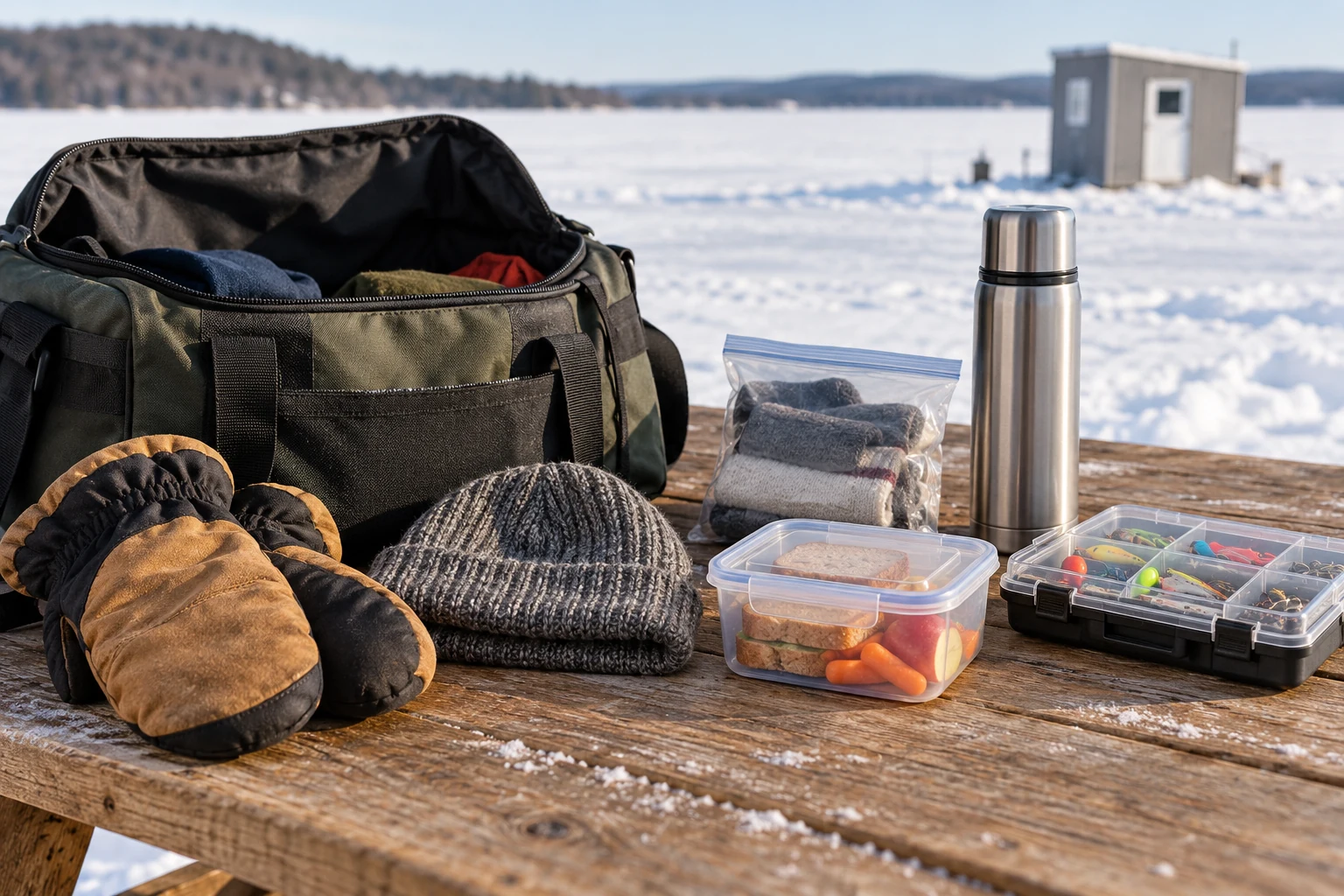
Confirm first what the operator supplies. A starting list for your party includes:
- An appropriate licence and identification for each angler who needs them.
- Insulated waterproof layers, gloves and spare dry clothing.
- Food, water, any medication and a charged phone protected from the cold.
- Bedding if needed for an overnight hut; confirm toilet access before booking.
Ice picks and other safety gear may be appropriate; ask the operator about its requirements and how to use the equipment before the trip.
If tackle is not included, compare the Canada ice-fishing rod guide and the ice-fishing gear guide. Confirm the intended species, tackle and legal bait for the water before purchasing. If you intend to bring a shelter of your own rather than rent a hut, see the shelter guide.
A personal drink bottle for a hut visit
Affiliate links: We may earn a commission from qualifying purchases, at no extra cost to you. We have not field-tested these items. Check the selected model, current price and delivery options on Amazon.
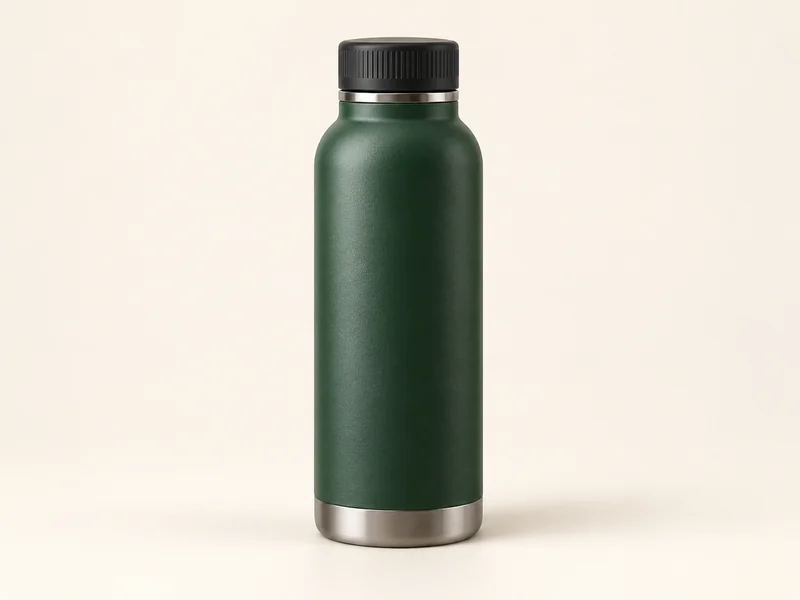
For carrying a personal drink
THERMOS Stainless King Beverage Bottle
- Forty-ounce vacuum-insulated beverage bottle in Midnight Blue.
- A personal drink container to compare when an operator does not supply drinks.
- Check filled weight and cleaning access, and follow the hot-liquid instructions.
Ask whether drinks are supplied before buying extra equipment. The listed 40 oz / 1.2 L bottle has a cup-style lid; check filled weight and bag space, and follow the maker's carrying, pouring, cleaning and hot-liquid instructions.
Check this drink bottle on AmazonProduct and care sources: Manufacturer’s product and care information
Frequently asked questions
Is a hut rented per person or per hut?
Both models exist. Check minimum party charges and whether children pay a different rate. Compare the entire group total for the same trip length and inclusions.
Does a hut rental include fishing gear?
Sometimes. An operator may provide a heated hut, transport and bait while charging extra for rods or equipment. A guided trip may bundle more gear. Confirm the exact package before booking.
Can I drive my own vehicle to the hut?
Ask the operator about transport and follow current access instructions. A thickness reading at one location does not establish that the route is suitable for a vehicle. Never assume an operator permits guests to drive onto the ice.
What happens if the ice is unsuitable?
Policies differ. Ask before paying whether the operator cancels, moves dates or refunds the deposit when the ice or weather prevents the trip. Get the terms in writing.
Is an Ontario fishing licence included?
Do not assume it is. Check your eligibility and obtain the appropriate licence before fishing. The operator can explain its package, while Ontario’s published rules determine the requirements.