

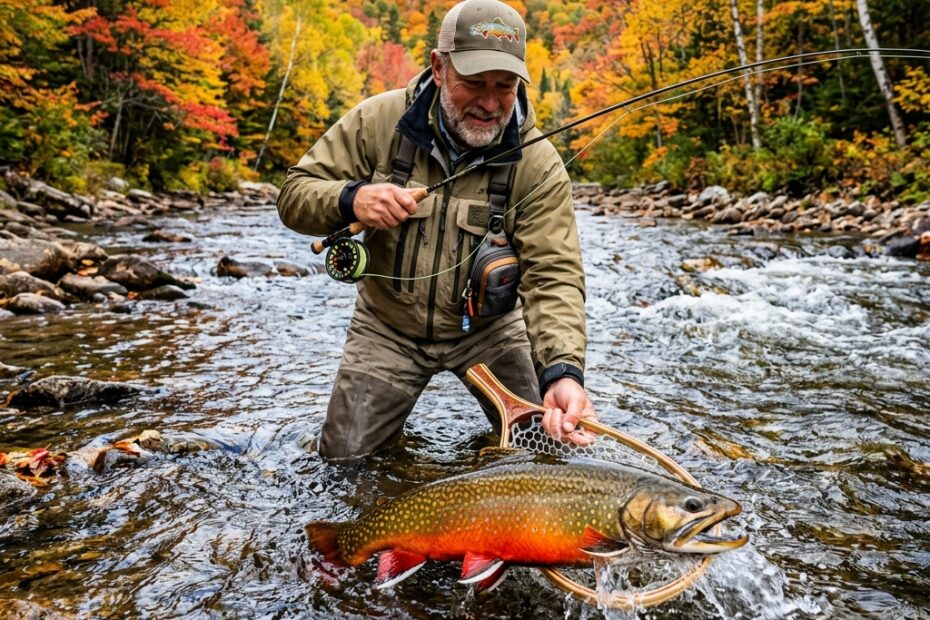
Discover the best guided brook trout trips in Quebec. Expert outfitter guide to fly-in camps in Nunavik, wild shield rivers, licenses, and top gear.
- Use Guided Brook Trout Trips in Quebec to match destination, season, access, and budget to the kind of trip you actually want
- Check licences, local rules, travel logistics, weather, and booking windows before locking in dates
- Compare locations by practical fit: target species or activity, remoteness, services, safety, and backup options
Bottom line Guided Brook Trout Trips in Quebec becomes easier when you choose the destination around timing, access, rules, and your real trip style
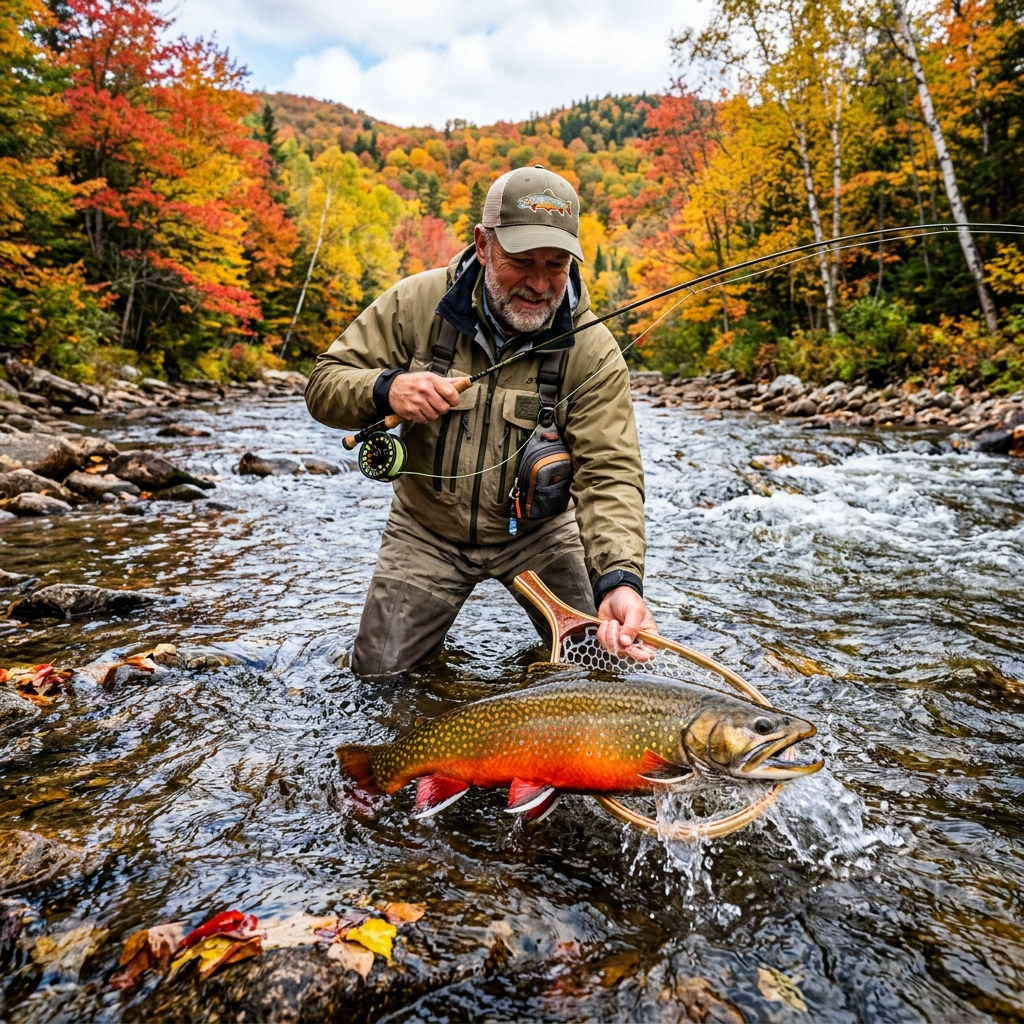
For anglers seeking wild brook trout (Salvelinus fontinalis)—known locally as speckled trout or truite mouchetée—Quebec is the ultimate destination in North America. The province’s massive network of glacier-carved rivers, remote lakes, and subarctic estuaries contains some of the healthiest self-sustaining populations of wild brook trout on earth. In the far north, these fish reach legendary sizes, with trophies regularly exceeding 5, 8, and even 10 pounds.
Because the premier trophy waters are located in the roadless wilderness of the Canadian Shield or the subarctic tundra of Nunavik, planning a successful excursion requires outfitting. A guided trip not only solves the complex logistics of floatplane travel and remote logistics, but also provides access to “exclusive rights” waters managed under Quebec’s unique outfitting system. In this comprehensive guide, we break down the best regions for guided brook trout trips in Quebec, the top outfitting camps, essential tackle, licensing regulations, and conservation protocols.
⚡ Key Takeaways: Quebec Guided Brook Trout
- The Outfitting System: Quebec has over 500 licensed outfitters (pourvoiries). Many hold “exclusive rights” to fish their lakes, guaranteeing zero outside pressure.
- Felt-Sole Ban: To prevent the spread of the invasive alga didymo (rock snot), felt-soled wading boots are strictly banned in Quebec salmonid rivers.
- Nunavik Sea-Runs: The far north of Quebec (above the 55th parallel) offers world-class fly-in fishing for sea-run brook trout that feed heavily in the ocean and return to rivers as massive, chrome-sided giants.
- License Requirements: All anglers must purchase a provincial sport fishing license online at
quebec.ca. Additional daily access fees apply in ZECs and wildlife reserves.
Top Regions for Guided Brook Trout Trips in Quebec
Quebec’s vast geography is divided into distinct zones, each offering a different style of brook trout fishing. Depending on whether you prefer small-stream wading, large wilderness rivers, or remote subarctic lakes, you must target the correct region.
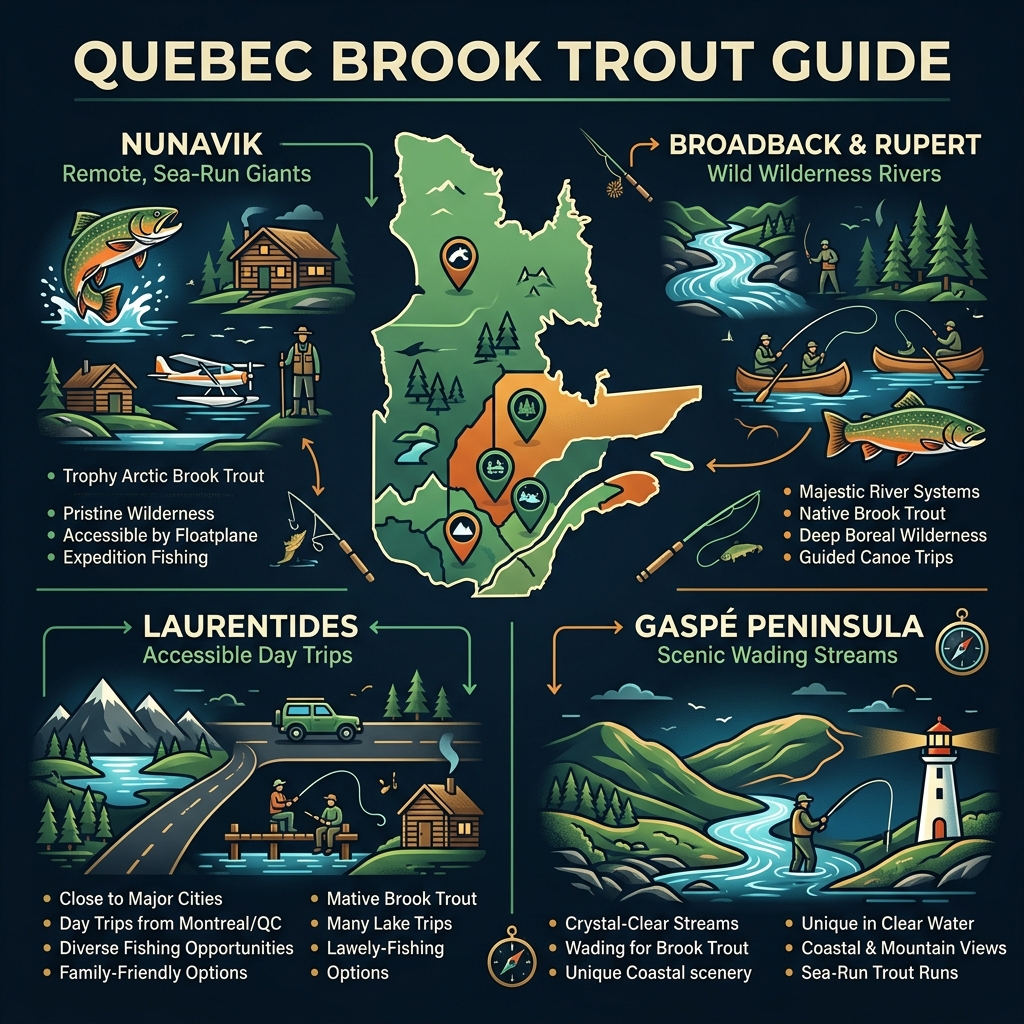
Understanding these distinct regions is critical to matching your expectations with the right outfitter:
1. Nunavik (Subarctic Quebec)
Nunavik is the subarctic tundra region of Quebec, lying north of the 55th parallel. Accessible only by scheduled flights to regional hubs and subsequent floatplane charters, this roadless wilderness is the crown jewel of trophy trout fishing. The rivers draining into Ungava Bay and Hudson Bay, such as the Leaf River (Rivière aux Feuilles), are home to massive, anadromous (sea-run) brook trout. These fish spend their summers feeding on krill and sand lance in the ocean, growing rapidly before returning to native rivers. Nunavik brookies routinely exceed 5 pounds, with 8 to 10-pound monsters caught every season on fly gear.
2. The Broadback & Rupert Rivers (Jamésie Region)
Flowing through the boreal forest of western Quebec into James Bay, the Broadback and Rupert Rivers are famous for producing giant, non-anadromous brook trout. These rivers are characterized by massive rapids, deep pools, and boulder-strewn runs. Because the water is highly nutrient-rich, the trout feed on abundant caddis, stonefly hatches, and baitfish. Wading and drifting these heavy rapids requires professional guides who know how to navigate the current safely. The fish here are exceptionally strong, built to fight in heavy currents, and are best targeted with streamers and large nymphs.
3. Réserve Faunique des Laurentides (Sépaq)
For anglers who want world-class wild brook trout without the high cost of a subarctic fly-in charter, the Laurentides Wildlife Reserve is unmatched. Located just north of Quebec City, this massive protected public territory is managed by Sépaq, the provincial parks agency. Laurentides features thousands of lakes and rivers that have been strictly managed for wild brook trout conservation for over a century. Sépaq offers guided day packages and lodge stays. Anglers can fish remote lakes using freighter canoes, or wade pristine streams. It is an excellent region for dry-fly purists who enjoy matching the hatch during the early summer insect emergences.
4. The Gaspé Peninsula
The mountainous Gaspé Peninsula in eastern Quebec is famous for its crystal-clear Atlantic salmon rivers, but its upper watersheds hold exceptional populations of wild brook trout. Wading these scenic, clear gravel rivers (such as the Bonaventure or York) in the late summer is a classic angling experience. Because the water is exceptionally clear, sight-casting with dry flies is the standard technique. The trout are highly visual and require long leaders, fine tippets, and precise presentations.
The Guide’s Log
We were anchored at the tail-end of a heavy rapid on the Broadback River in late August. The sun was dipping below the spruce line, and a steady hatch of large slate-winged caddisflies was beginning to fill the air. The river water was a cool 12°C. Right along the seam where the fast rapid met a slow-moving boulder eddy, a large, dark snout rose quietly, leaving a subtle ring on the surface.
I tied an Elk Hair Caddis dry fly to a 9-foot leader tapering to a 4X fluorocarbon tippet. Casting upstream, I mended the line to ensure a perfectly natural, drag-free drift. The fly floated down the foam line, crossing the seam. Just as it entered the eddy, the water bulged. The dry fly vanished. I set the hook, and the water erupted as a broad, bronze-and-red flank thrashed at the surface.
Unlike a rainbow trout, this fish didn’t jump. It bolted straight for the deep, fast current, using its deep body like a sail against the river. For fifteen minutes, I fought the heavy weight against the rapids. When my guide finally slid the landing net under the fish, we were looking at a stunning 6.5-pound male brook trout. Its back was covered in cream-colored marbling, and its spawning belly was a brilliant crimson orange. That dry-fly rise on a wild river is the pinnacle of Quebec angling.
The Best Guided Brook Trout Outfitting Camps in Quebec
Quebec’s outfitting industry is highly structured. When booking, look for outfitters that hold exclusive fishing rights. Here are the four premier guided brook trout outfitting camps in Quebec:
1. Leaf River Outfitting (Nunavik)
Leaf River Outfitting operates in the remote tundra of Nunavik. This fly-in lodge is world-famous for its massive, sea-run brook trout. Anglers fish the Leaf River and its main tributaries, where trout migrate from the ocean to spawn. The lodge operates on the “American Plan” (all-inclusive with gourmet meals, lodging, and professional guides). Guests fish from custom-built, heavy aluminum jet boats to reach remote pools, or wade the gravel bars. It is a premier destination for fly fishermen targeting true subarctic monsters.
- Location: Leaf River, Nunavik (Northern Quebec)
- Access: Charter flight from Montreal to Kuujjuaq, followed by floatplane to the lodge
- Target Size: 4 to 10 pounds (Trophy Sea-Run Brook Trout)
- Best Technique: Swinging large streamers or skating dry bombers
2. Mistassini Outfitting Camps (Rupert & Broadback Rivers)
Managed by the Cree Nation of Mistassini, these outfitting camps hold exclusive rights to some of the most famous brook trout rivers in Canada. Anglers stay in rustic log cabins situated right next to the rapids of the Rupert or Broadback Rivers. The Cree guides are legends of the north, possessing generations of knowledge about the river structures, currents, and trout holding positions. Wading is highly productive here, with anglers casting large streamers into current seams.
- Location: Rupert and Broadback Rivers, Jamésie Region
- Access: Drive to Chibougamau, followed by floatplane transfer
- Target Size: 3 to 7 pounds (Wild River Brook Trout)
- Best Technique:Articulated streamers and heavy nymphs fished under indicator
3. Sépaq Camp Giroux (Réserve Faunique des Laurentides)
Camp Giroux is a premium lodge managed by Sépaq in the heart of the Laurentides Wildlife Reserve. The lodge is easily accessible by road from Quebec City, making it a highly convenient option. Anglers have access to exclusive, protected lakes where only a limited number of rods are allowed per day. The lakes are fished using classic wooden freighter canoes equipped with electric outboards. Professional Sépaq guides assist with locating structures, navigating the lakes, and matching the hatch.
- Location: Laurentides Wildlife Reserve, Central Quebec
- Access: 1.5-hour drive north of Quebec City
- Target Size: 1.5 to 4 pounds (Wild Shield Lake Brook Trout)
- Best Technique: Matching the dry-fly hatch (Mayflies, Caddisflies)
4. Pourvoirie Lac Moreau (Charlevoix Region)
Situated in the spectacular Charlevoix region, Lac Moreau is a luxury outfitter holding exclusive rights to a network of remote lakes. The lodge offers five-star accommodations, gourmet French-Canadian dining, and professional guiding. Anglers fish the crystal-clear lakes for wild, native brook trout. Because the water is exceptionally clear, sight-fishing with light tackle is highly productive. The outfitter is an excellent choice for couples or families who want world-class trout fishing combined with premium lodging comfort.
- Location: Charlevoix Region, Eastern Quebec
- Access: 2.5-hour drive from Quebec City
- Target Size: 1 to 3 pounds (Native Speckled Trout)
- Best Technique: Ultra-light spinning spinners or light fly-casting
Interactive Simulator: Quebec Brook Trout Hatch Matcher
Choose your fly and cast it into the river seam. The wild brook trout is holding in the slow eddy behind the boulder.
Interactive Simulator: Drift a dry fly or swing a streamer to trigger a strike from this wild brook trout.
Essential Tackle & Gear for Quebec Brook Trout
Wild brook trout are active predators, but they are also easily spooked in Quebec’s crystal-clear waters. Depending on whether you prefer spin fishing or fly fishing, your tackle must be adapted to remote river currents and subarctic shield lakes.
Traditional Spin Fishing Gear
For spin anglers wading river rapids or casting lakeshores, an ultra-light or light power spinning rod is the standard tool. A 6’0″ to 6’6″ rod with a fast action allows for precise casting around boulders and logs. Pair it with a 1000 or 2000-size spinning reel spooled with 4 lb to 6 lb fluorocarbon or monofilament line. Braided line can be used (8 lb test), but you must tie a 6-foot leader of 6 lb fluorocarbon to prevent spooking trout in clear pools.
For lures, brook trout love flash and erratic vibrations. Inline spinners, such as the classic Mepps Aglia, are legendary trout catchers. Spoons that wobble and dart randomly are equally effective, particularly in gold, copper, and fluorescent red patterns.
🎣 The Stream Legend
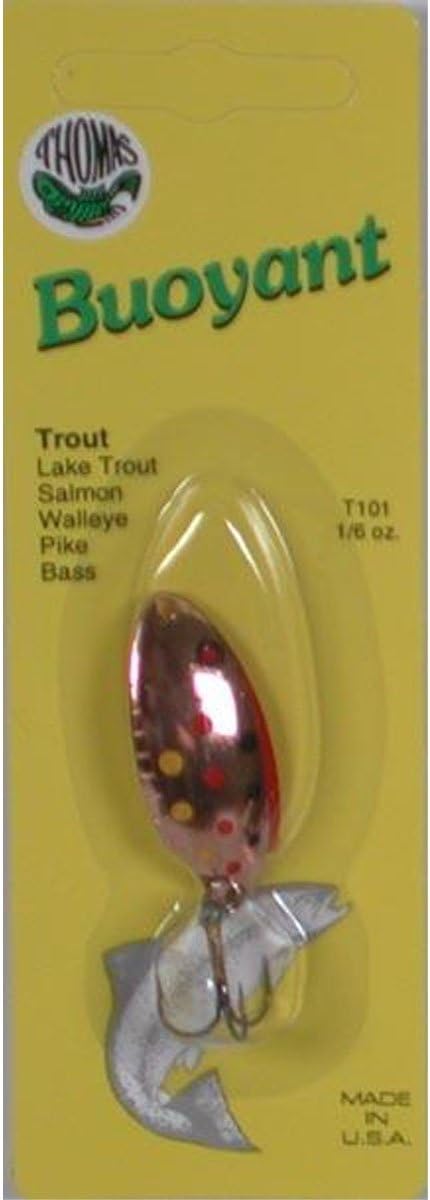
Thomas Buoyant Spinner Spoon (1/6 oz, Gold)
The Thomas Buoyant is an erratic-wobbling spoon that mimics a frantic, injured minnow. Extremely effective in small streams and lakes, this 1/6 oz lure produces a rapid side-to-side flutter that triggers strike responses from brook trout. Plated in gold, it cuts through dark pool shadows and murky waters, making it an essential addition to any Quebec outfitter’s tackle box.
Affiliate Disclaimer: As an Amazon Associate, CanadaFever earns from qualifying purchases. This helps support our Canadian outdoor research at no extra cost to you.
🎣 The Deep Pool Sinker
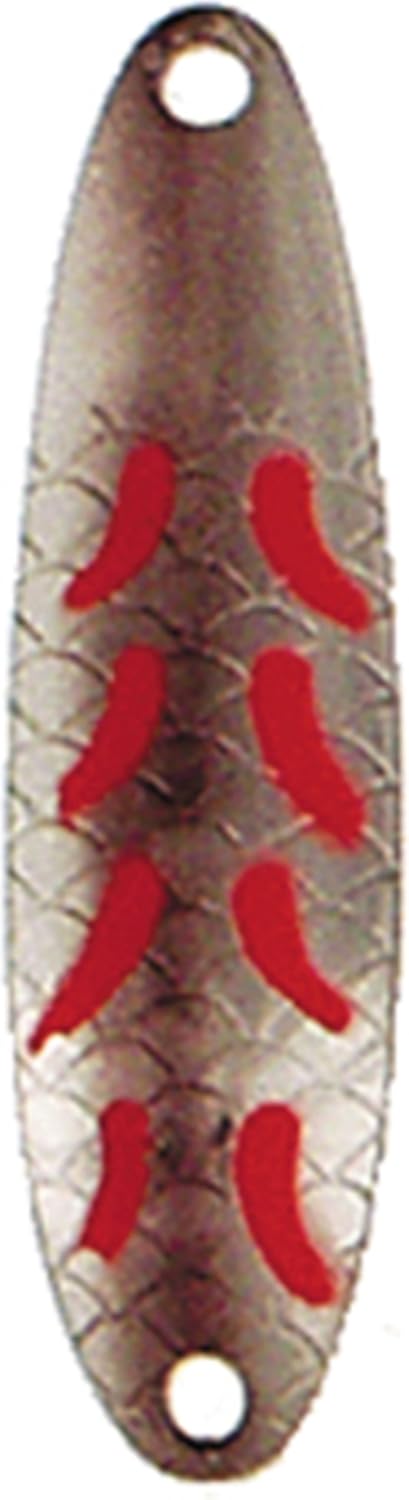
Luhr-Jensen Krocodile Spoon (1/4 oz, Hammered Chrome Red)
For reaching trout that hold in deep river pools or beneath lake thermoclines during hot summer days, the Luhr-Jensen Krocodile is unmatched. The heavy-gauge metal construction casts like a bullet and sinks rapidly to the target zone without tumbling. Its classic hammered chrome finish with a neon red stripe mimics injured shiners and is a proven Canadian standard.
Affiliate Disclaimer: As an Amazon Associate, CanadaFever earns from qualifying purchases. This helps support our Canadian outdoor research at no extra cost to you.
Fly Fishing Gear
Fly fishing is the preferred method for wild brook trout in remote Quebec rivers. Because river currents can be heavy and subarctic winds are common, having the correct rod weight is essential:
- The Rod: A 9-foot, 5-weight or 6-weight medium-fast to fast action fly rod is the standard. For remote Nunavik rivers where trophy trout exceed 6 pounds and wind is constant, a 7-weight rod is highly recommended to cast large, wind-resistant flies.
- The Reel: A fly reel with a smooth, sealed disc drag system is critical to prevent breaking light tippets when giant wild trout charge into fast rapids.
- Fly Lines: Carry a weight-forward floating line (WF) for presenting dry flies and mouse patterns. A separate spool with a sink-tip line (sink rate 3 to 5 ips) is mandatory for swinging streamers through deep river runs.
- Flies: For surface action, skate deer-hair mouse patterns, bombers, and large caddis patterns. For deep-river presentations, cast weighted Woolly Buggers, Muddler Minnows, and articulated streamers in olive, black, and white.
Quebec Fishing Regulations, Licenses, and Conservation
Quebec’s wilderness waters are pristine, but they are also fragile. Brook trout grow slowly in cold northern streams, requiring decades to reach trophy sizes. To protect these populations, the Ministry of the Environment, the Fight Against Climate Change, Wildlife and Parks (MELCCFP) enforces strict rules.
Quebec Sport Fishing Licenses
Every angler in Quebec must carry a valid provincial sportfishing license. Licenses can be easily purchased and printed online through the official Quebec government website. Options include annual resident licenses, as well as 1-day, 3-day, or 7-day non-resident permits. To understand how licensing rules compare across provinces, refer to our comprehensive guide on how to obtain a fishing license in Canada.
ZECs and Managed Territories
Much of Quebec’s wilderness is managed under ZECs (Zones d’Exploitation Contrôlée) or public wildlife reserves. When entering a ZEC, you must register at the station, pay a daily fishing access fee, and report your catch upon departure. These registration fees fund trail upkeep, biological surveys, and warden enforcement.
Quebec Brook Trout Conservation Rules
- Felt Wading Boot Ban: Felt soles trap microscopic organisms like didymosphenia geminata (didymo or rock snot), which forms thick mats that suffocate insect hatches. Use rubber soles with steel studs.
- Barbless Hook Mandate: In all trophy outfitter areas, hooks must be barbless. Pinch your barbs flat before casting to minimize handling stress and tissue damage.
- Proper Handling: Wild trout have a protective slime coat. Always wet your hands before touching them. Support the belly horizontally, and never suspend a large trout by its gill plates. Review our guide on how to unhook a fish safely.
- Catch & Release: Release all brook trout exceeding 18 inches to protect the genetic breeding stock. For detailed ethical handling rules, check out our guide on how to humanely kill a fish if keeping for consumption.
To compare licensing formats and regulations with adjacent zones, consult our Ontario Fishing License Guide.
Book a Guided Quebec Adventure
Planning your trip to Quebec? Enhance your wilderness fishing vacation with top-rated guided outdoor tours, river excursions, and local history walks across the province.
CanadaFever is a Viator Partner (ID: P00210641). We may earn a commission if you book through our links, at no extra cost to you.
Frequently Asked Questions (FAQ)
When is the best season for guided brook trout trips in Quebec?
The peak season runs from early June to mid-September. June is prime for matching the hatch on central lakes and rivers when insect activity is highest. Late August and September are best for trophy river trips, as the spawning colours emerge and trout migrate up river channels, feeding aggressively.
Are felt-soled wading boots really banned in Quebec?
Yes. Felt soles hold moisture and microscopic organisms, making it easy to transport invasive species (like didymo or spiny water fleas) from one watershed to another. Wading boots must be equipped with rubber soles; metal studs can be added for traction on slippery Shield rocks.
What is an “exclusive rights” outfitter in Quebec?
In Quebec, certain outfitters (pourvoiries) are granted exclusive commercial fishing rights to a specific territory by the government. This means only guests staying at the lodge are legally allowed to fish those lakes and rivers, ensuring zero angling pressure and pristine trophy management.
How large do sea-run brook trout grow in Nunavik?
Sea-run brook trout in subarctic Nunavik grow very large due to abundant marine proteins. They average between 4 and 6 pounds, but specimens weighing 8 to 10 pounds are caught every season on major systems like the Leaf River.
Do I need a different license to fish in ZECs?
You need your standard provincial Quebec fishing license first. When fishing inside a ZEC (Controlled Harvesting Zone), you must register at the reception office, purchase a daily access card (usually $20–$40 CAD), and report your catch upon departure.
Conclusion
From the subarctic giants of Nunavik to the scenic mountain streams of the Gaspé, Quebec is a world-class playground for brook trout fishing. By booking an outfitter with exclusive fishing rights, using high-quality spin or fly tackle like the Thomas Buoyant, and strictly adhering to local conservation regulations, you will experience the premier wild trout fishery in North America.
Prepare your wading gear, squeeze those barbs flat, and book your wilderness guided trip to hook the speckled trout of a lifetime in the spectacular wild waters of Quebec.
Affiliate & Expert Disclaimer: CanadaFever is a participant in the Amazon Services LLC Associates Program and a Viator Partner. We may earn a commission if you purchase or book through our links, at no extra cost to you. This content is intended for informational purposes and reflects field-tested tactics. Always adhere to local fishing regulations and safe boating practices. (Assisted by AI for research formatting).