

Compare five Saskatchewan lake trout lodges by charter access, guiding, comfort and package inclusions, with current rules and practical booking questions.
- Compare five real lodge options
- Confirm the actual charter gateway
- Check lake rules and release policy
Bottom line Choose the fishing day and travel package that fit your group.
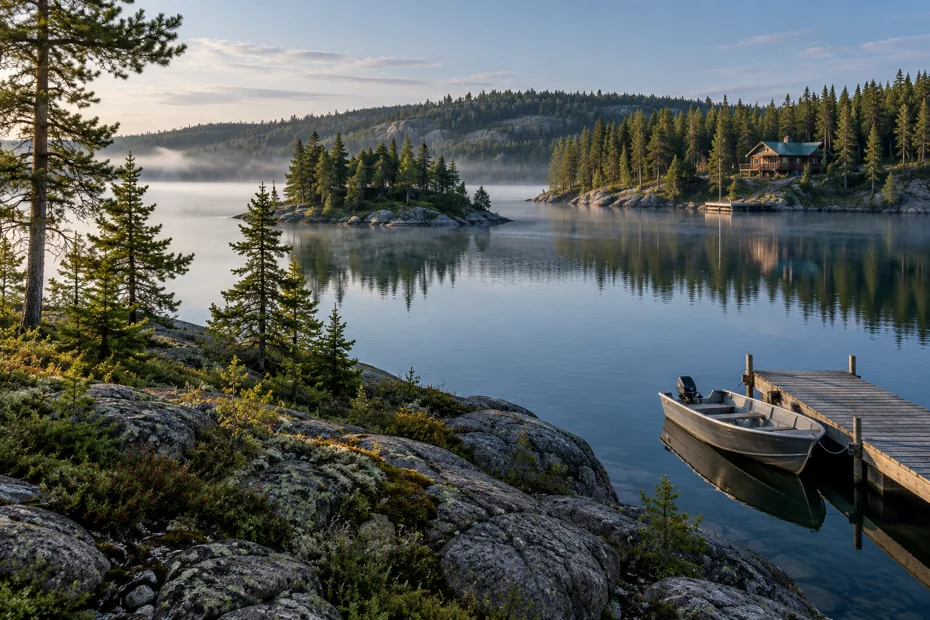
Saskatchewan lake trout lodges put you beside cold northern water, but the right booking depends on much more than the biggest fish in a photograph. Start with your preferred fishing day, the actual transfer route and the services your group needs.
This guide compares five lodges with published trip information, then explains how to turn a shortlist into a written quote. The comparison is editorial research, not a ranking based on personal stays, measured catch rates or guaranteed trophy fish.
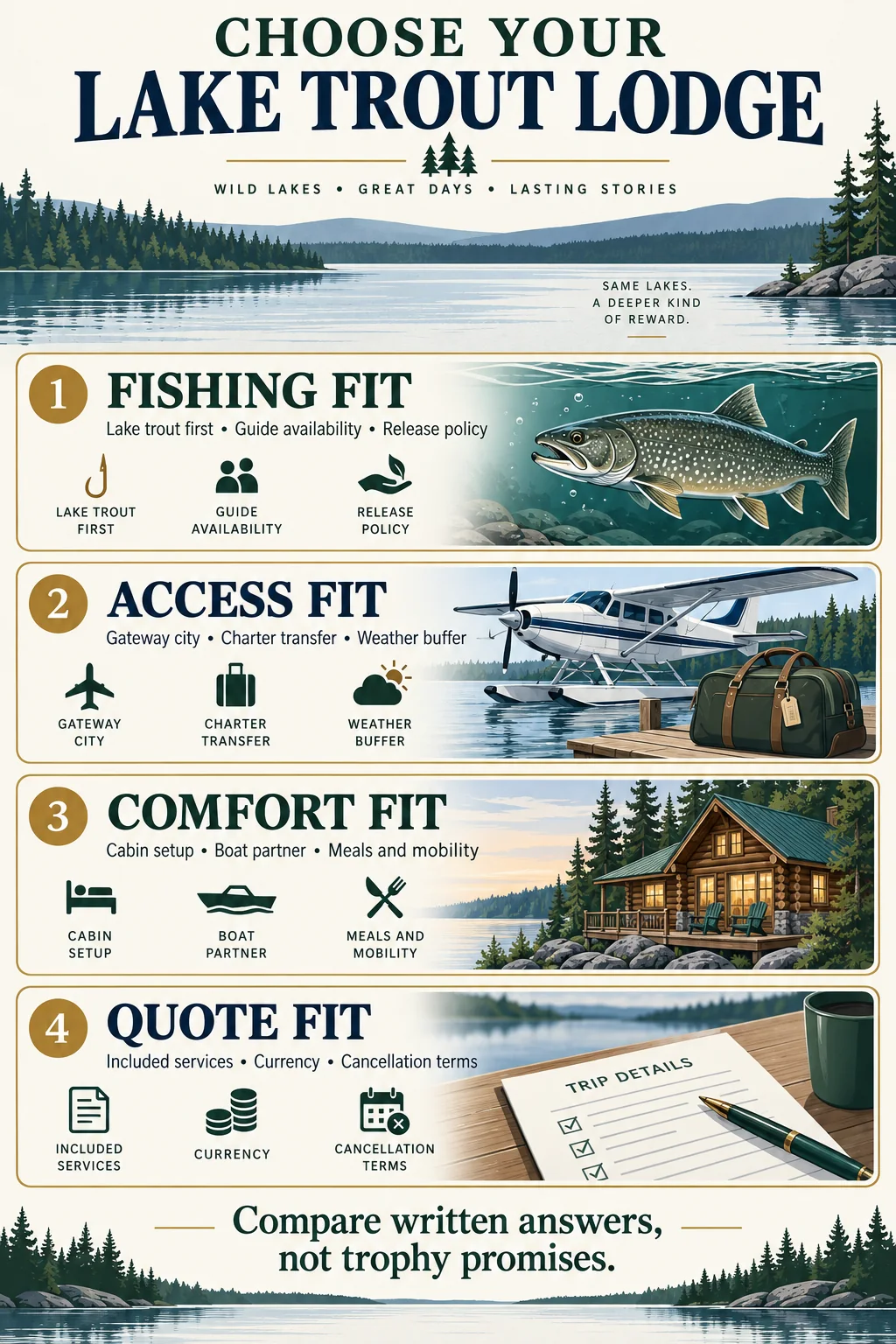
A remote lodge sells a chain of services: the flight, the cabin, the boat, the guide and the return journey. A good shortlist makes each link visible. Our broader all-inclusive fishing lodge comparison helps if your group is still choosing between provinces or species.
Early gear decision: if taking personal rods, compare a rigid case after confirming charter limits. View the Plano Airliner case on Amazon.com. Supplied lodge rods may save weight. As an Amazon Associate, CanadaFever earns from qualifying purchases.
Compare Saskatchewan lake trout lodges by the trip you want
The five options below all advertise lake trout fishing. They are not interchangeable: a full-service lodge, a portage-water experience and a self-guided tent package place very different demands on the traveller. Availability for your dates remains a direct enquiry.
| Lodge and water | Published trip format | Best question to ask |
|---|---|---|
| Wollaston Lake Lodge — Wollaston Lake | Guided cabin package; 2026 charter from Winnipeg | Can our guide prioritize lake trout, and which extras are outside the quote? |
| Arctic Lodges — Reindeer Lake | Fly-in lodge with guided multi-species fishing | What is the current gateway and the realistic lake trout plan for our dates? |
| Hatchet Lake Lodge — Hatchet and nearby waters | Charter access, lodge cabins, portage waters and optional fly-outs | Which excursions require walking, and which suit our mobility? |
| Cree Lake Lodge — Cree Lake | Guided lodge packages and a separate self-guided wall-tent option | Which package includes a guide, and what equipment is supplied? |
| Athabasca Fishing Lodge — Otherside Bay | Full-service lodge with a floatplane connection from Stony Rapids | How do commercial and lodge transfers connect, including delays? |
Wollaston Lake Lodge: a structured guided package
Wollaston Lake Lodge’s 2026 brochure lists a round-trip charter from Winnipeg, a northbound Winnipeg hotel night and one professional guide for every two anglers. Cabins, meals and equipped boats are described; fishing licences, rental equipment and optional fly-outs are separate items.
This is a useful starting point for a pair who want a coordinated travel package and guided fishing rather than managing an independent camp. Tell the office whether your priority is lake trout or a mixture of trout, pike, walleye and grayling.
The brochure distinguishes guided fishing days from total trip days. Compare those separately when evaluating another quote. The lodge’s fishing overview describes its catch-and-release policy with shore-lunch exceptions and barbless hooks; confirm how that policy applies to lake trout during your visit. Request next-season terms directly rather than treating a 2026 schedule as future availability.
Arctic Lodges: Reindeer Lake with several species in play
Arctic Lodges identifies Reindeer Lake as its fishery and advertises fly-in access, guided fishing and northern pike, lake trout, walleye and Arctic grayling. Its published lodge experience includes shore lunches and prepared meals.
Consider it when a fishing partner wants variety alongside lake trout. Ask the operator how a trout-focused day differs from its general multi-species itinerary: travel distance, boat time and the alternative if the preferred area is exposed to wind.
Request the current flight gateway in writing. Do not infer a Winnipeg or Saskatoon transfer from another lodge on the same lake. A tempting split stay with its sister property, Hatchet Lake Lodge, should be quoted as a complete itinerary with transfers and baggage arrangements. It adds variety, but also introduces another connection and potentially less uninterrupted time on one fishery.
Hatchet Lake Lodge: separate the home lake, portages and fly-outs
Hatchet Lake Lodge’s FAQ describes charter access typically from Saskatoon, private log cabins and fishing on Hatchet Lake, nearby portage lakes and optional fly-out waters. It lists lake trout among its four target species.
The distinction between these fishing formats matters. A portage involves getting out of the boat and walking; a fly-out involves another aircraft journey. Neither should be treated as an automatically included, effortless extension of the home-lake day.
This option suits travellers interested in a choice of northern waters, provided the lodge confirms which excursions fit their abilities. Ask for walking distance, ground conditions, dock steps and assistance with equipment. Its FAQ also describes connectivity and emergency support, but a nearby clinic is not a guarantee of immediate evacuation in unsuitable flying weather. Discuss personal medical needs before depositing.
Cree Lake Lodge: guided cabins and self-guided tents are different products
Cree Lake Lodge publishes guided lodge packages as well as a separate self-guided wall-tent excursion. Its stated flights operate from McMurray Aviation in Fort McMurray, Alberta, even though the fishing destination is Saskatchewan.
That makes it a useful comparison for groups weighing service against independence. The lodge package advertises meals, boats, gas and guides. The tent package describes a different accommodation and boat setup; do not assume it includes the same guiding or housekeeping.
Ask which package your quote actually names, how many people share each boat and what support is available if weather or equipment problems interrupt the day. Self-guided access increases your responsibility for navigation, boat handling and emergency communication. It is not a lower-effort substitute for a guided first visit. The site also offers rental gear; confirm availability before deciding to bring a long rod case.
Athabasca Fishing Lodge: verify the lodge identity and connection
Athabasca Fishing Lodge identifies its full-service property at Otherside Bay, at the mouth of the Otherside River, with a floatplane connection from Stony Rapids. Its published cabin description includes bathroom facilities and electrical service.
This is a candidate for anglers specifically interested in Lake Athabasca who also want lodge comfort. Specify the property name and bay in your enquiry: similarly named Lake Athabasca operations should not be combined into one imaginary lodge description.
The operator’s important information page separates exclusions and explains that weather-related flight delays can produce extra costs. It also says licences must be obtained before arrival. Ask for the entire route from your commercial arrival airport, not only the final floatplane segment, and request a realistic plan for a missed connection.
Choose dates around your fishing priorities
Lake trout are a cold-water species, but a calendar month does not determine a universal fishing depth. Ice conditions, the individual lake, weather and the guide’s release decisions all affect the day. Avoid booking around an exact depth or a promised fish size.
If casting for lake trout is your main ambition, ask each lodge when it normally offers that opportunity and how variable the timing is. An early trip can encounter cold conditions and changing access; a later summer trip may require a different approach. The useful answer includes an alternative, not simply “June is best.”
| Your priority | Ask the lodge | Allow for |
|---|---|---|
| More casting and less specialized deep-water fishing | When is this realistic on your lake, and what happens after a late ice-out? | Variable early-season access and cold boat days |
| A family or mixed-species week | Can we change species or shorten a day without disrupting boat assignments? | Different expectations between fishing partners |
| Summer lake trout focus | How do depth, temperature and release risk change your daily plan? | A need to switch water, method or species |
| Photography and comfortable downtime | What activities and sheltered spaces are available without a fishing guide? | Limited independent excursions at a remote property |
A guide can help choose an appropriate presentation without requiring you to arrive with a complete specialized system. Explain whether you prefer casting, trolling or learning a new method. Our lake trout fishing guide provides background; the lodge should specify the tackle suited to its boats and dates.
Saskatchewan licences, barbless hooks and lake-specific rules
Use the current Government of Saskatchewan season and limits information together with the waterbody entries in the Anglers Guide. Provincial Crown-water rules do not replace the separate rules for federal waters.
The 2026–27 guide lists Wollaston and Reindeer as CR1 waters, and Hatchet as CR3. These catch-and-release categories have specific species limits; CR does not mean that every species can be retained or that shore lunch is automatically permitted. Identify the exact home lake and every planned excursion water.
There is no province-wide barbless-hook mandate. Barbless hooks are required on designated catch-and-release waters and on certain specifically named lakes; an operator can also impose a stricter policy. Have the guide inspect your hooks before fishing, including replacements and spare lures.
Licensing depends on Saskatchewan, other-Canadian or international residency and applicable age exemptions. The 2026–27 guide introduces an Angling Habitat Certificate for annual and short-duration licences. Use your HAL account and the current purchase process to confirm the appropriate licence and certificate; a lodge booking is not itself a fishing licence.
For a multi-day lodge stay, count all actual fishing dates before choosing a short-duration licence. Keep an offline copy and identification available. Our Canadian fishing licence guide explains the broader system, while the official Saskatchewan guide controls this trip.
Release planning belongs in the booking conversation
Saskatchewan’s catch-and-release guidance advises avoiding catch-and-release fishing deeper than nine metres because pressure changes can increase mortality. Do not assume that a lake trout’s swim-bladder anatomy eliminates the risk or that slowly retrieving every fish makes deep release safe.
Ask what the lodge does when lake trout are concentrated deep. A responsible answer may involve changing the fishing plan, rather than repeatedly catching fish that will be released under poor conditions. A trophy-focused trip still needs a clear stopping decision.
Use tackle appropriate to the fish, minimize handling and air exposure, and discuss photographs before the fish reaches the boat. Prepare the camera instead of prolonging a fight while looking for it. Our fish unhooking guide helps organize tools; your guide should direct the actual release.
Read the quote as a complete travel contract
“All-inclusive” only becomes meaningful when the operator names what is included. Ask for a quote tied to the lodge, package, dates and number of anglers. Check whether its currency is Canadian or US dollars and whether taxes are already included.
| Item | Written confirmation | Cost or inconvenience to avoid |
|---|---|---|
| Travel | Gateway, charter, baggage allowance, transfers and included hotels | Buying a commercial flight that cannot connect |
| Fishing | Fishing days, guide ratio, boats, fuel, tackle and optional excursions | Assuming fly-outs or rental rods are included |
| Accommodation | Cabin occupancy, bathroom, heating, meals and dietary arrangements | A tent or shared cabin when the group expects a private lodge room |
| Disruption | Deposit, cancellation, weather-delay treatment and insurance requirements | Unbudgeted hotels or inflexible return flights |
Make one person responsible for the group booking, but give each traveller the contract and packing limits. A shared quote can hide a single-occupancy supplement or a different baggage allowance for one connecting flight. Resolve these before collecting everyone’s deposit.
For insurance, ask the insurer about the actual itinerary, charter transfers, remote medical evacuation and cancellation reasons. Do not equate travel medical cover with guaranteed evacuation or reimbursement for every weather delay. Retain the policy wording with the operator’s terms.
Ask what happens if fishing is shortened by wind while the lodge remains accessible. That is different from a cancelled charter. Knowing the distinction lets you plan a comfortable non-fishing day without assuming that each interruption creates a refund.
Pack around the lodge’s equipment, not a shopping list
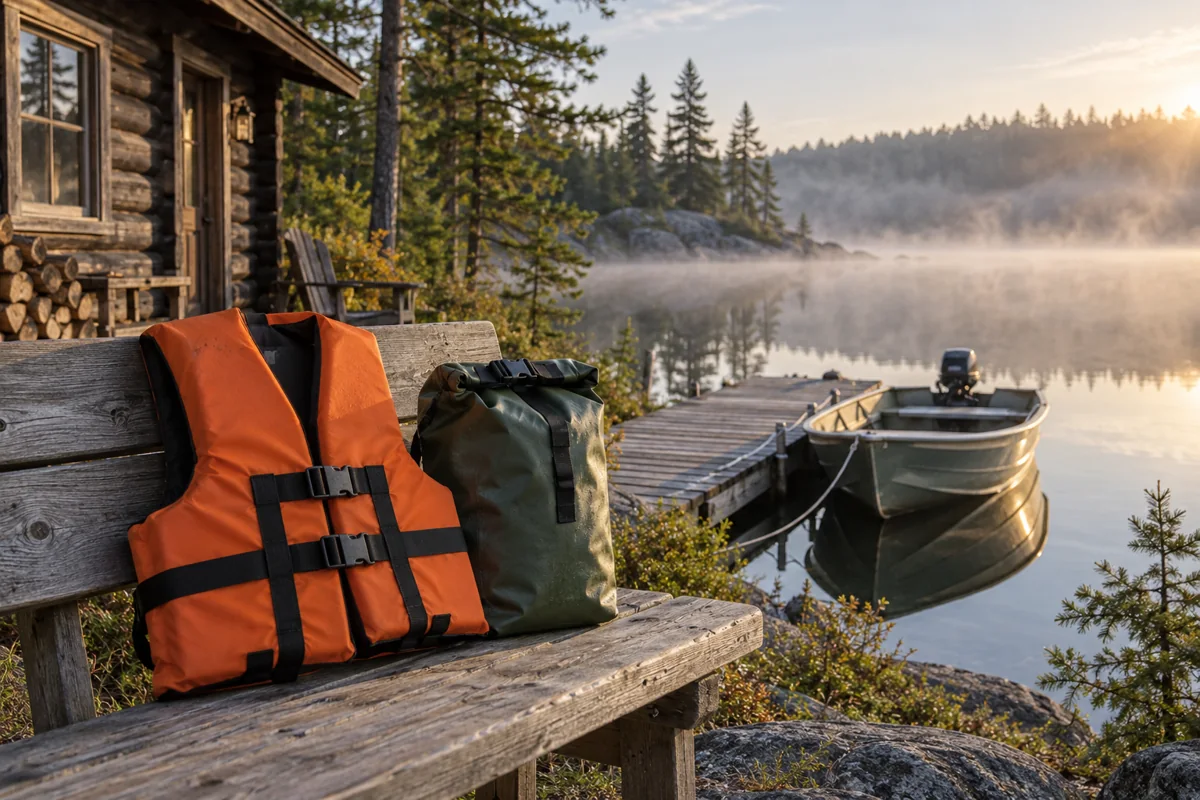
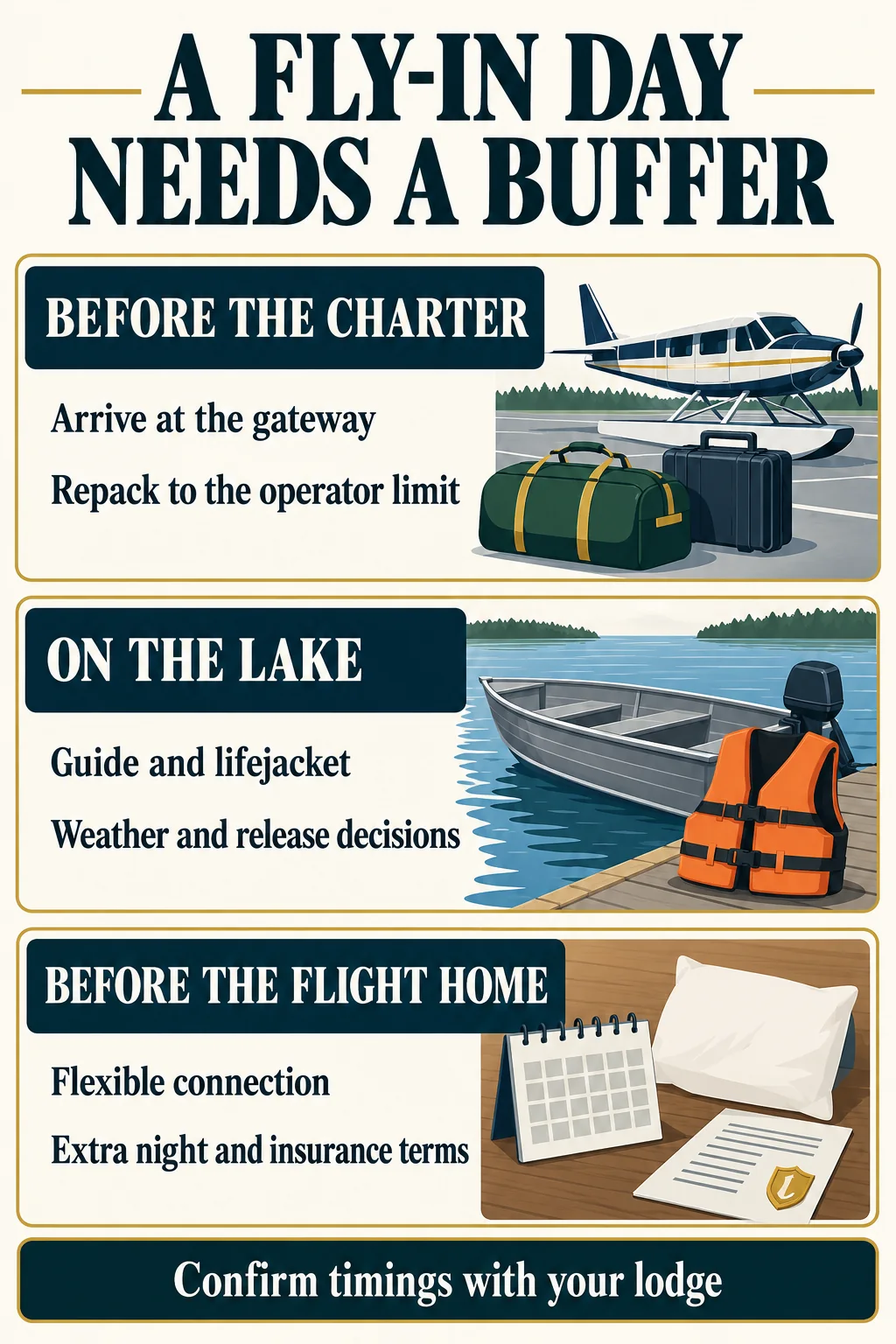
Request the operator’s current packing sheet before buying gear. Boat equipment, suitable lifejackets, rods and tackle may be supplied, rented or limited to particular packages. Confirm lifejacket sizing for children and larger adults, and disclose mobility needs before arrival.
Pack rain protection, insulating layers, sun protection and dry clothing for a boat day. Keep essential medication and travel documents accessible through every transfer. A waterproof bag helps organize spare clothing but does not turn electronics into submersible equipment.
If carrying personal rods, measure the longest collapsed section and the packed case. Check both the commercial carrier and the charter operator. A case accepted on the first flight can still be unsuitable for the smaller aircraft; our fishing rod case comparison explains the different transport roles.
A small selection of guide-approved lures is easier to manage than a heavy tackle collection. Check hook requirements, tackle weight and whether the boat already carries the equipment needed for the chosen method. These two products address transport and a simple lure option; neither is essential if the lodge supplies suitable equipment.
Two useful options to compare
As an Amazon Associate, CanadaFever earns from qualifying purchases. These recommendations use published listing information and trip fit; we have not claimed hands-on testing. Check current seller, variant, delivery and price on Amazon.com.

Plano Airliner telescoping rod case — model 458800
For personal rods that must pass through commercial and charter baggage handling.
- Rigid polypropylene construction offers a different level of protection from a fabric sleeve.
- Listed adjustment from 47 to 88 inches: measure your packed rod sections and padding.
- Buy only after both carriers approve the case dimensions and weight; supplied lodge rods may be easier.

Eppinger Dardevle 1oz red-and-white spoon — 0-16
One compact spoon option to discuss with your lake trout guide.
- The exact listing is the 1oz red-and-white version, rather than an unspecified mixed-size pack.
- Ask the guide whether this weight and presentation fit your dates and supplied rod setup.
- Inspect and modify hooks to meet the water’s barbless requirements and lodge policy; no catch guarantee.
Send an enquiry the lodge can actually answer
Include your preferred dates, departure city, group size, fishing experience and the proportion of the trip you want devoted to lake trout. State whether you need fully guided fishing, separate beds, private bathrooms or shorter excursions.
Then ask for the complete quote and one realistic itinerary. Compare answers against the same requirements. If one operator leaves guiding, flight arrangements or release policy unclear, ask again before treating its lower total as a better deal.
The strongest choice is the lodge that fits your group and explains its limits. Lake trout size, weather and wildlife remain uncertain. Clear service commitments, sensible release practices and a workable return journey are the parts you can evaluate before booking.
Saskatchewan lake trout lodge FAQs
Which Saskatchewan lake trout lodge is best?
There is no single best option for every group. Wollaston offers a structured guided package; Arctic provides a Reindeer Lake comparison; Hatchet adds portage and fly-out choices; Cree distinguishes guided and self-guided formats; Athabasca suits a Lake Athabasca enquiry. Compare the written services for your dates rather than treating this shortlist as measured fishing rankings.
Are barbless hooks mandatory everywhere in Saskatchewan?
No. They are required on designated catch-and-release waters and certain named lakes, and lodges may require them independently. Wollaston, Reindeer and Hatchet have listed CR regulations in the 2026–27 guide. Check the exact fishing water and operator policy before using any lure, including replacement hooks.
Do all lodge trips depart from Saskatoon?
No. Wollaston’s 2026 brochure uses Winnipeg, Cree Lake Lodge describes Fort McMurray flights, and Athabasca describes a Stony Rapids floatplane connection. Hatchet says guests typically charter from Saskatoon. Confirm your own package’s route, commercial arrival timing and hotel arrangements directly.
Can I bring lake trout home from the lodge?
That depends on the exact water’s retention and possession rules and the lodge’s policy. Do not assume a shore lunch means a take-home allowance. Ask which species, sizes and quantities may be retained, how fish are identified during transport and whether your operator permits any fish to leave the property.
Should I bring downriggers or a full tackle collection?
Ask the lodge first. Boats and guiding arrangements determine what equipment is practical, and charter baggage allowances limit what travels comfortably. Confirm supplied tackle and rentals, then bring a compact approved kit. A summer trout trip also needs a release-risk conversation; equipment alone does not make deep catch-and-release appropriate.
Sources and research limits
Research checked October 2, 2026. The Saskatchewan 2026–27 Anglers Guide and government angling pages support regulation notes. Operator websites and Wollaston’s 2026 brochure support published services. Future availability, prices, actual cabins, access conditions and fishing outcomes require direct confirmation. Generated illustrations show imagined scenes, not photographs of these operators.