
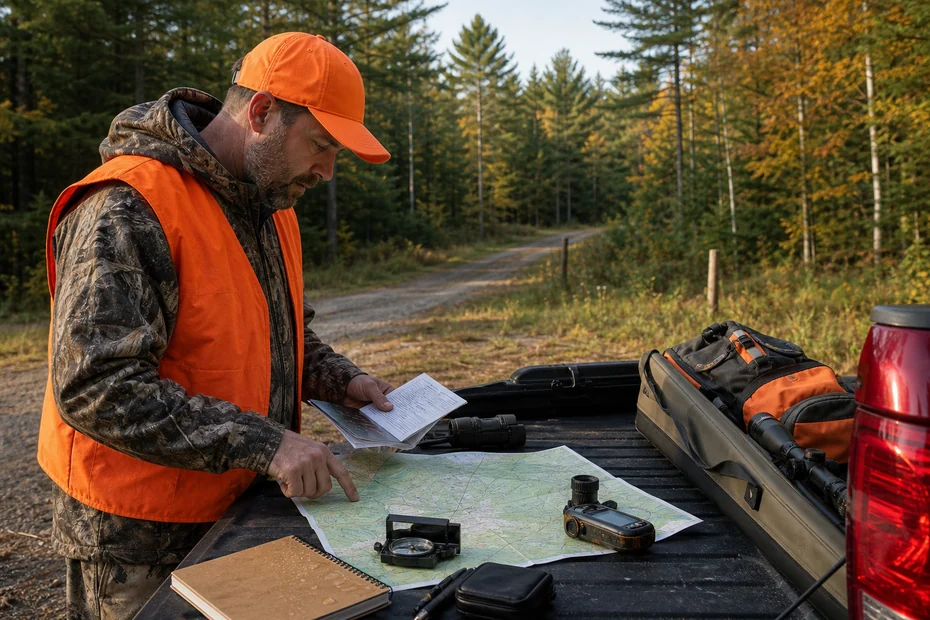
Ontario licence guide · 2026
Ontario Hunting Licence
Plan the Outdoors Card, accreditation, licence, tags and reporting before your Ontario hunt.
Get the eligibility and account layer right first
Plan the Ontario hunting licence path around Outdoors Card status, hunter accreditation, licence products, tags, WMU rules and mandatory hunter reports.
Get legal first: the correct card, licence, tag and report path decides whether the hunt can happen.
How to get legal before hunting in Ontario
Start with eligibility and documents, not gear. Ontario’s official pages say hunters need an Outdoors Card, hunter accreditation on file, required licences and tags, and firearm accreditation if hunting with a gun.
Confirm accreditation
New resident hunters normally need Ontario Hunter Education. Gun hunters must also satisfy federal firearm documentation rules.
Get or renew the Outdoors Card
The Outdoors Card is the identity layer used to buy hunting products and carry licence proof.
Buy the right licence
Licences are species-specific and are listed on your licence summary. They usually expire December 31 unless Ontario states otherwise.
Check tags and WMUs
Tags can define the animal, location, season, firearm type, age and sex. Your Wildlife Management Unit changes the answer.
Carry field proof
Carry your Outdoors Card, licence summary, applicable paper tag, firearm proof if needed, and permission documents where relevant.
Submit hunter reports
Ontario can require a hunter report even if you did not hunt or did not harvest. Record the deadline before the trip.
Important: CanadaFever organizes the process for readers. Ontario’s official regulations, your licence summary, your tag, federal firearm law, and conservation officers decide the legal answer.
Ontario hunting licence tracks by hunter type
Use this matrix to choose the right official source before buying anything. It is a planning aid, not a substitute for Ontario’s current Hunting Regulations Summary.
| Hunter profile | Core paperwork | Extra legal check | Main mistake to avoid |
|---|---|---|---|
| Resident gun hunter | Outdoors Card, hunter accreditation, species licence, licence summary and any tag. | Carry PAL, minor’s licence, or accepted CFSC proof as Ontario and federal rules require. | Assuming a provincial hunting licence gives firearm possession rights. |
| Archery-only resident | Outdoors Card, hunter accreditation, species licence, licence summary and any tag. | Verify method, season, WMU, tag and bow/crossbow rules in the current summary. | Buying a tag without checking weapon-method restrictions. |
| Non-resident hunter | Non-resident Outdoors Card, hunter accreditation on file, required licences and tags. | Check firearm border documentation, export rules, outfitter requirements and species-specific rules. | Booking travel before confirming Ontario non-resident eligibility. |
| Apprentice hunter | Apprentice pathway, mentor rules, appropriate licences or shared-tag conditions. | Ontario limits the youth apprentice program to eligible Ontario residents aged 12 to 14 under direct supervision. | Treating apprenticeship as independent hunting permission. |
| Waterfowl or migratory bird hunter | Ontario small game licence where required plus federal migratory bird permit where applicable. | Check federal permit/stamp rules and Ontario WMU/season rules together. | Buying only the provincial licence and missing the federal layer. |
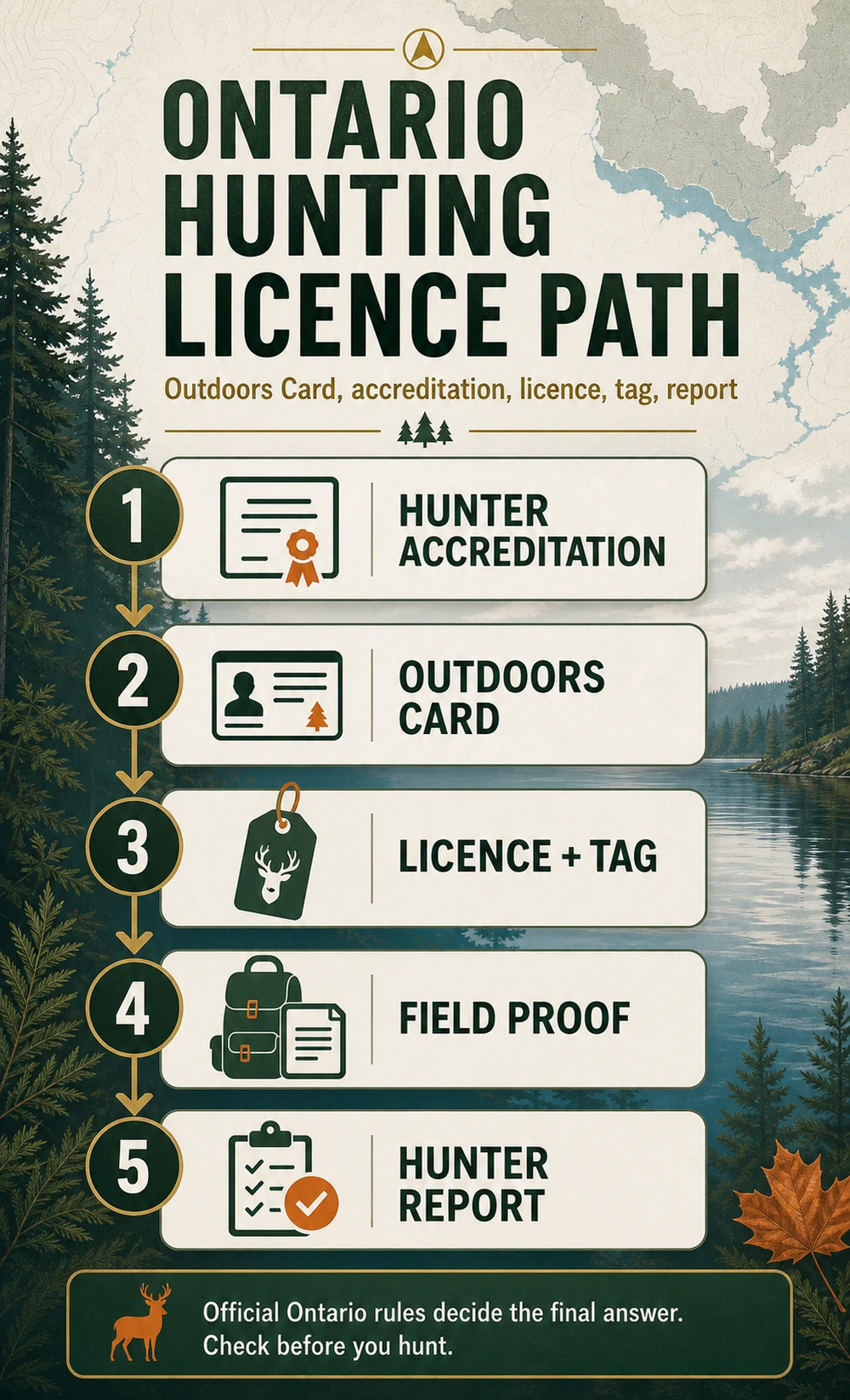
Ontario hunting licence path
This visual keeps the order straight: accreditation, Outdoors Card, licence and tag, field proof, then hunter reporting.
Outdoors Card, hunter accreditation and weapon-method rules
Ontario’s licensing system separates hunting identity, education, licences, tags, and firearm documentation. Keep those layers separate in your planning notes.
The account and carry layer
An Outdoors Card is required for resident and non-resident hunters who want to purchase hunting licences. Ontario says valid fishing and hunting licences are listed on your licence summary, and hunters must carry required proof while hunting.
Firearm or bow matters
In practical terms, hunting with a firearm requires Ontario hunter accreditation plus federal firearm documentation. Bow and crossbow hunting still requires the right species licence, tag, season, WMU and method rules.
Do not treat one credential label as the whole legal answer. A lawful hunt still depends on the current Ontario Hunting Regulations Summary, the licence summary, any paper tag, open season dates, local access, and federal rules where firearms or migratory birds are involved.
What to carry and verify before the hunt
Most mistakes happen because a hunter treats the purchase screen as the finish line. The field check is where the paperwork has to match the animal, place, date and method.
- Outdoors Card or licence summary access is current and available offline.
- Hunter accreditation is on file with the Fish and Wildlife Licensing Service.
- The species licence appears on the licence summary.
- Any required paper tag is printed, carried and matched to the correct hunt.
- The Wildlife Management Unit, open season, legal method and tag conditions match the plan.
- Gun hunters carry valid firearm documentation required by Ontario and federal rules.
- Non-residents have reviewed guide, outfitter, firearm, export and documentation rules.
- Hunter reporting deadline is saved before cell service disappears.
Non-resident Ontario hunting licence checks
Non-residents should verify the licence path before paying deposits. Ontario’s official non-resident page covers Outdoors Card needs, hunter accreditation, licences, tags, firearm documentation examples, and reporting.
For big-game travel, confirm whether the hunt requires a licensed tourist outfitter, operator, immediate resident relative pathway, or other documented arrangement. Do this before booking flights, crossing the border with gear, or assuming a previous year’s setup still applies.
If a firearm is involved, separate the Ontario hunting licence decision from federal firearm possession and transport requirements. Ontario’s hunter education page points gun hunters to the Canadian Firearms Safety Course and acceptable firearm documentation, while RCMP firearm licensing remains the federal source for PAL matters.
High-quality field tools that support licence compliance
These are not licence substitutes. They help keep documents dry, record WMU notes, navigate responsibly, and maintain a safer trip plan.

Garmin eTrex 32x Handheld GPS
Useful for WMU boundary checks, route notes and backup navigation when phone coverage drops.

Pelican 1040 Micro Case
A rugged waterproof case for licence summaries, tags, ID copies, cards and emergency notes.
Rite in the Rain Waterproof Notebook
Good for recording dates, WMUs, landowner notes, tag details, reporting reminders and route decisions.

Garmin inReach Mini 2 Satellite Communicator
A premium safety tool for remote areas where reporting plans, check-ins and emergency communication need redundancy.
As an Amazon Associate, CanadaFever may earn from qualifying purchases. Product images are loaded from Amazon’s media CDN and product buttons go directly to Amazon product pages.
Use these Ontario and federal sources before buying
Open the source that matches your decision. A blog guide should never be the last word on licences, tags, seasons or firearm rules.
Ontario residents hunting licence
Outdoors Card, hunter accreditation, firearm accreditation examples, licences, tags and reporting.
Non-residents hunting in Ontario
Non-resident licence path, documents, tags and special visitor considerations.
Ontario Hunting Regulations Summary
WMUs, tags, seasons, methods, reporting, maps and species-specific rules.
Get an Outdoors Card and licence summary
Outdoors Card validity, licence summary, hunter accreditation account details and tags.
Hunter education
Ontario Hunter Education, apprenticeship, recognized credentials and firearm-course references.
RCMP firearm licensing
Federal firearm licensing source for PAL and related firearm licensing questions.
Ontario hunting licence questions
Short planning answers. Always verify the current rule in the official source before hunting.
Do I need an Outdoors Card to hunt in Ontario?
+
In most hunting situations, yes. Ontario describes the Outdoors Card as required for resident and non-resident hunters who wish to purchase hunting licences. You also need the correct hunter accreditation, licences and tags for the hunt.
Is an Ontario hunting licence enough without a tag?
+
Not always. Some species and hunt types require a tag, draw result, controlled hunt authorization or specific conditions. The licence summary and tag must match the species, WMU, season and method.
Do firearm and bow hunters follow the same licence rules?
+
No. The Outdoors Card and hunter accreditation path may overlap, but the legal checks change by method. If you hunt with a gun, verify Ontario hunter accreditation plus accepted federal firearm documentation. If you hunt with a bow or crossbow, still verify species, tag, WMU, open season and method rules.
Do non-residents need a guide or outfitter in Ontario?
+
It depends on the species, location and hunt type. Non-residents should check Ontario’s official non-resident hunting page and the current regulations summary before booking. Big-game plans can involve outfitter, operator, immediate-relative or documentation requirements.
Do I need a PAL to hunt in Ontario?
+
If you hunt with a firearm, separate the provincial hunting licence from federal firearm law. Ontario’s hunting licence information says gun hunters must carry accepted firearm accreditation such as a valid PAL, minor’s licence or accepted CFSC proof depending on the situation.
Who must submit an Ontario hunter report?
+
Ontario requires hunter reports for specified licences or tags, including situations where a hunter did not hunt or did not harvest. Check the official hunter reporting page for your species and deadline.
Where this guide fits
Use this page for Ontario licence decisions, then move into broader safety, regulations and trip planning.
Hunting in Canada
Start here for a wider Canada hunting overview and planning context.
Hunting Regulations
Use this before any hunt where the question is legal or jurisdiction-specific.
Hunting Safety Tips
Review visibility, navigation, communication and field safety before the trip.