

Plan one lawful Canadian waterfowl trip: confirm the permit and regional rules, arrange access and retrieval, and prepare retained birds for the return.
- Confirm permits, district and species
- Arrange access and safe retrieval
- Plan weather limits and bird care
Bottom line Confirm the legal hunt and the complete return plan before booking.
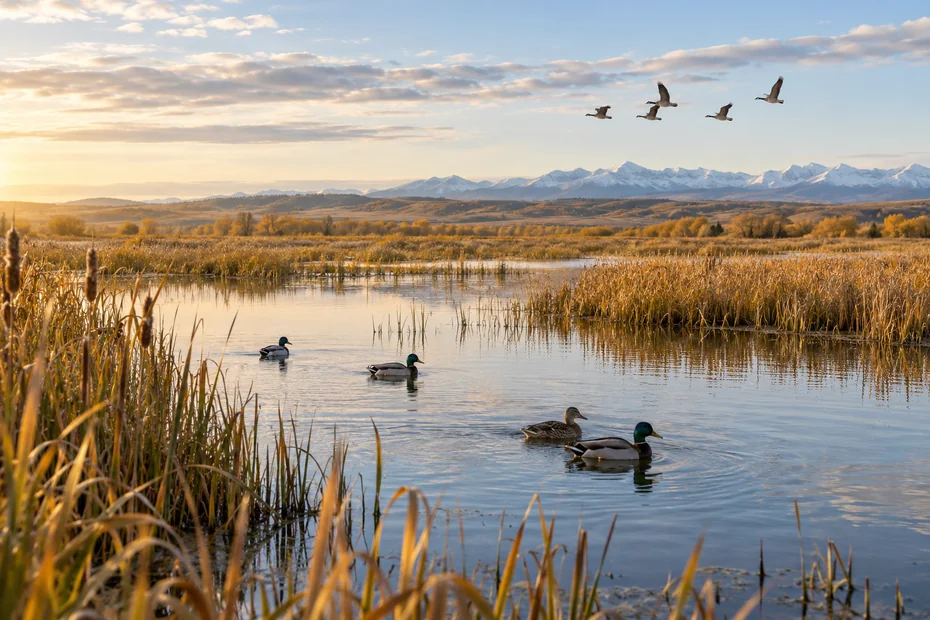
Waterfowl hunting in Canada starts with a legal species, a confirmed hunting area and a return plan that works in wet, cold conditions. Ducks and geese are migratory game birds governed by federal rules, with additional provincial or territorial requirements and site restrictions. A permit purchase alone does not establish that you may hunt a particular pond or field.
For a first trip, an experienced mentor or properly authorised local guide can help you connect the rulebook to the actual place. Ask them to identify the hunting district, explain how access is arranged and describe the retrieval and bird-care plan. Plan the legal hunt and the whole return journey.
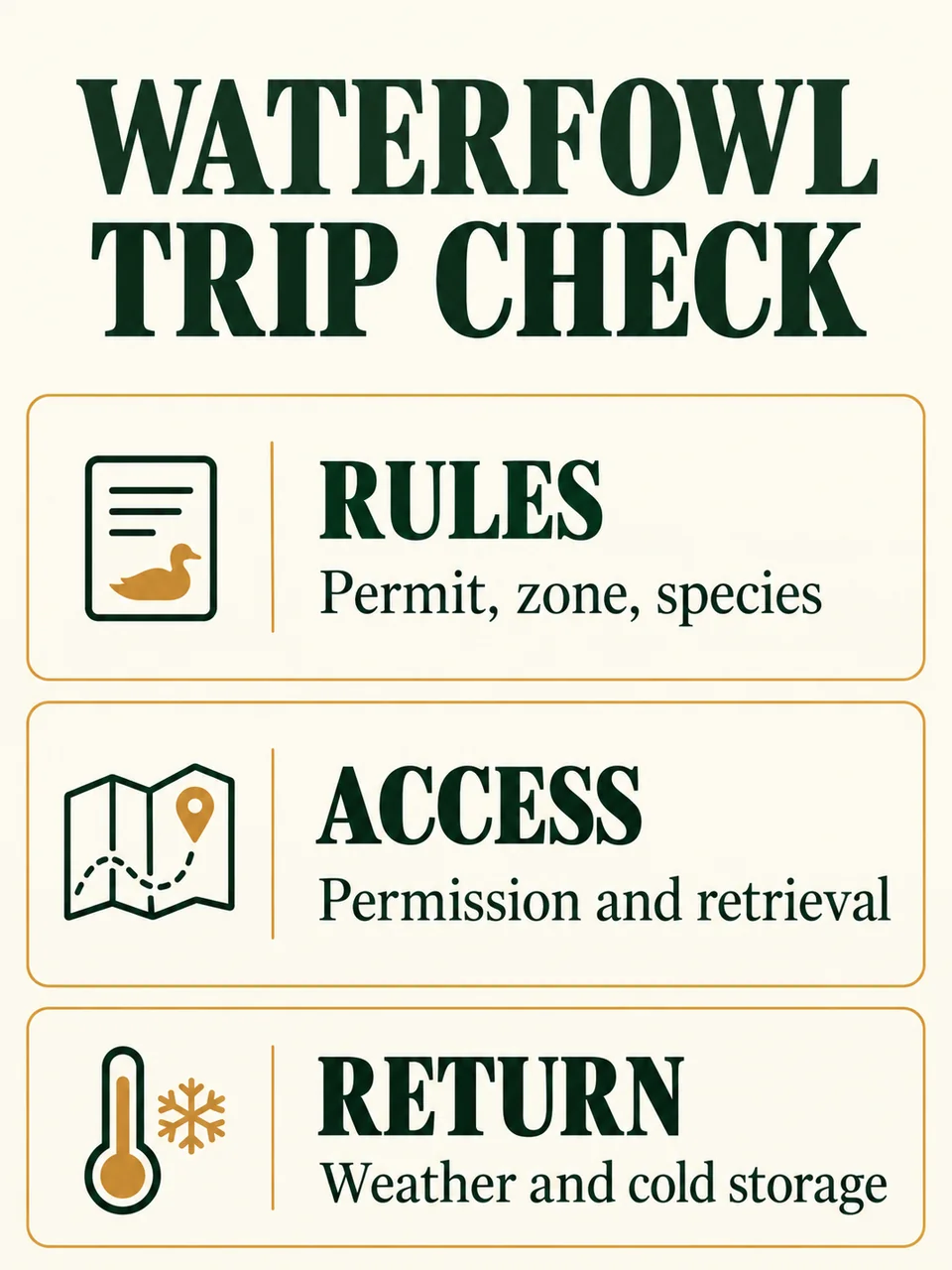
Confirm the trip before buying extra equipment
- Check the current federal permit and stamp, plus the provincial or territorial licence route.
- Read the exact species, zone, dates, limits and local access conditions.
- Arrange lawful retrieval, weather limits and chilled transport before the outing.
See the complete waterfowl trip plan
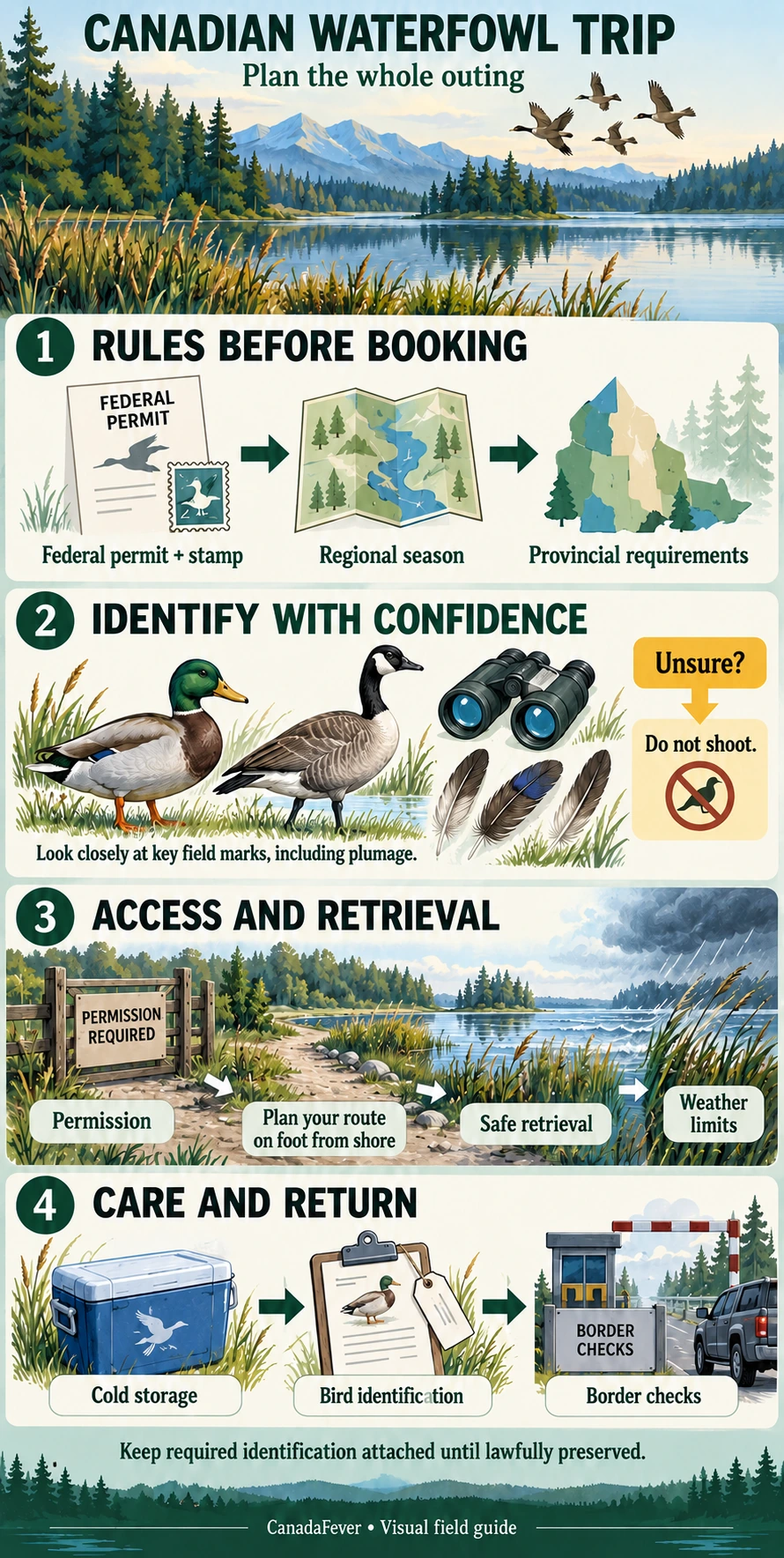
Use the current federal permit and local licence route
Environment and Climate Change Canada’s Migratory Game Bird Hunting Permit overview explains the federal permit and Canadian Wildlife Habitat Conservation Stamp requirement. The 2026 electronic permit includes the stamp image and is available from August 1, 2026, to June 30, 2027. Confirm the correct permit year for the dates you will hunt.
The federal permit is personal. Keep it accessible in an accepted physical or electronic format and check the carrying requirements before travelling. Store an offline copy if you intend to use a phone, and provide for a flat battery or damaged device. Buying several permits in one transaction does not create a shared group limit.
You must also check the province or territory’s requirements for your residency, age and circumstances. Ontario’s 2026 Hunting Regulations Summary, for example, requires the small-game hunting licence route alongside the federal migratory-bird requirement. Other jurisdictions have their own licence categories and eligibility conditions. Ask the wildlife licensing authority when a detail is unclear.
Do not assume a home-province licence, United States duck stamp or guide’s licence replaces your own documents. A visitor should establish the non-resident route before paying for travel. Discuss hunter education and any additional travel or equipment requirements separately with the relevant authorities and the operator.
For young hunters, read both federal youth-permit conditions and the local youth and mentor provisions. The rules have specific eligibility and supervision requirements. A family booking or a free permit does not remove those conditions, and an adult should confirm the complete route before promising a child that they can participate.
If you exercise Indigenous harvesting rights, consult the guidance applicable to your rights and location instead of assuming the recreational licence route describes every circumstance. Outfitters should be able to distinguish their ordinary client requirements from those separate legal contexts. Seek clarification from the appropriate authority when planning across territories.
Build a document checklist for your own trip
- The correct federal permit with the conservation stamp, where required for your circumstances.
- The applicable provincial or territorial licence and evidence of eligibility.
- Current species and district rules saved for the intended dates.
- Landowner permission, site authorisation and the operator’s written booking terms.
The federal summaries are refreshed for each season. A screenshot from an old trip, a forum answer or an operator’s promotional calendar can help you formulate a question, but use the current official rules to resolve it. Keep the year visible in the material you save for offline use.
Read the district, species line and footnotes together
Find the hunting location on the official district or zone map before reading dates. A provincial Wildlife Management Unit and the federal migratory-bird grouping may be connected in a particular summary, but they are not interchangeable labels throughout Canada. Record the actual federal district alongside any local management-unit reference.
The Alberta summary describes two federal hunting zones through lists of provincial WMUs. Ontario uses its own district structure and species provisions. Saskatchewan also has district distinctions. Follow the map and explanatory text for the province you will visit.
Read the row for the birds you may encounter, including any species-specific sublimits or special periods. A general duck limit does not establish that every duck species has the same allowance. Daily bag and possession limits describe different constraints, and the result must remain attributable to the individual hunter.
Check legal hunting hours through the applicable current sources and the actual location. Sunrise and sunset vary by date and place. A guide’s usual departure time or the time a neighbouring party begins does not establish your legal starting time. Agree on a conservative schedule that leaves time for identification in adequate light.
Special conservation seasons for overabundant geese have their own geographic and species conditions. They should be planned separately from an ordinary autumn duck hunt. Our goose hunting in Canada guide develops that narrower planning task; do not transfer its specific seasonal provisions to all waterfowl.
Consult ECCC’s migratory-game-bird FAQ and the Migratory Birds Regulations, 2022 for federal equipment, method and retrieval provisions. This trip guide does not provide firearm instruction. Complete the required training and follow applicable laws and qualified supervision.
For ducks and geese, plan around applicable non-toxic-shot requirements and check the exact jurisdiction and site rules. Avoid broad claims that every migratory game-bird species has identical provisions. Some rules distinguish species such as woodcock, and National Wildlife Areas can impose additional restrictions.
Where each answer belongs
| Question | Primary source | Record for the trip |
|---|---|---|
| Federal permit and stamp | ECCC permit overview | Permit year and named holder |
| Species seasons and limits | Current ECCC regional summary | District, species and footnotes |
| Local licence eligibility | Provincial or territorial agency | Residency and licence category |
| Land and site access | Owner or managing authority | Permission, boundaries and restrictions |
| Methods and retrieval | Federal regulations and local rules | Applicable provisions and return plan |
Learn identification before the hunt
Mallards, northern pintails, teal and diving ducks can occupy Canadian wetlands in the same season, but their identification features and legal treatment need attention. A bird briefly seen against a dark sky can be much harder to identify than a colour photograph suggests. Practise in ordinary daylight before trying to assess birds during a hunting outing.
Use a regional field guide, reputable species resources and an experienced instructor to learn silhouette, size, plumage and flight behaviour together. Ducks can show different plumage according to sex, age and season. One bright head marking is not a reliable identification method for every bird in a flock.
Begin with stationary observation from a lawful public viewpoint or land where you have permission. Notice how the same species looks when feeding, resting and flying. Keep the birds undisturbed, and compare your identification with the mentor while there is time to discuss it.
Canada geese and cackling geese require careful attention where both occur. Snow geese, Ross’s geese and other birds introduce further distinctions. Identification must fit the applicable rules and the circumstances of the observation. Leave an uncertain bird alone instead of treating membership in a large flock as proof of species.
Non-game and protected birds can share the wetland. A dark silhouette near ducks does not establish that it is a huntable duck. Improve your recognition of likely non-target birds as well as the species you intend to pursue, and avoid participating when poor visibility prevents dependable identification.
Binoculars are useful for scouting and learning from a distance. They do not guarantee identification of a rapidly moving or poorly lit bird, and they should not become a reason to make an uncertain decision. The safe outcome of an unresolved identification is to pass.
Keep a small notebook of what you saw, the habitat and the conditions. A record of birds resting in a marsh one afternoon helps frame the next observation, but it does not establish they will use the same place on the hunting date. Migration and local activity change with weather and available habitat.
Choose habitat you can access responsibly
Prairie potholes, larger marshes, river floodplains, agricultural fields and coastal estuaries each create different planning demands. The right destination for a beginner is one where the mentor can explain the boundaries, access and retrieval plan. Famous waterfowl country is not necessarily the easiest first outing.
A small wetland can look straightforward from the road while concealing deep mud, drainage channels or dense vegetation. Walk only where access is lawful and the ground is appropriate. Avoid disturbing nesting or resting wildlife, and respect closures, sensitive areas and the owner’s instructions.
A field trip requires arrangements with the person authorised to grant access. Discuss parking, vehicle routes, gates, crops and livestock before arrival. Permission for one field or one date should not be expanded to neighbouring property or a later trip without asking.
On larger water, wind and cold-water exposure can make retrieval and the return route substantially harder. A novice should use a qualified operator with a suitable vessel and a clear safety plan rather than treating a marsh outing as routine boating. Confirm who supplies properly fitted flotation equipment and how weather decisions are made.
Tidal locations add changing water level and return-access questions. A path crossed on arrival can be covered later, while current can carry a bird away from an apparently manageable shoreline. Use local expertise and check tide information for the actual site. Choose another area if a reliable retrieval and exit route cannot be established.
Our broader hunting in Canada guide covers destination and licence planning. For this outing, keep the destination choice narrow enough that you can investigate the actual wetland or field rather than collecting a long list of regions with different requirements.
Arrange permission and retrieval before setting out
Access for the hunt and access for a possible retrieve must both be considered. A lawful starting position can still leave you unable to reach a bird across a property boundary, channel or unsafe stretch of water. Discuss that possibility before choosing the location.
The federal regulations include duties concerning retrieving migratory game birds. Confirm those duties and the local requirements with the mentor, then select an area where the plan can meet them safely and lawfully. Do not begin with the assumption that a difficult retrieval will somehow resolve itself.
A trained retriever can help in appropriate conditions, but the dog’s fitness, experience and exposure limits still matter. Talk with the handler about current, cold, vegetation and veterinary precautions. The presence of a dog does not make every channel, icy margin or contaminated wetland a suitable retrieval site.
Questions for the landowner or managing authority
- Which exact property, entry route and dates does the permission cover?
- Where may vehicles park, and are any roads or tracks closed in wet weather?
- Are there neighbouring boundaries or restricted areas relevant to a retrieve?
- What conditions apply to gates, crops, livestock, waste and the end-of-day departure?
Carry a usable map offline and agree on recognisable boundaries with the group. Screenshots can be helpful but should not replace an accurate current map or the owner’s explanation. If a boundary remains ambiguous, choose a clear location or ask for clarification before the trip.
Respect other users even where hunting is allowed. Confirm the site’s restrictions, remain within the authorised activity and avoid crowding another party. A public wetland can include walkers, wildlife observers and neighbours whose presence changes what is appropriate that morning.
Set weather and cold-water limits
Check forecast wind, gusts, temperature, precipitation and warnings for the location. Wet clothing, fatigue and time spent stationary can make a mild-looking forecast uncomfortable. Pack clothing for the actual activity and make sure dry layers will remain available for the journey home.
A sheltered bank and an exposed boat route call for different decisions. Ask the operator which conditions cancel the outing and who makes the final call. Avoid a booking arrangement that pressures the group to continue because they have travelled far or the birds have just begun moving.
At the first signs of an approaching thunderstorm, follow ECCC’s lightning guidance for water and reach appropriate shelter. Allow at least 30 minutes after the last rumble of thunder before returning to the water. Forecast and return planning should get you ashore before the storm creates an emergency.
Cold water requires a suitable boating plan and properly fitted flotation equipment. Waders and waterproof clothing are not a substitute for that equipment or for training. Have a qualified mentor assess the location and activity; avoid wading or boat travel that exceeds your experience.
Set a realistic duration for the first outing. Choose a duration that leaves enough time to manage retained birds and return before the group becomes exhausted. Pack a light and spare power where needed, but plan to finish essential tasks before fading light makes them difficult.
The hunting rain-gear guide covers clothing choices. Choose the fit and layering system for the expected temperature and movement. Borrowing appropriate equipment for a mentored first trip can help you identify what you actually need before purchasing a specialised wardrobe.
Match the location to the return plan
| Location | Planning concern | Useful confirmation |
|---|---|---|
| Small inland marsh | Mud, channels and boundaries | Lawful entry and reachable retrieval area |
| Agricultural field | Crops, livestock and vehicle access | Owner’s exact permission and parking route |
| Large lake | Wind and cold-water return | Qualified boat operator and cancellation limits |
| Tidal estuary | Rising tide and moving water | Local tide assessment and dependable exit |
Observation and document storage
As an Amazon Associate, CanadaFever earns from qualifying purchases. These are optional equipment examples, not recent field-test winners. Check the selected model, seller, delivery destination and current terms.
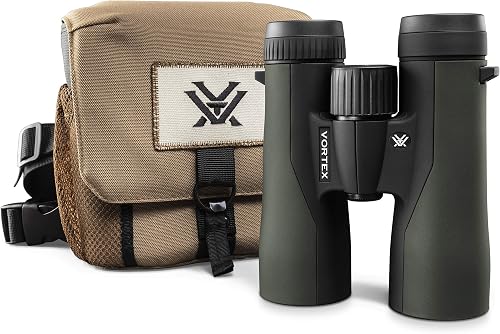
Vortex Crossfire HD 10×42 binoculars
An observation optic for studying wetland birds from a lawful access point before planning a hunt.
- Exact green Crossfire HD 10×42 variant, with 42 mm objective lenses.
- Use distant observation to study plumage and habitat without disturbing birds.
- Check steadiness and fit; binoculars cannot resolve every uncertain identification.

Plano 3640 Waterproof Stowaway
An optional small-parts organiser for a wetland pack. Use it for documents only when they fit without interfering with the seal; keep another accepted permit copy available.
- Exact 3640 Waterproof Stowaway with an O-ring seal and three latches.
- Check the actual compartment size before choosing it for folded documents.
- Keep the seal clean and inspect the closure; do not assume protection during immersion.
Build a first-trip plan you can check
Start with one jurisdiction, one general species group and a realistic date range. Confirm your eligibility before booking. Then ask the mentor or operator for the location, current rule links and a clear description of access and retrieval arrangements.
Confirm the legal outing
Establish your licence route and the correct federal permit. Identify the district and intended species, then check dates, limits and site conditions. Resolve uncertain details with the responsible authority before making a non-refundable commitment.
Confirm the place and people
Arrange lawful access, a competent mentor or operator, and a retrieval plan appropriate for the location. Agree on weather cancellation limits and the return time. Check who supplies safety equipment, transport and the bird-care materials.
Prepare the return
Pack accessible documents, suitable clothing and the clean handling and chilling supplies you need. Confirm identification and transport requirements for retained birds. Recheck forecasts and advisories shortly before departure, then shorten or cancel the trip when the plan no longer fits.
Get booking terms in writing. Ask which permits, transport, meals, equipment and processing arrangements are included, and what happens if weather cancels a day. A package description should let you compare the complete trip without relying on a headline price or an implied guarantee of birds.
Use our Canadian hunting-lodge comparison guide for the general discipline of checking camp access and booking terms. Its species and licence discussion concerns a different hunting task, so obtain waterfowl-specific answers from the operator you are considering.
Keep the practical kit manageable
- Current documents, an offline map and a protected communication device.
- Weather-appropriate clothing, dry spare layers and suitable footwear.
- Observation equipment you can use comfortably and the site’s required safety kit.
- Disposable gloves, clean separation bags, hand-cleaning supplies and planned cold storage.
A sealed small box can organise permitted documents or spare items in a pack, but check that they fit without damaging the seal. Keep a separate accepted permit copy if needed. Open and dry the container after the trip; equipment marketed as waterproof should still be inspected and used according to its instructions.
Handle retained birds and transport them responsibly
Check ECCC’s avian influenza information for hunters before the trip. Avoid birds that appear sick or have died from unknown causes. Report concerning sightings to the appropriate wildlife authority rather than handling a carcass to identify it more closely.
Prepare clean handling supplies and separate game products from other food. Use gloves and careful hand hygiene, avoid touching your face during handling and clean contaminated equipment. Read the applicable official precautions for dust, feathers and body fluids; a brief outdoor article cannot replace that health guidance.
Keep hunting dogs and other pets away from sick or dead wildlife and contaminated areas. The Public Health Agency of Canada’s handling guidance explains precautions for people and animals. Ask the dog’s veterinarian about trip-specific concerns before travelling.
Arrange chilling and processing before leaving home. A warm vehicle or an unprepared lodge room is not a storage plan. Discuss the practical process with the mentor and confirm how retained birds remain attributable to the hunter and meet the applicable identification requirements during transport.
Before cleaning birds for travel, check the federal identification provisions and any destination requirements. ECCC’s FAQ explains that an unpreserved bird must retain a fully feathered wing or head attached to the carcass. Plucking and eviscerating are only partial preservation; the identifying wing or head remains until the bird is being completely preserved outside the hunting area. Read the full provisions before arranging cleaning and transport.
Do not assume that completely removing identifying parts is acceptable for every journey, or that an outfitter’s packing habit settles the law.
For travel into the United States or another country, verify current import rules with the destination authority close to departure. Avian influenza restrictions can change, and Canadian legality does not guarantee import permission. Ask how birds would be handled if the planned border transport is unavailable.
Cook game birds thoroughly and follow current official food-safety guidance. ECCC’s avian-influenza page recommends approximately 74°C internal temperature for game meat; consult the relevant cooking instructions and food-safety guidance for the product you prepare. Use a suitable thermometer rather than colour alone, and prevent cross-contamination throughout preparation.
If you find a bird with a federal band or colour marker, record the information and use the official reporting route linked from the regional summary. These reports contribute to bird monitoring. Preserve any required identifying information while following the applicable handling and transport rules.
Waterfowl planning questions
Is the federal migratory-bird permit enough to hunt in Canada?
Check the provincial or territorial licence requirements as well as the federal permit and stamp. You also need an open season for the species and district, lawful access and compliance with site restrictions. A federal permit does not grant permission to hunt any wetland or private field.
Can I use one province’s season dates elsewhere?
No. Use the current ECCC summary for the destination and identify its district or zone. Read species rows and footnotes together with local hunting rules. Dates and sublimits can differ within a province, so even a nearby hunt may require another check.
What should a beginner ask a waterfowl guide?
Ask about your licence route, the exact district, target species, lawful access, retrieval and weather cancellation policy. Confirm the supplied safety equipment and bird-care arrangements. Obtain complete booking terms before paying, and explain your experience level so the operator can judge whether the planned outing fits.
What if I cannot identify a bird confidently?
Leave it alone. Practise with a field guide and mentor during daylight observation before the hunt. Plumage, silhouette and behaviour should support identification together. Poor light or a brief view may prevent a dependable identification even with experience, and a legal limit cannot resolve that uncertainty.
Can I bring harvested ducks or geese across the border?
Confirm Canadian transport and identification requirements, then the destination country’s current import restrictions. Avian influenza measures may affect game-bird meat. Do this before booking and recheck near departure. The guide or lodge should explain the alternative plan if the intended transport is unavailable.
Official sources for your destination
Start with the federal permit overview, 2026 to 2027 regional summaries, federal FAQ and Migratory Birds Regulations, 2022. Add the province or territory’s current licence and hunting guide, land permissions and avian-influenza guidance. This is general planning information, not legal advice or a substitute for required hunting and boating instruction.