

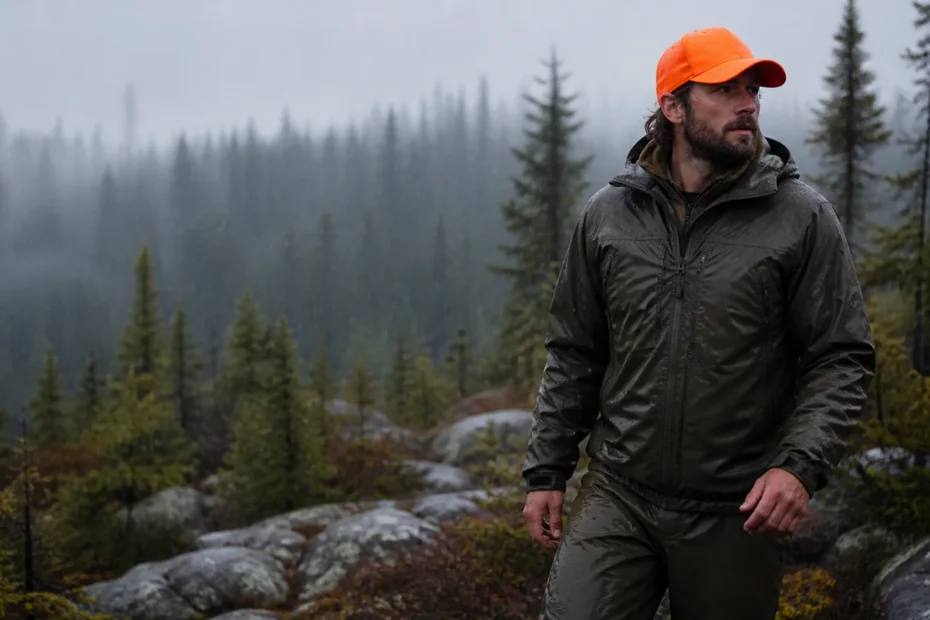
Compare the best hunting rain gear in Canada by waterproofing, breathability, durability, noise, fit and packability for real wet-weather hunts.
- Waterproof and breathable are not binary; exertion, humidity, vents and garment condition matter.
- Size the shell over the exact base and insulation layers used in season.
- Pit zips, two-way front zips and ventable pockets can matter more than a slightly higher fabric claim.
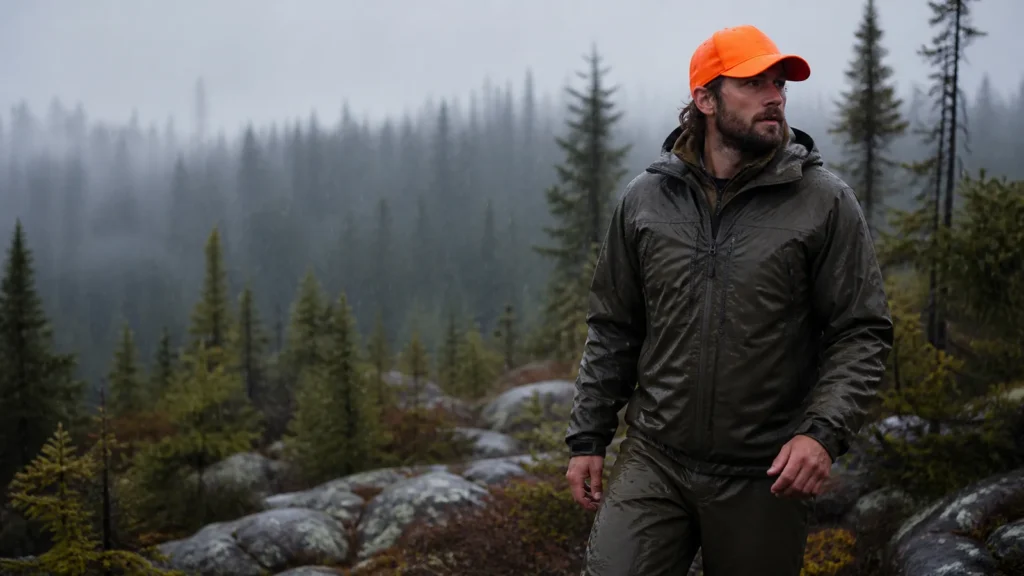
The best hunting rain gear Canada hunters can wear keeps external water out while giving internal heat and moisture somewhere to escape. A shell can be technically waterproof and still leave a fast-moving hunter soaked from condensation. It can also breathe well in a lab and fail quickly against alder, deadfall and pack straps.
This guide matches shell construction, ventilation, noise, durability and fit to stationary hunting, active hiking and emergency pack use.
Best Hunting Rain Gear Canada: Match the Movement
Rain shells work as part of the layer system described in best hunting base layers and the cold-weather planning in cold outdoor gear guidance.
| Use | Shell direction | Priority | Common failure |
|---|---|---|---|
| Emergency pack layer | Light two-piece suit | Low weight and fast deployment | Expecting brush durability |
| Tree stand or blind | Quiet, roomier shell | Noise control and insulation fit | Poor hood visibility while seated |
| Active mountain/forest hunt | Durable ventilated shell | Mechanical vents and articulation | Overheating inside a sealed suit |
| Coastal sustained rain | Robust full-coverage system | Seams, hood, cuffs and long hem | Water entering at interfaces |
| ATV/boat approach | Weatherproof outer layer with visibility | Wind block and closure security | Using motor travel as the first fit test |
How We Compared Hunting Rain-Gear Systems
This is a research-based comparison of three accessible suit directions, not a claim that CanadaFever ran controlled hydrostatic or long-term abrasion tests. We checked the current listings and compared each system by coverage, packability, adjustment, expected abrasion exposure and the fit needed over real hunting layers.
We did not rank a suit from the word waterproof alone. Seam design, hood movement, cuff closure, pant entry, ventilation and care all affect the result. The right choice also changes with effort: a stationary hunter, an active mountain hunter and someone carrying emergency rainwear in a daypack manage moisture differently.
What remains buyer-specific
Noise, condensation and durability can change with temperature, underlayers, brush and pack pressure. Try the complete system indoors, confirm the return policy and follow the maker’s care instructions. No lightweight shell should be presented as guaranteed protection in every storm or as a substitute for route, forecast and emergency planning.
CanadaFever fit-first pick
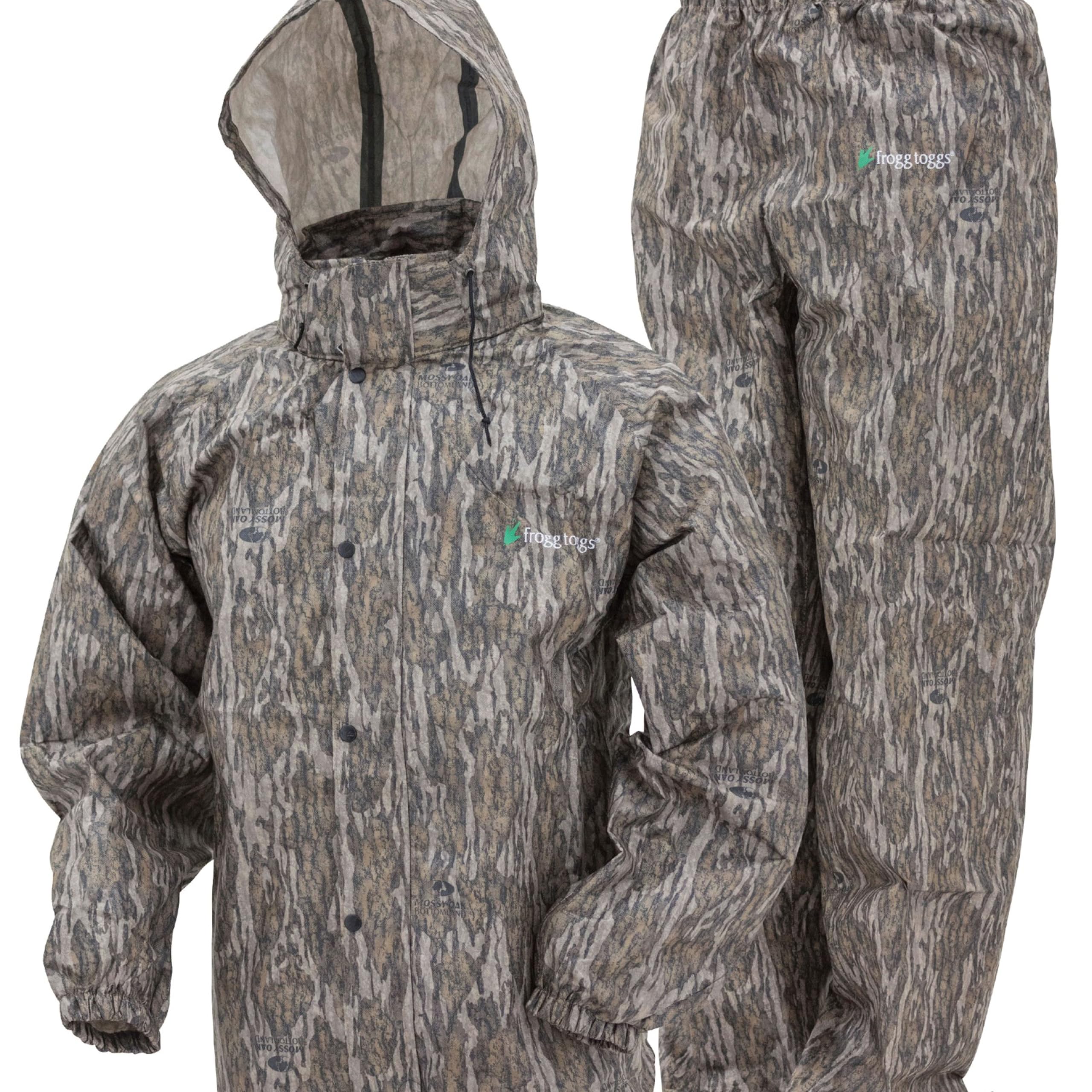
FROGG TOGGS Classic All-Sport Suit
A packable value-oriented two-piece system for stationary or moderate-use days where low cost and backup coverage matter more than brush durability.
- Listing describes a waterproof breathable three-layer fabric
- Two-piece format provides jacket and pant coverage
- Not the first choice for repeated abrasion through dense brush
Confirm the exact model, size and Canadian availability before ordering.
Three Rain-Suit Directions, With Their Limits
FROGG TOGGS Classic All-Sport: inexpensive backup coverage
The Classic All-Sport direction suits buyers who want a light two-piece layer for vehicle kits, stationary use and moderate exposure. Full jacket-and-pant coverage is more useful than a jacket alone when wind-driven rain reaches the legs and seat.
The compromise is abrasion. Lightweight nonwoven-style rainwear is not the first choice for repeated pushing through thorns, deadfall or tight conifers. Size it over planned layers, protect it from sharp equipment and view it as weather coverage rather than brush armour.
TIDEWE Packable Rain Suit: compact hunting-oriented setup
The TIDEWE suit is aimed at hunters who want sealed seams, adjustable closures and a set that stays packed until conditions change. It can be a practical direction for uncertain forecasts and shorter approaches.
Packability does not answer ventilation or long-term durability. Test the hood, cuffs, hem and pant entry with boots and gloves. Check whether a backpack belt blocks pockets or vents, and listen to the fabric while kneeling rather than judging noise from a showroom touch.
BASSDASH FW12: fuller shell-system direction
The FW12 is the broader option for buyers expecting sustained wet conditions and wanting a more conventional hunting/fishing outerwear system. Jacket-and-pant coverage and the listed breathable positioning make it the direction to investigate when rainwear will be worn rather than merely carried.
The important checks are movement, vent access and pack interaction. A fuller suit can trap more heat during a climb, and a quiet face fabric can hold surface water. Confirm how the exact size layers, where water drains and which zippers remain usable under a pack.
Waterproofing, Breathability and Condensation
Waterproof membranes and coated fabrics resist liquid water. Breathability describes water-vapour movement under particular test conditions; it does not guarantee comfort during hard climbing in humid rain. Ventilation is the controllable part of the system.
Start slightly cool, open vents before sweating heavily, and remove insulation during hard movement. The hunting safety guide covers broader weather and emergency planning.
Seams and interfaces
Inspect whether critical seams are taped or otherwise sealed. Water often enters at hood openings, neck, cuffs, jacket hem and the jacket-pant overlap rather than through the main fabric. A longer hem and higher waist can protect bending and seated positions.
Noise and abrasion
Soft face fabrics can reduce swish but may retain more surface water and gain weight. Ultralight shells pack small but are vulnerable to brush and repeated pack-belt friction. Durable shells cost weight and often make more noise. Choose which compromise matches the terrain.
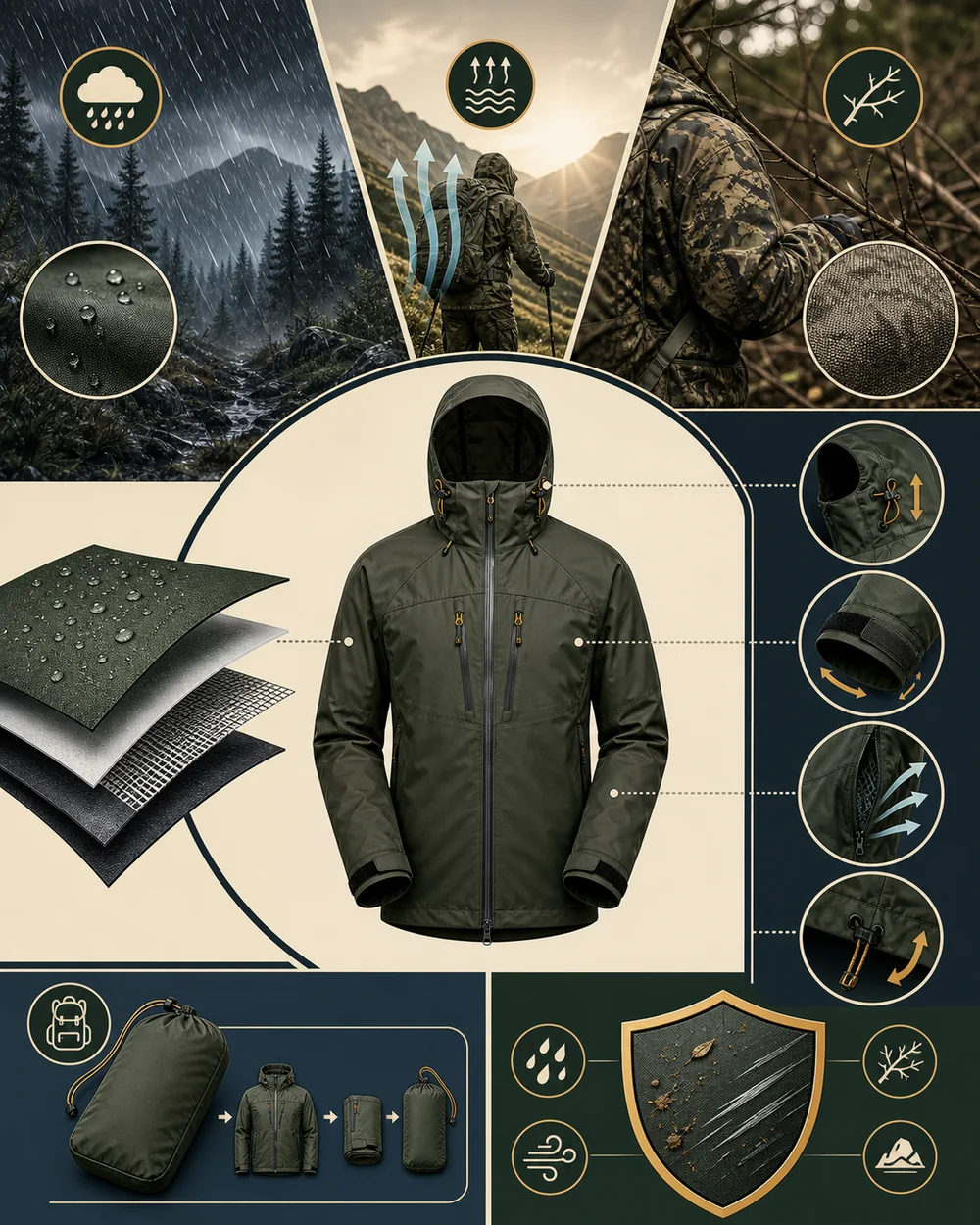
Fit the Complete Layer System
| Fit zone | Pass condition | Failure sign |
|---|---|---|
| Hood | Turns with the head and preserves peripheral vision | Brim blinds one side or collar pulls |
| Shoulders | Full reach over insulation | Hem lifts and sleeves shorten |
| Cuffs | Seal over or under gloves as intended | Water funnels into sleeves |
| Waist/hem | Overlaps pants while kneeling | Back opens when bending |
| Pockets/vents | Usable with pack belt and harness | Critical zip is completely blocked |
Wear the same hunting backpack and waterproof hunting boots during the fitting. Check that pack straps do not force water through shoulder fabric and that pants do not channel runoff into boots.
Care preserves performance
Mud, body oils and detergent residue can reduce water repellency and vapour transfer. Follow the garment maker’s wash, drying and reproofing instructions. Do not assume every membrane uses the same treatment.
What we would not buy
- A shell that cannot rotate with the head while the hood is tightened.
- Pants that require boots to be removed during an emergency change.
- An ultralight backup suit presented as brush armour.
- A quietness claim assessed only indoors and at room temperature.
Complete the system with our Canadian hunting gear guide and verify blaze-colour requirements in the current provincial or territorial regulations.
Manage the Whole Moisture System
Rain outside and sweat inside are different problems
A membrane can slow liquid water while still being overwhelmed by heat and humidity from the body. Vent before the climb becomes sweaty, reduce insulation early and slow the pace when conditions allow. If the base layer is already saturated, a waterproof shell cannot make the system feel dry.
Protect the interfaces
Most practical failures begin at the hood, neck, cuffs, hem and boot opening. Turn the head fully with the hood tightened. Raise both arms and kneel to see whether the jacket lifts away from the pants. Decide whether cuffs sit over or under gloves, and make sure pant runoff does not funnel into the boots.
Build for Canadian temperature swings
Cold rain near freezing has a different consequence than warm summer rain. Keep one dry insulating layer protected inside the pack, and avoid cotton where becoming wet would create a safety problem. Wet snow also loads hoods and shoulders differently than rain, while repeated transitions into a heated vehicle can produce condensation. Check the current forecast and active warnings through Environment and Climate Change Canada’s weather service before departure.
Care and field repair
Clean mud and body oils according to the manufacturer’s instructions because residue can reduce water repellency and vapour transfer. Carry compatible repair tape for small tears when appropriate, but do not treat a temporary patch as permanent. Dry the suit before storage and inspect high-friction zones beneath shoulder straps, belt wings, knees and seat.
Reject the suit if these checks fail
- The hood cannot turn with the head or blocks peripheral vision.
- The pant opening requires removing boots during a likely field change.
- The hem separates from the pants while kneeling or climbing.
- Critical vents or pockets disappear beneath the normal backpack belt.
- The garment has no clear care instructions for washing and restoring repellency.
Alternatives for different use cases
These are not interchangeable. Choose the format that solves your transport, weather or capacity problem.
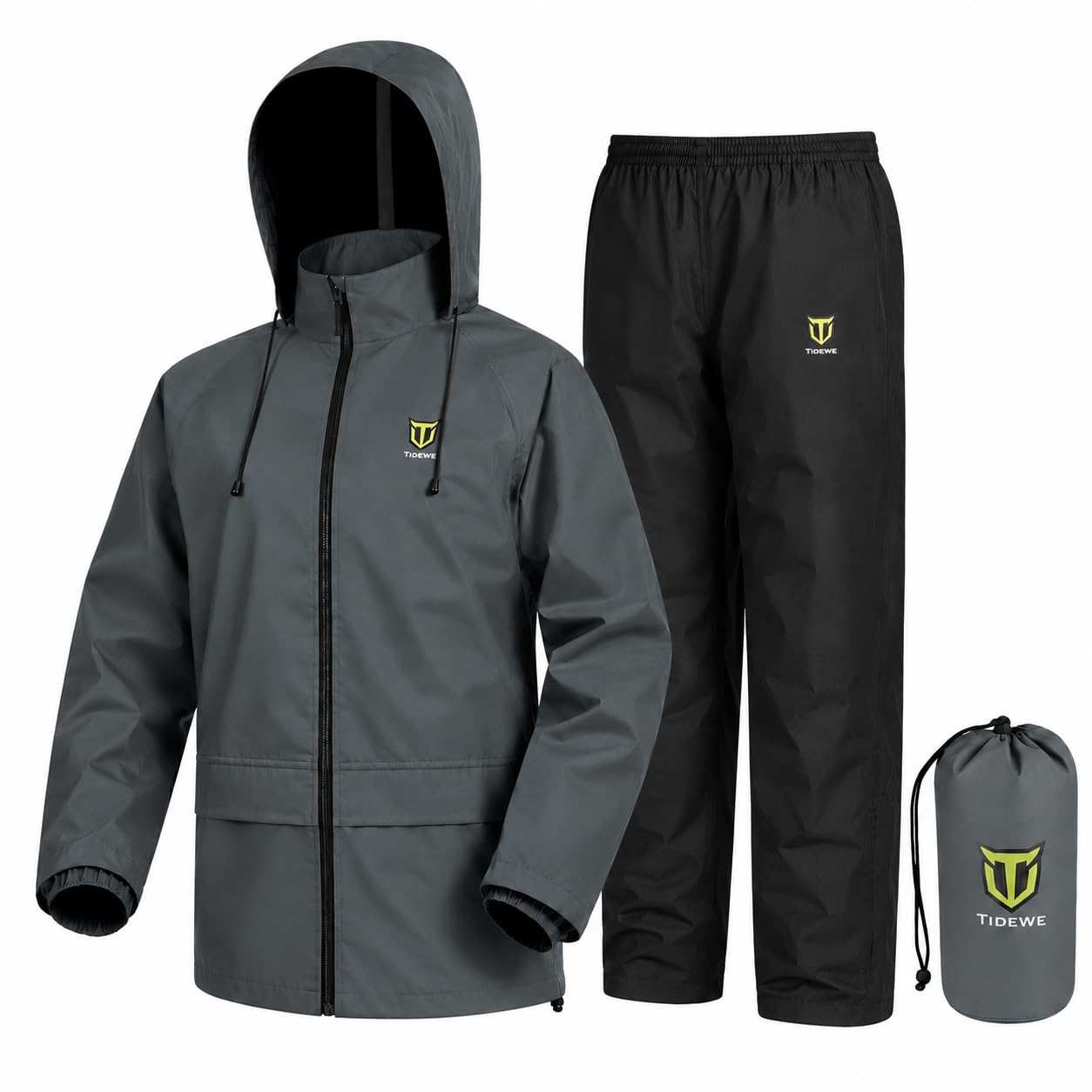
TIDEWE Packable Rain Suit
A hunting-oriented packable set with adjustability for buyers wanting a compact layer that can stay in the pack.
- Listing highlights sealed seams and adjustable closures
- Packability suits uncertain forecasts and vehicle kits
- Size over base layers and test full climbing movement
Confirm the exact model, size and Canadian availability before ordering.
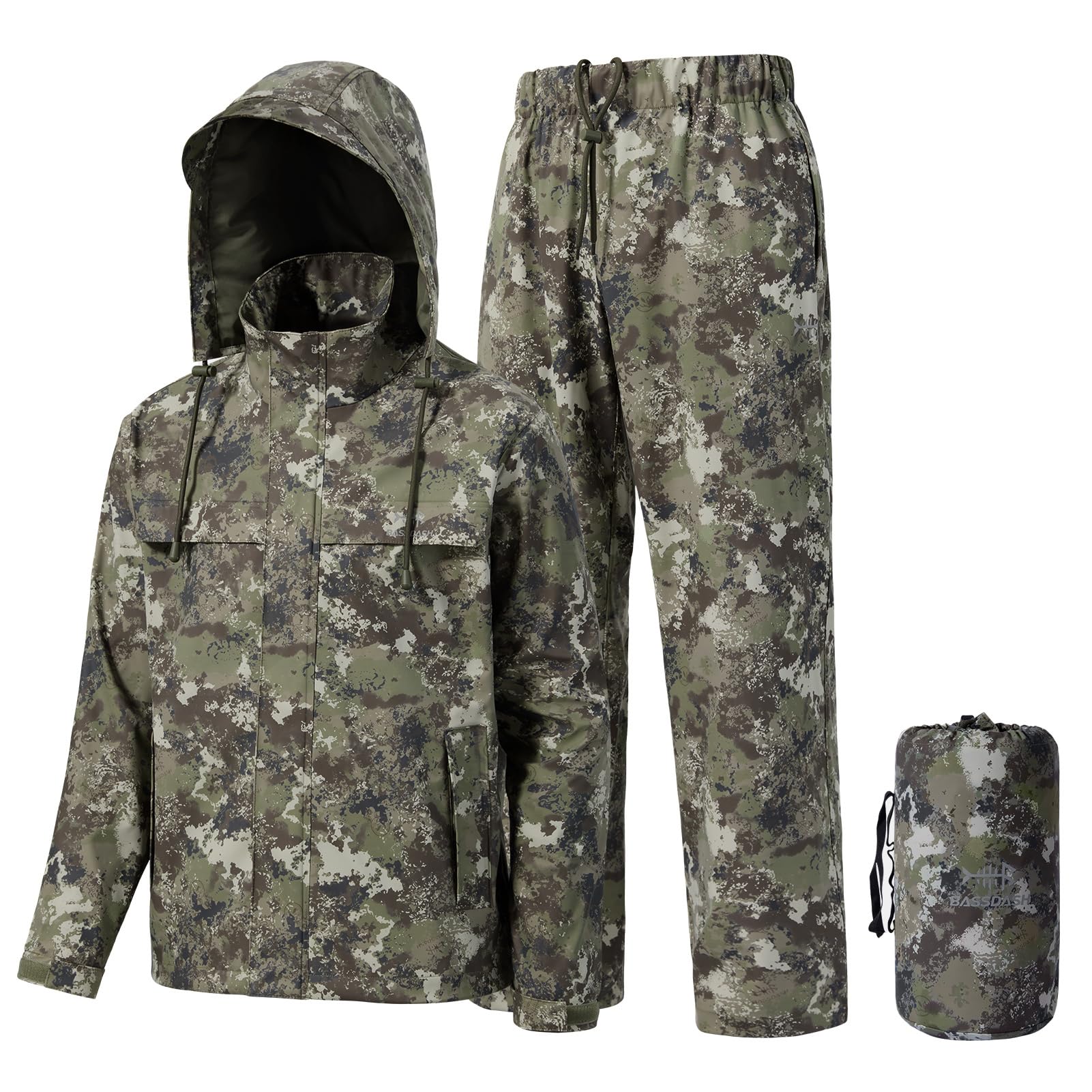
BASSDASH FW12 Rain Suit
A fuller hunting-and-fishing shell direction for buyers balancing weather coverage, ventilation and packability.
- Listing positions it as waterproof breathable outerwear
- Jacket-and-pant coverage suits sustained wet conditions
- Confirm noise, vent access and pocket use with a backpack belt
Confirm the exact model, size and Canadian availability before ordering.
Compare more best hunting rain gear Canada options on Amazon.com →
Listings, configurations and availability can change. Review the current seller page before purchase.
best hunting rain gear Canada: Frequently Asked Questions
What is the best hunting rain gear for Canada?
The best system matches exertion and terrain: ventilated durable shells for active brush use, quieter roomier shells for stationary hunting and light suits for emergency backup.
How waterproof should hunting rain gear be?
Published ratings can help comparison, but seam construction, hood/cuff design, fit and garment care strongly affect real protection.
Why am I wet inside a waterproof jacket?
Sweat and condensation can exceed the fabric’s vapour transfer, especially during hard movement in humid rain. Vent earlier and reduce insulation.
Should hunting rain gear be oversized?
It should fit over planned layers without restricting movement, but excessive volume can flap, snag and reduce hood control. Test the full system.
Is packable rain gear durable enough for brush?
Often not for repeated dense-brush contact. Low weight and compact storage usually involve a durability trade-off.
Bottom line: Buy a complete rain system, not a fabric claim. Fit every interface, create ventilation before sweat builds and match abrasion resistance to the terrain you actually hunt.