

Compare five Canadian hunting operators, then check the legal hunt, actual camp and complete quote before booking.
- Match species, area and licence route
- Confirm the camp and daily access
- Compare complete written quotes
Bottom line Book only after the operator confirms the hunt, camp and full terms.
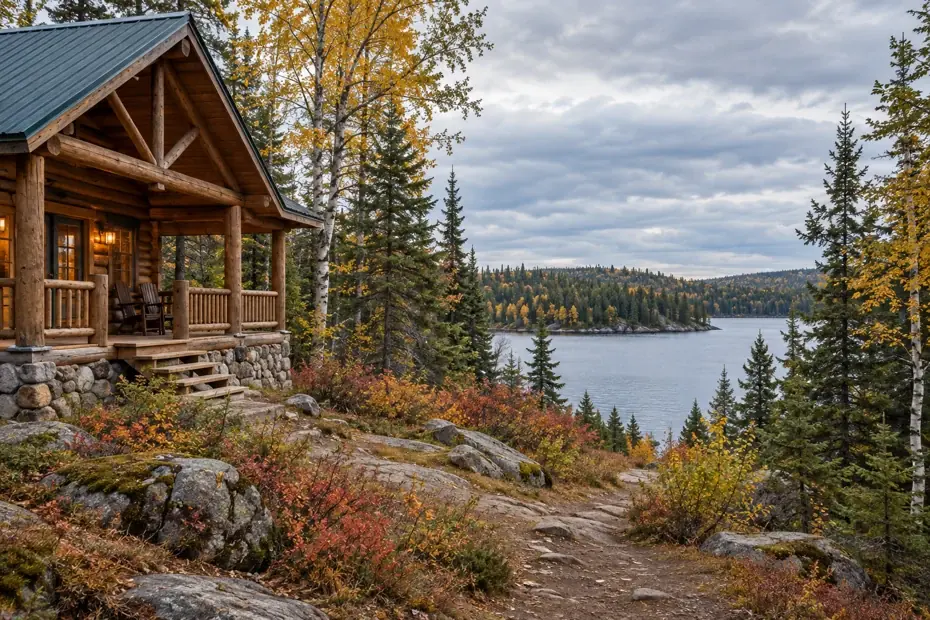
Big game hunting lodges in Canada differ in the hunt they sell, the accommodation you actually sleep in and the work expected of you after an animal is harvested. A comfortable bedroom in the brochure may be the arrival-night base, while your hunting nights take place in a remote cabin. Ask about both before comparing prices.
Choose a species and province, and establish your residency category. Compare the hunting area, daily travel, guide arrangements and complete trip cost. Keep an operator on your shortlist if the answers are clear and the contract records what you agreed.
Three checks before paying a deposit
- Confirm the exact species, management area, dates and licence route for your residency.
- Ask where you sleep on every night and how you travel from that camp to the hunt.
- Get a written quote covering transfers, guide arrangements, processing and cancellation terms.
Big game hunting lodges in Canada: a practical shortlist
These five operators publish Canadian hunting programs in four provinces. They are examples to investigate, not a tested ranking. Operator descriptions establish what is advertised; they do not independently prove service quality, current licence allocation or the results you should expect.
| Operator and region | Published hunting focus | Question to ask first |
|---|---|---|
| Moose Creek Lodge, Newfoundland | Moose hunting around Robinson River | Which management area, licence type and actual hunting camp? |
| Omineca Guide & Outfitters, British Columbia | Moose and black bear; lodge and cabin accommodation | Which territory and daily travel suit your mobility? |
| Martineau River Outfitters, Saskatchewan | White-tailed deer and black bear; Pierceland base | Which of the camps and what guide arrangement? |
| Skull Lodge Outfitters, Saskatchewan | White-tailed deer and black bear; Porcupine Provincial Forest | What stand access, accommodation and package terms? |
| Munroe Lake Lodge, Manitoba | Fly-in moose hunting in northern Manitoba | What licence route, aircraft allowance and delay plan? |
Moose Creek Lodge: start with the Newfoundland moose licence
Moose Creek Lodge identifies Robinson River, Newfoundland, as its hunting location. Its site describes adapting hunting methods to guests’ abilities. Discuss mobility in your first enquiry. Explain how far you can walk on uneven ground and whether you can comfortably climb into a vehicle or boat.
Request the moose management area and the conditions of the licence attached to the package. Ask how many hunting days remain after arrival, whether transfers are included and where hunters sleep during the actual hunt. Treat the operator’s advertised success figures as its own claims, not your personal probability of taking a moose.
For Newfoundland, confirm that the named business is a licensed outfitter and that the guide and non-resident licence arrangements are complete. Ask who coordinates processing and the provincial game export permit if you will take meat home. A short flight itinerary can still become complicated when your return luggage includes a substantial amount of meat.
Omineca: clarify lodge nights and time in the territory
Omineca Guide & Outfitters describes moose and black bear hunting in north-central British Columbia, with a lodge and private cabins. Its published information also mentions activities for non-hunting companions. Ask which activities are available during your hunting week, because a summer recreation description may not apply to an autumn hunt.
Ask how you will reach the hunting territory each day. Ask whether you return to the lodge each evening or spend nights in another camp. Get the expected driving, boating or walking schedule, and explain any knee, balance or stamina limitations before the operator proposes a hunt.
The legal booking route is separate from the bedroom reservation. British Columbia requires non-resident big-game hunters to be accompanied through an approved guide or permit route. For a commercial trip, obtain the licensed outfitter details and verify the species available within that operation’s territory and allocation.
Martineau River: choose the camp and species together
Martineau River Outfitters publishes white-tailed deer and black bear packages based out of Pierceland, Saskatchewan, and describes three camps. Do not assume that pictures from one camp describe the room, bathroom or dining arrangements at another.
Ask which camp would host your booking and whether you share a room. For a stand-based hunt, request the access method, expected hours outdoors and procedure for contacting the guide. Someone comfortable walking forest trails may still struggle with a long, cold sit or a ladder stand.
Have the quote state the currency and everything excluded from the advertised package. Confirm the correct Saskatchewan guided-licence arrangement for your residency category before paying. If the operator suggests a combination trip, ask for the additional species’ dates and authorizations separately.
Skull Lodge: ask about the hunting day, not just the camp
Skull Lodge Outfitters identifies its camp with Saskatchewan’s Porcupine Provincial Forest and advertises white-tailed deer and black bear hunting. For a booking enquiry, you still need the route to each stand and the daily transfer time.
Ask the operator to describe a typical day for your proposed species and week. Find out whether you travel by truck, ATV or on foot, what happens during severe weather and how meals work around early departures. Check whether a ground blind is possible if you cannot use an elevated stand.
For a returning group, also ask whether all hunters receive the same accommodation and hunting schedule. Different physical abilities can require different access plans. Get any agreed adaptation written into the booking rather than leaving it as an informal assurance.
Munroe Lake: budget for the whole fly-in journey
Munroe Lake Lodge publishes a fly-in moose hunting program in northern Manitoba. For a fly-in booking, ask about baggage weight and transfer timing, including how harvested meat leaves camp.
Ask for the current departure point, aircraft arrangements, baggage allowance and additional freight charges. Identify who pays for an extra overnight stay if weather delays the flight and whether a missed transfer changes the number of hunting days.
Have the operator explain the provincial licence and allocation route for your exact residency category and hunt area. Ask where meat is cooled, processed and stored, and how it travels out. A lodge’s published species list cannot replace confirmation that your proposed hunt is available and legally authorized.
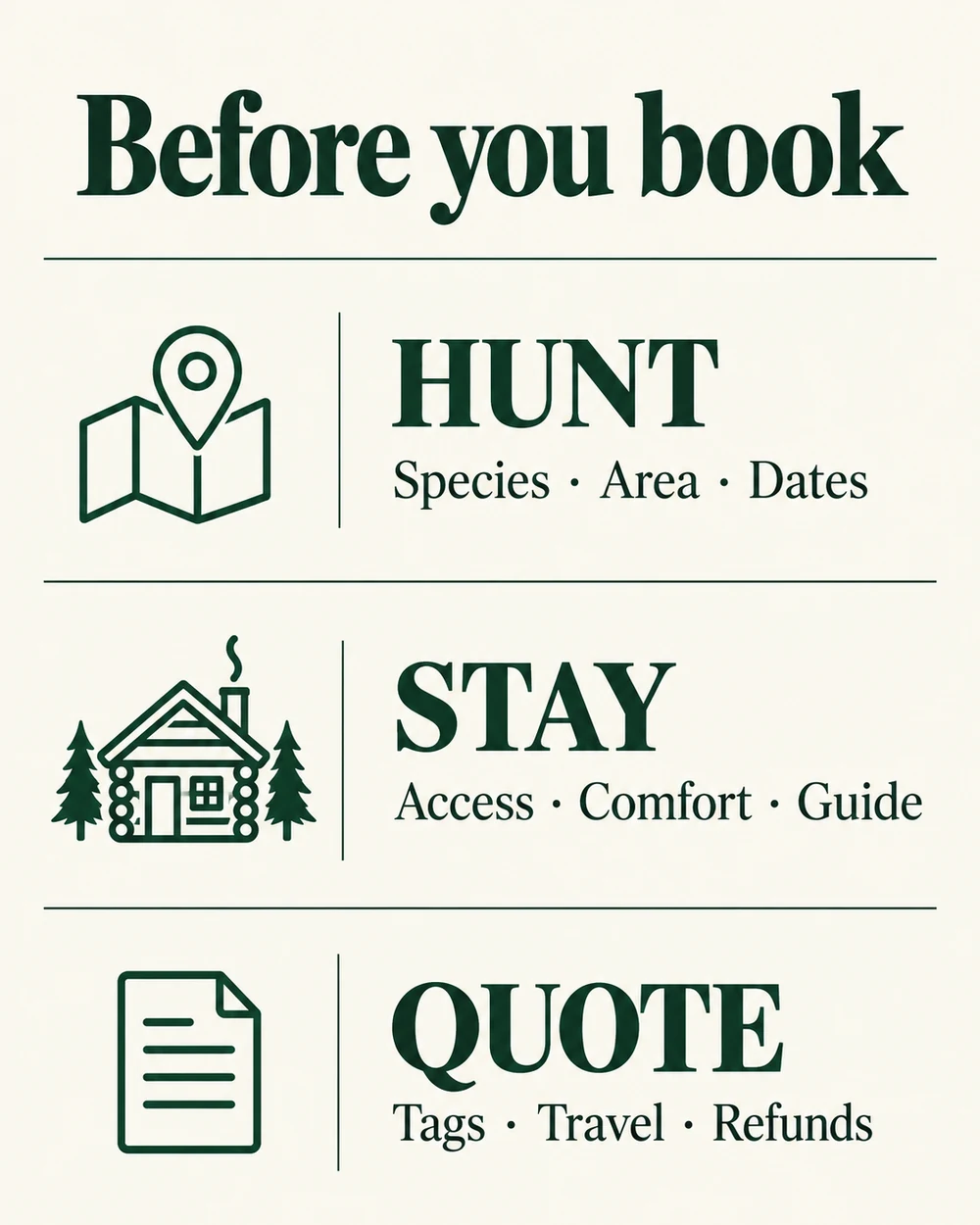
Residency, licences and guide requirements
The Newfoundland and Labrador 2026–27 Hunting and Trapping Guide says non-resident big-game licences for bear, moose and caribou are available through licensed outfitters and that non-resident big-game hunters require licensed guides. It also sets hunter-education credential requirements. Bring the accepted evidence with you.
In British Columbia, non-resident big-game hunters must be accompanied by a licensed guide outfitter, an assistant guide employed by an outfitter or a resident holding a permit to accompany. A recreational permit to accompany is not the commercial guiding route.
Saskatchewan’s licence guidance requires non-resident big-game hunters and Canadian resident moose hunters to use an outfitter and possess the appropriate guided licence. Canadian residents hunting other species have different options; the province’s categories matter when discussing deer or bear bookings.
For a Manitoba enquiry, use the province’s current hunting guide and ask the operator to identify the precise authorization for your species and game hunting area. Do the same for any additional province. Buying accommodation, hiring a guide and obtaining permission to hunt are related transactions, but one does not automatically settle the others.
Keep the hunting licence, species authorization and guide booking together in your travel file. Our Canada hunting planning guide explains the broader preparation; the relevant provincial source controls the actual rules for your trip.
Choose accommodation that supports the hunting day
Ask where you sleep every night. Some packages use a main lodge for arrival and departure and a smaller hunting camp in between. A transfer camp can be perfectly suitable, but you need to know its heating, water and bedding arrangements before packing.
Room and bathroom checks
- Request recent photographs of the room and bathroom assigned to your package, not only a gallery of the property.
- Ask how many guests share the facilities and whether hot water is available throughout the day.
- Someone who needs a private bathroom should make that a booking condition.
Drying your kit
- After a wet day outside, you need somewhere to dry your kit.
- Ask where boots and clothing dry, whether you can hang equipment overnight and how the operator manages damp bedding.
- Confirm laundry arrangements if the itinerary includes several travel days as well as the hunt.
Dietary and medical needs belong in the enquiry. Explain food allergies plainly and ask what the kitchen can manage. If medication needs refrigeration or you use powered medical equipment, confirm reliable storage or electricity at the actual hunting camp, including any interruption plan.
| Trip format | Likely planning issue | Get this in writing |
|---|---|---|
| Main lodge every night | Travel time between lodge and hunt | Actual room, bathroom sharing and daily transfers |
| Remote cabin or secondary camp | Heating, water and equipment drying | Bedding, meals, power and camp location |
| Fly-in lodge | Aircraft weight and weather delays | Transfer point, luggage limits and extra-night costs |
| Stand or blind-based hunt | Long periods outdoors | Stand access, retrieval and communication procedure |
Check the physical demands separately from accommodation quality. Ask for realistic walking distances, terrain and elevation changes. Get details about entering boats, riding ATVs or mounting horses if those methods are proposed. A guide can assess adaptations more usefully when you describe your limits than when you simply ask whether the hunt is easy.
Non-hunting companions need an itinerary of their own. Confirm whether they can join transfers, what they can do while hunters are away and whether those activities are included. Remote accommodation may offer little independent mobility. If fishing is an optional activity, it needs its own tackle, licence and seasonal checks; it is never a big-game hunting authorization.
Compare the complete quote
Ask each operator for the same information so you can compare offers without reconstructing them from emails. State your species, travel dates, residency and number of hunters. Request the number of hunting days separately from the number of nights.
The guiding arrangement changes the experience. Confirm whether your guide works only with you or serves more than one hunter, and what that means during the day. A shared arrangement may work for your group, but you should know who accompanies each hunter and how transport is scheduled.
What the quote should cover
- Ask about licences, taxes and transfers individually.
- A package price may include meals and accommodation while excluding the species licence, charter segment or arrival-night hotel.
- Record the currency beside every amount, particularly when one Canadian operator quotes in Canadian dollars and another quotes in US dollars.
- Get the processing arrangements before comparing totals.
- Ask whether field handling, retrieval, skinning, meat cutting and freezing are included or billed separately.
- Find out whether antler or hide preparation goes to another business and who arranges payment.
- Processing and transport can continue after your own return flight.
Read cancellation terms before sending a deposit. Separate a cancellation you choose from a trip cancelled by the operator, a closure that prevents hunting and a weather delay that prevents access. Ask whether the remedy is a refund, credit or rescheduled hunt and which costs remain yours.
Travel insurance should match the actual activity and location. Tell the insurer that the trip includes hunting and remote access, and ask about emergency evacuation and disruption cover. Read exclusions and reimbursement limits yourself. A lodge’s evacuation arrangements do not establish what your insurer will pay.
Keep the contract, invoice and payment instructions under the same business identity. Verify changed payment details through an established contact channel. An unexpected message asking for a transfer to a different account deserves a phone call to the operator before you pay.
For western bookings, our Alberta bear outfitter comparison gives another set of camp and booking questions. Use it when Alberta is a real alternative, then check Alberta’s own rules instead of carrying Saskatchewan or British Columbia assumptions across the border.
Choose dates after confirming the hunt area
There is no single Canadian big-game season calendar that can settle your booking. Species, management area, weapon category and residency can affect the dates available. Ask the outfitter to identify the official entry that authorizes your proposed hunting week.
A lodge’s open dates and your legal hunting dates can differ. The business may host fishing guests or sightseeing travellers outside the hunting season. Confirm both arrival dates and the first and last day you will actually hunt.
If you hope to hunt during a rut or a particular bear-hunting period, ask how the operator chooses the week and what conditions can change the plan. Biological timing and weather do not promise sightings, animal size or a harvest. Compare the daily hunting method as well as the month.
Explain whether you want a hunt focused on meat, a particular legal animal class or simply learning the method under a guide. Your willingness to pass an animal should be part of the conversation. Ask how the operation responds to a wounded animal and how tracking affects the remaining schedule.
Ask to speak with recent guests who took the same species hunt and used the same camp. Include someone whose trip involved poor weather or no harvest. Ask how the operator communicated and handled meals or changed plans when the hunt was difficult.
Plan arrival, firearms and the journey home
Build the route from your home to the actual camp. List the commercial flight or drive, arrival hotel, pickup point and final transfer. Ask what happens if the first flight arrives late and whether the outfitter meets you at the airport or somewhere else.
For aircraft transfers, get an allowance for both personal baggage and equipment, then weigh your packed bags. A rifle case, boots and layered clothing can consume the allowance quickly. Keep medication and essential documents accessible throughout the route.
International visitors bringing a firearm should follow RCMP non-resident firearms guidance. The RCMP says to complete the Non-Resident Firearms Declaration, RCMP 5589, before arrival and sign it in front of the border officer. A confirmed declaration is valid for 60 days; it does not authorize borrowing a firearm.
Firearm classification, border requirements and airline rules need separate checks. Confirm that the exact firearm can enter Canada and that every carrier accepts your intended case and ammunition arrangements. Discuss a borrowed firearm with the outfitter and consult the RCMP’s borrowing requirements instead of assuming the import declaration covers it.
For Canadian travellers, confirm your own transport obligations and the carrier’s conditions before departure. Ask the outfitter where equipment is stored at the lodge and who controls access. A photograph of a gun rack does not tell you how the operation handles secure storage.
Plan meat and trophy transport before hunting. Identify the processor, collection date, packaging and destination requirements. International travellers should check both Canadian export requirements and their home country’s import rules, including any applicable CITES documents for the species or parts they intend to carry.
The Newfoundland and Labrador guide specifically requires a game export permit for taking game out of the province and notes that black bear parts may require CITES documentation for transport outside Canada. Elsewhere, consult the relevant provincial and federal guidance for your exact journey.
Ask how the camp communicates during an emergency and who makes the evacuation call. Mobile coverage should be confirmed for the actual camp, not the nearest town. Give someone at home the itinerary and the operator’s established contact details, and agree on how a routine delay will be communicated.
Buy personal equipment after checking the camp list
Ask what the operator supplies before buying specialist equipment. Bedding, transport, observation optics and safety equipment vary between packages. Your personal kit should cover the agreed hunting method and weather without exceeding transfer limits.
Try waterproof hunting boots and layered clothing well before travel. Explain whether the hunt involves walking, sitting or both, because those activities create different warmth and moisture demands. Follow the province’s clothing requirements and the guide’s instructions; a camouflage pattern cannot settle visibility requirements.
A personal binocular can help you follow what the guide is observing without sharing one instrument constantly. Compare hunting binocular sizes, then choose a magnification you can hold steadily and test it with the glasses you normally wear. Use binoculars for observation, never a firearm sight to inspect an unidentified object.
Mosquito protection is relevant to some spring or warmer-weather bear trips. Ask about conditions during your actual week. Arrange fuel-powered repeller supplies locally when needed, because Thermacell states that its fuel cartridges cannot travel on passenger aircraft. Follow the Canadian label and use other protection appropriate to the conditions.
For a longer discussion of equipment choices, use our hunting gear guide alongside the outfitter’s packing list. Buy for the actual access method: a bulky camp accessory may be useful on a drive-in trip and unnecessary baggage on a tightly limited charter.
Two optional additions to your camp kit
As an Amazon Associate, CanadaFever earns from qualifying purchases. Check the selected model and shipping destination on Amazon; prices and availability can change.

Vortex Crossfire HD 10×42 binoculars
A personal observation optic for following the guide’s explanation at a distance.
- This exact listing is the green 10×42 Crossfire HD variant.
- 10x magnification and 42mm objectives suit observation; test your ability to hold them steadily.
- Check eye comfort with your glasses and protect the lenses during transfers.

Thermacell Fuel-ZoneGuard Extreme (MR300G)
An optional outdoor mosquito tool for a stationary camp or blind session when conditions justify it.
- The green MR300G uses fuel cartridges and repellent mats.
- Arrange permitted fuel locally; Thermacell prohibits these cartridges on passenger aircraft.
- Use outdoors according to the Canadian label; it does not replace suitable clothing and other insect protection.
Send an enquiry the operator can answer
Hunt details
Describe the trip you want and the limits the operator needs to work within. Include your home province or country, the species you want to hunt, your date range and the number of hunters and companions. Describe your hunting experience without exaggerating it.
Access and comfort
Add relevant physical limits and the accommodation features you need. Be specific about walking, stand access, medical power requirements or food allergies. The operator can then explain what is feasible before you book.
Written terms
Request the exact camp, hunting area, licence route and a complete written quote. Ask how many days are reserved for hunting and what happens if access is delayed. Keep the answers with the contract so later changes are easy to identify.
If two offers remain close, compare the parts of the day that matter most to you. You might choose between a short transfer with a shared bathroom and a private room with more daily travel. Think about how each arrangement would feel after several early starts.
Questions about big game hunting lodge bookings
Do big game hunting lodges in Canada include licences?
Some packages include licence arrangements or fees; others list them separately. Ask for the species authorization, residency category and any allocation requirements in writing. Accommodation alone does not give you permission to hunt.
Can a Canadian resident book a hunt in another province?
Often, but the destination province’s residency categories and species rules apply. Tell the outfitter where you live and check the official licence route before paying. Canadian citizenship does not automatically make you a resident hunter everywhere.
Is a lodge-based hunt suitable for limited mobility?
That depends on the hunting method and access. Ask about daily walking, terrain, boat or vehicle entry and stand climbing. Confirm any ground blind, shorter route or other agreed adaptation in the contract.
What should a fly-in hunting quote cover?
It should identify the departure point, transfer arrangements, luggage allowance and charges for extra freight. Ask who pays for weather-delay accommodation and how delays affect hunting days and the return journey.
Are advertised success rates a reliable booking comparison?
Only when you understand the definition and sample. Ask whether the figure means sightings, opportunities or recovered animals, which years it covers and how many hunters participated. It cannot guarantee your result.
Official rules and operator information
- Newfoundland and Labrador 2026–27 Hunting and Trapping Guide
- British Columbia non-resident hunting
- Saskatchewan hunting licence requirements
- Manitoba current hunting guide access
- RCMP non-resident firearms guidance
- Thermacell MR300 instructions and travel restrictions
Operator links appear beside each profile. Confirm current availability, authorization and terms directly before booking.