


New 2026 Alberta fishing regulations explained. Major changes to Walleye draws, updated license fees, and critical dates for ice shelter removal.
- Start with the current official rules for Alberta Fishing Regulations; seasons, permits, and limits can change by province or management zone
- Check the date, location, species, and licence requirements before using any checklist or trip plan
- Use the guide to spot practical risks: closures, gear restrictions, local exceptions, and proof you may need in the field
Bottom line Alberta Fishing Regulations is safest when you verify the current official rule first, then plan gear, timing, and travel around that rule
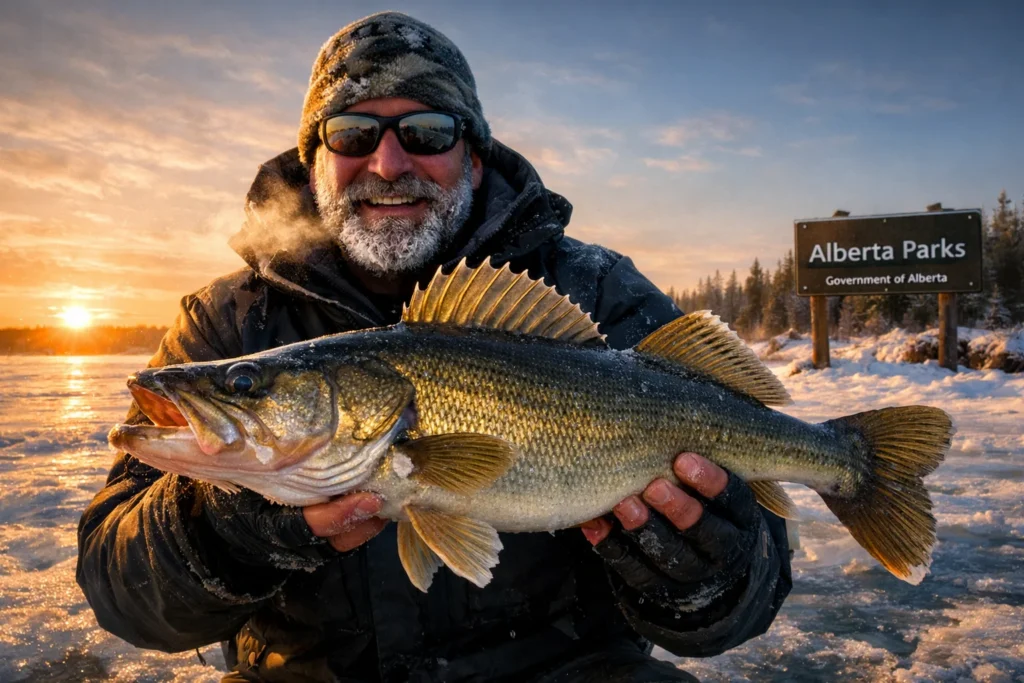
2026 Alberta regulations update
Alberta Fishing Regulations 2026: what changed and what to check first
Alberta fishing regulations changed most clearly around walleye Special Harvest Licences in 2026. Use this guide to confirm the new SHL process, current sportfishing licence fees, WiN requirements, and the important difference between Alberta provincial waters and national park waters.
Walleye SHL process
Class A, B, and C walleye SHLs move to direct purchase for eligible Alberta residents, first-come, first-served while quotas remain.
Licence and WiN check
A resident annual licence is listed at $30.00 before GST, and every buyer needs a valid WiN before purchasing.
Seniors and youth
Alberta residents age 65+ and youth under 16 do not need a provincial sportfishing licence, but regulations still apply.
National parks are separate
Banff, Jasper, Waterton, and other national park waters require the correct Parks Canada permit and park-specific rules.
Alberta fishing regulation decision path
Before you fish, run through these four checks in order. They prevent the most common licence and waterbody mistakes.
Use our Alberta licence guide if you are unsure whether you need a resident, non-resident, park, or SHL product. 2. Check SHL quotas
Walleye SHLs depend on class, waterbody, available quota, and paper tags. 3. Verify the waterbody
Zone rules, bait restrictions, closures, size limits, and possession limits can change by lake or stream. 4. Compare Canada-wide rules
Planning across provinces? Start with the Canada fishing regulations and licences hub.
Official source check: Verify final fees, SHL availability, and waterbody rules with My Wild Alberta licence fees, My Wild Alberta Special Harvest Licences, and the Alberta Guide to Sportfishing Regulations before you buy or fish.
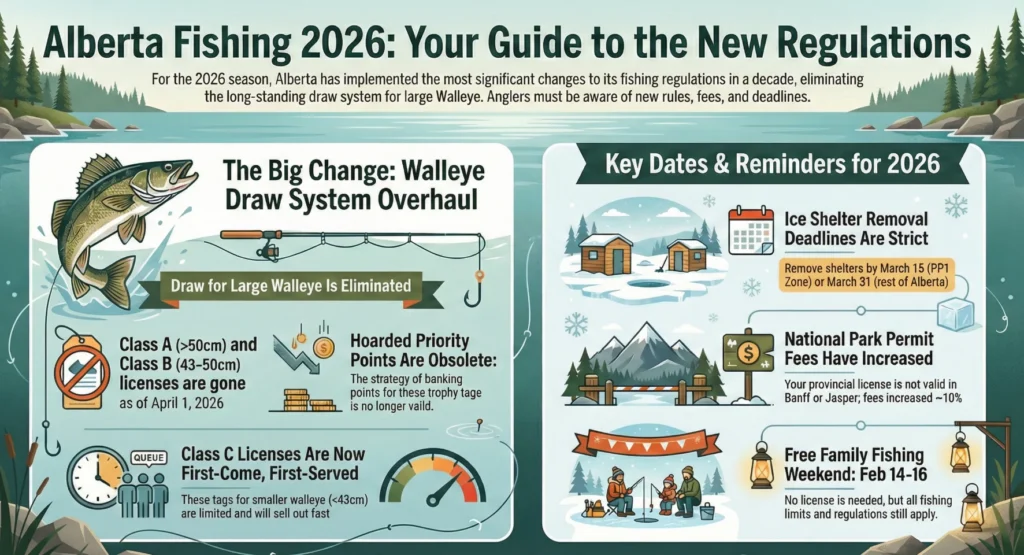
The Big Change: Walleye Class A & B Removal
This is the headline event for 2026. For years, we hoarded priority points like gold. We applied for Class A (Walleye over 50cm) or Class B (Walleye 43-50cm) through the draw system.
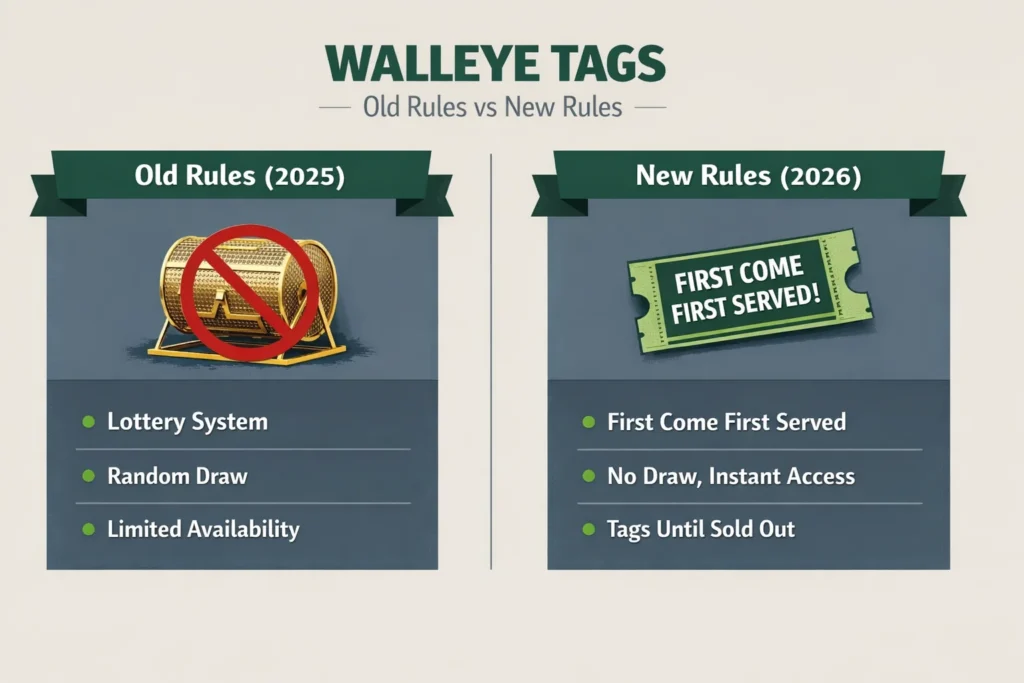
As of the 2026 license year (starting April 1), Class A and Class B licences are removed from the draw process.
What does this mean for your Walleye fishing strategy?
- Priority Points: If you were “banking” points for a trophy harvest tag in 2026, the strategy is now obsolete for these specific classes.
- Class C Remains: You can still purchase Class C licences (usually for smaller Walleye under 43cm) starting in May. Warning: These are sold on a first-come, first-served basis, and popular lakes will sell out fast.
- The Goal: The province is moving towards more sustainable, slot-size management without the administrative burden of the draw for every single fish class.
For the most accurate updates on your specific priority points, log in directly to AlbertaRELM.
The “Bridge” Season: Ice Fishing (Now – March 31, 2026)
Right now, we are in the transition zone. You are technically fishing under the 2025-2026 regulations until midnight on March 31st. If you’re looking for gear tips before the ice melts, check out our complete guide to ice fishing in Canada.
Ice Shelter Removal Dates
Don’t let the late winter freeze fool you. The deadlines for removing your huts are strict, and enforcement is heavy in March.
| Zone | Removal Deadline | Target Area |
| PP1 (Parkland Prairie) | March 15, 2026 | Generally south of Hwy 16 (verify specific WMU boundaries) |
| Rest of Alberta | March 31, 2026 | Northern zones and mountain areas |
Pro Tip: Legal dates don’t dictate safety. Late-season ice often becomes ‘honeycombed’ or ‘rotten’—strong vertically but weak horizontally. If the edges are soft, pull it early. A submerged truck costs way more than a missed weekend of fishing.
🍁 The Local Secret
The Family Weekend Loophole.Most people treat the Family Fishing Weekend (Feb 14-16, 2026) as a time to take the kids out for perch. But savvy anglers use it for reconnaissance. Since you don’t need a license (though regulations still apply), it’s the perfect weekend to test out a new lake you’ve been eyeing without committing to the full annual fee if you’re a visitor or a lapsed angler. Take the sled, drill a few holes, check the depth charts, and mark waypoints. You’re scouting for the spring opener while everyone else is just trying to keep their hot cocoa warm.
If you are planning to take advantage of the free weekend, read our tips on planning family fishing trips in Canada to ensure the kids stay warm and entertained.
2026 License Fees & Costs
Inflation hits everything, including tackle boxes and tag fees. If you are unsure about the general process, read our guide on how to obtain a fishing license in Canada.
Provincial Licenses (AlbertaRELM)
- Resident Annual (16-64): $30.00 before GST.
- Alberta Resident Senior (65+): No provincial sportfishing licence required; carry proof of age/residency where needed and follow all regulations.
- Youth under 16: No provincial sportfishing licence required, but all regulations still apply.
- Walleye Special Harvest Licence (SHL): $12.00 per licence, plus GST, while eligible quotas remain.
National Parks (Banff, Jasper, Waterton)
Important: National parks are federal, not provincial. Your Alberta provincial sportfishing licence does not cover Banff, Jasper, Waterton, or other national park waters. You need the correct Parks Canada fishing permit and must follow park-specific rules.
New for 2026: Parks Canada adjusted fees on January 1, 2026. Expect to pay:
- Daily Permit: ~$12.25 – $15.00
- Annual Permit: ~$45.00 – $51.25
Always check the specific park visitor centre. Fishing in a national park with only a provincial licence can lead to enforcement action. For park-specific rules, confirm details with My Wild Alberta and the relevant Parks Canada source before you fish.
The Pre-Trip Protocol
- Step 1: Check Your WiN Card Expiry. Your Wildlife Identification Number (WiN) expires every 5 years. Confirm the current WiN fee in AlbertaRELM before purchase; My Wild Alberta lists a WiN at $12.00 plus GST.
- Step 2: Keep Your Licence Accessible. Use AlbertaRELM or a printed copy where appropriate, and make sure you can show your licence and tags if checked.
- Step 3: Verify Bait, Closure, and Limit Rules. Check the exact waterbody before fishing. Bait rules, seasonal closures, size limits, and possession limits can vary by zone and species.
Conclusion
The 2026 fishing season in Alberta is defined by the end of the traditional Walleye draw for harvest classes. It’s a move toward simplification, but it requires you to pay attention.
Use the remainder of the ice season to get your gear sorted, mark your calendar for the March 15th shelter removal, and get ready for a new open-water landscape come April.
If you are looking for new waters to explore this year, check out our curated list of the best fishing spots in Alberta.
Tight lines, and stay safe on the hard water.
Frequently Asked Questions
Do I need a fishing license in Alberta if I am over 65?
Yes, but it is free. Alberta residents aged 65 and older must still obtain a sportfishing license at a cost of $0.00 to ensure they are registered in the system. You must carry this license while fishing.
When is the free fishing weekend in Alberta for 2026?
The first Family Fishing Weekend of 2026 is February 14-16, 2026. The summer weekend is scheduled for July 11-12, 2026. During these times, no license is required, but all regulations (limits, methods) still apply.
Can I use my Alberta fishing license in Banff National Park?
No. Provincial licenses are not valid in National Parks. You must purchase a specific Parks Canada fishing permit to fish in Banff, Jasper, or Waterton Lakes National Park.
What happened to the Walleye draw for 2026?
Effective for the 2026 season, Class A (>50cm) and Class B (43-50cm) licenses have been removed from the draw system. Class C licenses are available on a first-come, first-served basis.
When must ice fishing huts be removed in Alberta in 2026?
Ice fishing shelters must be removed by March 15, 2026, in Zone PP1 (Parkland Prairie) and by March 31, 2026, for the rest of the province, or earlier if directed by an officer.