

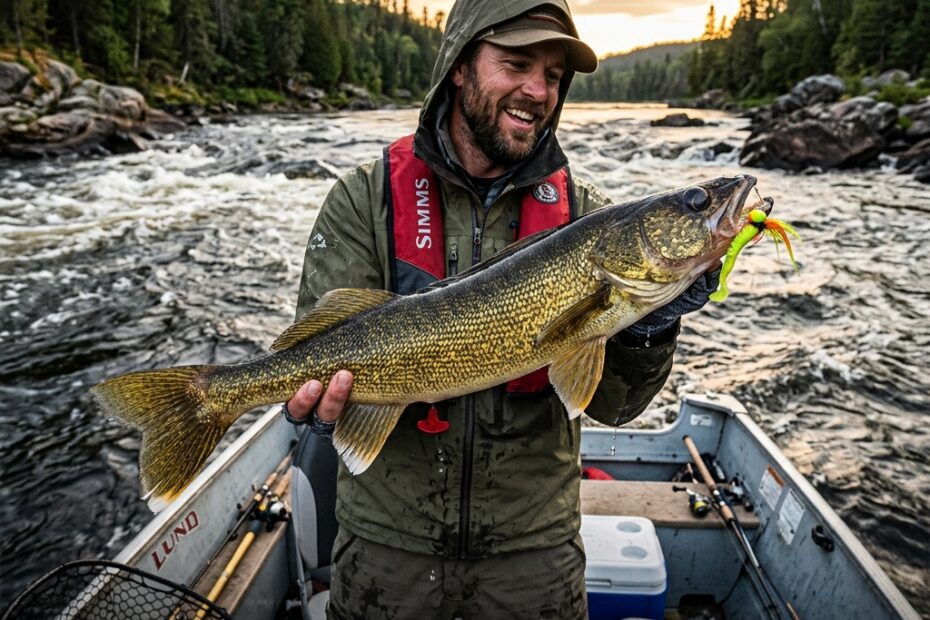
The best jigs for river walleye in Canada — weight selection, colour choices, and current reading techniques for the Ottawa River, St. Lawrence, Winnipeg River, and more.
- Use Walleye Jigs for River Current Fishing in Canada to understand habitat, seasonal movement, and signs without disturbing animals or sensitive areas
- Plan viewing distance, timing, optics, and weather around the species and location you are visiting
- Respect closures, local rules, and safety buffers, especially around large animals, nesting sites, and remote access
Bottom line Walleye Jigs for River Current Fishing in Canada is most rewarding when you combine patience, distance, habitat knowledge, and current local guidance
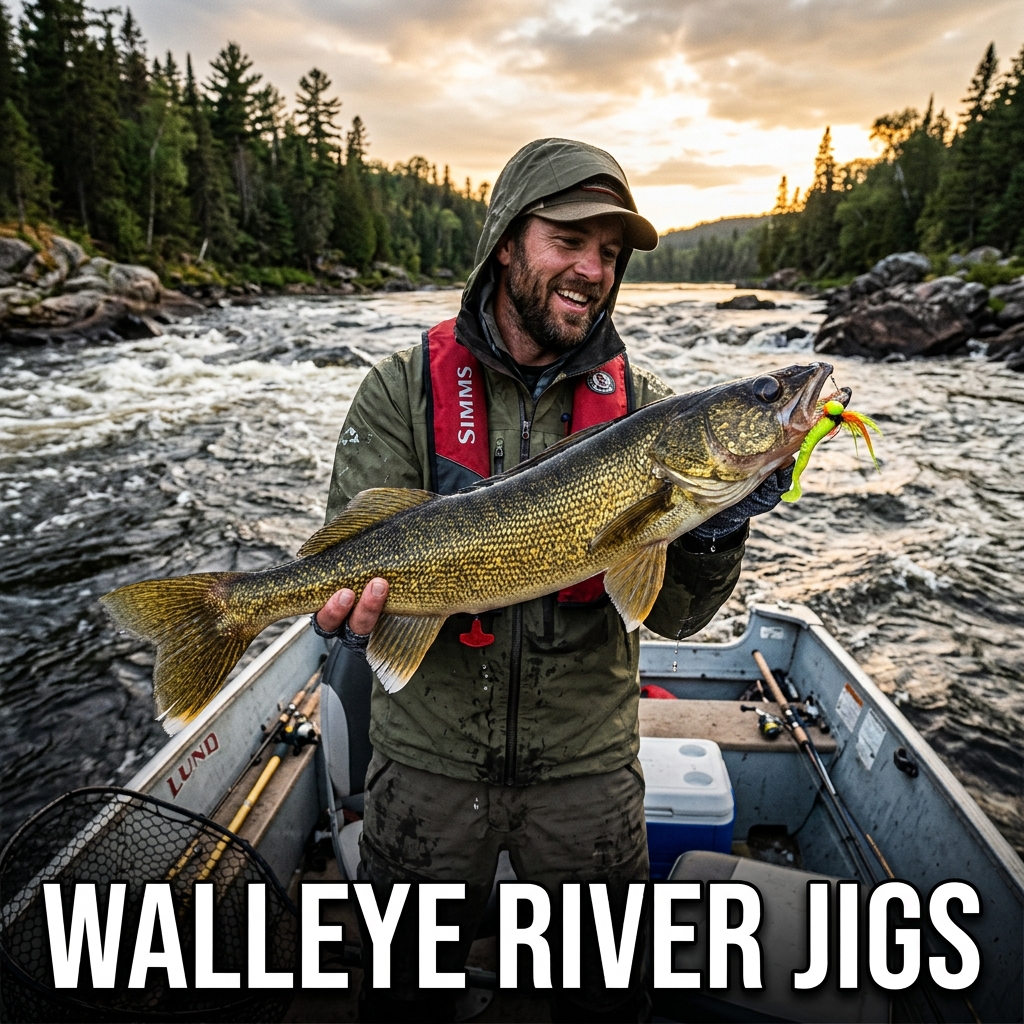
River walleye are a fundamentally different animal than their lake-dwelling cousins. In the Ottawa River, the French River, the Winnipeg River, or the North Saskatchewan, walleye have evolved to live in current. They hold position behind current breaks — boulders, submerged logs, ledge drops, bridge pilings — and ambush baitfish being swept past by the flow. The jig that dominates in still water fails in current. River walleye demand a specific jig profile, a specific weight, and a specific presentation technique.
This guide covers the five best walleye jigs for river current fishing in Canada, with the exact weights, presentations, and location patterns that guide-level anglers use on Canadian river systems from spring through fall.
⚡ Key Takeaways
- Go heavier than you think: River walleye jigs need to stay near the bottom. Use 3/8 oz to 1 oz depending on current speed — far heavier than the 1/8 oz jigs popular on calm lakes.
- Ball jig heads dominate in current: The round ball profile resists current drag and stays down. Stand-up heads are for slow water only.
- Fish downstream of structure: Walleye park directly behind current breaks. Cast upstream, let the jig sweep past the obstruction, and work the downstream shadow zone.
- Color by water clarity: Chartreuse in stained river water; white, smoke, or natural shad in clear water.
- Spring run = best of the year: Post-spawn walleye stacked in river pools below dams (where legal) are the most concentrated, most aggressive walleye you’ll ever encounter.
📋 The Guide’s Log
The Ottawa River in late April is arguably the best walleye fishing in Ontario. Post-spawn fish stack in the current seams below rapids, and if you find the right current break with the right jig, you can put 20–30 fish in the boat in a morning. I watched a client from Toronto spend three hours throwing a 1/8 oz jig from a lake fishing trip. Not a touch. I handed him a 5/8 oz ball-head jig tipped with a 4-inch shad body and told him to cast upstream of that large boulder and count three seconds before starting his retrieve. He had a 4 lb walleye on the third cast.
The fish were stacked there the entire time. The 1/8 oz jig was washing over their heads in the current before it had time to sink to the bottom of the strike zone.
1. Lindy Jig (3/8–5/8 oz) — Best All-Around River Jig
The Lindy Jig is the defining walleye river jig, purpose-built for flowing water. Its round ball head and wire weedguard allow it to be bounced along rocky river bottoms without snagging constantly. The hook rides at the correct angle for current presentations — when you lift and drop the jig in current, the hook orientation maximizes hookups on fish that strike from the downstream (tail-facing) direction.
Use 3/8 oz in moderate current, 1/2 oz in strong current, and 5/8–3/4 oz in fast water over 6 feet deep. Tip with a 3-inch white or chartreuse curly tail grub or a live minnow hooked through the lips.
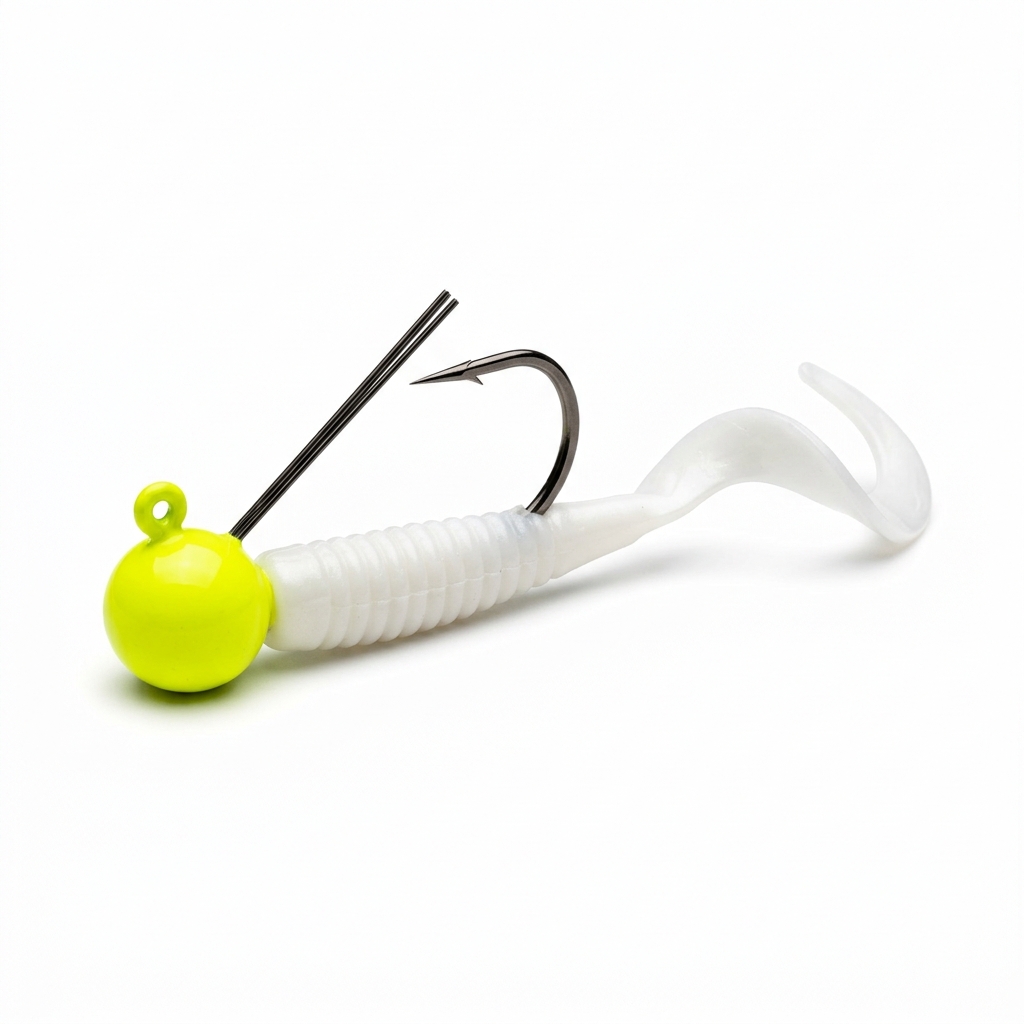
Lindy Jig (3/8–5/8 oz)
The original walleye river jig. Wire weedguard, round ball head, and optimal hook angle for current presentations. The benchmark all others are measured against.
2. Northland Tackle Whistler Jig — For Fast, Deep Water
When you’re fishing fast, deep current — the kind found in the main channels of the Winnipeg River, the North Saskatchewan, or the St. Lawrence — even a 5/8 oz ball head washes out of the strike zone before it reaches bottom. The Northland Whistler adds a small Colorado blade above the hook that creates both flash and lift-resistance, helping the jig plane down faster in current and producing a vibration signature that walleye can detect from downstream.
In turbid spring river conditions, the Whistler’s blade creates a flash signal that compensates for the reduced visibility. Use chartreuse/orange or chartreuse/green color combinations in dirty water; white/silver in clearer conditions.
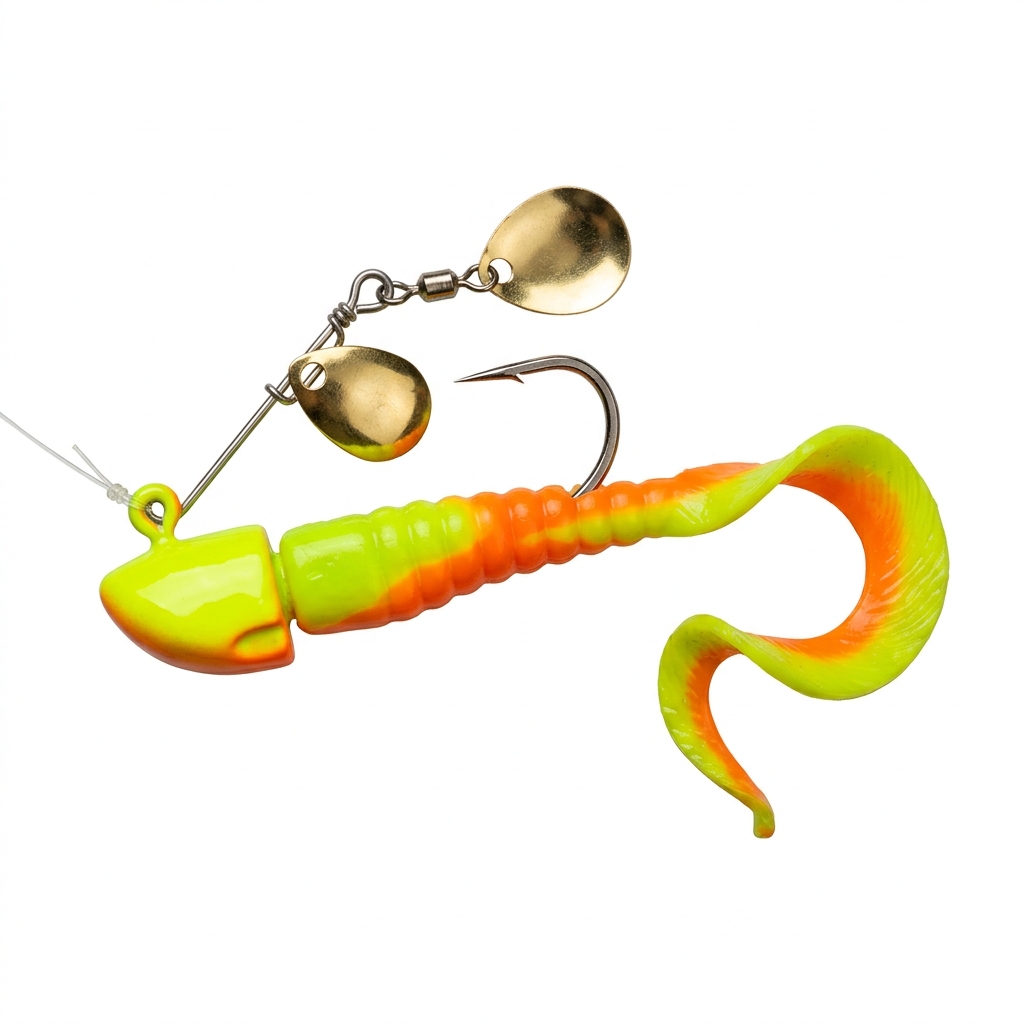
Northland Tackle Whistler Jig
Colorado blade creates flash and vibration in turbid current. Ideal for the fast, deep main channels of large Canadian river systems.
3. Custom Jigs & Spins Genz Worm — For Pressured River Fish
The Genz Worm is the finesse option for river walleye — a compact, slender jig with a small swimming tail that works best in moderate current over sand and gravel. When river walleye have seen heavy jig pressure (common in well-known Ontario and Quebec river systems), downsizing to a 1/4 oz Genz Worm on 8 lb fluorocarbon triggers fish that refuse larger presentations. The subtle, lifelike action of the thin tail is devastatingly effective on mid-season fish in medium-pace current.
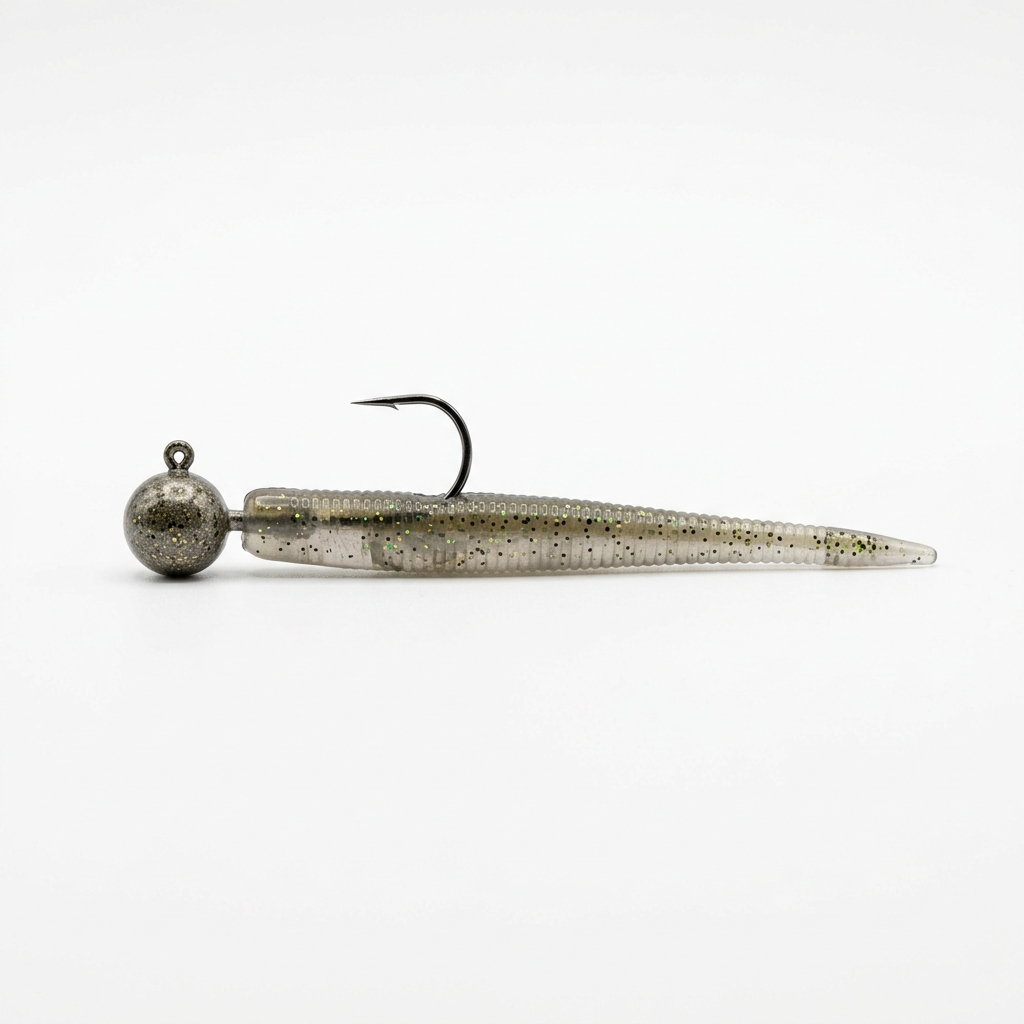
Custom Jigs & Spins Genz Worm
Finesse jig for pressured river walleye. Slim swimming tail produces a subtle, natural action that triggers refusal fish in moderate current.
4. VMC Mooneye Jig (With Paddletail Body)
The VMC Mooneye is a versatile ball-head jig with a large hook gap that pairs perfectly with 3.5–4 inch paddletail swimbaits. In Canadian river systems, the paddletail body adds a constant swimming action even when the jig is drifting downstream with minimal rod input — essential when you want a natural, current-driven presentation in the downstream shadow zones behind large boulders.
This setup excels for “swing jigging” — casting across the current, mending downstream, and letting the jig swing from fast water into the slack water behind a current break. Strike often comes right as the jig enters the seam between fast and slow water.
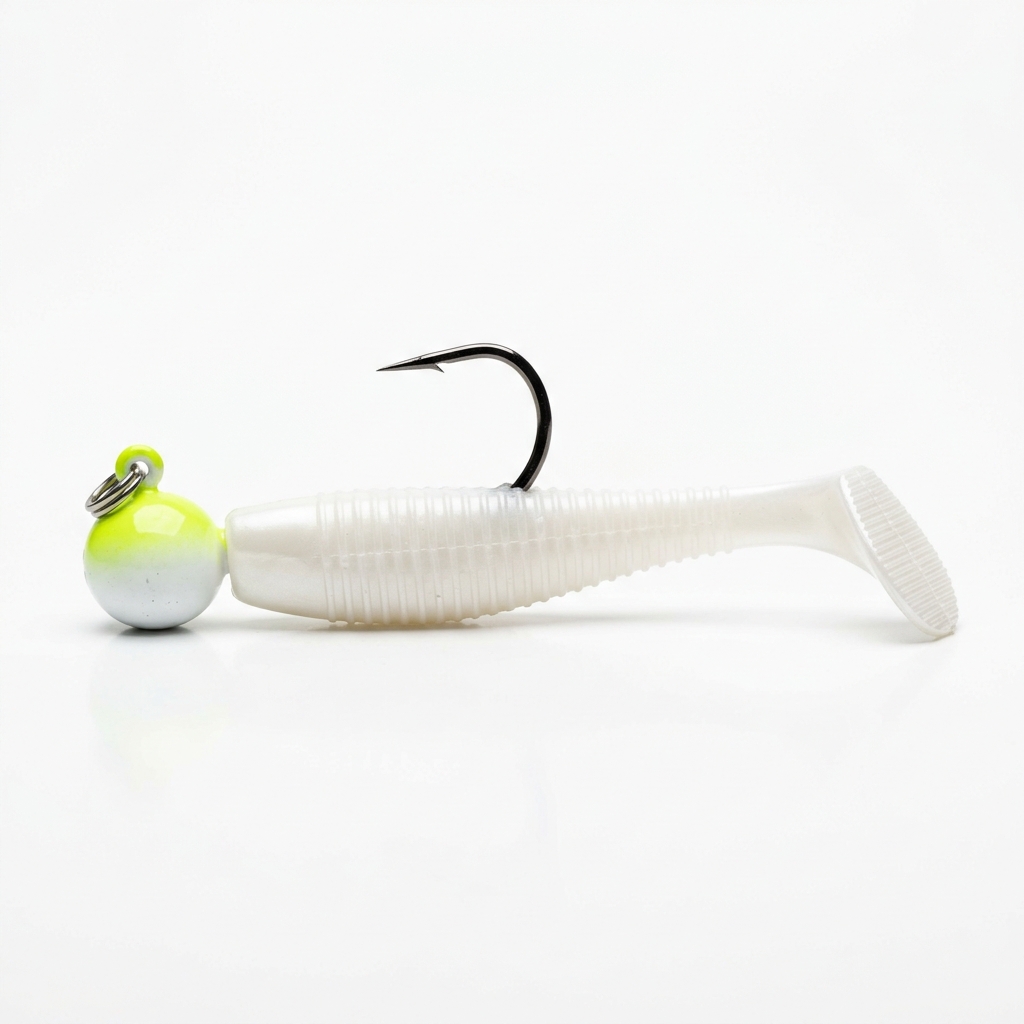
VMC Mooneye Jig + Paddletail Body
Large hook gap pairs with paddletail swimbaits for a constant swimming action. Deadly for swing-jigging through current seams.
🍁 The Local Technique: Vertical Jigging Below Dams
In the spring walleye run — March through May on southern Ontario rivers, May through June on northern rivers — walleye stack in the deep pools immediately downstream of dams to the extent that legal. This is the highest-density walleye fishing in Canada.
The technique is simple: position directly above the fish with your electric motor, lower a 3/4 oz to 1 oz ball jig straight down, and use a short 2–4 inch lift-and-drop motion. No casting. No swing. Just vertical contact. In peak spring conditions, you can often see the fish stacked on your sonar and watch individual fish attack the jig. Always verify provincial regulations regarding minimum distances from dam structures before fishing these areas.
River Walleye Location: The Four Key Spots
- Current Breaks (Boulders, Logs, Pilings): The calm water immediately downstream of any obstruction in current. Walleye hold in the slack zone and dart into current to grab passing baitfish. Cast upstream of the obstruction, let the jig sweep past it, and work the downstream shadow slowly.
- Inside Bends: Current slows on the inside of river bends, creating natural walleye holding zones at the transition from fast to slow water. Work the seam with a slow drift-and-drop presentation.
- River Ledges: Underwater rock ledges running perpendicular to current concentrate both baitfish and walleye. Cast upstream along the face of the ledge and drag the jig along the edge.
- Pool Tailouts: The shallow end of a deep pool where current re-accelerates is a feeding station, especially at dawn and dusk. Walleye stack here to intercept baitfish being pushed by the current.
Frequently Asked Questions
What size jig for river walleye in Ontario?
3/8 oz to 5/8 oz covers most Ontario river situations. Use lighter weights (1/4 oz) in slow, shallow runs and heavier weights (3/4–1 oz) in deep, fast sections of large rivers like the Ottawa or the St. Lawrence. The rule: your jig should just barely maintain bottom contact with a slight bow in the line. If it’s bouncing and tumbling, go heavier.
Match the complete jig-and-body weight to the stated rod range with our walleye jigging rod guide, and choose a higher-rated model whenever the needed rig exceeds it.
What’s the best river walleye colour in Canada?
Chartreuse is the most universally effective colour in Canadian river systems, particularly in the stained, turbid water common during spring runoff. In clearer summer water, white, smoke, and natural shad colours produce better. When in doubt, chartreuse.
Can I keep river walleye in Ontario?
Retention rules vary by river and by season. Many Ontario rivers have reduced possession limits or slot size restrictions. The 2025 Ontario Fishing Regulations Summary is the authoritative source — check it at ontario.ca before your trip. Regulations near dams and spawning areas are often more restrictive.
Is river walleye fishing better than lake fishing?
River fishing concentrates fish in predictable locations in a way that lake fishing does not. Once you understand current breaks, you can systematically work a stretch of river and know exactly where fish will be. Spring river fishing (post-spawn stacking) in particular produces more fish per hour than almost any other walleye scenario in Canada. The trade-off is that river fishing is more technically demanding — weight selection, angle of presentation, and current reading skills take time to develop.