

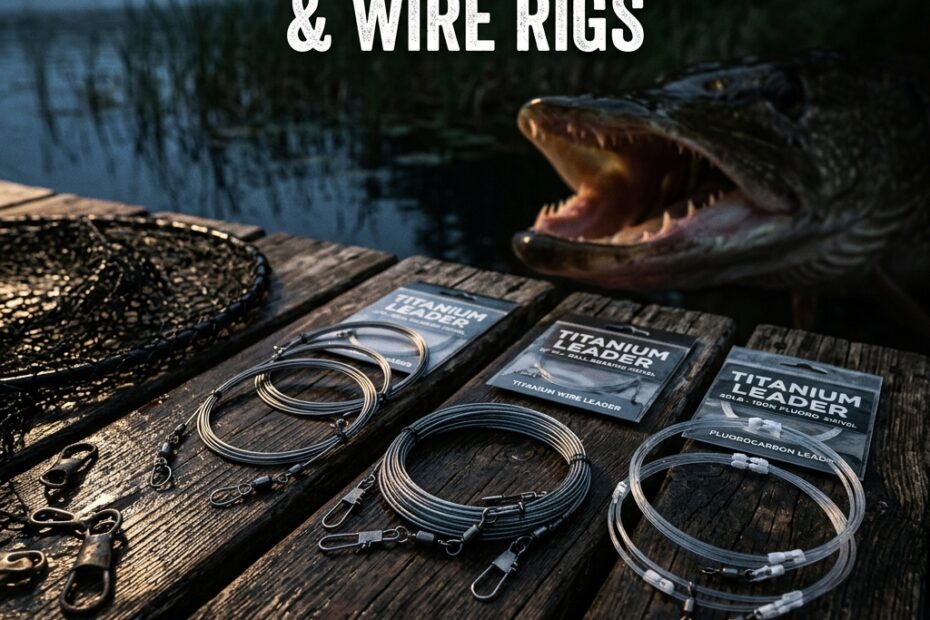
Titanium wire vs. fluorocarbon vs. pre-made leaders for Canadian northern pike. Expert breakdown of the best pike leader materials, lengths, and builds that guides actually use.
- Use Pike Leaders & Wire Rigs for Canadian Northern Pike to match species behaviour, habitat, season, and presentation to Canadian water conditions
- Check local regulations before fishing; limits, closures, bait rules, and licences can vary by province and waterbody
- Focus on practical setup: where to fish, what to cast or troll, how deep to work, and when to move
Bottom line Pike Leaders & Wire Rigs for Canadian Northern Pike gets simpler when you pair current rules with the right habitat, timing, and presentation
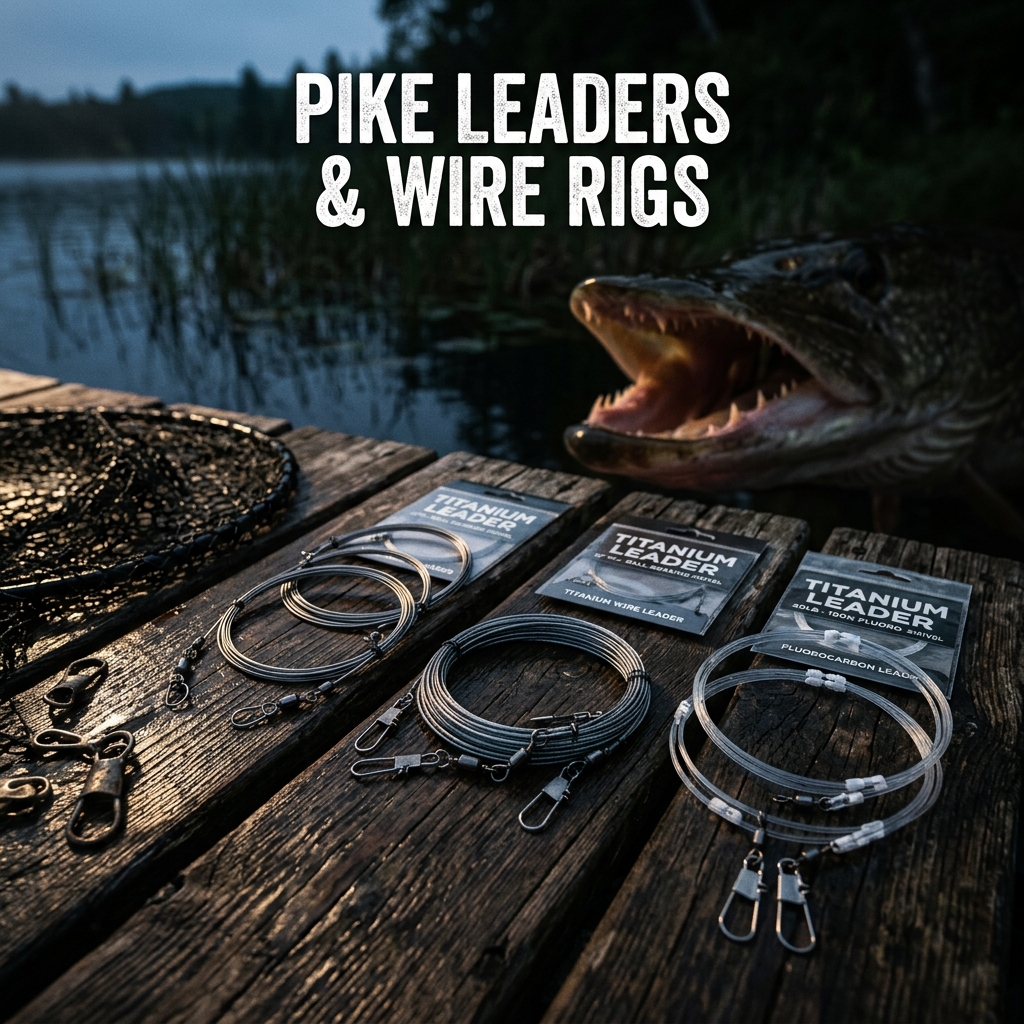
Every year, Canadian pike anglers lose expensive lures, miss fish at the net, and occasionally break off trophy fish — all because they chose the wrong leader. The pike’s teeth are not just sharp; they are arranged in a dense, overlapping array specifically designed to sever monofilament and fluorocarbon. A single roll or tail-thrash at the net can slice through 20 lb mono in an instant.
This guide covers the best pike leaders and wire rigs for Canadian northern pike fishing — from titanium wire for big-lure trolling to heavy fluorocarbon for finesse presentations in clear Shield lakes — with the exact rigs, lengths, and hardware recommendations that Canadian guides rely on.
⚡ Key Takeaways
- Wire is mandatory for pike. Any fluorocarbon under 100 lb can and will be cut by a large northern pike. In stained water or with big lures, always use wire.
- Titanium wire is the best all-around choice — kink-resistant, re-usable, and knottable. Worth the extra cost for a serious pike trip.
- Leader length matters: 12–18 inches for casting; 24–36 inches for live/dead bait or trolling.
- Heavy fluorocarbon (100 lb+) is viable in very clear water with smaller lures, but only if you inspect it after every fish.
- Always carry long-nose pliers and a jaw spreader — for your safety and the fish’s welfare when removing hooks from a pike’s mouth.
📋 The Guide’s Log
I once watched a very experienced angler lose what was clearly a 50-inch trophy pike in a remote Manitoba lake because he was using 80 lb fluorocarbon as his leader. He’d been using it all week without issue on smaller fish. When that big fish rolled three times at the net, the fluorocarbon frayed and snapped on the second roll. The fish was gone in under a second.
For big pike — anything potentially over 38 inches — use wire. Period. The extra flash or stiffness that wire adds to your presentation is worth less than the fish you’re about to lose.
1. American Fishing Wire Titanium (Best Overall)
American Fishing Wire Titanium is the gold standard for serious pike leaders. Unlike standard multi-strand steel wire, titanium can be tied with standard knots (an improved clinch works fine), does not kink permanently when a fish rolls, and has virtually unlimited re-use life. It is expensive — about $30–$40 for a small spool — but a single spool builds dozens of leaders that will last multiple seasons.
Build your leaders at 12–15 inches for casting, using a small barrel swivel at one end and a quality snap at the other. The snap allows instant lure changes without cutting the leader.
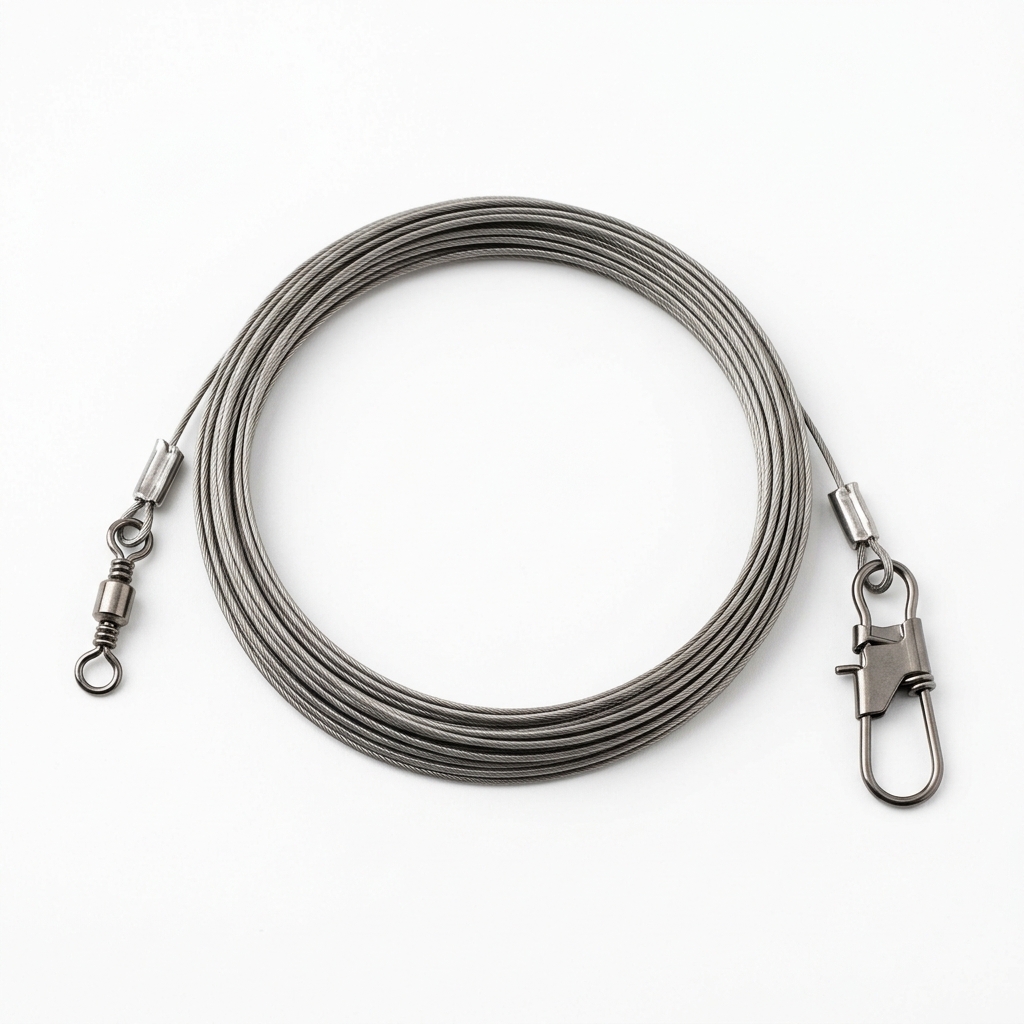
American Fishing Wire Titanium
Kink-resistant, knottable titanium wire. The most durable pike leader material available. Ties with standard knots — no crimps required.
2. Knipex Multistrand Wire Leaders (Pre-Made)
For anglers who don’t want to build their own leaders, quality pre-made multistrand wire leaders are the go-to choice. Look for leaders with a minimum 20 lb wire (30 lb preferred for fish over 15 lbs), quality ball-bearing swivels, and heavy-duty snap clips. The best pre-made leaders use crimped sleeve connections rather than twisted closures — crimps are significantly stronger and less likely to fail at the connection point.
Inspect pre-made leaders after every fish. The connection between the wire and the crimp sleeve is the failure point — if you see fraying, corrosion, or the sleeve beginning to loosen, discard the leader immediately. Leaders are cheap. Trophy pike are not.
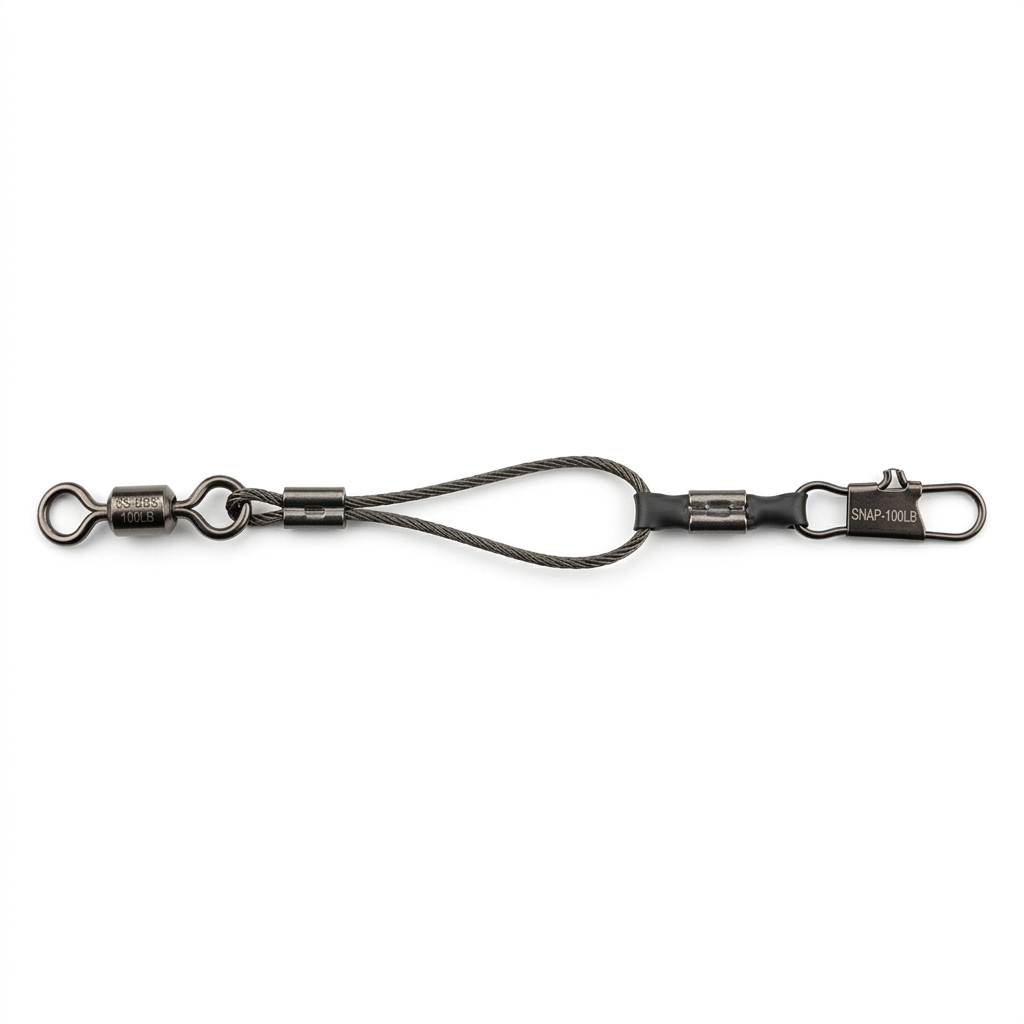
Multistrand Crimped Wire Leaders (30 lb)
Ready-to-use crimped wire leaders with ball-bearing swivels. Inspect the crimp connection after every fish — discard at first sign of fraying.
3. Surflon Nylon-Coated Multistrand (For Live Bait)
For live and dead bait presentations — sucker rigs, smelt rigs, and large cisco presentations for giant Manitoba or Saskatchewan pike — you need a leader that is flexible enough not to inhibit bait movement. Surflon nylon-coated multistrand wire is the guide’s choice. It is flexible enough that a live sucker can swim naturally, yet has the abrasion resistance to survive a pike’s teeth. The nylon coating also reduces the visual profile compared to bare wire.
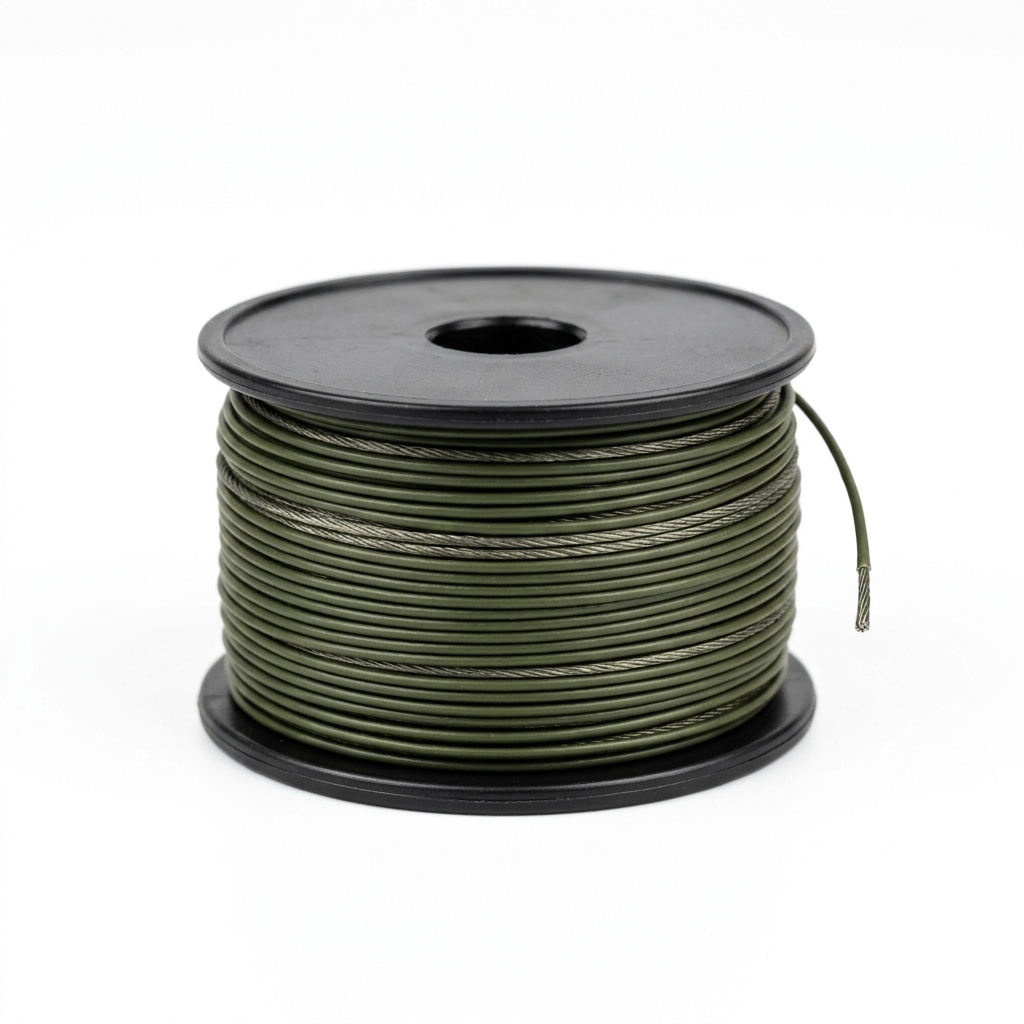
Surflon Nylon-Coated Leader Wire
Ultra-flexible for live and dead bait. Nylon coating reduces visual profile versus bare wire. Knottable with standard fishing knots.
4. Heavy Fluorocarbon Leader (Clear-Water Option)
In highly pressured, extremely clear Canadian lakes — parts of Georgian Bay, the French River, Lake of the Woods — wire leaders can visibly spook fish. In these conditions, a 100–125 lb fluorocarbon leader (approximately 1.0–1.2 mm diameter) provides enough tooth resistance for smaller pike (under 36 inches) while remaining nearly invisible. It is not a substitute for wire with big fish, but for clear-water jigging and finesse presentations targeting average-sized pike, it is a worthwhile option.
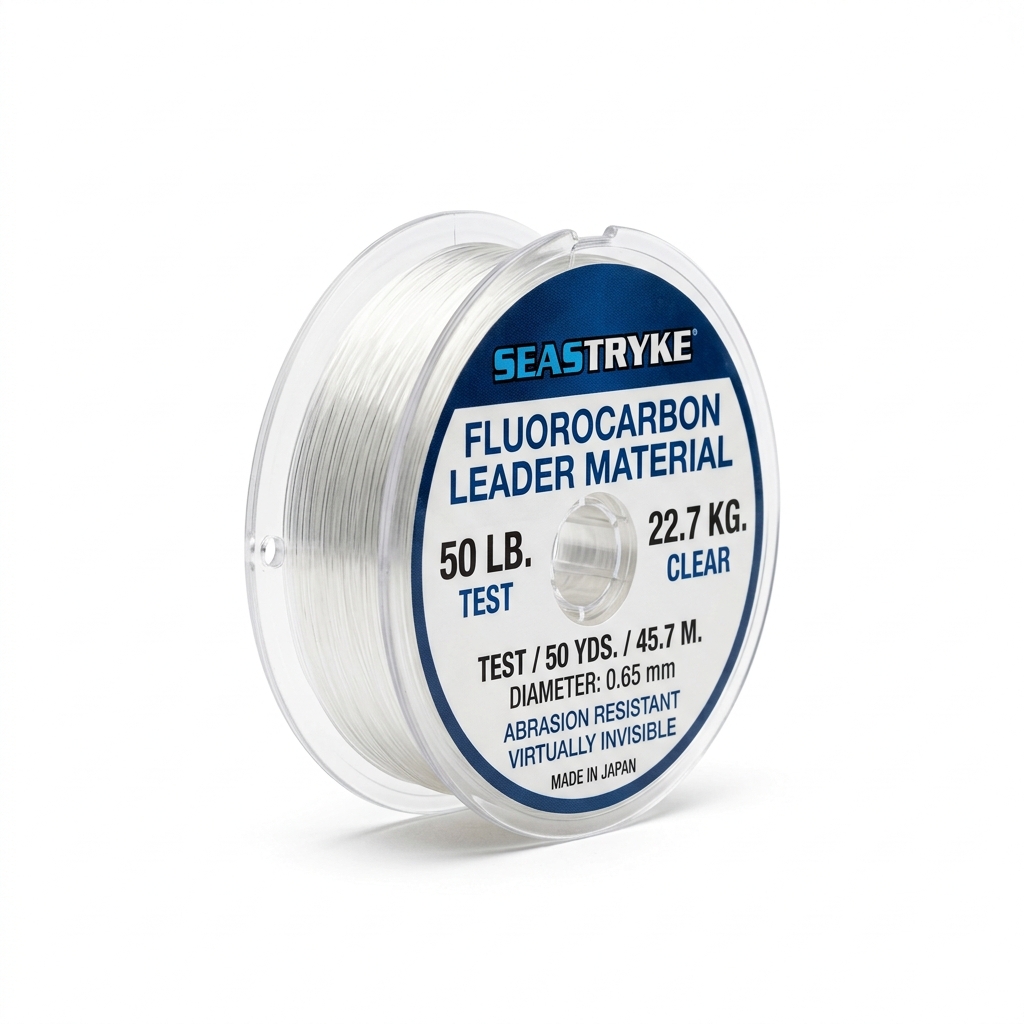
Heavy Fluorocarbon Leader Material (100 lb)
Near-invisible in clear water. Only viable for pike under ~36 inches. Must be inspected and replaced after every fish — never trust nicked fluorocarbon.
🍁 The Local Build: The Manitoba Guide’s Rig
Manitoba and Saskatchewan guides fishing for giant pike on large, shallow lakes use a specific big-bait rig: a 24-inch length of 40 lb titanium wire, crimped to a quality #4 ball-bearing swivel at one end and a stainless coastlock snap at the other. The long leader length prevents the pike’s body from contacting the main braid during a fight.
The coastlock snap (not a standard snap swivel) allows large lures to swing freely without restriction, preserving the action of big swimbaits and glidebaits. Never use a small snap with a lure over 5 inches — the restriction kills the bait’s action.
Essential Pike Handling Gear
No pike leader setup is complete without proper handling gear. Pike have sharp teeth, sharp gill rakers, and violent, unpredictable behavior at the net. The following tools are non-negotiable on any serious Canadian pike trip:
- Long-nose pliers (10–12 inches): For reaching deep into the pike’s mouth to remove hooks. Never use your fingers.
- Jaw spreader: Holds the pike’s mouth open safely while you remove hooks. Essential for deeply hooked fish.
- Large rubber landing net: A net with a rubber mesh bag is mandatory. Knotted nets damage the pike’s slime coat and scales. For pike over 36 inches, use a net with at least a 30-inch hoop diameter.
- Hook cutters: For deeply embedded hooks that cannot be safely removed — cut the hook and remove the piece rather than tearing it out.
Frequently Asked Questions
Can a northern pike bite through 80 lb fluorocarbon?
Yes. A large pike can sever 80 lb fluorocarbon with a single roll or head shake, especially if the line contacts the cutting edge of a tooth rather than the flat surface. For pike of any significant size, 100 lb minimum fluorocarbon is required — and even then, wire is safer and more reliable.
How long should a pike wire leader be?
For casting, 12–18 inches is standard. For live/dead bait fishing and trolling, use 24–36 inches. The longer leader prevents the pike’s body from rubbing against the main line during a fight, which is the second most common cause of bite-offs after actual tooth contact with the leader.
Do wire leaders affect lure action?
Stiff single-strand wire can dampen the action of smaller, light-wire lures like jerkbaits and glidebaits. For these presentations, use flexible titanium or nylon-coated wire with a small coastlock snap to maximize lure freedom. For heavy vibrating lures (spinnerbaits, big crankbaits), lure action is not significantly affected by wire stiffness.
What is the best leader for pike in Canada — wire or fluorocarbon?
Wire for any fish over 30 inches, any big lure, any situation involving pike over 10 lbs. Fluorocarbon (100 lb+) only for clear-water finesse situations with smaller lures targeting average-sized pike, and only if you inspect it after every single fish.