

The 4 best drop shot baits for Canadian Shield smallmouth. Expert rigging setups, depth targets, and structure patterns for summer bass fishing in Ontario and beyond.
- Use The 4 Best Drop Shot Baits for Deep Smallmouth Bass in Canada to match destination, season, access, and budget to the kind of trip you actually want
- Check licences, local rules, travel logistics, weather, and booking windows before locking in dates
- Compare locations by practical fit: target species or activity, remoteness, services, safety, and backup options
Bottom line The 4 Best Drop Shot Baits for Deep Smallmouth Bass in Canada becomes easier when you choose the destination around timing, access, rules, and your real trip style
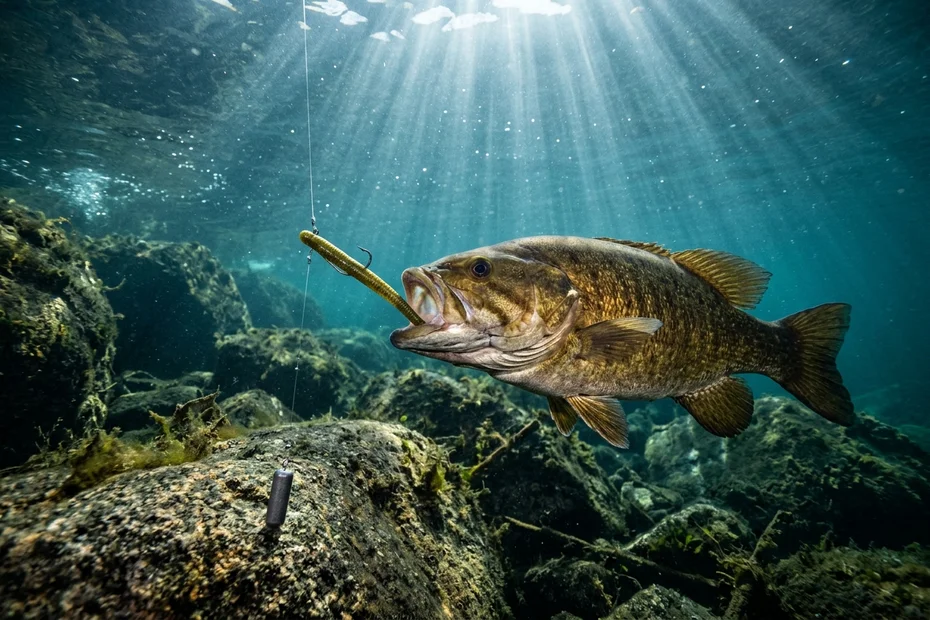
Deep smallmouth bass fishing on Canadian Shield lakes and Great Lakes waterways requires a specialized presentation once post-spawn water temperatures push mature fish off shallow spawning flats. Beginning in late June and stabilizing through July through late September, trophy smallmouth bass (Micropterus dolomieu) abandon shorelines and relocate to deep granite reefs, submerged saddles, gravel points, and current-washed shoals between 20 and 45 feet deep.
In these crystal-clear northern waters, conventional casting setups fail because horizontal lures pass through the strike zone too quickly or generate excessive unnatural commotion. The drop shot rig solves this challenge by anchoring a heavy tungsten weight directly on the bottom while suspending a supple soft plastic lure at the exact eye level of bottom-oriented fish.
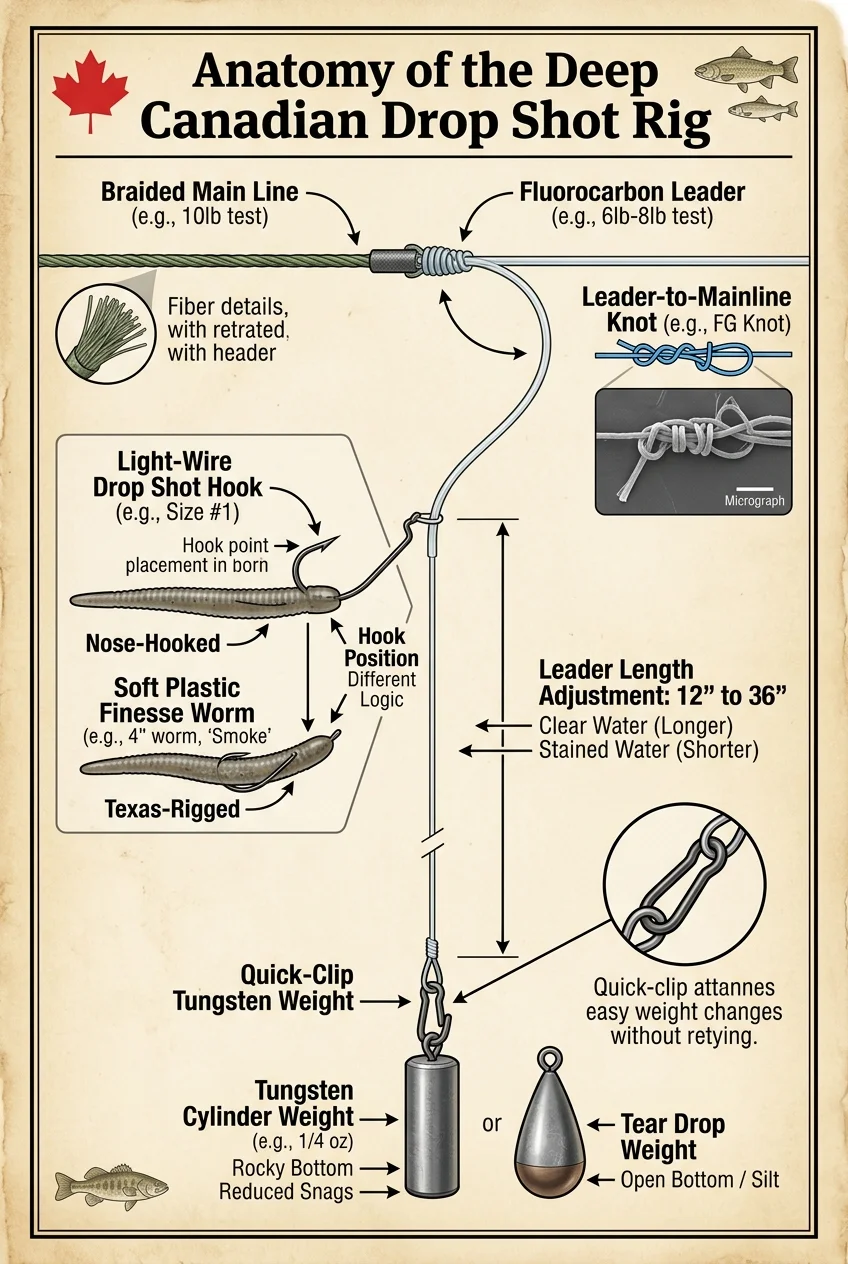
1. Deep Drop Shot Rig Mechanics for Canadian Shield Structure
The fundamental design of a drop shot rig reverses standard terminal tackle layout. Rather than positioning the weight above the hook or integrating weight into the hook shank like a jig head, a drop shot places the hook along the line with the sinker suspended below it on a terminal tag end. This architecture delivers three mechanical advantages in deep northern lakes:
- Independent Lure Suspension: The weight maintains continuous contact with the bottom substrate while the soft plastic bait suspends freely at a calibrated distance above silt, zebra mussels, or jagged rocks.
- Weightless Soft Plastic Action: Because the fish does not support the weight of the sinker when it inhales the soft plastic, it experiences zero resistance during the take, resulting in deep, positive hookups.
- Precise Vertical Station-Keeping: In deep water over 25 feet, an angler can hold the bait directly below the boat’s sonar transducer, monitoring the lure and the reacting smallmouth in real time with a dedicated sonar unit (see our guide to sonar flashers and fish finders for Canadian waters).
Selecting the correct terminal components ensures the rig stays on the bottom without constantly snagging in jagged granite crevices. Tungsten sinkers hold distinct advantages over traditional lead weights. Tungsten is approximately 70 percent denser than lead, allowing a 3/8 oz tungsten weight to maintain a significantly smaller profile than a comparable lead weight.
This reduced surface area allows the sinker to slip between rocks without jamming. The exceptional hardness of tungsten also transmits crisp vibrations through the fluorocarbon leader and braided line directly to the rod blank, allowing anglers to distinguish between soft silt, packed gravel, round boulders, and the distinct tick of a smallmouth bite.
Sinker profile selection must match the specific lake bed geology. Cylinder weights (also known as pencil or slim sinkers) represent the gold standard for Canadian Shield granite and broken rock.
Their elongated profile slides over crevices and boulder edges with minimal resistance. Teardrop or round weights, by contrast, excel over sand flats, clay basins, and sparse cabbage weed beds where maximum surface contact helps churn up subtle bottom sediment to attract curious bass.
2. Summer Thermocline Stratification & Deep Baitfish Dynamics
Understanding summer bass location requires analyzing the limnology of deep Canadian lakes. In northern freshwater bodies, rising air temperatures and intense solar radiation create distinct thermal layers by early July, a process known as lake stratification:
- The Epilimnion: The warm, upper circulating layer ranging from the surface down to roughly 15 to 18 feet. Surface water temperatures often reach 21°C to 24°C (70°F to 75°F). While smallmouth feed here during early June and low-light dawn periods, summer heat pushes mature fish deeper into cooler strata.
- The Metalimnion (Thermocline): The middle transitional layer, typically spanning 18 to 34 feet deep in Canadian Shield lakes. Water temperature drops rapidly within this zone, dropping from 20°C down to 14°C (68°F to 57°F). This narrow corridor contains optimal dissolved oxygen levels combined with comfortable metabolic temperatures for smallmouth bass.
- The Hypolimnion: The deep, cold bottom layer extending from 35 feet down to the lake bed. Temperatures remain cold, typically 6°C to 10°C (43°F to 50°F). While lake trout and cisco thrive in this deep basin, smallmouth generally avoid the hypolimnion floor unless pursuing forage along its upper boundary.
The positioning of smallmouth bass within the thermocline directly corresponds to their primary summer forage. In Great Lakes connected waters like Lake Simcoe and Georgian Bay, the invasive round goby (Neogobius melanostomus) has revolutionized bass feeding behavior. Gobies lack a functioning swim bladder, keeping them pinned to bottom gravel and rock humps in 20 to 40 feet of water. Smallmouth cruise these sunken shelves, holding their noses inches above the rock to vacuum up gobies. On northern Canadian Shield lakes without gobies, such as Lake of the Woods and Rainy Lake, smallmouth stage on deep reefs to ambush pelagic schools of rainbow smelt and cisco suspending along the upper thermocline boundary.
3. The 4 Proven Drop Shot Baits for Canadian Smallmouth
Selecting soft plastic baits for deep drop shot fishing requires assessing four specific criteria: profile matching, plastic suppleness, natural buoyancy, and scent attraction. The four baits detailed below have consistently outperformed all other soft plastics across Canadian Shield lakes and Great Lakes waterways.
1. Roboworm Straight Tail Worm (4.5-inch)
The Roboworm Straight Tail represents the classic finesse drop shot bait. Manufactured via a specialized robotic triple-pour process, Roboworm lures deliver lifelike dual-tone and triple-tone color laminates with exceptional plastic softness. In clear Canadian waters with 15 to 25 feet of visibility, the subtle taper of the 4.5-inch worm produces an organic tail oscillation in response to the slightest water current.
- Prime Colors: Green Pumpkin, Aaron’s Magic, Margarita Mutilator, and Bold Bluegill.
- Best Rigging Method: Nose-hooking on a size 1 light-wire drop shot hook exposed 1/8 inch behind the worm tip.
- When to Deploy: Calm water conditions, high post-frontal atmospheric pressure, and pressured clear lakes where bass refuse thicker plastics.
2. Z-Man Finesse TRD & Trick ShotZ (2.75 to 3.5-inch)
Z-Man soft plastics feature proprietary ElaZtech material, which is ten times more durable than conventional plastisol and naturally buoyant. While standard plastisol lures sink or rest horizontally when paused, an ElaZtech bait floats upward off the bottom. When rigged on a drop shot, the tail points straight up toward the surface, mimicking an alert goby or dying baitfish feeding on the bottom.
- Prime Colors: The Deal, Goby Bryant, Canada Craw, and Green Pumpkin Goby.
- Best Rigging Method: Nose-hooking on a size 1 hook or threading onto a size 1 offset worm hook for weedless presentations around cabbage beds.
- When to Deploy: Deep rocky structure populated by round gobies, and windy drift situations where maximum buoyancy prevents the bait from dragging in bottom moss.
3. Berkley PowerBait MaxScent Flatnose Minnow (4-inch)
Berkley’s MaxScent formula releases an expanded scent field that attracts fish from greater distances in deep, low-light environments. The Flatnose Minnow features a compressed, flattened head that sits securely against a drop shot hook, paired with a thin, V-shaped tail section that mimics pelagic cisco, rainbow smelt, and emerald shiners. In deep basins over 30 feet, the high scent dispersal induces aggressive bites even when fish are neutrally oriented.
- Prime Colors: Natural Shad, Smelt, Brown Back, and Green Pumpkin Party.
- Best Rigging Method: Nose-hooking through the flat head, or cross-rigging through the nose for horizontal suspension.
- When to Deploy: Deep overcast days, stained Canadian river systems, and deep open-water basin transitions where scent trail tracking matters most.
4. Strike King Rage Tail Finesse Craw (3.5-inch)
Crayfish (Orconectes propinquus and Orconectes virilis) form a critical dietary component for Canadian smallmouth bass foraging along rocky shoals and gravel drop-offs. The Rage Tail Finesse Craw incorporates patented flange tips on its claws, causing the appendages to flutter violently with minimal forward rod movement. When dropped into 20 to 30 feet of water over broken rock, the flanged claws display an upright defensive posture that triggers predatory reaction strikes from aggressive territorial bass.
- Prime Colors: Summer Craw, Green Pumpkin Purple, and Watermelon Red.
- Best Rigging Method: Threaded onto a size 1/0 light-wire wide gap hook with the hook point texposed to prevent snags in crevice-laden boulders.
- When to Deploy: Early summer post-spawn transitions, rocky drop-offs with heavy crayfish populations, and stained water conditions.
| Bait Name | Length & Profile | Material Type | Target Forage | Depth Range | Rigging Style |
|---|---|---|---|---|---|
| Roboworm Straight Tail | 4.5 in (Slim Finesse Worm) | Triple-poured Soft Plastisol | Leech / Thin Minnow | 18 to 35 ft | Nose-Hook (Size 1) |
| Z-Man Finesse TRD | 2.75 in (Stubby Stick / Goby) | High-Buoyancy ElaZtech | Round Goby / Sculpin | 20 to 45 ft | Nose-Hook or Texas (Size 1) |
| Berkley MaxScent Flatnose Minnow | 4.0 in (Forked Baitfish) | Scent-Infused MaxScent | Rainbow Smelt / Cisco | 22 to 45 ft | Nose-Hook (Size 1 or 1/0) |
| Strike King Rage Finesse Craw | 3.5 in (Flanged Claw Craw) | Standard Plastisol + Rage Flanges | Native Rock Crayfish | 15 to 30 ft | Texas-Rigged (Size 1/0 Wide Gap) |
4. Premier Canadian Deep Smallmouth Fisheries & Regional Adaptations
While drop shot tactics function in every clear northern lake, adapting terminal rigging to regional current velocity, available forage, and rock structure is necessary for reliable angling success across Canada’s premier bass destinations.
| Waterbody & Region | Primary Deep Structure | Depth Corridor | Dominant Forage | Recommended Rig Setup |
|---|---|---|---|---|
| Lake Simcoe (ON) | Offshore gravel humps & Cook’s Bay shoals | 25 to 40 ft | Round Goby, Cisco | 3/8 oz Cylinder, Z-Man TRD, 24″ leader tag |
| Georgian Bay (ON) | Sheer granite bluffs & island saddles | 20 to 35 ft | Rainbow Smelt, Crayfish | 1/4 oz Cylinder, Roboworm 4.5″, 18″ leader tag |
| St. Lawrence River / 1000 Islands (ON) | Deep current seams & shipping channel ledges | 25 to 45 ft | Round Goby, Emerald Shiner | 1/2 to 3/4 oz Tungsten, MaxScent Flatnose, 14″ leader tag |
| Lake of the Woods (ON/MB) | Sunken reefs, boulder saddles, cabbage edges | 18 to 32 ft | Cisco, Yellow Perch, Crayfish | 5/16 oz Cylinder, Rage Finesse Craw, 20″ leader tag |
| Rainy Lake (ON) | Isolated granite pinnacles in deep basins | 20 to 34 ft | Cisco, Rainbow Smelt | 1/4 oz Teardrop, Roboworm Straight Tail, 24″ leader tag |
Interactive Tool: Simcoe 30-Foot Goby Match Protocol Calculator
Calculate your optimal tungsten sinker weight, fluorocarbon leader rating, and hook-to-weight distance based on water depth, wind drift speed, and bottom structure conditions:
5. Numbered Procedural Sequence: Rigging & Cadence Execution
Executing an effective deep drop shot presentation requires precise knot craftsmanship and disciplined boat control. Follow these five procedural steps to rig and present your drop shot lure over deep Canadian structure:
Tie Main Line to Fluorocarbon Leader
Spool your 2500 or 3000 size spinning reel with 10 to 15 lb high-grade braided line. Measure an 8-foot section of 8 to 10 lb 100% fluorocarbon leader material.
Join the braid and fluorocarbon using an FG knot or a back-to-back Double Uni knot. The compact profile of the FG knot passes cleanly through micro-guides during deep drops without catching.
Tie the Drop Shot Hook with a Extended Tag End
Pass the fluorocarbon leader through the eye of a size 1 or 1/0 drop shot hook, pulling 20 to 28 inches of tag line through the eye. Form a Palomar knot, moisten the line with saliva, and cinch the knot down tight against the hook shank.
Key step: Pass the long tag end and pass it downward through the hook eye from top to bottom. This forces the hook point to stand rigidly upward at a perpendicular 90-degree angle to the leader.
Fasten the Quick-Clip Tungsten Cylinder Sinker
Slide the bottom of your tag end through the eyelet of a quick-clip tungsten cylinder sinker (1/4 to 1/2 oz depending on depth). Pull the line firmly into the pinched swivel groove to lock the weight in place without tying an overhand knot. This quick-clip attachment allows you to adjust leader length in seconds or pop free from bottom snags without losing your hook and bait.
Rig the Soft Plastic Bait for Optimal Action
For open rock and gravel, nose-hook your soft plastic worm or minnow by entering the hook point 1/8 inch under the nose and exiting through the top. For rocky terrain with heavy zebra mussels or scattered cabbage weeds, thread the hook through the nose, out 1/4 inch down, rotate the hook 180 degrees, and bury the hook point lightly into the plastic body (texposed) for weedless efficiency.
Execute the Controlled Vertical Cadence and Dead-Stick Pause
Open the reel bail and allow the sinker to free-fall directly beneath your boat until the spool stops. The slack line signals bottom contact. Turn the reel handle one half turn to remove excess bow in the line while keeping the sinker resting on the lake bed.
Gently shake the rod tip on a semi-slack line to impart quiver to the bait without lifting the weight off the bottom. Pause all motion for four to six seconds. When you feel a subtle weight or spongy pressure, do not deliver a violent hookset; reel down smoothly and sweep the rod upward in a fluid, continuous motion.
| Water Depth | Wind Drift / Velocity | Optimal Sinker Weight | Sinker Geometry | Recommended Leader Test |
|---|---|---|---|---|
| 15 to 22 ft | Calm (0 to 6 mph) | 3/16 oz (5.3 g) | Slim Cylinder | 6 to 8 lb Fluorocarbon |
| 22 to 32 ft | Moderate (7 to 12 mph) | 1/4 to 3/8 oz (7.1 to 10.6 g) | Slim Cylinder | 8 lb Fluorocarbon |
| 32 to 45 ft | Brisk (13 to 18 mph) | 3/8 to 1/2 oz (10.6 to 14.2 g) | Dense Tungsten Cylinder | 8 to 10 lb Fluorocarbon |
| 25 to 50 ft | Heavy River Current | 1/2 to 3/4 oz (14.2 to 21.3 g) | Pencil / Cylinder Tungsten | 10 lb Fluorocarbon |
Verified Terminal Tackle & Gear for Canadian Drop Shotting
CanadaFever evaluates terminal tackle and field equipment for northern angling conditions. When you purchase through our verified merchant links, we may earn an affiliate commission at no additional cost to you.
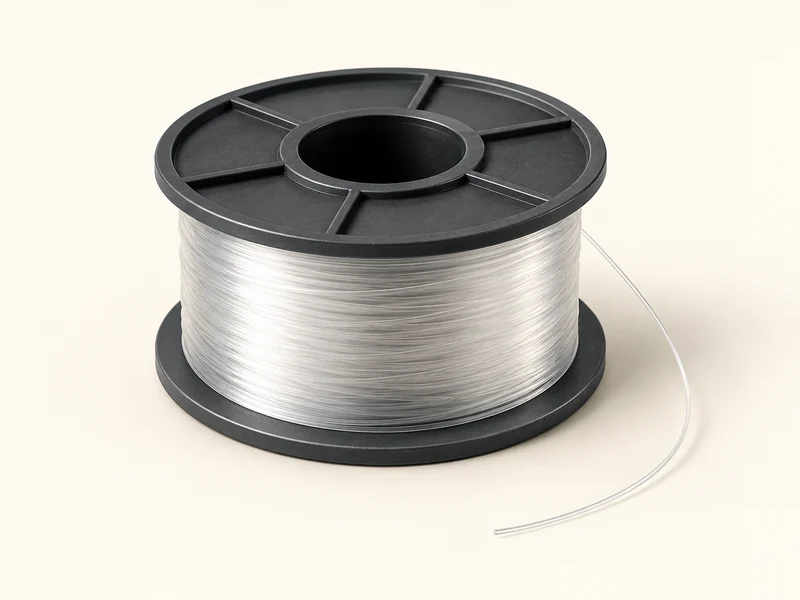
Original generic illustration: clear leader line spool; not an exact product photograph.
Seaguar Red Label 100% Fluorocarbon Leader (12 lb, 200 yd)
- Refractive index closely matches water, rendering the leader virtually invisible in crystal-clear Canadian Shield lakes.
- High abrasion resistance withstands constant friction against sharp zebra mussel beds and jagged granite rock edges.
- Selected 12RM200 variant provides 12 lb test on a 200-yard spool for tying fresh 8-foot drop shot leaders throughout a trip.
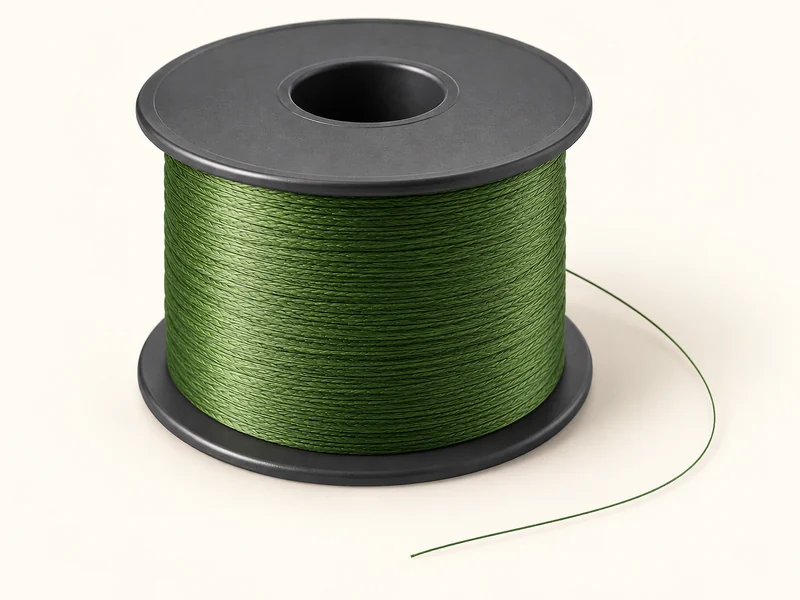
Original generic reference illustration: braided line spool; not an exact product photograph.
Sufix 832 Advanced Superline Braid (20 lb, 150 yd, Low Vis Green)
- Eight-fibre braided construction combining HMPE and GORE performance fibres delivers near-zero stretch for deep bite detection.
- Selected variant is 20 lb test on a 150-yard spool in Low Vis Green for pairing with a lighter fluorocarbon drop shot leader.
- Compare line diameter with your spinning reel spool capacity and connect to your fluorocarbon leader with an FG or Alberto knot.
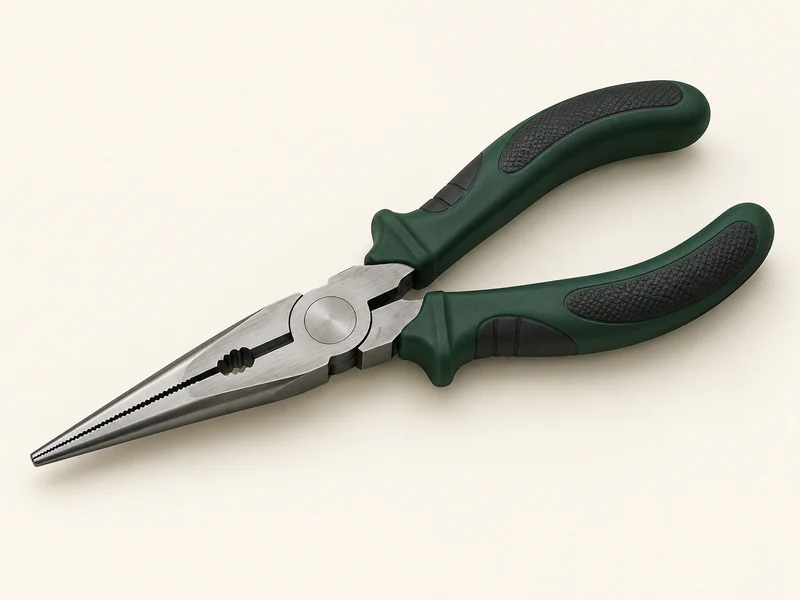
Original generic reference illustration: fishing pliers; not an exact product photograph.
Rapala 6½-inch Fisherman’s Pliers
- Durable carbon steel construction with nickel-plated finish resists corrosion during wet boat sessions on northern lakes.
- Narrow 6½-inch jaw format allows gentle, rapid hook extraction from the roof of a smallmouth’s mouth without tearing cartilage.
- Co-moulded textured grips provide a secure hold when pinching barbs flat or handling wet terminal tackle.
Explore Verified Soft Plastic Drop Shot Baits & Sinker Collections:
Frequently Asked Questions About Deep Drop Shotting in Canada
What depth should I target when drop shotting for summer smallmouth in Ontario?
Target depths between 20 and 35 feet on typical Canadian Shield lakes during July and August. In deep, ultra-clear Great Lakes waters such as Lake Simcoe and the St. Lawrence River, trophy smallmouth routinely concentrate on offshore humps and current ledges between 28 and 45 feet. In early summer (late June) or during overcast, windy low-light conditions, bass may push shallower along the 15 to 22 foot edge of cabbage weedlines.
Why is tungsten preferred over lead for deep drop shot weights?
Tungsten possesses approximately 70 percent higher density than lead. A 3/8 oz tungsten cylinder weight is significantly smaller and more compact than an equivalent lead sinker, allowing it to slip through narrow boulder crevices and sharp rock cracks without hanging up. The dense hardness of tungsten also transmits tactile feedback through your fluorocarbon leader, making it easy to distinguish between gravel, sand, hard rock, or subtle light bites.
What is the ideal rod, reel, and line setup for deep drop shot bass?
The optimal setup comprises a 6’10” to 7’2″ medium-light power, fast or extra-fast action spinning rod paired with a smooth 2500 or 3000 size spinning reel. Spool the reel with 10 to 15 lb braided line for zero stretch and instant hook penetration at depth. Connect an 8 to 10 lb 100 percent fluorocarbon leader measuring 6 to 8 feet in length using an FG knot or Double Uni knot.
How far above the sinker should I place my drop shot hook?
In waters dominated by bottom-dwelling round gobies such as Lake Simcoe and the Great Lakes, set your hook 12 to 18 inches above the sinker to keep the lure in the bottom cruise zone. When smallmouth are feeding on pelagic rainbow smelt or cisco suspending above deep structure, extend your leader tag to 24 to 36 inches so the bait rides higher in the water column.
Can I fish a drop shot effectively in strong river current like the St. Lawrence?
Yes, the drop shot is one of the most productive presentations in heavy current. Step up your sinker size to 1/2 oz, 5/8 oz, or 3/4 oz tungsten cylinder weights to maintain bottom contact. Cast upstream at a 45-degree angle, allow the weight to sink to the bottom, and drift the rig naturally along current seams, eddy lines, and deep rock drop-offs without reeling in too quickly.
What Ontario fishing regulations and bass season dates apply to deep smallmouth?
In most Ontario Fisheries Management Zones (FMZs), catch-and-keep bass season officially opens on the fourth Saturday in June and remains open until November 30. Several southern and eastern zones offer year-round catch-and-release seasons using artificial lures only. Catch limits, slot limits, and fish sanctuaries vary across specific water bodies. Always consult the current official Ontario Fishing Regulations Summary before your trip.
Official Canadian Fisheries Resources & Regulations
- Ontario Ministry of Natural Resources and Forestry (OMNRF): Ontario Fishing Regulations Summary
- Fisheries and Oceans Canada (DFO): Recreational Fishing in Canadian Waters
- Invasive Species Centre: Round Goby Ecological Impact in Great Lakes Basins
- CanadaFever Species Guides: Walleye Fishing in Canada: Identification, Seasons and Structure
- CanadaFever Equipment Guides: Best Fishing Sonar and Flashers for Canadian Anglers