

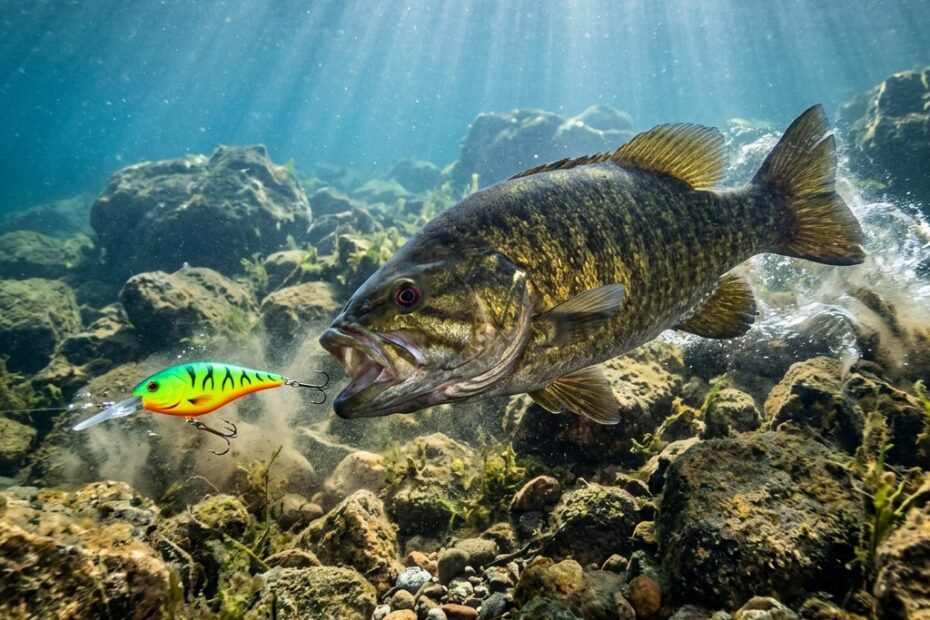
Discover the 4 best crankbaits for summer smallmouth bass fishing. Expert tactical buyer guide on square bills, deep divers, and the science of deflection.
- Plan The 4 Best Crankbaits for Smallmouth Bass in Summer around legal seasons, land access, firearm or bow rules, and current provincial or federal requirements
- Scout habitat, weather, travel routes, and animal movement before you commit to a field setup
- Keep safety, identification, permission, and retrieval plans clear before the hunt starts
Bottom line The 4 Best Crankbaits for Smallmouth Bass in Summer works best when legality, scouting, and safety are settled before tactics or gear choices
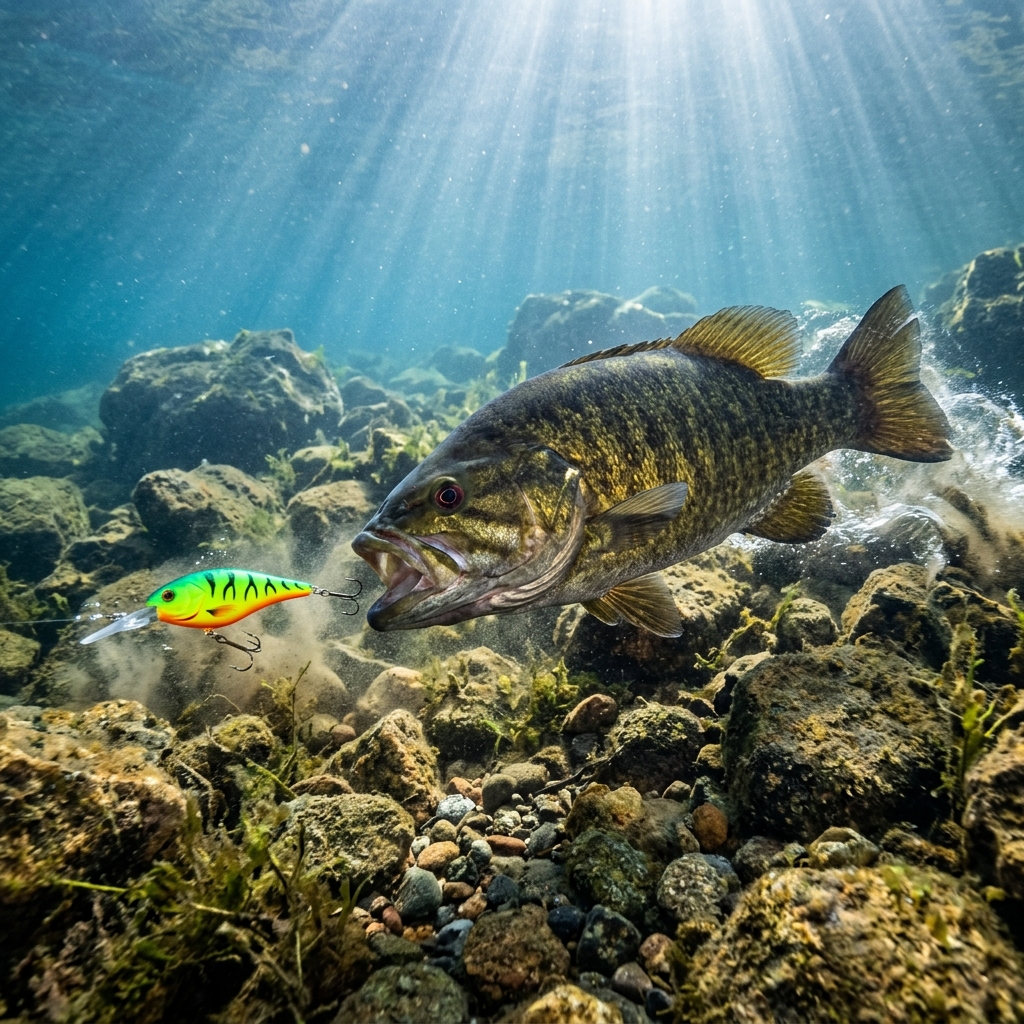
When the water temperature breaks 70 degrees on Canadian shield lakes and deep river systems, smallmouth bass metabolism shifts into overdrive. The lethargic, bottom-hugging fish of early spring transform into aggressive pelagic hunters. In these high-energy summer conditions, a slow-dragged tube jig or drop shot will catch fish, but a fast-moving crankbait will often catch the biggest, most aggressive fish in the school.
Summer smallmouth cranking is not about blind casting into open water. It is a highly tactical approach centered around “deflection”—crashing a specific lure into a specific piece of structure (a boulder, a submerged log, a gravel transition) to trigger a violent reaction strike. If your crankbait isn’t hitting bottom or bouncing off cover, you are retrieving it in the “dead zone.”
This guide details the four absolute best crankbaits for targeting summer smallmouth bass across Canada, categorized by the specific depth zones and structure types they were designed to conquer.
⚡ Key Takeaways
- Deflection is mandatory: A crankbait swimming smoothly through open water rarely gets hit. The strike almost always occurs the exact millisecond the lure violently ricochets off a rock or log.
- Match the hatch (and the water): In clear water (visibility > 5ft), use natural crawfish or translucent ghost minnow patterns. In stained water or overcast conditions, shift to chartreuse, bright red, or solid white.
- Speed triggers the bite: Summer smallmouth are fast. Don’t be afraid to use a “burn and pause” retrieve, reeling as fast as you can to crash the bait into the bottom, then pausing for a half-second.
- Square bills for shallow cover: When fishing laydowns or shallow boulder fields (1-4 feet), a square bill crankbait is essential to prevent constant snagging.
- Long casts equal depth: To reach the maximum running depth of a medium-diving crankbait (like the DT6), you need to make long casts. A short cast will cause the bait to run shallow.
The Science of the Reaction Strike
Smallmouth bass have two distinct feeding modes: feeding strikes and reaction strikes. A feeding strike occurs when a bass carefully examines a finesse bait (like a drop shot) and decides to eat it because it looks like natural food. A reaction strike bypasses the brain entirely.
When a fast-moving, vibrating crankbait suddenly careens off a rock directly in front of a smallmouth, the fish strikes instinctively out of sheer reflex, aggression, or territorial dominance. The fish doesn’t have time to inspect the lure; it simply reacts to the sudden flash and erratic change in direction. This is why deflection is the core philosophy of summer cranking.
1. The Shallow/Cover Specialist: Strike King KVD 1.5 Square Bill
In the early morning or on overcast, windy summer days, smallmouth will push up into remarkably shallow water (1 to 4 feet) to hunt baitfish in the rocks or wood cover. Throwing a standard round-lipped crankbait into a shallow boulder field is a guaranteed way to lose your lure.
The square bill was designed specifically for this scenario. The blunt, square-shaped plastic lip forces the bait to kick wildly to the side the moment it strikes a hard object. This aggressive “kick out” action not only prevents the treble hooks from snagging the log or rock, but it also creates the ultimate erratic deflection to trigger following smallmouth.
The Strike King KVD 1.5 is the undisputed king of the square bill category. It has no internal rattles, relying instead on a heavy, thumping wobble that smallmouth can track through their lateral lines. In clear Canadian lakes, the “Natural Shad” or “Ghost Minnow” colors are deadly. In the stained water of the Ottawa or Winnipeg Rivers, switch to “Chartreuse Sexy Shad.”
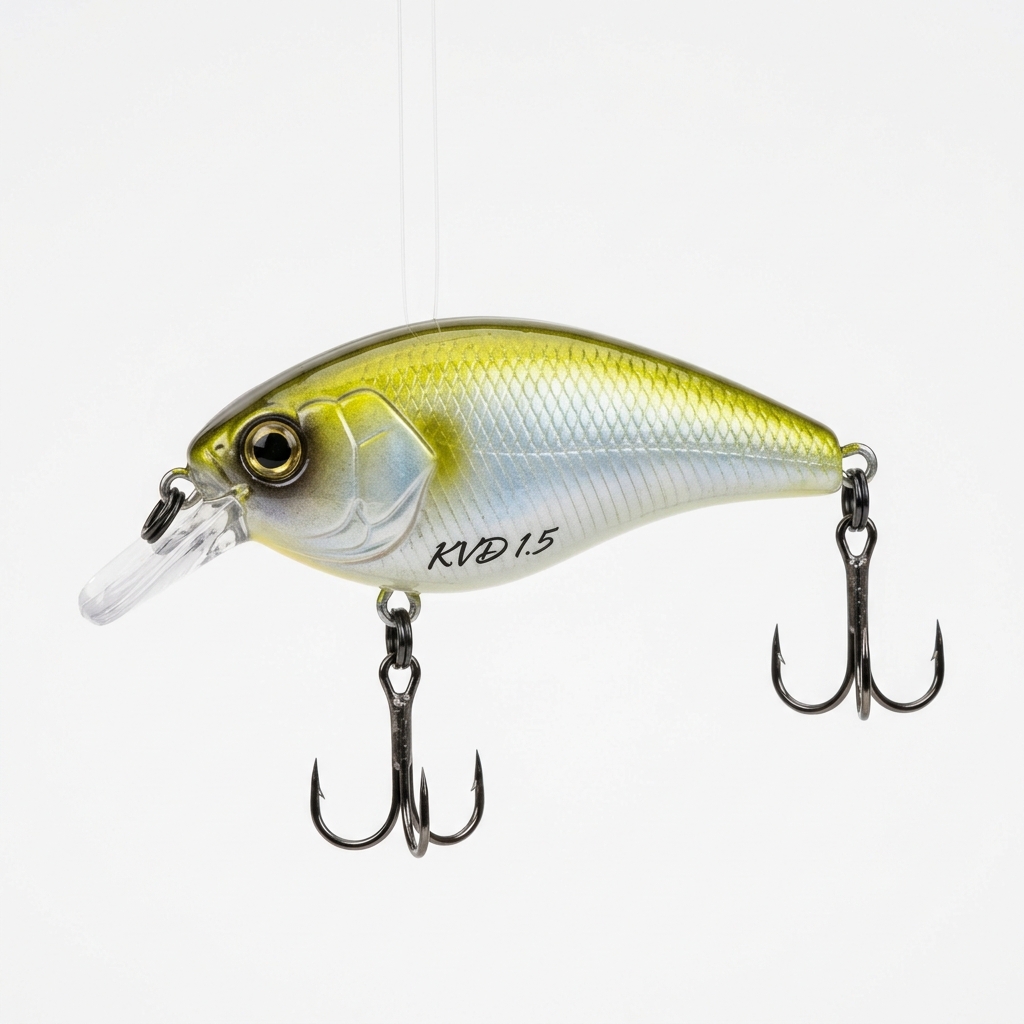
Strike King KVD 1.5 Square Bill
The ultimate shallow-water deflector. Designed to crash through wood cover and ricochet off shallow boulders without snagging. Silent (no rattles) for a subtle but heavy-thumping presentation.
2. The Mid-Depth Standard: Rapala DT6 (Dives-To 6)
When the sun gets high in the summer sky, smallmouth typically retreat to mid-depth structure—submerged points, rock piles, and deep weed edges in the 5 to 8-foot range. This is the realm of the medium-diving crankbait.
While most modern crankbaits are made of injected plastic, the Rapala DT series is carved from premium balsa wood. Balsa has a unique buoyancy profile that plastic simply cannot replicate. When a balsa crankbait strikes a rock and you pause your retrieve, the bait backs up and floats upward rapidly. This rapid rise triggers strikes from fish that were following the bait.
The DT6 (designed to dive to exactly 6 feet on a standard cast with 10lb fluorocarbon) features a tight, rapid wiggle rather than a wide wobble. This tighter action is often preferred by smallmouth, particularly in clear water. The “Demon” or “Red Craw” colors are incredibly effective in early summer when crayfish are molting, while natural silver/black patterns dominate in late August when smallmouth are hunting pelagic baitfish.
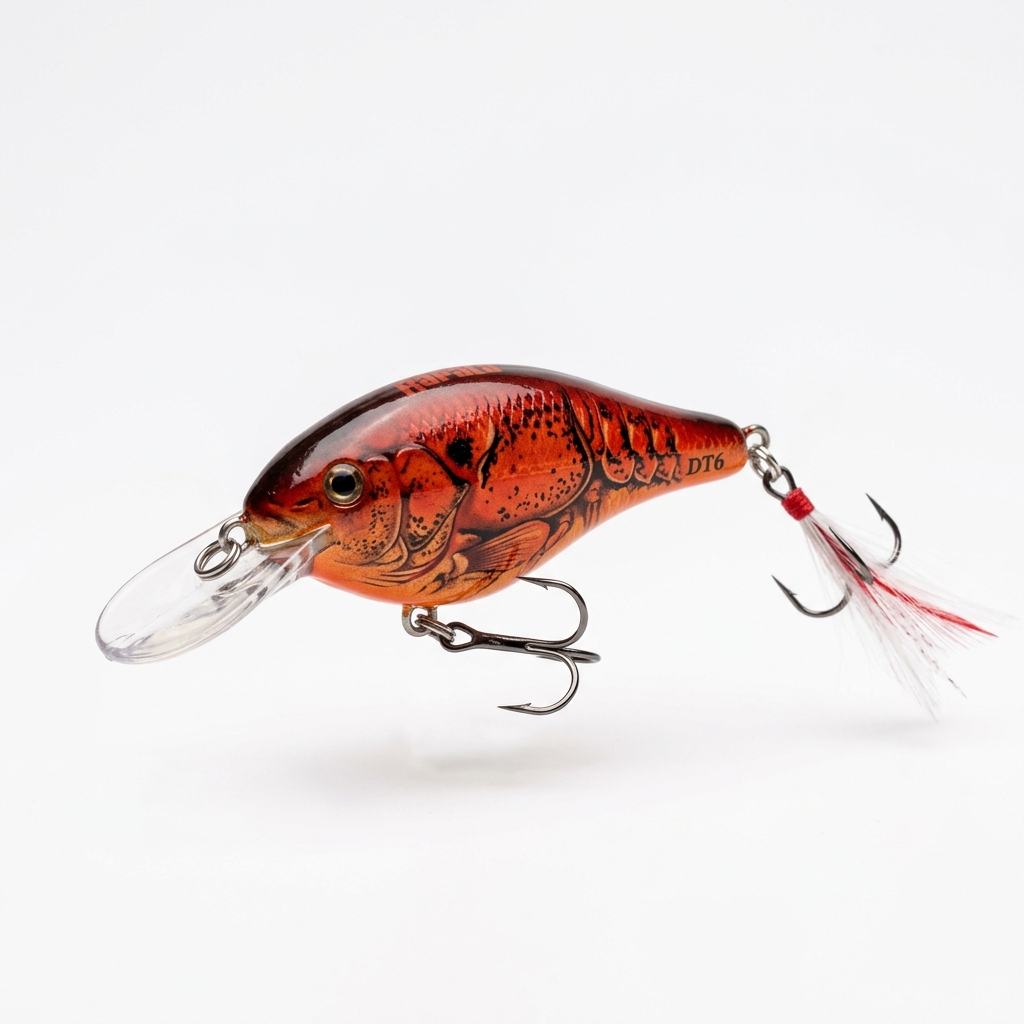
Rapala DT6 (Dives-To 6)
Constructed from premium balsa wood for a unique, rapid-rising action when paused. Features a tight wobble that excels in clear Canadian shield lakes. Dives quickly to the 6-foot strike zone.
📋 The Guide’s Log
We were fishing a deep rock spine on Lake Simcoe in late July. The fish were suspended 12 feet down over 20 feet of water. Drop shots and tubes were being ignored. I tied on a deep-diving crankbait and began “burning” it—reeling as fast as my 7.1:1 ratio reel would allow.
The bait would reach maximum depth, and just as it occasionally grazed the top of a deep boulder, I would abruptly kill the reel for one full second. The hits were so violent they nearly ripped the rod out of my hands. The smallmouth weren’t hungry; they were reacting out of pure aggression to the erratic, fleeing action of a bait bouncing off their territory.
3. The River Current King: Bandit 200 Series
Fishing for smallmouth in moving water (rivers or areas of heavy neck-down current in lakes) requires a crankbait that tracks true. Many crankbaits will “blow out”—roll over on their side and spin—when pulled through fast, turbulent current.
The Bandit 200 Series has a classic, rounded profile and a carefully balanced internal weighting system that allows it to maintain a stable, tight wiggle even when burned across strong current seams. It runs in the 4 to 8-foot range, making it perfect for targeting river ledge drop-offs or the downstream side of mid-river boulder fields.
The Bandit 200 is famous for its distinct, high-pitched internal rattle. In the often stained or turbulent water of river systems, this acoustic signature helps smallmouth locate the bait before they can see it. Rootbeer patterns and firetiger colors are legendary in the St. Lawrence and Ottawa River systems.
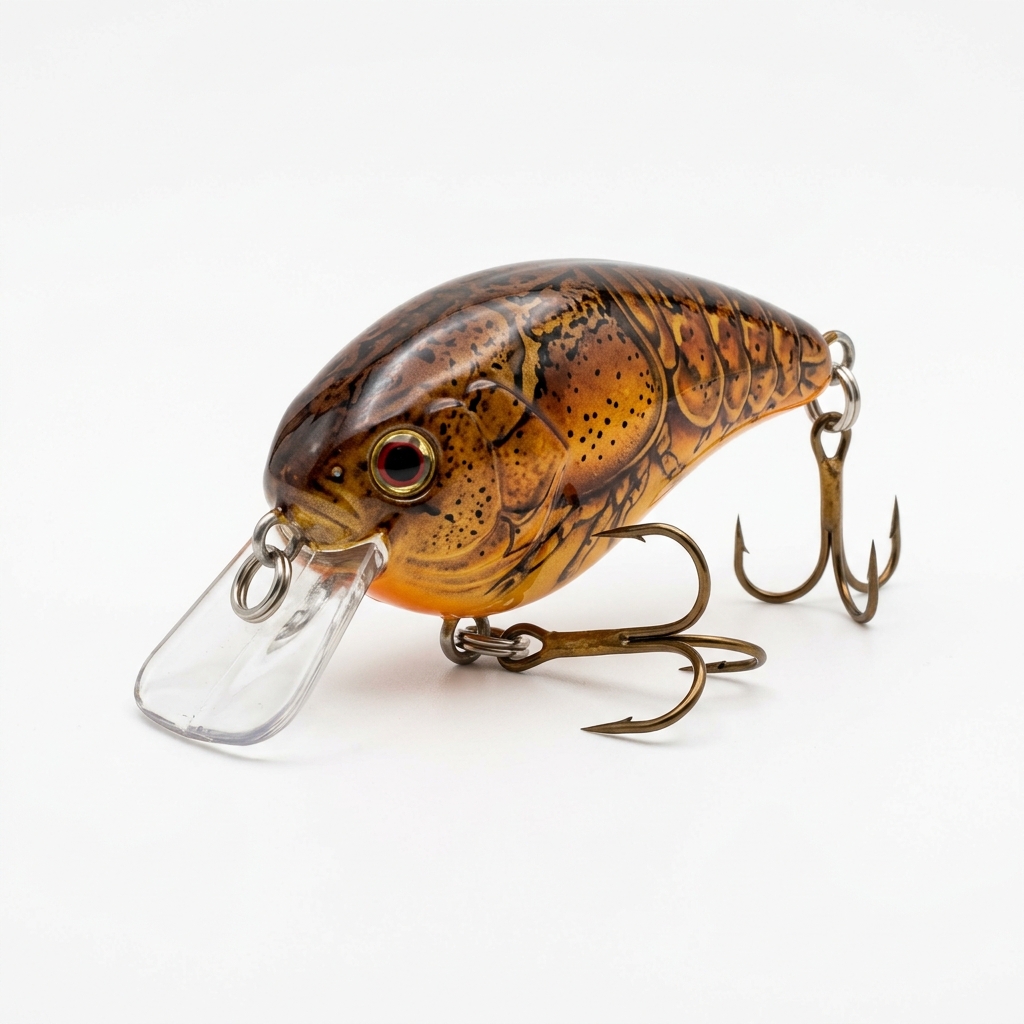
Bandit 200 Series
Tracks perfectly straight through turbulent river currents without rolling over. Features a loud, high-pitched internal rattle to draw strikes in stained moving water.
4. The Deep Gravel Grinder: Spro RKCrawler 55
In late July and August, the largest smallmouth in a lake system will often vacate the shorelines entirely, setting up on deep offshore structures—gravel humps, deep rock points, and ledges dropping from 10 into 20 feet of water.
To reach these fish, you need a crankbait with a large, elongated lip designed to dig into the bottom. But more importantly, you need a bait that “hunts.” The Spro RKCrawler 55 was specifically engineered to bounce and deflect wildly off rocks and gravel without getting permanently wedged in the crevices.
The RKCrawler has a wide, bulbous body that shifts water aggressively. When retrieved, it roots its bill into the gravel, kicking up a trail of sediment that looks exactly like a fleeing crayfish trying to bury itself in the substrate. This bottom-contact presentation is lethal for deep summer smallmouth. The natural craw and “Phantom Brown” colors are top performers.
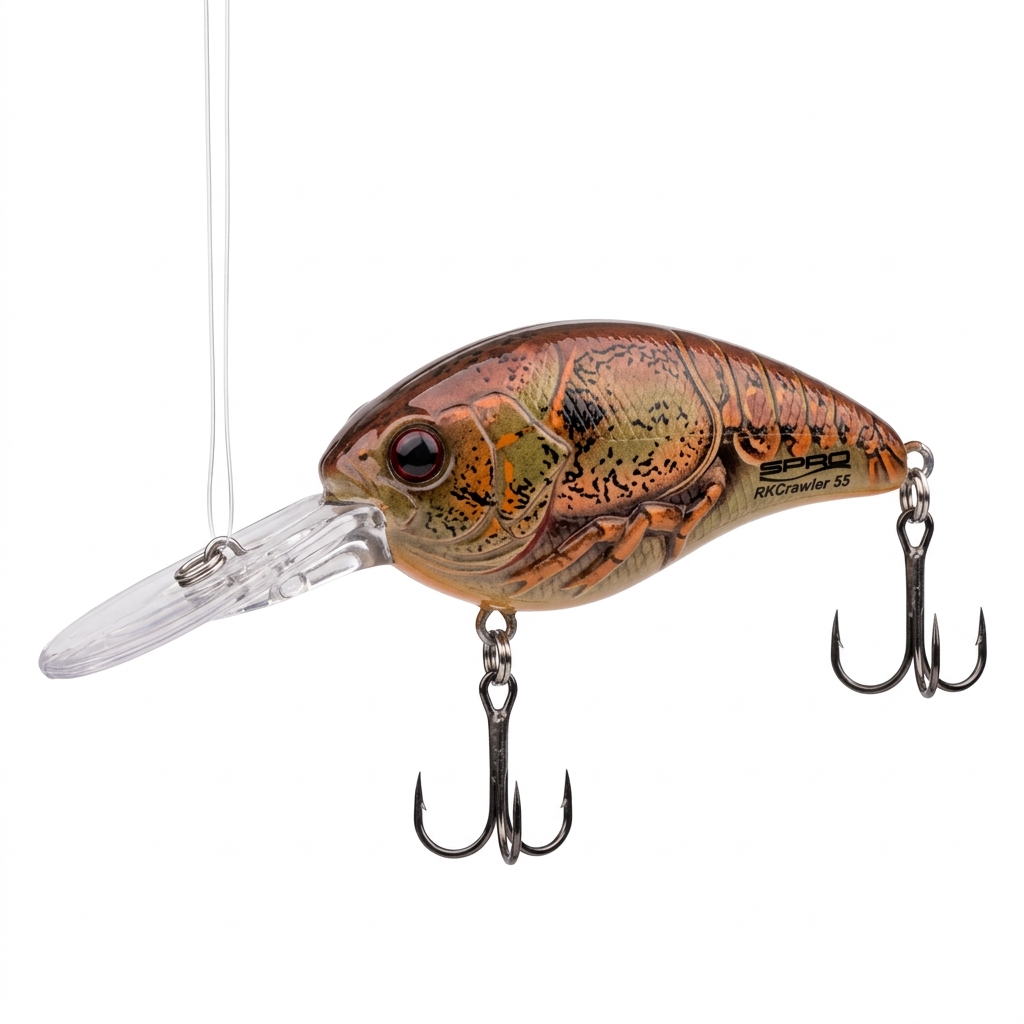
Spro RKCrawler 55
Engineered for deep bottom contact. The wide body and long lip cause the bait to ricochet wildly off deep gravel and rock piles, imitating a fleeing crayfish.
🍁 The Local Secret: “Killing” the Bait in August
In the heat of late August, when water temperatures peak, smallmouth will often follow a crankbait for 30 feet without striking, waiting to see if it makes a mistake. The mistake you must force the bait to make is the sudden “kill.”
Retrieve your crankbait at a fast, steady clip. As the bait nears the boat (or when you feel it strike a piece of cover), completely stop reeling. Drop your rod tip slightly to give the bait total slack. A floating crankbait will back up slightly and begin to rise toward the surface. In 90% of cases, this sudden change from fleeing horizontally to floating vertically triggers the following smallmouth to annihilate the bait.
Crankbait Gear: Rods and Line Setup
Fishing a crankbait effectively requires specific gear. A fast-action, stiff graphite rod (the kind used for jigging) is detrimental to crankbait fishing. Smallmouth often slash at moving baits, and a stiff rod will simply rip the treble hooks out of their mouth before they are fully embedded.
The Rod: You need a rod with a moderate or “slow” action. Fiberglass rods or composite graphite/glass blends are ideal. When a smallmouth strikes a crankbait, the deep, parabolic bend of the fiberglass rod allows the fish to turn with the bait, securely burying the treble hooks without tearing the soft tissue of the mouth.
The Line: Fluorocarbon line is generally considered mandatory for deep cranking. Unlike monofilament, fluorocarbon sinks, which helps the crankbait achieve its maximum diving depth. It also has less stretch than monofilament, allowing you to feel exactly what type of bottom composition the bait is deflecting off (wood, gravel, or mud). 10lb or 12lb test fluorocarbon is the standard for smallmouth cranking in clear Canadian lakes.
Frequently Asked Questions
What color crankbait is best for smallmouth?
Color selection depends entirely on water clarity and forage base. In clear water, natural, translucent patterns (ghost minnow, natural craw) excel. In stained water or under heavy cloud cover, shift to opaque, high-visibility colors like chartreuse with a blue back, solid white, or bright orange “demon” patterns.
Do I need a baitcasting reel for crankbaits?
While baitcasting gear provides better control and power for deep-diving, high-resistance crankbaits (like the RKCrawler), shallow square bills and smaller balsa baits (like the DT6) can easily and effectively be thrown on a medium-power spinning setup, especially in windy conditions where baitcasters are prone to backlash.
Why do I keep losing fish on crankbaits?
Smallmouth are notorious for throwing treble hooks when they jump. If you are losing fish, ensure you are using a rod with a moderate/soft action (fiberglass or composite) to absorb head shakes. Additionally, keep your rod tip low to the water during the fight to discourage the fish from jumping.
Disclaimer: Always consult official provincial regulations for specific waterbodies before fishing. This article contains affiliate links; as an Amazon Associate, CanadaFever earns from qualifying purchases. This content is for informational purposes and should not be considered professional outdoor survival advice.