

Compare five Alberta bear outfitter options, current guide and Hunter Host rules, camp comfort, licence checks, package costs and post-hunt responsibilities.
- Verify the guiding and licence route
- Match camp comfort to your needs
- Plan processing and export early
Bottom line A good quote names the legal hunt and every important service.
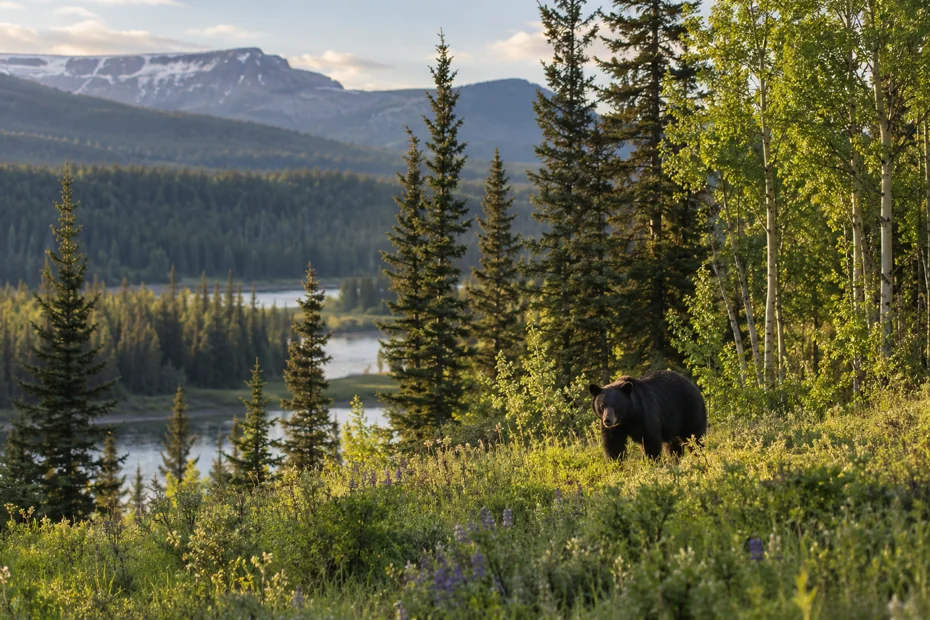
Alberta bear outfitters should be compared by the hunt they can legally provide, the camp you will actually use and the support available after a harvest. A dramatic photograph or a promised opportunity rate cannot answer those questions.
This guide offers five genuine operator starting points, a clear explanation of non-resident guiding rules and a practical way to compare written black bear hunt packages.
Decide first whether you want a guided hunt, an eligible visit with a resident friend or a wildlife-viewing holiday. Our Canadian bear hunting guide gives the broader provincial context. If your aim is photographs rather than harvesting an animal, use the wildlife viewing tour guide to build a different shortlist.
One useful early gear decision: ask whether personal binoculars are expected or supplied. The Vortex Crossfire HD 10×42 listing on Amazon.com is a concrete option for observing at a distance; try the fit first and leave species identification to a reliable, conservative process. As an Amazon Associate, CanadaFever earns from qualifying purchases.
Alberta bear outfitters: five starting points for a written enquiry
These operators currently publish Alberta black bear services. Inclusion is not an endorsement of current permit status, available allocations or measured results. Verify the contracted business and proposed hunt through the Alberta Professional Outfitters Society before paying.
| Operator | Published service | Question that determines fit |
|---|---|---|
| Primal Adventures | Northern Alberta guided black bear packages; camp and active travel options | Which camp, daily travel and walking requirements apply to our specific package? |
| Northern Element Outfitters | Fort McMurray pickup and a Kearl Lake basecamp; outfitter tents | How are guide supervision, camp facilities and emergency communication arranged? |
| North Point Outfitters | Guided bear hunts; its page advertises transport and remote sites | What do transport inclusions mean for our arrival airport and contracted dates? |
| Savage Encounters | Spring and fall black bear options, lodge or wilderness tent accommodation | Which accommodation and management unit does this quote actually name? |
| Black Antler Outfitters | Guided black bear and other species; based in Grimshaw | Can you provide the current bear package, camp details and licence arrangement? |
Primal Adventures: clarify the package behind the active-hunt description
Primal Adventures’ black bear page advertises northern Alberta guided hunts, meals, accommodation, airport transport and trophy care. It describes spot-and-stalk and horseback offerings; its accommodation list includes several possible formats.
That makes it worth an enquiry for travellers who want an active trip, but the exact package matters. Ask whether the proposed itinerary involves a wall tent, bunkhouse or hotel, how much walking is expected and whether horseback travel is actually included.
Its page separates meat processing, licences and some travel costs from inclusions. Request the same distinction in your contract. Advertised opportunity rates do not guarantee a harvest, and colour-phase claims cannot establish what you will encounter. A published 2026 booking statement also does not establish availability for a future season.
Northern Element Outfitters: a specific northern camp enquiry
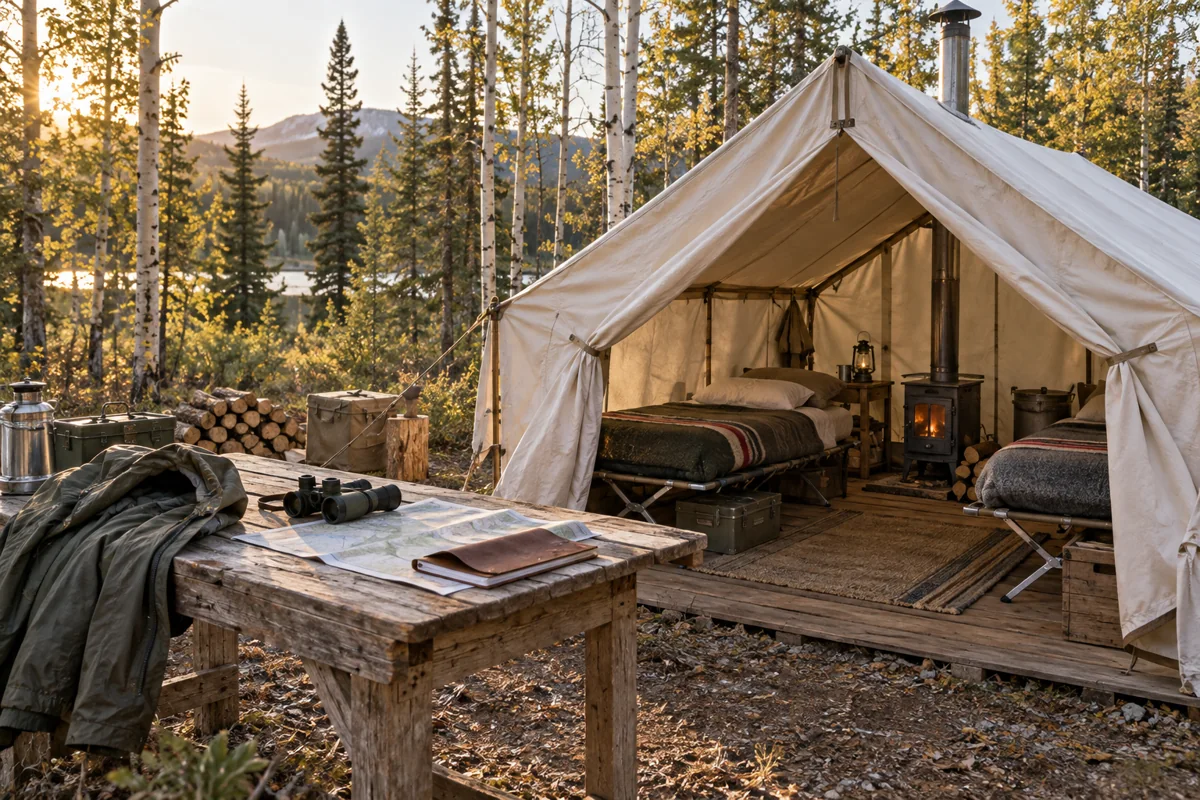
Northern Element Outfitters describes a Fort McMurray starting point with transport to a Kearl Lake basecamp. Its bear offering names outfitter tents, cots, foam mattresses, wood stoves and prepared meals.
This is a useful comparison for hunters interested in a tent-camp experience rather than assuming every outfitter operates a lodge. Ask about bedding, wash facilities, toilet arrangements, safe heating and how the camp handles a prolonged period of wet weather.
Confirm guide ratio and actual supervision throughout the hunting day. The website’s testimonials and advertised bear observations do not predict what your group will encounter. Describe any non-hunting companion in the enquiry and have the operator explicitly confirm accommodation, supervision and activities rather than assuming a testimonial establishes a current companion package.
North Point Outfitters: make broad transport inclusions specific
North Point Outfitters’ bear page publishes guided hunts, remote hunting sites and transport inclusions. It describes more than one hunting format, but the concise public page leaves important itinerary details for a direct enquiry.
Ask for the exact arrival airport, pickup time, camp type, number of hunting days and management unit. If a flight is part of your quote, request the baggage allowance and the plan for an interrupted transfer.
The page still advertises spring 2026 bookings when researched in October 2026. Treat that as evidence of the service it has marketed, not a current opening or a confirmed next-season date. A new written proposal is essential before organizing connecting travel.
Savage Encounters: lodge comfort and a wilderness tent are separate choices
Savage Encounters advertises spring and fall black bear hunts, with lodge and wilderness tent-camp choices. The different accommodation options are the useful starting point, rather than its broad trophy and success language.
Ask which property or camp applies to your dates and what “lodge” means in practice: shared rooms, bathroom access, heating, meals and daily transfers. A comfortable base can still require long travel to the hunting area.
Its advertised two-bear opportunities are not a province-wide entitlement. Have the operator explain the licence allocation, specific unit and any additional charge for your proposed hunt. The written answer should distinguish the legal opportunity from an optional service fee.
Black Antler Outfitters: request the missing package details
Black Antler Outfitters, based in Grimshaw, lists guided black bear hunts alongside moose, whitetail deer and timber wolves. Its public homepage establishes the species offering, but not a complete bear booking contract.
It is a sensible enquiry when comparing northern Alberta operations, provided you request the current bear-specific itinerary. Ask about hunting location, seasonal format, guide ratio, accommodation, transfer arrangements and the residency categories the package serves.
Do not interpret a business address as the hunting unit or combine its different species into an assumed package. A combined itinerary needs separately valid seasons, licences and explicit services. If the operator cannot supply a clear bear proposal, move to a better-documented option.
Who needs an outfitter or Hunter Host in Alberta?
The current Alberta licensing and guiding requirements distinguish resident hunters, non-resident Canadians and non-resident aliens. The last category generally covers visitors who do not qualify as Alberta residents or non-resident Canadians under the guide’s definitions.
Both non-resident categories hunting big game must be accompanied by a designated guide or a Hunter Host. A commercial package uses a valid big-game outfitter permit, a designated guide and the appropriate licence allocation. A friend cannot substitute paid informal guiding for that arrangement.
A Hunter Host is an eligible adult Alberta resident with a valid WiN and Hunter Host licence who cannot provide the service for gain or reward. Hosting is subject to restrictions, and a non-resident alien application requires official approval and statutory declarations; it is not an arrival-day shortcut.
The 2026 changes page says that if a resident hosts two non-resident Canadians, one must be a family member. The general licensing page also describes separate restrictions for hosting non-resident aliens, including intervals between hosted hunts. Read both pages and ask Fish and Wildlife to resolve your particular case.
| Your situation | Possible route | Check before booking |
|---|---|---|
| Alberta resident | Applicable resident licence; a commercial guided trip may still be chosen | Residency definition, unit, season and the offered licence arrangement |
| Non-resident Canadian | Designated guide or eligible Hunter Host | Current licence availability and the 2026 family condition when two Canadians are hosted |
| Non-resident alien | Commercial outfitter allocation or an approved Hunter Host arrangement | Official host approval, declarations, eligibility and restrictions if using the host route |
| Non-hunting companion | A separately agreed visitor arrangement | Camp access, supervision, activities and cost; no hunting authority implied |
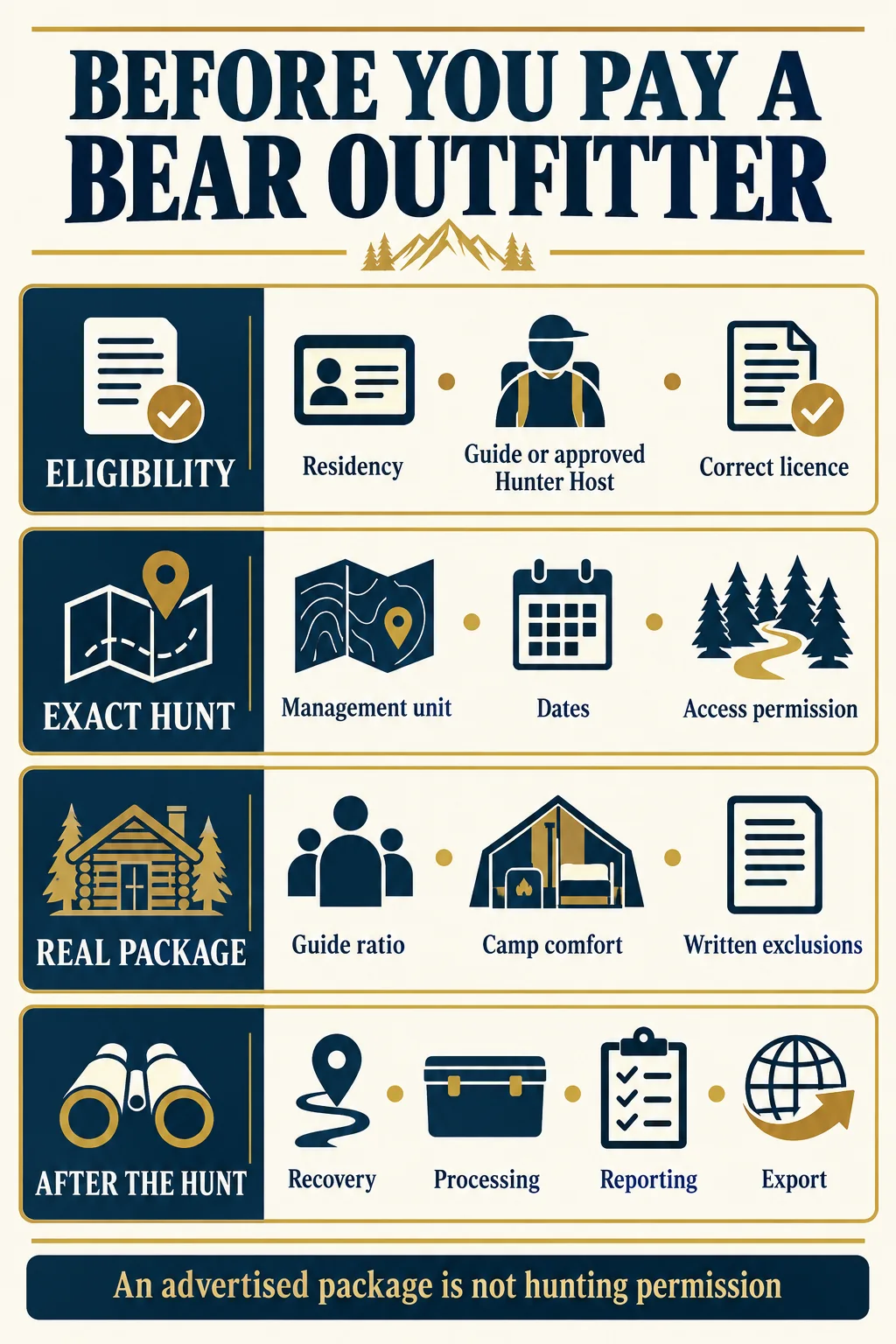
Alberta uses a Wildlife Identification Number, wildlife certificate and the applicable hunting licence and tags. Keep the required documents available during the trip. Ask who helps obtain them, which costs are included and whether any proposed change of unit affects the licence.
Alberta bear outfitters must name the unit and the season
The current black bear season table distinguishes Wildlife Management Units and season types. In the guide checked October 2026, the spring section is explicitly spring 2027 and requires a new-year licence. “Spring bear hunt” is not a date range for the whole province.
As an illustration of why the unit matters, that table lists spring 2027 general seasons ending May 15 in WMUs 400, 404, 406, 408 and 841, while WMU 500 appears in a group ending June 30. These examples do not establish where an operator is authorized to guide you.
Have the outfitter put your exact unit and dates in writing, then compare them with the current official table. Supplemental black bear licences are available only in named units and under the applicable licence conditions. An advertised second bear still needs valid authority.
Black bears under one year old and females accompanied by a cub under one year old are protected under the listed rule. Colour is not reliable species identification: a brown-coloured bear is not automatically a black bear. If identification or legality is uncertain, the decision is to refrain.
Camp style, daily effort and safety belong in the contract
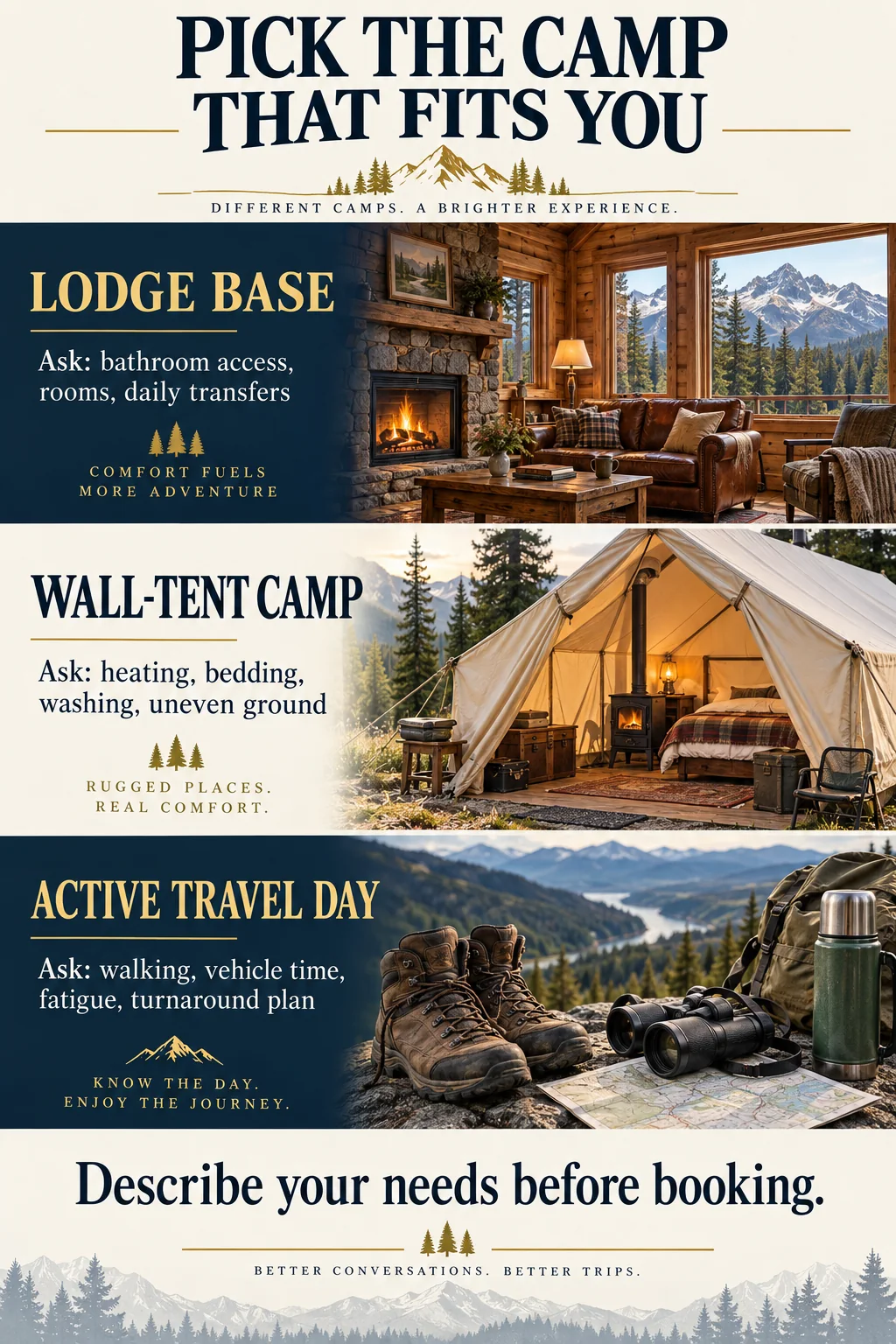
A lodge-based trip can simplify sleeping and washing; a wall-tent camp can offer a more remote experience. Neither label tells you how strenuous the day is. Ask about uneven ground, steps, vehicle time, walking distance and the amount of waiting outdoors.
Describe your abilities honestly, including knee or back problems and any need to rest during a day. Ask whether an alternative is available if the original plan proves too demanding. Adaptation should be agreed before arrival rather than assumed from the word “custom.”
For any elevated stand, ask how fall protection, access and safe use are managed. Let the guide explain the equipment and procedures; do not treat familiarity with another stand as proof that this one is suitable. Request an alternative if the setup exceeds your ability or comfort.
Discuss emergency communication, the nearest appropriate medical support and the operator’s plan for an evacuation. Mobile reception and camp internet are separate from reliable communication in the hunting area. Travel insurance should cover the actual activity and remote itinerary.
Compare the complete cost and the service after a harvest
Ask for a current quote rather than budgeting from a universal “Alberta bear price.” Packages differ by season, duration, guide ratio, transport and accommodation. Published currency can be US dollars, while taxes, licences and outside travel add separate costs.
| Part of the trip | Confirm in writing | Why it changes the decision |
|---|---|---|
| Before arrival | Deposit, currency, tax, cancellation, airport and pickup window | Prevents a travel connection or exchange-rate surprise |
| During the hunt | Guide ratio, days, camp, meals, transport and permitted unit | Shows what you are actually paying to receive |
| After a harvest | Recovery, preservation, processing, storage and taxidermy handoff | Separates initial trophy care from finished processing |
| Departure | Reporting, documents, export route and delayed pickup arrangements | Prevents a last-day obligation from becoming an unplanned extra stay |
Clarify how the operator defines a hunting day. Arrival, departure and weather interruptions may not be treated alike. Ask what happens if the guide cannot operate, the client chooses not to continue, or access is restricted by a closure.
Do not assume that “trophy care” includes tanning, a completed rug, taxidermy or shipping. Request the individual steps, responsible business and estimated handoff process. Avoid paying a second provider based only on an informal assurance that the outfitter will sort everything out.
Alberta’s general rules allow recovery of skin or edible meat in the circumstances described, but do not permit wasting both. If the skin is abandoned, the guide states that the meat must be tagged like other big game. Decide the lawful preservation plan before hunting and verify current conditions with the operator.
Reporting and registration requirements depend on the animal and licence. Ask the guide to identify your actual obligations and keep the evidence. A blanket rule borrowed from another species is not a substitute for the current Alberta requirements.
Export is a separate decision from processing
International travel adds federal CITES and destination import questions, as well as Alberta export conditions. A finished taxidermy item shipped later is different from a hunter carrying a fresh trophy home.
Alberta’s export section prohibits exporting black bear gall bladders and paws, and separately restricts claws detached from the whole skin. Ask Fish and Wildlife about the exact trophy parts before arranging transport. A federal permit exemption does not remove provincial restrictions.
Canada’s CITES guidance describes a narrow exemption for a US hunter returning with specified fresh, frozen or salted black bear parts in accompanying baggage. Taxidermy mounts, other conditions and exports to other countries require permits as described; do not extend the exemption to a later shipment.
Check the Alberta export requirements and the importing country’s rules for the actual parts and transport method. Ask who obtains the permits and how long processing may take. Keep licences, tags and any permits with the shipment rather than assuming a processor’s invoice is enough.
Useful personal gear after the outfit is confirmed
Ask for the operator’s packing list and supplied equipment first. Prioritize rain protection, insulating layers, footwear suited to the terrain, medication, offline documents and a way to keep spare clothing dry. Our hunting gear guide helps organize those categories.
Personal binoculars can help you observe at a comfortable distance and follow the guide’s explanation. Try them with glasses if applicable, adjust the eyecups and practise holding them steadily. Magnification alone does not establish that an animal is a lawful target.
Insect protection should suit the actual season and camp. Consider clothing, a head net and appropriately labelled repellents; ask the operator what works locally. A fuel-powered mosquito device is optional and cannot be packed without checking transport restrictions.
Thermacell’s transport guidance says its fuel cartridges cannot travel on passenger aircraft. If the outfitter can arrange an appropriate product and fuel locally, the device below may be useful outdoors. Follow the Canadian label and ask about camp restrictions. Treat mosquito protection and scent management as separate needs; the device does not guarantee an insect-free area.
Two useful options to compare
As an Amazon Associate, CanadaFever earns from qualifying purchases. These recommendations use published listing information and trip fit; we have not claimed hands-on testing. Check current seller, variant, delivery and price on Amazon.com.

Vortex Crossfire HD 10×42 binoculars
A personal optic for observing at a distance and following the guide’s explanation.
- 10× magnification and 42mm objectives are confirmed for this exact Crossfire HD listing.
- The listing describes waterproof and fogproof construction; keep lenses protected during travel.
- Test the fit and steadiness before buying; binoculars do not replace reliable species identification.
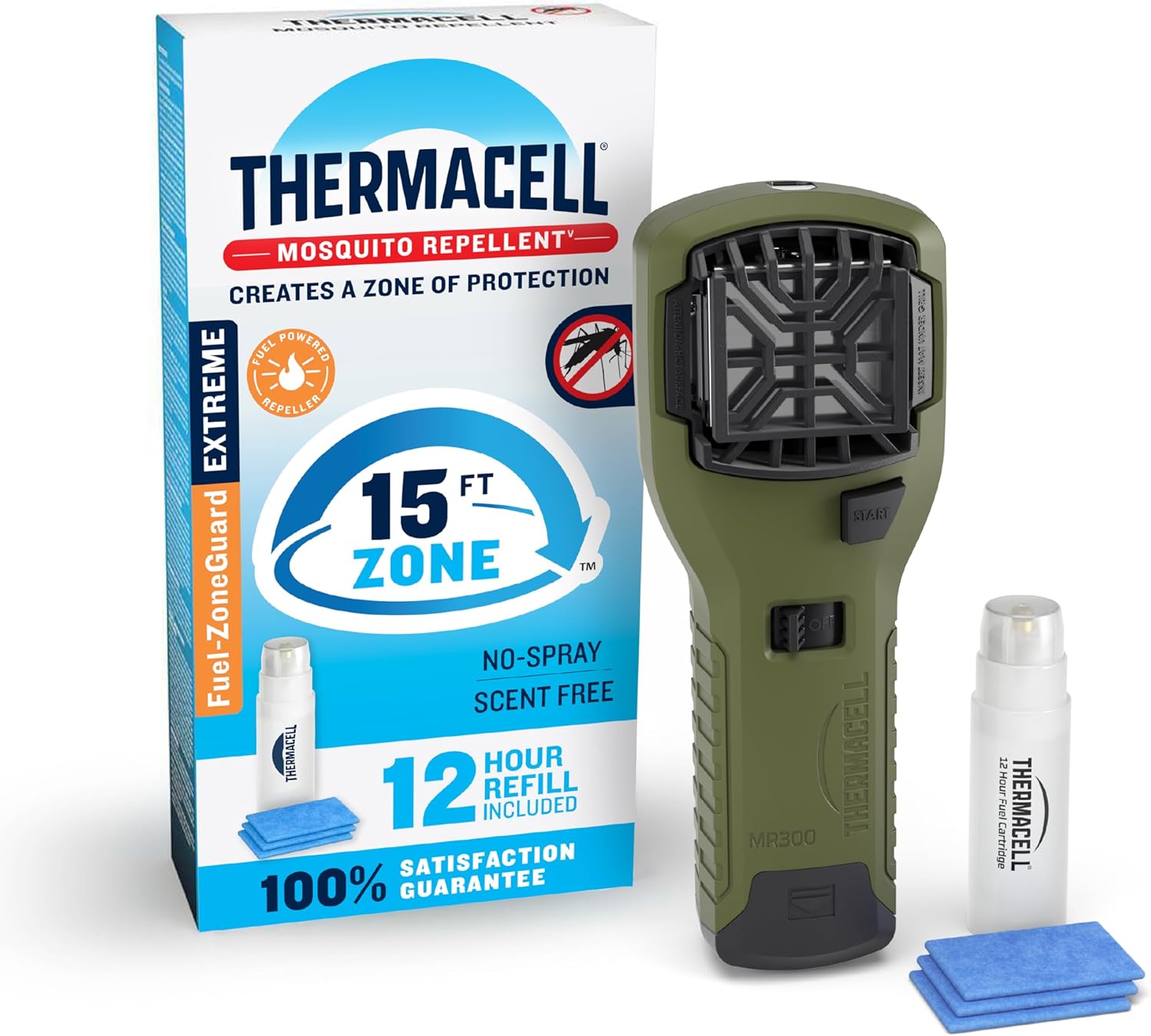
Thermacell MR300G fuel-powered mosquito repeller
An optional outdoor mosquito tool when the outfitter can arrange permitted fuel locally.
- This green MR300G uses fuel cartridges and mats, rather than rechargeable repellent cartridges.
- Allow warm-up and follow the Canadian product label; it is not a complete insect-protection system.
- Thermacell says its fuel cartridges cannot travel on passenger aircraft: arrange them locally with the outfitter.
Turn the shortlist into a realistic booking
Send two or three operators the same brief. Include residency, preferred dates, arrival city, experience, mobility, camp preference and companions. Ask for the permit-holding business name, guide arrangement, unit and complete services rather than requesting only a price.
Read the responses side by side. A lower quote may mean fewer guided days, shared accommodation, a different transfer or processing left to the client. Choose only after those differences are clear and the legal route matches your circumstances.
If adding a fishing day, verify the exact water and separate fishing licence requirements. Our Alberta fishing destinations guide can help identify a suitable addition, but a hunting package does not automatically include fishing access, tackle or guiding.
Be prepared for a lawful hunt with no harvest. An outfitter can describe services, experience and past activity; it cannot control the animals or remove uncertainty. Choose the trip you would still consider worthwhile when the honest decision is not to take an animal.
Alberta bear outfitter FAQs
Does every non-resident need a commercial bear outfitter?
No. Non-resident Canadians and non-resident aliens need a designated guide or an eligible Hunter Host, with different restrictions applying to the host route. A non-resident alien requires the appropriate official application and approval. An informal paid arrangement with a resident friend is not the same as a lawful commercial outfitter package.
Can my Alberta friend host two visiting Canadian hunters?
The 2026 changes page says one of the two non-resident Canadians must be a family member. The host also needs the required licence and must follow the current conditions. Ask Fish and Wildlife about the actual relationships, licences and dates; do not rely on older general hosting advice.
Is a two-bear package legal everywhere?
No. Supplemental licences are tied to specified units and licence conditions. Ask the outfitter to explain the allocation or licence authorizing each bear, as well as any separate service charge. A second-bear price on a website does not establish your entitlement in the proposed unit.
Are spring 2026 advertisements valid for my next trip?
They show what the operator advertised, not current availability. The guide checked in October 2026 includes spring 2027 seasons, with different closing dates by unit and a new-year licence requirement. Obtain a new dated quote and compare the proposed hunt with the current official table.
Can an outfitter send my bear trophy home after I leave?
Potentially, but a later shipment needs its own lawful preservation and export arrangements. The narrow US accompanying-baggage CITES exemption does not cover every processed trophy or subsequent shipment. Confirm Alberta export conditions, CITES permits, destination import rules and the responsible shipper before choosing taxidermy or leaving the item behind.
Sources and research limits
Research checked October 2, 2026. Alberta’s current changes, licensing, general regulations and bear season pages support the legal distinctions. Operator pages support advertised services only. Canada.ca supports the CITES discussion. Current permit status, allocations, available dates and individual contracts require confirmation; we have not visited these camps or measured hunting outcomes. Images are generated editorial illustrations of imagined scenes.