

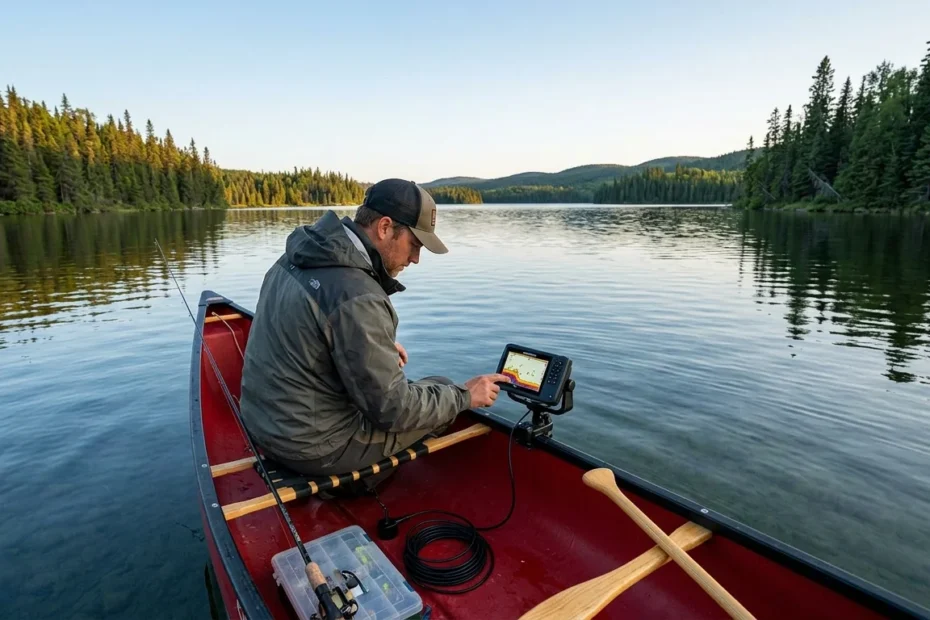
Looking for the best portable fish finder for canoe fishing in Canada? Compare castable sonar, compact screen units, and no-drill canoe setups before you buy.
- Match Portable Fish Finder for Canoe Fishing in Canada to your water, season, boat size, and actual skill level instead of buying by specs alone
- Prioritize readable controls, durable construction, and Canada-relevant use cases before chasing premium features
- Use the guide to compare what matters in the field: setup time, reliability, safety, storage, and upgrade path
Bottom line The right Portable Fish Finder for Canoe Fishing in Canada choice solves your real Canadian trip conditions without adding gear you will not use
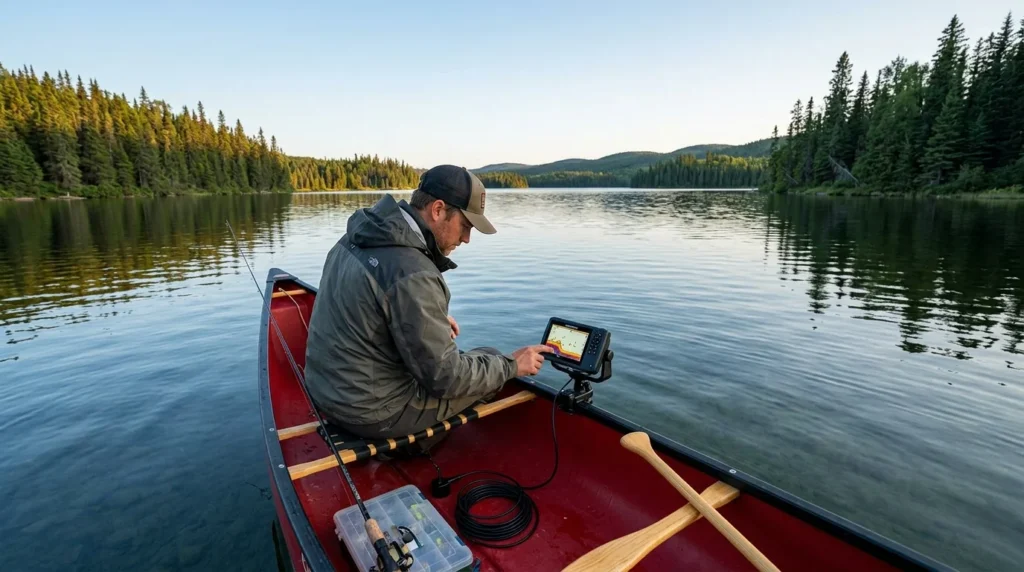
The best portable fish finder for canoe fishing is the one that respects the canoe.
That sounds obvious, but most product roundups ignore it. They recommend units that are fine on kayaks or small boats, then quietly assume you are happy drilling, clamping, wiring, or dragging more battery than a canoe trip really wants. That is not how most canoe anglers in Canada fish.
For most buyers, the real decision is not simply “which fish finder is best?” It is `castable sonar or portable screen unit?`
Key Takeaways
- For most canoe anglers, the best portable fish finder is either a castable sonar or a small portable screen unit, not a full boat-style install.
- Choose castable sonar when you want the lightest, easiest, no-drill path.
- Choose a portable screen unit when you want a dedicated display, better sonar control, and less dependence on your phone.
- Backcountry, rental, and portage anglers should prioritize weight, simplicity, and zero-drill setup over feature bragging.
- For many Canadians, the smartest canoe fish finder is the one that still feels worth carrying after the second portage.
That Canada-specific angle matters more than most reviews admit.
Canoe anglers in Canada are more likely to deal with rented boats, wilderness lakes, carry trails, and no-drill setups than the average small-boat buyer. If you want the wider electronics cluster first, use Best Fish Finders and Fishing Electronics in Canada as the hub.
The Guide’s Log
Portable electronics make or break a canoe trip because a canoe has no patience for clutter. The wrong system does not just feel heavy. It changes how you launch, where you place your feet, how cleanly you portage, and how much you trust the whole boat once wind or current starts moving you around. That is why canoe fish-finder buying is different from kayak fish-finder buying. A kayak tolerates more rigging. A canoe punishes dead weight, snaggy mounts, and gear that turns every shoreline transfer into a packing problem. The good news is that canoe anglers do not need a giant system. They need clarity. If the trip is simple, a castable sonar can be the best answer. If the trip is bigger, a compact portable screen can still work well, but only if it earns its place. The winning setup is not the one with the loudest spec sheet. It is the one you would willingly take on a cold morning, a rental canoe day, and a backcountry portage without resenting it by lunch.
Best Overall for Most Canoe Anglers: Castable CHIRP Sonar
If you want the lightest, least invasive, most canoe-friendly electronics path, a good castable sonar is still the strongest overall answer for most buyers.
As an Amazon Associate, CanadaFever may earn from qualifying purchases.
Best Portable Fish Finder for Canoe Fishing
The best portable fish finder for canoe fishing is usually a castable sonar if portability is your first priority, and a compact portable screen unit if dedicated display control matters more.
That is the key split. Canoe buyers should not be pushed into the same answer as kayak buyers by default, because the platform is different and the setup tolerance is lower.
| Buyer type | Best fit | Typical CAD lane | Why it wins |
|---|---|---|---|
| Most canoe anglers | Castable CHIRP sonar | Low to mid hundreds | No drilling, no heavy battery, and strong portability for rentals and carries |
| Frequent canoe angler who wants a real screen | Compact portable screen unit | Mid hundreds to low four figures depending on bundle | Better control and less phone dependence, if you can justify the extra carry burden |
| Backcountry or portage-heavy buyer | Castable sonar or ultra-light portable solution | Low to mid hundreds | Every extra pound hurts more on a canoe carry than on a kayak launch |
| Occasional rental-canoe angler | Simple castable sonar | Low hundreds | Best no-drill path when you do not own the boat |
The biggest canoe mistake is over-rigging.
If the fish finder turns the canoe into an electronics project, it is probably the wrong answer for that trip style.
Why Castable Sonar Wins So Often on a Canoe
A castable sonar wins because it solves the hardest canoe problem: how to add sonar without creating a mounting headache.
This is why products like Deeper keep showing up in canoe conversations. A castable unit can be stored, launched, and packed without turning the canoe into a permanent electronics platform. That matters for rentals, occasional use, and backcountry carries.
- No drill holes
- No transducer arm hanging off the side
- No separate screen mount to plan around
- Easier to justify when the canoe is shared, rented, or carried long distances
That is also why this page does not simply copy our kayak logic. The stronger screen-based path in Best Portable Fish Finders for Kayak Fishing in Canada is still useful context, but a canoe has less tolerance for deck clutter and rigging bulk.
When a Portable Screen Unit Is the Better Choice
A compact portable screen unit is the better answer when you fish from a canoe often enough that phone-based sonar starts feeling limiting.
This usually happens when:
– you want a dedicated display in bright light
– you do not want to rely on your phone around spray and rain
– you want more consistent sonar control
– your canoe trips are frequent enough to justify a better rig
- Better visual control than phone-only sonar
- More familiar if you already use a fish finder in other boats
- Stronger fit for frequent users, not occasional canoe anglers
But this only makes sense if the carry burden still feels reasonable. If you are already trying to stay light, it is easy to turn a canoe into the wrong platform for a battery-and-screen setup.
Build a Better Canoe Electronics Setup
If you are shopping seriously, think in three lanes: castable sonar, compact screen units, and the simple mounting or dry-storage gear that keeps the whole system practical on a canoe.
Castable Sonar for Canoes
Best if you want the lightest no-drill solution for rentals, backcountry routes, or occasional canoe days.
Portable Screen Fish Finders
Best if you fish canoes often and want a dedicated display that is easier to read and control.
Dry Bags and Simple Mount Gear
Best if you already know your sonar path and now need to keep your phone, battery, and gear protected in a canoe.
As an Amazon Associate, CanadaFever may earn from qualifying purchases.
The Canada-First Buying Angle
Canoe fishing in Canada often means one of three things: rental convenience, portage practicality, or quiet access to water that bigger rigs never touch.
That is why portability means something different here than it does in a lot of U.S. portable fish-finder pages. On this kind of trip, a fish finder needs to support the canoe instead of dominating it.
If your budget is already capped, use Best Fish Finder Under 500 in Canada. If you are still learning how to read what the screen or sonar is showing, go next to How to Use a Fish Finder.
For most buyers, the best-for bullets are simple:
- Best overall: castable CHIRP sonar
- Best no-drill setup: castable sonar
- Best for frequent canoe anglers: compact portable screen unit
- Best for backcountry carries: the lightest system you will actually bring twice
The Pre-Trip Protocol
- Step 1: Decide whether your trip is truly no-drill, rental-based, or portage-heavy before you shop.
- Step 2: Choose between castable simplicity and screen-based control based on how often you fish from canoes.
- Step 3: Buy the lightest system you will still trust on a real day of paddling, moving, and carrying gear.
Best Portable Fish Finder for Canoe Fishing FAQ
What is the best portable fish finder for canoe fishing for most people?
For most canoe anglers, a castable CHIRP sonar is the best overall choice because it stays light, simple, and easy to use without drilling or permanent rigging.
Is a castable sonar better than a screen fish finder on a canoe?
Often yes, especially for rentals, no-drill setups, and portage-heavy trips. A portable screen unit becomes more attractive when you fish canoes often enough to justify the extra gear.
Can you mount a regular fish finder on a canoe?
Yes, but that does not always mean you should. A canoe has less tolerance for battery bulk, transducer arms, and mounting clutter than a kayak or small boat.
What matters most for a canoe fish finder?
Weight, no-drill practicality, portability, and how easily the system survives wet conditions and carries. Portability matters more on a canoe than on most fishing platforms.
Is a canoe fish finder worth it in Canada?
Yes, especially on larger lakes, backcountry routes, or unfamiliar water. The key is choosing a system that helps the trip instead of turning the canoe into a gear management problem.
Where this fits: A canoe fish finder needs a stable mounting and storage plan. Use the Kayak and Canoe Fishing in Canada pillar to compare canoe electronics with craft choice, gear, and trip planning.