
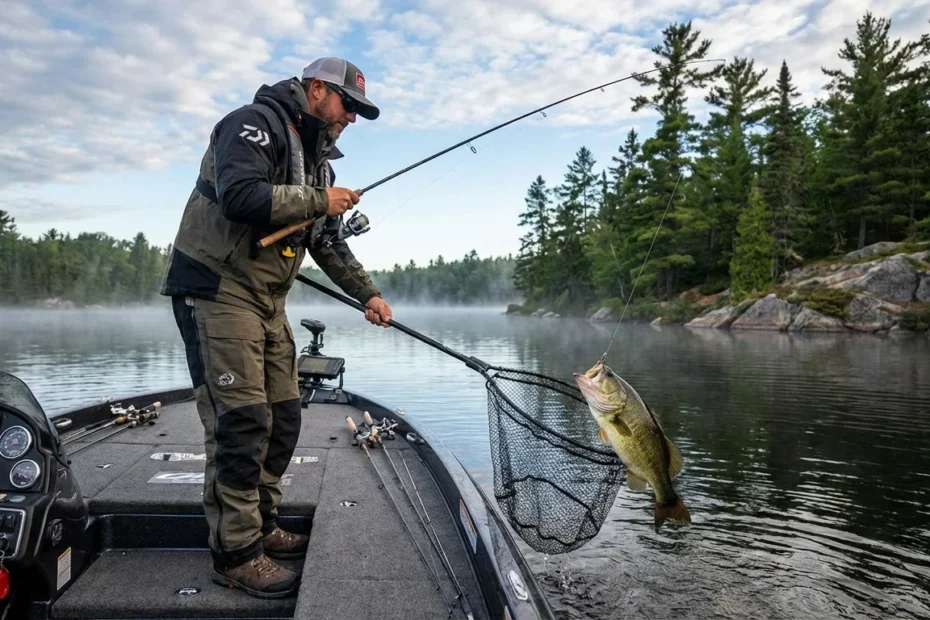
Bass fishing tips and techniques only become useful when they help you make a faster decision on the water.
That is the problem with most bass articles. They give you a pile of lure names, a few seasonal cliches, and a lot of generic U.S. advice, but they do not tell a Canadian angler where to start on a clear lake, how to think about smallmouth versus largemouth, or when to stop forcing power fishing and slow down.
Key Takeaways
- In much of Canada, smallmouth thinking should come first: rock, shoals, points, clean water, and subtle presentations matter more than random power casting.
- Largemouth still reward classic weed, shade, slop, and dock patterns, but only if you actually identify the warmest, most stable cover zones on the lake.
- The biggest bass mistake is not wrong lure colour. It is starting in the wrong part of the lake and fishing the wrong depth for the season.
- When conditions get tough, simplify: one moving bait, one finesse bait, one confidence area, and a cleaner decision tree.
Before you worry about bait brands, ask the question that controls the whole day: are you fishing a clear smallmouth-style lake, a weed-heavy largemouth lake, or a mixed system where both fish force you to split decisions?
If you are also trying to lock down the right casting setup, read Best Baitcaster Combo for Bass in Canada. If your water is cleaner and more smallmouth-driven, Best Smallmouth Lures for Ontario Clear Water is the better next step.
The Guide’s Log
Bass have a habit of making anglers feel smart right before they expose every bad assumption in the boat. You idle over a textbook point, see scattered bait, make three good casts with a confidence lure, and suddenly you are convinced the pattern is solved. Then the lake humbles you. The next two hours go dead because the fish were not “on points” in some broad, magical sense. They were on one wind-touched rock seam, in one depth band, feeding for a short window. That is the lesson bass keep teaching. Good anglers do not chase a generic pattern. They narrow the pattern until it becomes real: this depth, this kind of bottom, this kind of edge, this speed, this angle. In Canadian bass water, that matters even more because clear lakes, short feeding windows, and heavy cottage pressure punish sloppy pattern talk fast. The anglers who stay consistent are usually the ones who cut decisions down, not the ones who keep adding more lures.
Where to Start Bass Fishing in Canada
The first hour matters more than people admit. If you start in the wrong water, the rest of the day often becomes a repair job.
In a lot of Canadian bass water, especially around Ontario, Quebec, and shield-style lakes, smallmouth are the tone setters. They push anglers toward rock, shoals, clean points, current, and baitfish or crayfish logic. Largemouth still matter, especially around weeds, pads, back bays, and warmer cover, but they are not always the default first read.
If you need a quick house rule, use this:
- Start with rock, points, shoals, and depth changes if the lake is clear, open, or known for smallmouth.
- Start with weeds, pads, docks, wood, and warmer protected water if the lake feels stained, grassy, or largemouth-heavy.
- Start where wind or current improves feeding, not where the map simply looks pretty.
CanadaFever already has technique pages that fit this decision tree well, including drop shot rig deep water smallmouth, precision flipping and pitching for bass, and swimbait fishing for trophy bass. This guide is the bigger map that tells you when to reach for each style.
The Local Secret
On many Canadian lakes, anglers waste the first hour fishing obvious shoreline cover when the better early clue is actually wind-touched rock, a nearby shoal, or a clean break where smallmouth can slide up and down fast.
Amazon.com Picks
Build a Bass Kit That Covers Most Canadian Water
If you want a simple bass system, cover three categories first: a finesse setup, a moving-bait box, and electronics that help you stay on the right depth and edge.
Drop Shot and Finesse Terminal Tackle
Best if you fish clear water, pressured bass, or deep summer fish that need a quieter presentation.
See Category
Jerkbaits, Spinnerbaits, and Crankbaits
Best if you need to cover water, locate active fish, and learn whether bass are willing to chase.
See Category
Portable Fish Finders and Sonar
Best if you want to stay on the right break, shoal, weed edge, or suspended bait zone instead of fishing blind.
See Category
As an Amazon Associate, we earn from qualifying purchases.
| Situation | Start Here | Best Bass Logic | Common Mistake |
|---|---|---|---|
| Clear shield lake | Rock points, shoals, breaks, and wind-touched seams | Smallmouth usually dictate the pattern | Running shallow weeds first with no reason |
| Warm weedy lake | Weed edges, pads, wood, docks, and sheltered bays | Largemouth positioning is more cover-driven | Ignoring the healthiest weeds and fishing random shoreline |
| Cold front or pressure spike | Deeper breaks, tighter cover, slower finesse | Fish often shrink their strike zone | Fishing fast just because it worked yesterday |
| New lake with limited time | One search bait plus one finesse follow-up | Learn location and depth before lure obsession | Changing baits constantly before finding fish |
Bass Fishing Tips by Season
Season is the fastest way to clean up bad bass decisions. Fish can be shallow in every season somewhere, but the reason they are shallow changes, and so should your expectations.
- Spring: focus on warming water, staging areas, and nearby spawning flats. Slow-moving baits and suspending presentations often matter more than maximum speed.
- Summer: think in two halves. Early and late can belong to shallow feeding windows, but midday often pushes fish to deeper weed edges, current, or rock breaks.
- Fall: bait movement matters more. Bass often roam more aggressively, and moving baits get stronger if you can identify where forage is collecting.
If you already like structured deep-water fishing, pages like deep cranking for summer lake trout and spoon fishing for deep water walleye reinforce a useful bass lesson too: depth control and edge choice are often more important than lure variety.
Smallmouth vs Largemouth Bass Techniques
The easiest way to stay generic is to talk about “bass” like both fish want the same thing. They often do not.
| Bass Type | Best Starting Water | Go-To Presentations | What Anglers Misread |
|---|---|---|---|
| Smallmouth | Rock, sand, shoals, current, and clean breaks | Drop shot, jerkbait, tube, swimbait, finesse minnow | Assuming they are always shallow because one fish chased on top |
| Largemouth | Weeds, wood, pads, docks, darker pockets, and warmer cover | Jig, Texas rig, frog, spinnerbait, flipping bait | Fishing every weedline the same instead of finding the best grass |
Best Bass Fishing Tips for Pressured Canadian Lakes
Pressure changes the game fast on cottage-country water.
Clear water, weekend traffic, electronics, and constant casting can all make bass more conditional. That does not mean the fish become impossible. It means your timing, angles, and lure speed have to get cleaner.
- Fish outside the obvious community spots whenever possible.
- Make your best casts first on every target instead of “warming up” on the spot.
- Use finesse sooner on sunny, calm, clear-water days.
- Let wind work for you. Slightly dirtier or more broken water often helps.
- Do not overstay dead water just because the map says it should be good.
If you are fishing from smaller craft, related pages like kayak fishing techniques, fishing tackle setup for kayaks, and best portable fish finders for kayak fishing in Canada help tighten the boat-control and electronics side of the equation.
The Pre-Trip Protocol
- Step 1: Decide whether the day starts on rock or weeds based on the lake, not on habit.
- Step 2: Carry one search bait and one finesse follow-up so you can answer “active or neutral?” fast.
- Step 3: Check the local rules and licence requirements before the trip, especially around openers and zone-specific bass regulations.
Bass Fishing Regulations and Licence Reminders
This part should stay simple: never fish bass by memory when the local rules are easy to verify.
Ontario’s regulations make clear that largemouth and smallmouth bass are managed with zone-specific seasons, size limits, and combined possession rules. Quebec also requires anglers to carry a valid licence unless an exception applies. That means your “normal bass habits” from one region may not transfer cleanly to the next.
Start with Ontario’s guidance on bass limits and catch-and-release rules, the broader Ontario fishing regulations summary, and Quebec’s page on getting a fishing licence.
- Check the active zone, not just the province name.
- Do not assume bass openers line up the same way across regions.
- Carry the right licence and identification.
- If you travel often, use how to obtain a fishing license in Canada and province-specific guides like Ontario fishing regulations or Quebec fishing regulations as your first stop.
Why Most Bass Anglers Miss the Pattern
Most missed bass days are not mystery. They come from one of three mistakes:
- fishing the wrong depth
- fishing the wrong type of water for the species you are really targeting
- changing lures before confirming whether the area itself is right
The cleaner bass approach is also the calmer one. Read the lake first. Let the season set the likely depth. Use a moving bait to find willingness. Then slow down only where the fish have actually given you a reason.
Bass Fishing Tips and Techniques FAQ
What is the best way to start bass fishing on a new Canadian lake?
Start by deciding whether the lake is more of a smallmouth rock lake or a largemouth weed lake. Then use one search bait to locate active fish before you start cycling through finesse options.
Are smallmouth and largemouth bass techniques the same?
No. Smallmouth often reward rock, current, clean breaks, and finesse or baitfish-style presentations. Largemouth usually respond better to weeds, wood, shade, and stronger cover-oriented tactics.
When should you use finesse for bass?
Use finesse sooner in clear water, on pressured lakes, during cold fronts, and when fish are showing themselves but refusing louder search baits.
What is the biggest bass fishing mistake beginners make?
They keep changing lures without first proving they are in the right area and depth. Wrong location usually hurts more than wrong lure colour.
Do you need to check local bass regulations every trip?
Yes. Bass seasons, limits, and zone rules can vary, especially in Ontario and other province-specific systems. Do not rely on memory if you change lakes or regions.