

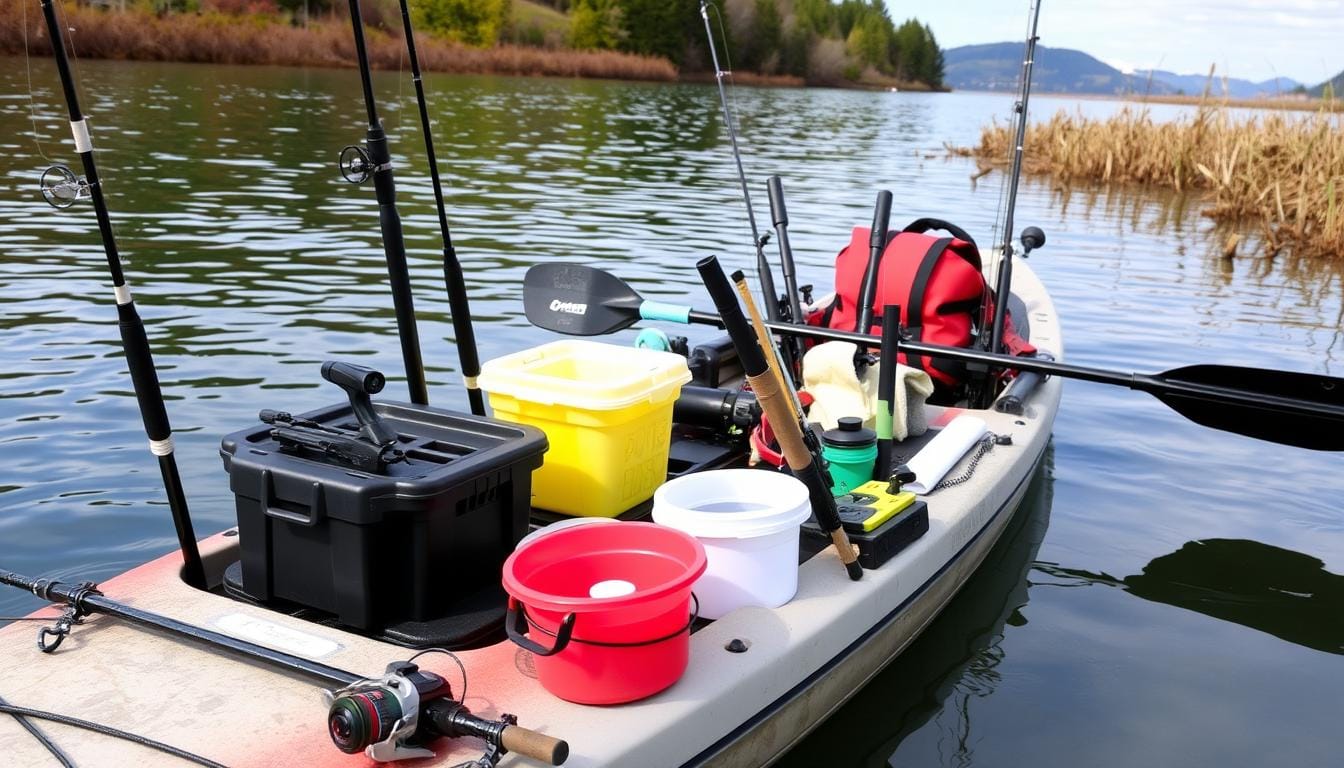
Discover expert tips for fishing tackle setup for kayaks and organize your gear efficiently. Learn how to maximize storage space and keep essential equipment within reach.
- Match Fishing Tackle Setup for Kayak Anglers to your water, season, boat size, and actual skill level instead of buying by specs alone
- Prioritize readable controls, durable construction, and Canada-relevant use cases before chasing premium features
- Use the guide to compare what matters in the field: setup time, reliability, safety, storage, and upgrade path
Bottom line The right Fishing Tackle Setup for Kayak Anglers choice solves your real Canadian trip conditions without adding gear you will not use
Key Takeaways
- Short Rod Lengths: Use shorter 6.5ft to 7ft rods. Shorter blanks are much easier to handle on tight decks and allow you to reach the rod tip to clear snags.
- Compact Tackle Trays: Don’t carry massive tackle boxes. Downsize to 2-3 target Plano trays filled with species-specific lures.
- Leader Material: Use abrasion-resistant fluorocarbon leaders. Kayak lines frequently rub against gear tracks, paddles, and hull plastic.
- Track Mounted Holders: Store rods horizontally along the gunwales using track-mount holders to prevent catching low-hanging tree branches.
🎣 Kayak Tackle Loadout Selector 🐠
Select your target species to get the recommended rod setups and tackle loadout.
Rigging your fishing tackle setup for a kayak requires a completely different approach than rigging for shoreline or motorboat angling. On a kayak deck, efficiency, compactness, and rod length are crucial. If your rods are too long, you won’t be able to reach the tip to clear snags or tie knots safely. If you bring too much tackle, your deck will be cluttered and unsafe.
Downsizing your gear, selecting shorter, highly responsive rods, and managing your tackle trays is key to staying comfortable and productive. Let’s look at the optimal kayak tackle setups, horizontal deck storage, and rod guidelines for 2026.
Include the landing net in that layout: our kayak fishing net comparison explains how folding handles, fixed hoops and usable reach affect storage around your tackle.
1. Downsize Rod Lengths for Maneuverability
Anglers fishing from bass boats often prefer 7.5ft to 8ft rods to maximize casting distance. On a kayak, however, long rods are a major liability. Shorter rods (6’6″ to 7’0″) are highly recommended. A shorter rod is much easier to steer around the bow when a big fish runs under your kayak, and it allows you to reach the rod tip to clear tip-wraps without leaning dangerously off-balance.
2. Transition to Horizontal Rod Storage
Many kayaks feature vertical rod tubes behind the seat. While vertical storage is common, it carries a major risk: if you paddle under low-hanging tree branches along the shoreline, your rods will catch and snap. Storing your rods horizontally along the side gunwales using specialized track-mount clips keeps them safe and low-profile.
3. Organize Tackle by Target Species
Do not bring multiple bulky tackle bags. Downsize your tackle to **two target Plano boxes** that fit directly into your seat-side pockets or crate. Organize one box with search baits (crankbaits, spinners) and the other box with finesse rigs (jigs, soft plastics) specific to the species you are targeting.
Kayak Tackle Setup Gear
Vetted, top-rated products that are highly recommended for Canadian paddlers and anglers.

Plano Guide Series Tackle Bag (3600 Size)
A compact, highly durable tackle bag with molded top storage and utility trays. Ideal for sitting flush inside kayak tankwells.
- Drop-Ring Design: Patented molded top holds a Plano utility box securely for fast, on-deck tackle access.
- Non-Slip Molded Base: Features a rigid, waterproof base with rubber feet that prevents sliding and keeps your tackle dry in wet tankwells.
- Heavy-Duty Construction: Built with rugged, water-resistant fabric and oversized zippers to withstand harsh outdoor elements.

KastKing split ring Fishing Pliers
Corrosion-resistant stainless steel pliers with sheath. Essential for cutting braid, crimping sleeves, and opening split rings.
- Stainless Steel Durability: Made from corrosion-resistant 420 stainless steel and coated with tough Teflon for saltwater and freshwater use.
- Tungsten Carbide Cutters: Ultra-sharp tungsten carbide line cutters easily slice through tough braided line, mono, and fluorocarbon.
- Split Ring Tip: Designed with a specialized split ring nose tip for easy opening and changing of hooks on lures.
KastKing Fishing Line Spooler
A compact spooling station that lets you spool casting or spinning reels easily. Perfect for re-lining kayak tackle setups.
- Tension-Controlled Spooling: Built-in tension bands apply steady pressure to ensure line is wound tightly and evenly onto your reels.
- Zero Line Twist: Spools line directly onto spinning or casting reels without twisting, preventing future wind knots.
- Compact & Portable: Lightweight design folds flat, making it easy to carry in your tackle bag for on-the-water spooling.
Affiliate Disclaimer: As an Amazon Associate, CanadaFever earns commissions from qualifying purchases. This supports our free outdoor guides at no extra cost to you.
🌍 Explore Guided Fishing Trips in Canada
Want to fast-track your success on the water? Book a professional local guide through Viator to find the best spots, learn advanced paddling techniques, and hook into trophy fish.
*CanadaFever is a Viator Partner (ID: P00210641). We may earn a commission if you book through our links, at no extra cost to you.*
What rod length is best for kayak fishing?
Rods between 6’6″ and 7’0″ are ideal. They provide the perfect balance between casting distance and deck maneuverability, letting you easily reach the tip to clear tangled lines.
How do you store fishing rods on a kayak?
Use horizontal rod holders along the deck sides to clear tree branches when paddling near shorelines. For open basins, vertical rod tubes behind your seat are fine.
Why use fluorocarbon leaders for kayak fishing?
Fluorocarbon is virtually invisible under water and has high abrasion resistance. This is crucial because kayak lines frequently rub against hull plastic, paddles, or track mounts.