

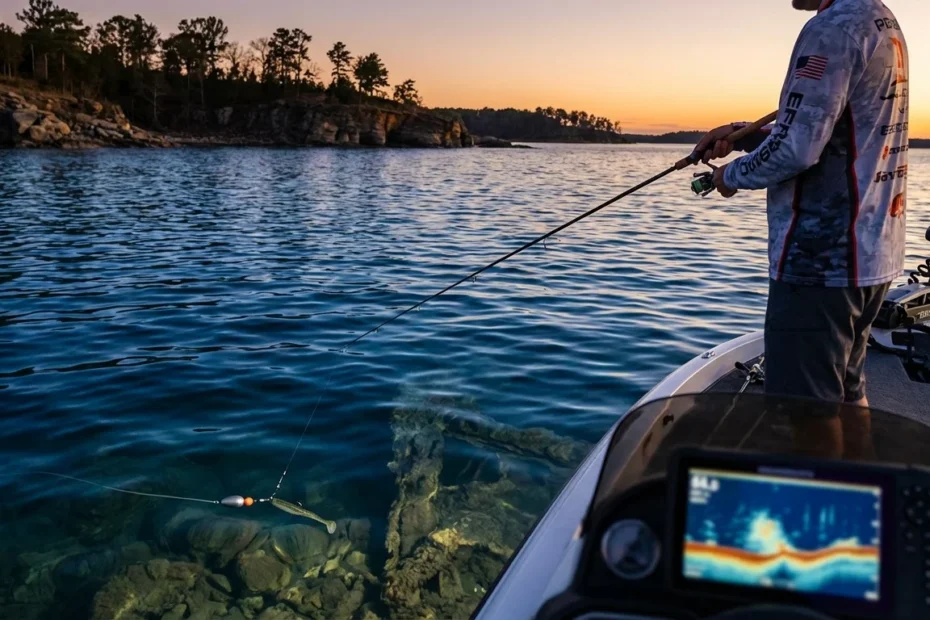
Learn how to fish a Carolina rig on offshore structure with the right weight, leader, drift angle, and bottom-reading discipline.
- Use Carolina Rigging for Offshore Structure to match species behaviour, habitat, season, and presentation to Canadian water conditions
- Check local regulations before fishing; limits, closures, bait rules, and licences can vary by province and waterbody
- Focus on practical setup: where to fish, what to cast or troll, how deep to work, and when to move
Bottom line Carolina Rigging for Offshore Structure gets simpler when you pair current rules with the right habitat, timing, and presentation
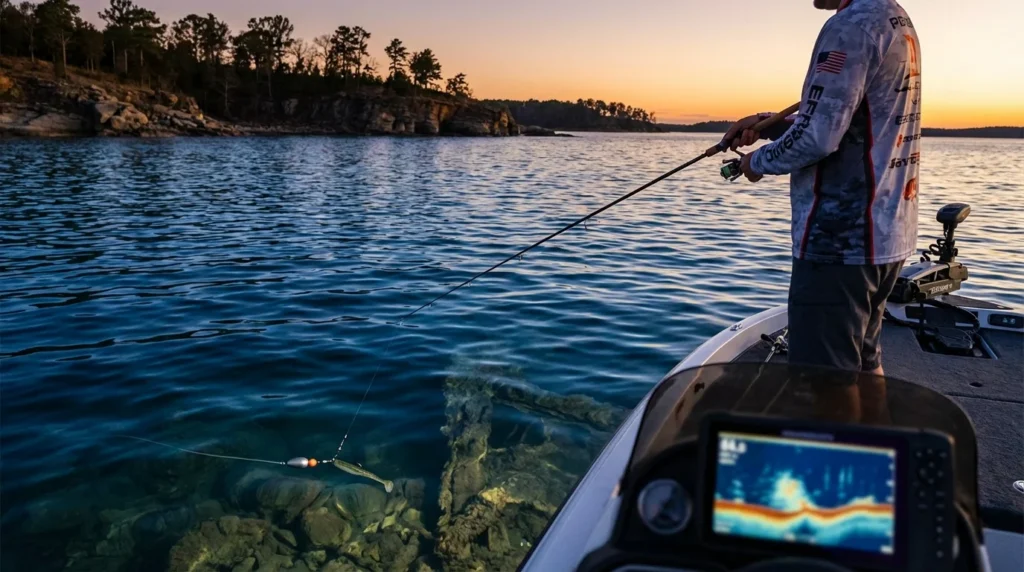
Carolina rigging for offshore structure works when you need one rig to feel bottom, stay in the strike zone, and keep a bait moving naturally behind weight over ledges, shell beds, humps, and hard edges.
For CanadaFever readers, this is mostly a travel and transferable-technique article. You may use it on southern saltwater trips, or you may borrow the same structure-reading logic for deeper freshwater breaks at home. Either way, the rig only shines when the setup, weight, leader, and drift control all work together.
Key Takeaways
- A Carolina rig is strongest when fish are glued to bottom-oriented structure but still want a moving bait with some freedom behind the weight.
- Your sinker choice matters more than people admit. Too light and you lose contact. Too heavy and you plow the structure instead of reading it.
- Boat position, line angle, and drag cadence usually matter more than lure color on offshore breaks.
- This is not a one-size-fits-all rig. Leader length, weight, bait profile, and hook size should change with depth, current, and cover.
The Guide’s Log
A Carolina rig teaches you very quickly whether you are actually fishing structure or just dragging hope across water. The moment you start feeling the difference between clean sand, broken shell, sharp rock, and that one hard turn on the break, the rig stops being “just a setup” and turns into a map. That is also the moment most anglers either get disciplined or get sloppy. They rush the drag, lose bottom contact, or keep the same weight after current changes. Offshore structure fishing rewards the patient version of you: the one who watches line angle, keeps the sinker honest, and lets each cast tell you something before trying to force the bite.
What Is Carolina Rigging for Offshore Structure?
A Carolina rig is a sliding sinker system built to keep weight on the main line while a leader trails a bait behind it. Offshore, that matters because the rig can maintain bottom contact while the bait glides, lifts, or pauses more naturally than it would on a rigid bottom rig.
That is the real attraction. You are not just fishing a bait. You are reading structure through the sinker while giving the bait some freedom behind it. On shell beds, gravel turns, rubble, wreck edges, and ledges, that separation makes the rig feel cleaner and more informative than many bulkier bottom setups.
For CanadaFever readers, think of this article as the saltwater cousin of deeper structure presentations already familiar from pages like drop shot rig deep water smallmouth, spoon fishing for deep water walleye, and deep cranking for summer lake trout. The species may change, but the logic of contact, angle, and bottom interpretation does not.
When This Rig Actually Shines
Carolina rigging is not the answer to every offshore problem. It shines when fish are using bottom structure but are not pinned so tightly to cover that a shorter, more vertical rig is the better tool.
- Dragging ledges, humps, or shell lines for snapper, grouper, and structure-oriented species
- Covering water across hard-bottom transitions where fish are scattered instead of stacked
- Fishing current breaks where you still want the bait to move naturally
- Learning a new offshore spot by feel rather than just by screen interpretation
The Local Secret
Most anglers talk about Carolina rigs like a tackle recipe. Better anglers treat them like a structure-reading system. If you cannot feel the change from soft to hard bottom, or from the flat into the lip of the break, your rig is not tuned yet.
Amazon.com Picks
Build a Carolina Rig Kit That Travels Well
If you are packing for an offshore structure trip, focus on three categories first: sinkers that hold bottom, leader hardware that survives abrasion, and compact soft baits that stay clean behind the rig.
Egg Sinkers and Bottom Weights
Best if you need clean bottom contact and want enough range to adjust for depth and current without guessing.
See Category
Swivels, Beads, and Leader Hardware
Best if you want stronger connection points, cleaner separation, and hardware that holds up when the rig is dragged all day.
See Category
Compact Soft Plastics for Structure
Best if you want a bait that tracks cleanly behind the leader and keeps a Carolina rig efficient around ledges, shell, and rubble.
See Category
As an Amazon Associate, we earn from qualifying purchases.
Carolina Rig Setup for Offshore Structure
The rig itself is simple. The tuning is where people either dial it in or ruin it.
The core build is still main line, sliding sinker, bead, swivel, leader, hook, and bait. Offshore, the real variables are sinker size, leader length, hook style, line type, and how much current is trying to push the whole system off the zone.
| Component | Typical Offshore Range | What It Changes | Common Mistake |
|---|---|---|---|
| Sinker | 3/4 oz to 3 oz, adjusted for depth and current | Bottom contact, feel, and drift control | Using a bass-style light weight when current demands more contact |
| Leader | 40 cm to 100 cm | How high and freely the bait trails | Running a long leader in rough structure where snagging spikes |
| Main line | Braid for feel, mono less common for this use | Sensitivity and hook control at distance | Choosing stretch over feel when structure reading is the goal |
| Hook | Matched to bait profile and target species | Hook-up ratio and bait tracking | Oversizing the hook and killing bait action |
| Bead and swivel | Hard bead plus strong swivel | Click, separation, and twist control | Cheap hardware that fails under repeated dragging and abrasion |
Weight Selection by Depth and Current
If you remember one rule from this whole guide, make it this one: choose the lightest sinker that still lets you stay honest about bottom contact.
That does not mean “as light as possible.” It means as light as you can use without losing the structure. In stronger current, deeper water, or faster drifts, a heavier sinker is not a compromise. It is the only way the rig still functions like a Carolina rig instead of a drifting guess.
This is similar in principle to other deep presentations where angle and contact matter, including saltwater fishing tips for drifting structure and deeper freshwater methods where being in touch with the bottom changes everything.
Best Structure for an Offshore Carolina Rig
This rig is strongest on structure you can drag through, over, or across without constantly donating terminal tackle to it.
- shell beds and hard-bottom patches
- offshore ledges and stair-step breaks
- long humps and rubble transitions
- wreck edges where the fish are outside the metal, not buried in it
- mixed bottom where you need to learn the shape by feel
Where it gets weaker is ultra-snarly vertical structure, heavy metal, and tight cover where a shorter or more controlled bottom rig makes more sense. A Carolina rig is an edge tool before it is a snag tool.
| Structure Type | Why the Rig Works There | Best Presentation Angle | When to Switch Rigs |
|---|---|---|---|
| Shell beds and hard patches | The sinker telegraphs bottom change clearly and the bait trails cleanly | Long drags across the transition | If the bottom is too jagged and hangups stack up |
| Ledges and breaks | You can drag from flat to lip to drop and feel the exact change | Across the contour, often from deep toward shallow or vice versa depending on drift | If current makes the angle too vertical or too chaotic |
| Wreck edges and rubble | Good for fish set just outside the hard core of the structure | Parallel passes outside the snag zone | If the bait needs to stay almost vertical in place |
| Featureless soft bottom | Still workable, but you lose the rig’s biggest advantage: structure interpretation | Search drags with long pauses | If another rig gives better bait control or species-specific presentation |
Boat Position and Line Angle Matter More Than People Admit
A Carolina rig starts to fail when the line angle gets bad. That failure may look like poor bite detection, but the real issue is often geometry.
If the boat is set poorly, the sinker slides without telling you much, the bait lifts in weird ways, and the whole rig feels dull. Good offshore Carolina fishing is often nothing more glamorous than getting on the right side of the structure and maintaining a workable drag angle.
In many situations, holding on the deep side and casting shallower across the break gives you better bottom feedback on the return. In others, especially with current pushing across structure, you may need to cast with the flow and let the sinker walk the contour more naturally.
- watch your line angle on every cast
- do not let the drift turn the drag into a sideways skate
- mark the exact part of the structure that produced contact or bites
- reposition the boat instead of trying to “fish through” a bad angle
This is where trip setup matters too. If you are not fishing your own boat, pages like fishing charters and guides help you ask better questions about drift control, boat positioning, and whether the crew actually fishes the technique you want to use.
Drag Cadence, Bait Choice, and the Right Hookset
The classic Carolina mistake is turning every cast into one long sweep with no feel breaks. You want the sinker to travel, yes, but you also want time for the bait to settle, float, or lag behind it naturally.
The standard cadence is a controlled pull, then a pause. Sometimes a small shake helps the bead and sinker create sound or frees the bait from a dead patch. What you do not want is constant speed with no structure reading built into it.
Best Baits for Offshore Carolina Rigging
The best bait depends on species and structure, but the categories stay fairly consistent:
- soft plastics when you want clean drag and subtle movement
- strip or cut baits when scent is part of the equation
- live bait when local rules and conditions support it
- compact profiles around rougher bottom where too much bulk grabs structure
If the bite feels mushy, reel down until you feel load and then sweep firmly instead of trying to snap the rod like a topwater hookset. Offshore Carolina bites often reward pressure and control more than violence.
The Pre-Trip Protocol
- Step 1: Match your sinker to depth and current first, not to habit. Bottom contact is the whole foundation.
- Step 2: Start with a leader length that fits the structure, then shorten or lengthen after the first few reads instead of locking into one setup all day.
- Step 3: Use the first productive cast to refine angle, drift, and bottom interpretation before chasing bait changes.
Common Problems With Offshore Carolina Rigs
The rig usually fails in predictable ways. That is good news, because predictable failures are easier to fix.
| Problem | What It Usually Means | Best Fix | Mistake to Avoid |
|---|---|---|---|
| Constant snagging | Leader too long, angle too bad, or structure too nasty for this rig | Shorten the leader, change the angle, or switch rigs | Assuming more sinker weight alone will solve it |
| No feel on bottom | Weight too light, drift too fast, or line angle too wide | Increase sinker size or improve boat positioning | Continuing to fish blind because the rig “looks right” on paper |
| Short strikes or lost fish | Hook size or hookset timing is off, or fish are nipping the bait | Tighten the hook-bait match and sweep into pressure more cleanly | Going to a violent snap set every time |
| Dragging dead water all day | You are covering structure without identifying the actual sweet spot | Mark every bite, bottom change, and hard turn in the contour | Changing baits constantly before refining location and angle |
Why This Matters to CanadaFever Readers
This is not a classic across-Canada everyday rig. It matters here for two reasons.
First, many Canadian anglers travel south for saltwater trips, and a Carolina rig is one of the more practical structure tools to understand before you ever step onto the boat. Second, the rig teaches transferable lessons about line angle, bottom contact, and structure reading that also improve how you fish at home.
If you are planning coastal travel, broader pages like saltwater fishing and saltwater fishing in canada help frame where this fits into the bigger picture. If you are fishing outside your home waters, always verify local rules before rigging up. Even for technique-driven trips, harvest, tackle, and species rules can vary, and in U.S. federal waters that may mean checking the relevant NOAA Fisheries guidance before the trip.
The simplest summary is this: Carolina rigging offshore is less about copying a bass setup and more about building a structure tool that stays honest in moving water. When the rig is tuned right, it shows you the bottom and keeps a bait in play. When it is tuned badly, it teaches you nothing and wastes the whole drift.
Carolina Rigging for Offshore Structure FAQ
What is the best sinker weight for offshore Carolina rigging?
The best sinker is the lightest one that still keeps reliable bottom contact in the depth and current you are fishing. Offshore, that often means going heavier than a freshwater Carolina setup.
How long should the leader be on a Carolina rig offshore?
A medium leader is the default starting point, but the right answer depends on current, structure, and fish position. Longer leaders help roaming fish. Shorter leaders usually fish cleaner in rougher bottom.
When is a Carolina rig better than a standard bottom rig?
It is better when you want to cover structure horizontally, read bottom changes clearly, and let the bait trail more naturally behind the weight instead of pinning it tightly to the sinker.
What is the biggest mistake with offshore Carolina rigging?
Bad line angle. Once the boat position and drift angle are wrong, the rig stops telling you what the bottom is doing and the whole system loses purpose.
Can Canadian anglers still benefit from learning this rig?
Yes. It is useful for southern saltwater travel, and the structure-reading logic behind it transfers well to other deep-water presentations Canadian anglers already use.