

The 4 best drop shot baits for Canadian Shield smallmouth. Expert rigging setups, depth targets, and structure patterns for summer bass fishing in Ontario and beyond.
- Use The 4 Best Drop Shot Baits for Deep Smallmouth Bass in Canada to match destination, season, access, and budget to the kind of trip you actually want
- Check licences, local rules, travel logistics, weather, and booking windows before locking in dates
- Compare locations by practical fit: target species or activity, remoteness, services, safety, and backup options
Bottom line The 4 Best Drop Shot Baits for Deep Smallmouth Bass in Canada becomes easier when you choose the destination around timing, access, rules, and your real trip style
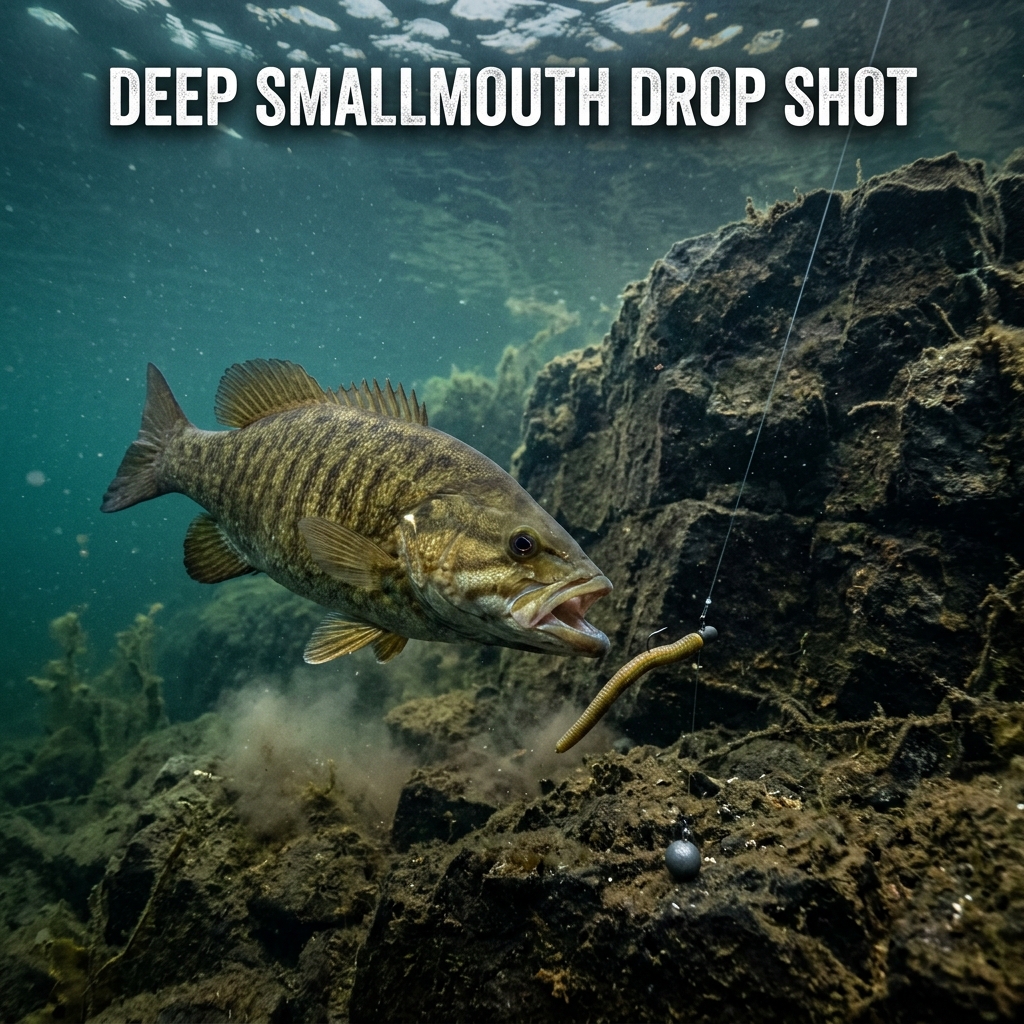
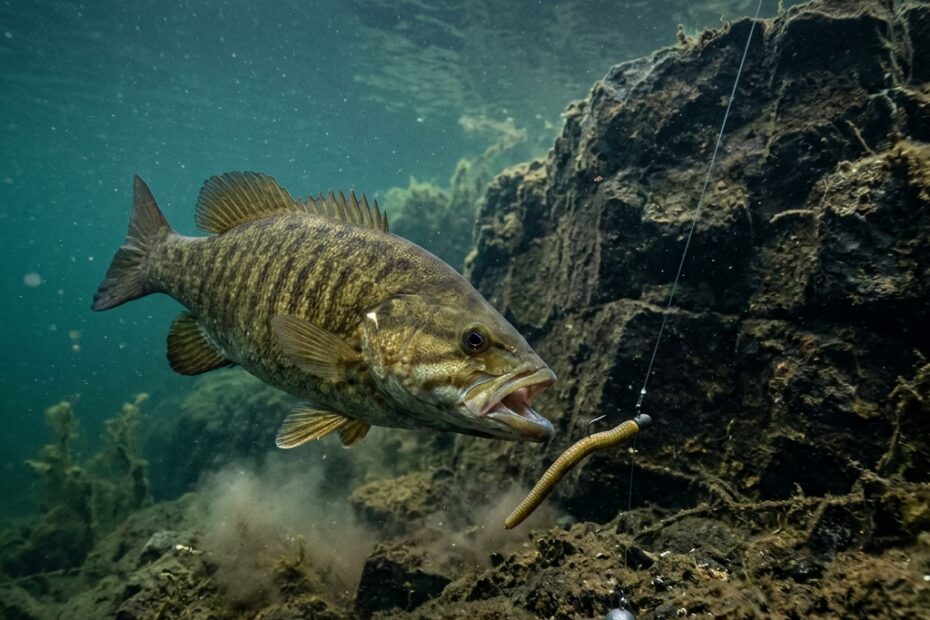
Ask any guide who has spent serious time on the Canadian Shield — Georgian Bay, Lake Simcoe, the Kawartha Lakes, the St. Lawrence River system — and they will tell you the same thing: once smallmouth bass move deep in summer, most anglers simply stop catching them. They keep throwing the same topwater and crankbait setups that worked in May, and they get nothing.
The drop shot changed everything. It is the single most effective technique ever developed for extracting deep, post-spawn and summer-pattern smallmouth from Canadian rock and gravel structure. This guide covers the four best drop shot baits for Canadian conditions, the exact rigs to run, and the depth and structure patterns that concentrate big fish from June through September.
⚡ Key Takeaways
- Target Depth: Canadian Shield smallmouth move to 18–35 ft by mid-June. If you’re fishing shallower than 15 ft in summer, you’re in the wrong zone.
- Best Baits: Finesse worms (4–6″), small tube baits, Ned rigs, and shad-profile stickbaits on drop shot hooks outperform all other presentations at depth.
- Line Setup: 8–10 lb fluorocarbon leader off 10 lb braid. Fluorocarbon is non-negotiable — smallmouth in clear Canadian lakes will refuse baits on visible monofilament.
- Weight Distance: Start with 10–14 inches between hook and sinker. Increase to 18–24 inches in clearer water or when fish are more finicky.
- Ontario Regulations: Check current DFO/OMNRF slot limits before keeping any smallmouth — many Canadian lakes have size restrictions in place.
📋 The Guide’s Log
It was mid-July on a clear lake near Parry Sound. Water temps had pushed the smallmouth off the main lake points into 28 feet of water over a gravel flat with scattered boulders. My clients had been throwing tube jigs all morning — the standard setup — and had landed exactly two fish under 2 lbs. I put them on drop shots with 5-inch finesse worms and told them to shake the rod tip lightly and do nothing else. Within 40 minutes they’d landed nine smallmouth, three of them over 4 lbs.
The fish were there the whole time. They just needed a bait that sat at their exact depth and moved with almost no effort from the angler. That’s what a drop shot does.
Why Drop Shot Dominates Deep Canadian Smallmouth
The drop shot keeps your bait suspended at a precise, fixed depth above the sinker — which sits on the bottom. Unlike a jig that falls through the strike zone and has to be jigged back up, a drop shot bait simply floats at the same level as the fish, indefinitely, while you shake it in place. In 25 feet of clear Canadian water over rock, this is an almost unfair advantage.
Canadian Shield lakes are typically extremely clear. Smallmouth in these environments are heavily pressured by natural predators and can be far more finicky than their counterparts in stained southern lakes. Finesse presentations on light line are mandatory — not optional.
1. Roboworm Straight Tail Worm (4.5″)
The Roboworm Straight Tail is the #1 drop shot bait on the professional bass tour, and it earns that reputation on Canadian Shield smallmouth every season. The injected salt and amino acid formula produces a scent trail that is scientifically proven to trigger strikes from reluctant fish. In clear Canadian water, the “Morning Dawn” (translucent pink) and “Aaron’s Magic” (green pumpkin/purple) colors are the go-to choices.
Fish it on a #1 or #2 drop shot hook with a light 1/4 oz drop shot weight. The bait should have a subtle nose-hook presentation — hook it once lightly through the nose so the tail hangs straight and quivers on the slightest rod twitch.
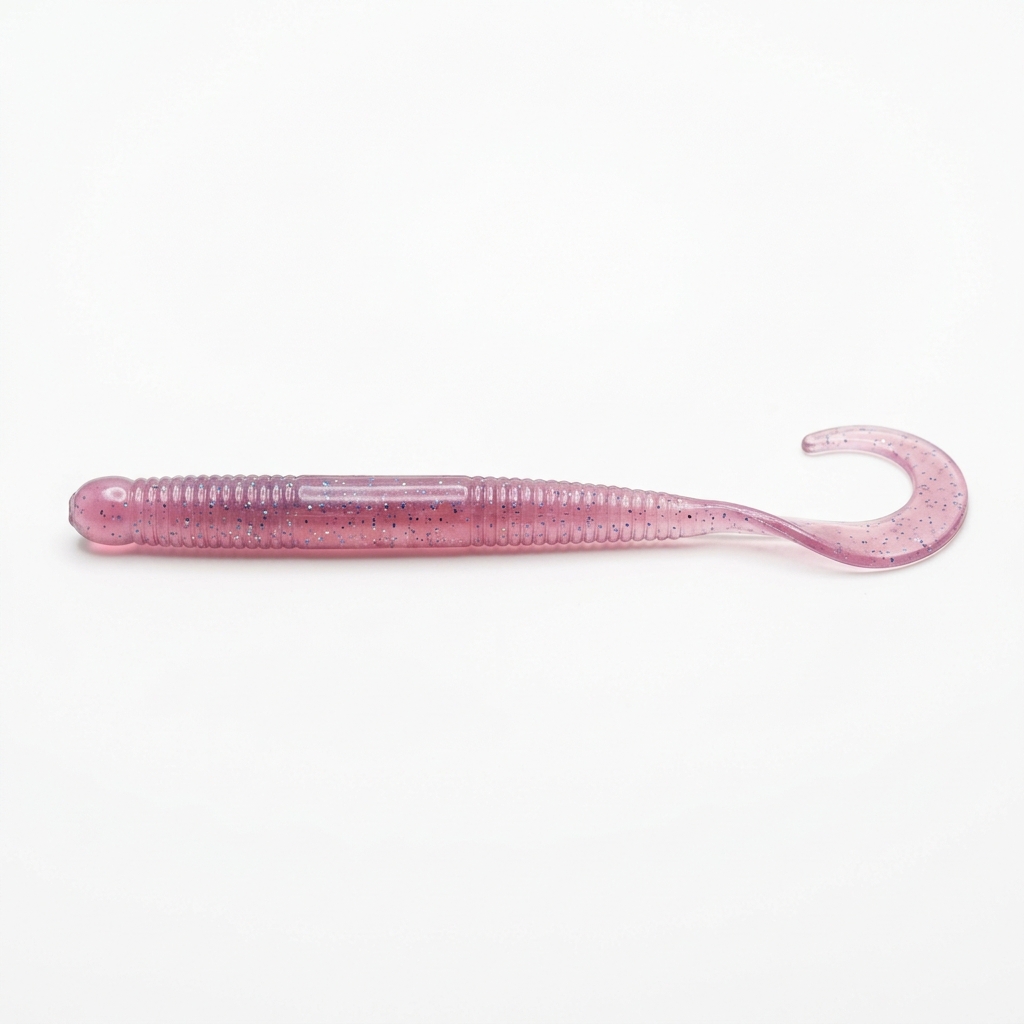
Roboworm Straight Tail Worm (4.5″)
Salt and amino acid injection triggers strikes from finicky, clear-water smallmouth. The #1 finesse worm on the pro tour.
2. Z-Man Finesse TRD (2.75″)
The Z-Man Finesse TRD (The Real Deal) is the defining bait of the Ned rig revolution, and it works equally well on a drop shot hook. The ElaZtech material is almost impossibly buoyant — it floats the tail up even when nose-hooked, creating a constantly moving, shrimp-like presentation that Canadian smallmouth cannot ignore. It is also nearly indestructible, lasting through 10–15 fish per bait compared to 1–2 for standard plastics.
On a drop shot, use a #2 Gamakatsu drop shot hook, nose-hooked. The bait will stand nearly vertical off the hook, mimicking a crayfish or goby — two of the primary forage species for Canadian Shield smallmouth.
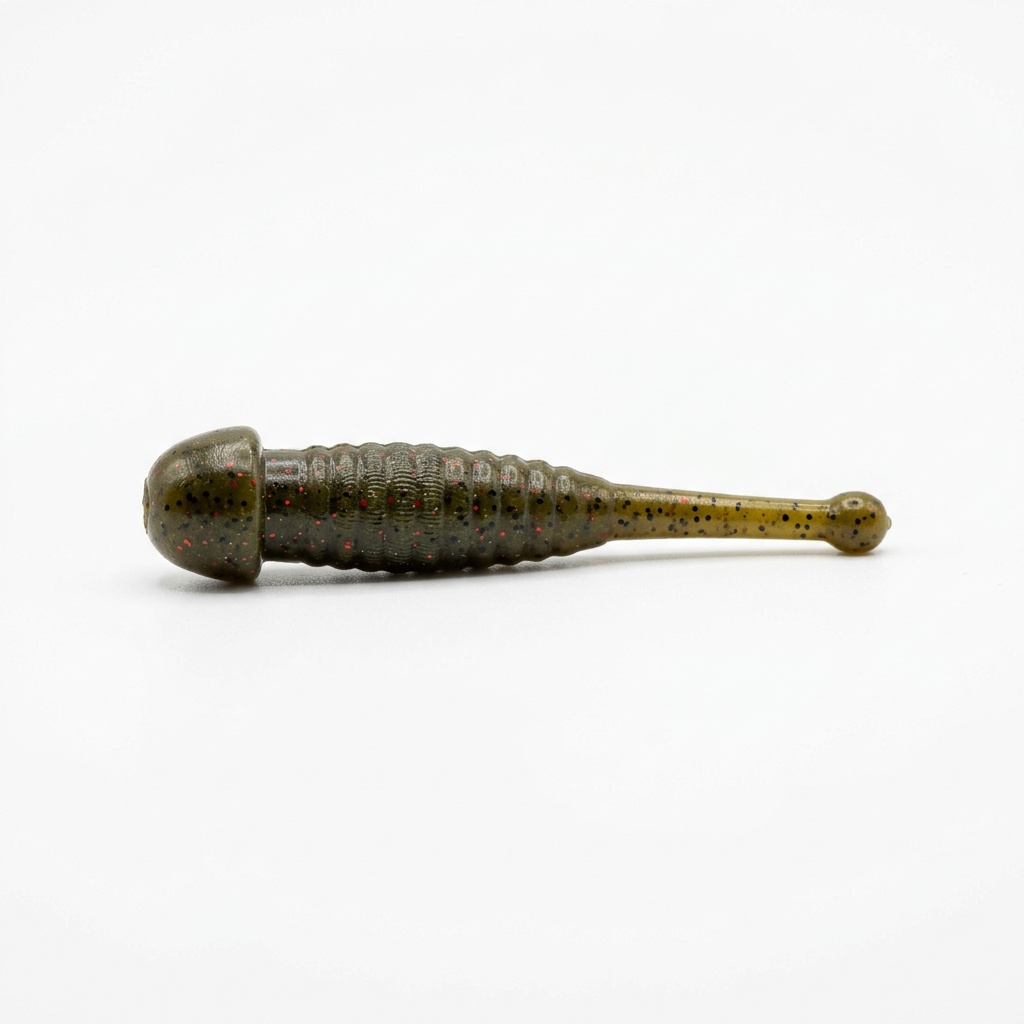
Z-Man Finesse TRD (2.75″)
Buoyant ElaZtech material floats the tail upward, creating a crayfish-like stance that smallmouth can’t resist. Nearly indestructible.
3. Berkley Powerbait Maxscent Flatnose Minnow (4″)
When smallmouth are targeting baitfish rather than crayfish — common in early summer when alewives, shiners, and young-of-year perch are schooling — a slim, shad-profile bait on a drop shot outperforms worms. The Maxscent Flatnose Minnow has a flat, paddle-shaped nose that creates a tight, quivering shimmy on the slightest rod movement. The Maxscent formula releases a continuous scent cloud that dissipates slowly through the water column, drawing fish from well outside visual range.
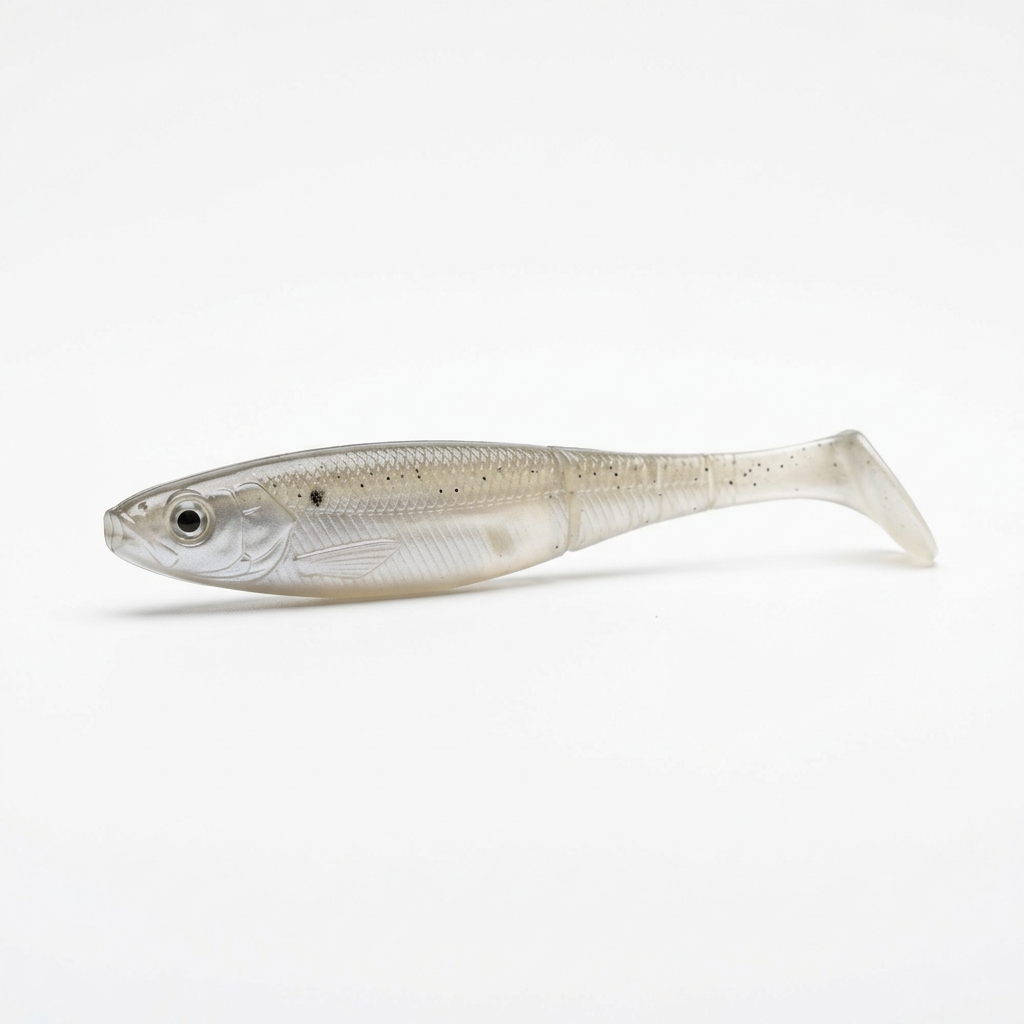
Berkley Maxscent Flatnose Minnow (4″)
Flat nose creates a quivering shimmy at rest. Maxscent formula releases continuous scent cloud to draw fish from outside visual range.
4. Strike King Rage Tail Finesse Craw (3.5″)
When smallmouth are locked onto rocky bottom structure — points, submerged humps, gravel flats — and crayfish are the primary forage, nothing out-produces a craw-profile bait on a drop shot. The Rage Tail Finesse Craw has two hydrodynamic claw segments that flare and pulse on the slightest current or rod movement. Use “green pumpkin” or “rock craw” colors on Canadian Shield lakes.
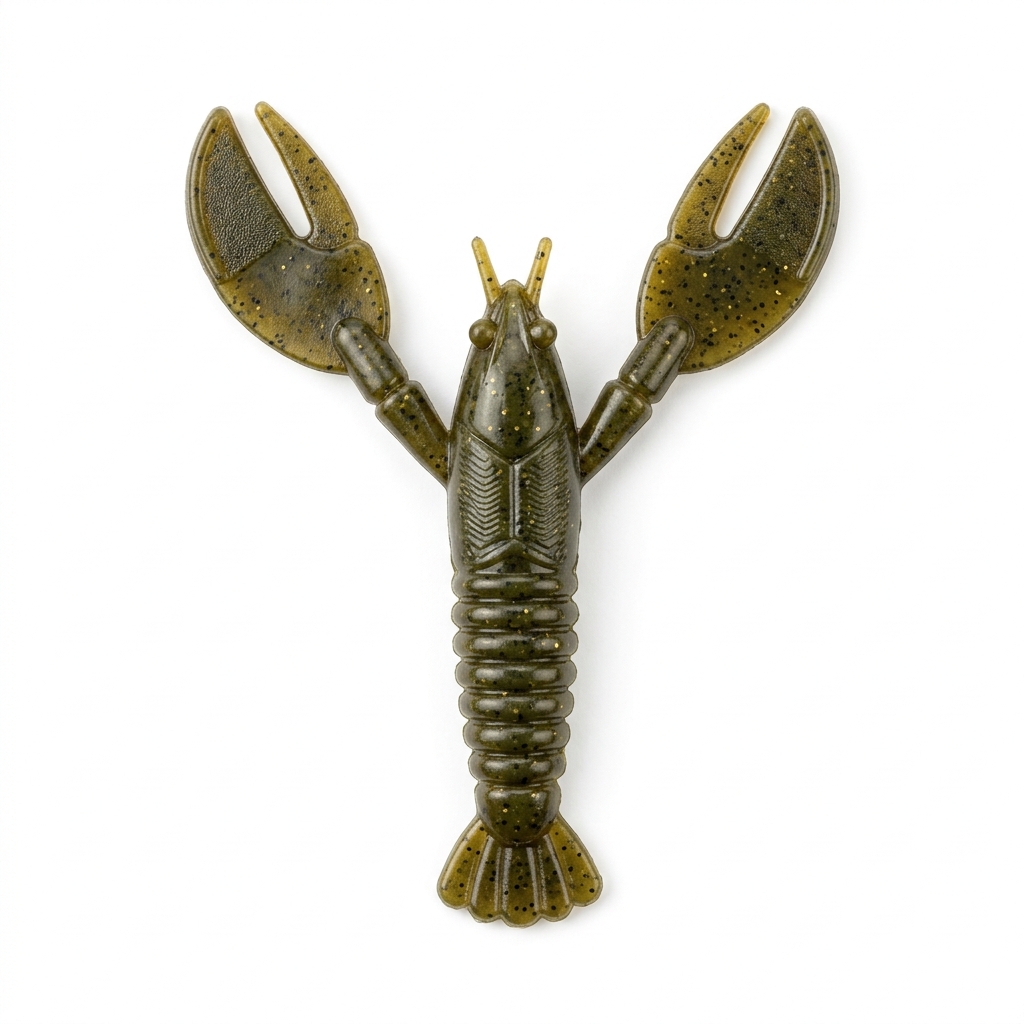
Strike King Rage Tail Finesse Craw (3.5″)
Hydrodynamic claw segments pulse and flare at the slightest movement. Devastates smallmouth on rocky Canadian Shield structure.
The Complete Drop Shot Setup for Canadian Smallmouth
- Rod: 7′ medium-light spinning rod with a fast tip. You need sensitivity to feel the bottom composition and detect the light taps of finicky fish.
- Reel: 2500-series spinning reel, 6:1 or higher gear ratio.
- Main Line: 10 lb braided line. Braid has zero stretch, which telegraphs every movement from 30 feet of depth.
- Leader: 18–24 inches of 8 lb fluorocarbon, connected to the braid with a double uni knot or an Alberto knot.
- Hook: #1 or #2 Gamakatsu drop shot hook, tied with a Palomar knot leaving a 10–14 inch tag end for the sinker.
- Weight: 3/16 oz to 3/8 oz cylinder or round drop shot sinker. Use heavier weights in deeper water or current.
🍁 The Local Technique: “Dead Sticking”
In ultra-clear Canadian Shield lakes during summer, the most effective drop shot technique is counter-intuitive: do nothing. Lower the rig to the bottom, reel up your slack, and simply let the bait sit. The natural quiver from boat movement and water movement does all the work.
Most anglers shake the rod too aggressively. Deep smallmouth in clear water are suspicious of unnatural movement. A bait that barely moves — but smells right and looks right — will out-fish an aggressively worked bait 3-to-1 in pressured, clear-water conditions.
Where to Find Deep Smallmouth on Canadian Lakes
Depth alone is not enough — you need structure at depth. The three most productive deep smallmouth locations in Canadian Shield lakes:
- Submerged Points: Any point that extends into the lake continues below the surface. The underwater extension, where it drops from 15 to 30+ feet, concentrates summer smallmouth like a magnet. Find these with a quality fish finder.
- Gravel-to-Rock Transitions: Where a gravel flat meets a boulder field in 20–30 feet is prime territory. Crayfish concentrate on gravel; smallmouth follow.
- Saddles Between Islands: The underwater ridge connecting two islands or an island to the mainland creates a current funnel that concentrates baitfish. Drop shots worked along the deep edge of these saddles at 18–28 feet are extremely productive.
Frequently Asked Questions
What depth should I drop shot for summer smallmouth in Ontario?
Target 18–35 feet in mid-summer (July/August) on Canadian Shield lakes. In shallower Canadian river systems like the French River or the St. Lawrence, smallmouth hold in 10–20 feet near current breaks and ledges. Use a fish finder to locate fish marks and match your bait depth precisely.
Can I use a drop shot from shore?
Shore fishing with a drop shot is possible but limiting — you need to reach the deeper structure where summer fish hold. A canoe, kayak, or small boat dramatically expands your access. If shore fishing, target docks, bridge pilings, and any structure that drops quickly into deep water within casting range.
Do I need a fish finder for drop shot fishing?
A quality fish finder makes drop shot fishing dramatically more effective. You can locate fish marks at precise depths, identify structure types (gravel vs. rock vs. soft bottom), and see fish reacting to your bait in real time. For serious smallmouth fishing, it is the single best investment you can make after your rod and reel. See our guide to the best fishing sonar units for Canadian anglers.
What is the Ontario smallmouth bass season?
Ontario smallmouth bass season typically opens the last Saturday in June and runs through November 30 in most zones. However, regulations vary significantly by water body — some lakes have year-round catch-and-release, others have slot limits. Always check the current Ontario Fishing Regulations Summary before you fish.