

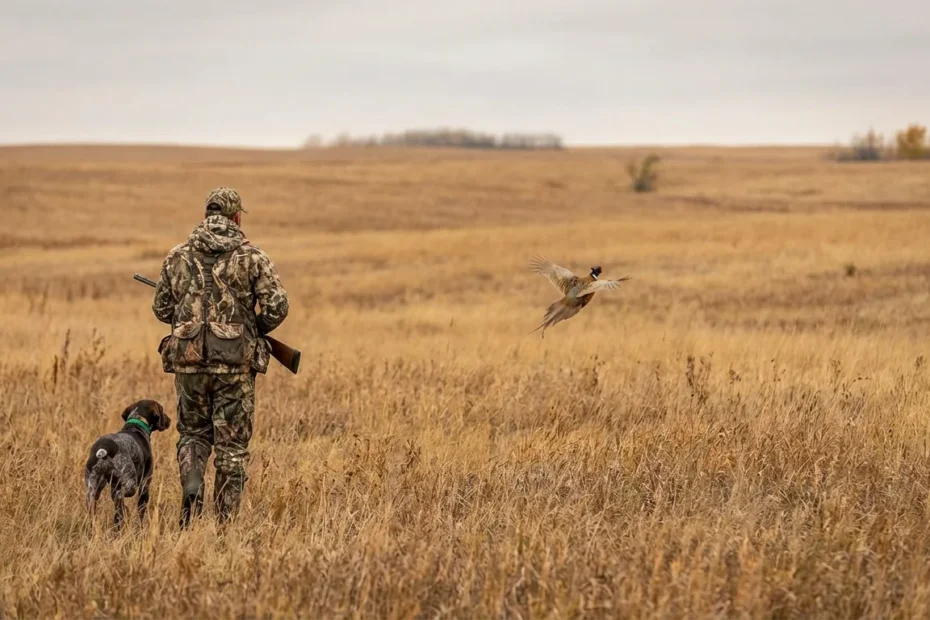
Learn where pheasant hunting is realistic in Canada, how wild birds differ from preserves, and how to plan safer, smarter upland hunts.
- Plan Pheasant Hunting in Canada around legal seasons, land access, firearm or bow rules, and current provincial or federal requirements
- Scout habitat, weather, travel routes, and animal movement before you commit to a field setup
- Keep safety, identification, permission, and retrieval plans clear before the hunt starts
Bottom line Pheasant Hunting in Canada works best when legality, scouting, and safety are settled before tactics or gear choices
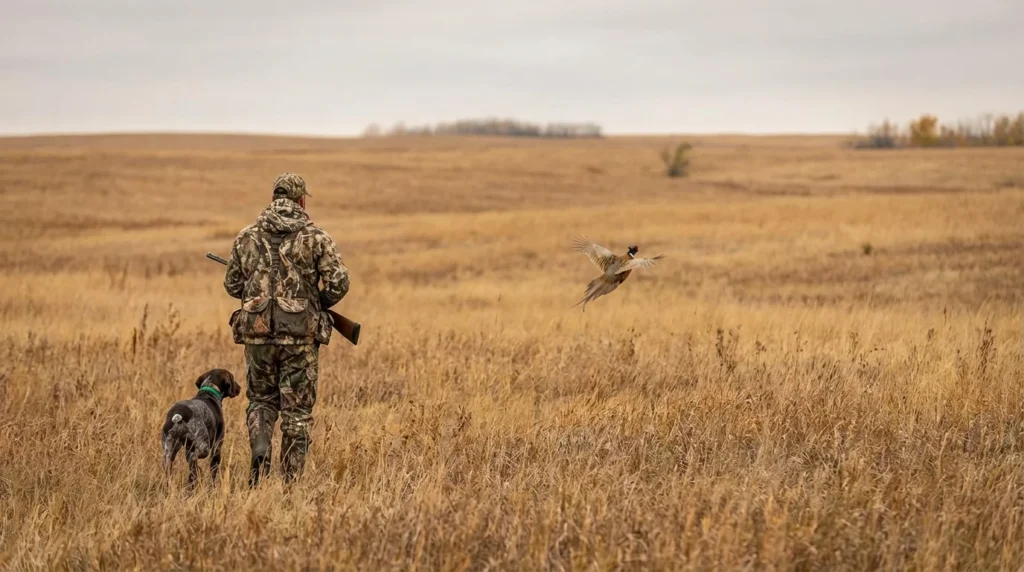
Pheasant hunting in Canada can be outstanding, but only if you understand one hard truth early: opportunity is not evenly spread across the country, and the best plan for wild birds is not the same plan for preserve birds.
That is where most generic upland articles fail Canadian readers. They talk about corn edges, dogs, and shot size, but they do not explain the real planning friction here: localized bird populations, private-land access, preserve options, provincial licence rules, and the difference between a romantic idea and a realistic trip.
Key Takeaways
- Pheasant hunting in Canada is strongest where habitat, access, and local bird numbers line up. That usually means doing more planning than generic upland guides admit.
- Wild ring-necked pheasant hunting and preserve hunting are not the same experience. You should plan gear, expectations, and access around that difference.
- For many Canadian hunters, the real edge is not walking harder. It is choosing the right cover, hunting it at the right time of day, and staying disciplined about pressure and line of travel.
- Licensing and season details change by province, so treat official provincial summaries as part of the hunt plan, not as an afterthought.
Before you get lost in gear or dog talk, lock in the real shape of the hunt first: wild birds, preserve birds, or a mixed plan with very local access rules.
The Guide’s Log
Pheasants have a way of making a field look empty until the exact second it explodes. That is part of the addiction. You spend half an hour moving through good-looking cover, convincing yourself the birds are not there, then one rooster detonates almost under your boots and every lazy step from the last ten minutes suddenly feels like a mistake. What separates steady upland hunters from frustrated walkers is not luck. It is how they read edges, pressure, wind, escape lanes, and timing. They do not just “hunt a field.” They hunt the last warm strip of grass on a cold day, the hedgerow that gives a bird one clean running lane, the corner where dogs slow down because scent finally pools instead of blowing out. In Canada, that discipline matters even more because you often get fewer truly good pheasant chances than the big American prairie stories suggest. When the cover, permission, and bird numbers line up, you need to move like the next flush matters, because it probably does.
Where Pheasant Hunting in Canada Is Actually Realistic
The first good decision in pheasant hunting is not shell choice. It is honesty about geography.
Pheasant hunting is not a universal across-Canada pursuit. It is a localized southern opportunity shaped by agriculture, winter survival, access, and stocking or preserve systems. In practical terms, that means some readers are planning for wild birds in prairie or southern farm country, while others are better served by licensed preserves or released-bird options.
If you want the broader context for how regional hunting culture changes across the country, start with hunting in Canada. For this article, though, the useful question is simpler: where does pheasant hunting actually make sense for you?
The Local Secret
The biggest Canada-specific edge is understanding that “pheasant country” here is often patchy, permission-driven, and highly local. Hunters who accept that early build better plans than the ones who assume every pretty field should hold birds.
Amazon.com Picks
Build a Pheasant Kit That Actually Helps in the Field
For most Canadian pheasant hunts, three gear categories matter more than gadget clutter: a proper vest, visible safety gear, and loads that pattern cleanly in real cover.
Upland Vests and Bird Bags
Best if you want shell access, water, and bird carry capacity without turning a long walk into a shoulder problem.
See Category
Blaze Orange Hats and Panels
Best if you hunt with partners, dogs, or pressured birds in mixed cover where visibility matters as much as etiquette.
See Category
Chokes and Pheasant Loads
Best if you want a cleaner match between cover, flush distance, and your actual effective pattern instead of guesswork.
See Category
As an Amazon Associate, we earn from qualifying purchases.
| Region or Setup | What Opportunity Usually Looks Like | Big Planning Constraint | Best Reader Takeaway |
|---|---|---|---|
| Southwestern Ontario wild-bird pockets | Localized farmland and edge habitat with uneven bird density | Access, municipal rules in some areas, and realistic expectations | Treat it as a precision hunt, not a guaranteed numbers game |
| Ontario licensed preserves or released-bird setups | More controlled access and more predictable shooting opportunities | You still need to understand preserve rules and licensing | Excellent for beginners, dogs, and tighter schedule planning |
| Prairie farm country | Better pheasant identity and stronger game-bird culture in the right zones | Private-land permission is often the real limiter | Land access strategy matters as much as shooting skill |
| Travel hunter with no dog | Shorter, more tactical hunts around tighter edges and cleaner escape funnels | Covering ground efficiently without blowing birds out early | Choose fewer, better fields and hunt them more carefully |
Wild Pheasants Versus Preserve Pheasants
This distinction is where most pheasant articles get too sentimental and not practical enough.
Wild birds are a habitat and pressure problem. Preserve birds are more of a controlled access and shooting-discipline problem. Both can be worthwhile, but they demand different expectations. If you treat one like the other, you usually end up frustrated.
In Ontario, the official small-game framework and hunting regulations make that distinction clear. Ring-necked pheasant is treated as a small-game species, and licensed game bird hunting preserves have their own rules and structure. Ontario also has separate guidance for releasing birds for hunting on private land, which matters if your plan is preserve-style rather than a true wild-bird walk-up hunt. See the Ontario small game regulations summary and Ontario’s page on releasing birds for hunting on private land.
That is why the smarter Canada-first question is not “Where can I shoot a pheasant?” It is “Am I planning a true wild-bird hunt, a preserve hunt, or something in between?” Once that is clear, the rest of the trip starts making sense.
How to Hunt Pheasants With and Without a Dog
A good dog makes pheasant hunting smoother, but it does not erase bad field strategy.
With a dog, your job is to help the dog control edges, pin runners, and keep likely escape routes covered. Without a dog, your job is to build structure into the walk. That means hunting corners, shelterbelts, ditch lines, and cover transitions in a way that forces a bird to choose between flushing and making a bad run.
Readers who already hunt other upland species will notice the overlap with upland bird hunting and grouse hunting. The difference is that pheasants run more, hold differently in open agricultural country, and punish sloppy spacing faster.
- Hunt into or across a useful wind when possible so scent, dog work, and likely flush direction make more sense.
- Do not burn the middle of a field first if the edges, fencerows, and thick corners are the real holding cover.
- Late in the day, expect birds to slide toward thicker shelter and more protected escape routes.
- If you are hunting with partners, assign lanes before the first flush instead of inventing safety rules mid-chaos.
Best Pheasant Hunting Cover in Canada
Good pheasant cover is rarely random. It usually combines food, edge, shelter, and an easy running line.
That means grassy strips near agriculture, brushy corners, hedgerows, shelterbelts, ditches, cattail edges, and rough cover that stays huntable after pressure increases. Cold weather often pushes birds tighter. Wind often pushes them into the protected side of a piece of cover. Snow can make small pieces look dead until you realize they are the only remaining soft pocket in the area.
This is where pheasant hunting gets more tactical than many beginner guides admit. You are not walking for scenery. You are walking to collapse a bird’s best options before it knows exactly where the pressure is coming from.
| Cover Type | Why Birds Use It | Best Hunting Move | Common Mistake |
|---|---|---|---|
| Grass edges beside crops | Food nearby, cover nearby, clean running lanes | Work the seam, not just the open side | Walking straight through the widest easy section first |
| Shelterbelts and hedgerows | Protection from wind and pressure with multiple escape routes | Pin one end or hunt with a stopper when legal and safe | Letting birds run out the back before anyone is in place |
| Cattails and thicker wet edges | Late-season thermal cover and security | Slow the walk and expect very tight holds | Rushing through because the cover looks unpleasant |
| Isolated corners and brushy points | Low-pressure pocket cover that gets overlooked | Hit them like they matter, because they often do | Treating small cover as a throwaway stop |
Shotgun, Choke, and Load Logic for Pheasants
Pheasant gear gets overcomplicated fast. It does not need to be.
Most hunters need a reliable shotgun they shoot well, a pattern they have actually tested, and enough discipline to match choke and load to flush distance instead of to ego. Thick close cover and preserve birds often favour a more open setup. Wild late-season birds that flush longer can justify a tighter pattern, but only if you still shoot it well.
For the broader kit conversation, hunting gear guide covers the basics well. The pheasant-specific question is whether your gun and pattern let you make clean, ethical hits in the type of cover you are truly hunting.
- Pattern the gun before season instead of trusting the label on the choke tube.
- Dress for miles, wet grass, and layered temperature swings, not just for the truck-to-field walk.
- Keep blaze orange and partner visibility part of the plan from the first field.
- If you hunt preserves and wild birds, do not assume one shell and choke setup is ideal for both.
Pheasant Hunting Access and Rules in Canada
This is where Canadian pheasant planning becomes real.
Ontario treats ring-necked pheasant under its small-game system, and the province’s hunting licence page makes clear that small-game hunters need the right provincial documentation and firearms documentation when hunting with a gun.
Ontario also notes that some southwestern municipalities may add local licensing wrinkles for certain small game. That is exactly why last-minute checking matters.
Start with Ontario’s hunting licence information and the province’s small game overview.
On the prairie side, access is often the bigger story than the gun. Saskatchewan’s official hunting material and land-access guidance make the point directly: private-land respect is central, and asking permission is not just etiquette.
It is often the difference between a realistic pheasant trip and a wasted one. Manitoba’s hunting guide also belongs in your planning stack if that is where you are headed, because season structure, transport rules, and field realities can shift year to year.
See Saskatchewan’s guidance on hunting in Saskatchewan and Manitoba’s current hunting guide.
If you want a broader house rule before opening any new province, use hunting regulations and hunting safety tips as your reminder.
Do not assume small-game rules, access rules, or preserve rules carry over cleanly from one jurisdiction to the next.
- Verify the active season and bag structure with the current provincial summary before opening day.
- Confirm whether your hunt is on true wild ground, a licensed preserve, or private land with released-bird rules.
- Get permission details sorted before you drive, especially in prairie farm country.
- Do not assume firearm, transport, or local municipal rules look the same across provinces.
Smart Tactics for Late-Season Pheasant Hunting
Late-season pheasant hunting rewards patience more than optimism.
Birds have seen pressure. Cover is thinner in some places and thicker in others. Escape routes become more obvious, and birds get better at using them. This is usually when loose walking and lazy partner spacing start to hurt you.
In cold weather, target protected cover first. In high wind, hunt the side of the field that actually offers shelter. If the first pass through good-looking cover produces only running sign or a single distant flush, slow down and ask where that bird wanted to go. The next productive move often comes from that answer, not from covering more acres.
Hunters who already enjoy turkey hunting or duck hunting will recognize the same discipline: the best results often come from reading how birds use pressure, not from charging at every opportunity the same way.
- Hit protected cover first on cold mornings.
- Use wind direction to choose the side of the field that holds scent and birds better.
- Slow down after the first flush instead of speeding up and blowing the rest of the cover apart.
- Let one useful sign or flush tell you where the next high-value pass should be.
Why Pheasant Hunting Still Matters in Canada
Pheasant hunting matters here because it teaches a very Canadian form of hunting humility.
You have to plan around real habitat, real permission, and real regional variation. You have to accept that some of the best opportunities are highly local, and that preserve hunting may be the smarter route for some readers depending on where they live and how often they can get out. That is not a lesser version of the sport. It is simply an honest version of how pheasant hunting actually works in Canada.
The best pheasant hunters are not just good shots. They are better planners. They understand that a productive day can come from one good field, one good dog, one tight corner, and one flush they were ready for because the rest of the day was organized around reality instead of fantasy.
Before You Head Out
If you remember only three things from this guide, make them these:
- Figure out whether you are hunting true wild birds or a preserve-style setup before you choose your plan.
- Hunt the best edges and shelter first instead of trying to cover every field you can access.
- Check the current provincial rules, permission requirements, and local access realities before the morning starts.
Pheasant Hunting FAQ
Where is pheasant hunting best in Canada?
It is best where habitat, access, and local bird numbers all line up. In practical terms, that usually means localized southern agricultural country, selected prairie opportunities, or licensed preserve setups rather than a uniform coast-to-coast wild-bird experience.
Is preserve pheasant hunting different from wild pheasant hunting?
Yes. Preserve hunting is more controlled and predictable, while wild-bird hunting is much more dependent on habitat, pressure, access, and bird behaviour. The field strategy and expectations should change accordingly.
Can you hunt pheasants in Ontario?
Yes, but the experience depends heavily on where you are hunting and whether you are pursuing wild birds or using a licensed preserve or released-bird setup. Always verify the current Ontario small-game and preserve rules before the trip.
Do you need a dog for pheasant hunting?
No, but a good dog can make the hunt more efficient. Without a dog, success depends even more on walking discipline, pressure angles, and focusing on the right edges instead of trying to cover everything.
What is the biggest mistake new pheasant hunters make?
They confuse movement with strategy. New hunters often walk too much low-value ground, hit the wrong part of the field first, or ignore access and local bird reality before the trip even starts.