

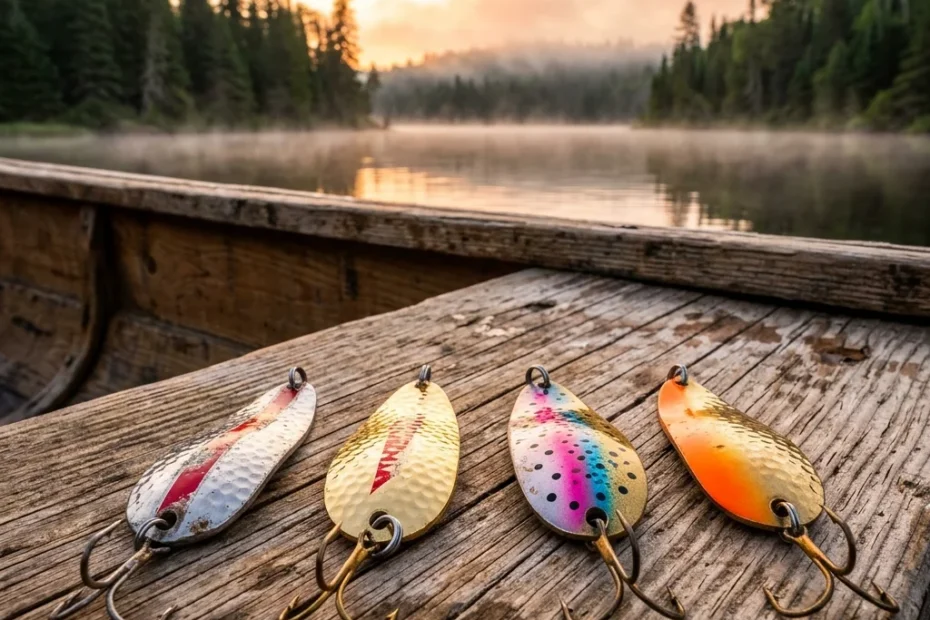
Expert guide to the best trout spoons for Canadian stocked lakes. Reviewing Williams Wabler, Little Cleo, and Kastmaster. Learn tactical retrieves for rainbow and brook trout.
- Use The Ultimate Trout Spoon Guide to match species behaviour, habitat, season, and presentation to Canadian water conditions
- Check local regulations before fishing; limits, closures, bait rules, and licences can vary by province and waterbody
- Focus on practical setup: where to fish, what to cast or troll, how deep to work, and when to move
Bottom line The Ultimate Trout Spoon Guide gets simpler when you pair current rules with the right habitat, timing, and presentation
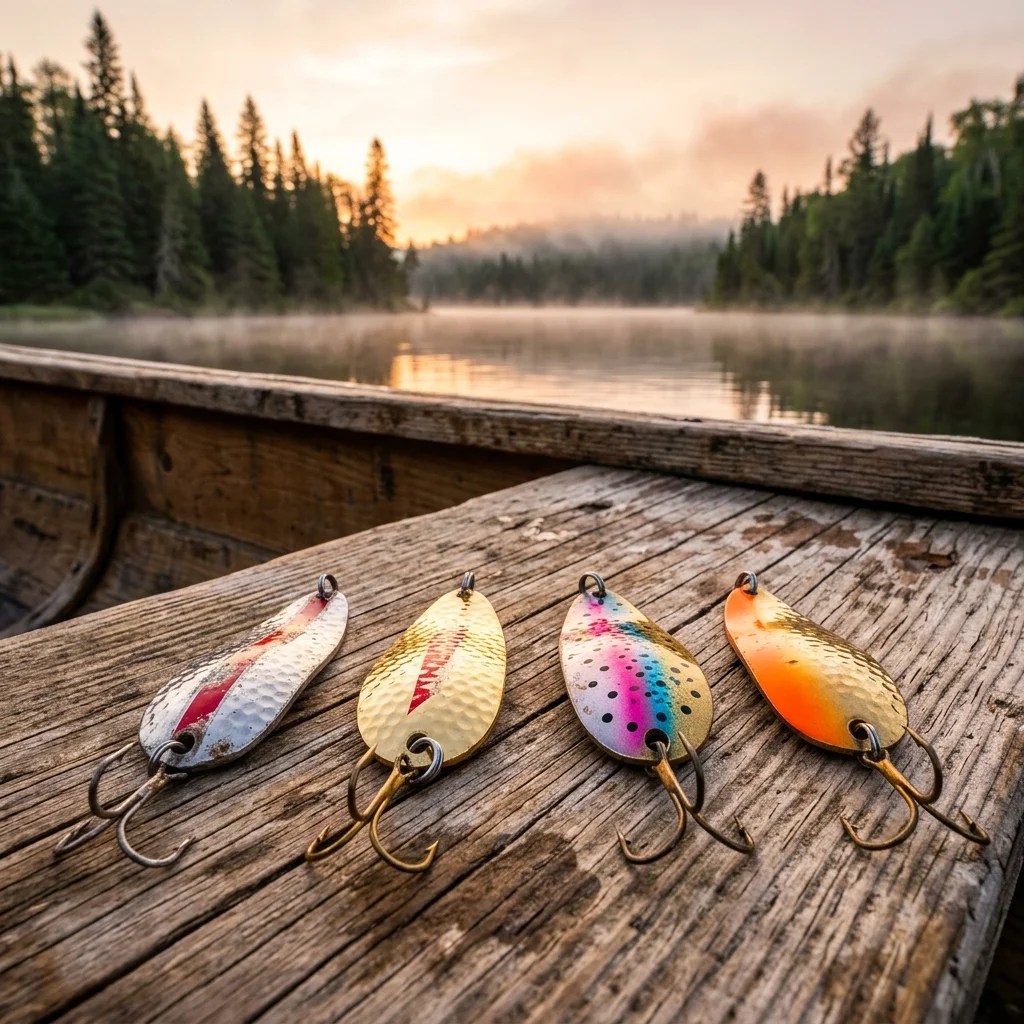
There is a reason why every serious trout angler’s tackle box is dominated by one specific lure: the spoon.
For stocked rainbow and brook trout in Canadian lakes, spoons are the ultimate tool. They cast like a bullet (critical when fish are surfacing 40 yards offshore), they cover the entire water column, and they produce a unique “flash-and-flutter” that triggers the predatory instinct of a hatchery-raised fish like nothing else. Hatchery-raised trout are often highly aggressive toward flashing objects, as they associate surface disturbance and flash with the pellet-feeding frenzy they experienced in the rearing tanks.
But not all spoons are created equal. Some are designed for heavy current, while others are built for the slow, subtle retrieves needed in the crystal-clear waters of the Canadian Shield. In this guide, we break down the five best spoons you need for your next trip to a stocked trout pond or lake, along with the technical setups required to turn follows into strikes. If you’re looking for larger targets, check out our guide to the Best Lakes for Fishing in Canada.
⚡ Quick Guide: Choosing Your Spoon
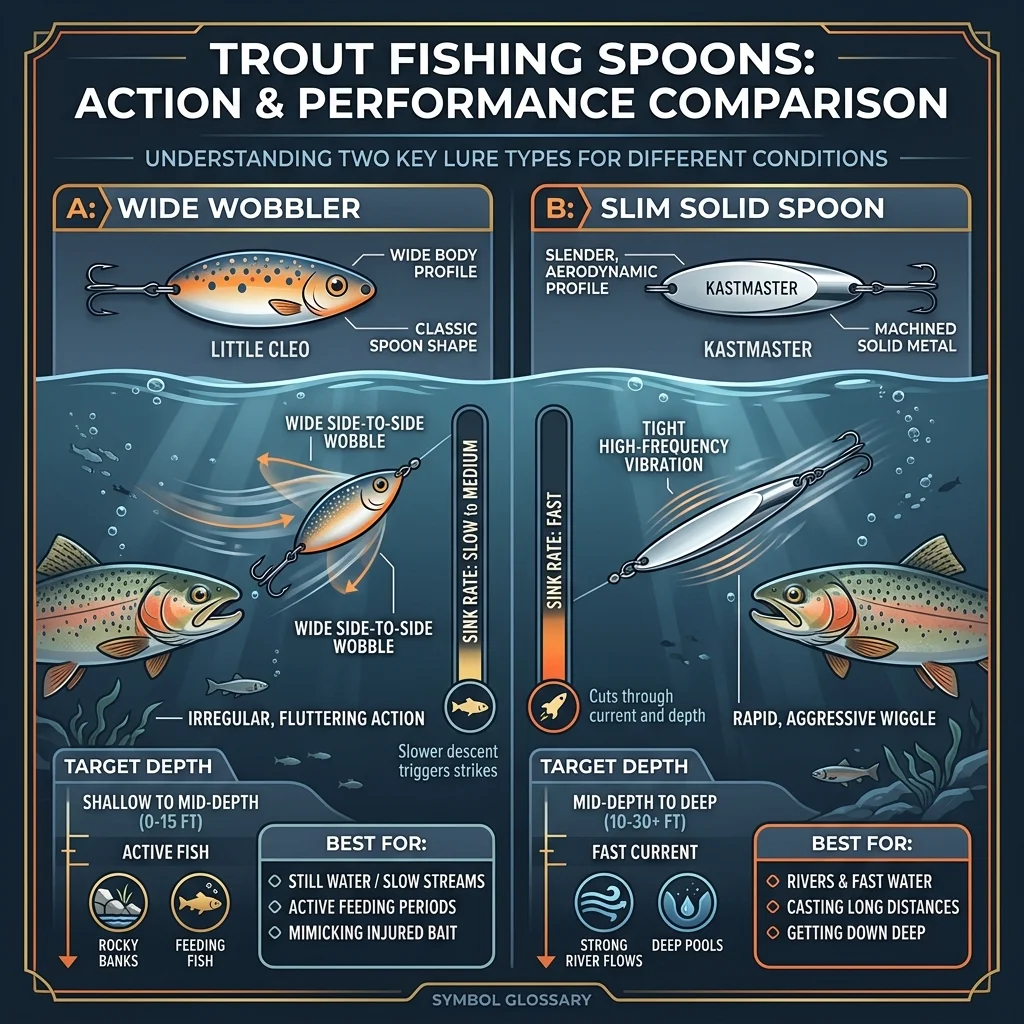
- For Distance: Use the Acme Kastmaster. Its aerodynamic shape cuts through wind better than any other lure.
- For Slow Retrieves: The Williams Wabler is king. Its patented ridge prevents it from spinning, even at ultra-low speeds.
- For High Vibration: The Little Cleo produces a wide, “thumping” wobble that trout can feel from a distance.
- The “Stocked Lake” Trick: Hatchery trout often key in on bright orange or pink—colors they associate with the protein-rich pellets they were raised on.
The Top 5 Trout Spoons for Canada (2026 Rankings)
When selecting a spoon for stocked lakes, you need a mix of profiles. Trout in these environments fluctuate between feeding on insects near the surface and chasing small baitfish in the depths. Having these five lures ensures you can adapt to any depth or light condition. For those specifically targeting larger lake trout in deep water, we recommend our specialized guide on the Best Spoons for Lake Trout Trolling.
🇨🇦 The Canadian Classic
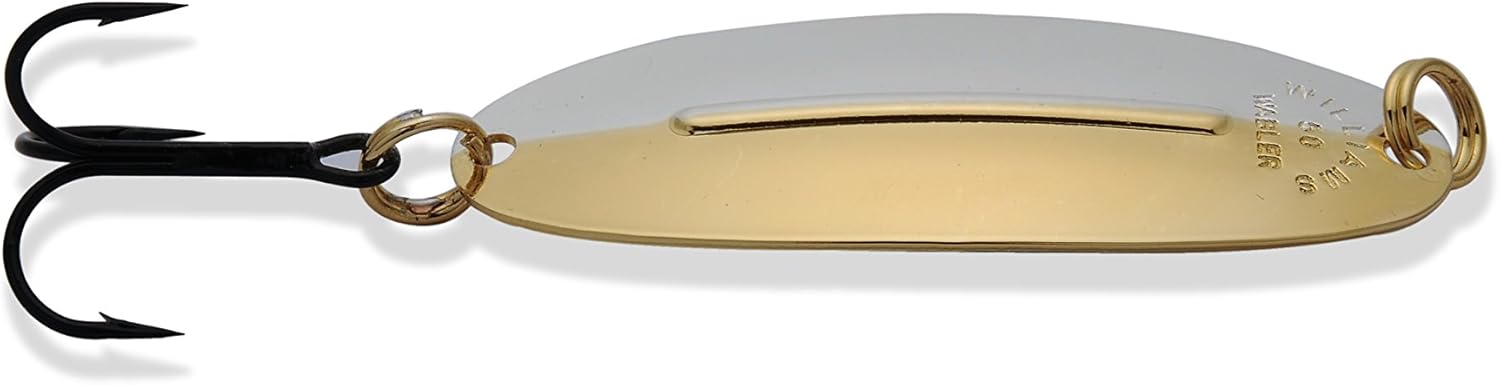
Williams Wabler (Hammered Silver/Gold)
Made in Canada, the Williams Wabler is plated in real silver and gold. Unlike painted lures, precious metal plating produces a unique light refraction that trout can see in low-visibility conditions. The “stabilizing ridge” is its secret weapon—it prevents the lure from spinning and tangling your line, allowing for incredibly slow retrieves that “waft” the lure through the strike zone. Perfect for early-season brookies.
🎣 Best for Active Fish
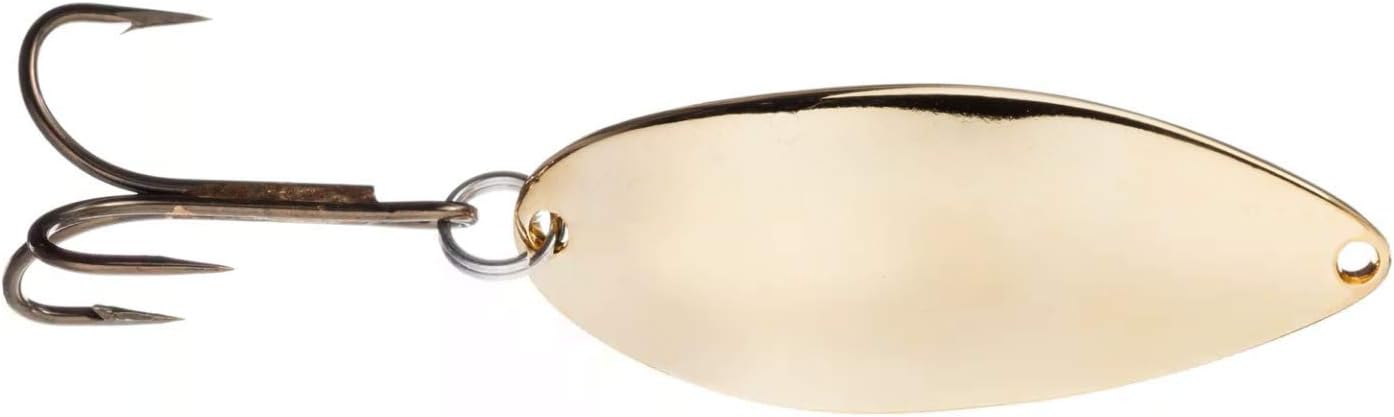
Acme Little Cleo (1/4 oz)
The unique “C” shape of the Little Cleo gives it a wide, seductive wobble that creates significant water displacement. This “thumping” vibration is essential in stained water or during heavy insect hatches when trout are keyed into movement. The 1/4 oz model is the “goldilocks” size—heavy enough to cast far, but light enough to stay above submerged weeds where stocked rainbows like to cruise.
🚀 Maximum Casting Distance
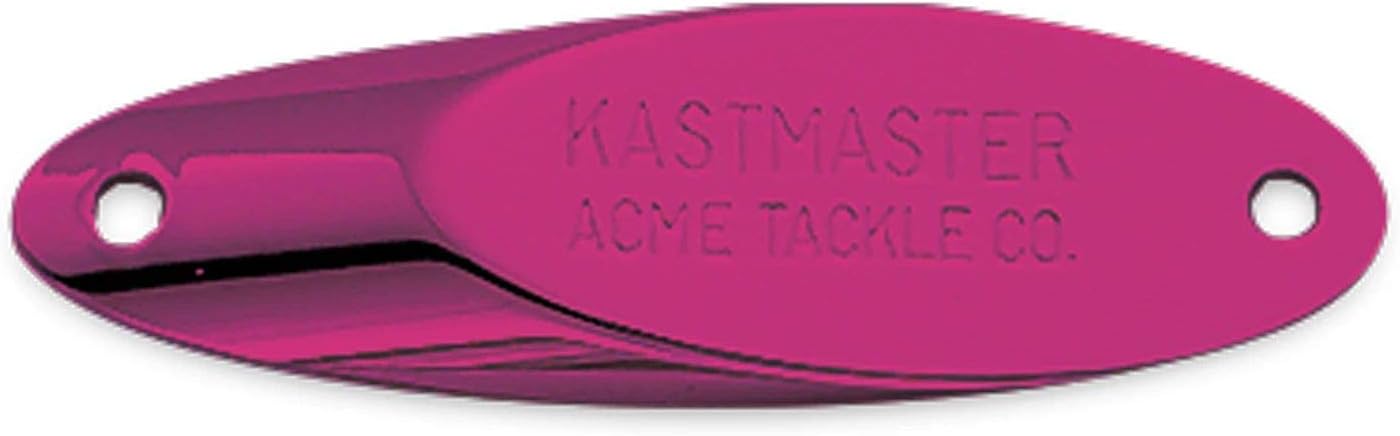
Acme Kastmaster (1/4 oz)
When trout are holding in the middle of a lake or schooling deep, you need the Kastmaster. Its solid brass construction is practically indestructible and perfectly aerodynamic. It doesn’t tumble in the air, meaning you can reach distance targets that other anglers can’t. In the water, it produces a tight, frantic vibration that mimics a fleeing fathead minnow or shiner. Use the silver/blue pattern for clear sky days.
🌀 Best Erratic Action
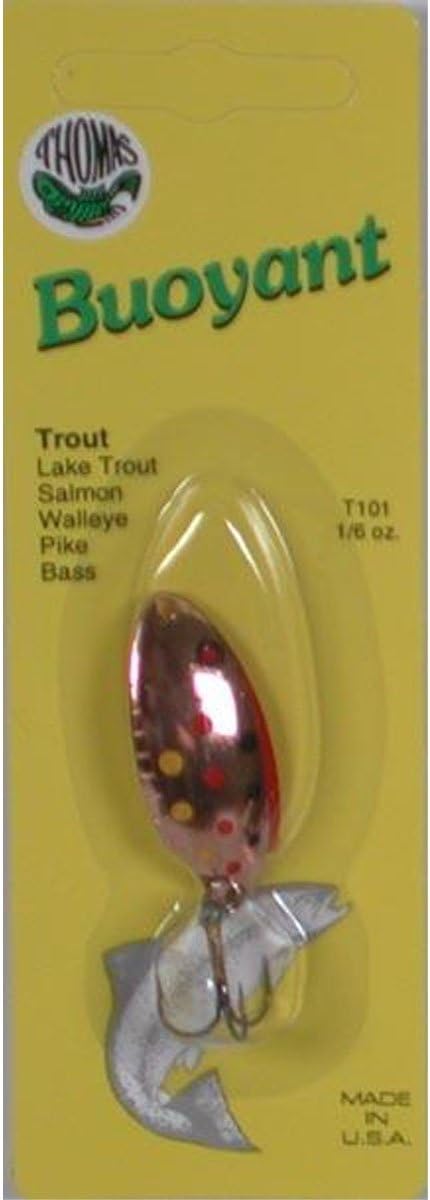
Thomas Buoyant Spoon (1/6 oz)
The Thomas Buoyant is an “erratic wobbler” that mimics a wounded baitfish perfectly. Its asymmetrical shape causes it to dart and pause randomly during a steady retrieve. This is a “reaction bait”—it triggers strikes from trout that are following but hesitant to bite. It’s especially effective in 1/6 oz for finicky brook trout in small mountain lakes.
🐊 The Versatile Killer
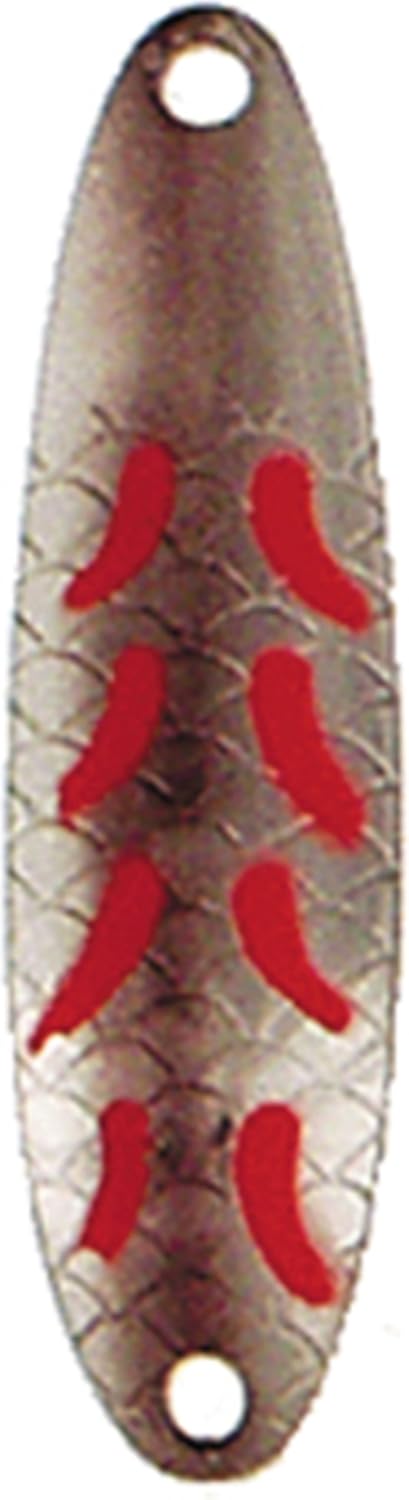
Luhr-Jensen Krocodile (1/4 oz)
The Krocodile is arguably the most versatile spoon ever made. It can be cast, trolled, or even vertically jigged through the ice or off a boat. Its heavy-gauge metal allows it to sink faster than a Little Cleo of the same weight, making it your best choice for reaching trout that have moved deep into the thermocline during the midday heat. The hammered chrome with a neon red stripe is a Canadian staple.
Advanced Tactical Retrieves for Stocked Trout
Stocked trout behave differently than wild fish. Because they were raised in crowded tanks and fed from above, they are often attracted to splash and sudden “falling” movements. Use these two specific techniques to double your hookup rate:
The Technical Setup: Rod, Reel, and Line
You can have the best lures in the world, but if your tackle setup is too heavy, you’ll never see the bite. Stocked trout are “line shy” and have very soft mouths.
- The Rod: A 6’6” or 7’0” Light Power, Fast Action spinning rod. The “Light” power provides the necessary cushion to keep small hooks from tearing out during a jump. For a broader look at rod selection, see our review of the Best Spinning Rods.
- The Line: Use 4lb to 6lb Fluorocarbon. Unlike monofilament, fluoro is nearly invisible underwater and sinks faster, helping your spoons stay at the desired depth.
- The Swivel Trick: Spoons naturally rotate. If you tie directly to the lure, you will destroy your fishing line with twists in minutes. Always use a high-quality ball-bearing swivel about 18 inches above the lure to allow the spoon to spin freely without twisting your main line.
🍁 The Local Secret: The Half-and-Half
In the Canadian Shield, water clarity can change in an instant with the wind. The “Nu-Wrinkle” silver/gold finish on a Williams Wabler is a pro-favorite because it provides two different types of flash. The silver reflects the bright sky, while the gold cuts through the tea-colored tannin water. If you can only buy one spoon for Ontario or Quebec trout, this is the one.
Ethical Catch & Release in Stocked Waters
Many stocked lakes in Canada have specific regulations regarding hooks. Check your local DFO or provincial guidelines before heading out. To ensure a healthy fishery, consider the following:
- Switch to Single Hooks: Most spoons come with trebles. Replacing them with a single “Siwash” style hook makes unhooking faster and significantly reduces injury to the fish. Learn more in our Catch & Release Guide.
- Pinch Your Barbs: Using pliers to flatten the barb on your hook makes it much easier to release fish, which is essential if you are fishing for sport rather than food.
- Wet Your Hands: Trout have a protective slime coating. Touching them with dry hands or a rough towel removes this coating, leading to fatal infections after release.
- Proper Dispatch: If you are keeping your catch for a meal, ensure you follow the Humane Fish Killing Standards to ensure the highest meat quality and ethical treatment.
❓ Frequently Asked Questions (FAQ)
What is the best trolling speed for trout spoons?
The “sweet spot” for most Canadian spoons is usually between 2.0 and 2.5 mph. If the water is cold (early spring), slow down to 1.5 mph to match the slower metabolism of the fish. If the trout are active in the evening, speed up to 3.0 mph to trigger aggressive reaction strikes.
Should I use a snap or tie directly to the spoon?
Never tie your line directly to the lure. Always use a small, high-quality snap or a ball-bearing swivel. This allows the spoon to pivot, wobble, and “kick” freely. A direct knot can dampen the action and significantly reduce the number of strikes you get.
How do I know how deep my spoon is running?
Use the “Count-Down” method. Most high-quality spoons sink at a rate of approximately 1 foot per second. Cast out, count to 10, and begin your retrieve to target fish holding at exactly 10 feet. This is the most consistent way to find the “thermocline” where trout hang out.
Are colorful spoons better than metallic ones?
Metallic (silver/gold) is best for sunny days and clear water because it mimics natural flash. Use “hot” colors like neon orange, chartreuse, or pink on overcast days or in “stained” (brown) water lakes where visibility is low.
My spoon is spinning instead of wobbling. What am I doing wrong?
You are retrieving too fast. Every spoon has a “break point” where the wobble turns into an unproductive spin. Slow down your retrieve until you feel a steady, rhythmic “thump-thump” in your rod tip. That is the vibration of a lure that is catching fish.
Ready to hit the water? Make sure your license is up to date with our Ontario Fishing License Guide before you go!