
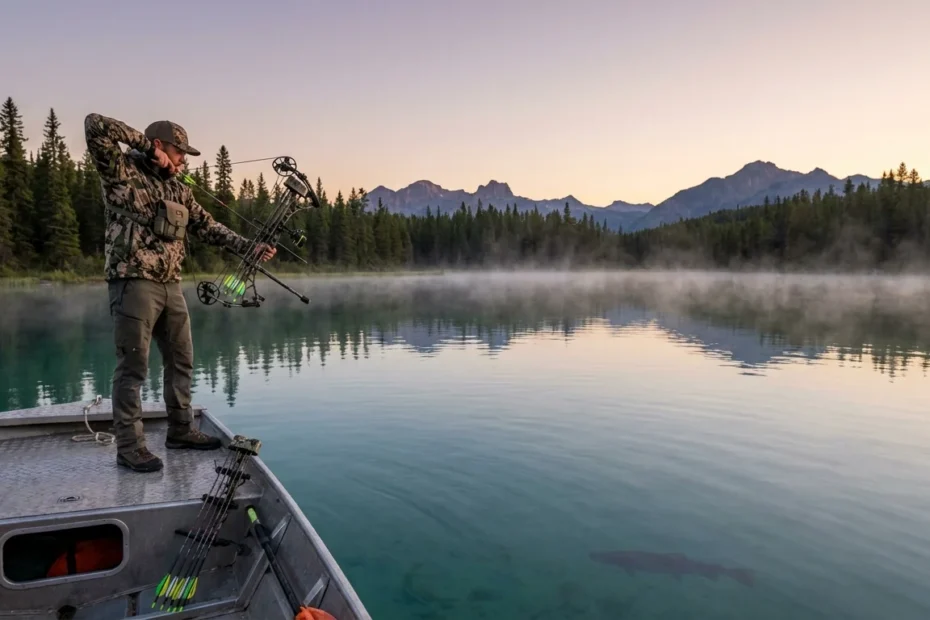
Bow fishing in Canada is not one simple sport with one simple rulebook.
It can be a fun warm-water side season, a carp-control tool, and a sharp way to stay active with archery gear. It can also get you into trouble fast if you treat a generic American bowfishing article like it applies everywhere north of the border.
The real question is not whether bowfishing looks exciting. The real question is where it is legal, which species you can target, and what kind of trip actually makes sense in your province.
Key Takeaways
- Bow fishing rules in Canada are province-specific, not universal.
- Ontario allows bow-and-arrow harvest only for listed species, in listed FMZs, and during daylight-only seasons.
- Saskatchewan allows bow fishing all year, but only for carp and suckers, and fish taken by bow cannot be released or wasted.
- Alberta allows bowfishing under a sportfishing licence, but major game species are off-limits and some named lakes are closed to the method.
- The best beginner setup is usually a simple retriever reel, stout arrow, durable line, and short-range shot discipline.
If your current picture of bowfishing is all warm nights, deck lights, and easy carp shots, slow down.
For a CanadaFever reader, this is first a planning sport. You need the legal window, the right water, and a target species that actually matches your province before the gear and shooting part even matters.
The Guide’s Log
A shallow bay can fool you. It looks easy from a distance: warm water, tails moving, fish cruising in plain sight. Then the light shifts, the glare hardens, and every shot starts landing low because your eyes keep forgetting how badly water bends the target. That is the moment bowfishing stops being a novelty and starts feeling like a real field skill. You slow down. You stop rushing the shot. You watch angle, depth, weeds, and the fish’s line of travel instead of just staring at the body. The same lesson carries across Canada. The people who enjoy this sport for more than one trip are not the ones chasing chaos. They are the ones who respect the rules, know the species in front of them, and build the trip around clean, short shots they can actually recover. Bowfishing is most fun when it stays disciplined: legal target, reachable fish, controlled gear, and a plan for what happens after the arrow lands.
Bow Fishing in Canada Starts With the Rules
The biggest weakness in most bowfishing articles is that they talk gear first and legality second.
That order is backwards for Canada. Ontario, Alberta, and Saskatchewan all treat bowfishing differently, which means the right trip in one province can be the wrong one in another.
| Province | What the rules allow | Main restriction | Practical takeaway |
|---|---|---|---|
| Ontario | Bow and arrow can be used for listed non-angling harvest opportunities such as bowfin, common carp, and white sucker in listed FMZs and listed seasons. | Openings are species-specific, zone-specific, and daylight-only. There is no blanket bowfishing season. | Ontario rewards homework. Check the exact FMZ and species entry before you ever nock an arrow. |
| Saskatchewan | Bow fishing is open all year with a valid angling licence. | It is permitted for carp and suckers only. Game fish and bigmouth buffalo are prohibited, and fish taken by bow may not be released or wasted. | This is one of the clearest beginner provinces, but only if you treat species ID and fish handling seriously. |
| Alberta | Bowfishing is allowed under the Alberta Sportfishing Licence. No extra bowfishing licence is required. | Bows cannot be used for trout, mountain whitefish, Arctic grayling, lake sturgeon, walleye, or northern pike. Some named lakes are closed to the method. | Alberta is not a free-for-all. Match the species, then check whether the waterbody has a separate closure. |
For Ontario, the best starting point is your exact zone and your exact species, not a social-media clip.
Ontario’s official regulations spell out daylight-only bow-and-arrow seasons for listed species in listed zones. Use that together with your licence planning at Ontario Fishing & Hunting License before you build a trip around common carp, bowfin, or white sucker water.
If you are comparing provinces, CanadaFever’s guides to Alberta fishing regulations and Saskatchewan fishing regulations help you see how quickly the legal picture changes once you leave Ontario.
The Local Secret
The hidden skill in Canadian bowfishing is not shooting. It is legal filtering. The anglers who waste the least time are the ones who eliminate bad water first by checking species, daylight windows, FMZ rules, and waterbody-specific closures before they ever talk about bows, arrows, or reels.
Where Bow Fishing Actually Makes Sense
Bowfishing works best in warm, shallow, visually readable water.
That usually means back bays, calm flats, marsh edges, slow river margins, and carp-rich stretches where fish show themselves instead of forcing you to guess.
- Best beginner water: shallow bays with slow fish movement and clean recovery space.
- Best beginner species: legal rough-fish targets you can identify quickly at short range.
- Worst beginner water: heavy glare, thick weed mats, current seams that move fish too fast, and boat lanes with poor recovery angles.
- Worst beginner habit: taking long shots at fish you cannot identify cleanly.
- Best season feel: the warm period when fish push shallow enough to stay visible and recoverable.
- Best trip style: a short, legal scouting session with a realistic shot window, not an all-night hero mission copied from U.S. content.
If you need a broader warm-water planning baseline first, Recreational Fishing in Canada gives you the wider licensing and trip-prep context that bowfishing articles usually skip.
Bow Fishing Gear That Actually Matters
Beginners often overthink the bow and underthink the rest of the system.
In practice, retrieval line, arrow durability, reel reliability, and shot discipline matter more than owning a flashy rig. CanadaFever readers who also hunt with archery gear can use parts of their existing setup, but only if the fishing side is purpose-built and safe. The broader loadout logic in Hunting Gear Guide helps if you are adapting gear you already own.
| Setup part | What works for most beginners | What to avoid | Why it matters |
|---|---|---|---|
| Bow | Simple recurve or moderate-poundage compound you can shoot smoothly at short range. | High-poundage setups that feel jumpy or hard to control over repeated short shots. | Bowfishing is about clean repeatability, not maximum draw-weight bragging. |
| Arrow | Heavy bowfishing arrow with a secure barbed point and tough shaft. | Light target arrows or improvised broadhead setups. | The arrow takes the abuse. Weak shafts and bad points turn into failures fast. |
| Retriever reel | A reliable retrieval system with line that stays clear and deploys smoothly. | Cheap reels that bind, kink, or spill line under tension. | Recovery is part of the shot. A bad reel ruins good hits and wastes fish. |
| Polarized glasses | Dark, glare-cutting lenses matched to bright shallow water. | Shooting bare-eyed into glare and guessing where the fish really sits. | Seeing depth, angle, and fish path is half the sport. |
The Best Beginner Tactics for Bow Fishing
The cleanest beginner strategy is simple: shoot fewer fish, but shoot better fish.
That means legal species, short shots, broadside movement when possible, and a recovery path you can actually control.
Bow Fishing Shots You Should Take
- Fish moving slowly across a shallow flat.
- Broadside fish in clean water with a visible bottom reference.
- Short-range opportunities where the arrow line will not wrap heavy weeds or dock hardware.
- Shots where you can instantly confirm species and recovery space.
Bow Fishing Shots You Should Skip
- Long-range fish in glare.
- Targets partly hidden in weeds, roots, or timber.
- Any fish you have not identified cleanly.
- Shots near swimmers, docks, other anglers, or boat traffic.
- Any recovery angle that could drag a fish into private property, prop wash, or unsafe footing.
If your instincts already lean toward bank and shallow-water movement, articles like River Fishing Techniques and Safety Tips for Kayak Fishing help build the same habit of reading angle, current, footing, and recovery before you commit.
What Most Bow Fishing Beginners Get Wrong
Most beginner misses come from refraction, hurry, and species confusion.
The first fix is mental, not mechanical. Slow down enough to read the fish instead of reacting to the flash of movement.
- Aiming too high: water bends the image, so the fish is lower than it looks.
- Rushing the shot: a calm second of alignment beats a fast bad release.
- Ignoring the line path: weeds, branches, and cleats can ruin the recovery even after a good hit.
- Treating every rough fish as legal: this is how avoidable enforcement problems start.
- Planning only for the shot: if you have no recovery plan and no handling plan, you are not ready.
That last point matters more than people think. Saskatchewan is explicit that fish taken by bowfishing may not be released or wasted, and Ontario and Alberta both expect the same basic seriousness around lawful harvest, fish care, and disposal.
A Better Canada-First Bow Fishing Plan
For most readers, the best version of this sport is modest and well-controlled.
Pick one province, one legal target, one short legal window, and one piece of shallow water that gives you real visibility. That is better than trying to build a fantasy trip around aggressive shooting and vague rules.
The Pre-Trip Protocol
- Step 1: Confirm the province, waterbody, species, and season entry from the current official regulation source.
- Step 2: Build a short-range setup you can recover cleanly: arrow, line, reel, glasses, and safe footing.
- Step 3: Decide before the trip how you will handle, transport, or dispose of legal fish so nothing gets wasted or abandoned.
For broader outdoor-risk habits, Wildlife Safety Tips in Canada is still worth the read. Bowfishing is not a wilderness emergency sport, but it still rewards the same planning mindset: legal clarity, safe movement, and respect for the place you are using.
Bow Fishing FAQ
Is bow fishing legal everywhere in Canada?
No. Rules are province-specific, and in provinces like Ontario they are also species-specific, season-specific, and zone-specific.
Can you bowfish at night in Ontario?
The listed Ontario bow-and-arrow opportunities referenced in the regulations are daylight-only. Do not assume night bowfishing is allowed just because it is common in U.S. content.
What species can you bowfish in Saskatchewan?
Saskatchewan allows bow fishing for carp and suckers only with a valid angling licence. Game fish and bigmouth buffalo are prohibited.
Do you need a special bowfishing licence in Alberta?
Not according to Alberta’s current general regulations. Bowfishing is allowed under the Alberta Sportfishing Licence, but species restrictions and named-lake closures still apply.
What is the best bow fishing setup for a beginner?
A simple, reliable setup is best: controllable bow, durable bowfishing arrow, dependable retrieval reel, strong line, polarized glasses, and a plan for short, clean shots.