
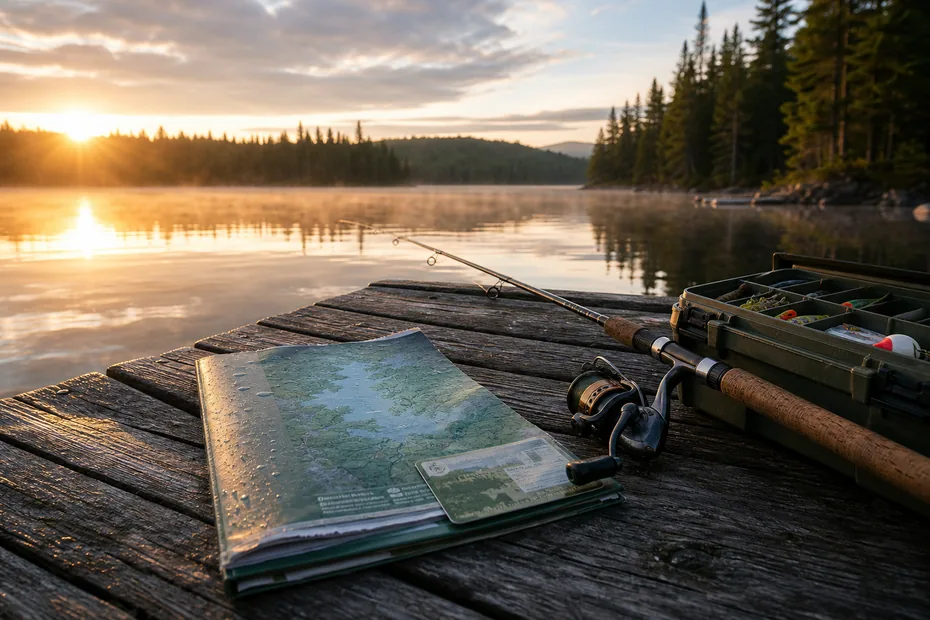
Canada outdoor field guide · Fishing rules
Fishing regulations & licences in Canada
Find the right authority, check your water and plan your next trip with confidence.
Find official sourcesTrip essentials
Keep your field kit ready.
Compare practical items for dry storage, planning notes and time on the water.
CanadaFever participates in the Amazon Associates Program. We may earn a small commission from qualifying purchases at no extra cost to you. Product images below are loaded from Amazon media URLs; prices and availability can change.
Rite in the Rain Waterproof Notebook
View on Amazon
Plano Waterproof StowAway Tackle Box
View on Amazon
AURAME Fishing Pliers with Braid Cutter
View on Amazon
Lamicall Waterproof Phone Pouch
View on Amazon
Onyx MoveVent Dynamic Paddle Sports Life Vest
View on AmazonThe right licence starts with the right water.
The Québec non-resident licence guide gives the current purchase path and explains why zone and water exceptions still matter.
Find the correct Canadian fishing licence path by province, waterbody, species, date, residency status and official rule source before you cast.
- 1
There is no single recreational fishing licence for all of Canada.
- 2
Province, territory, tidal water and park rules can differ sharply.
- 3
Check official sources for seasons, limits, closures and bait rules.
Bottom linePick the exact water, species and date first; then verify the licence and rule that applies there.
Fishing regulations and licences in Canada are set mainly by province or territory, with separate federal rules for tidal waters, salmon, shellfish, national parks, and some protected areas. That means there is no single Canada-wide recreational fishing licence.
For 2026, the safest planning rule is simple: choose the exact province, waterbody, species, and date before you buy. A licence that is valid for Ontario does not let you fish in Quebec, Alberta, British Columbia, or any other province. Non-residents also face different prices, ID requirements, and in some cases special stamps or permits.
This guide gives you the national planning map first, then points you to the official source you should check before you fish. If you are new to Canadian angling, pair it with our Fishing for Beginners in Canada hub so the licence rules connect to gear, first spots, seasons, and safety. If you already know your trip target, also use our detailed guides for Canada fishing licences for non-residents, Alberta fishing licences, BC fishing licences, and Ontario fishing and hunting licences.
Quick answer: what licence do you need in Canada?
- Freshwater: start with the province or territory where you will fish.
- Ontario: most anglers need an Outdoors Card plus a valid fishing licence or licence summary.
- British Columbia freshwater: 2026-27 freshwater licences are handled through WILD and linked to a Fish and Wildlife ID (FWID).
- BC tidal waters: check Fisheries and Oceans Canada, not only the provincial freshwater system.
- Non-residents: verify residency definitions, visitor prices, guide requirements, and species stamps before booking.
Before you fish: the 2026 verification checklist
- 1. Confirm the province, territory, or tidal/federal authority.
- 2. Buy the correct licence type for your residency and trip length.
- 3. Check the waterbody zone, open season, size limit, possession limit, and bait rules.
- 4. Add any required species stamp, conservation surcharge, park permit, or guide/outfitter requirement.
- 5. Carry proof of licence and photo ID in the format required by that jurisdiction.
Regulation-ready gear
Useful gear to compare before a regulated fishing trip
These picks are not a shortcut around the rules. They support licence proof, dry organization, fish measurement, hook handling, and water safety after you have checked the official regulation for your province, zone, species, and waterbody.
CanadaFever participates in the Amazon Associates Program. We may earn a small commission from qualifying purchases at no extra cost to you. Product images below are loaded from Amazon media URLs; prices and availability can change.
Licence proof
Rite in the Rain Waterproof Notebook
Useful for recording licence numbers, zone notes, waterbody rules, access details, and catch logs when phone signal or battery is unreliable.
Why it belongs in a regulation-ready kit: Regulation mistakes often happen because anglers rely on memory. A small waterproof notebook gives you a place to write licence details, conservation limits, slot notes, and officer instructions.
Before buying: This does not replace official licence proof where digital or printed proof is required. Use it as a backup planning tool.
View on AmazonDry storage
Plano Waterproof StowAway Tackle Box
Useful for keeping hooks, jigs, swivels, tags, and small licence-related trip items dry in boats, canoes, kayaks, and wet shore conditions.
Why it belongs in a regulation-ready kit: A regulation-ready kit is organized. Dry storage helps separate barbless hooks, legal lures, measuring tape, licence proof, and species-specific tackle.
Before buying: Do not carry illegal bait, barbed hooks, or lead items where local rules restrict them.
View on AmazonFish handling
AURAME Fishing Pliers with Braid Cutter
Useful for hook removal, pinching barbs where required, cutting line, opening split rings, and reducing fish handling time.
Why it belongs in a regulation-ready kit: Many regulations are not just about possession. Proper release technique, hook style, and quick handling matter in catch-and-release zones and conservation waters.
Before buying: Check whether barbless hooks, single hooks, or bait restrictions apply before rigging.
View on AmazonDigital proof
Lamicall Waterproof Phone Pouch
Useful for protecting a phone that holds digital licence proof, regulation screenshots, maps, weather alerts, and emergency contacts.
Why it belongs in a regulation-ready kit: Many anglers now rely on a phone for licence proof and rule checks. Keeping that phone dry and accessible matters on docks, boats, canoes, kayaks, and rainy shorelines.
Before buying: Confirm your jurisdiction accepts digital proof, and keep backup ID or printed proof if required.
View on AmazonWater safety
Onyx MoveVent Dynamic Paddle Sports Life Vest
Useful for anglers fishing from canoes, kayaks, paddleboards, small boats, and cold-water locations where flotation planning matters.
Why it belongs in a regulation-ready kit: Licence compliance is only one part of responsible fishing. Boating and paddling trips also need safety planning, especially on cold Canadian water.
Before buying: Verify current Transport Canada guidance, fit, label, sizing, and activity suitability before launching.
View on AmazonSources and official links
Where to verify Canadian fishing licences and regulations
CanadaFever can help you plan, but official sources control the final rule. Licence categories, open seasons, possession limits, size limits, bait rules, barbless-hook rules, emergency closures, and waterbody exceptions can change by province, zone, species, date, and permit type.
Fisheries and Oceans Canada
Use DFO for federal recreational fishing regulation entry points, especially when tidal, coastal, salmon, or federally managed waters may be involved.
Open DFO recreational fishing regulationsDFO Pacific tidal waters licence
British Columbia tidal waters use a separate federal licensing system from ordinary provincial freshwater licences.
Open Pacific tidal waters licence guidanceOutdoors Card and licence summary
Ontario anglers may need an Outdoors Card and the correct sport or conservation licence, plus zone-specific rules.
Open Ontario Outdoors Card guidanceFreshwater fishing licence
BC freshwater fishing can involve FWID/WILD profile details, classified waters, conservation surcharges, and species-specific rules.
Open BC freshwater licence guidanceFishing licences and fees
Alberta anglers should confirm WiN requirements, licence products, fee categories, and current regulation exceptions before fishing.
Open Alberta licence and fee guidanceTransport Canada PFD guidance
If the trip involves a boat, canoe, kayak, paddleboard, or cold water, verify current lifejacket and PFD guidance before launch.
Open Transport Canada PFD guidanceTrust note: This guide is a planning resource, not legal advice. Always verify current rules directly with the responsible province, territory, Parks Canada, or Fisheries and Oceans Canada before purchasing a licence or fishing a specific waterbody.
Digital asset
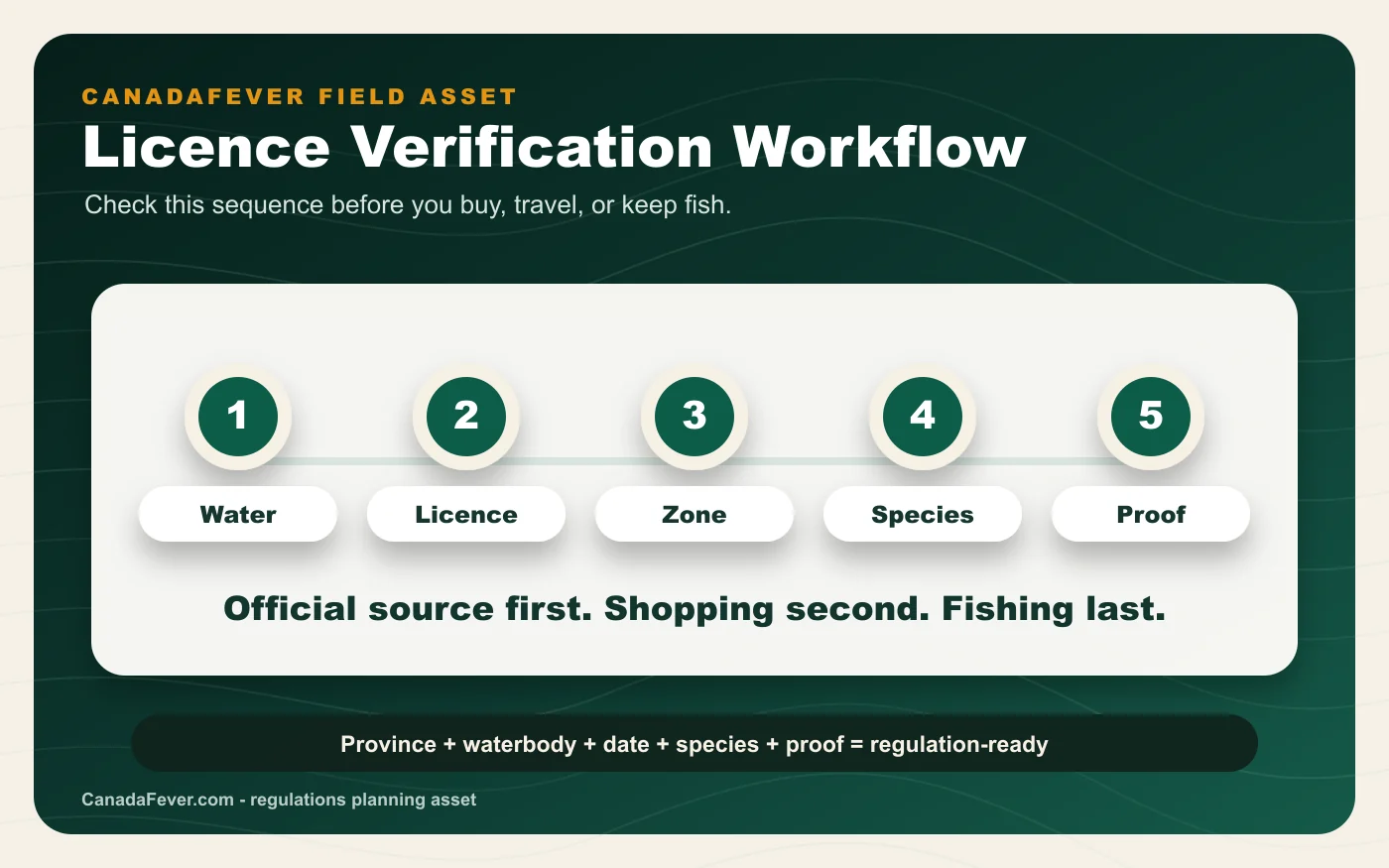
Canada Fishing Licence Verification Workflow
Use this visual sequence before buying a licence, crossing a provincial border, fishing a new waterbody, or keeping fish. It keeps the decision in the right order: official source first, shopping second, fishing last.
Two separate checks
A licence is only part of the plan.
Your licence
- Issuing authority
- Residency category
- Licence type and validity
- Required proof
Your exact water
- Zone and waterbody exceptions
- Species and open season
- Size and possession limits
- Bait, hooks and closures
Printable checklist
Download the licence and regulations field checklist
This two-page PDF gives readers a practical pre-trip check for licence authority, waterbody rules, species limits, proof requirements, bait and hook restrictions, PFD planning, and conservation checks.
Decision map
Canada Fishing Licence Decision Map
Use this flow before you buy anything. It keeps beginners, visitors, and travelling anglers from choosing the right-looking licence from the wrong authority.
Start here
Fishing Licence & Regulations Learning Path
Use these guides in order when you need a deeper answer. This page gives the national map; the supporting pages handle specific provinces, visitor rules, and first-trip context.
1. Get the right licence
Use the national licence-buying path before opening a checkout portal.
2. Check non-resident rules
For visitors, travelling Canadians, Americans, and international anglers.
3. Ontario Outdoors Card path
Plan around the Outdoors Card, licence summary, free dates, and Ontario rules.
4. BC freshwater and stamps
Separate freshwater, tidal waters, estuary stamps, and special BC requirements.
5. Alberta licence planning
Fees, WIN card context, national park cautions, and common Alberta trip checks.
6. Manitoba regulations
Useful for lodge trips, fly-in plans, fees, seasons, and provincial limits.
7. Saskatchewan regulations
Check licences, seasons, fees, and limits before northern lake trips.
8. National park permits
Parks can require separate federal permits even when you hold a provincial licence.
Different trips. Different checks.
Put the rules into your trip plan.
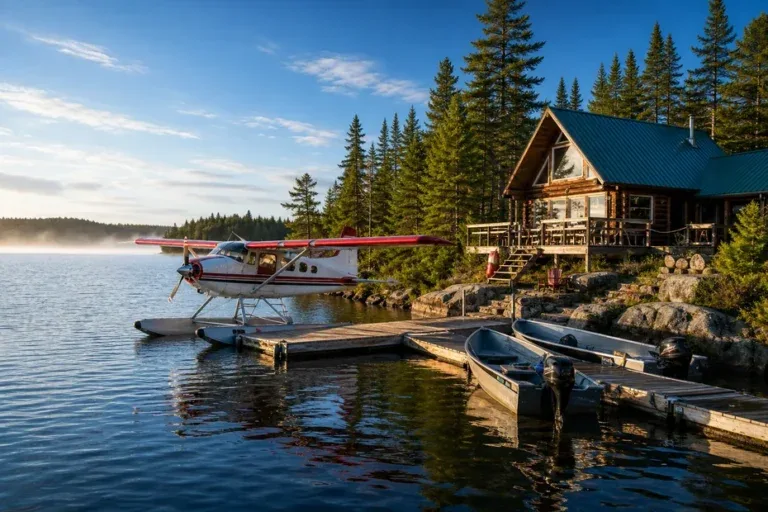
Remote lodge trip
Confirm the exact waters and licence requirements before travelling.
Explore the trip guide →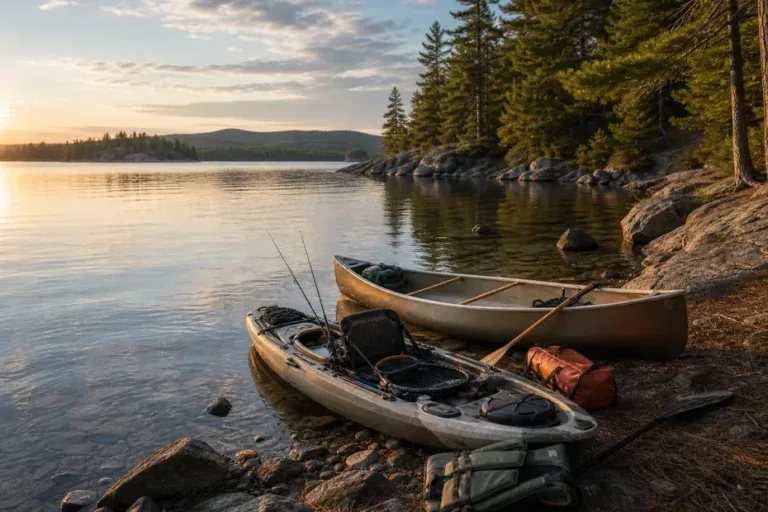
Paddle fishing
Check fishing rules alongside your route and flotation plan.
Explore the trip guide →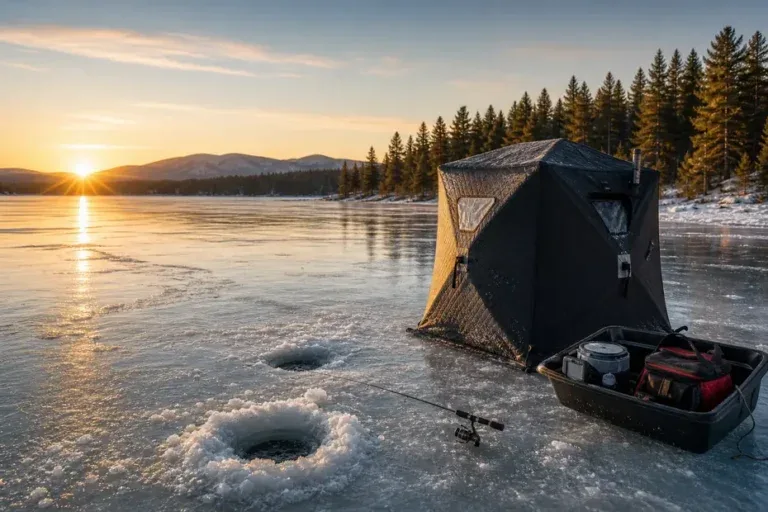
Ice fishing
Look up the waterbody and season before planning the winter setup.
Explore the trip guide →1. Provincial profiles and identification: where to start
Before you can purchase a fishing licence in most Canadian provinces, you need a provincial identification card. This is not the licence—it’s the prerequisite for the licence.
Ontario — Outdoors Card: An Outdoors Card is valid for three calendar years. It is separate from the fishing licence. Check the official Outdoors Card and licence summary guidance for purchase, renewal and proof requirements.
Alberta — Wildlife Identification Number (WiN): A one-time activation fee of $8.00 (plus GST). Purchase online for a $2.00 discount. The WiN is virtual—it lives in the MyWild Alberta app. You never need a physical card, but you do need the number before applying for any licence or draw.
British Columbia — Fish and Wildlife ID (FWID): For the 2026-27 licence year, B.C. freshwater fishing licence sales have moved to the WILD system and are linked to a Fish and Wildlife ID. Anglers should set up or confirm their FWID before buying a freshwater licence. If you fish tidal waters in B.C., also check Fisheries and Oceans Canada because tidal licences and salmon stamps are separate from provincial freshwater licensing.
Quebec, Manitoba, Saskatchewan: These provinces do not require a separate registration card. You purchase your licence directly through the provincial portal, using your provincial ID for verification.
2. Provincial licence fees: comparison reference
Before using these figures, confirm the current licence year, residency category and licence product with the official authority. Freshwater and tidal licences are different products; this table is not a live price feed.
Use this overview to identify the licence categories to compare, then confirm the current fee and eligibility with the official source.
Swipe or scroll the table to compare all columns.
| Province | Resident Annual | Non-Resident Annual | 1-Day Option | Youth Free Until | Senior Discount |
|---|---|---|---|---|---|
| Ontario | $26.57 (Sport) / $15.07 (Conservation) | $83.19 (Sport) | $12.21 | Under 18 | Free at 65+ |
| British Columbia | ~$36 (basic freshwater) | $121.14 (tidal, annual) | $8.39 (tidal) | Under 16 | $5.71 at 65+ |
| Quebec | $26.24 (under 65) | $93.90 (annual) | $21.95 | Under 18 | $20.81 at 65+ |
| Alberta | ~$28 (annual) | ~$29 (5-day visitor) | N/A | Under 16 | Free at 65+ |
| Saskatchewan | Contact SK for 2026 | Non-resident available | Yes | Under 16 | Varies |
Important: Fees above are subject to change. Always confirm current rates directly with your provincial Ministry of Natural Resources or Wildlife before purchasing. For B.C. tidal waters, start with the DFO Pacific recreational fishing licence page. For other saltwater questions, use the relevant Fisheries and Oceans Canada regional guidance.
3. Free Fishing Days in Canada: 2026 Calendar
This is one of the most searched fishing topics in Canada—and it changes every year. Here are the confirmed 2026 licence-free fishing periods by province:
Swipe or scroll the table to compare all columns.
| Province | Winter Free Dates 2026 | Summer Free Dates 2026 | Notes |
|---|---|---|---|
| Ontario | Feb 14–16 (Family Day) | May 9–10 (Mother’s Day), Jun 20–21 (Father’s Day), Jun 27–Jul 5 (Family Fishing Week) | No Outdoors Card required on free days |
| British Columbia | None confirmed | Jun 19–21 (Father’s Day / Family Weekend) | Classified waters exemptions still apply |
| Alberta | Feb 14–16 (Family Day) | Jul 11–12 | National Parks excluded. All other rules apply. |
| Saskatchewan | Feb 14–16 (Family Day) | Mid-July (TBD — watch Saskatchewan.ca) | Cannot transport fish out of province on free days without licence |
| Manitoba | Feb 14–16 (Family Day) | June (TBD — watch gov.mb.ca) | National Parks require a federal licence even on free days |
Critical reminder: On free fishing days, the licence requirement is waived—but ALL other regulations remain fully in force. Catch limits, size restrictions, season dates, and prohibited species rules still apply. A conservation officer can and will issue fines for violations even on Family Fishing Weekend.
4. Sport vs. Conservation Licence: What’s the Real Difference?
This distinction trips up more experienced anglers than beginners—because both licences let you fish, but they have fundamentally different implications for what you do with your catch.
Sport Fishing Licence:
- Allows you to keep the full legal bag limit for each species.
- In Ontario: $26.57/year for residents; $83.19 for non-Canadian residents.
- Required if you want to keep walleye, pike, bass, or trout for the table.
- The Standard choice for the vast majority of recreational anglers.
Conservation Fishing Licence:
- Mandatory catch-and-release for all retained fish.
- In Ontario: $15.07/year for residents—a $11.50 saving.
- Appropriate for anglers who practise live-release fishing exclusively, or regions where Conservation Licences receive priority access during draw periods.
🎣 Which Licence Do You Need? Decision Matrix
🍳 Keeping Fish to Eat
→ Sport Licence. Always. A Conservation licence prohibits keeping any fish.
🔄 Purely Catch-and-Release
→ Conservation Licence works and costs less. You still follow all size and season rules.
❓ Not Sure Yet?
→ Get the Sport Licence. You can always release fish on a Sport licence; you cannot keep fish on a Conservation licence.
🧒 Under 18 / Over 65 (ON)
→ No Licence Required in Ontario (and most other provinces). Carry government-issued photo ID as proof of age.
5. Non-Resident Rules: What Visitors Need to Know
If you’re an angler visiting from another country—or even from another Canadian province—you are a “non-resident” in the province you’re fishing.
From Another Province: You are a “Canadian non-resident.” In Ontario, this means your annual sport licence costs $55.81 (vs. $26.57 for residents). This catches many Canadians off guard—your Manitoba licence does not allow you to fish in Ontario.
From the USA or Internationally: You are a “non-Canadian resident.” In Ontario: $83.19 for an annual sport licence, or $24.86 for a single day. The 8-day non-resident Conservation licence in Ontario is $31.52—often the most cost-effective choice for a week-long fishing trip.
Special cases:
- Canadian Armed Forces members and veterans: Exempt from licensing fees in Ontario and Alberta. Carry your service documentation.
- Persons with disabilities: Exemptions exist in Ontario for individuals who require direct physical assistance to fish.
- Indigenous rights holders: Aboriginal and treaty fishing rights sit in a constitutional, treaty, community, conservation, and fishery-management context. Do not treat this as a normal recreational licence category or a one-size-fits-all exemption. For plain-language context, start with Indigenous fishing rights and regulations in Canada, then verify the exact official source that applies to the fishery, Nation, treaty area, species, waterbody, and date.
6. Province-by-Province Deep Dive
Ontario
Ontario’s framework is the most complex, and the most commonly encountered by Canadian anglers. The two-licence system (Sport vs. Conservation), combined with the Outdoors Card prerequisite, is unique to Ontario.
For a complete breakdown including the Outdoors Card registration process, catch limits by species, and zone maps, see our Ontario Fishing and Hunting Licence Guide.
Key 2026 Ontario notes:
- Annual licences valid January 1 to December 31, 2026.
- Free fishing dates: Feb 14–16, May 9–10, Jun 20–21, Jun 27–Jul 5.
- The Outdoors Card itself never expires, but licence tags must be renewed annually.
British Columbia
BC manages freshwater and tidal (saltwater) fisheries with completely separate systems. Freshwater licences are a provincial responsibility; tidal licences are federal (DFO).
For 2026, BC’s freshwater licensing moves to the new WILD system. Existing licences remain valid. See our BC Fishing Regulations Guide for full details including classified waters, species stamps, and area restrictions.
The Salmon Conservation Stamp ($7.19) is required for all anglers retaining salmon in tidal waters—this is separate from the base tidal licence and is the most commonly forgotten permit by visiting anglers.
Alberta
Alberta’s fishing regulations are increasingly notable for their walleye management. As of 2026, the Class A and Class B walleye harvest draws have been dissolved and replaced with a new Special Walleye Harvest Licence (SHL) system at $11.00 each.
All Alberta anglers need an active WiN before purchasing. No WiN = no licence, no draw entries. See our Alberta Fishing Regulations 2026 guide for the walleye SHL details and current possession limits.
Saskatchewan
Saskatchewan has some of the best walleye and pike fishing in North America, and its regulatory framework is correspondingly exacting. Our Saskatchewan Fishing Regulations guide covers the full 2025–26 season including the latest possession limit changes for northern pike.
Critical note: On Saskatchewan’s free fishing weekends, you must still purchase a licence if you intend to transport fish out of the province—even if caught locally during the free period.
Quebec
Quebec’s regulations run on a two-year cycle (currently April 2024–March 2026). Atlantic salmon fishing requires a completely separate licence from general sport fishing and is managed by the Société des établissements de plein air du Québec (Sépaq). Many of Quebec’s best trout and salmon rivers are on Sépaq territory; verify whether you’re fishing on a ZEC (controlled harvesting zone) before you go.
Manitoba
Manitoba’s extensive lake network—including Lake of the Woods, Manitoba Lake, and the extraordinary fly-in lake country of the north—is governed by one of Canada’s most detailed size limit and slot limit systems. For multi-day wilderness fishing trips, see our Manitoba Fly-In Fishing guide.
7. How to Purchase Your Licence: Online vs. In-Person
Every province now offers online licence purchasing. Here’s the summary:
Swipe or scroll the table to compare all columns.
| Province | Online Portal | In-Person Options |
|---|---|---|
| Ontario | ontario.ca/outdoorscard | ServiceOntario, bait shops, outdoor stores |
| British Columbia | wild.bc.ca (new 2026) | Sport fishing suppliers, Service BC |
| Alberta | mywildalberta.ca | Hunting & fishing dealers |
| Saskatchewan | saskatchewan.ca | Outdoor equipment retailers |
| Quebec | sépaq.com / gov portals | ZEC offices, sporting goods stores |
| Manitoba | gov.mb.ca | Manitoba Conservation offices |
Pro tip: Always save a PDF or screenshot of your licence on your phone. Many provinces now accept digital licences during enforcement checks, but some conservation officers in remote areas may request a physical copy when connectivity is poor.
8. Common Violations and Fines
The most ticketed violations in Canada, in order of frequency:
- Fishing without a licence — Fines range from $200 to $500+ depending on province. In Ontario, a first offence is typically $200–$300.
- Exceeding possession limits — This is the most serious category. Possession limit violations are often charged as provincial offences and can result in fines exceeding $1,000 and equipment seizure.
- Wrong licence for the activity — Keeping fish on a Conservation licence. Fines similar to exceeding limits.
- Licence not on person — Even if you have a valid licence at home, you must have it with you. This is typically a minor fine ($50–$100), but still a chargeable offence in most provinces.
- No Outdoors Card (Ontario) — If you present a licence tag but not your Outdoors Card, you will receive a ticket even if the licence is valid.
The Ontario MNRF fishing licence enforcement page has the complete current fine schedule.
9. Protecting the Resource: Conservation Obligations
Buying the right licence is only the beginning. Conservation compliance is an active responsibility.
Slot Limits: Many provinces use slot limits rather than simple bag limits. A slot limit might say: “You may keep walleye between 37–50 cm, but not above 50 cm.” The large fish (the breeders) must be released. Understanding slots requires reading the species-specific tables, not just the headline bag limits.
Invasive Species Obligations: It is illegal across Canada to move live baitfish between water bodies. Draining your live well before leaving a boat launch is mandatory. Improperly cleaned waders can also transport invasive species like Didymo (rock snot) or zebra mussels. Fines for invasive species violations are among the harshest in Canadian wildlife law. See our protecting our waters guide for responsible angling practices.
Catch-and-Release Best Practices: If you’re releasing fish, do it properly. Wet your hands before handling, minimize air exposure (under 30 seconds), and use barbless hooks in catch-and-release zones. A fish that swims away doesn’t always survive—proper technique dramatically improves post-release survival rates.
Regulation FAQ
Fishing regulations and licences in Canada FAQ
Click each question for the practical answer before buying a licence, crossing a provincial border, or fishing a specific waterbody.
Can I fish in two Canadian provinces on the same trip?
Yes, but you need the correct licence for each province where you actually fish. A licence for Ontario does not cover Quebec, Manitoba, Alberta, British Columbia, or any other province. If your trip crosses a border, buy and carry proof for every jurisdiction you plan to fish in.
Do non-residents need a different fishing licence in Canada?
Usually yes. Most provinces separate resident, Canadian resident, and non-resident licence categories, with different fees and sometimes different trip-length options. Visitors should also check whether they need a guide, species stamp, conservation surcharge, park permit, or tidal-water licence. Start with our Canada fishing licence for non-residents guide if you are visiting from outside the province or outside Canada.
Does an Ontario Outdoors Card work outside Ontario?
No. The Ontario Outdoors Card belongs to Ontario’s licensing system. Other provinces use their own systems, such as Alberta’s WiN and British Columbia’s FWID/WILD profile. Treat each province as a separate licensing decision.
Do youth or seniors need a fishing licence in Canada?
It depends on the province, residency category, and age. Some provinces exempt youth or seniors from buying a licence, but they may still need to carry government ID and must still follow seasons, size limits, possession limits, bait rules, and conservation rules. Never assume an exemption applies across Canada.
Can I fish in a national park with only a provincial licence?
No. National parks can require a separate Parks Canada fishing permit even if you already hold a provincial fishing licence. Check the park’s current rules before you fish, especially in places such as Banff, Jasper, Waterton Lakes, Riding Mountain, Prince Albert, and other park-managed waters.
Is ice fishing covered by the same licence as open-water fishing?
In many provinces, the same recreational fishing licence covers both ice fishing and open-water fishing, but the rules can change by waterbody and species. Ice seasons, shelter rules, bait restrictions, and possession limits may differ from summer rules. Always check the zone or waterbody page before drilling a hole.
What happens if I buy the wrong fishing licence?
Do not rely on a refund or correction after the fact. Provincial licence offices may have strict refund rules, and conservation officers judge the licence you actually hold while fishing. Before purchasing, confirm the province, residency category, licence duration, sport versus conservation option, and any required stamps or tags.
Related Canadian Fishing Regulation Guides
If your trip depends on a specific region or special fishing area, check these CanadaFever guides before you buy a licence or book travel.
- National parks fishing regulations in Canada
- New Brunswick fishing regulations
- Prince Edward Island fishing regulations
- Ontario ice fishing hut rental prices and planning notes
Final Word: Know Before You Go
Canadian fishing regulations exist to protect the extraordinary resource that makes this country one of the world’s premier angling destinations. Ignoring them—even accidentally—can result in meaningful fines, equipment seizure, and licence suspensions.
The internet makes this easier than ever. Every province publishes its regulations online. Every provincial licence is purchasable in minutes. Every bag limit, slot limit, and closed season is searchable.
Tight lines—and fish responsibly.
Affiliate Disclosure: This article contains Amazon affiliate links in the regulation-ready gear section. CanadaFever may earn from qualifying purchases at no extra cost to you.
Regulatory Disclaimer: Fishing regulations change annually and can also change through emergency closures, waterbody exceptions, conservation orders, and park-specific rules. Always verify current regulations directly with your province, territory, Parks Canada, or Fisheries and Oceans Canada before purchasing a licence or fishing.
AI Transparency: This content was researched, drafted, and edited with AI assistance, then structured for CanadaFever’s editorial standards.
Conservation context: Rules are the legal baseline, but habitat work, invasive-species prevention and local stewardship also protect fishing opportunity. Use Fishing Conservation Organizations in Canada to find credible groups and action paths.
Coastal licence check: If the trip involves BC tidal waters, salmon stamps, halibut records, shellfish or Atlantic marine rules, use Ocean Fishing Licence in Canada before assuming a freshwater licence covers the plan.